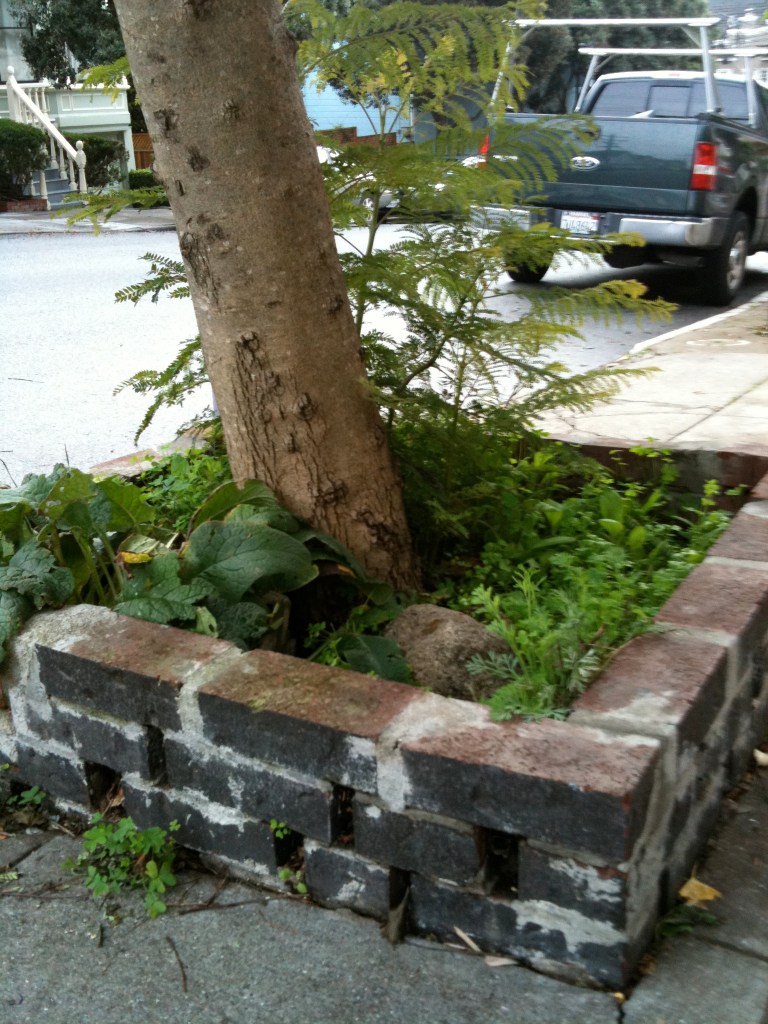

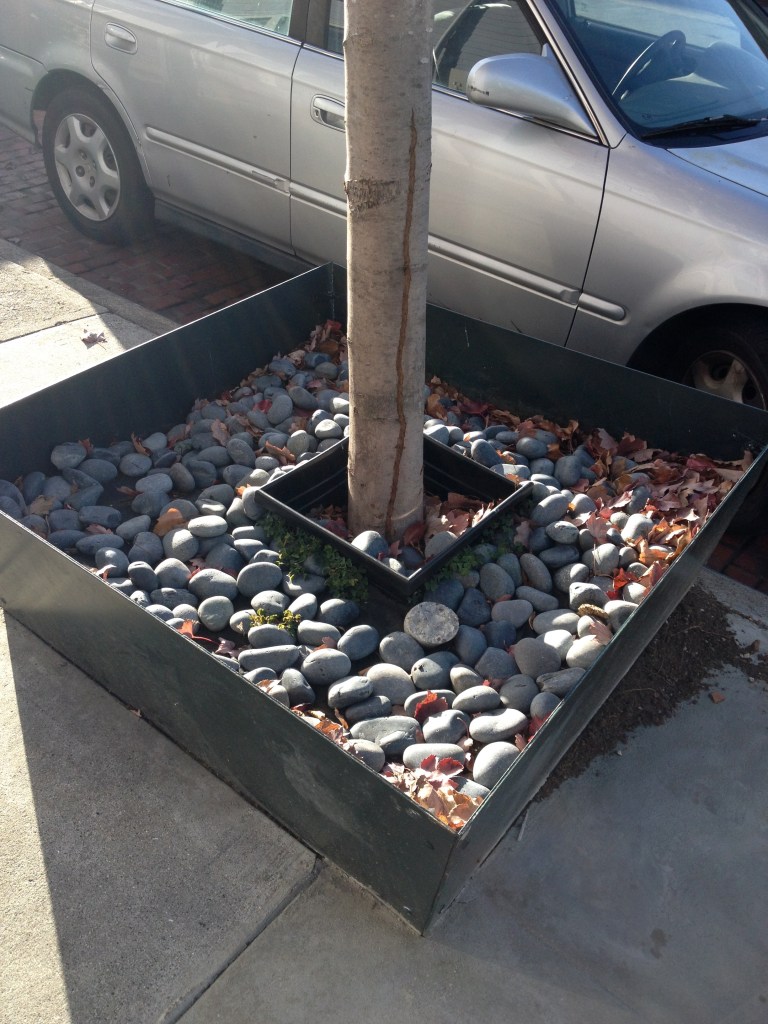
Yes it looks nice and neat. The enclosure probably keeps some of the animals from urinating or defecating close to the tree also. And, you may be able to sit on the edge and eat your lunch there on a sunny day. But, how would you like it if your most important interface – where the base of your trunk meets the earth and soil – is damp and wet all the time? Covered and piled up with rock and gravel and dust and dead leaves and weeds. Trapped and held in with nowhere to go.
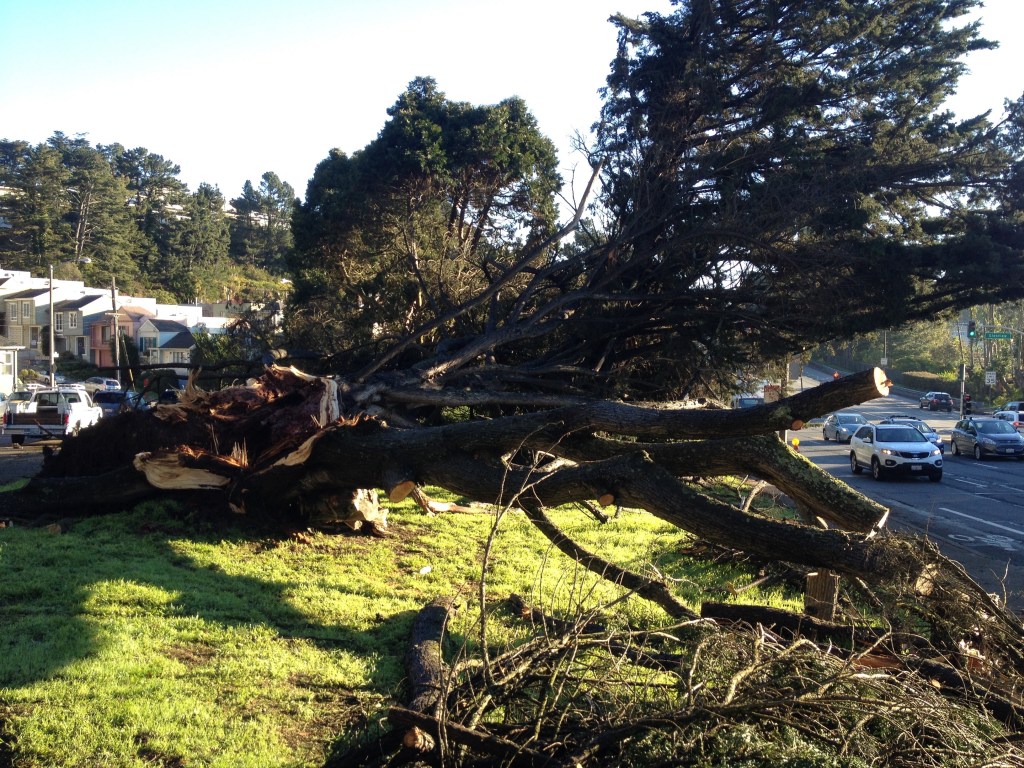
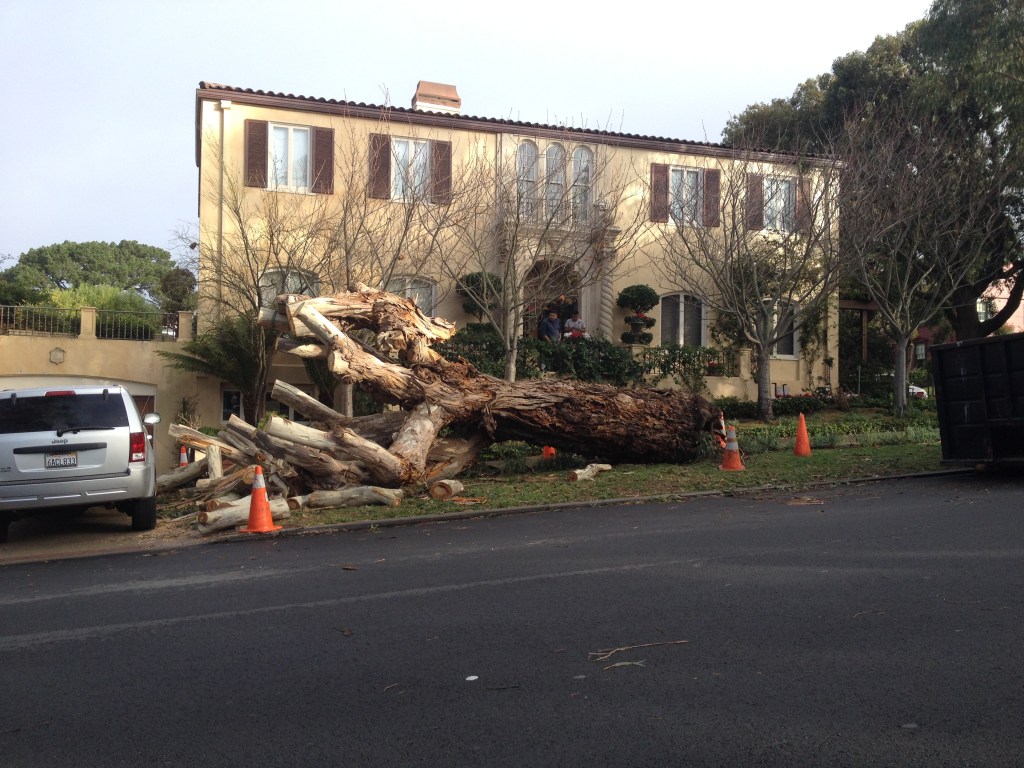
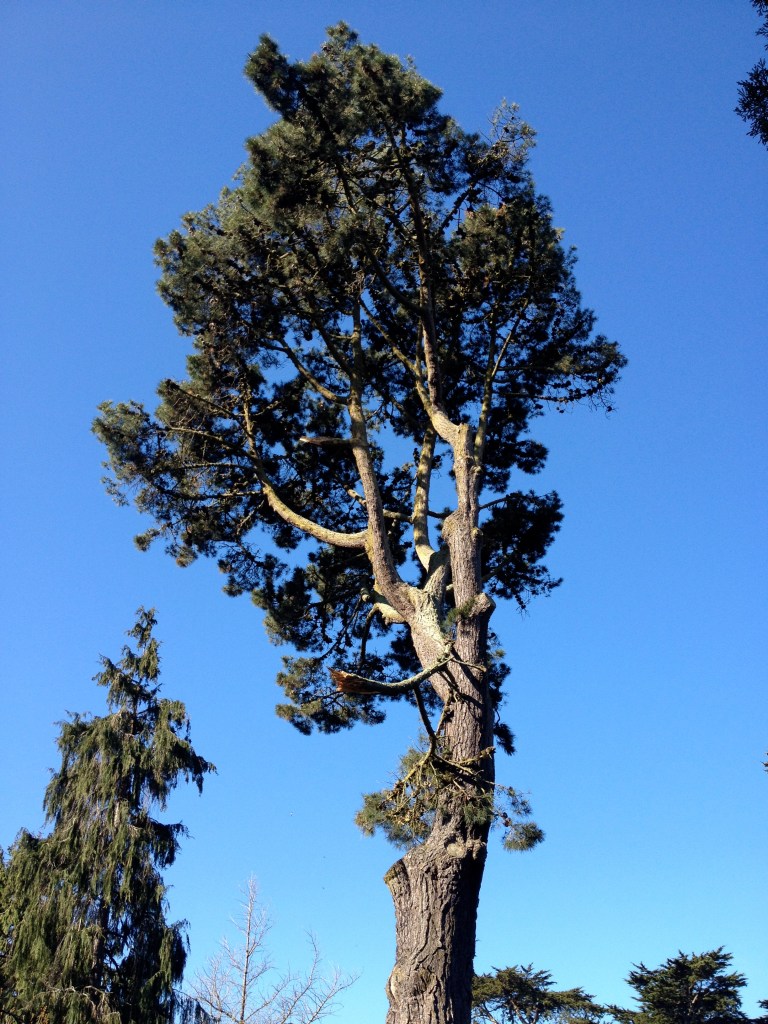
Sometimes trees fall down and hurt people and property. Occasionally they fall down and miss everything all around ‘em. Often, the cause is natural – they are old and sick, they are growing unbalanced in the loose sand, el nino storms are strong and water has saturated the soil. Other times, human care and maintenance may play a role in the outcome. Hard to say. What is important is that while you are working and playing around these massive huge creatures, you pay attention and watch out. Lest a broken branch fall and hurt you. Do you see the hanging limb caught in the crotch here? Imagine it comes loose and tumbles down. If you are a gardener – best to caution tape and cone off the area until the arborists can come and take care of the problem.

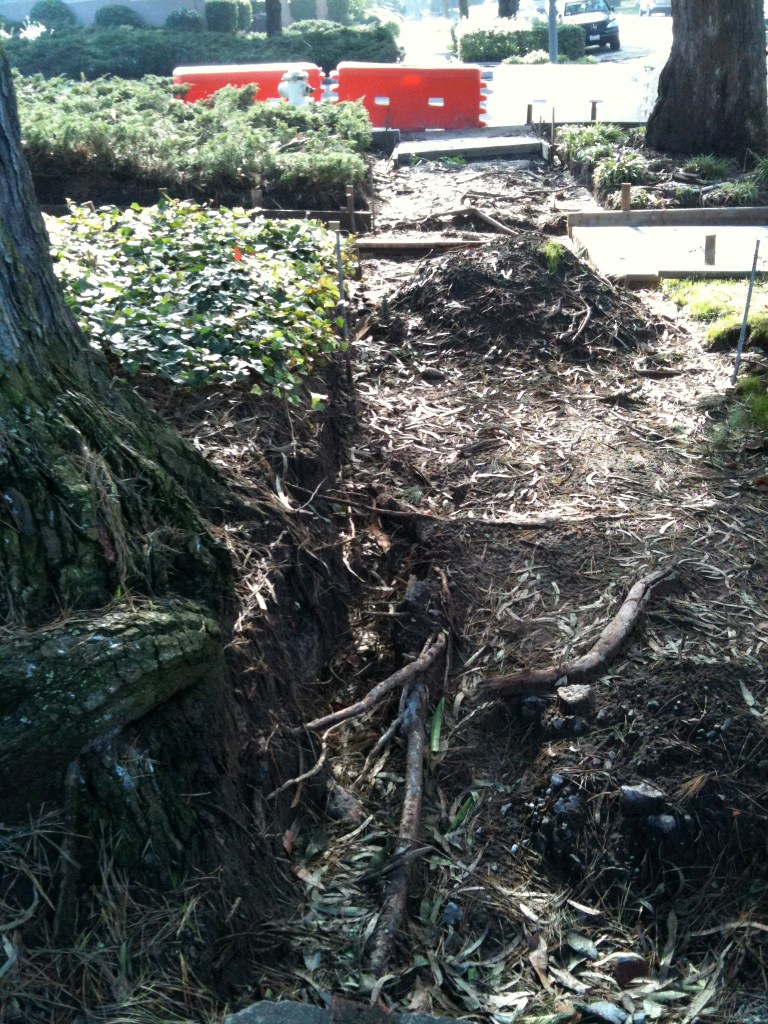
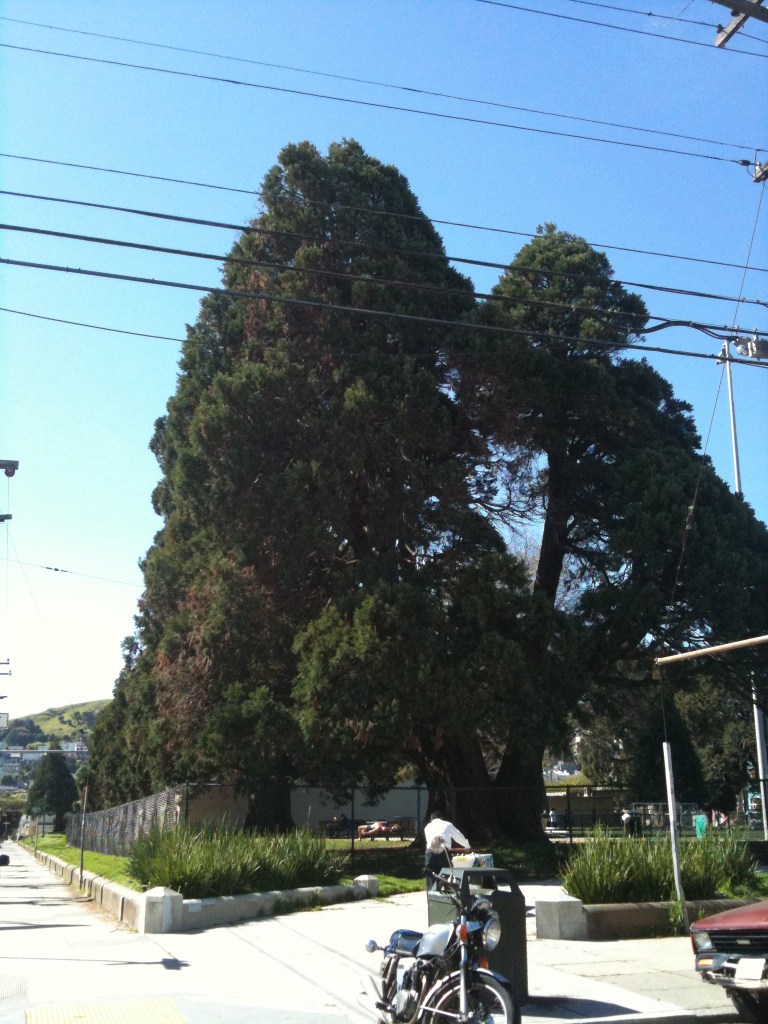
You plant a big tree in a small space. It ain’t ever gonna fit right. It ain’t ever gonna stop growing till it dies. It ain’t ever gonna mature at 15’, more like 80’ then start growing sideways. As the tree grows, roots swell, and the sidewalk cracks. Gotta fix it. So you bring in the jackhammers and forms and bags of concrete. The reciprocating saw cuts the roots in the ground real good, and the saw blades are cheap. You cut the roots off clean and level. Some of the roots you cut are the fine fibrous roots in the upper surface. Down lower, you cut some of the larger thicker anchoring roots five six inches thick to almost a foot wide. Then you pour the concrete over the top. Once the new concrete is screeded and dry, nobody hardly even takes a second look.
But like Gus says, “the damage has been done”. It might take five years, ten years, twenty years before the tree succumbs, fails, and falls. By then people are blaming the weather or the canker disease or something else. More likely if you were a real detective you could trace it to the big root cuts, or the big pruning topping cuts, performed years before. That is where the disease got in. That is when the rot started. So design and plant with size and proportion in mind. The ol gardener refrain goes –
“Right plant right place”.
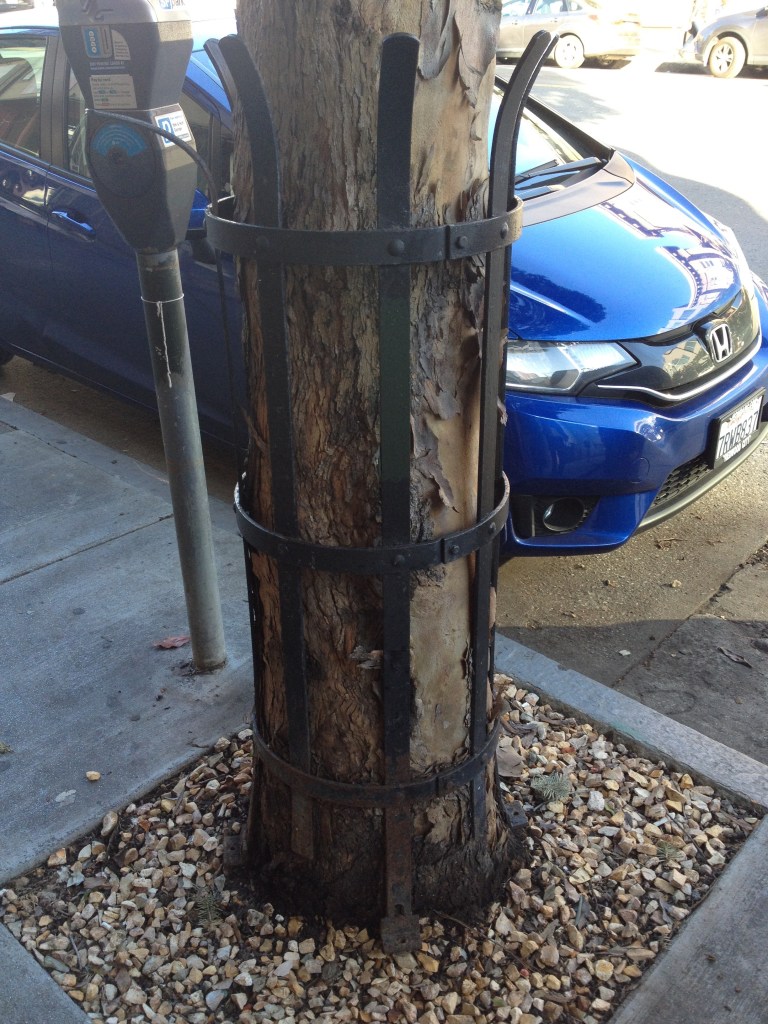


The tree planters. They do it with the best of intentions. But the follow up is so so. They think “We are saving the earth and planting trees. We are going to protect you (the tree). You are going to grow up straight and tall. We are going to make sure of that by binding you nice and tight!” But they forget to come back and loosen the straps or the bars or the cage or the grate. They forget that as a tree grows, it gets bigger. They do not recognize that a tree needs to move, needs the wind to blow it back and forth, for its roots to grow strong and firm into the ground. So then one day, five years down the line, somebody finally removes the stakes and the ties that were too tight to begin with. And the first wind storm, the tree falls over because its roots never rooted on its own, never went looking for water on its own. It was dependent on external supports placed there by an undependable human. Oh well, better luck next time!
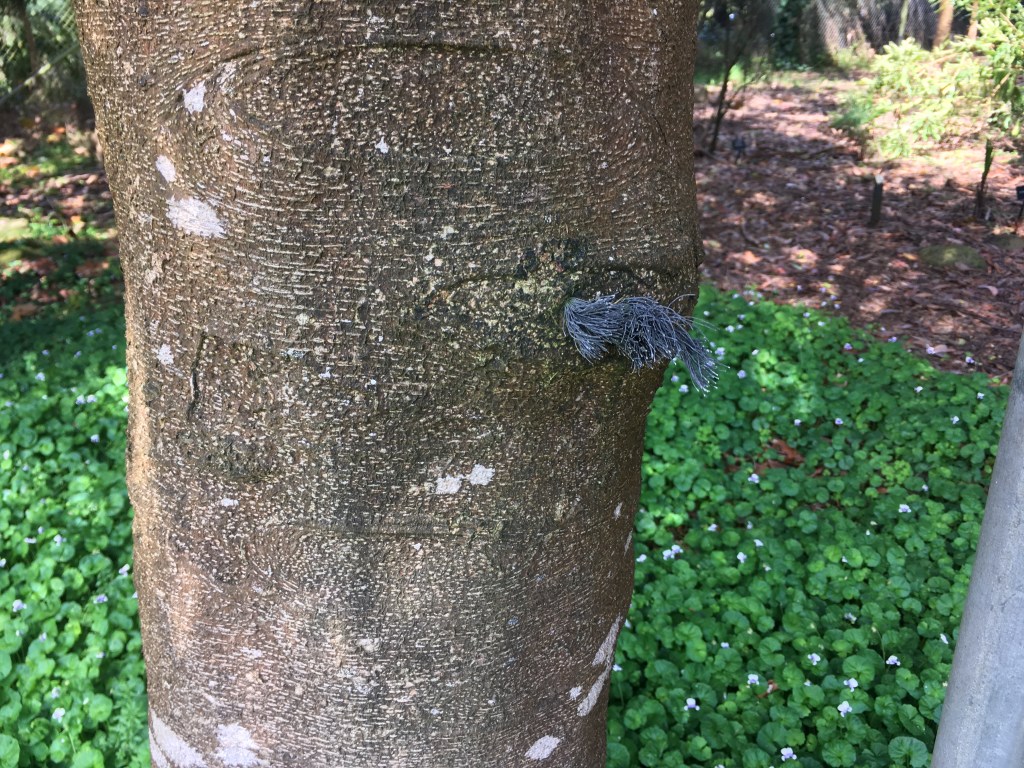
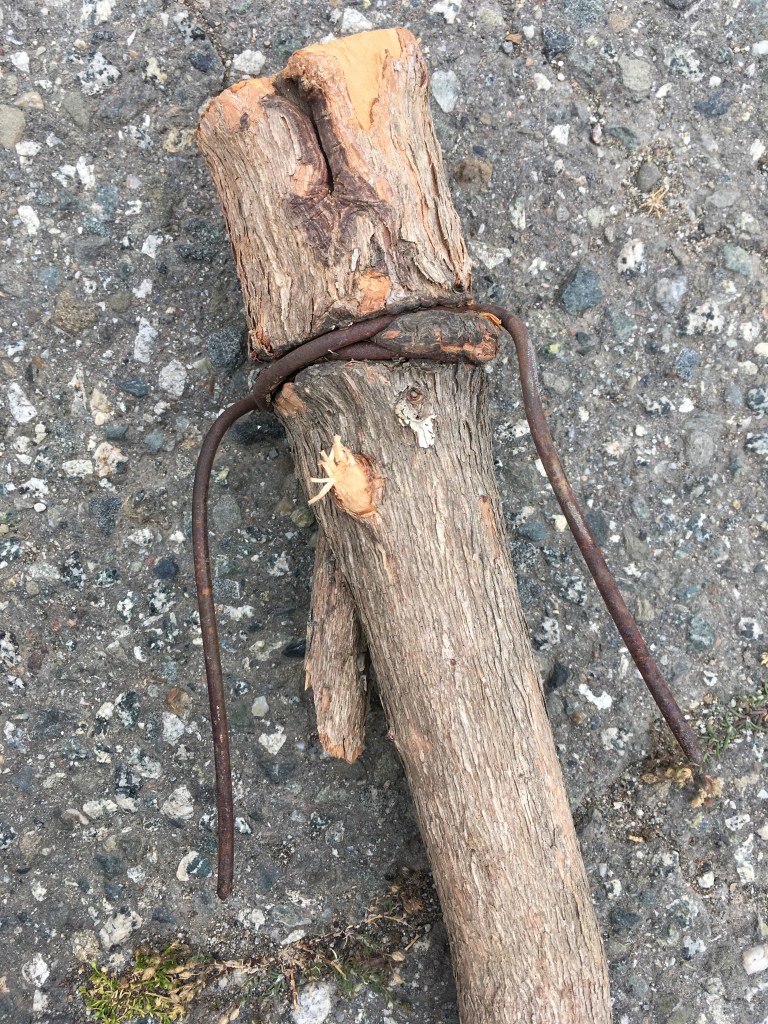

Girdling is when the tree gets sick and dies from strangulation. The conduction of water and nutrients gets stopped up and jammed. This can be from plastic rope that got tied around its trunk. This can be from a root in a container that went around and around until it choked itself. This can be from a piece of wire that would not let go. If you care for your trees, this does not happen. Loosen the ties. Prune the circling roots.
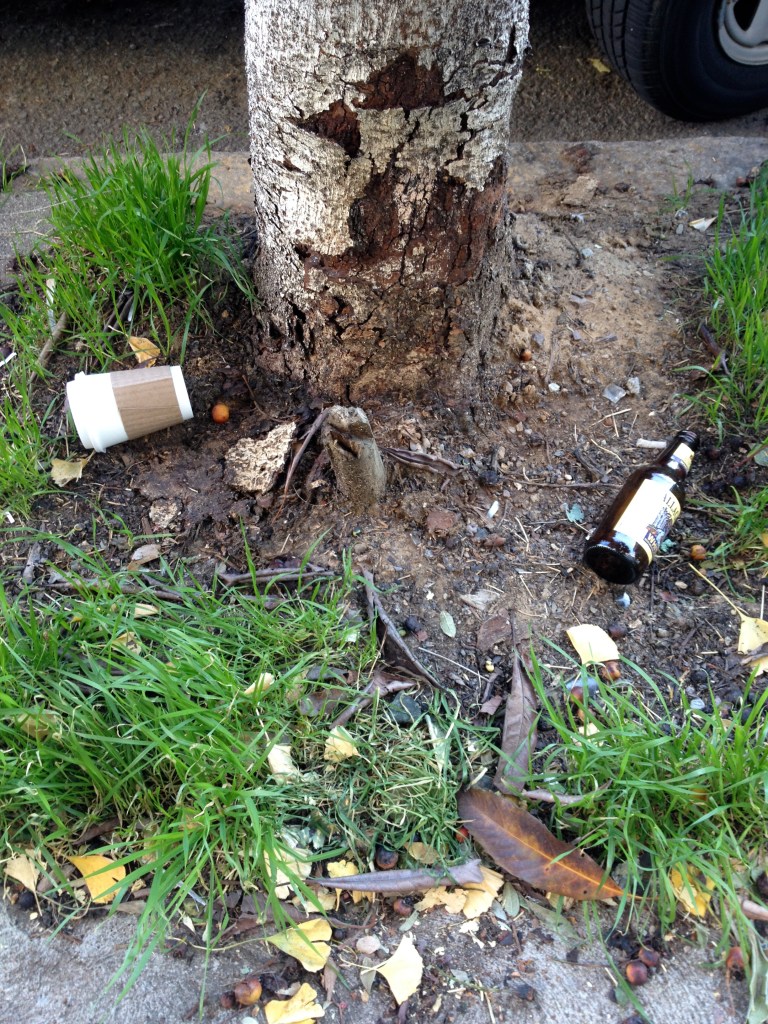


If you view a tree as a thing, as an object, not as a living creature, then you will treat it as such. You may see the trunk as a fire hydrant, and be unaware that dogs are burning the tree with their nitrogenous waste stream, burning it until the bark peels off. You may use the tree basin like a trash can or an oversized ash tray which it resembles. You may plant a tree too close to the house because you thought it was like a sculpture that would always stay the same size. You may fill a tree cavity full of concrete because you figured the problem was one of hardware – like the tile and the grout, the shower tub and the caulk, or the drywall and the spackle for the nail hole Most of these things, most of these treatments, the tree just accepts and tolerates, and keeps on growing!

The bud union is where the tree was budded. That is to say the bottom part (the rootstock) is one plant, chosen for its disease resistance, its ability to dwarf the size of the tree, or other qualities. The upper part is another individual plant (a bud), chosen for its pretty flowers or tasty fruits. The two were stuck or taped together back in the day, and now they grow together as one. Where they meet is often a bump of a swollen scar. The union. You can commonly observe this on flowering cherry trees, roses, and fruit trees.
A weak V shaped crotch is a tight narrow angle between the two trunks. It occurs commonly on the sweet gum tree Liquidambar. Sweet gums have the maple looking leaves and a fruit that resembles a small mace ball with spikes all over it. It has a fruit that will pop your bicycle tire’s inner tube. When your crotch is narrow like that, the growing bark becomes rolled inwards with the years, eventually resulting in a a weak crotch that is prone to splitting. When you put a two hundred pound arborist climbing in the tree pushing hard at that junction then kaboom – half of it breaks off and down goes the arborist. So be careful around them especially if they are rotten.
These days it is not fashionable to leave a stub. This is based more on aesthetics and cosmetics rather than health. Some people will say that if you leave that ‘dead wood’ stub it will attract fungal pests and infect the rest of the tree. Not really. The tree will usually compartmentalize that chunk, slowly suck out its nutrients, and let it die. Most any organism that lands and eats it will be a saprophytic dead material eater, not a live tissue eater. In the country farmers like to leave a little stub to hang a hat or a jacket or a tool, so that stuff don’t get lost in the bushes. But in town, it is best to leave no stubs for looks and for the standards…
Double leaders are tricky. If it is an older tree, and the crotch angle is U shaped and strong, then just leave it. Trees do not have to have only one strong leader, they can have two. But if it still a young tree, and the leaders are thin and not yet really developed, and you want to nip one of them, then go ahead.
Spurs. Once, a beginning gardener was asked to prune an apple tree in the springtime. He thought it was no big deal even though he had never done it before. He did not even ask for advice or look it up in a book or use the internet. He just went for it. He finished pruning and it looked real good. Most of the year went by. Then the client called to ask why there was no apples at all this year. Gardener felt a little bad, shrugged, and went to look up what spur wood looked like…
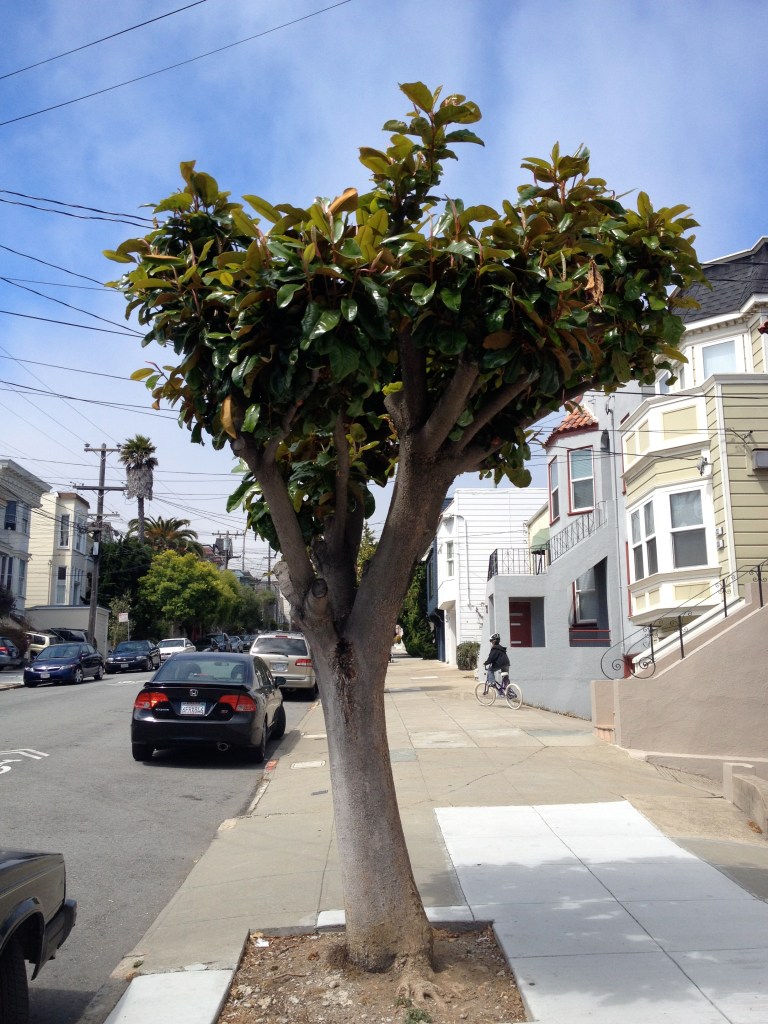
Here is a Magnolia tree that has been topped. What do you think? Does it look okay? Why would you top a tree? Did you know it is technically illegal to prune in this manner? And that you can be fined hundreds of dollars?

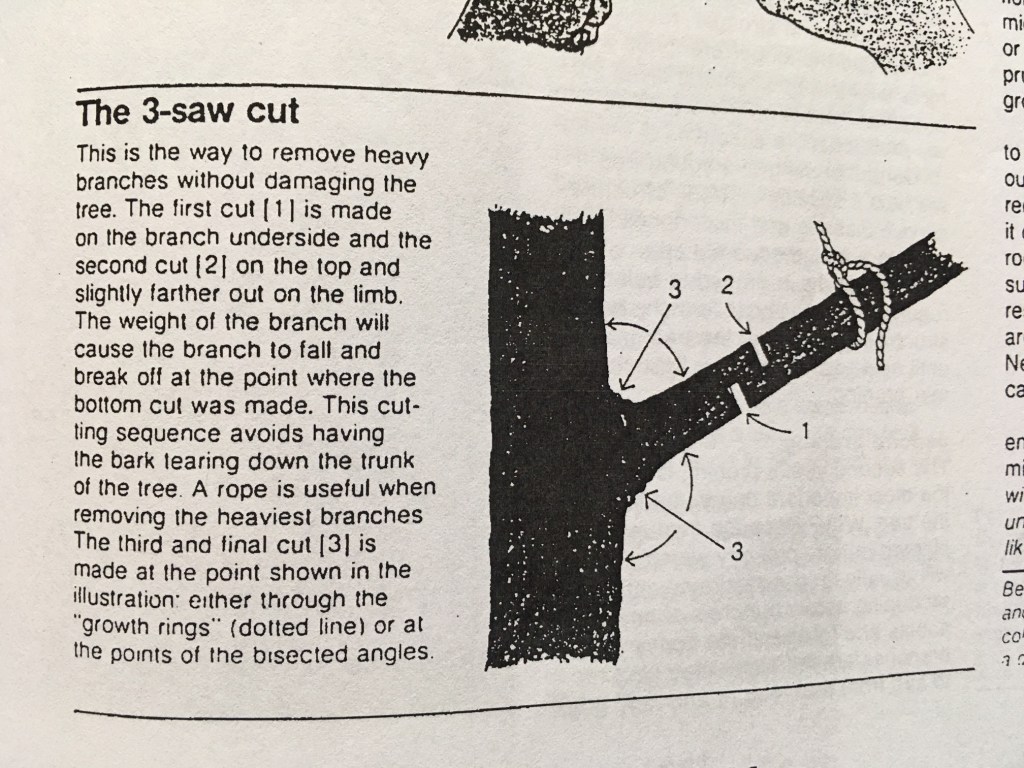
The three cut method is still a good and valid way to prune larger limbs off a tree. Only change in recent years is this: On the second cut, prune it right to the undercut, not a little aways like in the illustration. Straight shot to the cut, not letting it snap where the cuts are separated.
Couple of changes here. New standards recommend no fertilizer for the first year or so. Let the tree get used to the site first. And the backfill – use all the same local native soil you dug and excavated, not a 50/50 mix of native soil and organic matter. The logic and theory is that the tree will adapt and do best in the stuff it has to live in, not some compost leafy barky organic matter that is going to decompose and let the root ball subsides and sink deeper. This way the trunk base – soil interface does not get covered with dirt and soil and moisture and rot. Better to plant the tree a tiny bit high rather than low.

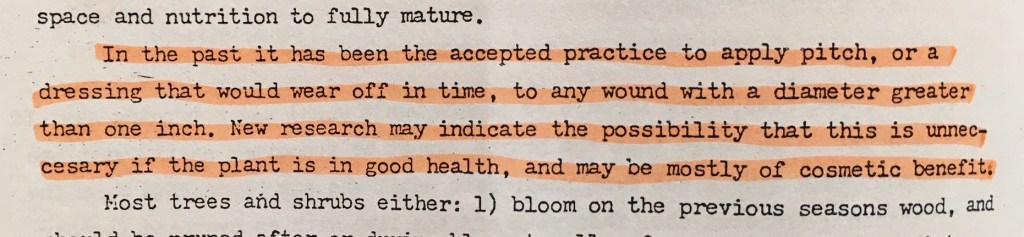
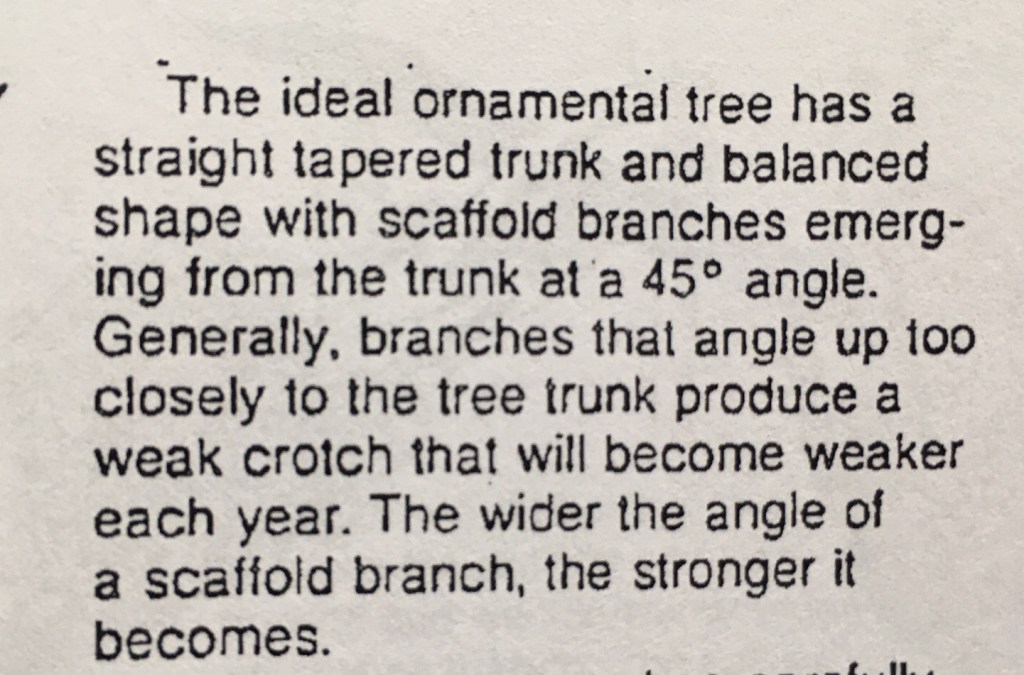
As we progress in our knowledge of trees as living organisms, we have made changes in how we treat them near our dwellings. We are emphasizing tree health over simply tree cosmetics. We are broadening our view of what an ornamental tree is, and what is ideal in a given landscape. We are seeing trees not only from an engineering model’s stand point, but also seeing a tree as a tree.
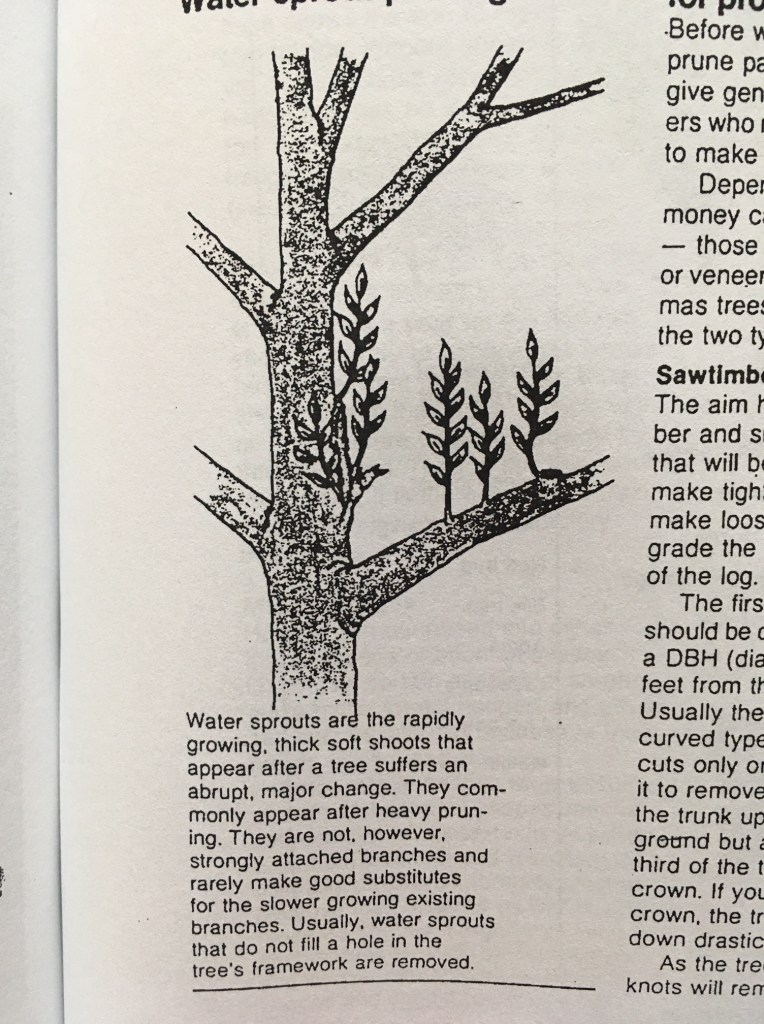
Have you ever seen a wild old plum, one planted by itself on the edge of a field? Have you seen how it is a dense thick tangle of trunks and branches crossing meshing and exhibiting a sort of mad exuberance? Well that is its natural wild form. Even the domesticated town plums would like to look like that a little bit, but most of the time us peoples don’t let them. “Stay in your little square!” So when we prune them hard in an effort to ‘correct their poor structure’, they fight back with a ton of new sprouts, thin woody upright sprouts on the branches, sprouts we call watersprouts.
The tree is filling out all the pruned-away empty space with energy producing leaves. It is filling in gaps in its canopy where light is being wasted. What we call “wrong’, ‘ugly’, ‘incorrect’ and ‘bad’, the tree knows as ‘good’. Good for survival, good for making food for itself.
Ornamentally speaking, sometimes a light natural prune is more beneficial over time than a heavy hard prune that will set you down a path where every year you are fighting to make the tree do what you want it to do. This instead of letting the tree do what it has done for the last hundred million years just fine, and just helping it along as a gardener to make it look its best.
 Mission Azul