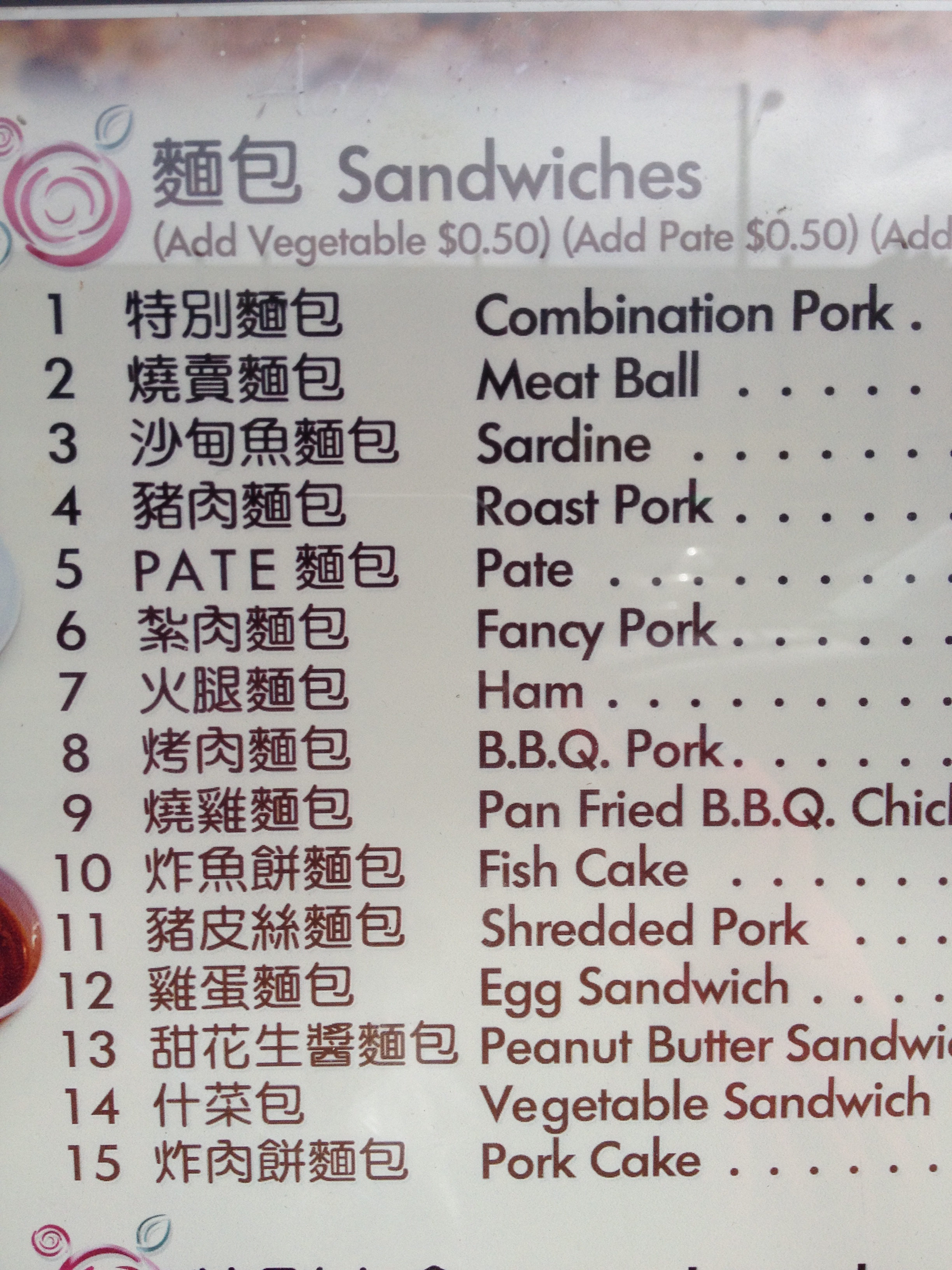
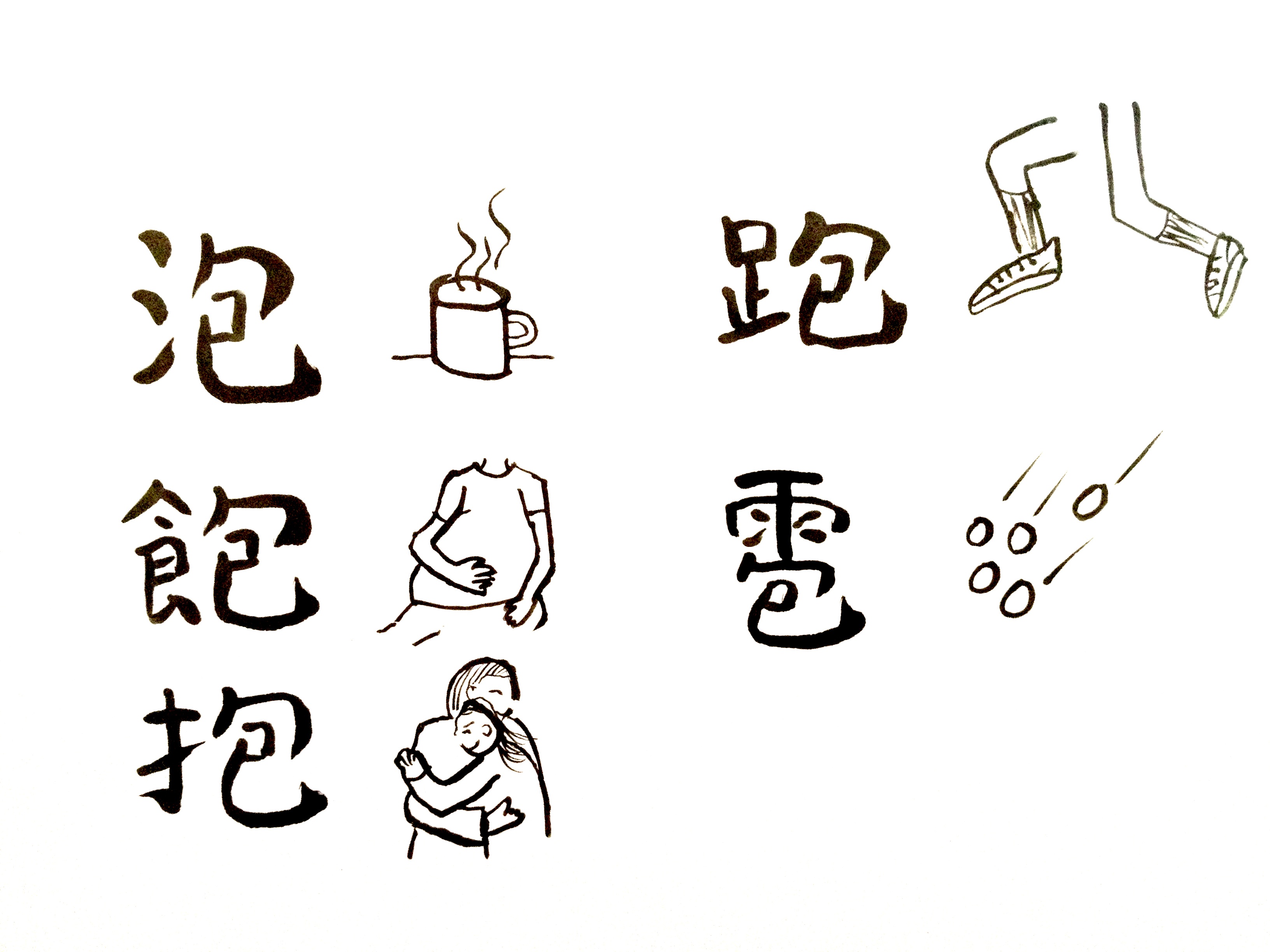
Have you ever eaten a bao? What did it taste like? Which character looks like a stuffing rolled up into a rice flour bun? Which one is the bao?
Brewing tea, being full, hugging. Running and hail. Keep your eye on the bao.

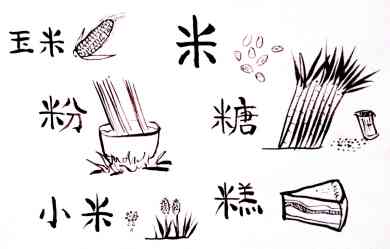
Grandma says, “Don’t just eat the rice, eat more vegetables.” The specks of grain that grow out of the square rice paddy, that’s the rice. Mi is grain, the life giving starch of grasses. Corn is the jade grain; rice grains grind into a fine flour for noodles. The little grain is millet. Mi is in sugarcane and in cakes.
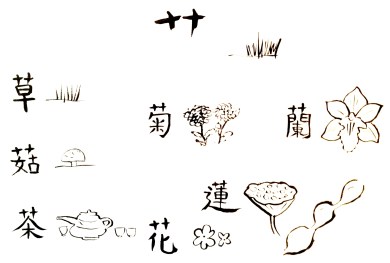
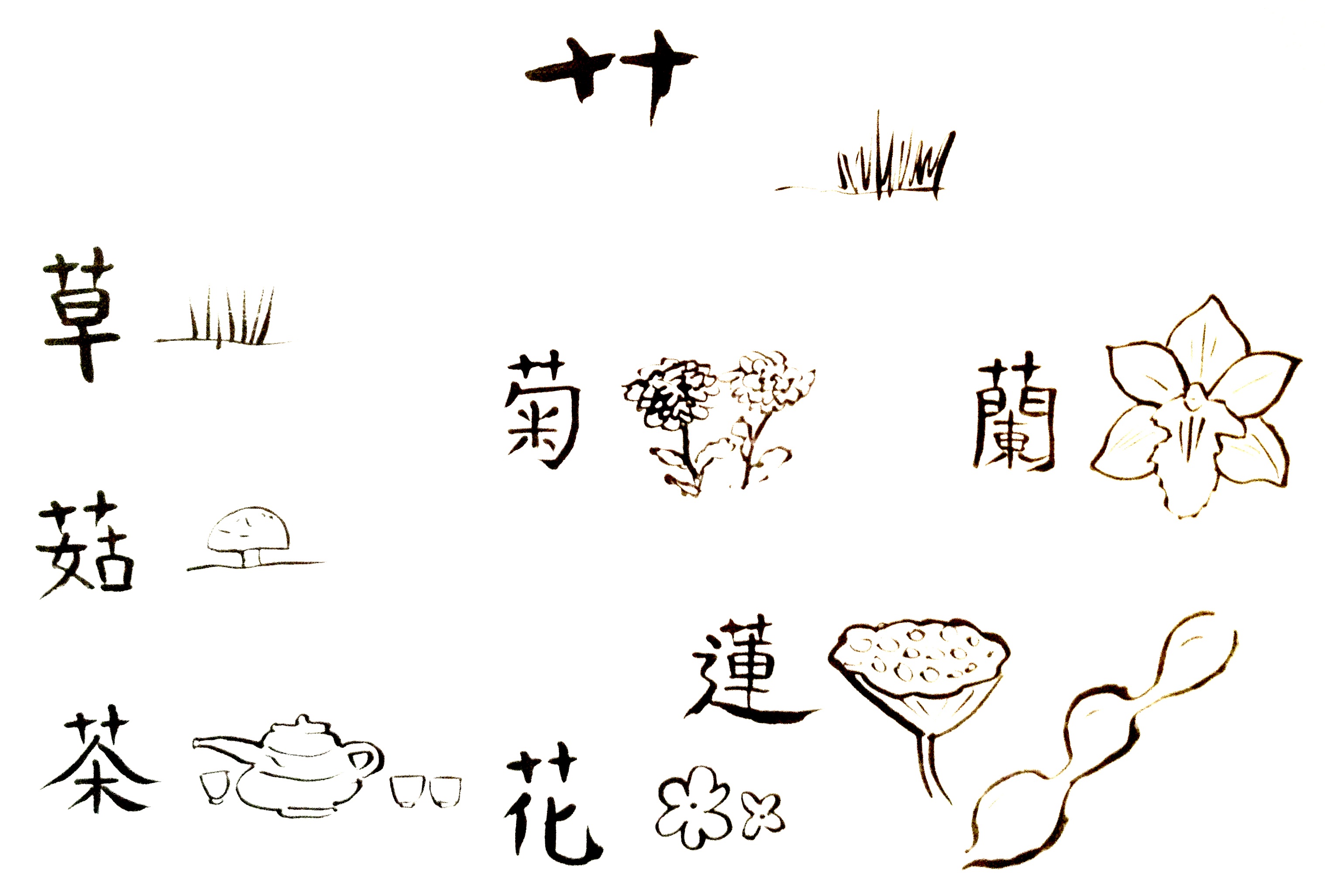
Herbaceous plants (and fungi) are depicted with the two crosses of tsao. Grass, mushroom, tea, and flower are written with ‘tsao’ on top. Chrysanthemum flowers are good for tea; and for making a soup with pig tripe. The orchid is a ‘tsao’ with a doorway looking to the morning sun in the east. Out of the muddy waters of the pond rises the lotus flower. It is the soul beaming in pure light. Where’s that recipe for lotus seeds and winter melon soup? Don’t forget the pig bones. Grandma!?
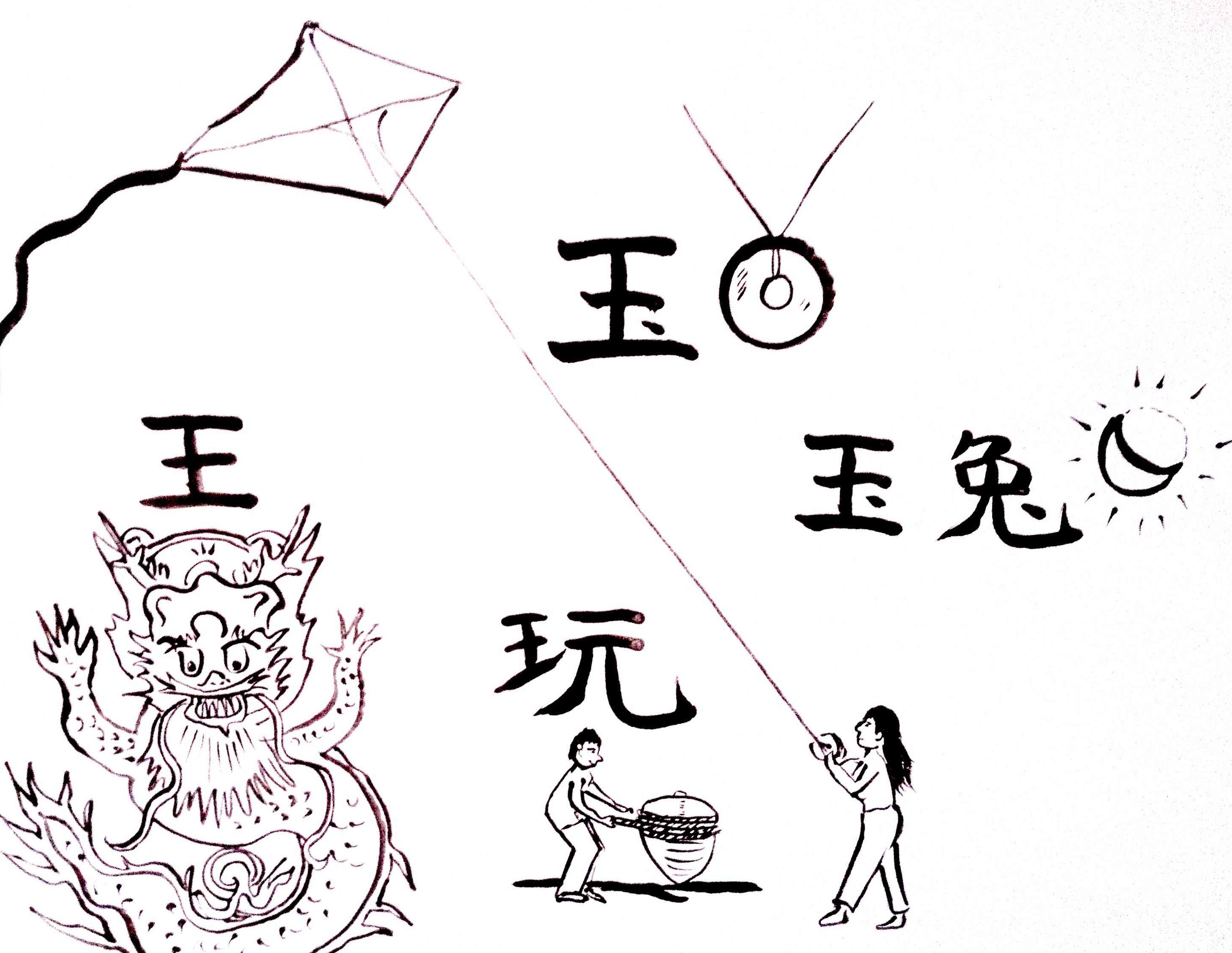
By the train station, little old ladies sell Magnolia champaca and Magnolia alba flowers. The smell brings you close to buddha’s mind. In Chinese, magnolias are jade orchids. Jade (yu) is the color of mountain streams and precious stones. The king comes from jade. Jade is in the spinning top and the flying kite. It is said that a jade rabbit lives in the moon, have you seen it?

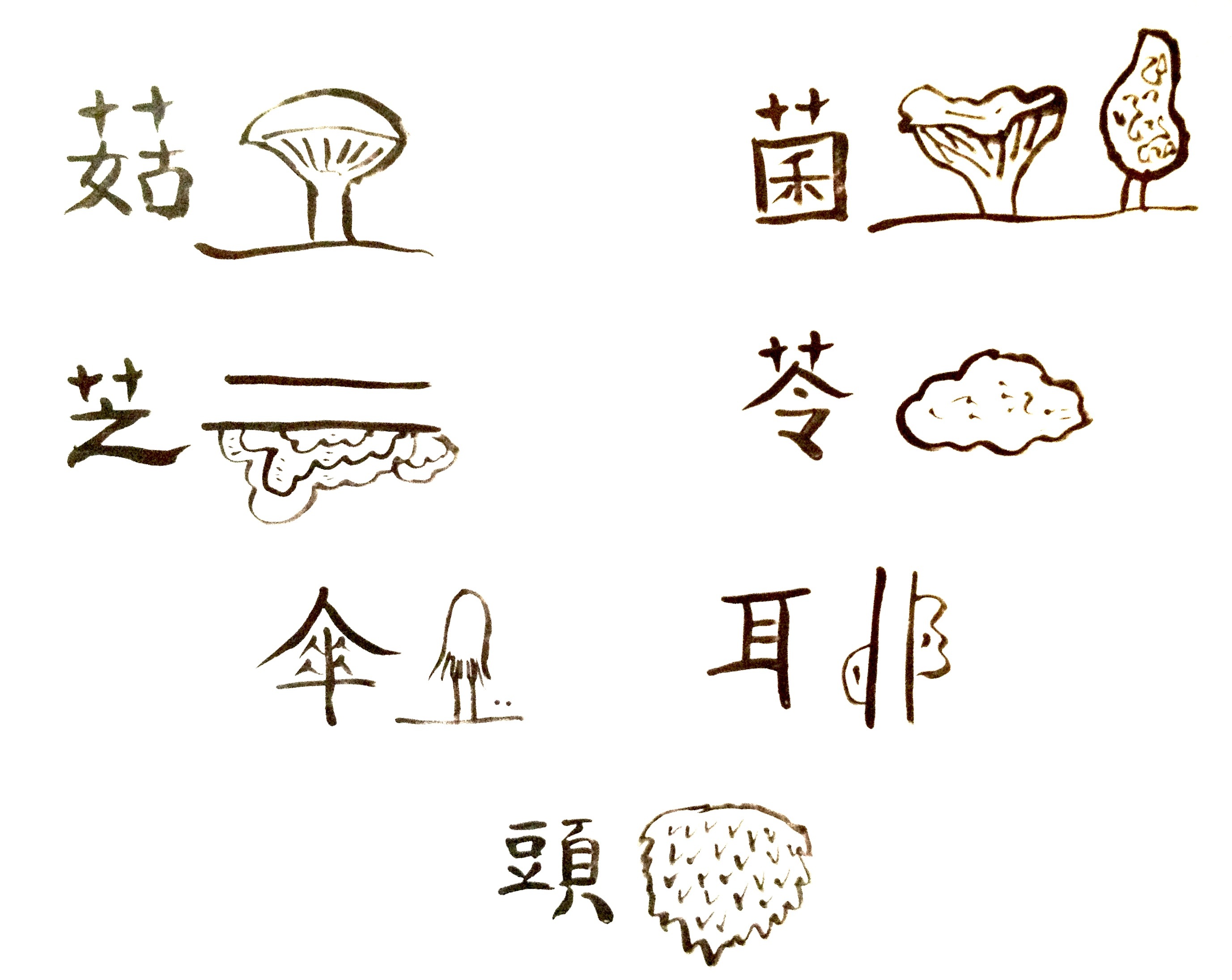
The “typical” mushroom is gu. Hard conk, shelf-like, mushrooms are zhi. Morels and chanterelles are jun. The potato tuber of Poria is qing. Shaggy manes are umbrellas, Tremellas are ears (growing out of a tree), and Hiercium is the head of a furry lion.

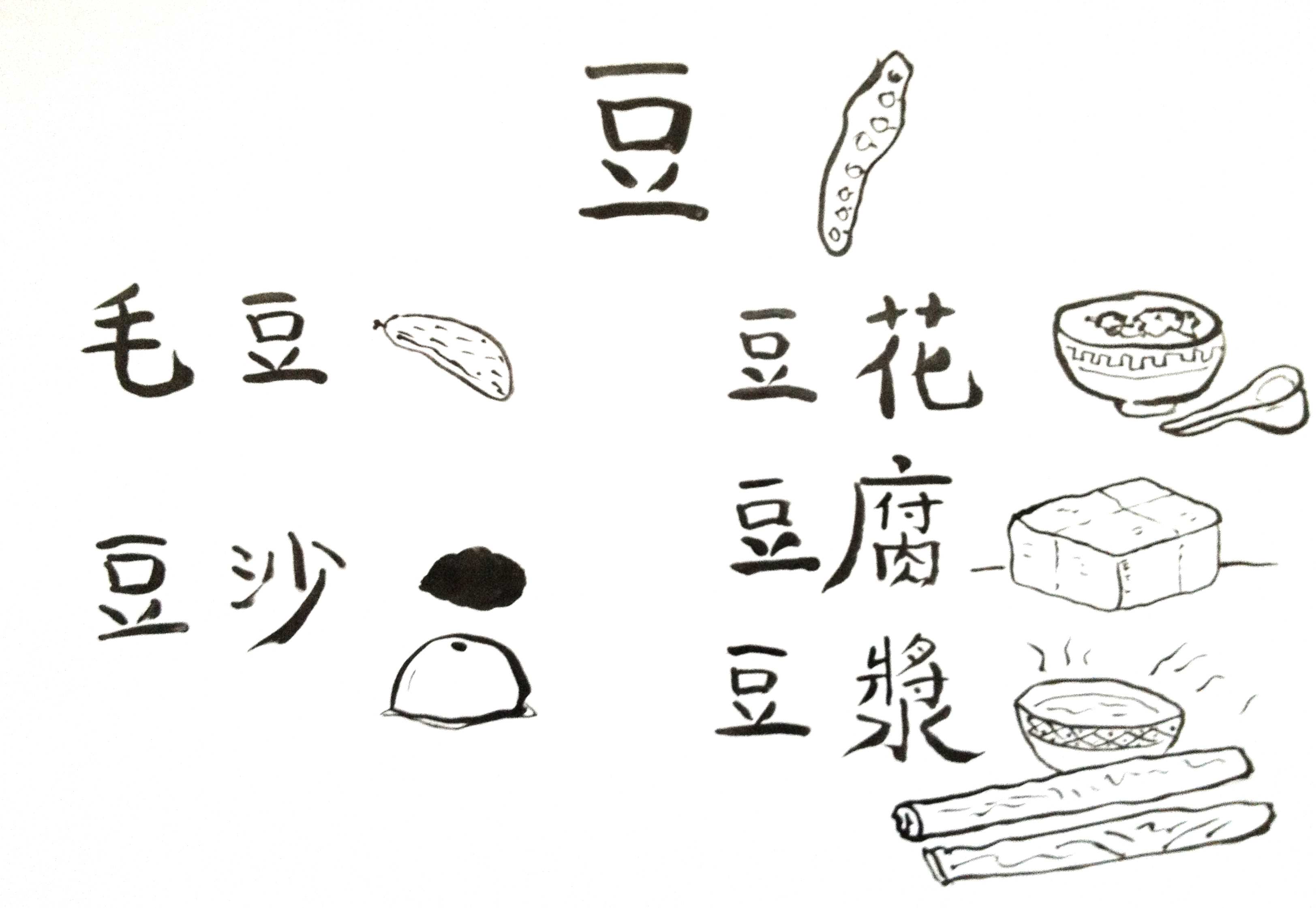
Beans are a useful source of protein, and a good crop to put nitrogen into the ground. Tofu comes hard or soft; hot in a stir fry or cold in a desert soup; fried, fermented, and disguised as meat. In rolls of thin skins and in sweet buns. Stinky, that’s my favorite kind! You smell it three blocks away…How I miss it! Beans are do. The hairy bean is the soybean. Bean sand is the sweet black paste of the bao with a pink dot. There is bean flower soup and bean curdle (tofu). A common Chinese breakfast is warm and salty – plain fried churros dipped in a bowl of soymilk.

A bitter taste often indicates powerful plant chemicals – chemicals that may help break down fats, cause paralysis, or open up kaleidoscope visions of the cosmos. Bitter melons are known for their ability to defeat intestinal worms, prevent cancer, and help people with too much sugar in their pee pee.
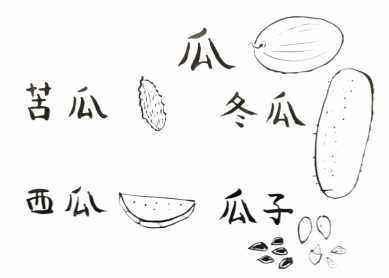
The melon is gua. Bitter melon has the wrinkly skin. The melon that came from the west is the watermelon. Winter melon is also known as the furry melon. Melon seeds, tea and some friends – that is how you chill on the street corner on a humid and hot summer day.
Who blooms in the dead cold of winter? Plums! The fruit tree that is beautiful to behold, and delicious to eat. Plum fruits are preserved for snacks in a thousand ways to twist your tongue and furrow your brow. Another fruit that comes from trees is the orange. Some have a skin that is easy to peel, others are cut into wedges.
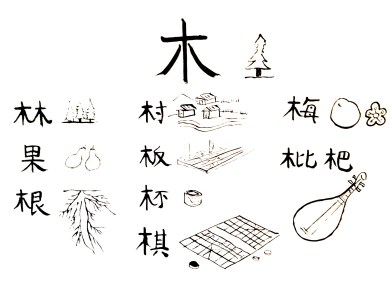
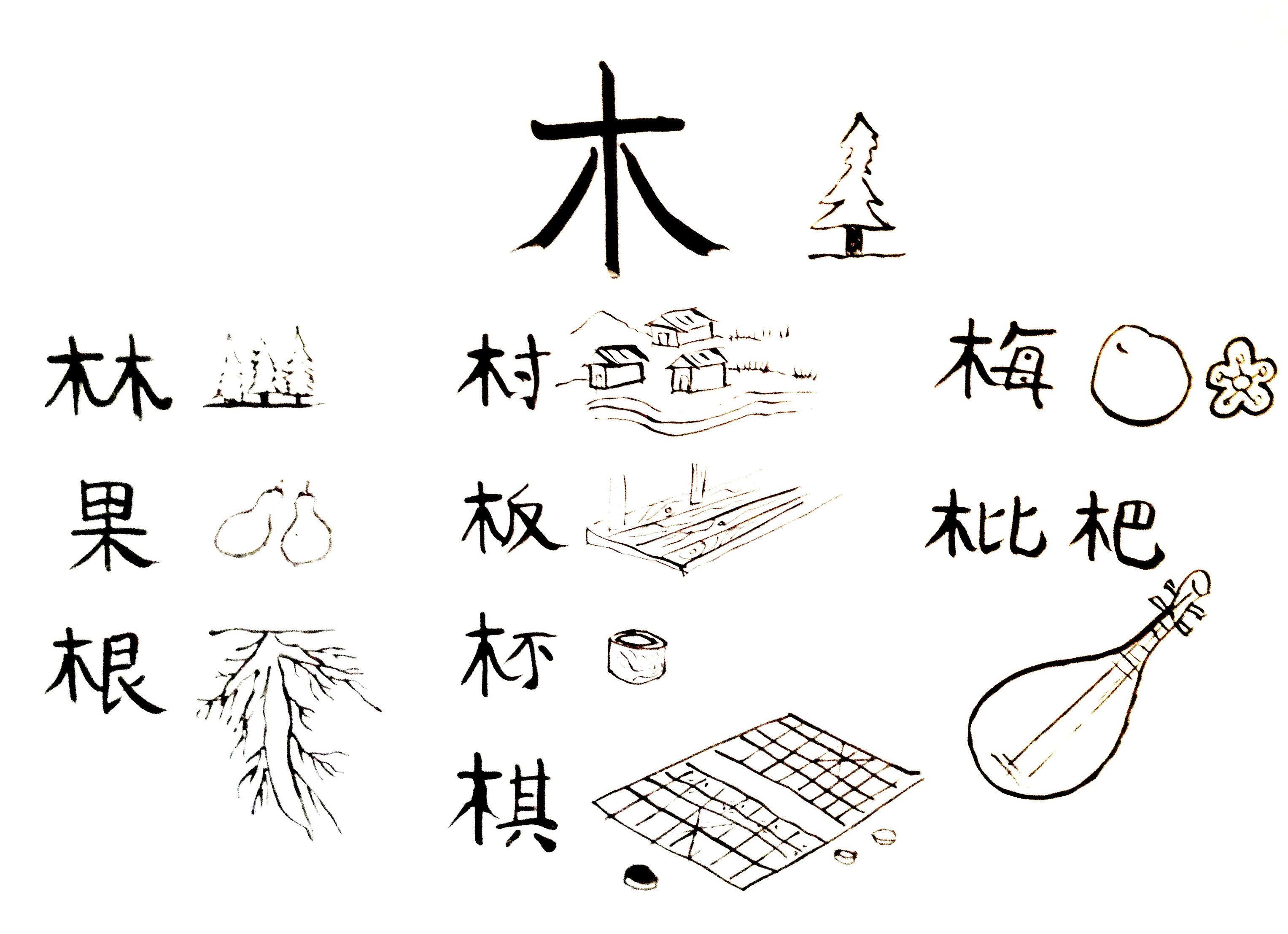
All fruit trees have in common the character for wood, or mu. There are forests, fruits, and roots. Villages, boards, cups, and chess. Plum. Loquat – fruit or music instrument? Either way, a tea made of its leaf is a great remedy for cough. Just remember to flick off the little hairs on the underside.
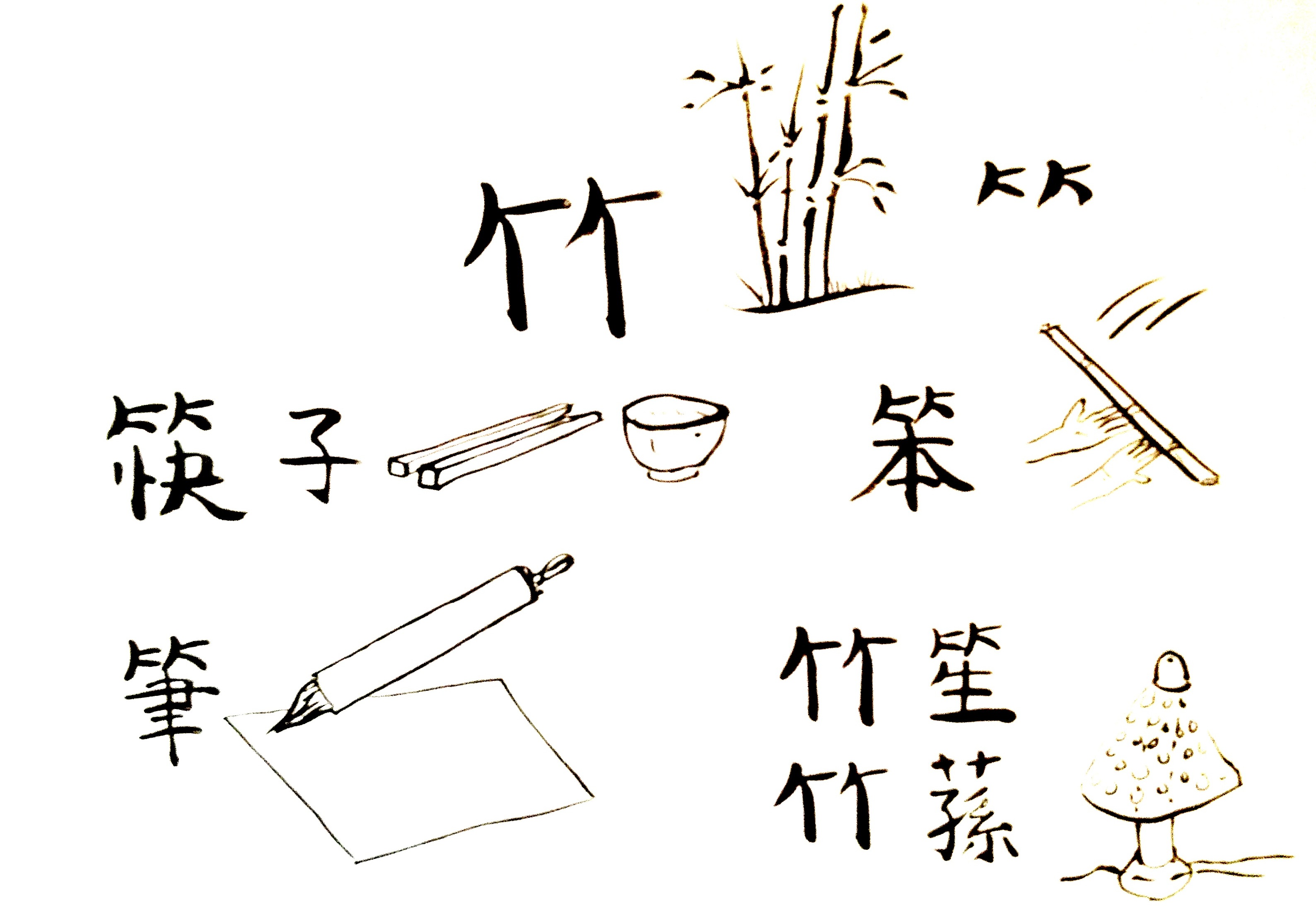
Bamboo is admired for its straightness, and ability to withstand high winds. Be strong and flexible, not rigid and brittle. In the bamboo grove, grows the bamboo mushroom. It is a species of mushroom sometimes referred to as a “stinkhorn”.
Bamboo is dru. Chopsticks and pens are made of bamboo. In old days, the dummies and naughties of the classroom got hit with bamboo sticks. The bamboo mushroom named Dictyophora has a long skirt.

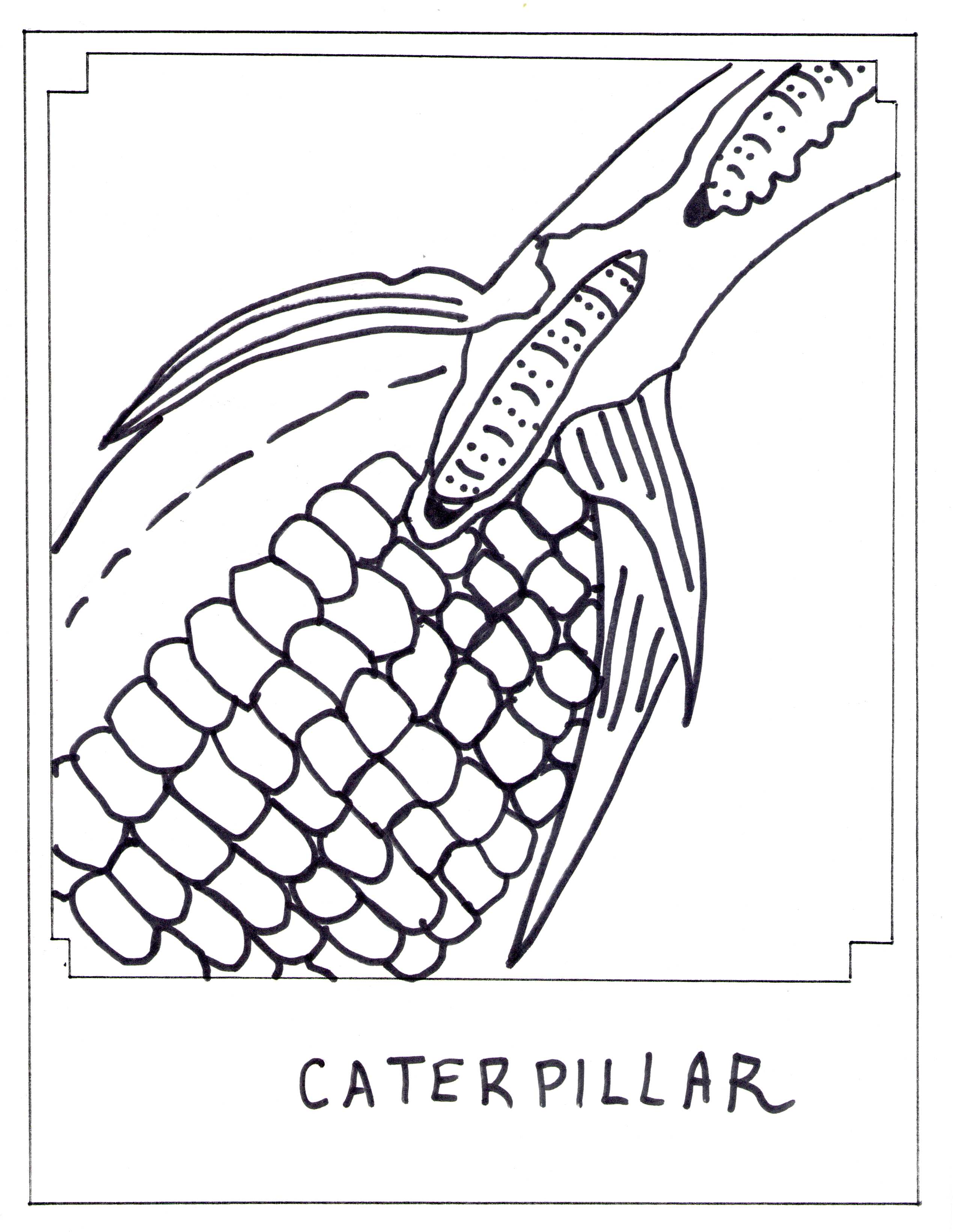
In the high plateaus of Tibet, herders noticed that their strongest sheep were eating some kind of a worm in the grass. A closer look revealed a golden caterpillar, parasitized, and taken over by a fungus. Hence the common name, Winter Bug Summer Grass. Its name is Cordyceps.
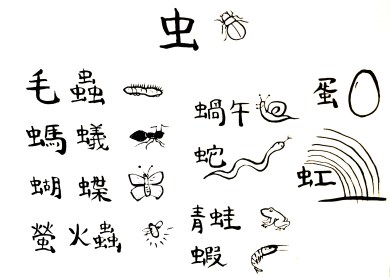
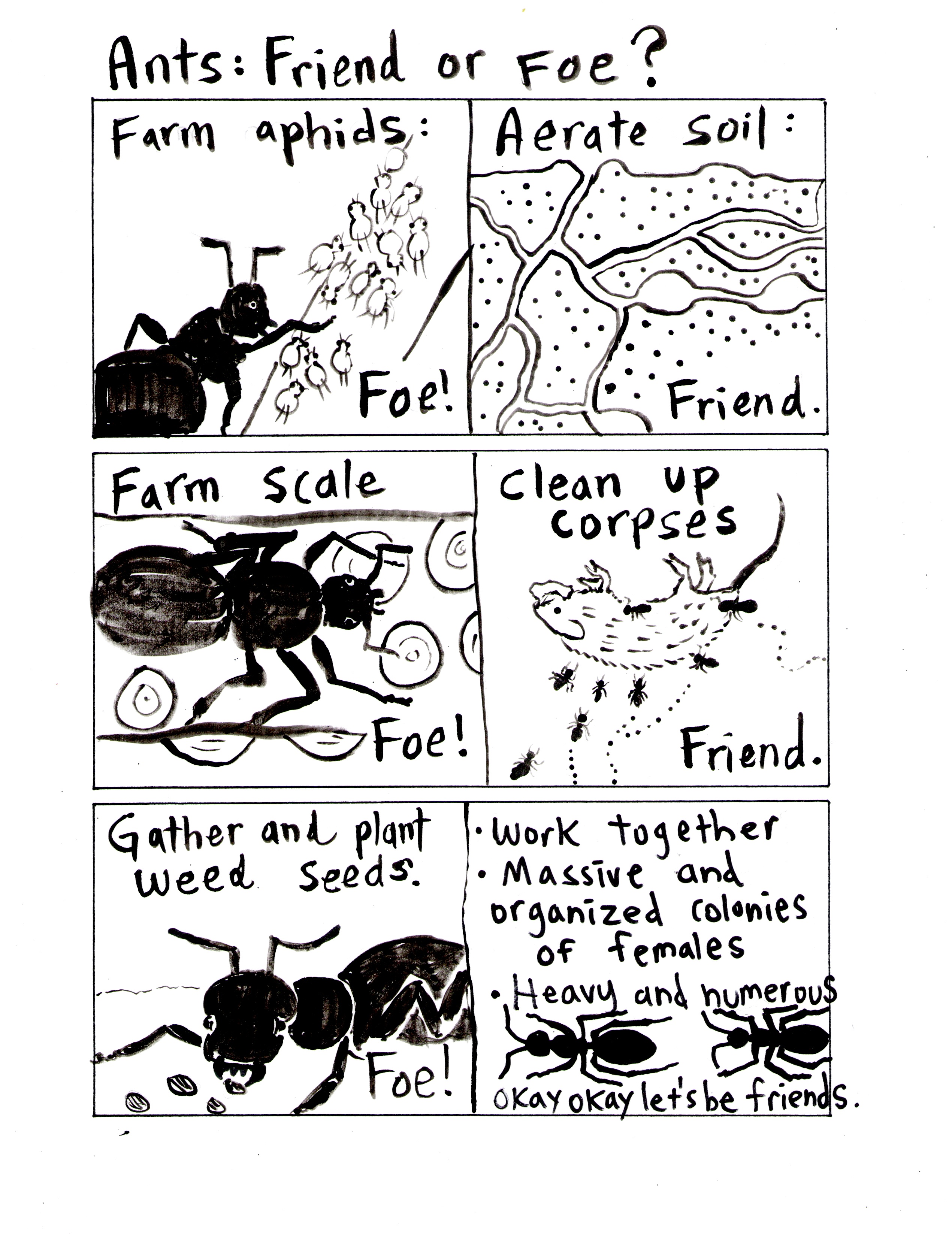
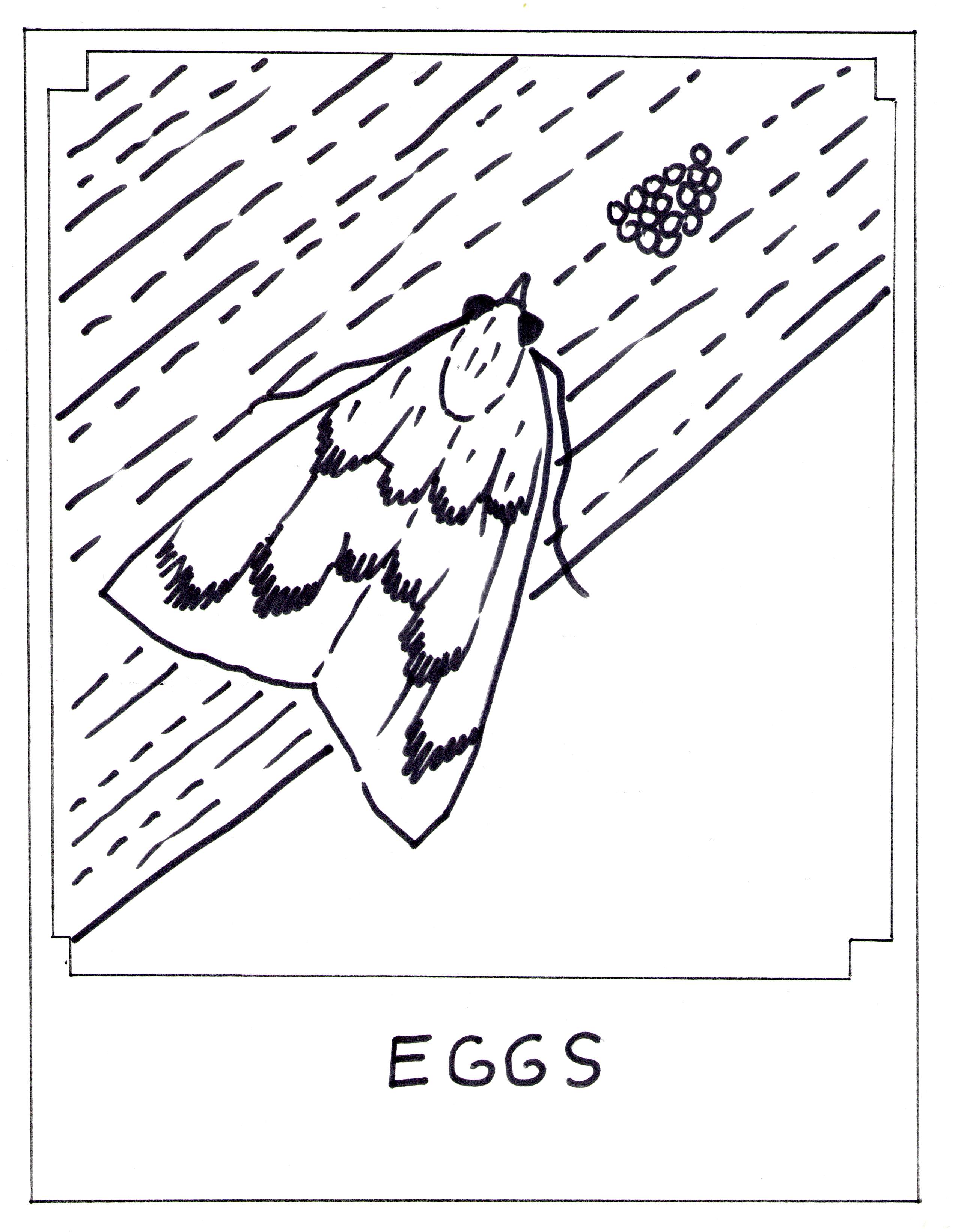
A bug is trong. The caterpillar is a furry trong. Ants, butterflies, and fire flies are all trong. Lumped together in this group are snails and snakes, frogs and shrimp. Can you find the trong in the egg and the rainbow?









 Mission Azul