Archives for category: mythology

A story or myth is a powerful entity.  It can embody a culture’s experiences and mistakes, and provide a vision that guides its evolution.

In some cases, myth is presented as fantasy, false, or fake; this is in contrast to the world of science and reality.  Myth is a way to explain phenomenon for pre-literate, superstitious, hunter-gatherer type societies that don’t know any better.  Or, a myth is just a tale that people make up for fun, something that isn’t really real.

In other functions, myth presents a deep reflection of human society.  The underlying themes of myth are true for all time – greed and generosity, anger and death, love and ecstasy, sadness and humility, birth and metamorphosis.  Stories offer clues to the respectful interaction between humans and nature.  Stories help one to navigate the difficult world of uncertainty and fear; a world ruled by survival and adaptation.  A story may give hope to a world that struggles with destruction, corruption, addiction, and power.

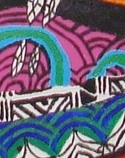
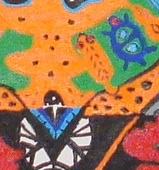
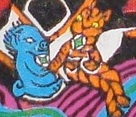
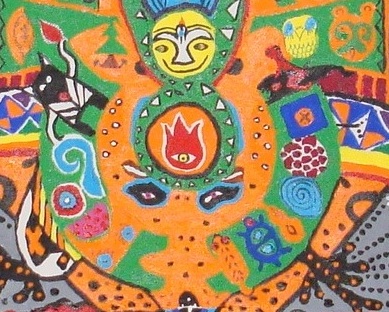
The following are drawings inspired by stories from the Amazonian Indian tribes of Ecuador, Peru and Colombia.  The tribes include the Machiguenga, Siona, Kofan, Secoya, and Kichwa peoples.  This first set of pictures come from Los Cuentos de Los Abuelos compiled by Jaime Hernando Parra, The Storyteller by Mario Vargas Llosa, and Vine of the Soul by Richard Evans Schultes and Robert F. Raffauf.

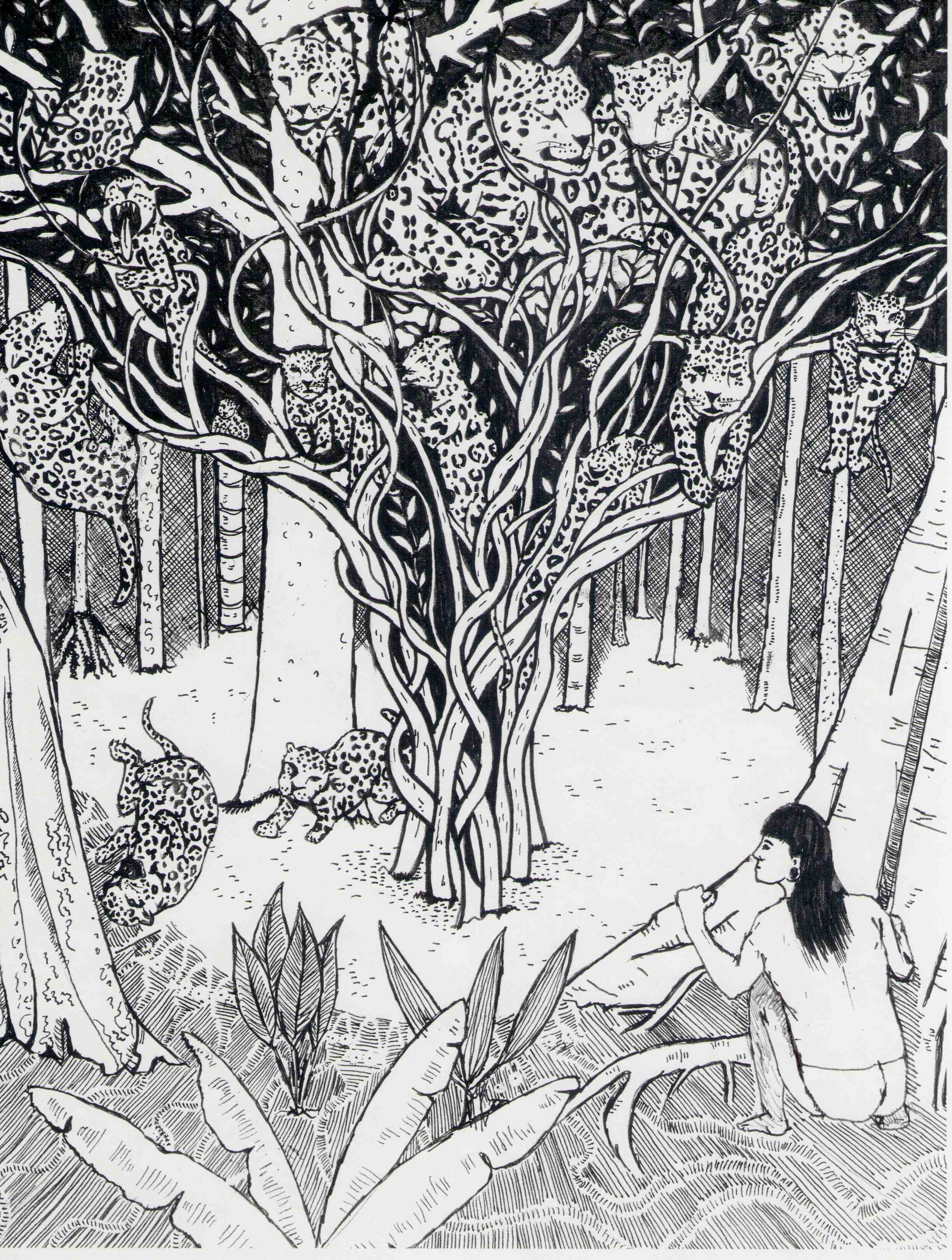
Up in the sky, the jaguar woman sat in her hammock nursing her baby.  She kept watch, and protected the earth and all its creatures.
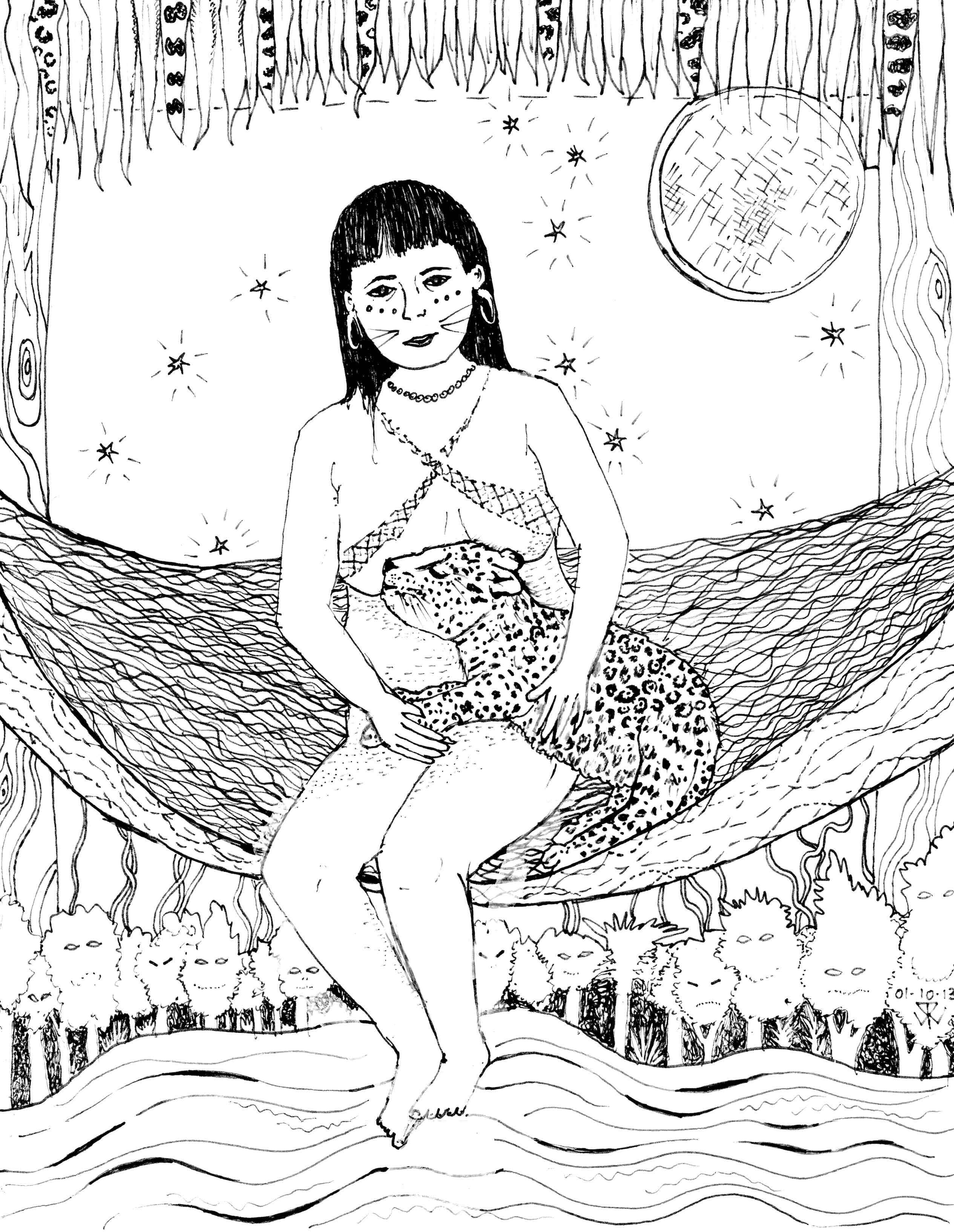
jaguar baby

One day, a woman washing clothes down by the river fell in love with a boa.
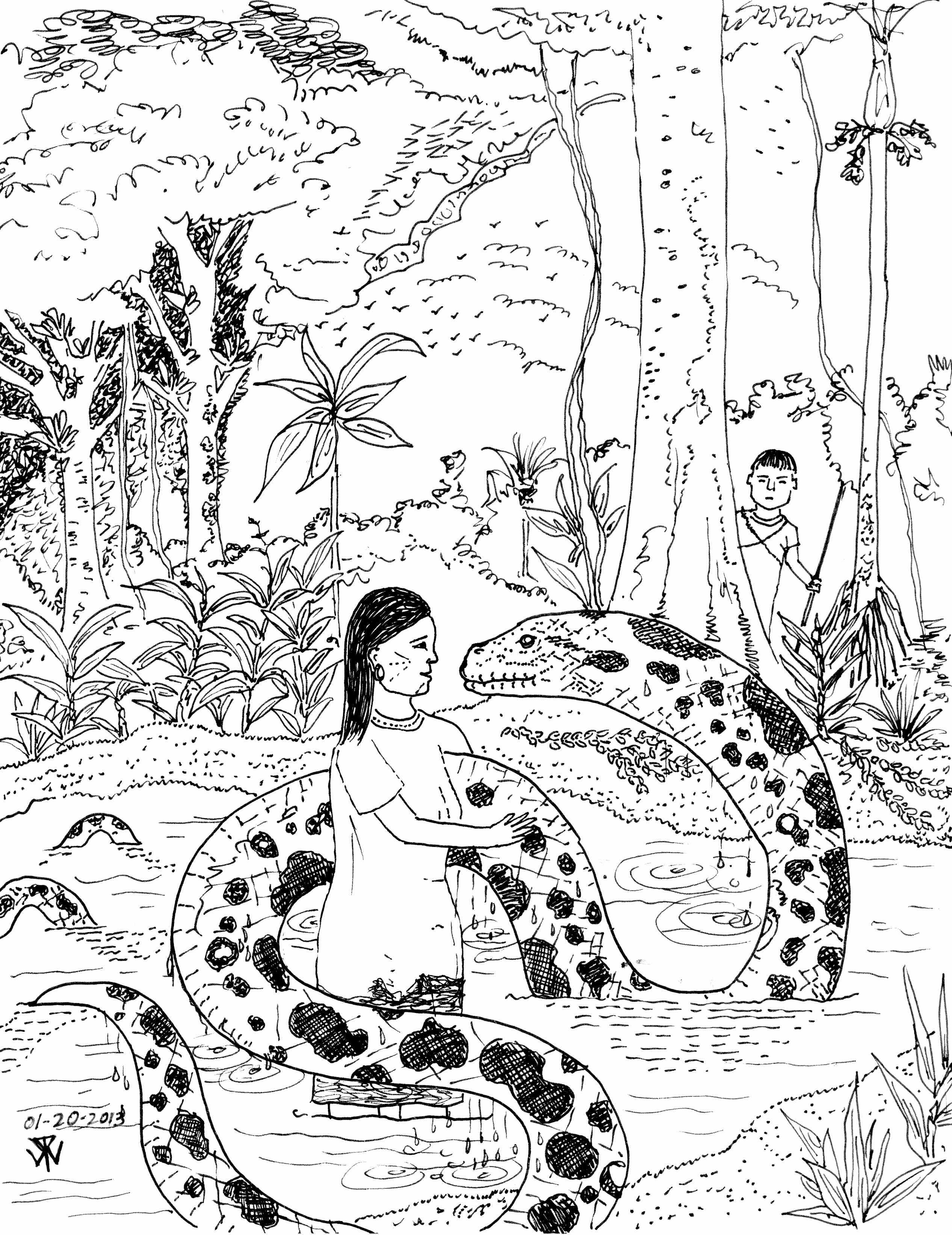
4

They had a baby.  The baby boy had boas around his wrists, and leaches on his ears and face.
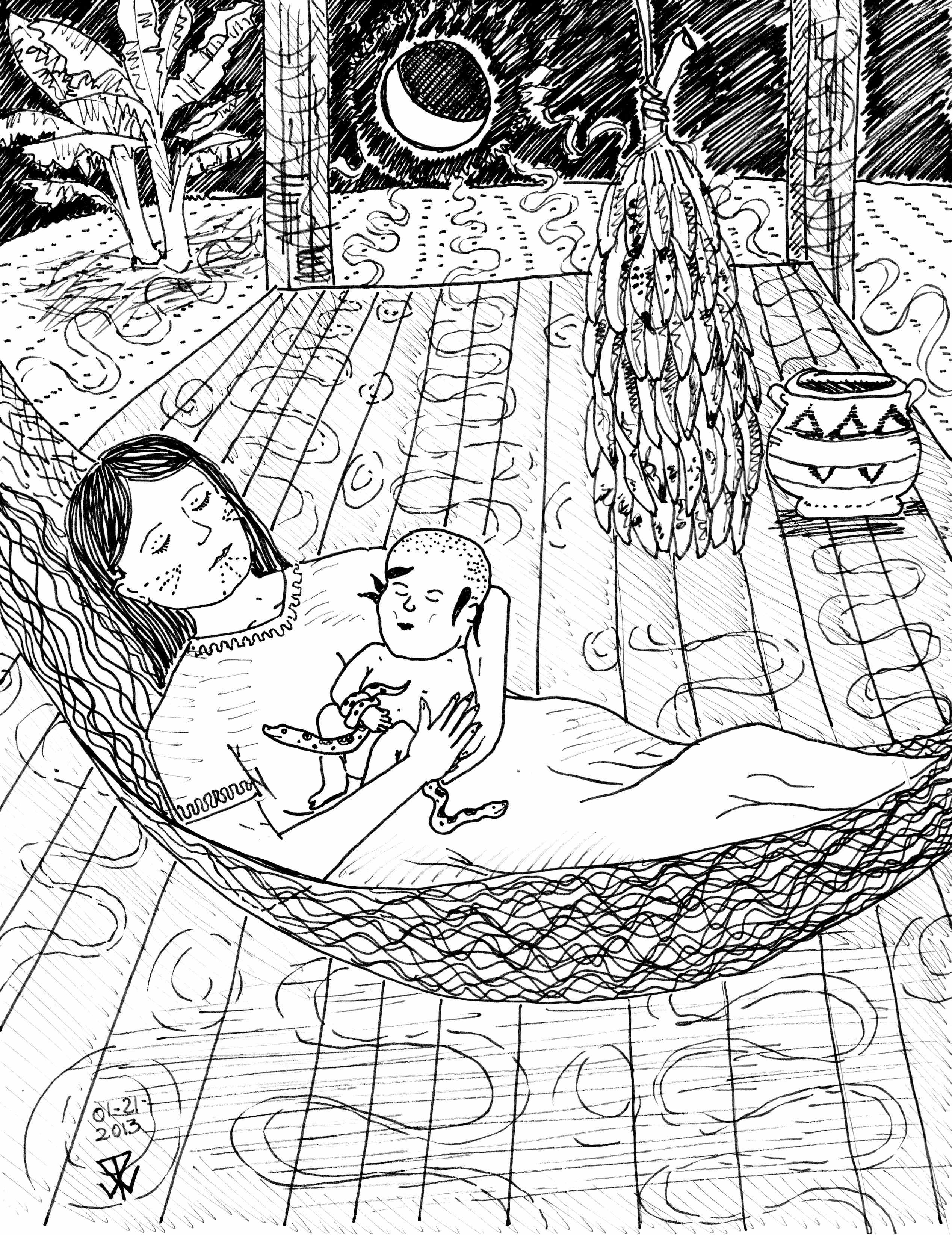
5

The boy grew up to be a great fisherman, but he was bullied and pushed aside for being different.  With the magic of the cane plant flower and the help of his father, the village was flooded and drowned.  The boy’s family and kind friends went to live under water with the boa people.  They lived happy times singing and feasting at the bottom of the river.
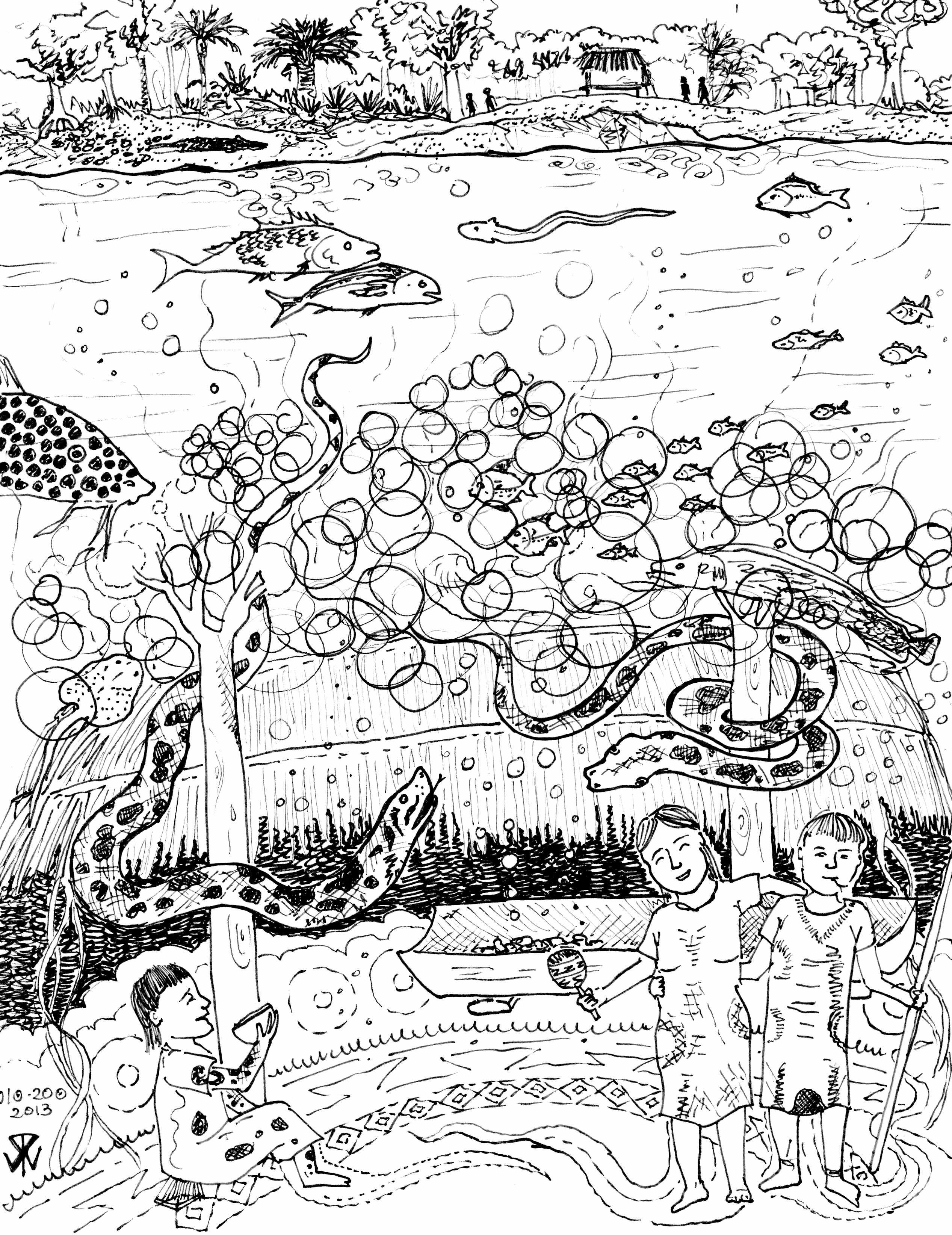
6

It is said that tiny little demons live inside the flowers of the Parascheelia palm.  Best to stay away from this plant….
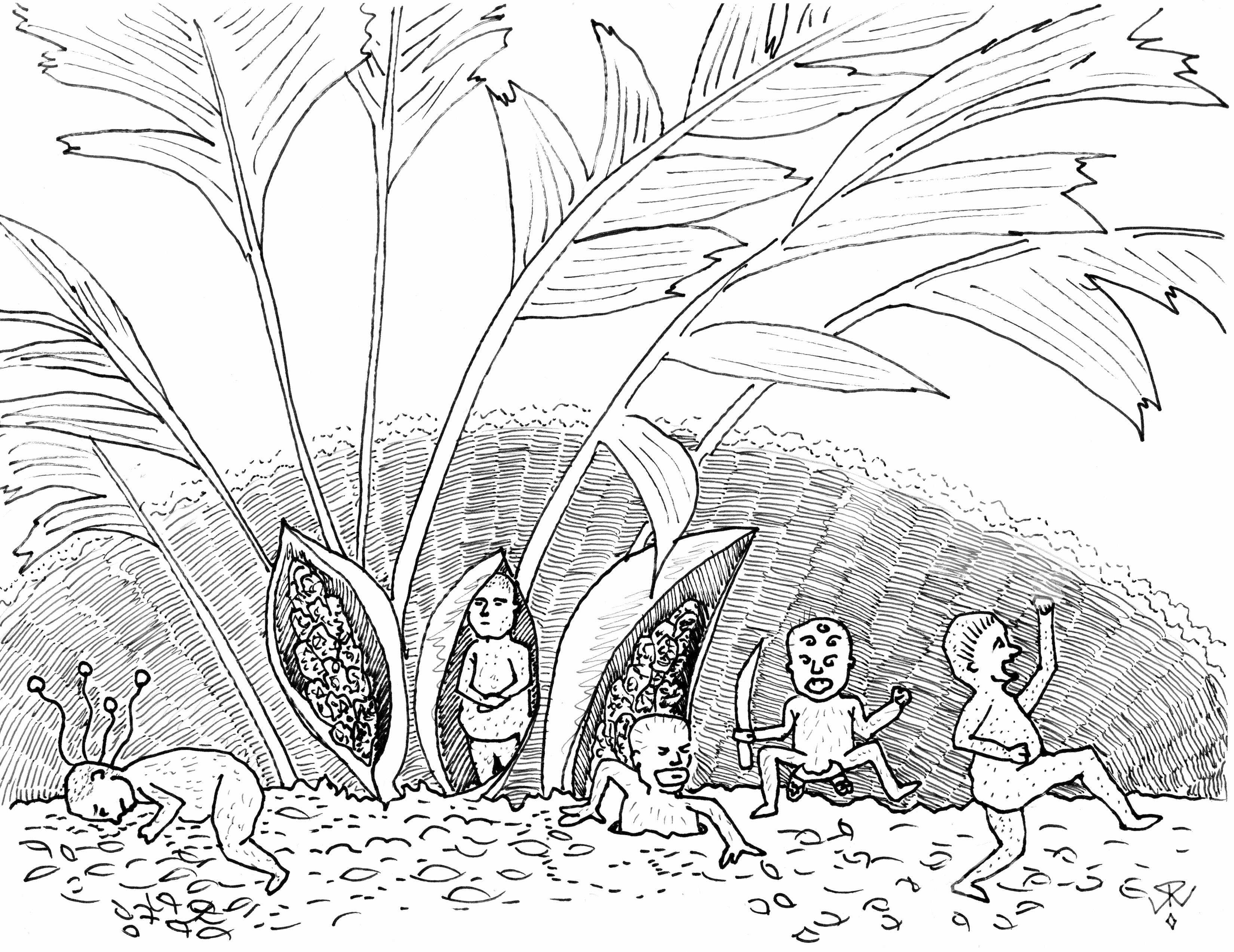
palms

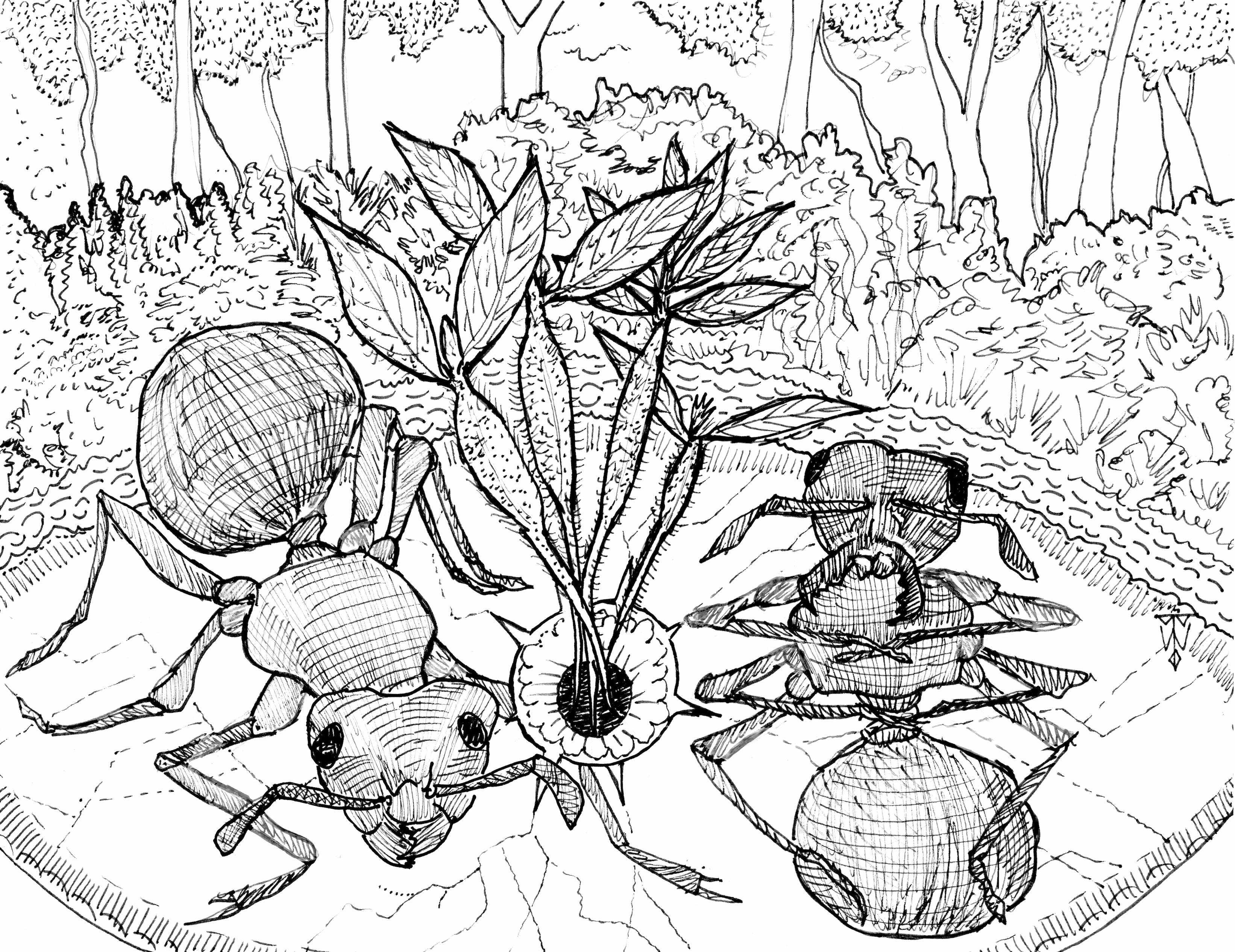
Ants live in the nodes of the Duroia hirsuta shrub.  They are the guardians of this plant that also belongs in the devil’s garden.
ants

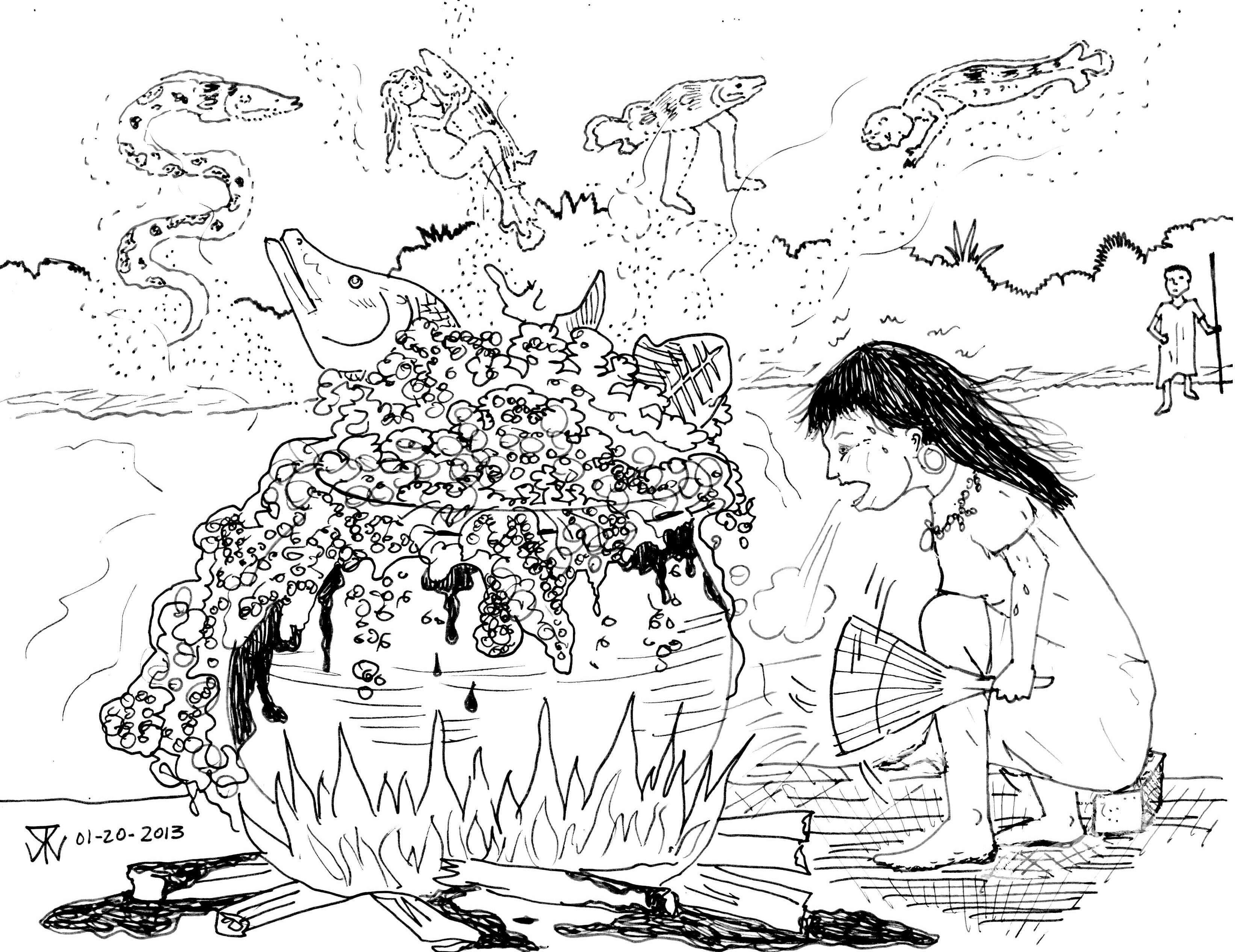
There was another woman who fell in love with a river fish.   The fish had handsome scales and beautiful song.  In time, her husband grew suspicious, and saw what they were up to one day.  He managed to trap and kill the fish, then asked his wife to cook it for dinner.  The fish would not boil, not matter how hard she fanned the flames.  It just kept oozing foam and blood, and cried out for their union.
3

This next set of pictures were based on stories told to me by Jonathon Miller-Weisberger, working in the lineage of Don Cesareo Piaguaje, Don Casimiro Mamallacta, Mengatue Baihua, and Juan Gringo.  I am told that the stories will soon be published in book form.  Hence, the text here is minimal.  You are welcome to use your imagination to fill in the missing parts, or to treat the pictures as a trailer of tales to come.

Some hunters went to a sacred mountain.  The silent one went to the guardian spirit to ask for embers.

huesos for ma

The hunters did not respect the animals they killed.  They mocked them and tore them to pieces.  The silent one knew what was goin’ down, and climbed a tall tall tree to hide.

comida for ma

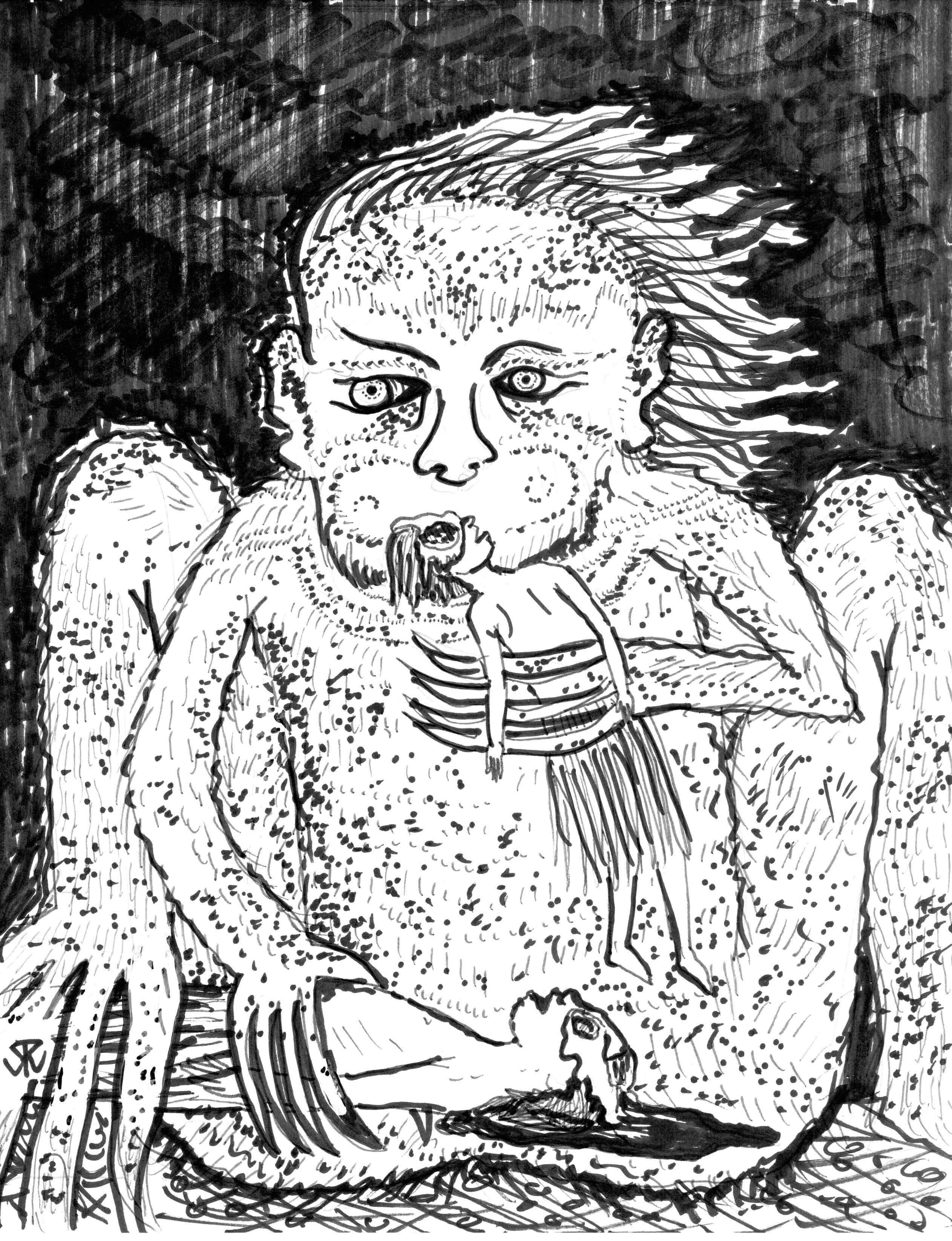
That night, the guardian spirit sent her kids to suck out the hunters’ eyes.  Evil sees no visions, it only knows darkness and pain.
wiri for ma

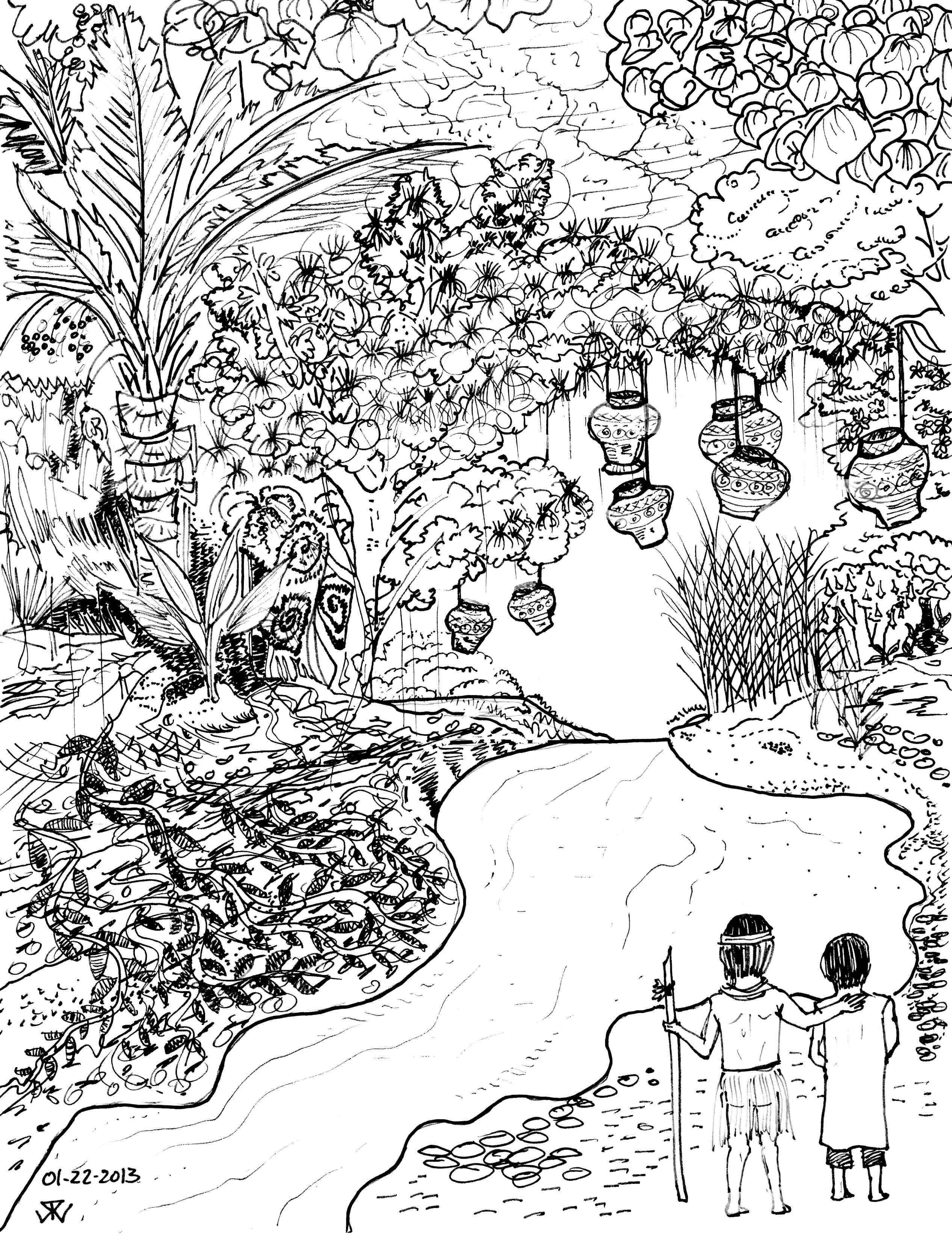
On the way home, the silent one passed by some magical pots hanging by the river. Later, with a replica in hand, he went back to the site with the village elder.  They traded the pots, and brought back one of magic.  The pot was filled with abundant and everlasting sweet corn drink.
Scan 1

Selfish youth, with spite in their eyes and jealousy in their hearts, broke the pot.  That was the end.

olla for ma

In ancient times, people went to visit the primordial god of the rainforest and skies.  He tried to teach them, but they ended up falling asleep.  Only the ones who could shed their skins, and transform themselves from within, stayed awake for the heavenly songs.

1

By the river of all the colors, ancestors came to teach the way of flowers and birds.  “Are you ready?”  They asked.

2

With a whisk of the wand, wings tore through the sky and opened up channels of light.  All the strands of the rainbow wove into one.

In our introduction to horticulture class we use a textbook called the California Master Gardener Handbook, published as part of the California Master Gardener Program.  The California Master Gardener Program is run by the University of California, and shares information about home gardening with the general public.  In the first pages of the book is this brief description of plants:

Image

A view of plants as energy output machines has enabled us to to apply efficient methods of cultivation, and to produce enormous amounts of plant products.  Foods, drugs, fibers, and building materials.  Boxes of oranges, bags of rice and potatoes, piles of folded cotton, and stacks of 2 x 4’s.

On the other hand, Amazonian Indians – horticulturists, hunters, and caretakers of the forest – articulate the perspective that plants are beings, or the abode of spirits.  In some cases, the plants are actually teachers of humans.  The plants teach kinship, symbiosis, humility, and inner metamorphosis.

The time I have spent in the rainforest is minimal.  Nevertheless, I am amazed by the diversity in the jungle, and bewildered by the primeval plant knowledge that enabled human survival for many thousands of years.  Stories passed down by Indian tribes to explorers and writers embody a universe and relationship with nature very distinct from our own.

Inspired by the Secoya peoples, permeated by the writings and old photographs of G. Reichel-Dolmatoff, R.E. Schultes, and W. Vickers, I started to draw some of the stories related to plant lore:

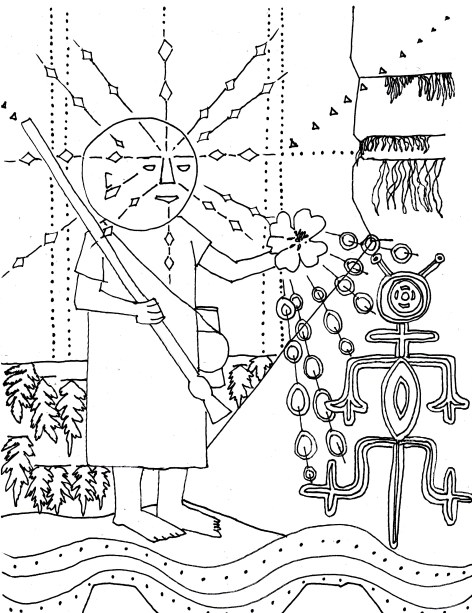
This is the sun father carving petroglyphs with flowers and light on rocks by the waterfalls.  The nuclear reaction that powers our world – the SUN!

sunfather

Here are the first settlers of the Amazon basin from the Tukanoan tribes.  They came to the jungle from either the highlands to the west, or from the stars of the milky way.  A cosmic anaconda pulled their canoe.  Inside the canoe were three sacred plants.  Manioc is first; it is the starch and staple of all meals.  I met Manioc as a tasty flat bread and as a plant in an actively cultivated garden plot.  The second plant was Coca, the source of coca leaf.  Coca leaf is a ritual food that provides protein and vitamins.  It staves off hunger and thirst, so that one could work a little bit longer in the forest clearing.  The third plant is Yage, the vine of the soul.  This plant enables the Indians to travel to mythic time, and make contact with the spirits of the forest.

settlers 2

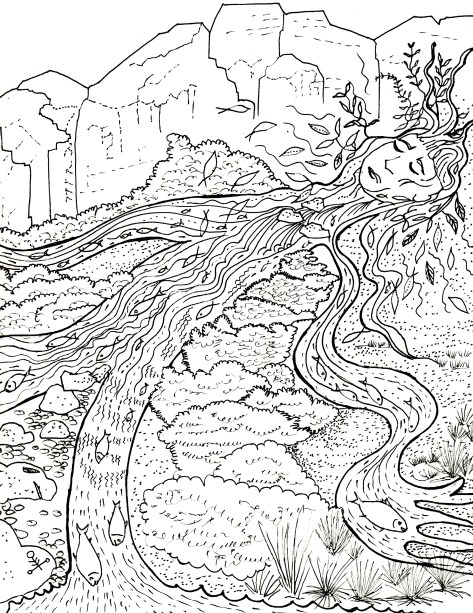
One of the epic Indian dreams sees the river as a person.  The head is the headwaters, and the feet go to the sea.  When the person shakes their flowing hair, leaves of the yage plant scatter into the river and become fish.

headwaters

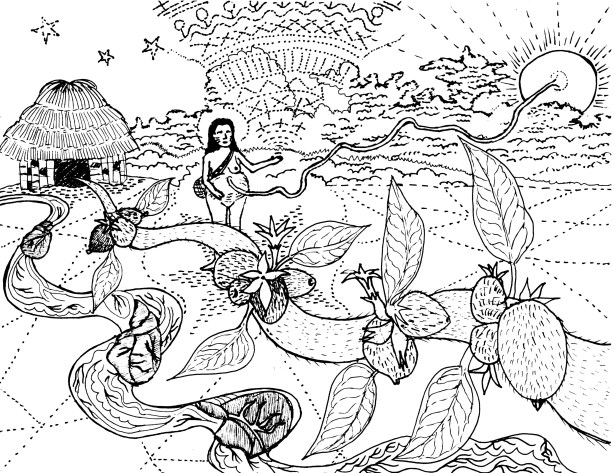
An important medicinal plant is Kana, Sabicea amazonensis.  It belongs to the Rubiaceae, the plant family whose members also include coffee and quinine.  The commonly used landscape shrub in the subtropics Ixora is in this family, as is the fragrant Gardenia of florists.  Small red fruits of Sabicea are eaten and drunk.  This plant symbolizes the linking and twining of humanity.  Fruits are hearts are people; vines are string are umbilical cords are rivers are time.  We are all children of the sun.

sabicea 2

One of the most important plants to any society is the plant with caffeine.  No caffeine, no work!  Amazonians are partial to Yoco as well as Guayusa tea.  Since I was drawing hollies with caffeine content I went ahead and included mate from Argentina (Ilex paraguariensis), Ilex vomitoria from the southwestern United States used as a purge, and the bitter nail tea holly from Taiwan and China.  Oops, forgot Guarana!  A Yoco relative of the rainforest.  The elfin dudes running at a fast clip have just had their morning brew, their heads are the fruits of Yoco.

hollies

There is this idea of transformation in the jungle.  Of people and basketry turning into animals, plants, and rocks.  The boundaries are not strict.  Consciousness permeates from every substance in this universe.  The whole thing is alive and reflective…!

transform 2

plants

oct 3rd ceremony

This story is about drinking the vine of the soul from dusk to dawn.  It is dedicated to the brave people of the Siecopai culture, to the unguragui and chambira palms, and to the wantas scavenging for forest fruits in the night.

When the sun lit up the day, these pictures flashed before me.  There are three stories in one.  The first is a gathering of people around a ceremonial fire.  The second is about cells and the scientific mind.  In the third we enter the realm of jaguars and anacondas.
Part I:  Ceremony

C’mon, let’s go!  By the side of the trail, three hawthorn trees with berries stand tall.

Image

Let’s make camp by the river.  Clear wings of dragonflies glide and spin along the banks.

Image

Orange spotted blue butterflies hop from sand spit to sand spit.  Crows dive, tumble, and even out.

Image

We greet the dude who chants, blows, and sings all night.  Ho ho ho!

Image

We share a smile with friends who hold down the corners: turtle, fox, and hummingbird.

Image

This is Hawk, the black sun dancer who loves Indian stories.

Image

It was our first wedding anniversary, a full moon by the gushing river.  Que romantica!

Image

We drank a bitter potion of jungle vines, leaves, and flowers.

Image

We sat still on round pebbles watching the flicker of flames.

Image

Part II:  The cell

This is the membrane that lets stuff in and out – the lipid bilayer made of hydrophilic and hydrophobic heads.  Stay in balance!

Image

These are various parts inside the cell – the powerhouse, the dump, the makers of proteins…

Image    Image    Image

Here is the nucleus:  the safe house of the secret code.  Shhhhhhh……..

Image

The helical twists we know and love.  Elegant design, endless variation.

Image

Here comes the virus!  Don’t let it replicate!

Image

Part III:  Jaguars and anacondas

The rainbow serpent, protector of the universe, gets ready for transformation.

Image

Thousands of tigres y culebras are wrapped in gold, running back and forth.  They are laughing in a crystalline sky of chimes.

Image

Between the sun and the shade, Jaguar lies in camouflage.

Image

Jaguar’s whiskers sense unusual activity on the river rocks.

Image

Jaguar opens her mouth and sharp teeth, she gets ready to tear it up!

Image

Eagle claws, take me to the sky!  Grab hold.

Image

The Indian lodge!  I am here!  But how do you sing the universe into form and pattern?  Why is the setting sun black?  How do you keep the gates open?  I want to learn more.

Image

No!  Not into the bowels of excrement.  The storage vault of the spirit – the chipped and scarred, charred and broken.  Release the worms inside!

Image

Gotta hang by your toes.  This part is painful.  Drain the brain.  Fill it with love.

Image

Anda!  Una escritora Chilena guapita.  Too bad she is married and not your age.  Run free!

Image

And that was the end.  Wish I could explain it better.  Well, hope you enjoyed this story.

Image

CACOHUITOYAI!

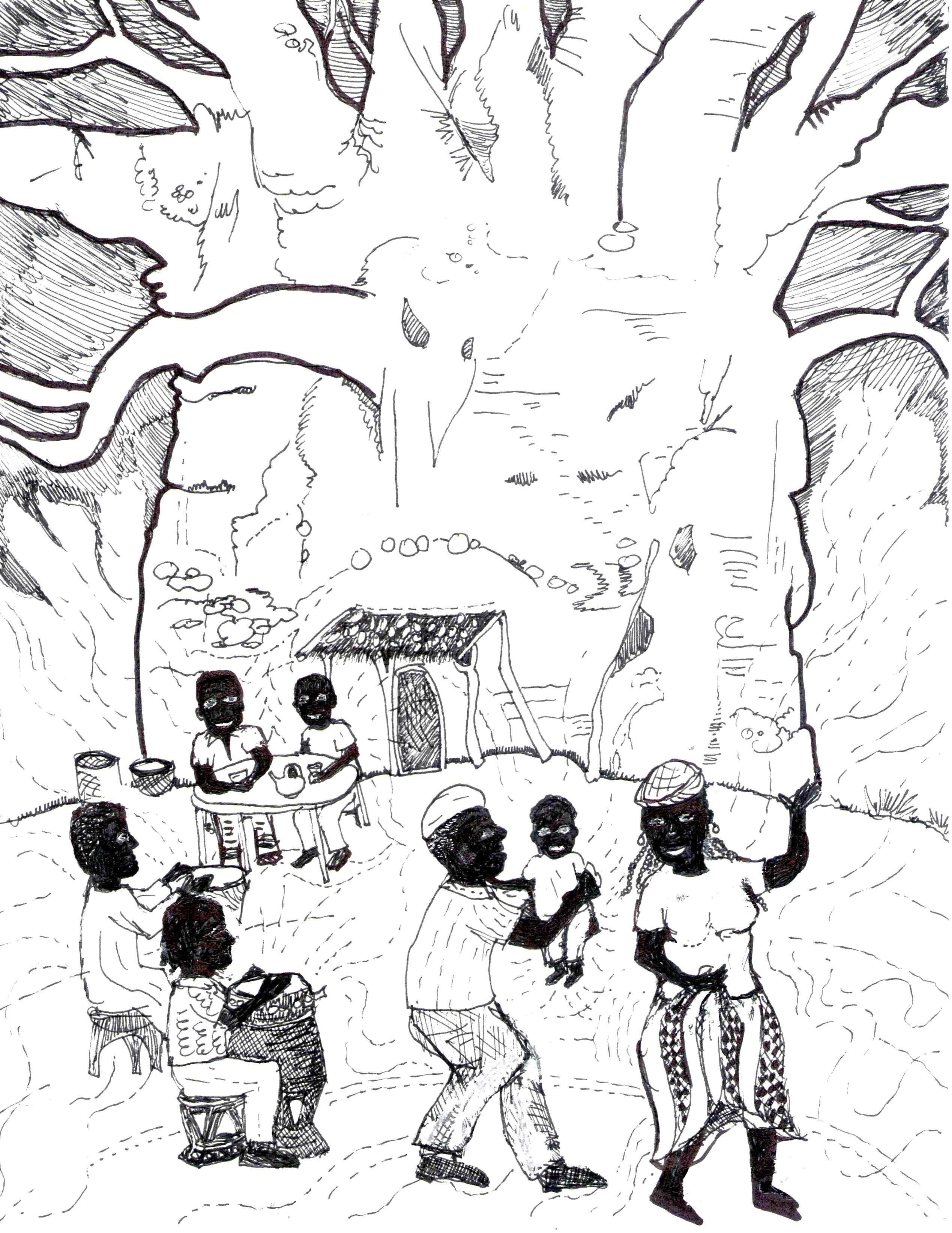
In the old times, plants important to human cultures were attributed to divine forces.  Stories articulated these simple themes:  plants are heaven’s gift to people; people and plants are one; plants are energy beings with power and knowledge.  In the end of the stories, there was usually something to be learned about wisdom, and the place of human beings in the cosmos.  Here are a couple of plants whose origins reach way back into mythical time:

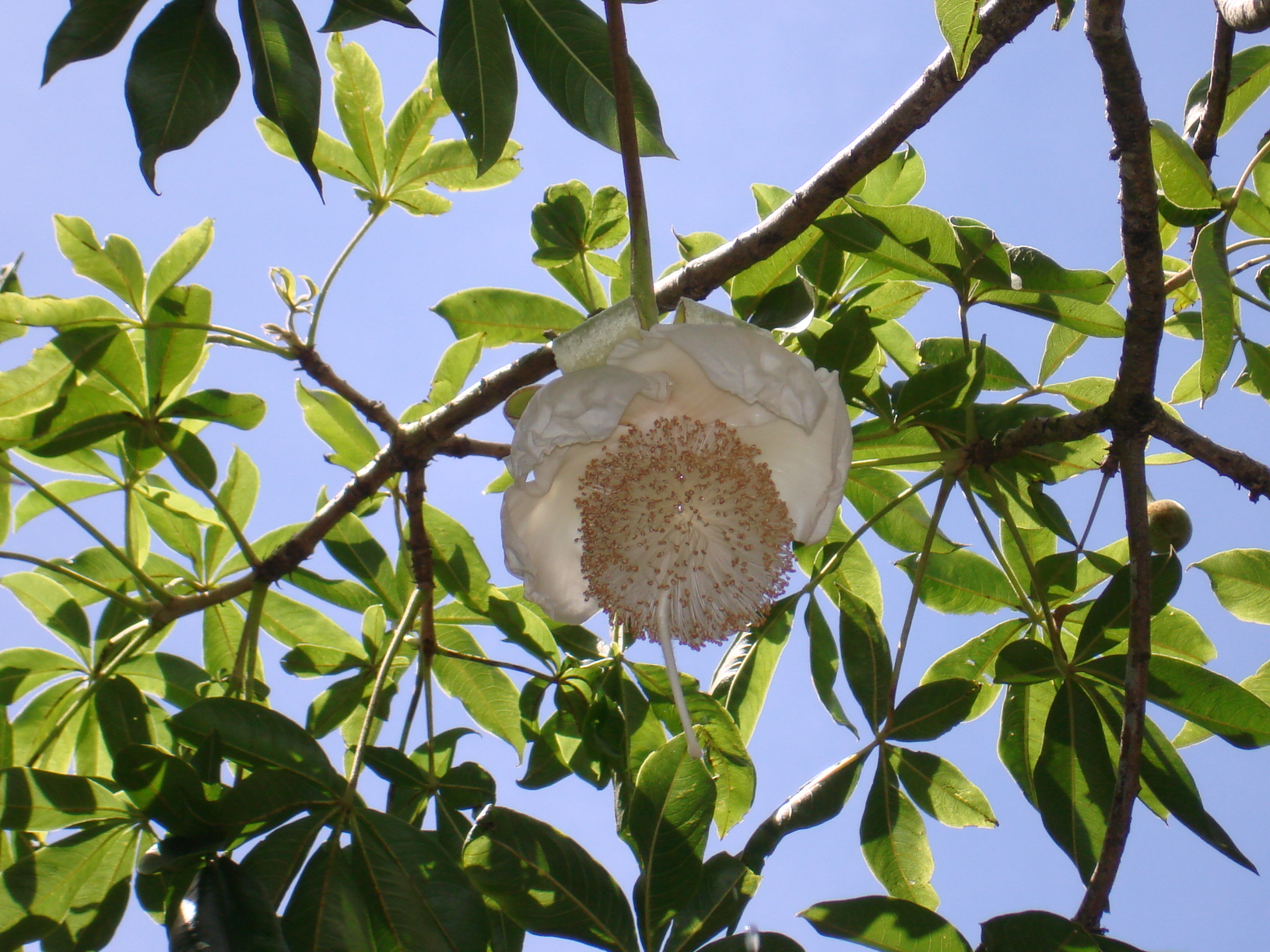
BAOBAB:

The baobab tree sprouted and grew up by a mirrored lake.  Baobab saw his own reflection, and he did not like what he saw.

Baobab desired the showy red flowers of the flame tree.  He was jealous of the palm’s slender and regal form.   He wanted the shiny and smooth skin of mahogany, not his own wrinkly elephant hide bark.  Night and day, Baobab complained and complained to the Creator.

Image

Creator was tired of listening to Baobab’s whining.  The creator gave the tree to hyena.  Hyena pulled Baobab from his roots, and planted him upside down.

Image

Thereafter, Baobab quietly served humanity, and gathered the community together for all the important events.

Image

Know silence.  Respect elders.  Create unity.

Image

YAGE:

The vine of the soul sprouted from the blood of the rainbow serpent’s tail.

Image

As it grew, it gathered power and attracted the jaguars of the forest.

Image

The spirit of  yage is so strong that it can carry you into the realm of the dead, or up to the sky to converse with the spirits in the milky way.

Use this plant, if at all, with caution and respect.  If you use the vine in anger and greed, your life and that of others will be ruined.

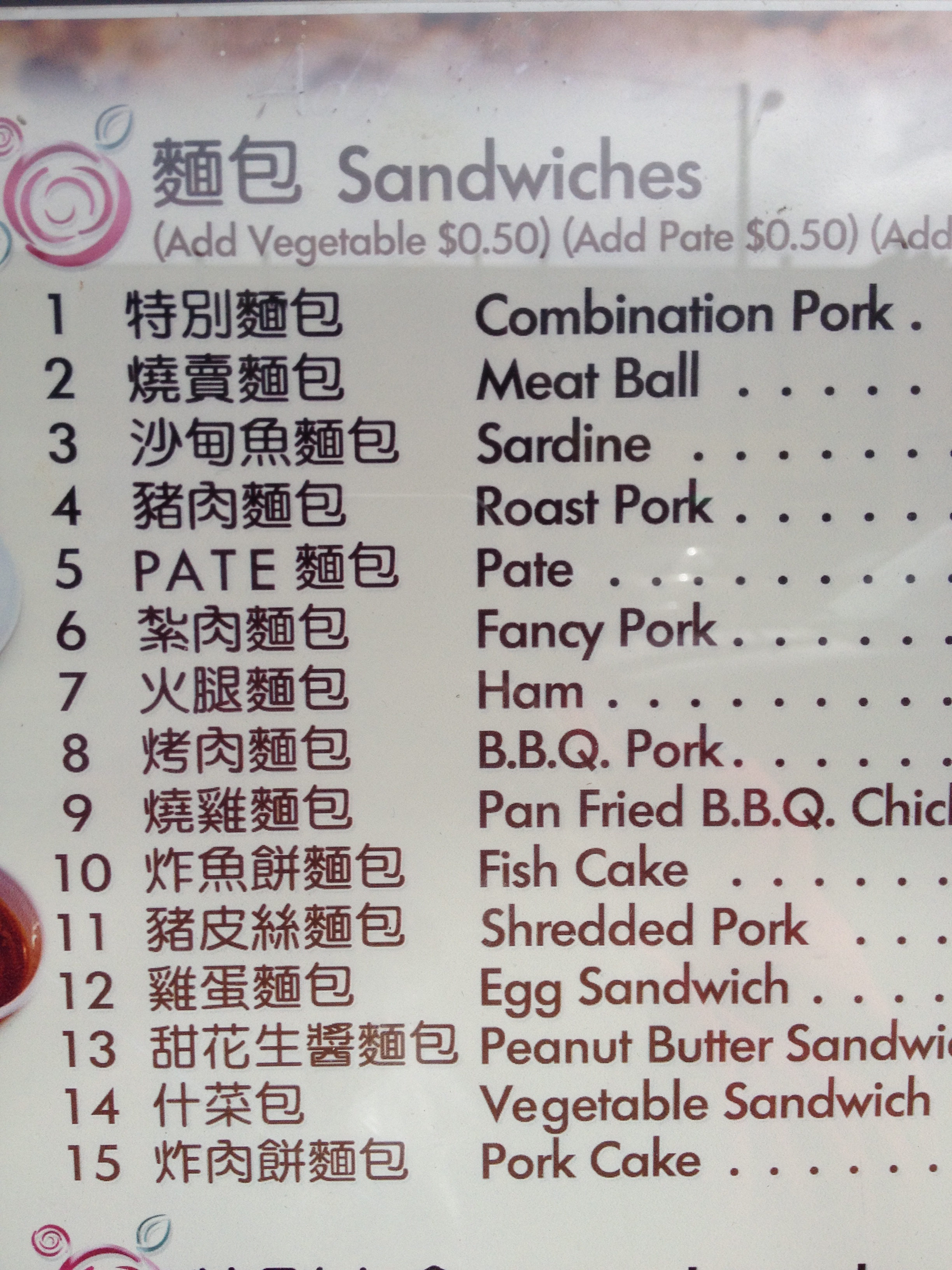
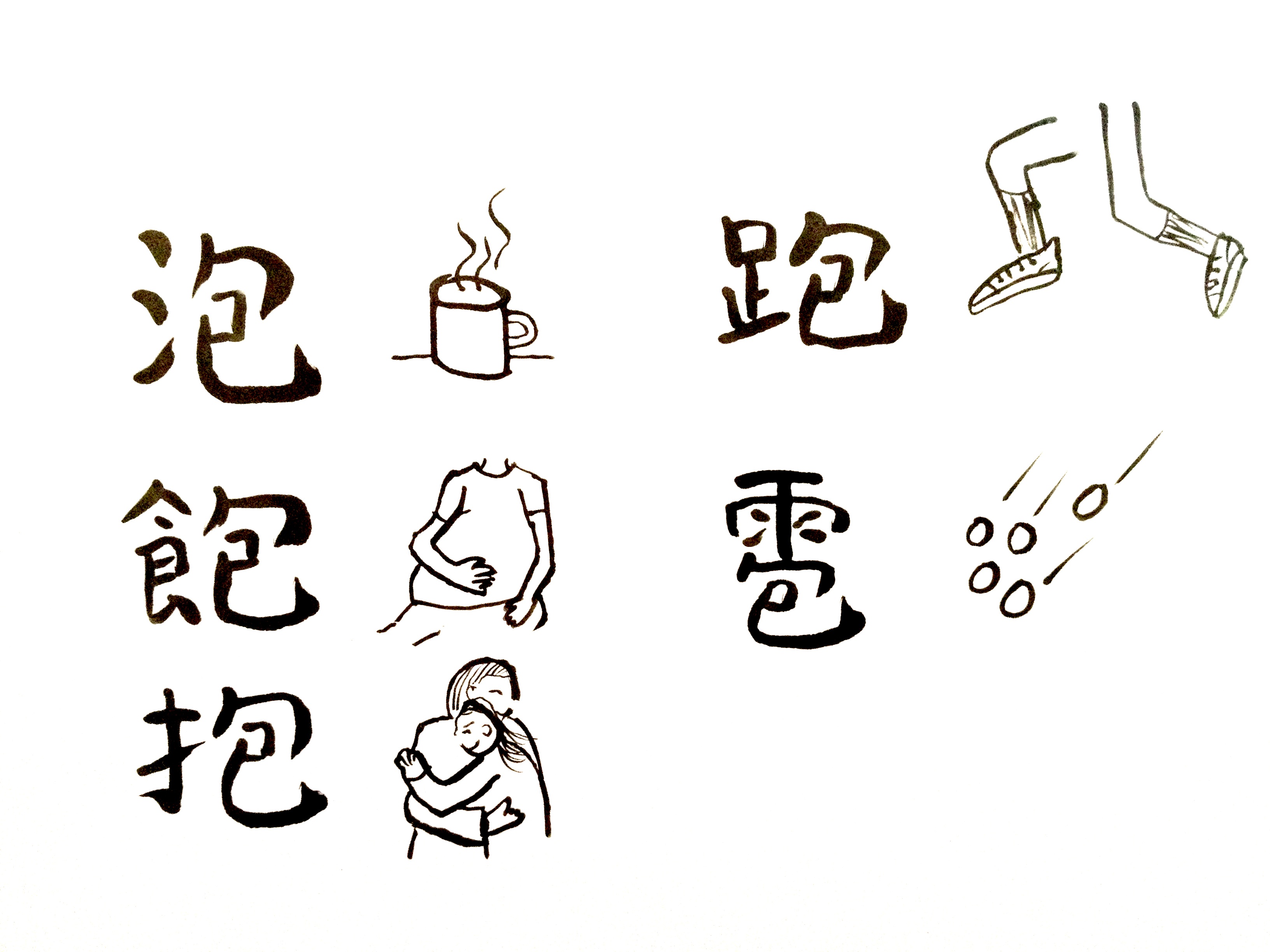
Have you ever eaten a bao?  What did it taste like?  Which character looks like a stuffing rolled up into a rice flour bun?  Which one is the bao?

Image

Brewing tea, being full, hugging.  Running and hail.  Keep your eye on the bao.

Image

Grandma says, “Don’t just eat the rice, eat more  vegetables.”  The specks of grain that grow out of the square rice paddy, that’s the rice.  Mi is grain, the life giving starch of grasses.  Corn is the jade grain; rice grains grind into a fine flour for noodles.  The little grain is millet.  Mi is in sugarcane and in cakes.

Image

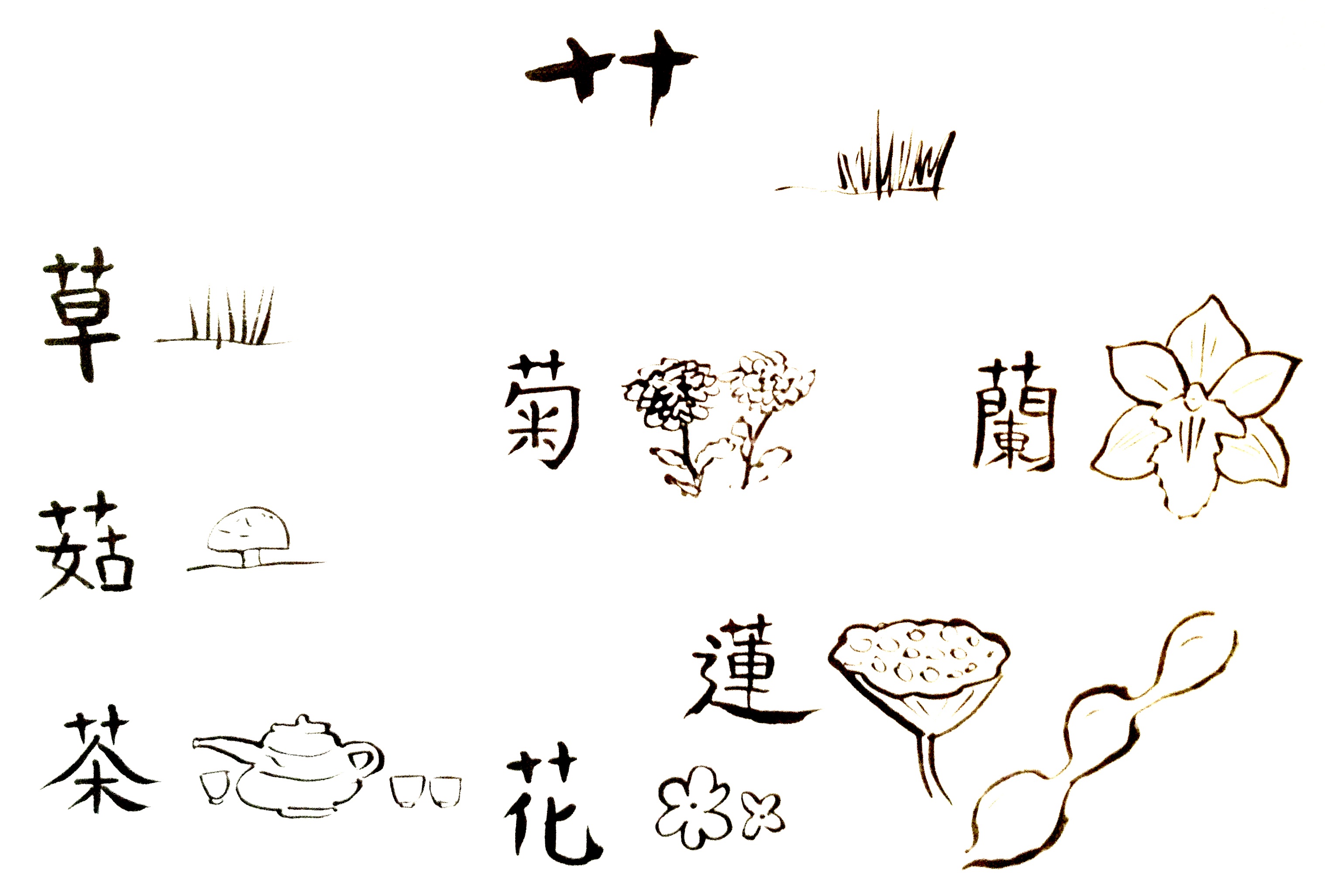
Herbaceous plants (and fungi) are depicted with the two crosses of tsao.  Grass, mushroom, tea, and flower are written with ‘tsao’ on top.  Chrysanthemum flowers are good for tea; and for making a soup with pig tripe.  The orchid is a ‘tsao’ with a doorway looking to the morning sun in the east.  Out of the muddy waters of the pond rises the lotus flower.  It is the soul beaming in pure light.  Where’s that recipe for lotus seeds and winter melon soup?  Don’t forget the pig bones.  Grandma!?

Image

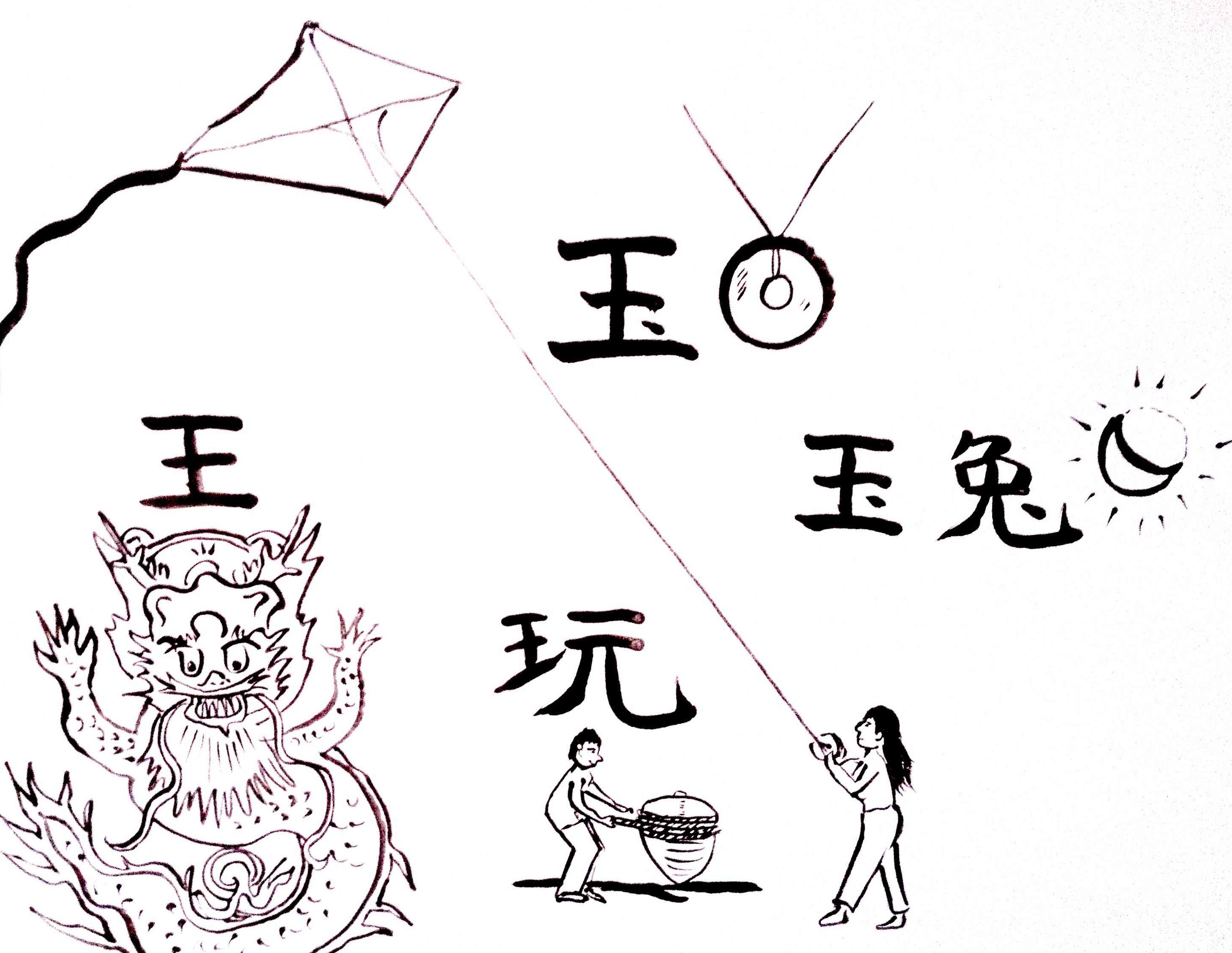
By the train station, little old ladies sell Magnolia champaca and Magnolia alba flowers.  The smell brings you close to buddha’s mind.  In Chinese, magnolias are jade orchids.  Jade (yu) is the color of mountain streams and precious stones.  The king comes from jade.  Jade is in the spinning top and the flying kite.  It is said that a jade rabbit lives in the moon, have you seen it?

Image

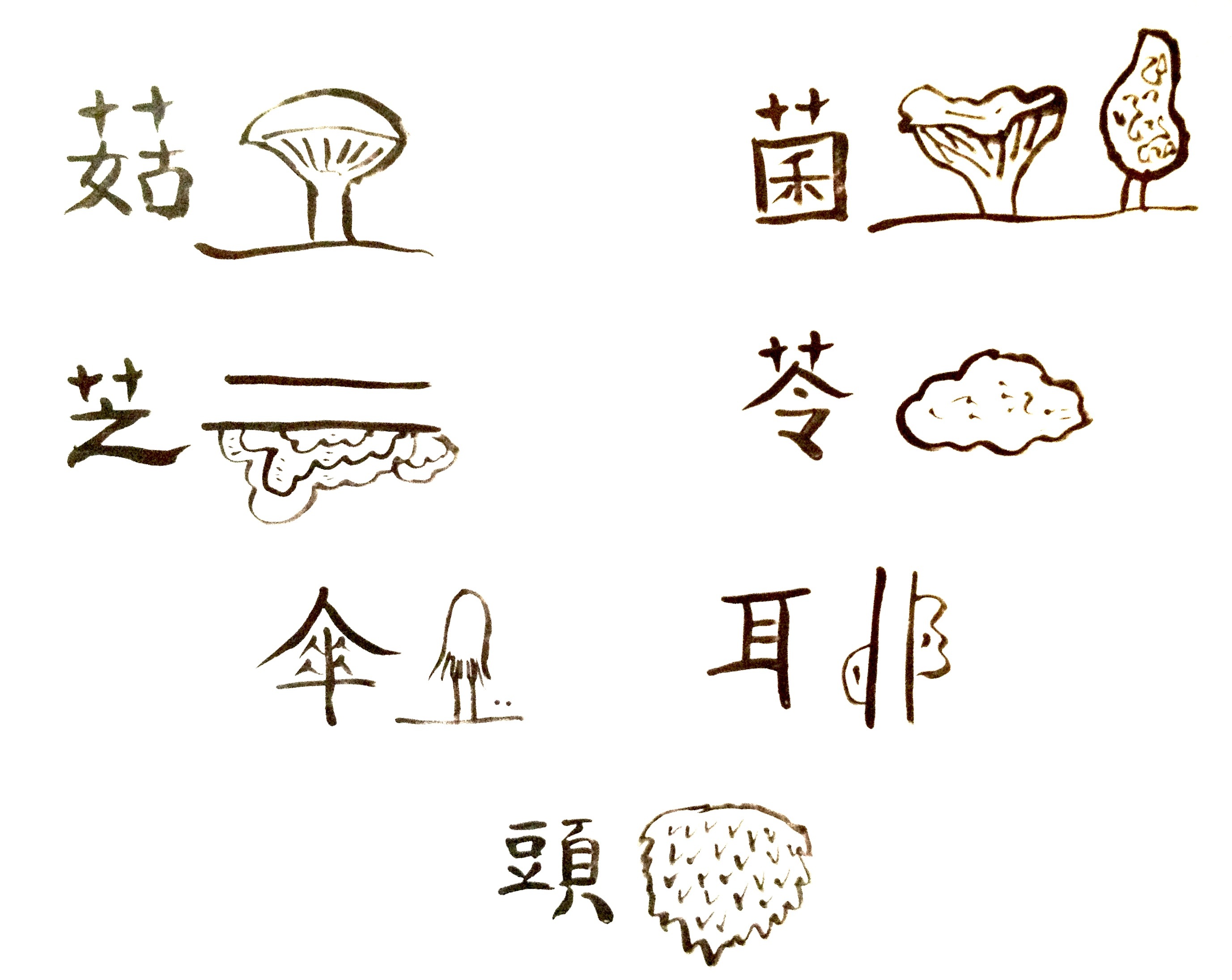
The “typical” mushroom is gu.  Hard conk, shelf-like, mushrooms are zhi.  Morels and chanterelles are jun.  The potato tuber of Poria is qing.  Shaggy manes are umbrellas, Tremellas are ears (growing out of a tree), and Hiercium is the head of a furry lion.

Image

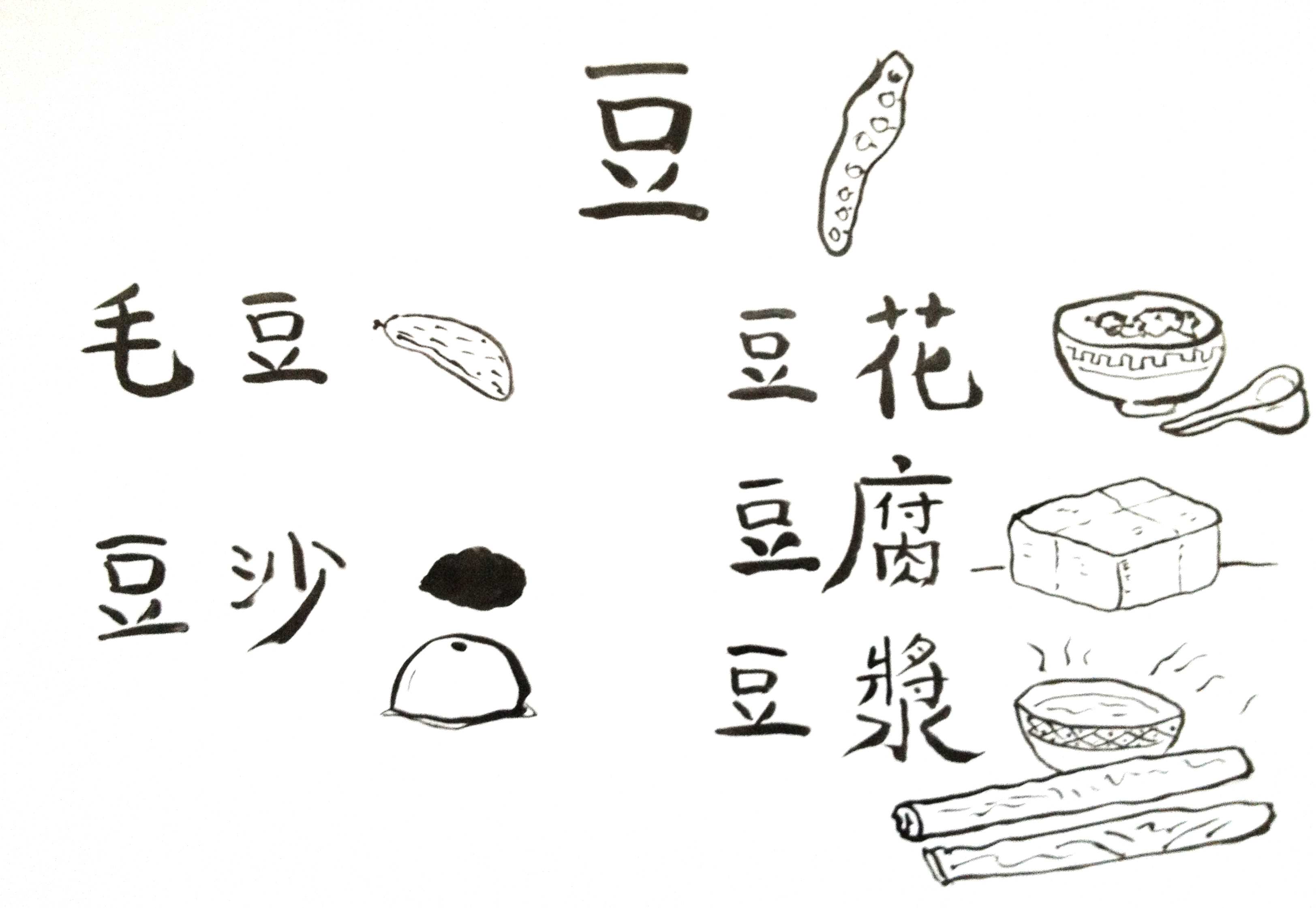
Beans are a useful source of protein, and a good crop to put nitrogen into the ground.  Tofu comes hard or soft; hot in a stir fry or cold in a desert soup; fried, fermented, and disguised as meat.  In rolls of thin skins and in sweet buns.  Stinky, that’s my favorite kind!  You smell it three blocks away…How I miss it!  Beans are do.  The hairy bean is the soybean.  Bean sand is the sweet black paste of the bao with a pink dot.  There is bean flower soup and bean curdle (tofu).  A common Chinese breakfast is warm and salty – plain fried churros dipped in a bowl of soymilk.

Image

A bitter taste often indicates powerful plant chemicals –  chemicals that may help break down fats, cause paralysis, or open up kaleidoscope visions of the cosmos.  Bitter melons are known for their ability to defeat intestinal worms, prevent cancer, and help people with too much sugar in their pee pee.

The melon is gua.  Bitter melon has the wrinkly skin.  The melon that came from the west is the watermelon.  Winter melon is also known as the furry melon.  Melon seeds, tea and some friends – that is how you chill on the street corner on a humid and hot summer day.

Image

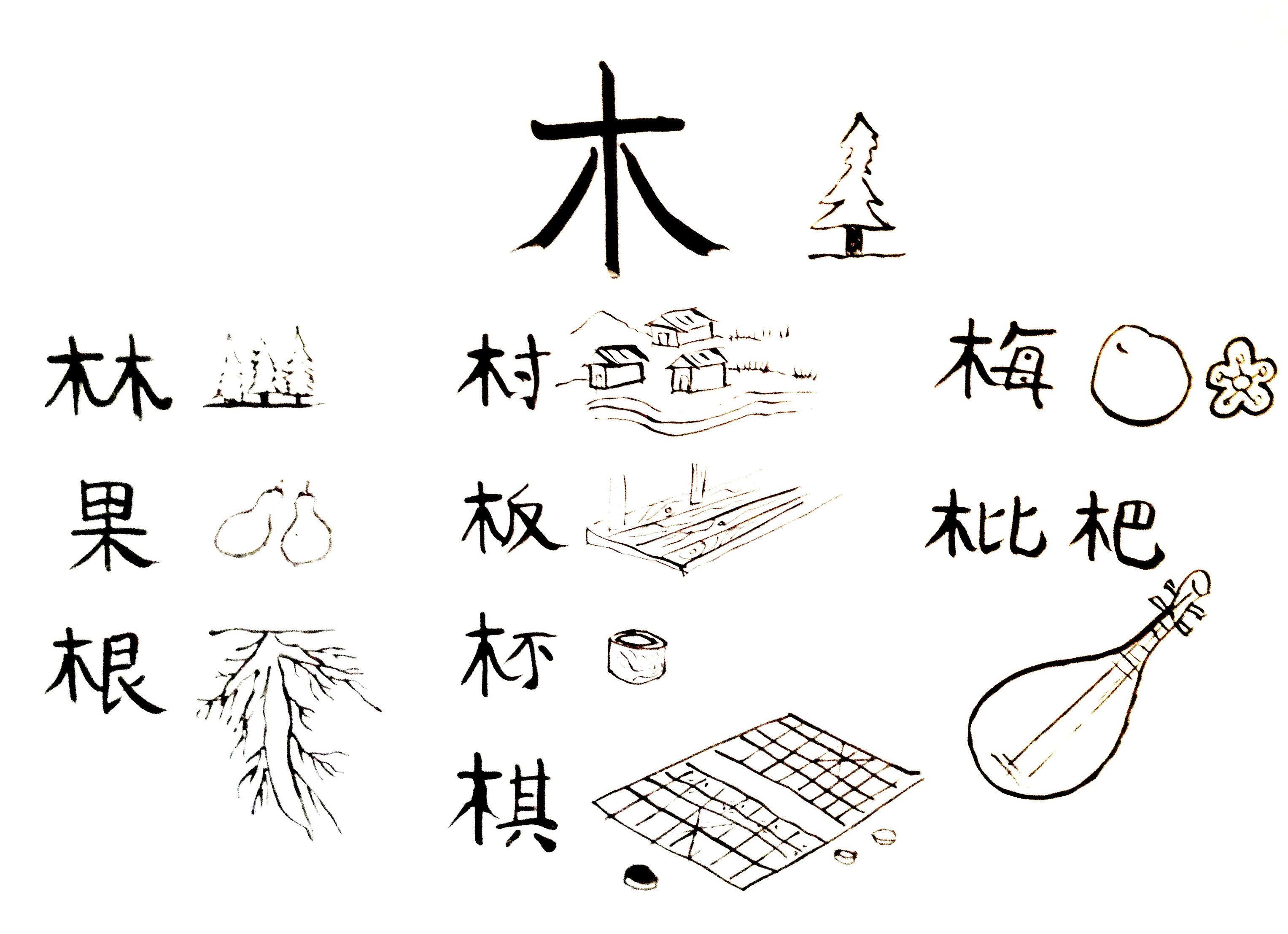
Who blooms in the dead cold of winter?  Plums!  The fruit tree that is beautiful to behold, and delicious to eat.  Plum fruits are preserved for snacks in a thousand ways to twist your tongue and furrow your brow.  Another fruit that comes from trees is the orange.  Some have a skin that is easy to peel, others are cut into wedges.

All fruit trees have in common the character for wood, or mu.  There are forests, fruits, and roots.  Villages, boards, cups, and chess. Plum.  Loquat – fruit or music instrument?  Either way, a tea made of its leaf is a great remedy for cough.  Just remember to flick off the little hairs on the underside.

Image

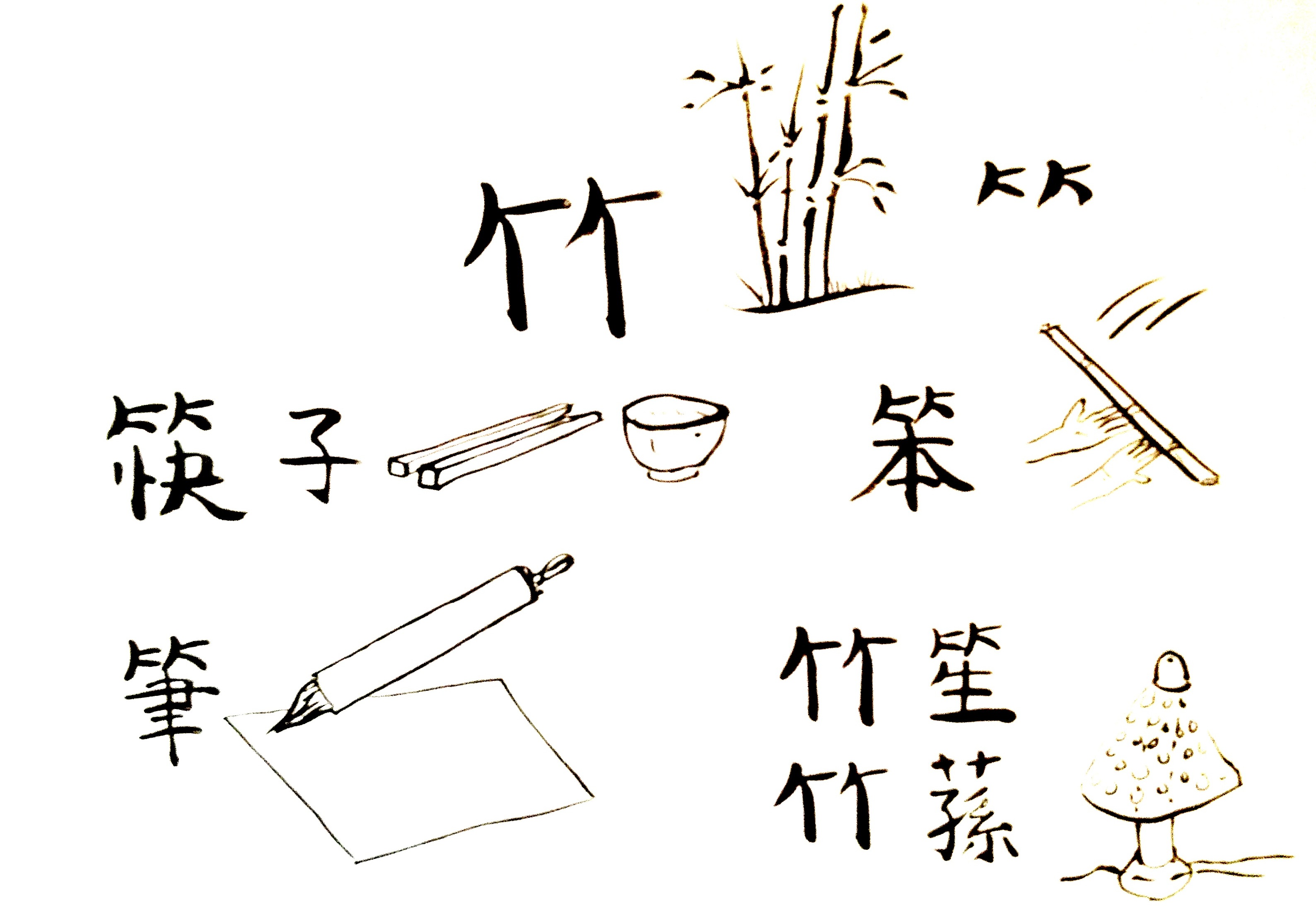
Bamboo is admired for its straightness, and ability to withstand high winds.  Be strong and flexible, not rigid and brittle.  In the bamboo grove, grows the bamboo mushroom.  It is a species of mushroom sometimes referred to as a “stinkhorn”.

Bamboo is dru.  Chopsticks and pens are made of bamboo.  In old days, the dummies and naughties of the classroom got hit with bamboo sticks.  The bamboo mushroom named Dictyophora has a long skirt.

Image

In the high plateaus of Tibet, herders noticed that their strongest sheep were eating some kind of a worm in the grass.  A closer look revealed a golden caterpillar, parasitized, and taken over by a fungus.  Hence the common name, Winter Bug Summer Grass.  Its name is Cordyceps.

A bug is trong.  The caterpillar is a furry trong.  Ants, butterflies, and fire flies are all trong.  Lumped together in this group are snails and snakes, frogs and shrimp. Can you find the trong in the egg and the rainbow?

Image