Archives for category: Uncategorized

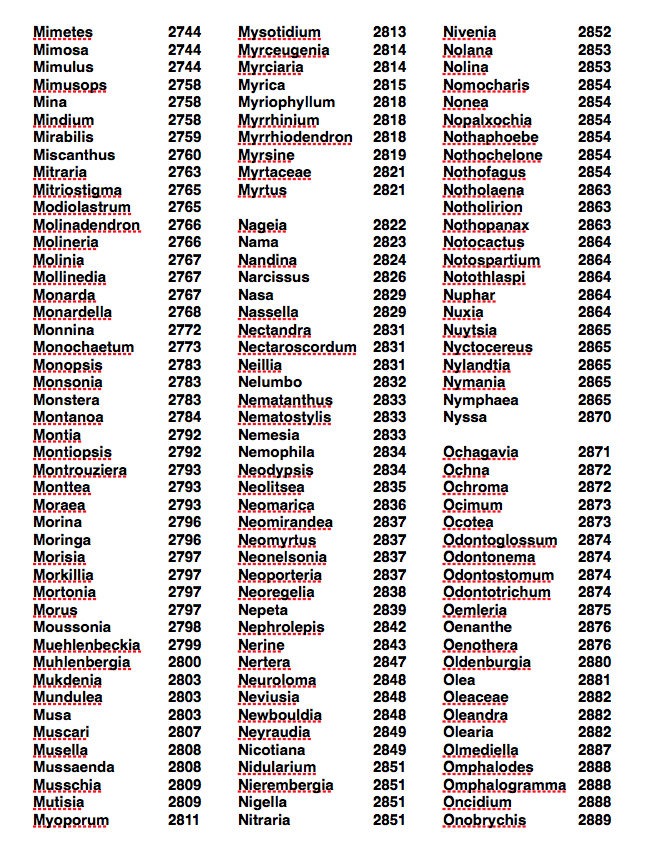
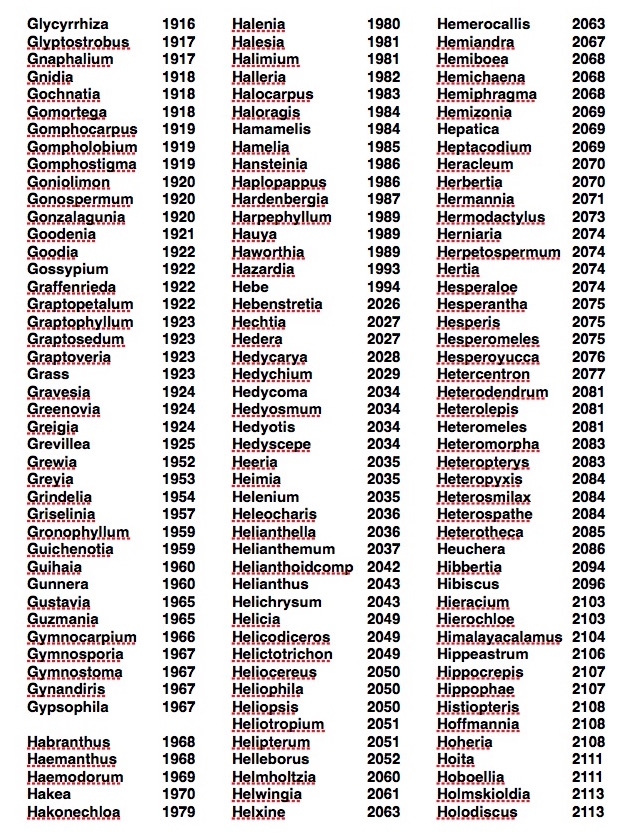
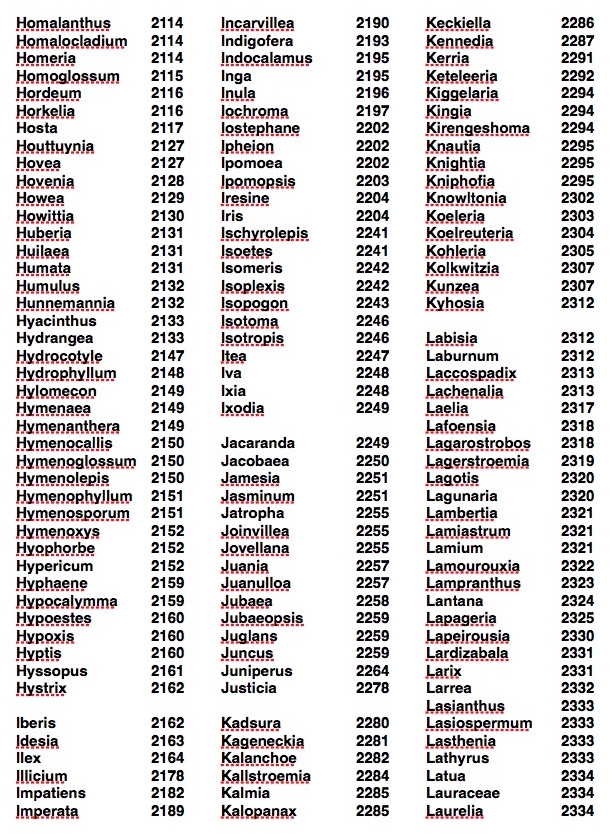
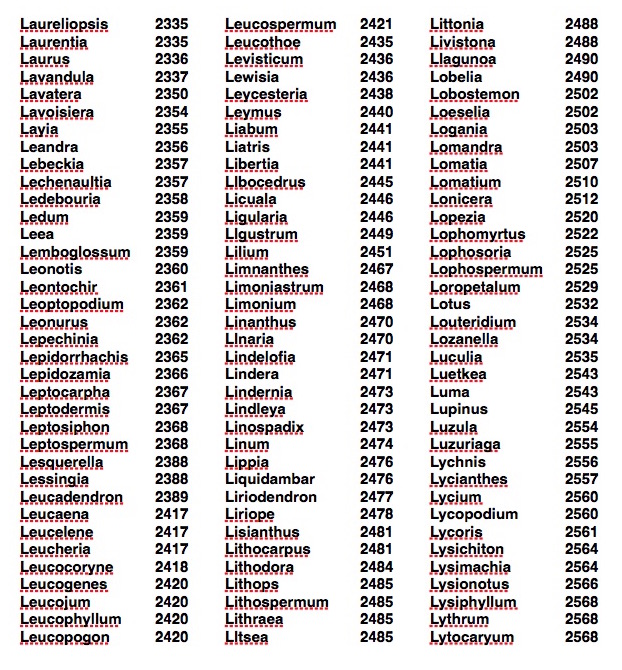
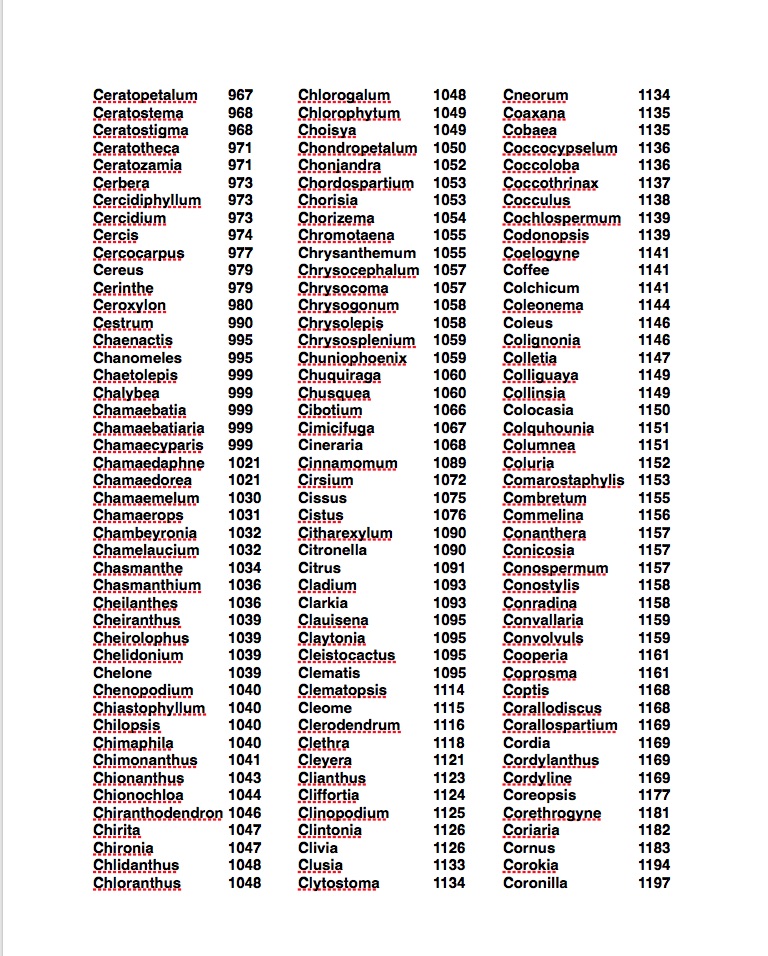
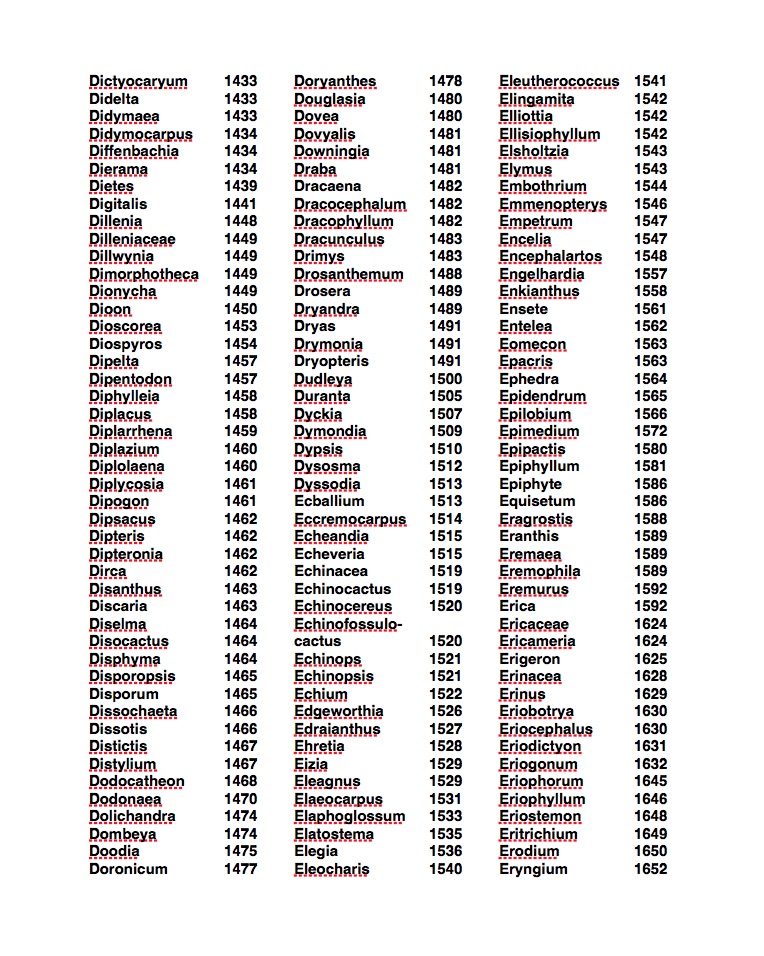
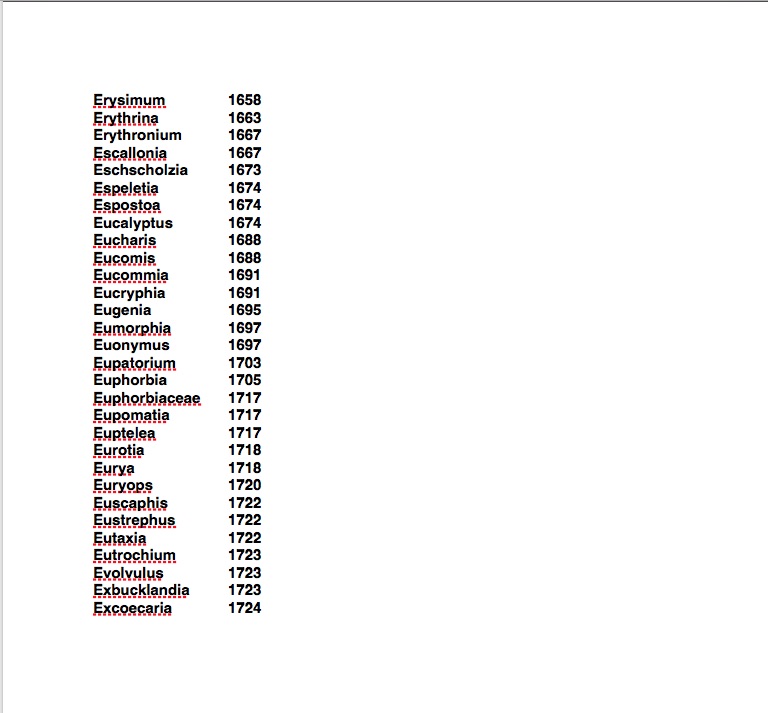
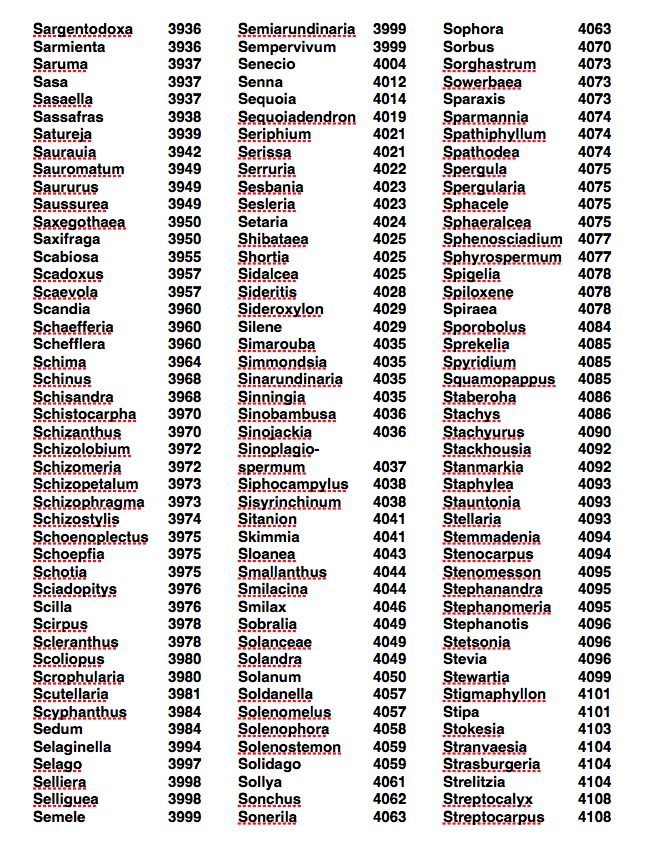
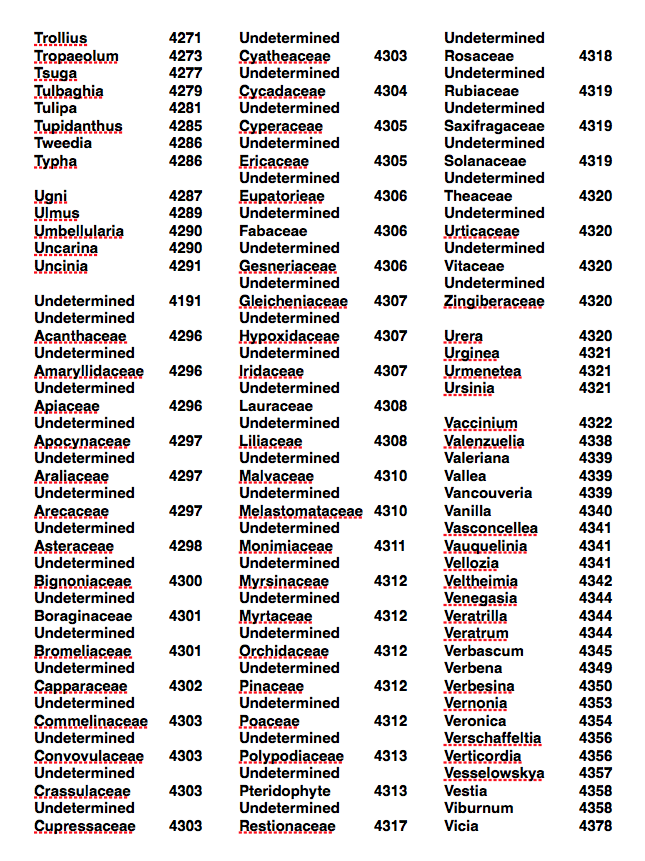
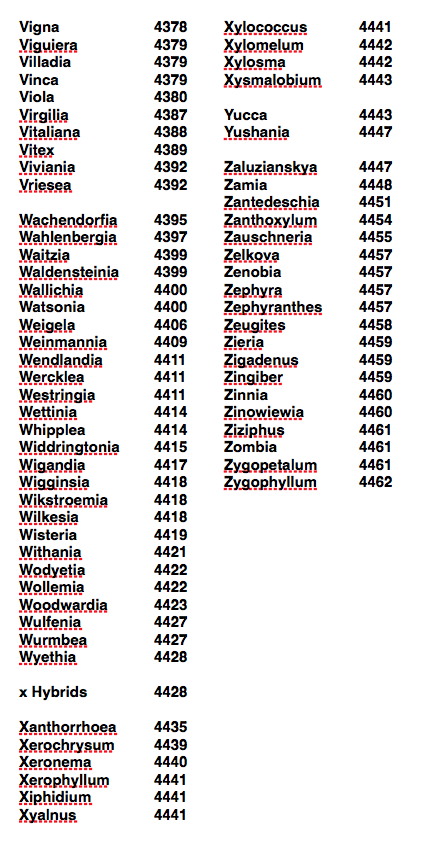
Heres the next set from our local botanical garden – genera C-E, circa 2014:

Third party surrogates are all the rage these days. The other day I ran into a bunch of ecology and botany students from the university in the botanical garden, using phone apps to identify plants they did not know. Snap a picture, get a name. Easy. And if the computer could not identify it, oh well, forget it. Move on, its probably not important. Funny. Did you touch the plant? Smell it? Acknowledge its existence as a life form?

The data bases of botanical gardens, and modern day herbariums, have become digitized, following along with all the rest of our society. Yes it is organized and the facts are all there, but the entries to specific plants read like a dismembered body that is scattered and incoherent. A lot of human data was sacrificed for that computer accuracy and efficiency. Basically you fall into an internet spider web with no center, that you click here then there then click some more. It will tell no tales until the circuit is complete, and you go on a walkabout. It does not work because the intermediary between the sun and the plants is a person.

If I was getting to know a collection of plants in the garden, what I want to know would be: Where did it came from, and how did it fare in the field or in the container? Who collected the seed and on what mountain, what time of the year? Was it propagated from seed or cutting or layering? Who did the work of caring for it? What made it special? Did it die of old age, disease, gophers, slugs, or neglect? Was it human or natural causes? How do the species and varieties differ in morphology, in cultivation? And so on.

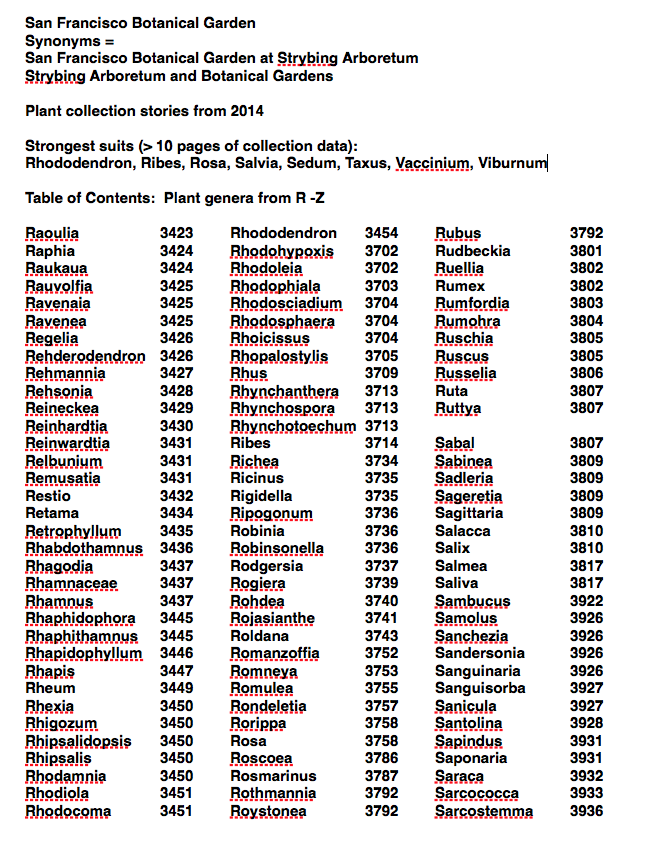
Here are the plant collection records from our local botanical garden, from about eight years ago. Thank you curators of the past! Plants are listed in an old fashioned manner such that they tell a story. If you are interested in a particular plant genus, use the table of contents to figure out what page it is on, and then scroll to the proper spot in the pdf to read the entry. Its likely the resolution is better if you download the collection document altogether. Then, if you are so inclined, find the beds they lived in, and go looking for them in the garden. Well, heres a start. Off we go on a botanical adventure. First, the A’s and B’s. More to come.

Here’s how the plants came to be in the garden:

During the winter of early December we hightailed it to the ranchos of central California
as ol man Colin describes it, the land takes you back in time to the 1800’s
rolling undulations of hills covered by annual grasses and cow trails


punctured by oak trees and an occasional pine
broad dry creek beds of broom thickets and tree tobacco on the fringe
and way upland
thick dense fragrant booming alive chaparral
buzzing with bees on sage, wooly yerba santa shrubs, and unstoppable chamise
doe bedded down in the shade
on the trail was a dead coyote, bloating in the sun,

no obvious wounds or bleeding
nobody would touch it or scavenge it, not even the vultures
not sure why
kid says ‘ it looks like a dog!’, it sure does

Quail hunting season this past year ran from October 16th to January 30th in our zone. And for Dove, the season was November 13th through December 27th.

Like always, I was curious about what they had been eating. This way, you know where to look for em next time. It is the same with hunting mushrooms – what trees is it growing next to? It is the same with lingcod – what is in its stomach? Octopus?! Again?! The chunky, muscle bound, buff tough little bird is the California quail. The skinnier smaller one is the dove, a white winged dove to be precise.

What is in its crop? Well the dove had only one kind of seed it seems, and the crop was loaded! No wonder it was just sitting there and not flying off.

The quail had fewer seeds, but had a bit more variety in its diet in terms of seed selection.

Brought the seeds to class and had the students sow em. Lets see what comes up!

On the dove side, seeds came up quick. The leaves look comp-ish like a dandelion or a thistle or something. Wait for it. Wait for it. The flowers – bit of a tinge of purple spines and yellowish flowers. Internet ID taxonomy seems to point towards the Maltese star thistle Centaurea melitensis. Okay, we got one!

On the quail side it was a lot more sparse and irregular. Yes theres the pink five petaled flower of a geranium family thing with the typical crane’s bill looking fruits. Reddish stems. Lets go with the redstem filaree Erodium cicutarium. That is the plant ol master Bob Patterson of Plant Taxonomy class would say, ‘comes in with the cattle’.

Another one was the cant forget about it, scorpionoid coiling tail inflorescence with orange flowers. Not white flowers, that would be Cryptantha, but orange, so Amsinckia. I know my old teachers would be proud to know that the words ‘gynobasic style’ are still forever stuck in my brain. You know or have seen this family of plants already. I know you have. Does forget me not, tower of jewels, borage or comfrey ring a bell? Anyhow, lets call it the common fiddleneck, Amsinckia intermedia. Well maybe it is Amsinckia menziesii, but my eyes are such that I find it hard to differentiate between flowers 4-7 mm long and 7-11 mm long. LOL. What a terrible taxonomist!

Last but not least, a bunch of thin grasses were in the quail seed plot. They look like fescues. Why? How? I’m working on it – communicating the basic gestalt of such things in simple language and drawings… For now, best determination is Festuca bromoides.

Well thats all for now. Pretty limited sample, but neat to see what comes up always. And don’t worry about the star thistle, I won’t plant it in the garden. Cant wait to go back in time again…