Luke the Wiley coyote introduced me to Joey the Roo (Kanga) who in turn was friends with Mr Horn from days of standing up in watery shacks in Chile. That is how I ended up in his backyard of sand in the sunset district of San Francisco.
Colin had already embarked upon the dream of creating his backyard paradise when I informed him that we have a design class where students draws landscape plans and submit them to clients, who in turn offer feedback and a more or less realistic not-staged design experience. He was stoked and game for the process and that is what we did. Then the class was over (Spring of 2020), and we shook hands. That was about the last time I saw his metaphoric garden boat of oxalis weeds and trash strewn dune sands sail off into the wild blue yonder.
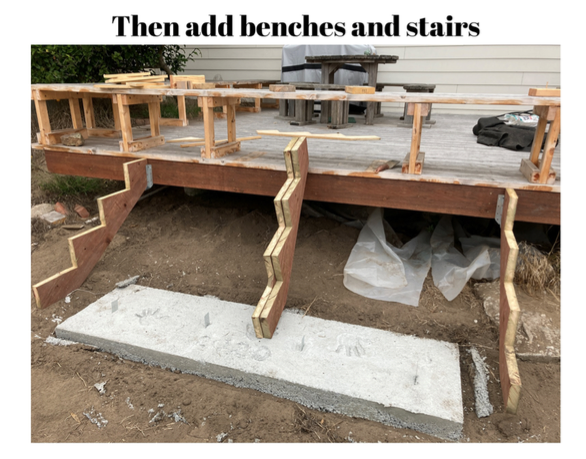
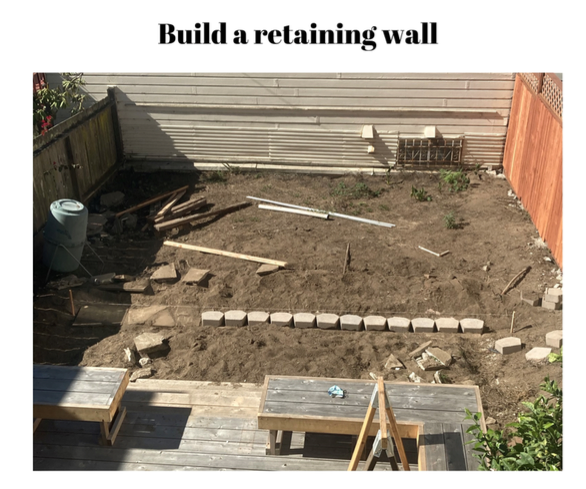
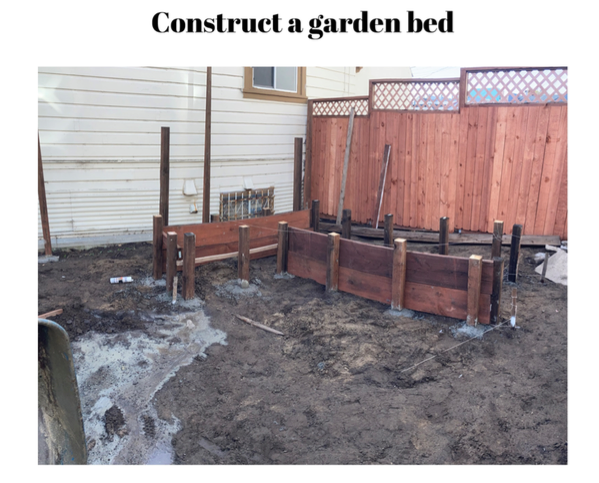
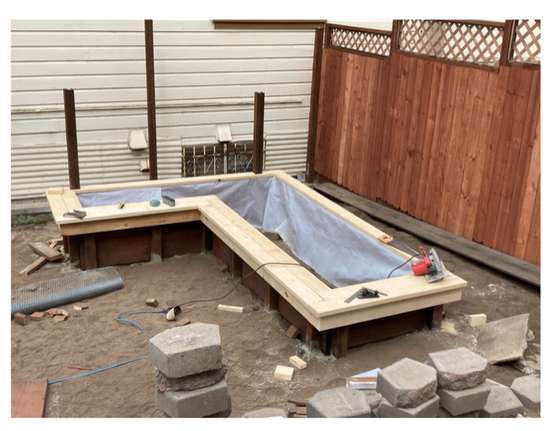
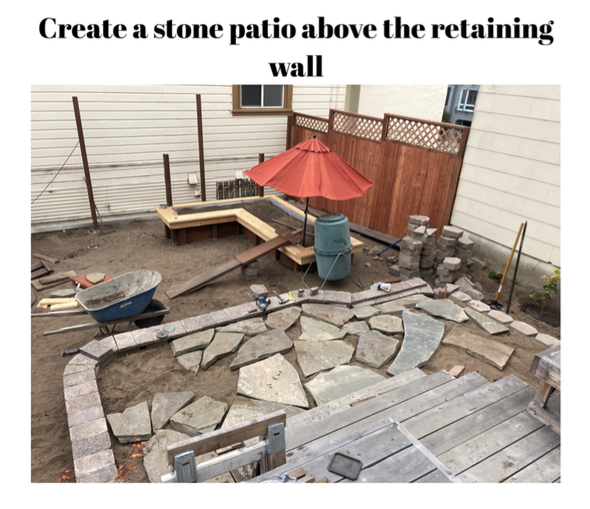
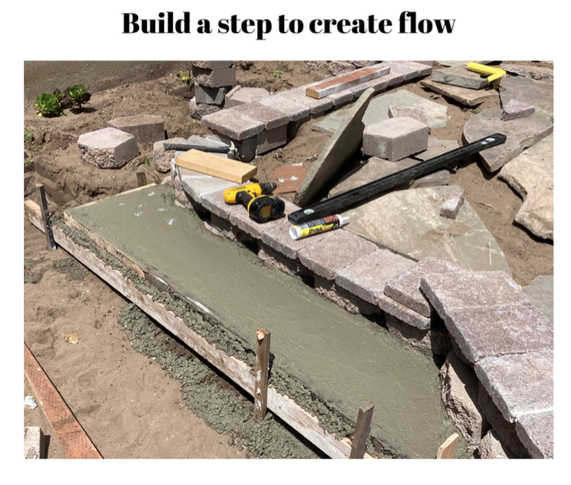
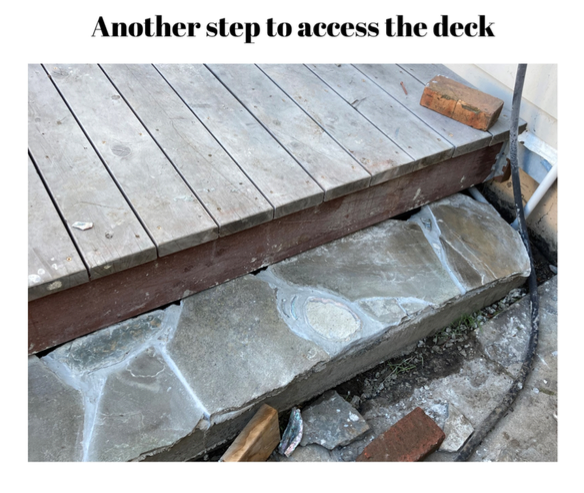
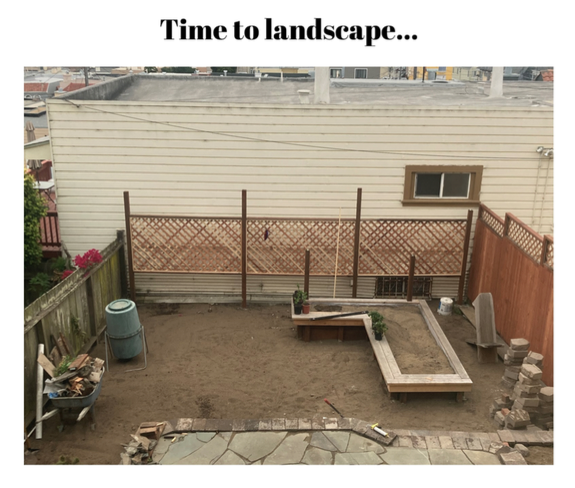
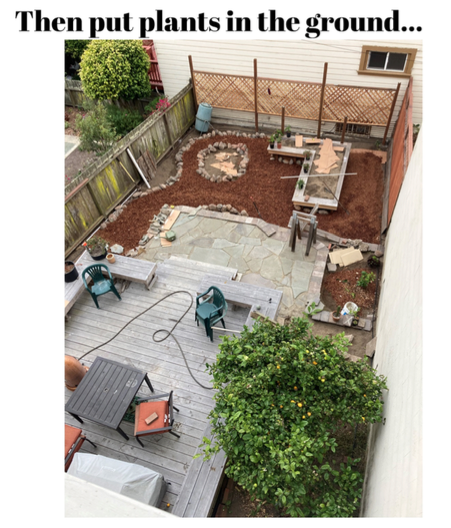
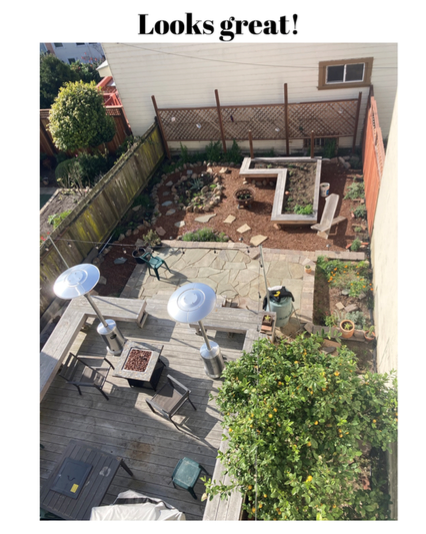
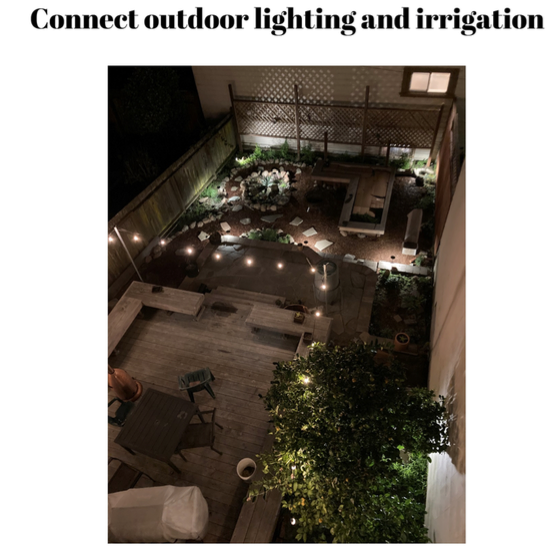
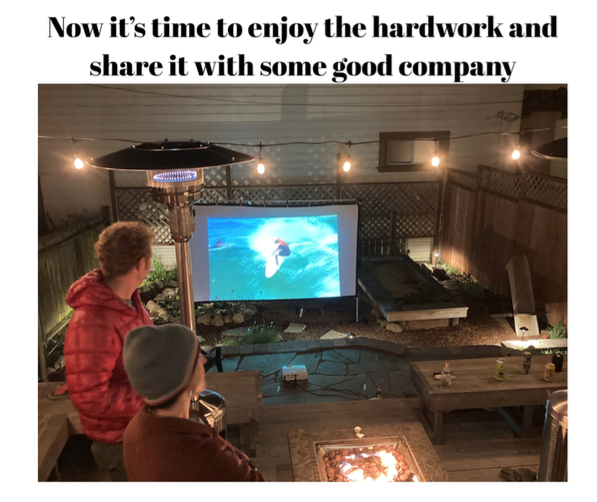
A year passes, maybe two. Not sure. Pandemic coats time with a strange passive sheen. Surprise! Mr. Horn gives me a pamphlet/book of his garden build. Its awesome. So thought I would share it with y’all. Here’s Colin of the big red board (like Clifford the dog; I will explain the nickname later) in his own words and pictures:
A huge thank you to the students who drew the design plans:
Well, thank you to Colin for sharing his story, and documenting the build. Would like to add that most of the plants Mr Horn planted were California native plants from the north and south. Also noteworthy is that although he is not a professional landscaper and had not done this before, his did a fine job of it. He is really creative with his hands and is not afraid to ‘go’ and get mucky sweaty dirty in the process. Perhaps this will inspire another person to be a gardener and to make something fun, interactive and alive in their own yard.
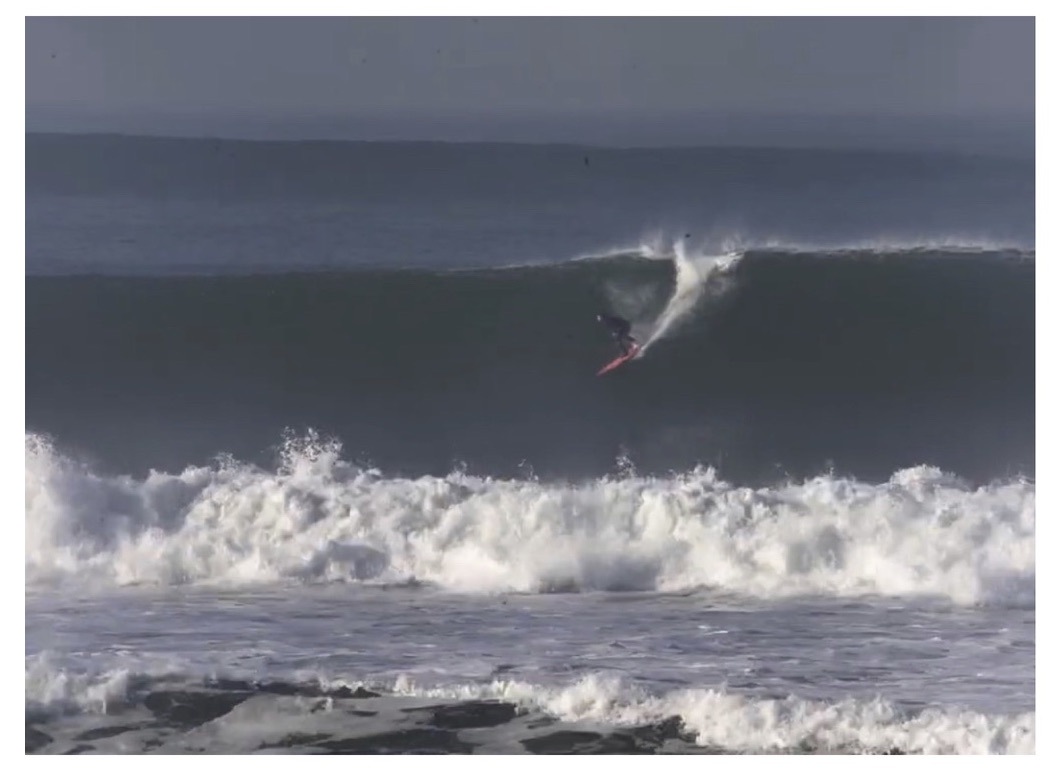
Then was chatting to the Roo (Kanga) and he pulled something up on his phone from some surf film or cam. Says did you see this? I’m like no, don’t watch much screen if I can help it. And there was Colin in action, slicing across a right hand Ocean Beach slider, on what i call a two to three wave:
Joey says that is a 9’6″ board, so you go figure about how big that wave is. Dang kid is sick and charges. LOL
By the way we are still doing landscape designs and always on the lookout for potential residential projects. Send me an email at tywang@ccsf.edu if you are in SF and have a yard that fits the bill. Especially welcome are clean slate yards in the sunset or richmond districts of San Francisco. Thank you.
Like all garden pests, the management of mammalian and bird pests comes under the banner of integrated pest management. That is to say, we use a variety of techniques and methods to reduce the damage caused by these creatures in our gardens. Our goal is not total eradication and elimination, our goal is to keep the pests at a reasonable level and live with them in an uneasy balance and precarious harmony.
We generate and waste a lot of excess food, and create movement and disturbance wherever we go. As a result, creatures that enjoy our presence thrive alongside us. Without planning for it, we provide them with food and shelter. And what more can you ask for?! This is true for weeds and bugs, as well as larger animals like rodents, coyotes, skunks, pigeons and sea gulls. In old old native times, food and the density of people was pretty well matched. Some years the acorn crop was lean, others years the salmon were abundant. There was an ebb and flow to the cycles. The amount of food was constrained by the climate and weather, dependent on the water and rains, and fluctuated year to year dependent on health and disease.
As the country got flooded with settlers, they took to shooting and eating darn near everything that moved. Especially if there was a famine or a drought and the crops failed them. Plus people were hankering for meat in the markets. For a whiles there, every animal ended up in a pan, a pot, or in the side of a ditch. Then, luckily, at some point, folks realized that this was not going to be good in the long run, and enacted game laws, anti poaching laws, plus created wild life conservation areas and reserves. To keep up with the demand for animal protein, we boosted the production of domesticated animals like chickens and hogs, and cultivated acres and acres to grow fodder crops for the animals to get fat on. Fields of grain, alfalfa and corn, soy and so on.
In cities where many people now live, most people don’t hunt or trap, and are often pretty averse to the very act of killing or slaughtering an animal, even if they have a slab of one on the plate almost every day. So its a bit of a sensitive topic. When mammalian pests invade the home, some people will resort right away to poisons, or to traps. These methods are readily available at the hardware store. More often than not, other people will call the pest control company for some advice and a round up of the small beasts perturbing the peace.
Do note that for some animals, there is no protection. There is no Society for the Conservation of the Brown Rat nor the Roof Rat Chapter of California. You can kill as many as you want of these guys, and it is unlikely anyone will knock on your door or protest your actions. On the other hand, it is illegal to kill seagulls because they are protected under the Migratory Bird Treaty of 1918. As are most birds. That did not stop Greg’s hungry sailor buddy from making seagull soup in the Sausalito harbor back in the day, but just to imagine the taste of that meat and broth is enough to make you want to take a really long solitary walk in a hot desert. For other animals like the crow, there is a hunting season on em; here it runs from around December through April. And sometimes you can request special permission to hunt certain animals as a nuisance. In a city, it is illegal to go shooting guns because of the potential for injury. So you would have to use a bow and arrow, or try to run and grab one with your bare hands. Check the city ordnances and find out what is on the books before you do anything silly and suspect that will land you in hot water.
Back to IPM. We roughly classify the methods of control into four categories. Physical (direct action kill or trap), cultural (preventive ways to keep animals out and away), biological (find an animal that will eat your pest animal, maybe you), and chemical (poisons and things of that nature).
For the most part, cultural is the number one method. If you put all the food away, and do not give the animals a place to live, they will go elsewhere. But in a garden, how do you put all the plants away so that the deer cannot eat them? What happens if the plants you are enjoying are the food?! And if their home is the very dirt in the garden, short of removing all the dirt and filling it all with concrete, what can you do? This is the dilemma. Screens, stainless or plastic netting and wire, electric fencing – they can do the trick. Raised beds, unpalatable plants also. Predator urine and blood, foul smell from castor oil bean extracts, fake owls, sonic noises, icky ick things that repel the animals, all potentially useful. A Jack Russel terrier or a beagle, that might do it. Not always though, like when a whole family of eight raccoons decides they really like that bowl of wet cat food on your back porch.
Traps and the back side of a shovel. These are number two – physical controls. But first you have to catch em. And that means identifying the culprit, finding out where and when they are active, and then somehow hunting them down. That is what it takes. For the most part, nobody cares that much about the rodents. Except there were protests for a while against gardeners killing gophers, and they set up a ten block stretch in Golden Gate Park where it was forbidden to catch them. Not sure if the gophers needed much help, but that is how it goes sometimes. When it comes to a little bit larger and some would say cuter mammals like squirrels, skunks, and raccoons, that is where it gets tricky. The old time gardeners would get calls about them, trap them, then just go ahead and release them into the wild somewhere nearby like the Presidio or San Bruno Mountain – which is not that far away from wherever they came from. A short happy night stroll later they would be right back where they started. Or they would be disoriented and fall fast victim to an asphalt roadway and steel belted radial tires. If you have a trappers license or are a certified pest control operator, you are supposed to catch them and put them down right away (kill them), you are not supposed to move them around. But sometimes, they just let the animals go again after they’ve been paid for their services, out of laziness or compassion or what have you. Then the animal is on the loose, again. Do note that wild animals can and do carry a number of worm parasites, invertebrate hitch hikers, as well as diseases that can affect humans in a negative way. Yes there is still the bubonic plague bacteria around here, hanta virus in the rat droppings, rabies, lyme disease once in a while from the ticks, etc. Friends in more rural places say there are not that many raccoons out in the country. Likely because there is not as much food in the wild as there is next to the garbage cans and dumpsters here in the city. Plus the comfy warm crawl spaces and rain-free under-the-deck four star accommodations. Lack of mountain lion or eagle predation earns another star. Then what do you do? What can you do? Most of the time people do nothing, which is not productive really and not helpful either. Sometimes you hear about some crazy hungry gardener that speared a raccoon, made a hat with its skin, and ate its meat over a barbecue with friends. But that is rare and almost unheard of in our modern world today. And in general not recommended for the reasons already stated above.
Biological methods often work for other pests of the garden, whether that be mites or aphids. You can go ahead and buy some beneficial insects online from an insectary, creatures like mite predators or nematodes or even praying mantises. They work. And chickens or ducks eat the slugs or snails too. But who is going to eat a 12” rat or attack a skunk? Great horned owls are predators of skunks but it is unlikely you can encourage it to come and eat that exact skunk that is camped out under your ipe ironwood boardwalk. And there are not enough peregrine falcons or hawks to eat all the pigeons under the freeway overpass. So for the most part, pass on biological control of the larger mammals and birds. Unless you are dreaming of coyote. But dens and dens of coyotes roaming in a dense urban metropolis poses its own set of challenges….For sure they will not only attack the pests. They will pick on the easy well fed cat that is playing in the yard, or the little three year old kid rolling a ball on the lawn while the parents are looking at their cell phone.
Last but not least are the poisons. For the most part these are ingested (eaten as bait), but in the old times poisonous gases like the tail pipe exhaust of a vehicle, or the sulfuric smoke from a flare would count in this category as well. Fumigants they call them. They are okay, and if you look at any public institution or commercial center you will notice the black plastic boxes full of rat poison. Still, come out at night in a densely inhabited place with food and water and you will see the shiny beady eyes of the rats. Lots of them. They will be here as long as people are here, likely longer. I won’t go into the chemical mode of action of particular poisons here. Just keep in mind that rodents can readily evolve resistance to our chemicals over generations of selection, and that whatever poisons we put out into the world work their way up and to the side of food chains. That is all for now. Good luck keeping mammalian and bird pest at bay in your garden.
The sacred in the garden, and design patterns to emulate
In all the cultures, flowers, trees, and garden spaces are valued, and inspire many aspects of mythology, stories, art, music, and our relationship to nature. The gardens are specific to the geography and climate of a place and are imbued with certain principles and values that make them unique. In many cases, being a gardener (and designer) is a sacred profession that is dedicated to the maintenance of this connection. The garden is thus the realm of a spirit practitioner that mediates between the plant and human worlds.
Now, people will approach the sacred in any number of fashions. What does that even mean – the sacred, the spiritual, sublime ecstatic divine awe? Is it a set of material symbols? Do you have to buy into it, or subscribe to a set of beliefs? Is it antagonistic to science, reason, and rational discourse? Define ‘sacred’… Well, this is not a comparative religion essay, nor is it a preachers pulpit, an atheist’s diatribe, or psychoanalysis of ego and mind. It is about how the garden can assist in evoking a state of bliss and communion with the universe. It is about methods used in the design process.
A few things to reflect on before we start. The garden is an intermediary junction between nature and culture, the overlap between the wilderness and your home. It follows nature’s cycles – there are plants and it is outdoors. At the same time, it is easily amenable to our manipulations and add ons – whether that be a nice stone path or some up lights on the palm tree. In the house, theres the bedroom, kitchen, living room – mostly all rectangular shapes each with defined roles. In the garden, theres a lot more fluidity, and varied shapes are possible – curves, circles and the whole bit. Less is set in blocks. The innards of the house is mostly for humans and pets, whereas just outside the back door almost any creature can and does come by – spiders, ants, hummingbirds, worms. They are all out there. So how do you find harmony and balance? How do you make the garden a mirror of life itself, in order to look inwards?
In the northern woods, cold fjords and island nations, there is a long history of this sort of nature connection that predates recorded time. I was shown an Irish tree alphabet by a student named C, and can see how knowledge of the Ailm, Beith and Coll (pine, birch, and hazel) could potentially build a vocabulary for the soul. A sacred garden has happy and healthy plants. Hopefully, in my aesthetic, a lot of them! Ratio wise, hardscape to softscape, concrete & wood to leaves and flowers, strive for say 50:50, 60:40, or something close to it. Okay okay 70:30 but that is my last offer. Heck, the house is in the realm of 98:2 not counting the veggies in the refrigerator. Balance! Most of the time, folks do not have their breath taken away by a sofa, but a cluster of dogwoods in spring bloom, or the silhouette of a pink sky-lit cedar – those will do the trick. Plants play their part in the theater of time – that’s what makes the show special. Plants make the garden. If you wait till the end of the design to think and dream about the plants and their gifts, then most of the spaces will be taken up already, and you will relegate the plants to the edge of the deck and foundation or a container or two of so so greenery. That will be too late for the protagonist to rush to the rescue.
Do not plant plants that will quickly grow too big for their spot – these end up having to be corrected, hacked, manipulated, tortured, and moved. You want plants that fit. Plants that are comfortable with the ecology of the site, with regards to their basic needs. Plants that get better and better with age. Plants are like you, they want freedom and to be as they are; they do not want to be stuck out of place. On your plan, be sure to design with plants that wear different clothes as the seasons pass, to mark the wrinkles around the eyes, the loose skin at the elbows, and a slight clouding of the senses. There is no plant that is beautiful and unchanging all the time, that would be a plastic rubber statue stuck in an eternal state of wanna-be juvenility. You want well-grounded dynamic motion. And the red and yellow fallen leaves, well that is part of the picture. So is the fuzzy scattering fluff of anemones, and the bright red seeds of magnolias. Just cause its old, and on its way out, does not mean that you erase it from the garden entirely before its due. It is going to feed the earth, and with good weather give birth to a novel spring.
In medieval Europe, in the monastic gardens, the gardeners were the monks and nuns in a cloistered brick monastery. These places also happened to be the repository of medicinal plants and hence healing traditions. The ordered universe, the layout of the monastery garden, the not idle, hard working, and prayerful person in the midst of it all. All were to be in agreement. In an overall sense, it is like chemical molecular structures and formulas. Such a garden is geometric and law-abiding. Fibonacci sequence and the golden ratio of flowers are all repetitions of this same motif. In the garden is the universe made small to fit. It too will have symmetry, whether radial or bilateral and repeating spiral fractal type elements that twist you into a churning web of complexity. All the while the outward forms appear simple and straightforward. That is the challenge. It is not easy. That is why there is a backspace, delete, and escape key on the keyboard. Not sure how many of you still crumple paper, but that is another kind of visceral and audial joy that lends itself to the design process.
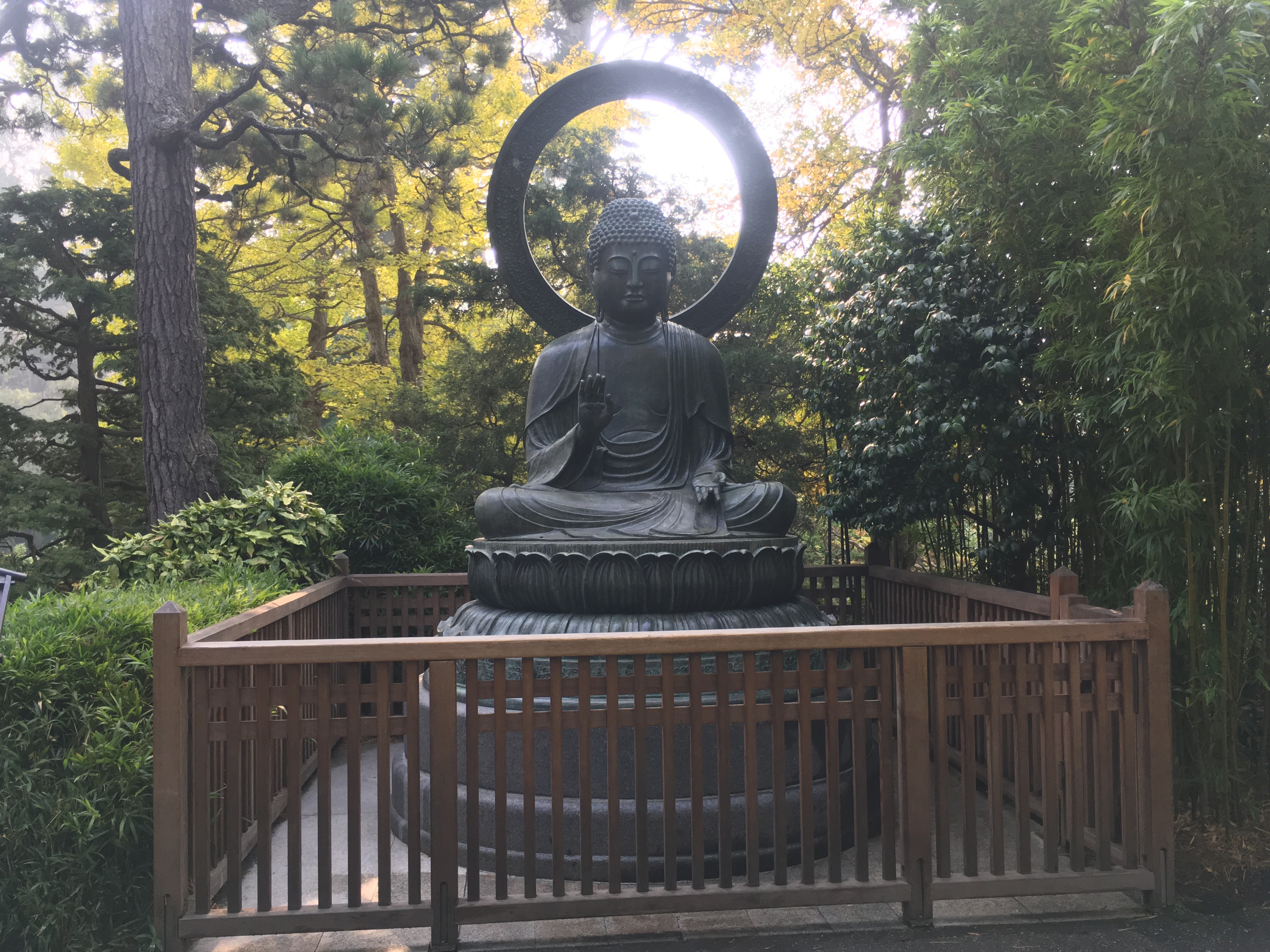
In Japan, you see the influence of Shintoism which is old time nature worship and spirits, then the later addition of Buddhism that arrived in the 6th century via Nepal India China, and Korea. The gardeners are the monks who rake the pebbly gravels to create an ocean and sweep the boardwalks of leaves and debris as they empty their minds in the same way. It is a walking meditation that allows a person to become fully immersed in the way or no way, the circular blank-out lightning bolt kazaam that is intrinsic to the Buddhist frame of thought. This is to say, while you are raking, the mind is judging, analyzing, thinking “This is lame, I’m not here, I wish I was somewhere else”. Or the mind is in a blank rut, unaware of its surroundings, uttering not much more than “Uhhhh”. And when the mind is saying neither of those things or anything else, yet focussed like the prick of a pin, then you are sewn into the fabric of the whole dream-like scene. It happens in a wisp. You engage as an actively integrated pollinator in the care and maintenance of yourself and our world. And that’s all, that is the goal. Kinda reminds me of the walking labyrinths that go from the outside in. Then it lights up and reverses direction.
In the Japanese garden, the rocks lining the paths are deliberately staggered and uneven. Zig zagging here and there. It is not a straight shot from one end of the garden to the other. Time is not an issue; it is no longer money. Time is a petal falling to the earth. The passage way does not go up up up then climax and stay there. The paths are made to slow down the uptown frenzied motion and bring a person down to nature’s sloshing tidal-type rhythm. And if you think about a person’s life, with the myriad of twists and turns of fate, wishes, accomplishments, and expectations coupled with disappointments and failures. Well, there’s the path. The plants are uniformly green, without the frills and shock of a multitude of colors. Again, bright city lights, billboards, drunken head-spinning neon LED tubes with heavy bass. Not so much. Birds scratching in the dirt for breakfast, droplets of dew shining mini rainbows seen only with your head tilted, cold hands holding a warm cup of coffee. The fading of the sun and clouds into fog shroud mists – that is the ambiance and vision. Another design technique is the whole contemplation-borrowed-scenery-from afar vantage point. That is to say, you deliberately create a place that invites someone to sit down and look off into the distance, whether through a cut out in the fence or the direction that the seat is facing. The whole idea is to see beyond the narrow small confines of one’s built world and bring in something from far far infinite. A high mountain, a sky, some light. So it’s a setup, designed on purpose to bring about a desired mind state for the garden visitor.
When I used to watch my friend Saba do Haitian dancing they would alway trace design patterns onto the floor, and set up a central place to gather the energies of the dancers and musicians. In general, the point of concentration was an altar with a myriad of objects representative of the cosmos at large. And as the ceremony proceeded the participants would request that the spirits descend to demonstrate that humans are not, well, just animals or biological phenomena hard-wired to genes and such. The drum frequencies were also dialed in to elicit this break from the regularly scheduled programming that runs on the hour, to the minute, and measures every second. Yeah, you got to wake up at 6 am tomorrow and do a 45-minute commute and put in an exactly 8 hour day with a 15-minute break. But today, you are coursing down an eternal stream in a canoe of sound, fish-on-the-line hooked into the design patterns hidden from day-to-day view. And anything is possible.
When you observe a site you can look for these same lines of energies that are ever present but require investigation, observation, and perhaps even supplication. The lines are disguised and not clearly marked. What you are looking for is the slope of the land in relation to the whole neighborhood, the shadows cast by the sun around the third week of June, and a place where people would likely gather, congregate and share food. You are looking for the source and origin and path of travel for that most sacred of all substances which is water. You want to accentuate these ‘power locations’ and the intersection of the lines where Papa Legba lives. Navigate to the center, and track the dotted lines of planets revolving around this sphere. Imagine every person has a lit flame of a star inside. The individual bodies may spin in ellipses, shoot off into the galaxy like asteroids, then come looping back a millennium later. Where are the lines and punctuation marks? Does your design plan have a core? How is the circulation and movement? If it is all flat paths that lead to fence walls, hard square cubby-like rooms, closed in, and constricted traffic, then the energy cannot buzz and people will be separated from one another, not joined together in the skin and beats. Given our already limited tiny yards in San Francisco, keep the garden plan more or less open. That is to say, limit minimize or eliminate the one-way streets, dead ends, narrow alleyways, and abandoned lots smelling of ammonia. That is the planning aspect of design.
Across the waters you will come to the continents of the north and south Americas. Aside from the well noted, highly organized, stratified hierarchical civilizations, there remains a deep and intrinsic connection here to the plants and animals, to hunting and gathering. All of the ‘hunt’ is masked in magic and encapsulated by ritual because you never know. You are not sure what will go down. Anything can happen. Success or failure is hunger and survival. And so you walk the same path as the animals, straighten your arrows as you coat them with good wishes, and ask for any kind of divine assistance there is. Because of this uncertainty, in the old times, each person found their own way to the spirit realm. There were no intermediary priests or abbots, no fine extravagant temple architecture, no guarantees or insurance of everlasting life, no school to teach meditation, no way you could buy your way in with a fistful of clamshells. You could only go there on your own. This was a difficult problem and terrain; it was a very personal adventure. How do you get there?
One of the methods for this spirit communion was ingesting a variety of plants and fungal products that would release a hunter from the confines of thought. It would tune your inner chords into an owl or a panther or a bushmaster. Encumbered with this sort of insight, you would no longer see and design the garden as a 25’ x 45’ outdoor room. Instead, you would design the garden as a replica of a cosmic shattering universe, comprised of all manners of angelic plants and probably a few accidental stowaway demons too (named yellow jacket wasp and raccoon, LOL). That is the desired vision. Lookup a Tibetan mandala or an aboriginal dream time painting to replicate this sensation. Anyhow, to go back to plants and fungi – one of the flight-inducing methods of such a subsistence culture is the small ephemeral Psilocybe mushroom commonly called the magic mushroom. Okay, to back up a bit and brief you on its history. For the past 10,000, 15,000 years, it has been revered as a medicine by native peoples because it reveals what the eye cannot see. (? And what is that?) Spanish Catholics show up around 1500 and think that the mushroom is in competition with the communion wafer which is the body of Christ, and they suppress the eating of these substances. Meanwhile, the native name for the mushrooms is the flesh of the gods. Weird coincidence? And the locals say yes, we know Jesus, we have known him since ancient times because he has shown himself to us when we eat the mushrooms. He is all that is good and holy and the only way to reach heaven. Bishops and fathers are in flabbergasted disbelief. Are we getting through to these people at all!? They come to church every Sunday, but during the week, they go to the woods! Ridiculous and callous drama ensues for centuries. Around 1970 these mushrooms were outlawed because – they have no FDA-approved medical use. And being a Schedule I drug means that there is a high chance for abuse and addiction. Fifty more years pass. Nowadays, there are leading medical schools advocating for its use in therapy, my psychiatrist friend down the street is prescribing it to patients with great success, Nikii at the bonsai nursery tells me about micro-dosing, and an army veteran student is using it for PTSD. I’m like ?!? There is something going on here.
Maybe you got lost there, I almost did. Yes, this is about garden design. Well you can grow your own spirit medicines in the garden, and put that down in the plant list or notes on the side. That would be super cool. If you can grow a peony or a daffodil, you can grow a patch of fungal mycelium, or grow a cannabis plant if that is your natural meds and it is legal where you live. Plus the garden is more exciting when there is something to harvest year-round.
If you cultivate and nurture this presence and unity in the garden, then that sacred edge will unfurl and reveal itself. The cocoon peels itself. In this manner you wed yourself to a little dinky plot of land that is an embodiment of the beauty and awe that is our world. And there you have done it – expressed what you feel inside, and made it perfectly match the outer reality. Yippee, you win, and the community wins too. Hopefully, you will come to possess all the good stuff readily available in abundance in the garden – greens, fruits, flowers, sun, and extra bonuses too like peace love understanding compassion joy contentment, and laughter. It’s right outside. Go!!
To sum up the main lessons for this section about bringing something of the sacred into your garden design: Its plants, geometry, stillness, frequencies & flow (music dance movement), and feeding the inner landscape in order to make the backyard bloom. Good luck on your journey!
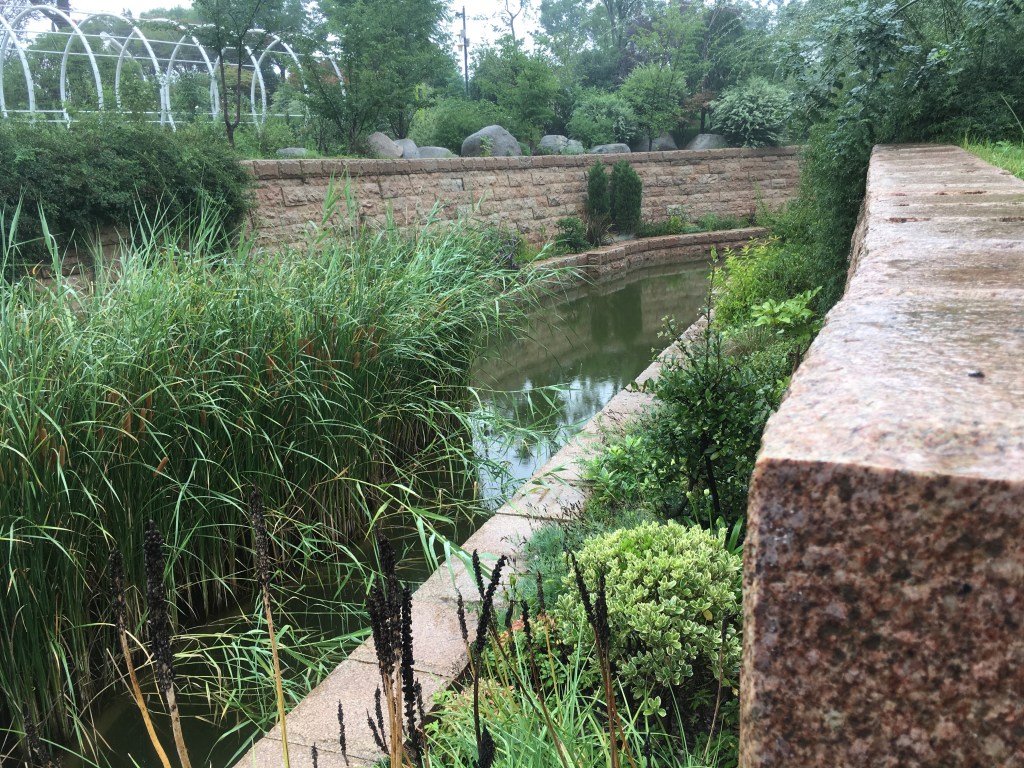
Water is life and occupies a central place in the garden. This can be in the form of human made lakes, ponds, streams, fountains, or just a simple basin. There is something reflective, tranquil, and calming about the presence of water. Whether that be the sound of a gentle trickle, the gush of a waterfall, or the mirror like surface that drums in radiating circles when the rain falls upon it.
In this essay we will start with a walkabout to look at water features far away from here. Then, we will come home to San Francisco, and observe water features close by. We will then discuss their basic construction, maintenance, and care over time. We will end with the ecological benefits of well cared for water elements in the garden, and a discussion of their viability in light of severe drought and high maintenance requirements.
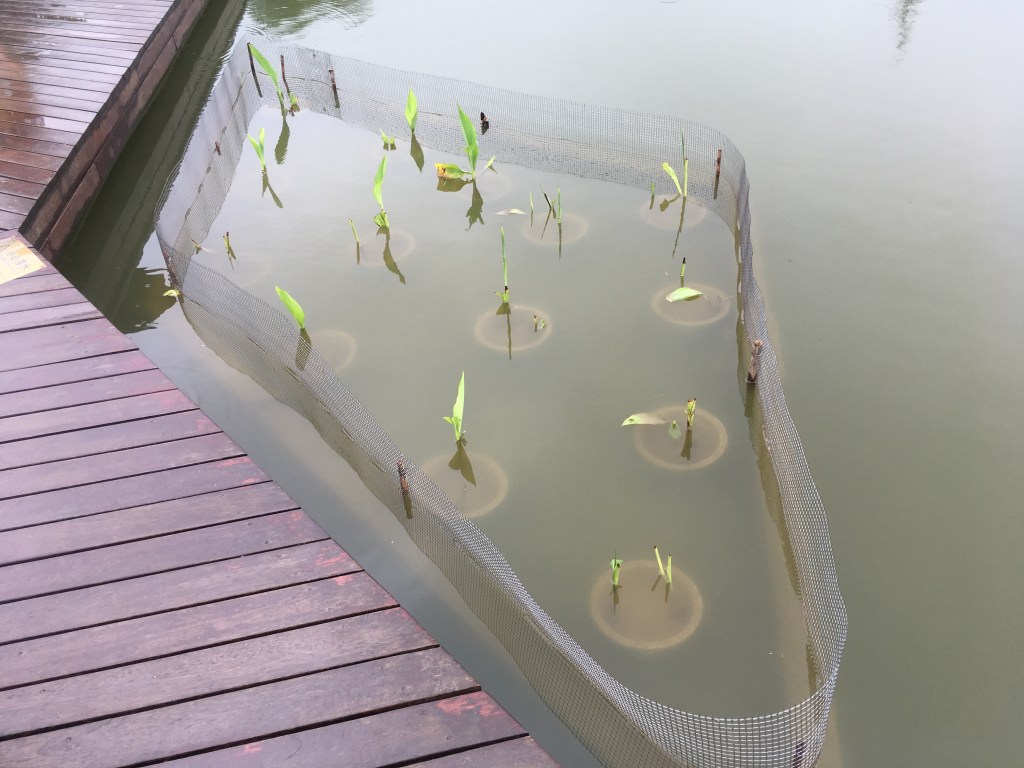
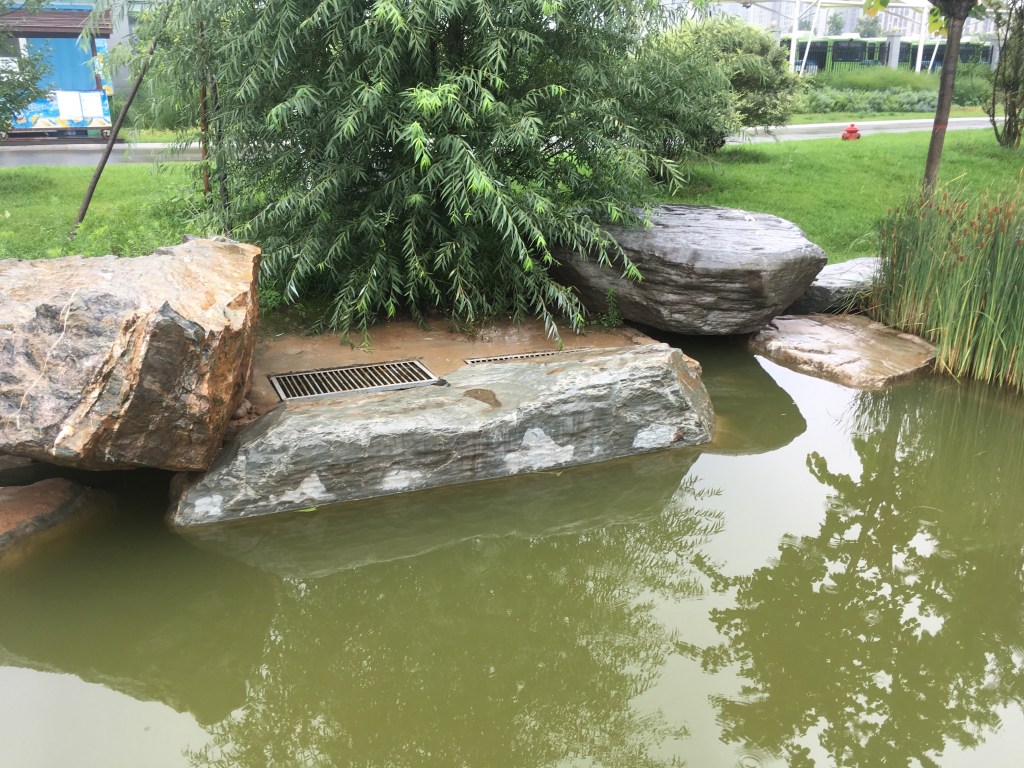
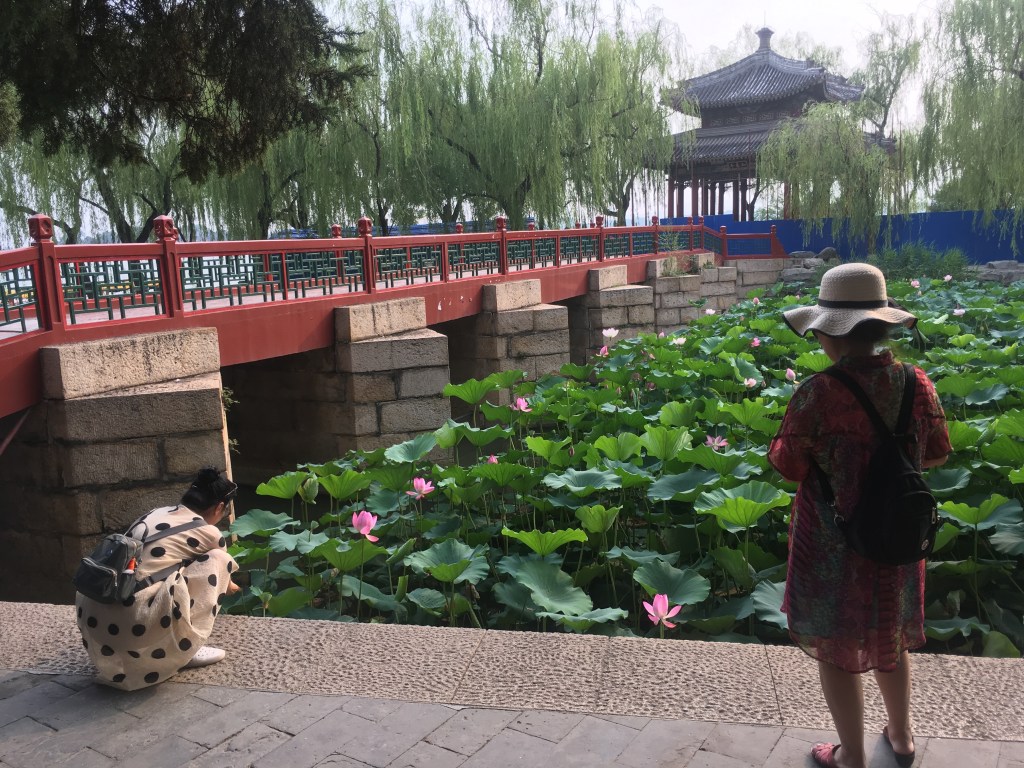
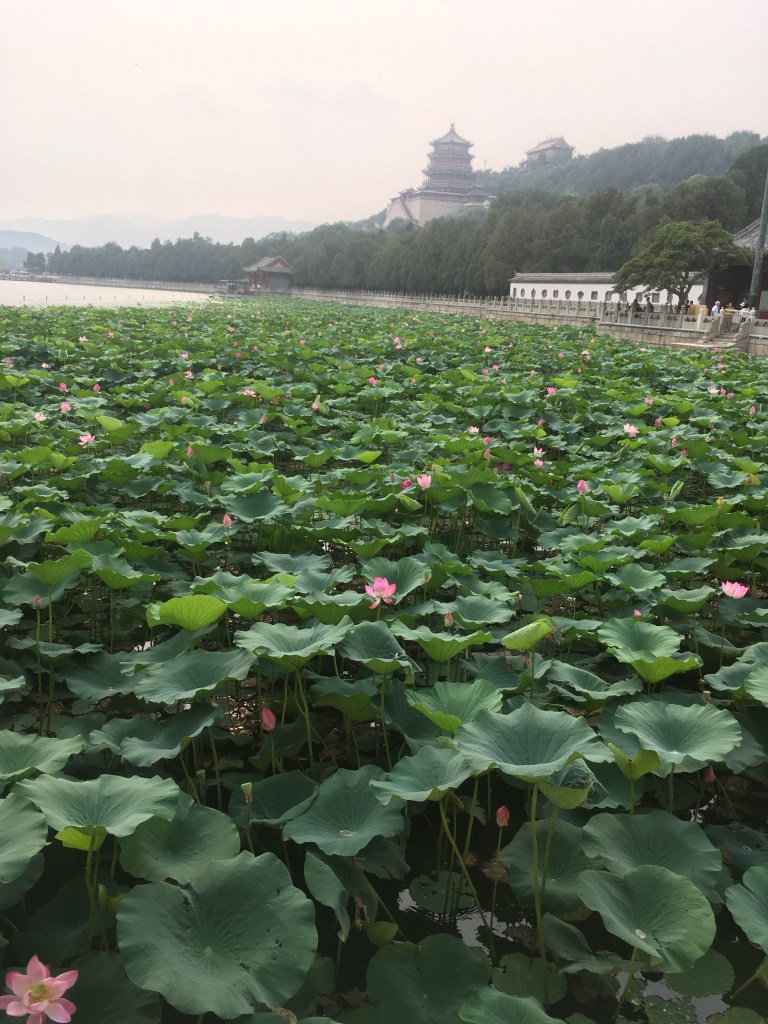
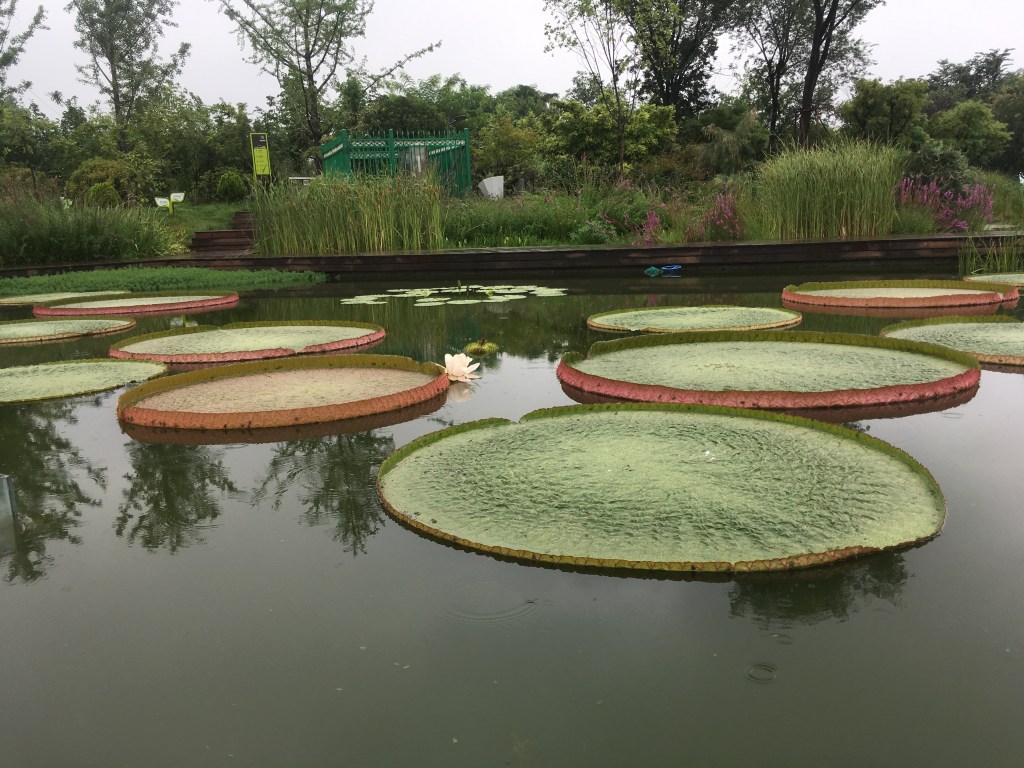
Chinese gardens are big on ponds. The people don’t mind the green algal water so much, and they enjoy the cultivation of koi type goldfish, water plants like lotuses, and the incidental visitors like frogs and tadpoles. Oftentimes, water plants are grown in pots in a fenced off area, especially when they are young. Otherwise, the fish would nibble them all to death before they were established. Plus the pot helps hold the roots together and hence settle down. Its helpful in a pond to have an over flow drain in case of heavy downpours, so that the water does not end up flooding the walkways and buildings nearby. Aside from lotuses, papyrus are also a good water plant, having neat structural form, and not minding its roots standing in the water. A canal of water running through a garden is a remnant and reminder of old time farming irrigation and implements like water wheels and crops like rice paddies. Additionally, the water raises the humidity and allows for the growing of plants that like that sort of ambiance – of being next to a creek. Plants like columbines, horsetails, sedges, dogwoods, and so on.
Southern Spain has old time water features like moorish fountains that are scattered throughout the Andalucian towns. They give you a nice respite from the heat and connect you up with the Sierran snow melt flows. Oftentimes the water is hard, cause its been running past the limestone and picked up all that cal, calcium. Where the water originates for distribution to town dwellers it is the nacimiento, the birth place so to speak. From there it is parceled out to the local farmers with gates and channels by folks who work as an aguador, like a water keeper. There is a lot of old fashioned marble type fountains too in the classical style here and there. More so in the public places and fancier tourist plazas.
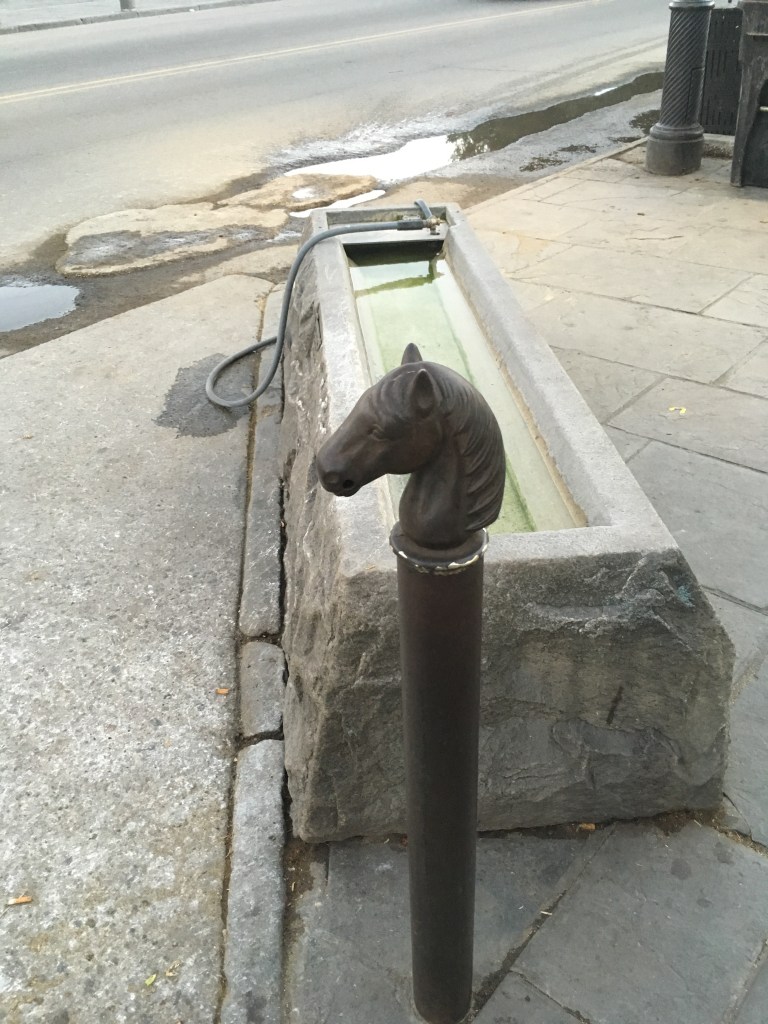
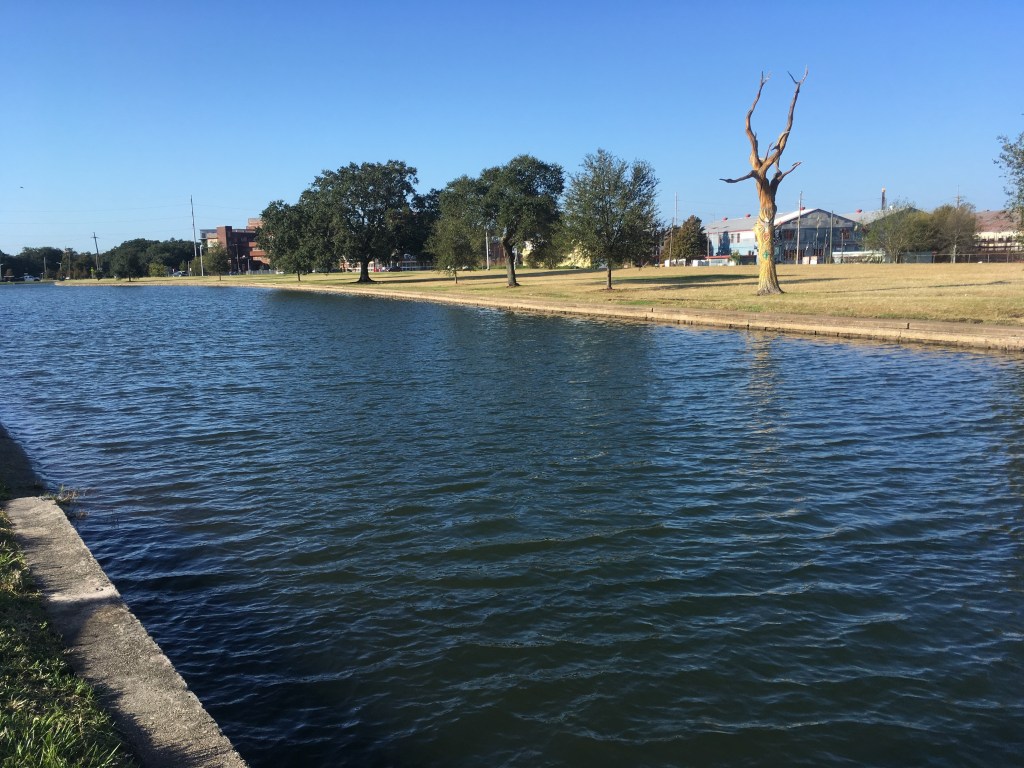
Down in the south, in New Orleans, water is all over the place. It back and forth through town and on the outskirts too, where the swamp cypress trees meet up with snapping turtle and the alligators in the bayou. At the botanical garden there was a symmetrical pond, with plants labelled, in the formal European design. And across from the beignets and coffee restaurant was a water trough for horses.
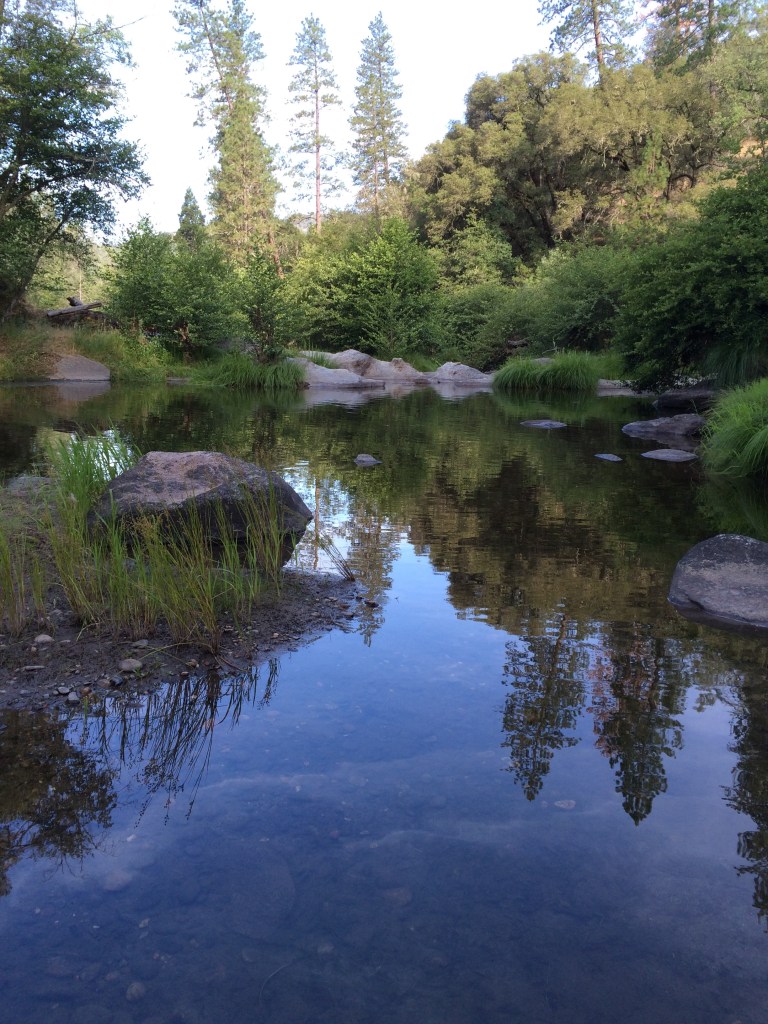
Back home in California, the state is branched by numerous rivers going mostly east to west. They have names like American, Russian, Eel, Mad, Merced, Tuolumne, Pit, Feather, and Yuba. It is imperative that you, as a designer, visit the a sandy bank along the river on a hot summer day and take a plunge into a deep pool lined by granite. Then you bake a little while on the willow and alder banks. This will provide you with an appreciation for water and light, and inspire you as you create water features of your own. This here is a glimpse of the Cosumnes.
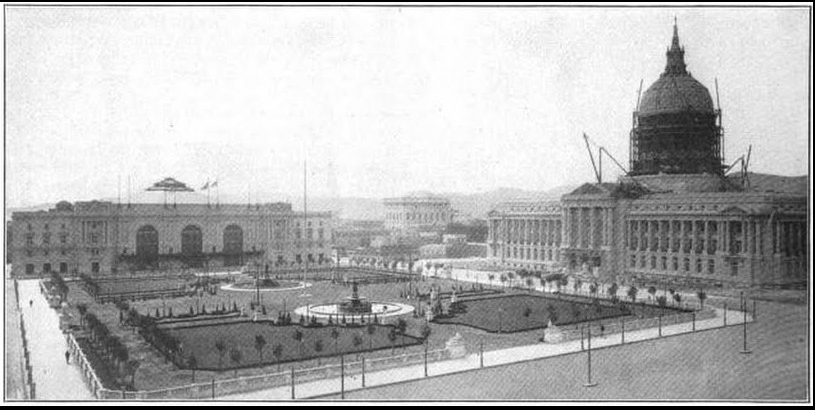
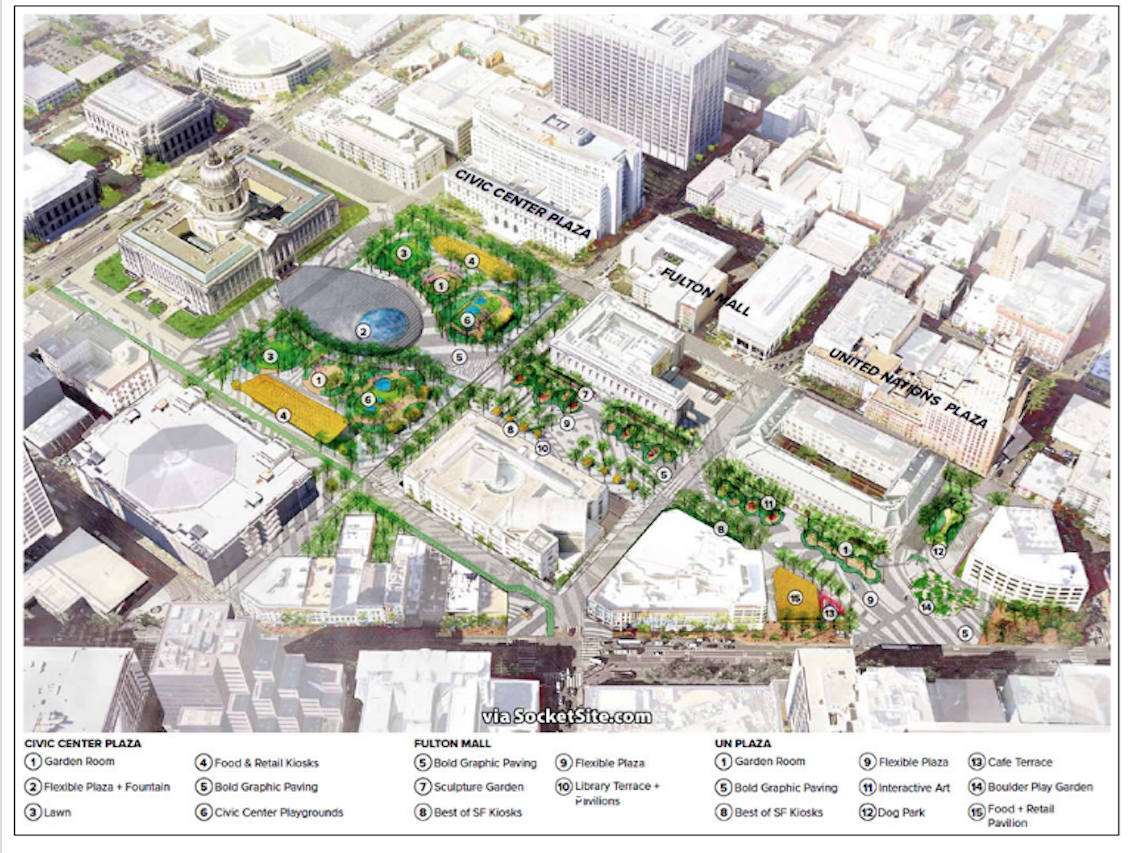
Here at the Civic Center in San Francisco, the design of the plaza has changed over time. Over the past 100 years, it has gone from a formal, monarchal, decadence to something strictly utilitarian and minimal in flowery touches. It once had water features, there are none today. Check out the epic round fountains and the long reflecting pool that once ran down the middle. In the latest rendering by landscape architects there is a water feature again. Not sure about how the use of others’ photos is these days, but this set is all from google images. So thank you to google and the photographers.
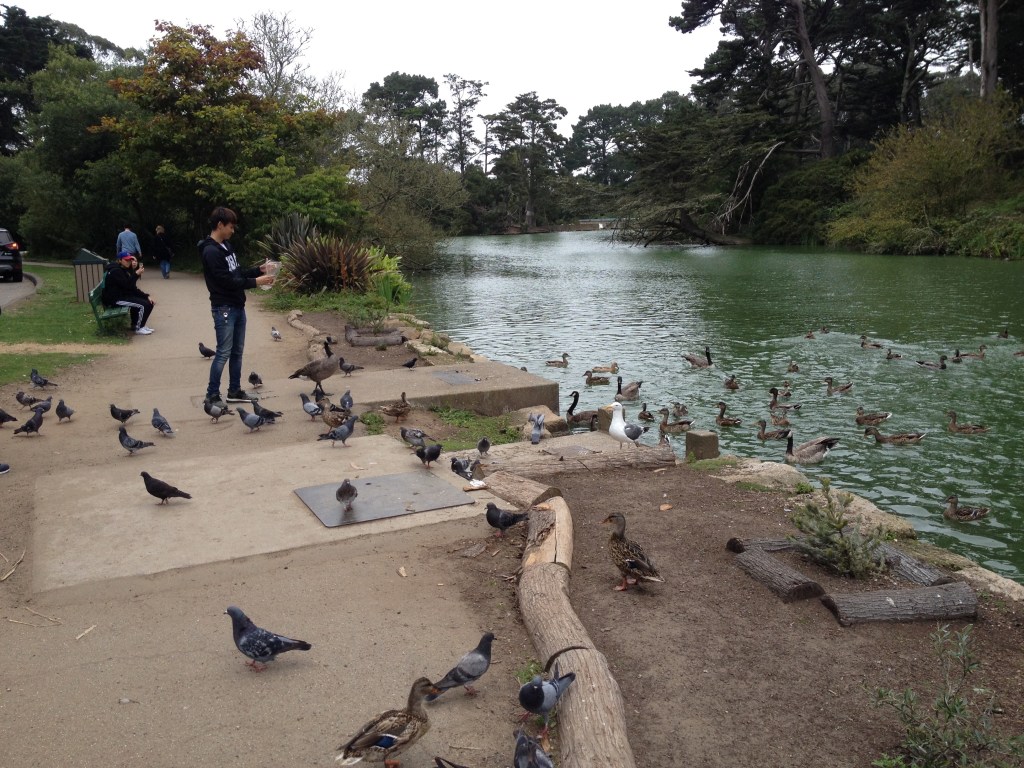
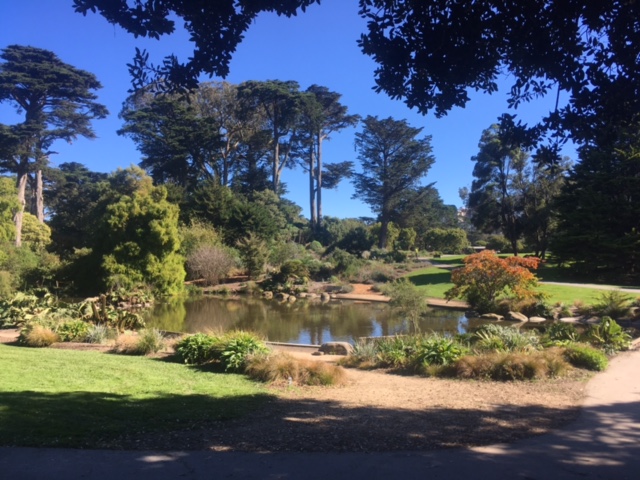
Heading into Golden Gate Park. A fun spot to go to is Stow Lake which is about in the middle of the park. There, you can rent pedal boats and cruise around. The water is recirculated via large pumps in pump house shacks. It goes up to the top, then down the water fall with gravity. Over the years, people have released numerous fish into the lake. Plus there is the constant feeding of geese, ducks, coots and copious guano. This is why the lake is green with algae, from all the wealth of nutrients. This is why this is not a lake for swimming in. Once in a while when heavy rains overflow the banks, you can catch large eels and catfish that wash out on the road.
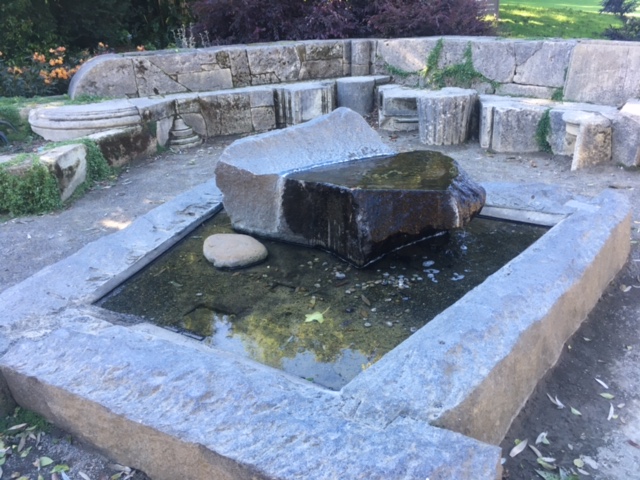
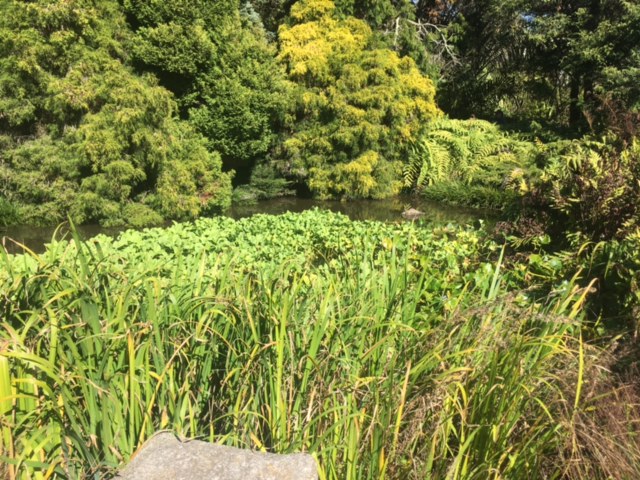
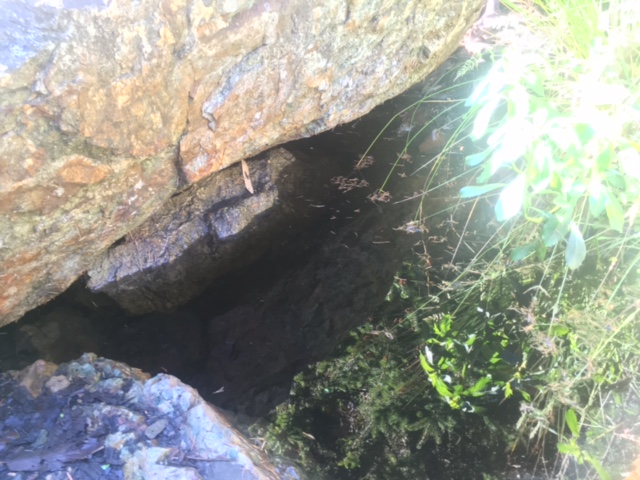
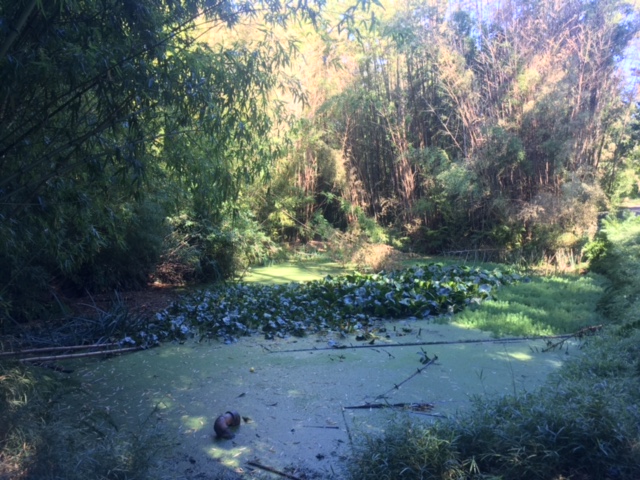
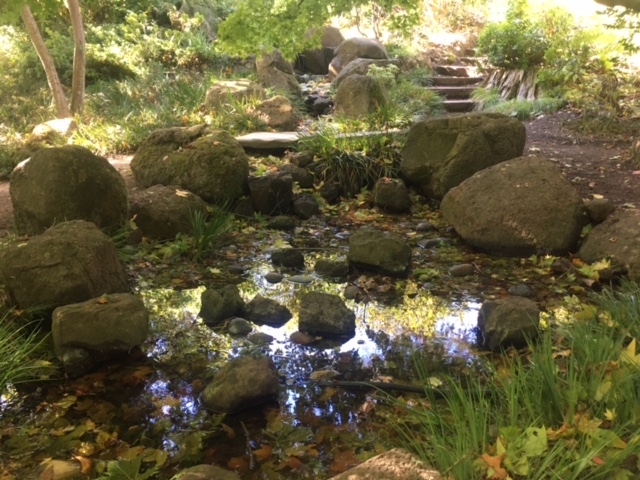
Inside the botanical garden, almost every individual geographical garden has some kind of water feature in it. Sometimes it is just the suggestion of water – like a dry stream bed of roundish pebbles and sinuous lines in the Australia and the California gardens. There are two fountains made of granite, concrete and tile, with pumps. These are at the center by the big meadow, and at the library courtyard entry garden). In other cases, theres a series of natural ponds – a system of well thought out, expertly crafted, no pump necessary, interconnected features that lead from one to the next. The connecting pipes are made of terra cotta about six inches in diameter. In temperate Asia, the head waters are at the Annelli Pond, then water travels to the dwarf conifer pond, descending to the bamboo pond, past the big dawn redwoods, then to the previously carnivorous plant pond, and finally under the redwood bridge and ending at the California native garden pond.
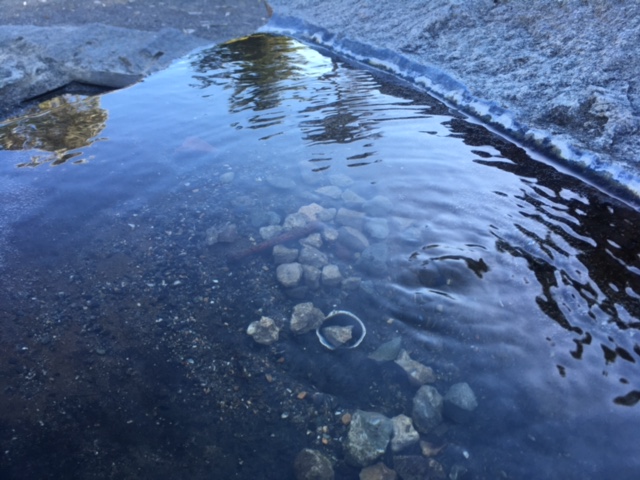
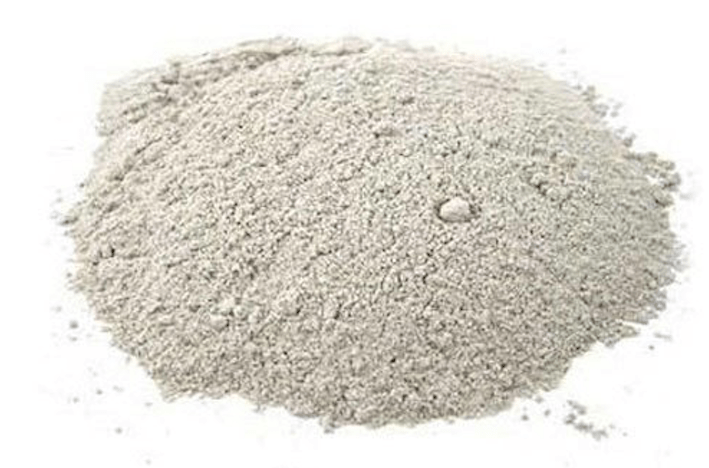
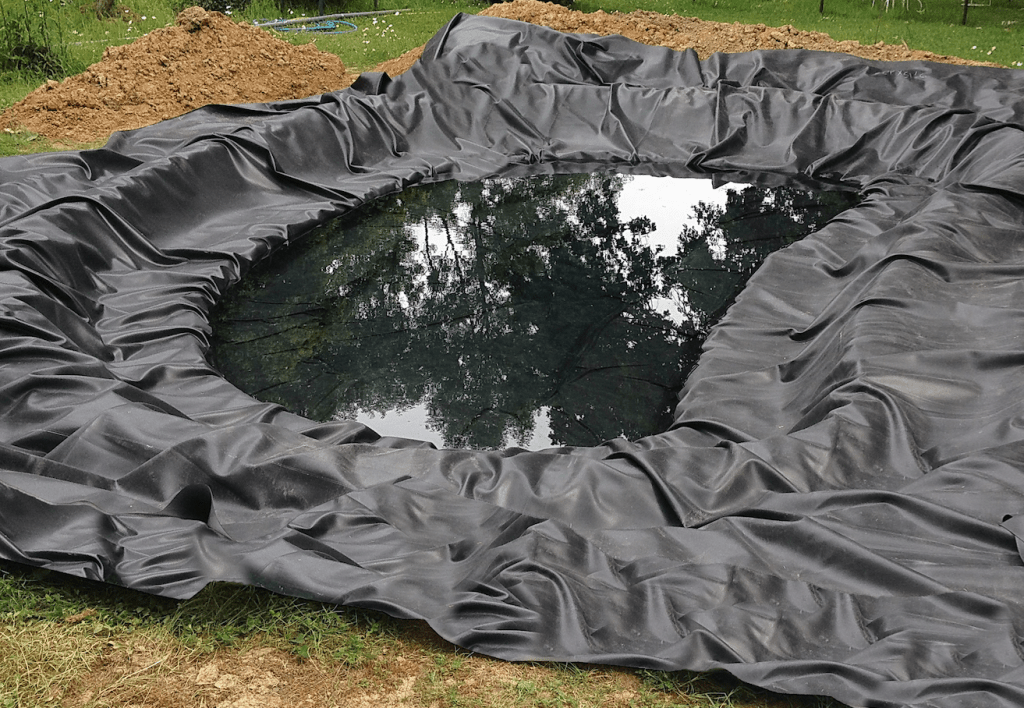
These wonderful ponds are constructed in the old time manner, which is lined with either concrete or with bentonite clay about six plus inches thick. They will silt up over time, and require a gardener to hand dredge a few tons of mud and vegetation a year. The clay bottom seals itself for the most part, and are only problematic at the edge where coyote and raccoon dig for crawfish, causing small leaks. Hydraulic cement to the rescue! Again, an attentive gardener is the only remedy. Nowadays many water features are lined at the bottom with EPDM rubber that comes in a large roll. The sides of the rubber pond liner are then held down with rocks. Just make sure you don’t go digging or poking around the bottom of such a pond because you will puncture the membrane and have to drain the whole thing to find the hole and fix it.
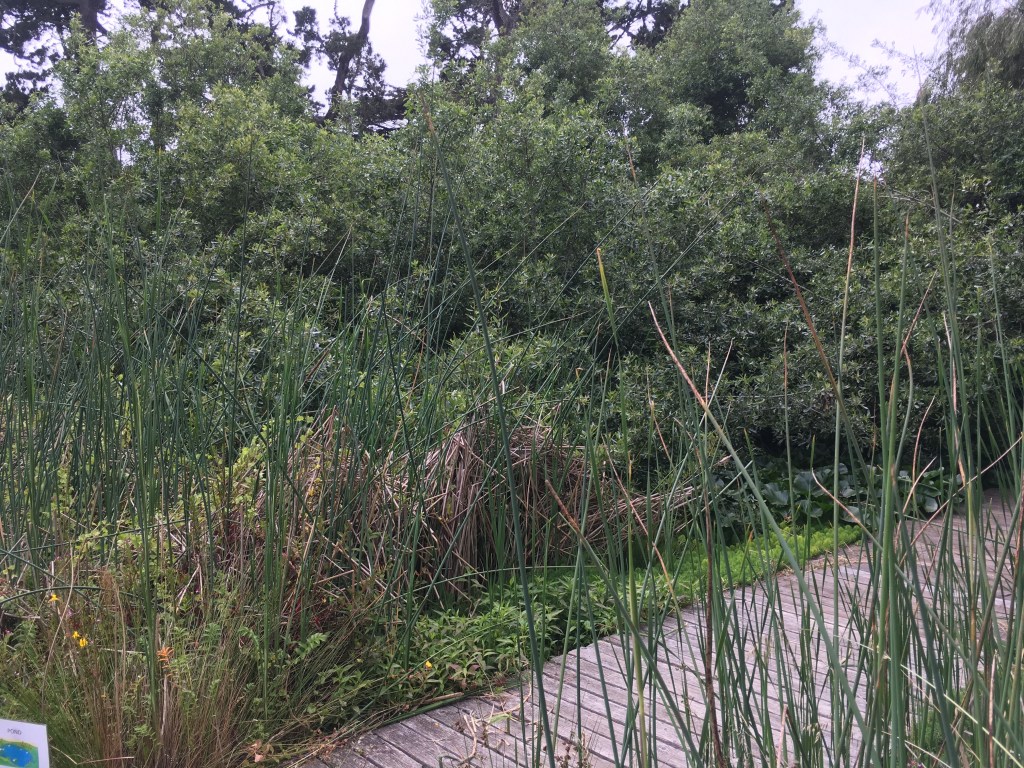
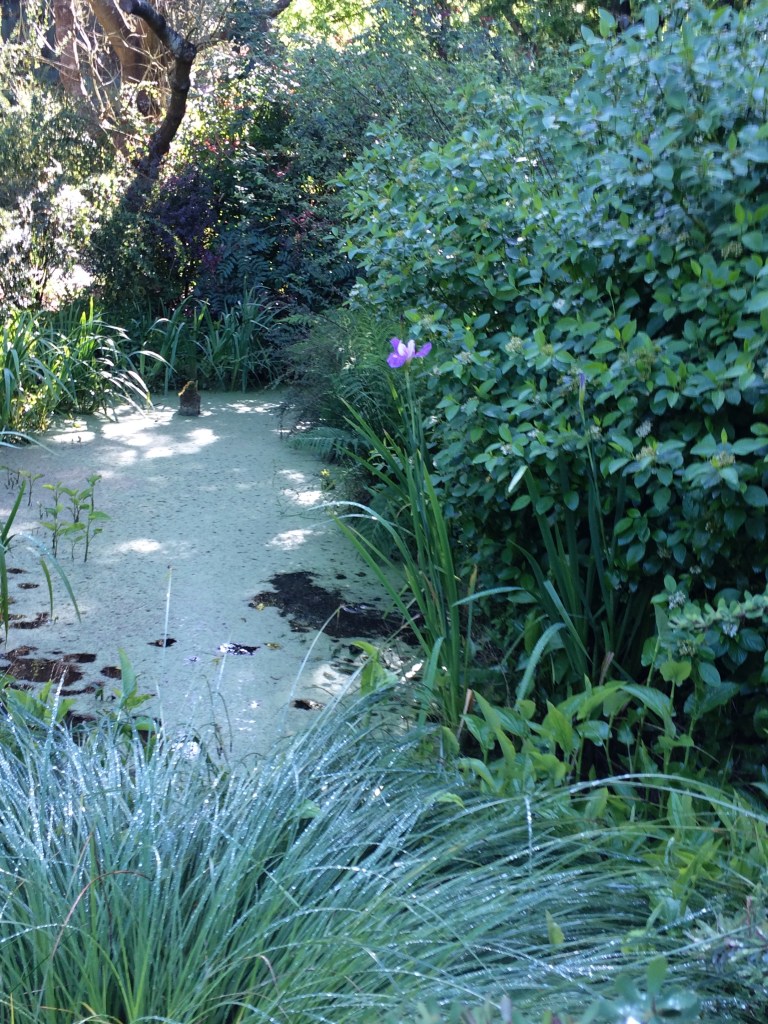
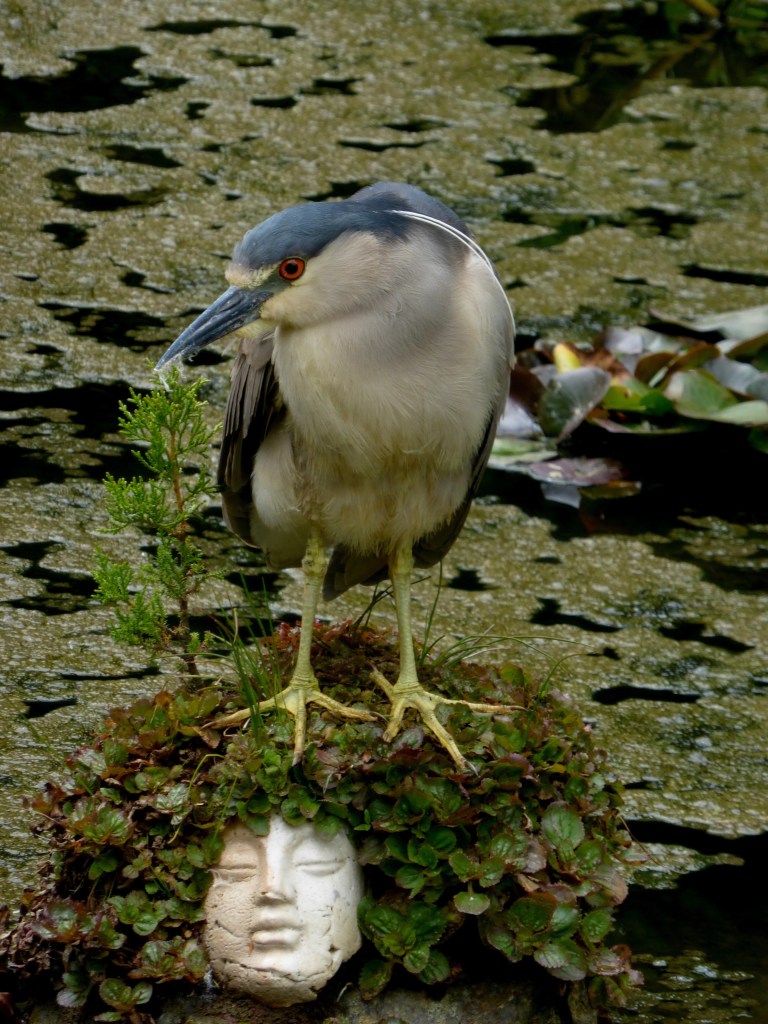
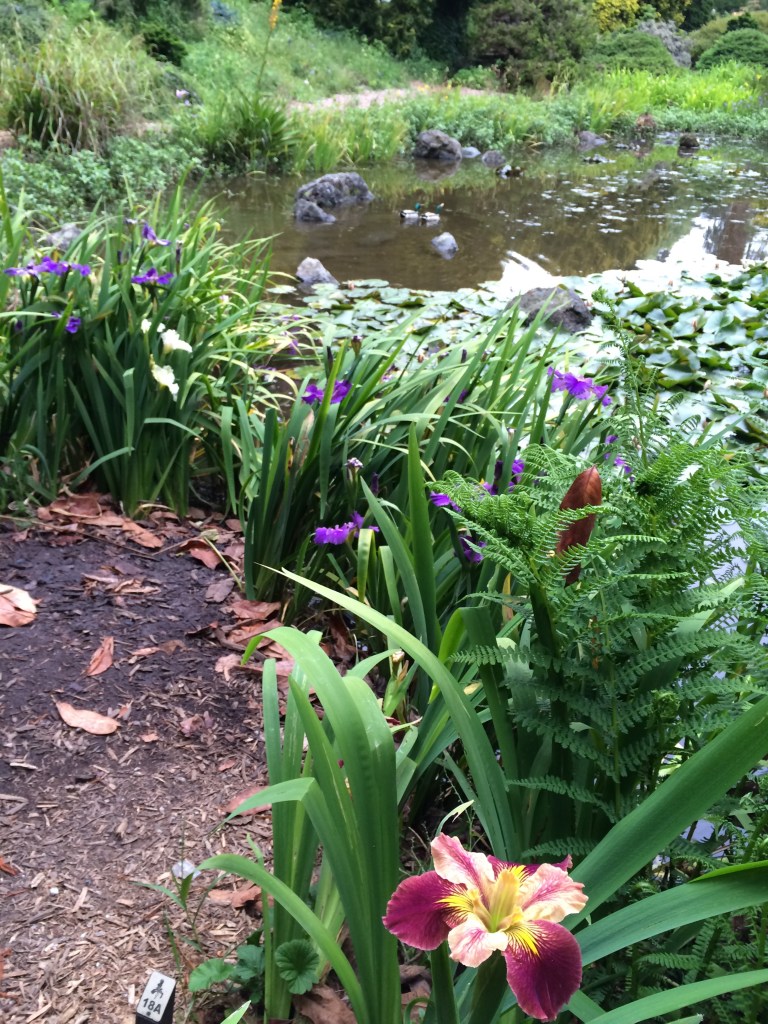
If aquatic weeds are weeded, open pockets are maintained, and chemical pesticides are not used, then fish, dragon flies, and damsel flies will also thrive. There is a local frog called the red legged frog which used to live in the garden, laying its eggs at the edge of the ponds. Have not seen it in a whiles… Plus, birds love the water. Or more specifically, some birds love to hunt in the water. Healthy water will bring all sorts of fun critters to your garden, and make life a little bit more spicy and flavorful. It really is worth it. The wee bit overgrown pond at the John Muir nature trail is here, followed by an old view of the carnivorous plant pond many years back when the gardener performed periodic actions mimicking periodic floods.
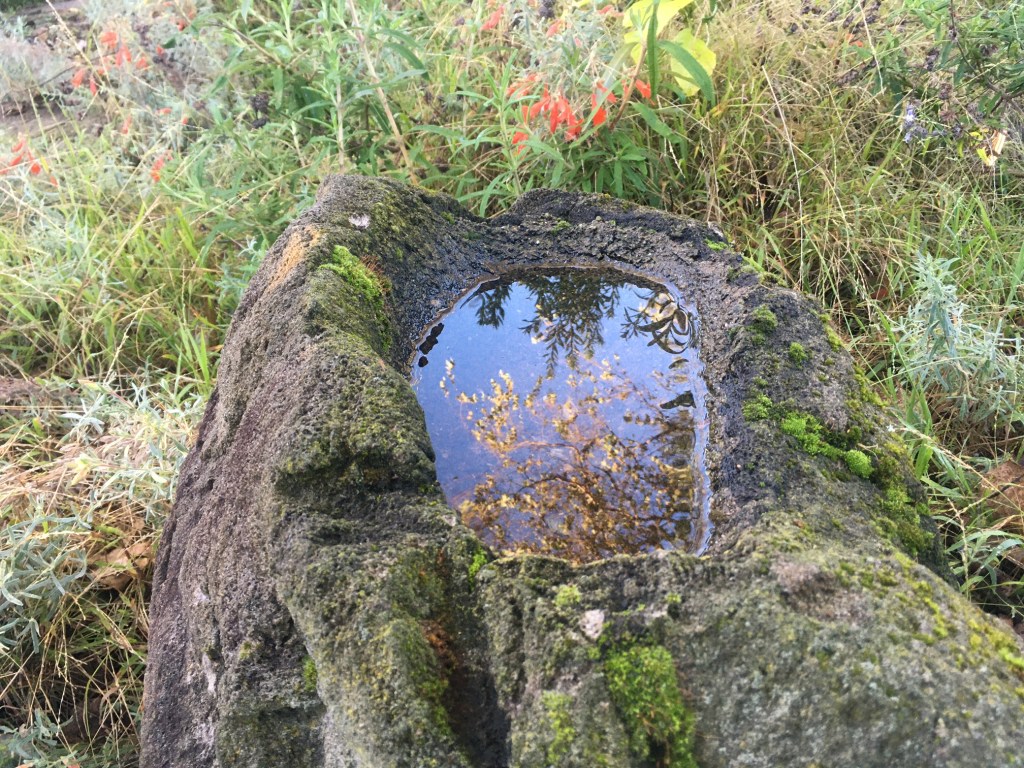
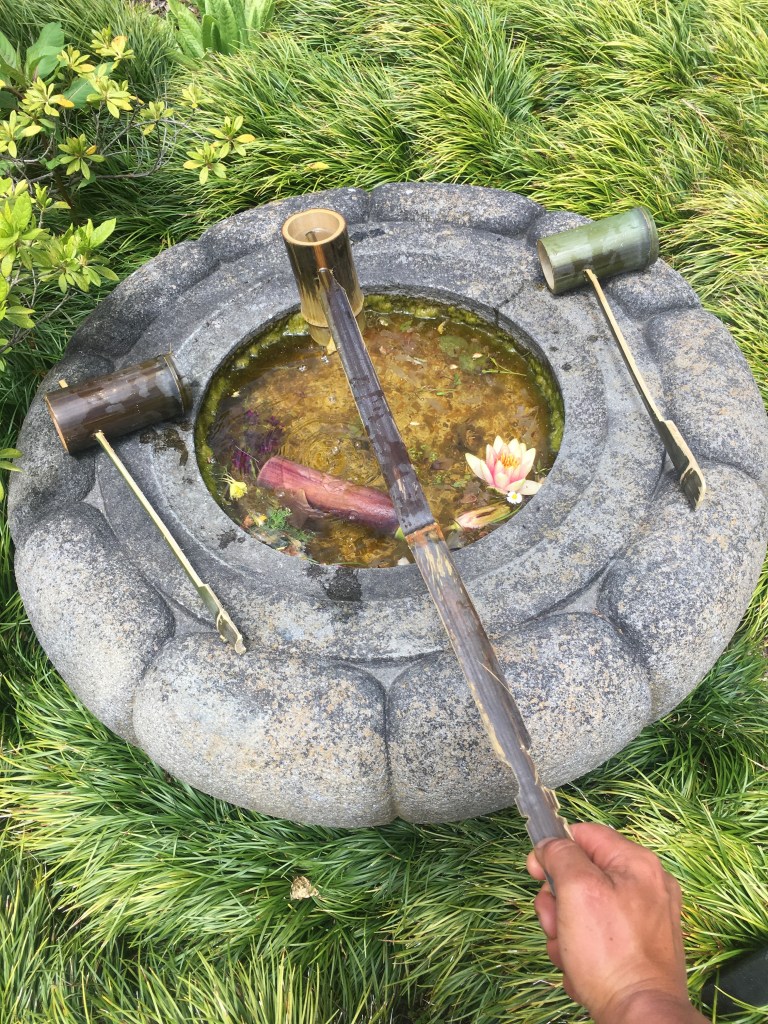
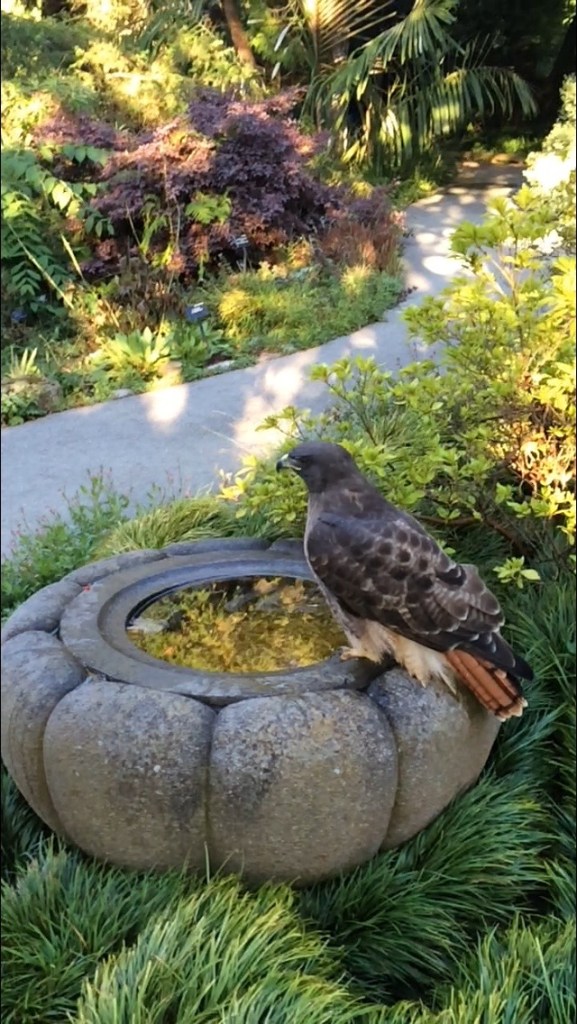
The water feature does not have to be a big deal. It can be a basin that is cleaned out every few days and refilled with fresh water. It can serve as a vase for flowers or a bird bath. The important thing is that it does not become stagnant and start to breed mosquitoes or disease. This sort of water in a pot design used to be relatively common and in vogue. At the local nurseries there used to be a water plants section with taro, cannas, and water lilies. And folks would have mosquito fish or small feeder goldfish in these basins. Nowadays its all about vertical gardens instead. Who knows if and when the simple water features will make a come back?
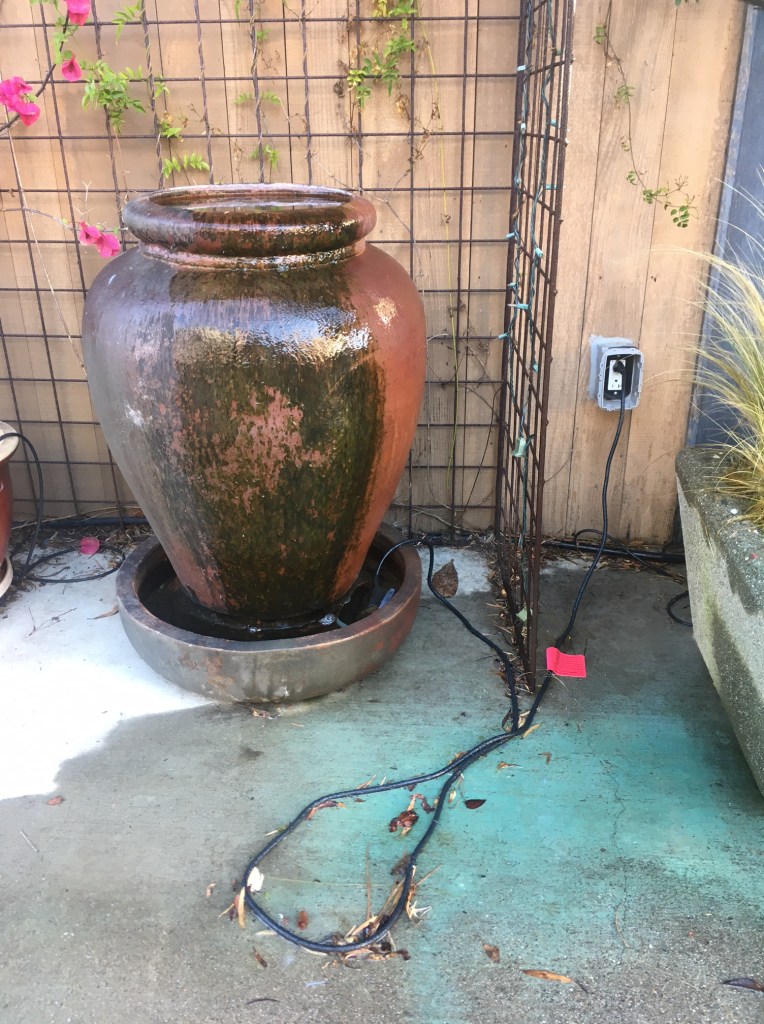
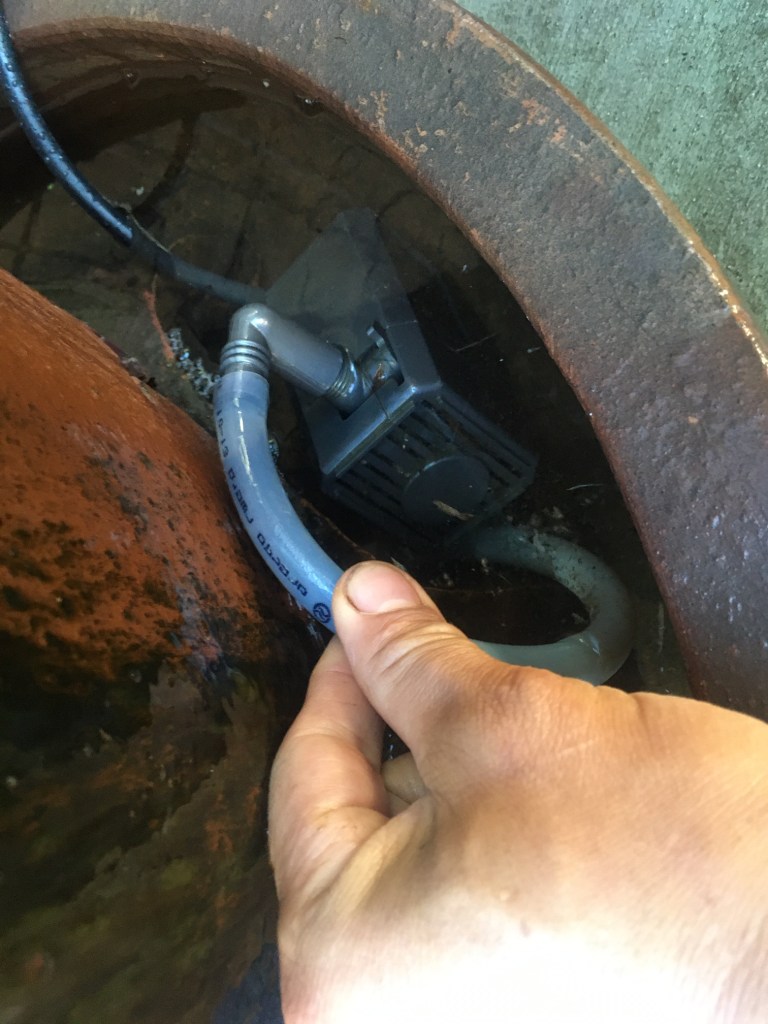
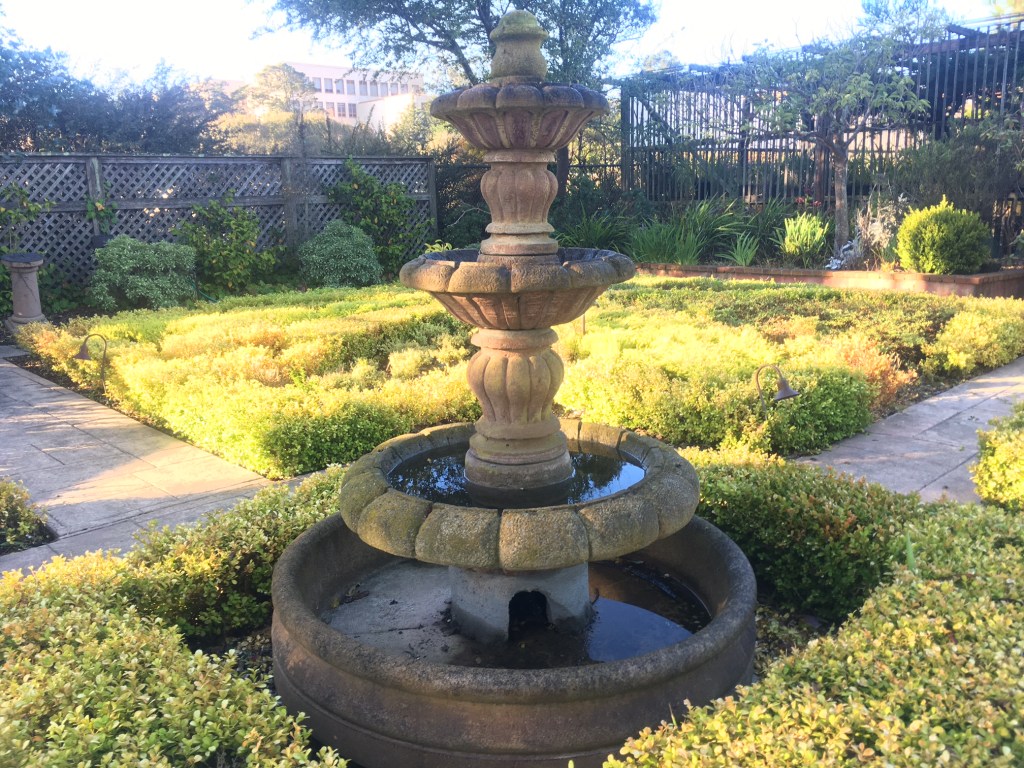
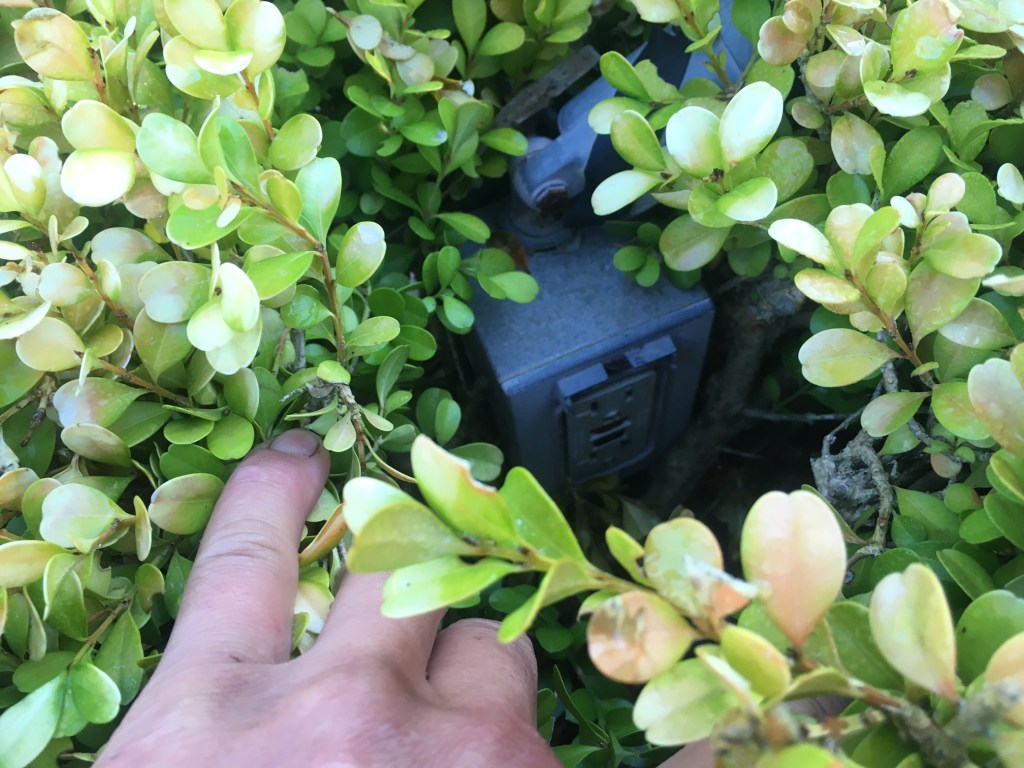
A fountain is a really easy thing to make. Basically there is a small pump at the bottom of a reservoir that sucks water in, then pushes it up a pipe. The water trickles and drops back down to the reservoir on some kind of ledge or side or lip. Thats it! You do need a GFCI outdoor outlet to plug in the pump, and a pump that is capable of pushing oh so much water up a steep gradient at a measured rate. A few problems can and often do occur. One is that bits of fallen debris and gunk clog the pump. No pump, no fountain. So make sure in your design you can access and clean out the entire contraption. Or find or invent a tool that is capable of doing so. Filter elements help but they too can become clogged. A small amount of chemical like chlorine can also deter the growth of algae. As can a design where the water is minimally exposed to the light and spores. That is to say, if the reservoir is underground in the dark, then less stuff will be able to grow in the water. Pay attention to the fountains out in front of the shopping centers and you will understand this preventive design technique. There are also UV lights which the water swirls around as it is pumped and filtered. The ultraviolet light kills algal spores and keeps the water clear like in a high mountain trout stream. Then theres the skimmers. And gravel hosting beneficial bacteria. And charcoal media, and so on until you are fully immersed in aquarium culture.
Aquatic plants are of fantastic variety. Some can be entirely submerged all the time, while others like their feet wet only part time. A handful of the plants that ‘take over’ for us are duckweed, parrot weed, willows Salix lasiolepis, cat tails, and tule. Water primrose can be a fast grower too. These have to be cut back time to time in order for the pond to be balanced and harmonious. That is when you don a pair of chest high waders and jump right in. The water weeds are great compost.
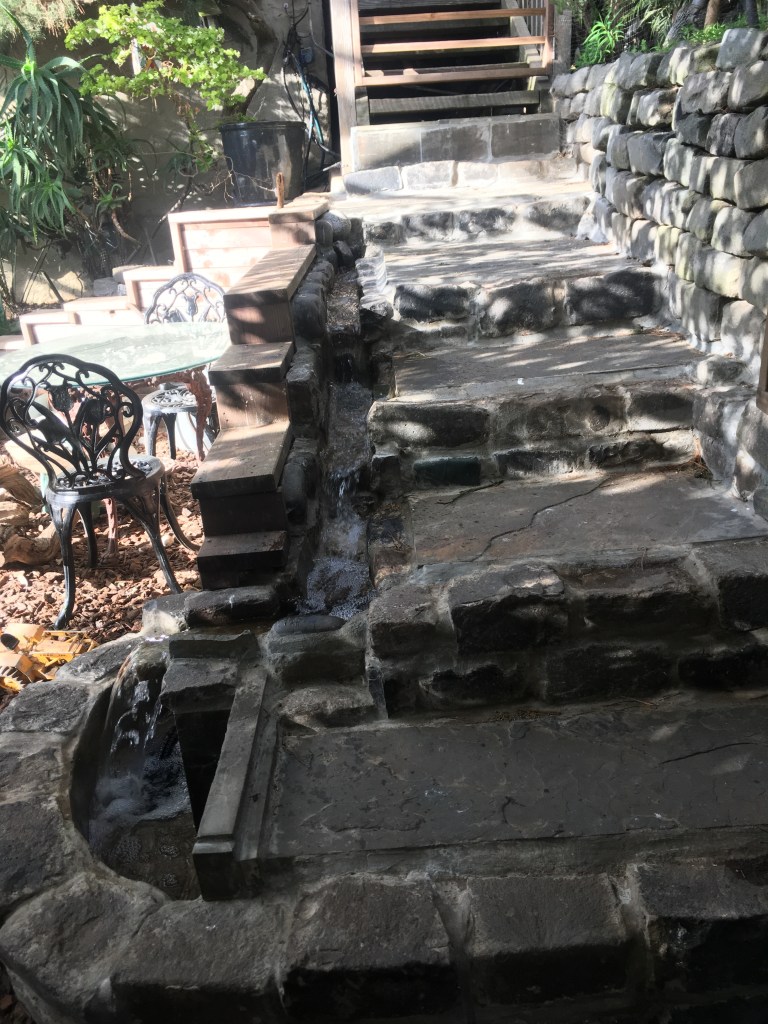
If you start to look for water features they are still around, just not as much as in the days past.
They do take work to maintain, and yes we are still in a drought. Nevertheless, in the western parts of town especially, evaporation is minimal and the water is just going around and around. It may cost you a little money in electricity and a bit of time in keeping it clean; that’s not too bad for the ambiance it creates. The water really is soothing in the garden, and takes the mind to a place that is not busy and stressful. You turn into a lizard on a sun lit slab of volcanic rock, time is flowing like water down to the sea, and the swirling gurgling liquid bellows bubbles and dreams.
Assignment: design a water feature and draw it on two or three pages. Plan view, elevation, and or perspective. You might want to experiment with different materials and have water slush and fall over them at different rates; and fall into reservoirs of varying depths and textures. You are observing the pattern of falling water, its clingyness, and the sounds it makes. Good luck!
































































 Mission Azul