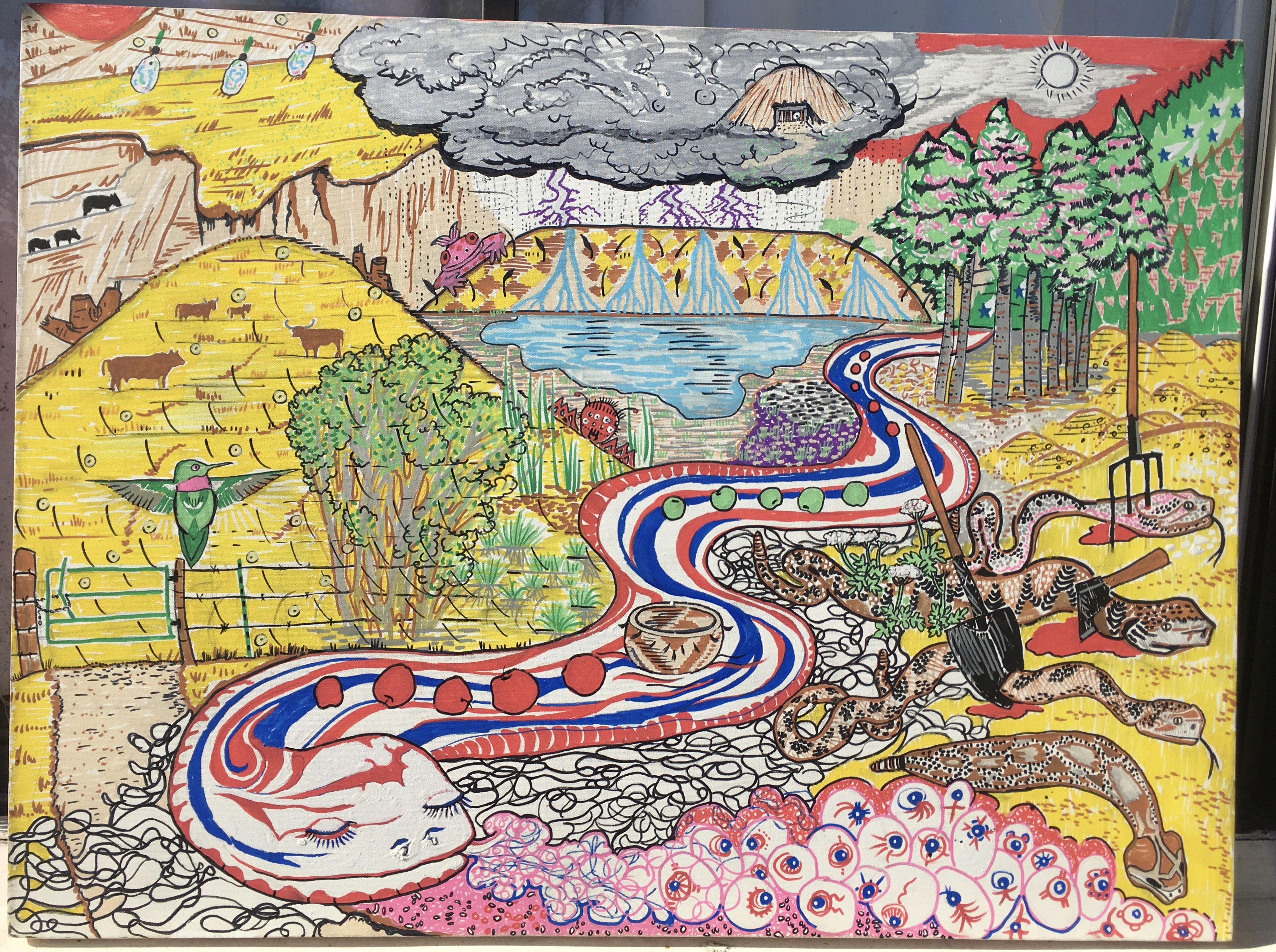
Super patient gentleman Joey lent me a book by Greg Sarris called Weaving the dream. A book about a pomo indian weaver named Mabel McKay. After I read it got all itchy inside and couldn’t stomach it. The concepts were so so so so indian. How else to describe it? Luckily there was a blank canvas in the garage and I could vomit out a review in colors. I used these color markers by a company named posca. You can paint real fast with them but I am limited in any ability to blend or mix or brush like with tubes of goopy paint. Plus there was no orange in the box, just mostly all primary type colors. So if the picture is a little gaudy sorry about that. If it was too rushed sorry about that too, just seems scenes these days running by at clip neck pace and if I pause, ten years pass. Hence got to make the best of a few hours of clarity or inspiration.

If you want to understand how to weave a dream of your own, you actually have to read the book. No substitute for stories first hand second hand. This just a few of the elements I remember from it while digesting.

There was a part about a white snake in the river. Some kinda all powerful spirit creature that probably gives birth to life itself as it sleeps and breathes creation. In chinese mythology there is a white snake who can change into a human; she is like really scary and evil. Real pretty, real bad news. Then there is the band whitesnake from the 70’s. There was just too much baggage with the white snake, so I made it red white and blue. Red white and blue snake river. Mabel’s work floats in the river of dreamscape time that is why theres apples and a basket in there. If I biffed up the basket in terms of its authenticity and details I apologize to the old time indian tribes that could tell the difference between north and south and riverine and upland basketry. Us newcomers can hardly tell the difference between a rush and a sedge, much less the difference between the thickness of the roots seasonally, or be able to compare the ease of splitting from one patch to the next.

On the right side of the river is the wet side, the watershed side, the shady side, and also the side packed with rattle snakes in this painting. In the story the rattle snake comes as a helper to assist in medicine doctoring duties. Rattle snakes everywhere, that is awesome! But of course the white folks do not appreciate this and do not understand. Besides the Christian motif of snake as pure evil that got us all thrown out of the garden of eden, there is the very practical aspect that rattle snakes are poisonous and you do not want them around. That is why I killed most of them with garden implements of farmers and ranchers. But I did leave one of them to live, the really short stubby fat one in the front. Can’t help it, really do appreciate snakes. Same like with sharks or ling cods or coyotes and things, just great fascinating creatures. So in amongst all this blood and snakes I planted the angelica root medicine that old timers smoke, to balance the chi so to speak.

On the left is the open exposed lit dry side of the valley that turned to gated cattle ranches of annual grasslands after the oaks and indians and acorns were swept away. But down by the river and the flat muds theres still patches of basketry materials like sedge and willow and rush too. The hills become sidestepped with parallel line trails from cows and geology, the edges lined with barb wire. In the dreamscape, these are the round and round and round spirals of a coiled basket. If you could see the hills turned upside down you will realize that the landscape is baskets all baskets, spirit all spirit nothing more nothing less. As a reminder of this, hummingbird is there, full of motion, in a standstill as a flying cross. Of course no landscape is all pure and good and without danger. In the story theres plenty of weird crazy bent out of shape spirits that inhabit our realm. Seemingly for no reason – angry frustrated lost and disenchanted spy like beings out to destroy the world. So I painted them there crouched in the hills, a salamander fish thing and a spider antennae thing. Was tempted to put them in cages or stab them with picks but thought it best to just leave them be.

In back of the valley lies the flat mesa of a hill of a basket that is draining rivers and getting pounded drenched by a thunder storm of epic proportions. Lightning and flash and kaboom kaboom thundering action. Somehow in this story people and weather phenomenon are intimately connected by electricity and mana. So when good and significant people die, the sky actually sheds tears or undergoes an emotional train wreck of a transformation. Pretty wild stuff, I agree. At the base of the mesa is a lake, probably shallow Clear Lake where blue gill and bass roam chasing after little teeny bait fish. Very likely a good spot to gather materials for weaving, and chat with the neighboring tribes.

Atop the mesa is the silvery clouds of the storm and a red sky full of moon. Slow drift paste of thin clouds sheathing the bright white glare of her surface. And nestled within the clouds, there can be only one thing – a roundhouse full of indians dancing and singing and making jokes, dreaming everyday into existence.

Hahahhaha. C’est tout fini! Or perhaps just beginning…

Usually this chapter, I show this painting I made called our Lady of Black’s Beach and tell the story of how Maui was cracked in half by Hine-Nui-Te-Po when he tried to swim up her birth canal. Then go into detail about Dave the Tank marginalies or Bruce the Barbinskate, Jack the lego maniac and Bob the seal who lives with Corona the dog in a shack at Rosarito Mexico by the power plant and taco stands and ship wreck in the line up. That painting is about the landscape called the mother ocean. But I have already told a few surf stories and try not to be repetitious.

Then there is a painting about the mojave desert called Zzyzx, a scene of a lump of a hill named San Bruno Mountain, a gathering in the forest that goes by mendocino woodlands, and the rainforest we visited for our honey moon by the river of secoya territory. All different kinds of landscape designs with distinct feels.

Well never did tell y’all about this painting called Alcoina. Its kinda rough in a way, not sure I ever really finished it, but good enough to tell a story by so here goes:

Theres a little town in the south of spain. That is where my wife’s family is from. She got a mom, a dad, and five brothers and sisters. She the littlest one.

Theres town, and theres country. Town is the church called san juan where all the celebrations and memorials go down and loquat tree and roses out front. Streets are narrow of hand laid pebbles and cobbles that barely fit a fiat or a citroen or a seat with pelargoniums hanging on the walls. Past the hardware store is a yellow colored convent with brick columns and some young adults rolling a cigarette of hash and tobacco across the street. Theres a central gathering space called the alameda where after dinner when its cooled off you go for a walk and see everybody out and about. Go back and forth chatting gossiping while kids are running circles around the canes and walkers and horses with braided tails. Adolescents roaming in packs and courting or chillin’ at a sit down at the burger joint.

Country is woods of pines planted by general franco and understory of feral pig tracks and limestone. In the clearings theres rosemary and thyme and rock rose and wild carnations. Fields of esparto grass punctuated by asphodeles and teucrium or a clump of palmitos chamaerops. Reminds me of cali with the big oaks, but add some carob trees and figs, and an escaped pomegranate bush or two or three. And the bright orange of a persimmon come december.

Water comes down as rainfall in the winter, running through the mountains and popping up in fountains all the way through town. Some of it runs in creeks, creeks filled with giant reed grass. Giant reed grass farmers cut to make stakes and trellises for their tomato crop. Some of the water runs in irrigation canals, of concrete construction with movable gates and valves introduced by the moors way back. Flood irrigation for hard corn and orange groves. By the canals next to the roads, its annual displays of wild pink snapdragon conejitos and red poppies and blue purple trachelium.

Besides fig, orange, and lemon trees, a couple of other trees stand out. One is the canary island phoenix palm with its majestic stature and robust form. The other is of course the olive trees that dot the hills, pruned short and squat, with ancient trunks and hardy yet fine foliage. Introduced by roman armies way back, and happy to stay.

The architecture is a mix. Its got the thick white walls of lime and interiors of sierran rocks and clay mud from river bottoms. The arches are north african middle eastern, the tile motifs are muslim, the theme is geometrical and repetitious mathematical. African is only about 9 miles away, after all.

In late january february the first blooms of the year arrive. They belong to the white and pink flowers of the almonds. They burst like sprays of phosphorescent seas all over the landscape.

Every easter, a week before sunday, every neighborhood decorates a big ol cross eight nine feet tall full of flowers. Its placed in the middle of the street and people and petals are scattered all around it. Streets are strewn and decorated with the pinnate leaves of palms. Usually the cross is made of carnations in red, or in white. It is like a competition but not really, just each group of ladies showing pride and joy, bound by the theme of resurrection. There is the Jesus statue too, in the alameda, another cross blended with the symbols of death and rebirth and renewal that spring brings.

Later, in may, is the romeria. That is when the whole town dresses up fancy and walks the two three miles outside of town to greet and receive the tiny little virgin statue hidden in a cave, found by the farmer and shepherds. That is why you see the bull dressed up in his best gear and the two brothers too, Antonio and Pepe. They are there to prod the bull along and do their work as the mamporero. My wife has three older sisters, they are there too. One is a politician activist name Ana, another is a botanist poet named Aurora, and the last is a great mom and grandma and baby sitter and cook and all around busy body named Isabel. Mom Maria is in the upper left, doing her flamenco thing with the tamborine sun, and dad Sebastian is on the right with the arching moorish moon, he is guardia civil and marine. But I mounted him on a donkey since I really like donkeys and isnt that how jesus went into jerusalem?

The whole design is a play on opposites – town and country, male and female, brother and sister, mom and dad, cultivated and wild, christian and muslim, water and earth, sun and moon, light and dark.

Thats about it. Feeling thirsty, I’m gonna go pick some grapes hanging off the top of dome, or catch a drink at the fountain with Loli.

Happy thanksgiving!

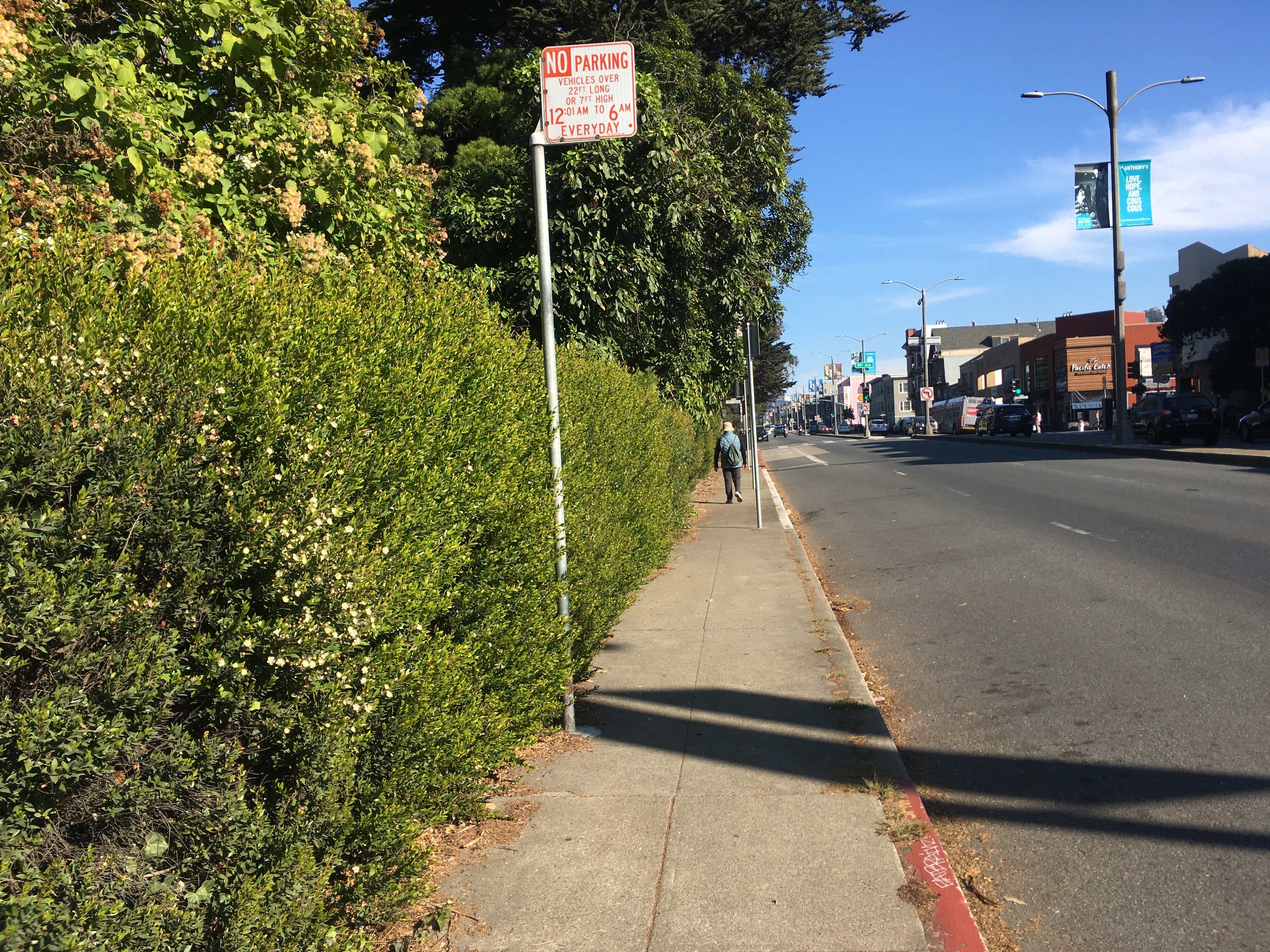
Hedges and lawns

Around here, most hedges are made of boxwood, or privet

dodoneae or podocarpus fern pine

pittosporum is popular too

or on occasion – griselinia and escallonia.

Gas station hedges are made of raphiolepis.

Look under the hedges for the irrigation spray heads or drip lines or soaker hoses

Oftentimes, there isn’t any

in clay soils, these plants require no additional irrigation once established.  

That is the key – once established.

For most shrubby woody plants in the clay loam soils

it can take two or three years of winter rains and intermittent summer irrigation

for the roots to sink down wide and deep, and for it to be well grounded

after that happens, you can come by once every couple of months to shear it to shape

and it does not seem to mind

it resprouts a wall of greenery right away without any problems

cause it has reserves, cause its embedded in the landscape

it helps that these plants

often have small waxy leaves somewhat resistant to desiccation

it helps that these plants originate from places with much much hotter summers

compared to a foggy coastal place like san francisco

if these shrubs are growing in the west side, in the sand

perhaps in the lean of a shadow of a house

they can still get by with no additional supplementary irrigation

they might get a little stressed after four or five months of dry weather

drop some leaves, turn a wee bit red or yellow

but they usually pull through alright

If they are established

and the rains come

aside from the usual suspects

there are a number of other plants that fit the criteria of a useful hedge

plants that grow a thick and full bush of smallish leaves

plant that sprout out readily even when cut back, even to bare wood

Plants that do not go leggy and tree-like and lanky on you

plants that are uniform and green green green all year round

What you don’t want as a hedge plant 

is a plant that is finicky and temperamental after a hedging operation

some leafy parts go vigorously nutty

while a whole nuther section just dies, leaving a gaping hole

Those plants you want to avoid, they are no good as hedges, better in their own natural shape

Ceanothus is one of those:

A few other drought tolerant plant choices (once established) are:

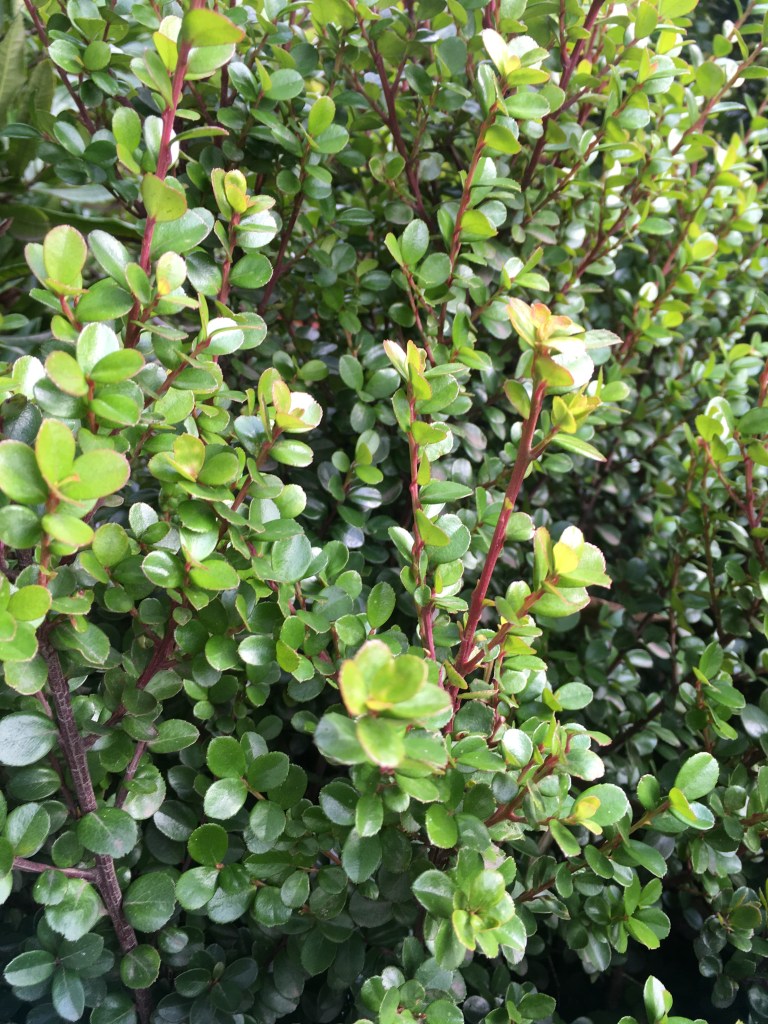
True myrtle Myrtus communis.  Can you guess where this is?

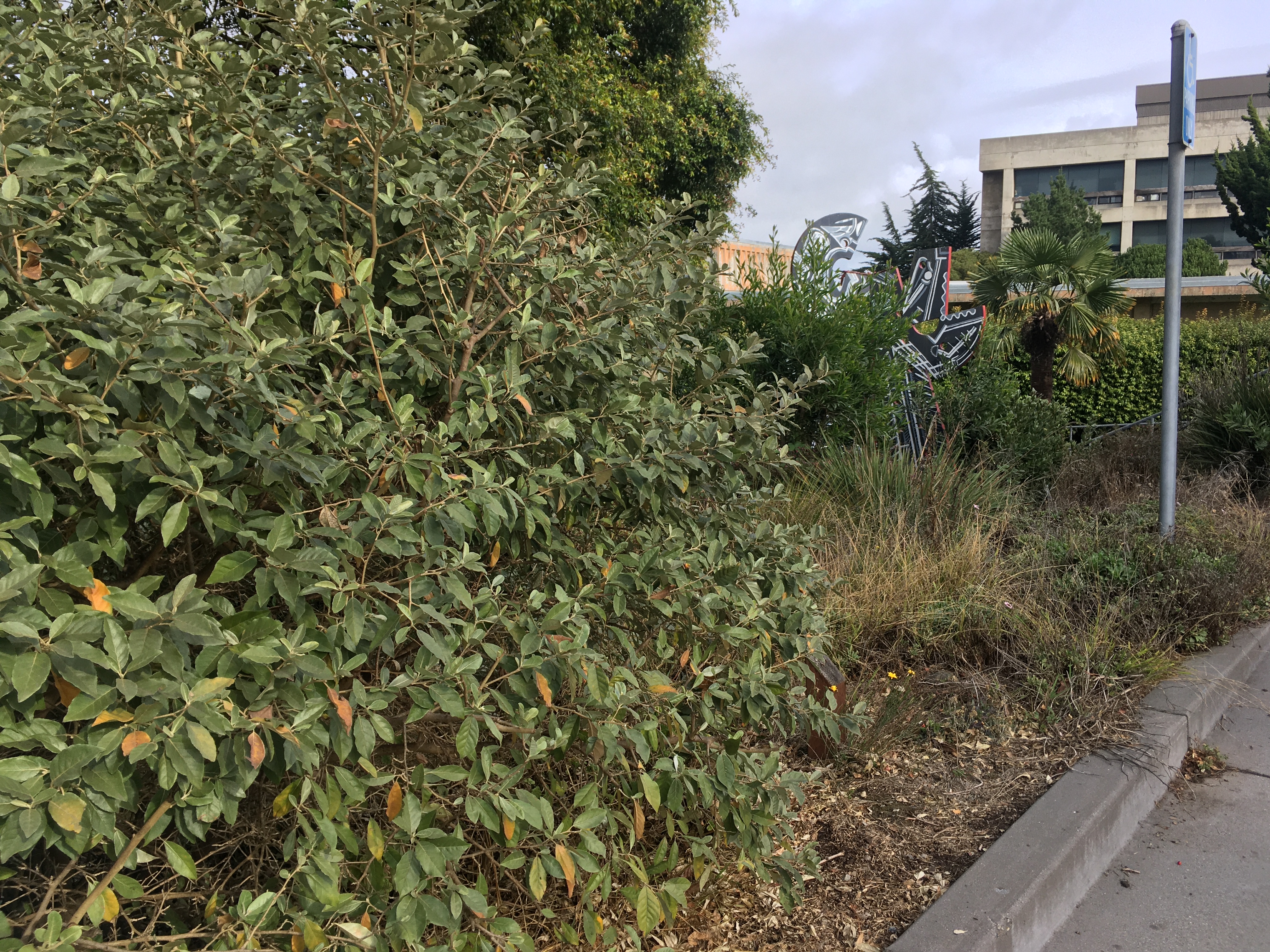
Eleagnus umbellata is another great plant. The silvery leaves, plus the edible berries for jam. What is not to like about autumn berry?

Africa boxwood Myrsine africana shown here with Myrica California in the background and Quercus agrifolia in the foreground on the side.  In our cloud garden.

Way old stand by from forty fifty years ago Juniperus communis.  All along Teresita.

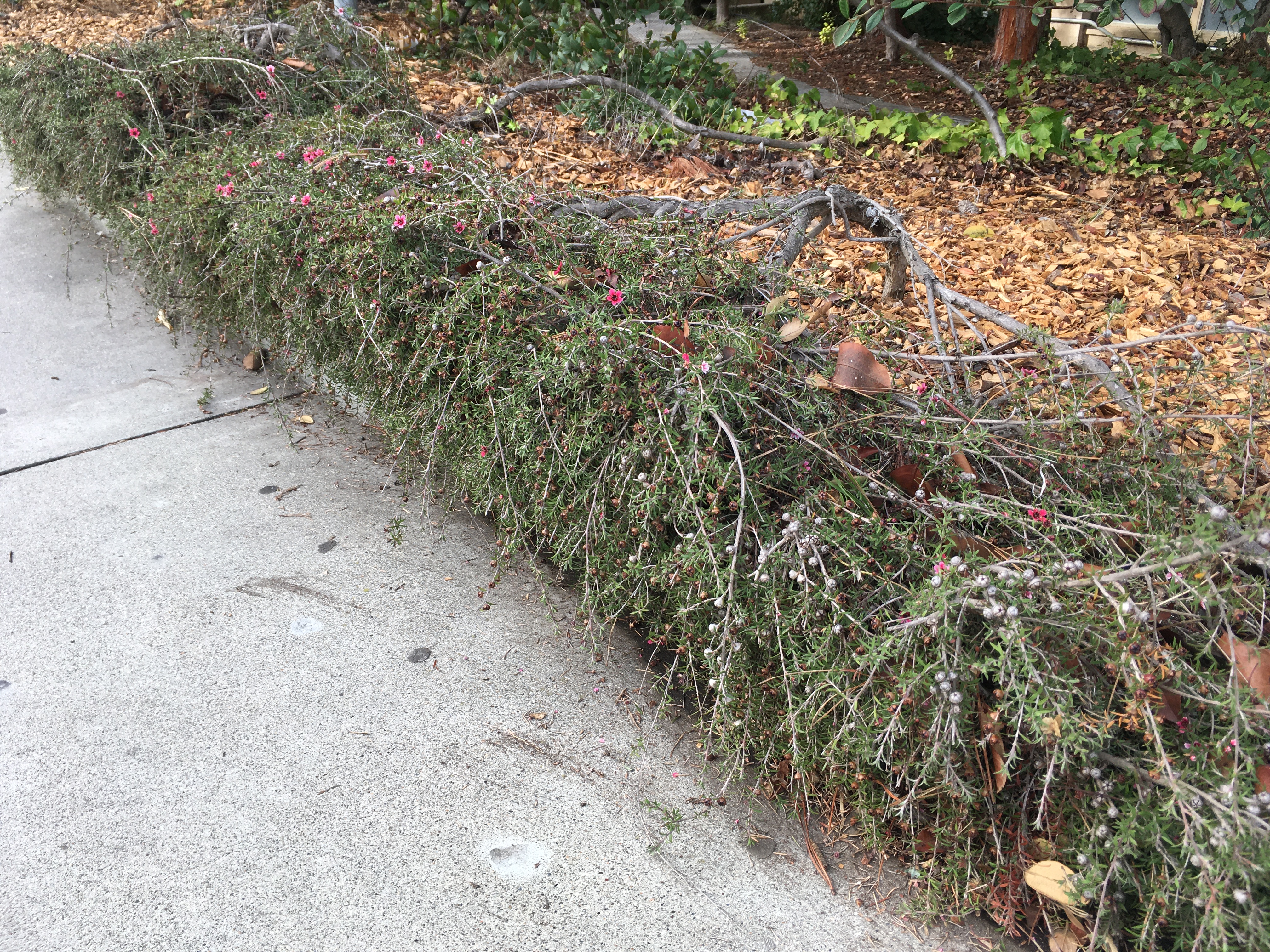
Heres an interesting specimen. Leptospermum scoparium as some kind of a sidewalk bonsai hybrid hedge thing.  We’ll just say that it may have potential.

Breath of heaven Coleonema pulchra. 

Like all hedges, gotta stay on top of em.  If you fall asleep with Rip Van Winkle,  the plant grows tall & wide.  Then when you prune it hard down to all bare wood, it may live, or it may go into shock and die.  Or it will die back in sections here and there, and there goes your full green hedge concept out the window.  So like mowing the lawn – be consistent and keep trimming trimming and trimming on a regular basis.  Dont take off too much in one hit.  Do not neglect it.

Hedges – a living wall, a breathing border, a wave of greenery

pretty neat garden sculpture

a sculpture that comes back to life as soon as you’re done with your role as a gardener

Around here, most lawns are like mutts

they are a mix of plant species

if you go to the golf course or the lawn bowling green

theres patches of pure good sod – all fescue, or all bent grass

but most other ‘lawns’, at least in open public places

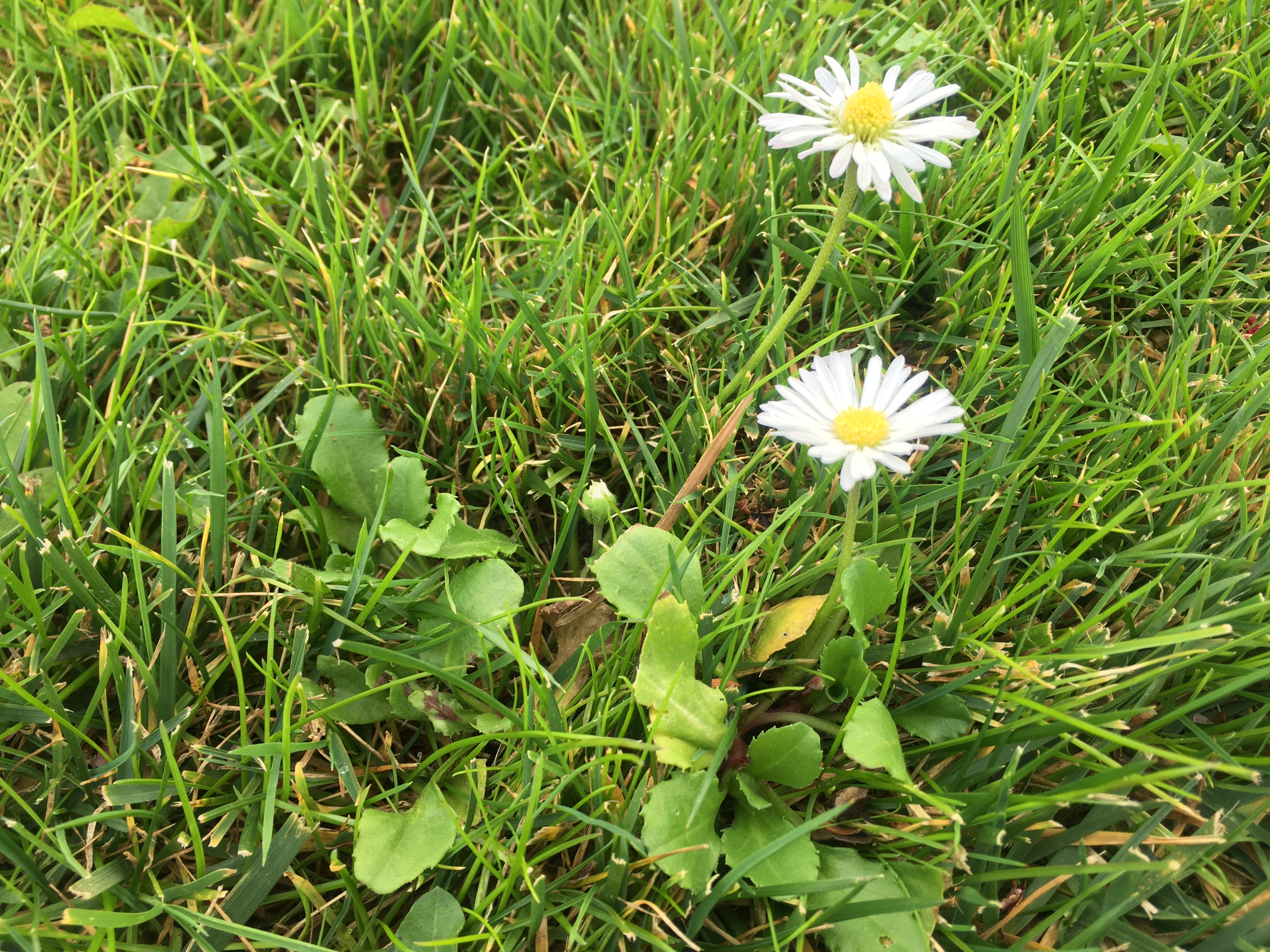
All full of daisies clover dandelions plantain veronica cat’s ears

and the grasses are a mix of fescue and poa and bermuda and rye

if you are not a discerning turf expert, you probably don’t even notice its a mix

once it has been mowed to 1.5” tall

and its all trim and uniform

that is what you see, that is all you see – a carpet of green

It does take considerable water 

to keep the lawn green

like the hedge, we like the lawn to be green year round

if we did not water the lawn, it would  go dormant, dry, and brown

that is what happens to the grasses in nature, during the dry season

to keep it full of life, water that lawn

the green color  – its so soothing

Lets say you want a flat usable space, a patch of greenery

but not one made of water-hungry always needs to be mowed grass

What are the alternatives?  

What is another plant that you can 

Step on, lay on, walk on, roll around on?

And you say “No, I do not want round tiny gravel or artificial turf or decomposed granite or slabs of concrete or slate or flagstone with a weatherproof carpet on top.  I want something soft, something gentle”

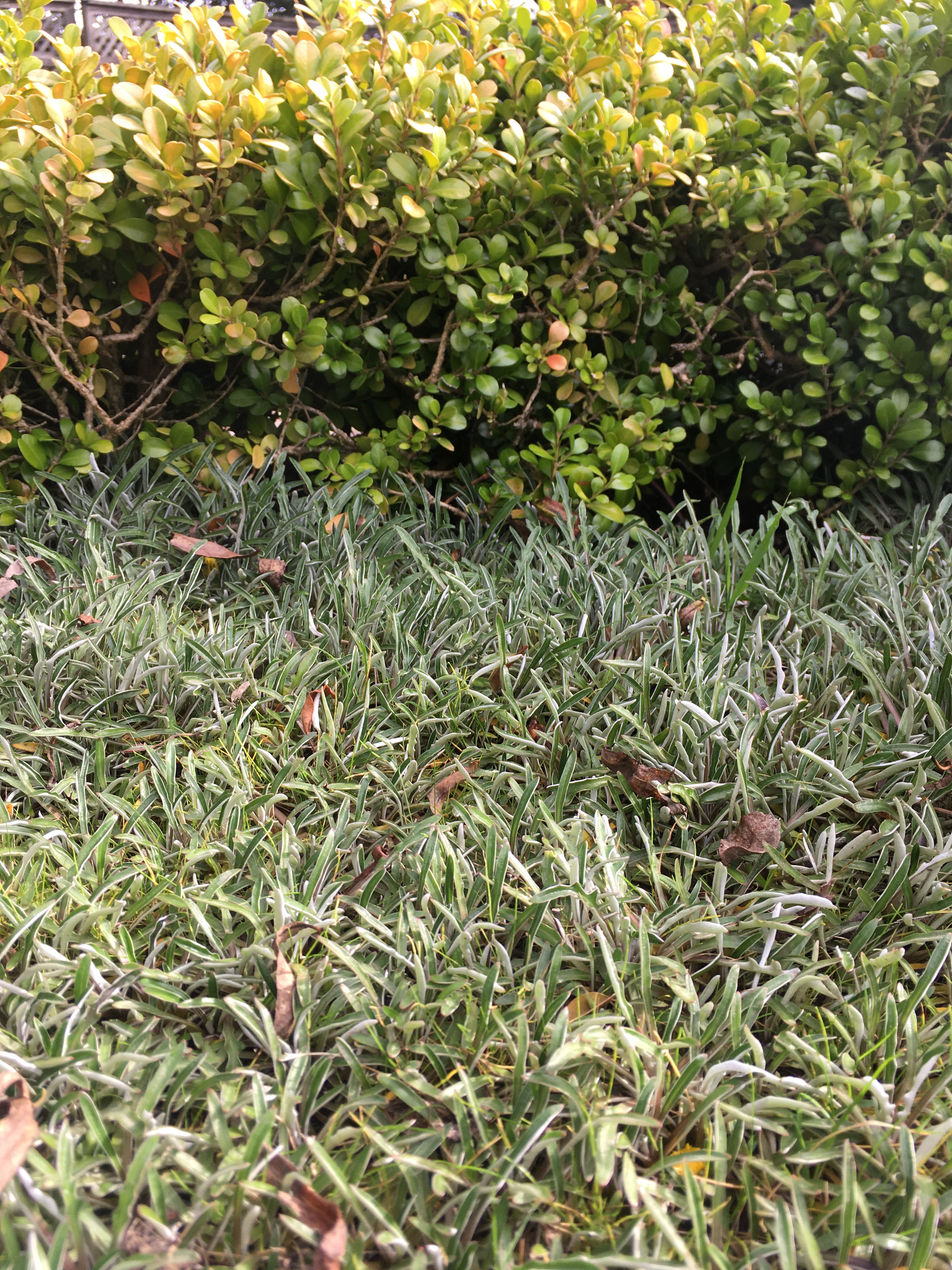
A pretty tough ground cover is Dymondia margaritacaea

A friend in the east bay tore out the lawn, and knitted it back together with a native plant ground cover called Lippia repens.

Dichondra always shows up on these lists.  My experience is that with a little bit of walking on em, the leafy ears start to crumble and then its lights out. Left alone it is has solid coverage.  With interaction it gets patchy.

The following particular choice is controversial, both among the native plant activists and amongst some rank and file gardeners.  Arctotheca cape dandelion.  Some people say it is a ‘nonnative invasive weed’. It does have those ‘I’m gonna take over’ tendencies.  At the same time, it restricts itself to mostly wet soils and shady exposures.  That is to say, it does not rule in the south side, it does not do well in the uplands.  It is the boss, however, on the north side, and on the bottom of the slope where water gathers.  It completely replaced the CCSF entrance lawns on Phelan Avenue, and has persisted year after year after year.  Nope its not the lush paradise lawn manicured turf like at USF. But then again, it wins on a lot of other criteria, and our windy foggy commuter campus is not the kind of place where people are lounging around in designer gear. They are working! What do you think?  Reach for the round up?  Get out the rototiller?  Or leave it alone?  

There is some room for entrepreneurial spirit in the turf alternatives world.  I imagine a good second choice would be a meadow mixture comprised of say three to five different species of plants.  They would all be okay with mowing, and be more or less drought tolerant once established.  They’d be plants that are a little less needy with regards to fertilization and pest control.  Seeds could be sown in a flat, and grown up into a tight mudflat quilt ready to be transplanted or divided and grafted into the ground.  You would have to play with the water regime to figure out the evapotranspiration rate and the best watering schedule to keep it green, to let it establish.  Aside from the general mutt lawn mix of dicot broadleaves we already noted, there are many other possibilities to experiment with and dream up.

How do you irrigate something that needs water all throughout the dry season, and still be frugal and conserving?  You have to irrigate like the rain that comes down on everything everyone – drip drip drip drip drip in tiny little droplets.  Not gushin big spurts.  Nice and slow tick tick tick building to a crescendo storm of pelting drops.  Wet it all the way down down down.

Visualize the earth as a huge sponge with tiny tiny holes all over her.  To get in there, as water, you have to get tiny tiny too.  If you try to push your way in, but you are large and stuck to yourself, then you will not fit.  You will have to be fine and patient, that is the trick. Well plus it helps if the soil is not hydrophobic. Organic matter organic matter.

Xeriscaping: Gardening with native plants, gardening for wildlife, gardening for restoration

The xeriscape planting process is easy. This next part of the discussion is bundled into a huge knot. I don’t know if I will be able to explain it well and loosen some of the tied up tension. Perhaps better to stay clear to avoid metaphorically pinching a nerve or falling into a ditch or getting hit on the head. But like my friend Joey tells me, when in doubt, paddle out. So here we go.

So theres a shift. Rather than imposing our garden style on nature, we are going to listen to her, and go with the flow. If theres a lot of water, use it. If theres not so much, conserve it. Common sense. But what if the king, who controls all the water, says “I don’t care, all the water for me, y’all get the left overs”. “Y’all” meaning poor people, salmon people, wildflower people, and rainbow people. Then you say, “Hey that is talking about morals and politics and class, like stratified class, not a college xeriscape class, we didn’t come to discuss stuff like this. That is for sociology or political science or religious studies or law school” Okay, skip it then. Stick to the curriculum.

Back to the shift. For many years nobody cared about growing California native plants. They were not used in landscaping. If there was mountains and valleys full of the stuff, why would you plant it in the garden? It is like – do you go to a zoo to see a raccoon and a pigeon, or to see a tiger and an elephant? Are the natives even showy? No! What you wanted was an exotic orchid or a huge gorgeous rose or the latest hybrid everyone is gushing over, not some hard scrabble drought tolerant ugly thing weird looking thing that come out of the universe’s twisted imagination. Beauty was defined by the old folks from the east, from across the seas, not embodied or dreamt up or personified in the landscape around you.

Then the natives caught on like a fuse of gunpowder about fifteen twenty years ago. In every public space that the landscape architect planned – natives. In every new installation or design magazine – natives. It became the new hip thing. It didn’t matter if the plant did not fit in the site, it was ‘native’! Like so happens in the this-or-that sphere of public affairs, native became synonymous with good. So if you were a righteous kind loving person, you better go ‘native’.

Some of you probably don’t even know what a native plant is. Well that is a made up term for plants that have been here in California since around year 1540, or longer. Plants that have been around for the past ten thousand years or so plus or minus. Plants that were present before the Spaniards and Russians and French and English and Irish and German settlers came and displaced the Miwok and the Chumash and the Achowami and the Pomo and the Modoc and then opened the gates to the Lao and the Japanese and Yugoslavs and Hindus and Nicoyas and anybody else from around the world. The Mexicans, well they have been here all along; perhaps they were called Kumeyaay or Kiliwa way long ago… Thus, there are these native plants that have persisted, and there are introduced plants. Introduced plants that came as seed on ships and in shirt pockets, in the guts of sheep and stowed away in bales of hay. They were brought here by immigrant settlers travelers for animal food, for human crops, for gardens, and so on. If you don’t go hiking around to natural places, if you are mostly a town dweller, then most of the plants you have met are probably non-natives. So theres natives and non natives – if you want to divide them and make it clean cut, easy to label. Its actually a really mixed up matrix already, and bound to mix more, not less. In the continuum of time, they are all just plants.

To stay on track – you can plan and design a xeriscape garden, but once it is in the ground, you do not get to control it, nor do you really want to. If you took your measurements correctly, the tailored suit should fit just fine. Same with the landscape, if you were careful with observations and made the right selections, the plants ought to ‘perform’ as indicated. And over time, nature she will play with the patterns and make it her own. Then you will do adaptive maintenance. Its like a fun dance, not a war of wills. Plants may come in by themselves, plant that you elect to keep. Other plants that come in, you may decide to weed out because they tend to take over. A low maintenance xeriscape garden does not mean no maintenance. Take a heading, set a course, but be prepared for currents and swells. Again, same lesson. You want to listen to the land and plant accordingly. If you have an artificial culturally bound goal, (for example, I only want 100% native plants), you will be frustrated when it is not pure and then you will fall into the pit fall trap of fixed ideology (angry with fists clenched, ‘it has to look like this!”). The trap of viewing the garden through the dichotomous mind rather than perceiving it as it is (the sort of thinking that ruins the whole scene). Now you are like – “Hey this is not a philosophy class or some hippie dippie meditation martial arts class! Get on with it!”. Sorry, pass. Pass. Pass.

Many of the native populations have suffered. Again, we are talking about plants, not people. Plants. Some of them evolved in the clay riverine drainage flats of the central valley. As the soils were plowed and converted to large tracts of farm land, the plants either disappeared or shrunk and shrunk their range. In some hilly grasslands, cattle were let loose. If the cows were to munch a munch and move on, the plants could recover. But if the cows were fenced and walked back and forth, back and forth, then the carpets of annual flowers eventually caputted and faded away. Here in San Francisco, as the western dunes were developed to make way for people, the flora of the sands got bulldozed into oblivion. And with the flora went the insects that depended on them for food. Hence, the first couple of butterflies to go extinct in North America happened right here – a couple of dinky little blue butterflies by the names of Xerces and Pheres. Right here along Ocean Beach and the Sunset Richmond and Marina green neighborhoods.

Then what do we do? Cant go backwards, only forwards. For people distraught about all that has been lost and destroyed, the goal is restoration. Restoring native habitats. This is happening in the grassland prairies of the midwest, the wet soggy woods of the northwest, and the wetlands of the bay area. Restoring some of that diversity that once existed, re energizing some of that connection ancient peoples had with their land. This is a neat challenge that utilizes many of the same principles as xeriscaping – planting with the rains; fitting plants to the specific site according to water, light, soil; planting for desirable wildlife. Most important though, as far as restoration is concerned, this is about restoring the love that native peoples have for the earth. And by native I do not mean measurements of blood lineage or your ability to make a sinew bow string or your agility to ride a horse, I am talking about being part of a place and a community, of being grounded.

You know, native, in the best sense of the word. Not native like in native versus cosmopolitan, like you never left the street you were born on. Not native like in native versus educated and cultured. Like you are ignorant and without manners and don’t know anything about hygiene. Native meaning proud, protective, working with, and on behalf of, all the creatures big and small, young and old, healthy and infirmed.

I dont know about how and when you grew up, but it seems to me that much of this generation of children may be the first to grow up with absolutely no clue as to their relatives and kin in the natural world. The wild kin. Not the kind you have to pay to see, not the pestiferous ones always following us around, not the pets in the house. Wild kin that are independent, going about doing their own thing: goofing around, talking to their friends, raising their families. By no clue I mean that kids don’t know them alive, in person, hands on. These days, all those kin are either sitting dead in a glass case, jailed in an outdoor museum, verbally dissected on a screen, or so far away as to become mythic creatures. Yes there a few kids that gut fish, or shoot 22’s, or harvest tomatoes with their mom, or go picking apples in trees, or paddle a canoe, or make a fort in pine woods. It would be nice to see more. More kids actively engaged with the natural world.

If you are a kid who grows up without ever having damselflies land on your fingers, or butterflies flitting around your head, or hummingbirds zapping back and forth in your vision, what does that do to your imagination? Or your psyche? What kind of a sterile lonely place would a mind retreat to, when it is devoid of fellow sentiment majestic forms? If you had to count the monetary cost of such a transaction, would your calculator be able to hold all the zeros? Well, easy to get overwhelmed by the world’s drama, best to open the door out back. To the ranch and the farm and garden and the plants – to work. With a shovel a pick and a handful of seeds, and wait for the rains to come.

Alright, where’s the action? Well in the past years gardeners and academic entomologists have been working together towards the conservation of insects. You can help by planting native plants, planting forage and nectar plants, and planting caterpillar host plants. You can make trendy solitary bee homes or leave patches of open sands for them too. A UCB professor who specializes in bees, Gordon Frankie, has been hard at work alongside nurseries like Annies Annuals and curators like Dr Don Mahoney of the San Francisco Botanical Garden. These folks have been advocating for these beneficial creatures that help pollination and pest control. Dr Don gave us a tour of his garden, and discussed how he maintains his fantastic collection of plants. It is not xeriscaping per se, but it is close to gardening in a way that the natives would appreciate. Please watch his two part video here for specific tips and advice about habitat gardening:

As a gardener, you do have to come to terms with life and death. It is a part of all the interactions in the field. If you want to grow and protect the plants, you will have to help them against their foes. Doing nothing or letting nature takes its course just means that you are neglecting your duties. For example, with regards to gophers, you could use cultural measures to stop them, like the use of gopher baskets. But, time to time, you may have to trap them and kill them. Same thing with the weeds. Take care of them, you’re the gardener.

You are an active manager of the wildlife in the garden; one who is tasked with the balance and health of all the species. I will tell you right now that it is not an easy job, and real messy too, but necessary. There is a discomfort that comes with death. In the amazonian universe the hunters go into the rivers or under the earth in dream state to negotiate with the master of animals. Its a back and forth as a caretaker of the jungle and a taker of life. You realize that it is a reciprocal relationship to maintain the fecundity and abundance of all creatures. It must be approached with respect and gratitude, otherwise it will all go to poop. Whoops I think I strayed off topic again to mythology and anthropology or rainforest conservation or some other unrelated topic. Xeriscaping – it is about water, plants, the land, and life. Water is the ultimate connector and universal solvent and most and least common denominator. That is how it is all tied together.

This third set of plants are plants found in the sandy dunes, the clay uplands, and plants useful for raising butterfly larvae. Most are natives, not just California natives, but San Francisco natives. A few are from other places. Some of these we saw on our walkabout to the Ocean Beach dunes off of Judah Street, the rest we will hopefully encounter another day.

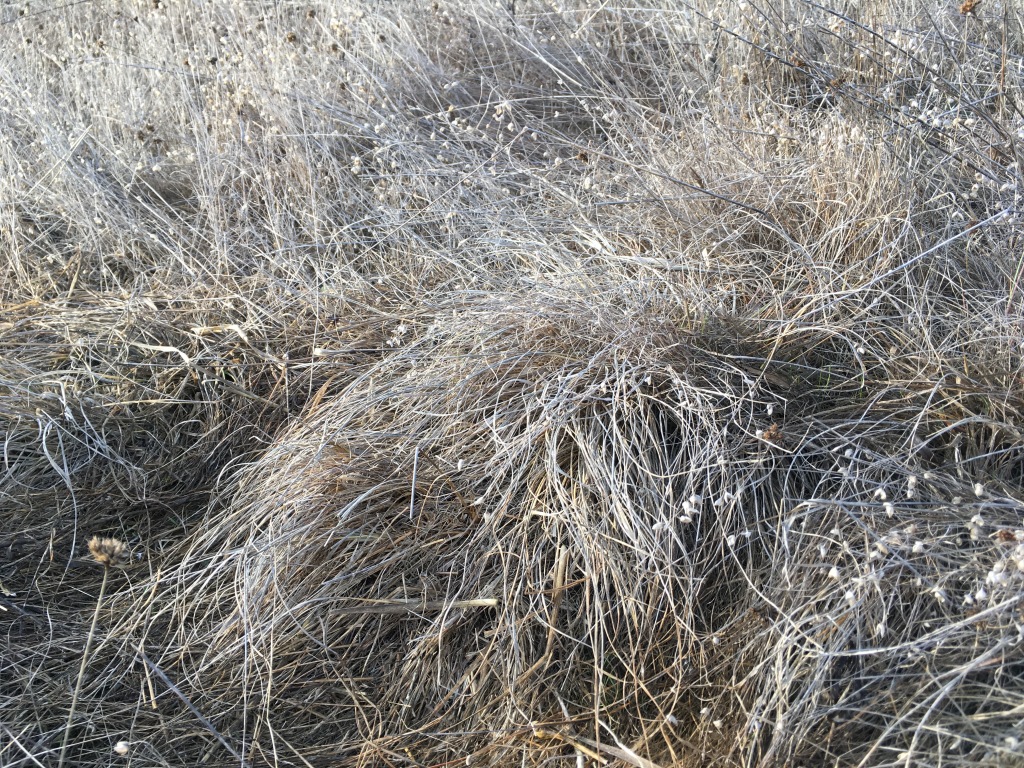
This is nutka reed grass in our cloud garden:

In the dunes, plants holding and stabilizing the blowing sands: