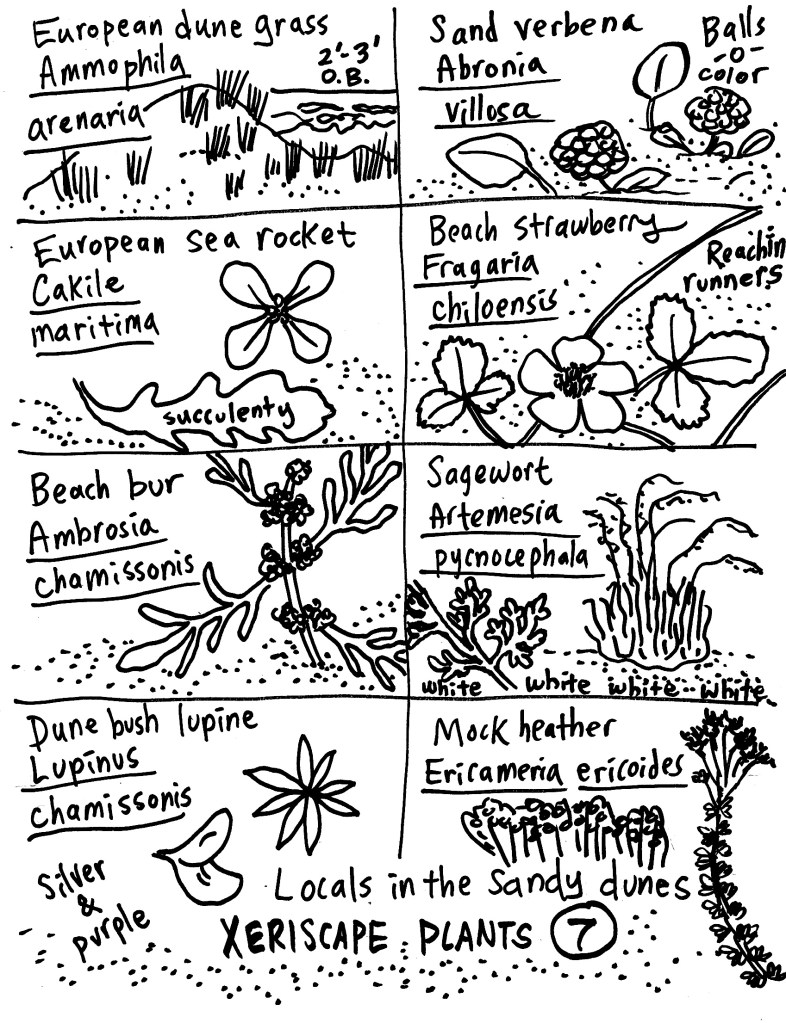
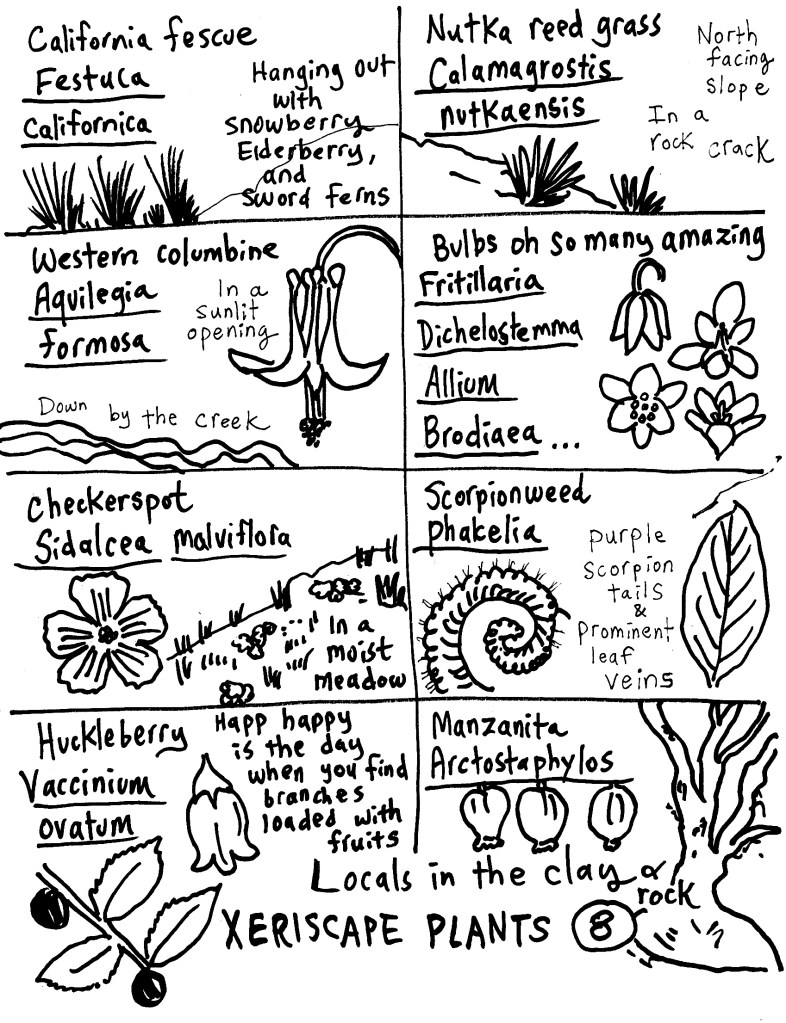
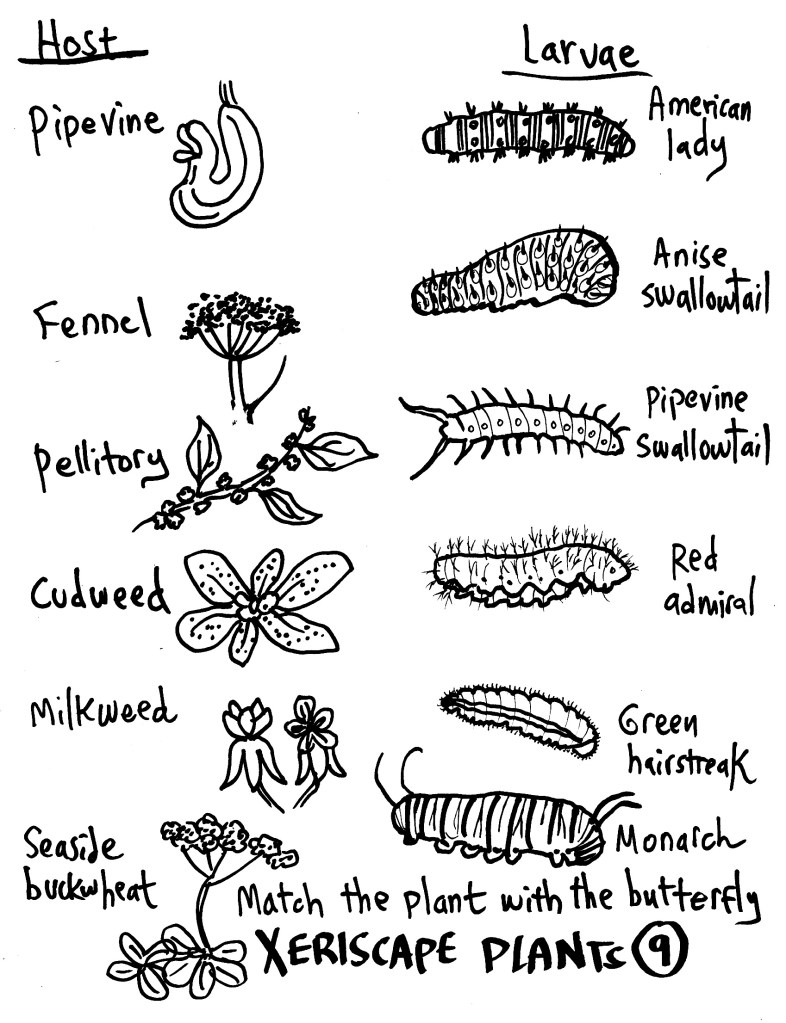
This third set of plants are plants found in the sandy dunes, the clay uplands, and plants useful for raising butterfly larvae. Most are natives, not just California natives, but San Francisco natives. A few are from other places. Some of these we saw on our walkabout to the Ocean Beach dunes off of Judah Street, the rest we will hopefully encounter another day.
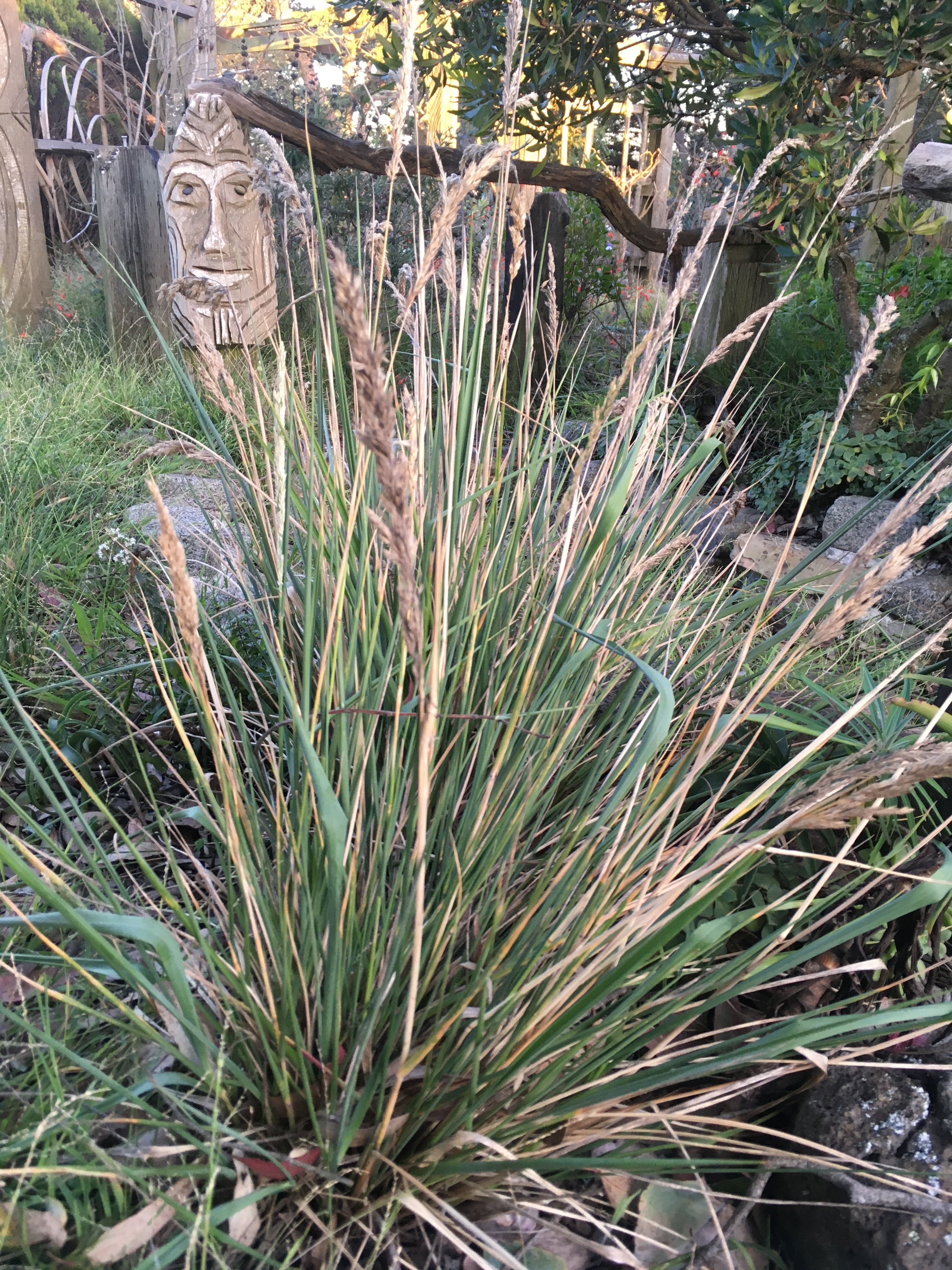
This is nutka reed grass in our cloud garden:
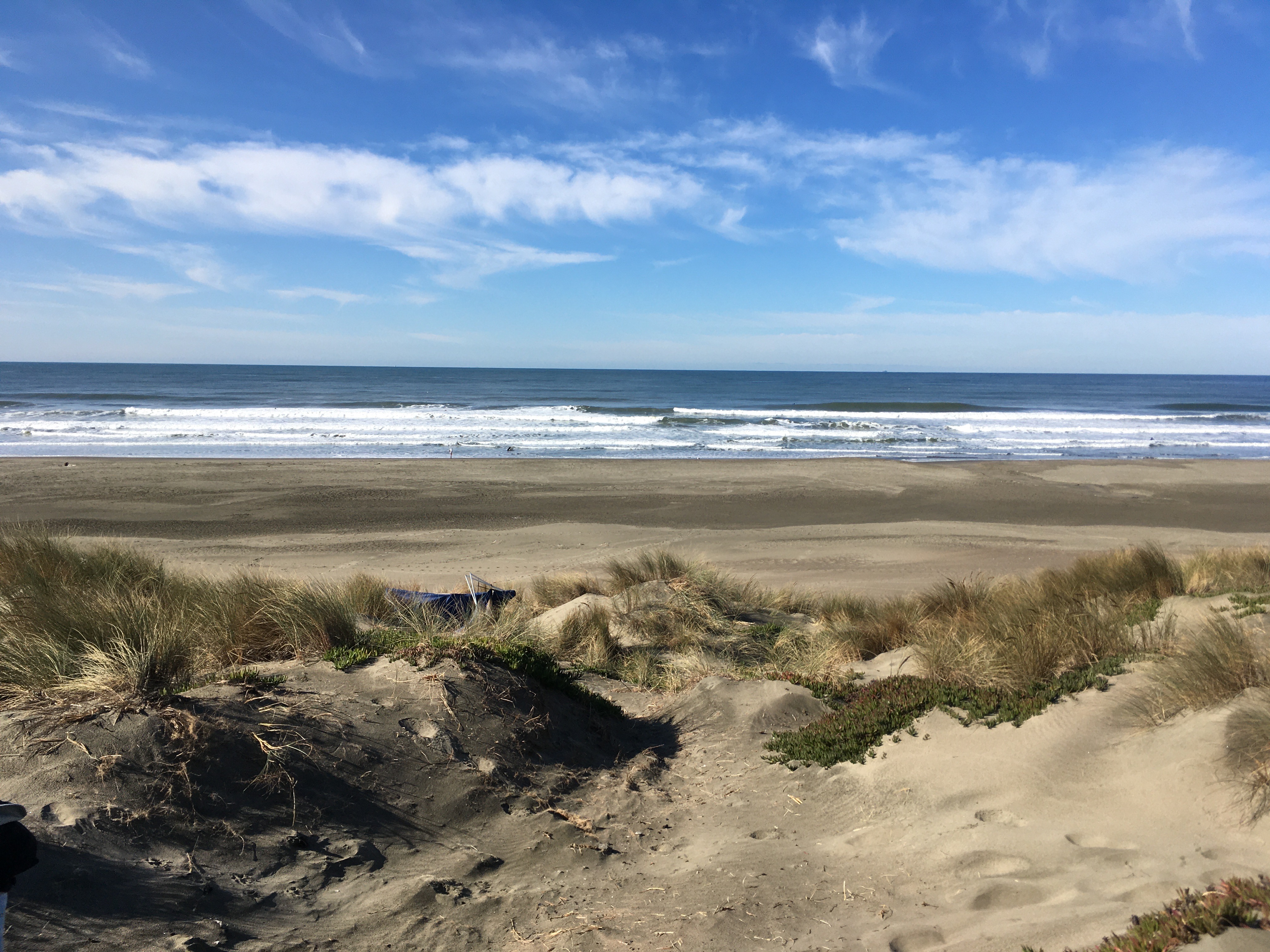
In the dunes, plants holding and stabilizing the blowing sands:
This second set of plants are from areas south of here. These include Southern California, Australia, and South Africa. So the criteria for selection is more climatic and geographical, unlike the first set of plants – whose selection was based on its succulent morphology and physiology.
This set plants come from a climate that is, for the most part, hotter than ours. So the plants can take the heat, and the dryness. These plants have been chosen because they are sometimes seen in the San Francisco Bay Area; also because they are not plants you learn in our CCSF Plant Identification classes OH 76 & 77. They are plants that are amazing to behold in the garden setting. Definitely ‘worthy’.
Keep in mind that these are a minuscule representation of the flora of these places. They are just a piece of bait, or an easy freebie, to entice you to explore the diverse flora of the world, and begin to cultivate some of that freedom.
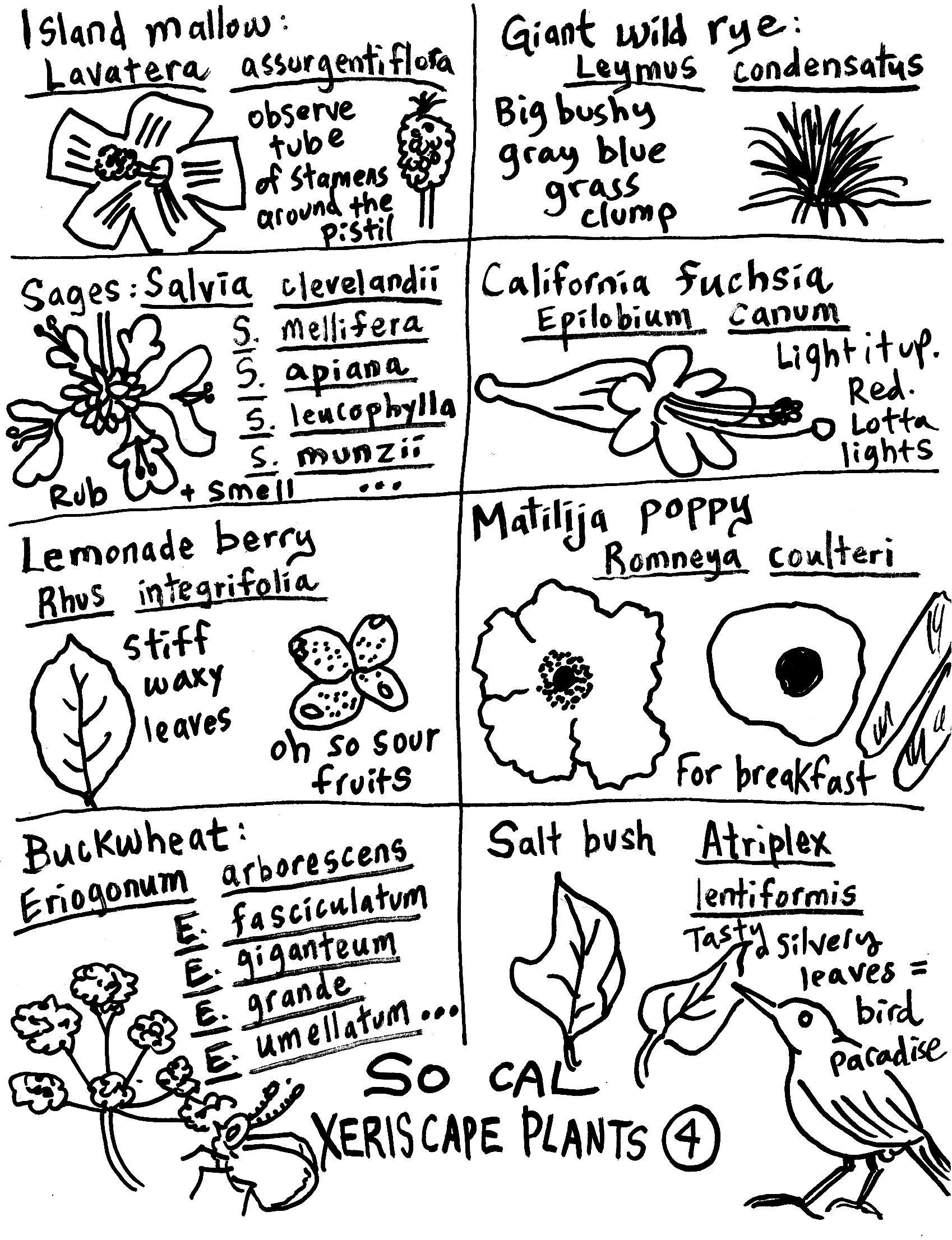
Lets head out to the Channel Islands, San Luis Obispo chaparral, alkali lakes of the desert, and coastal scrub of San Diego.
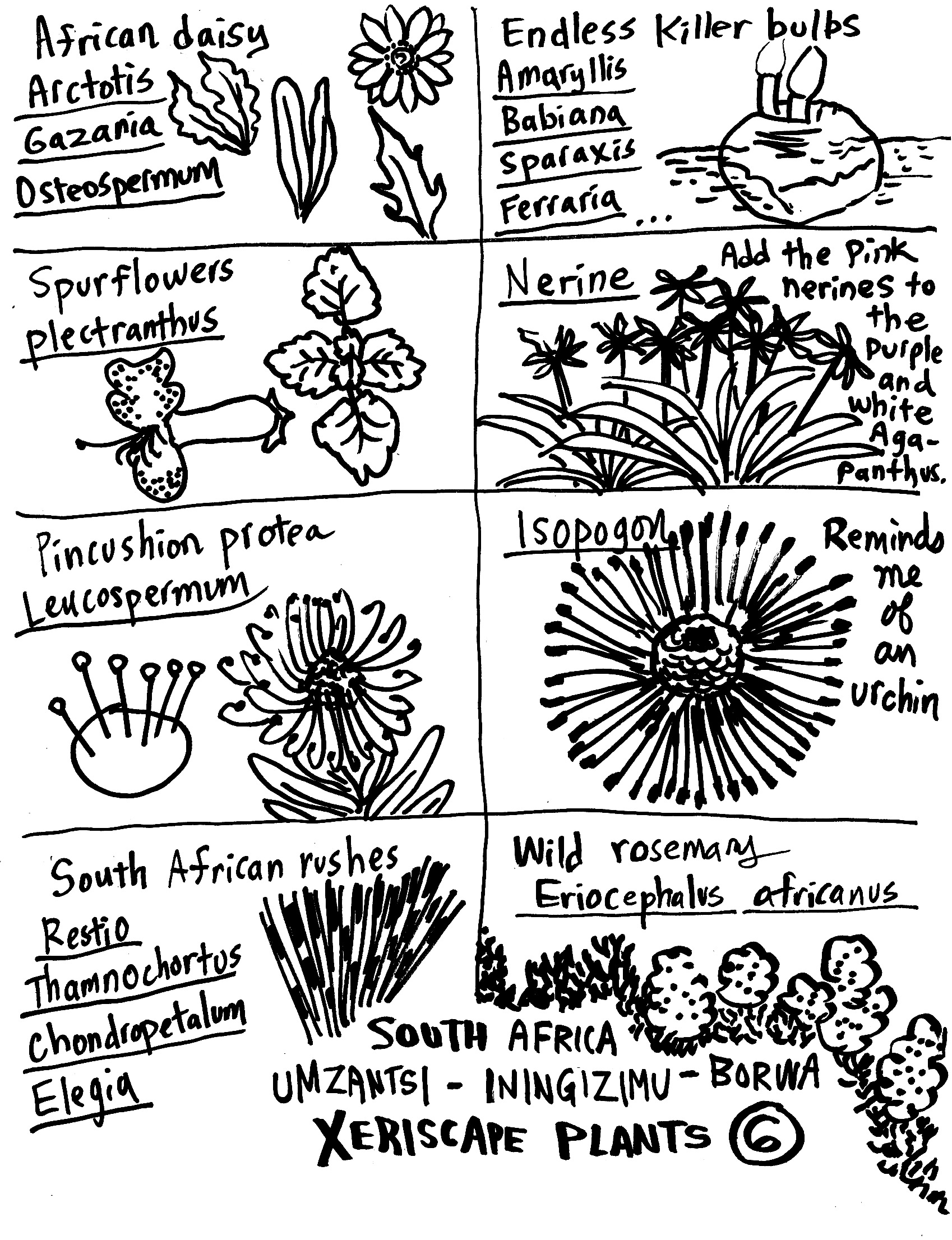
Now cross the Pacific Ocean and check out some botanical kin down under.
Finally take a sail past the Indian Ocean, cruise along Madagascar, and on down to the Cape of Good Hope.
How will we learn these plants? Scavenger hunts, walkabouts, propagation, and planting them in the garden. Stay tuned, more directions to come. This is only the list…
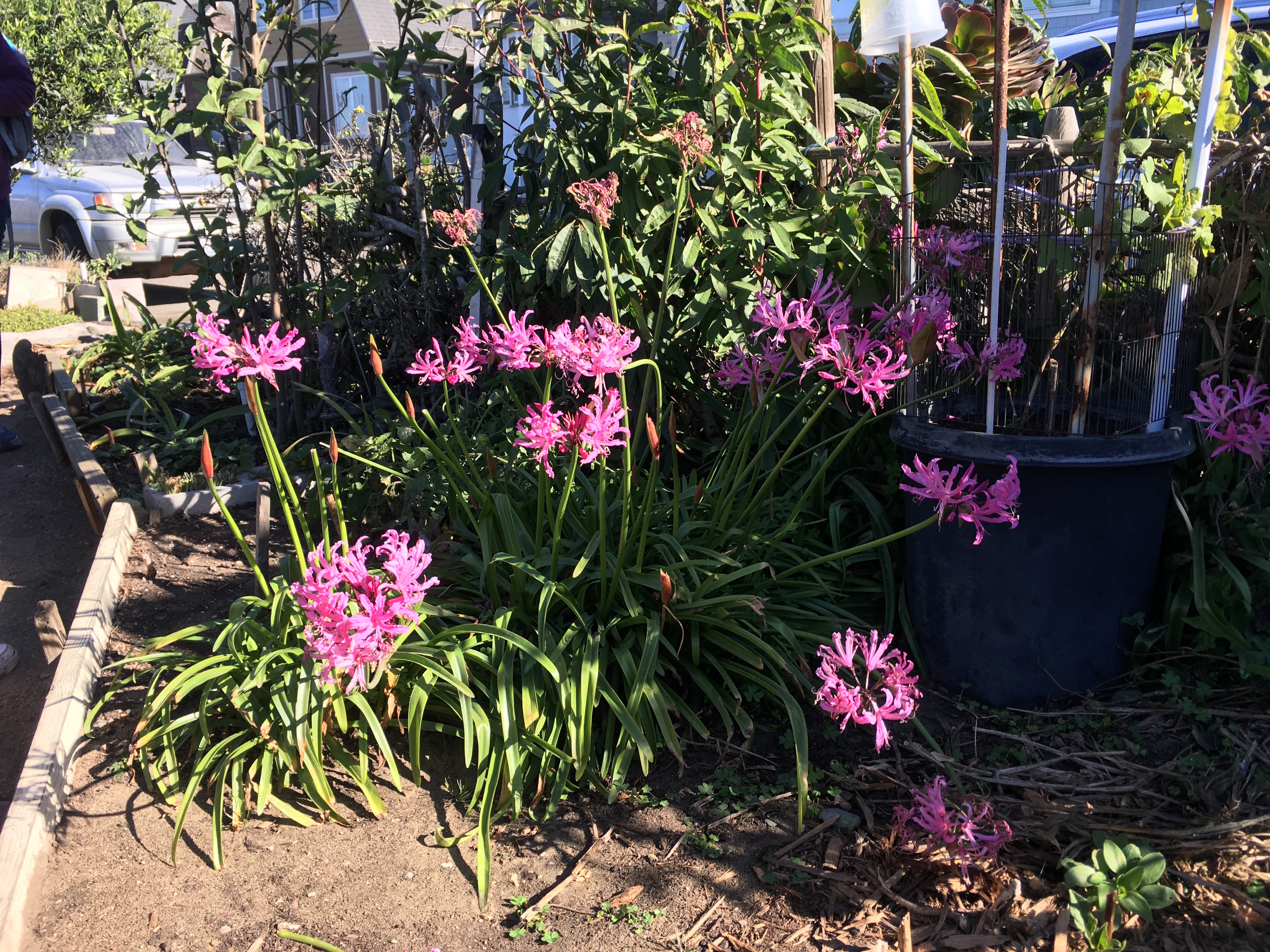
Wild rosemary and Felicia, all African in origin:
California fuchsia in the cloud garden, small tree in backdrop is wax myrtle Myrica californica:
South of Judah on La Playa, right past the bocce ball courts of decomposed granite:
If you are a farmer who plans to work the land for forty or fifty years, and maybe pass the land on to the next generation, you would try to take real good care of it. You want the earth to stay healthy and abundant, and to make it better, not worse.
If you are a landscapers working at a shopping mall or some kind of a commercial type property, then you know that the plants are just decoration and temporary. The next owner who flips the house will switch out the garden in five or ten years, the new manager will say ‘Cut it all down’ and put in a garden based on the latest trends. The plantings are disposable and short lived, and so you work accordingly.
In a short term planting plan, you bring in new top soil or potting soil, and just lay it on top. You do not have to mix it or till it in with the native soil, since the plant roots are going to be shallow – the upper 12” or 16” or so. You hook up an irrigation system to make sure that the plants are watered with good coverage. You do not anticipate that the plants will ever reach down deep or wide to find their own source. You lay down a layer of weed cloth, then cut some holes in it for the plants. You throw the plants into holes in the ground, not bothering much to open the root ball, or tease and cut out the girdling roots. Time is of the essence; you know that the plants are not going to live that long anyways. To finish the planting you spread a layer of small bark mulch on top. Thats it, you are done.
For the most part, the xeriscape garden is more the long range plan rather than the short range one. It requires you to pay attention to the soil and the water. You want your plants to be well settled into their places and take care of themselves, not always be dependent on external supports and high maintenance regimes. You imagine and hope that the plantings will still be prospering forty years down the line, although you may not be present anymore to witness them.
So the first thing is to plant according to climate. Microclimate to be specific. Meaning that you find the minor tiny variations in a given place, and match your plants accordingly. Observe your garden and surroundings with tremendous intensity. Even in a hot hot place, there may be a shaded spot near the eave of the house that is ten degrees cooler than everywhere else. Write this down. Next to the driveway, there is a spot that is perpetually wet. You are not sure if it is the roof runoff, shallow groundwater, or what?, but it hardly ever dries out. Water always gathers there. Write this down. And you look at the neighbor next door – they have a fifty year old lemon tree that is always blooming, always full of fruit. You see them using it for cocktails, kids squeezing lemonade all the time. You strike up a conversation with the neighbor – how often do you water the lemon? Do you fertilize it? And the neighbor says “I don’t do anything! It just loves the exposure and the soil, I guess…”. Plant something that likes that little niche you have discovered, not a plant that will be distressed and uncomfortable. Make the plant feel ‘at home’.
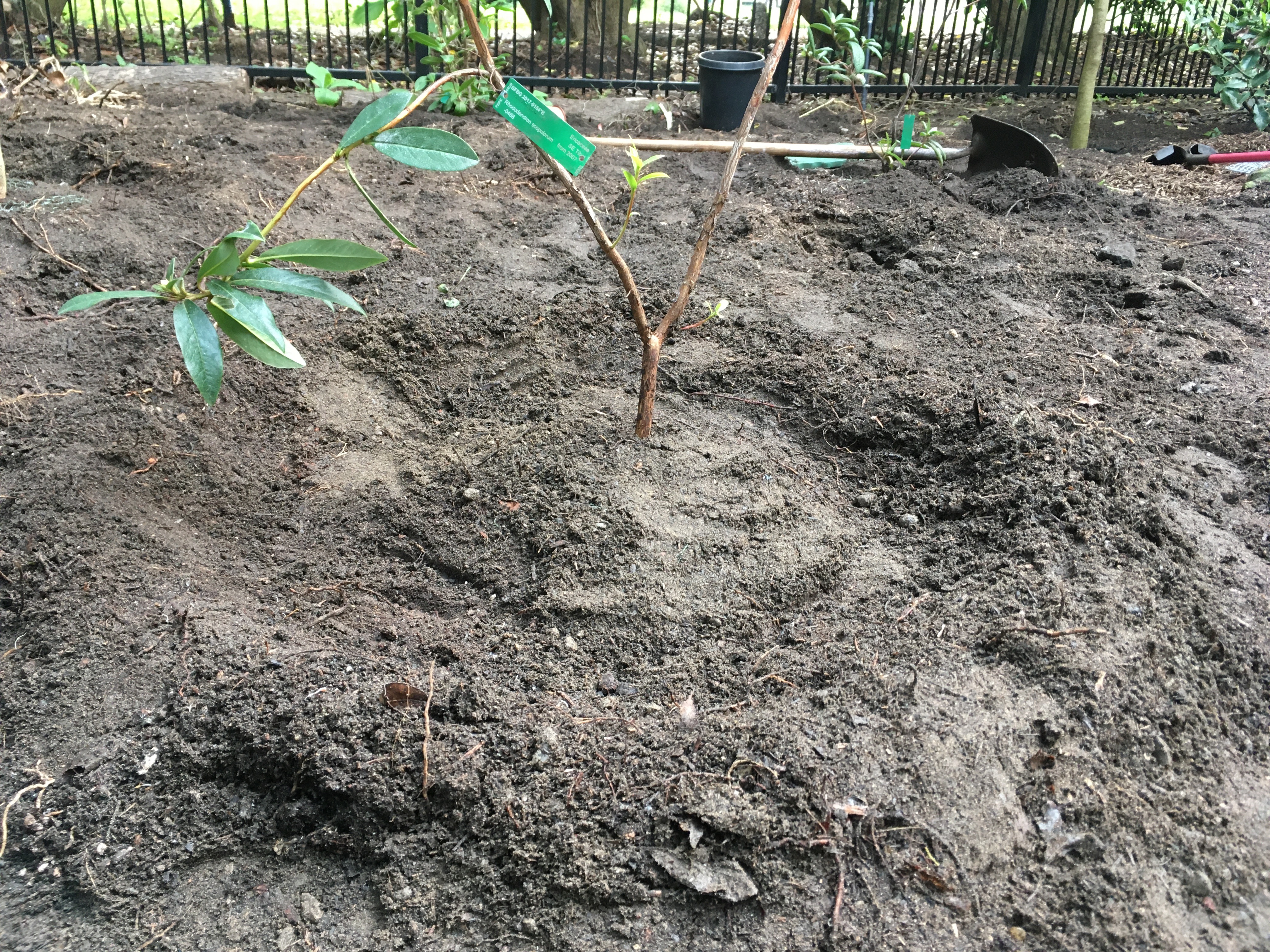
The second thing is to work the soil. Some of the ornamental xeriscape plants we are planting do not need much amendment, actually. They might have come from a place where poverty was the norm, and they are not really enamored of rich rich soils. They be like ‘Whats the big deal? I’m fine with rice and beans, and a bit of chile pepper. I dont want to eat beef and pork and shark and tiger and bear every meal. That is for the kings and queens. Rice and beans for me!” Other plants we are planting do like a bit of help to look good in the garden. So that is what we will do. First is to amend the soil and mix it in. That is in every garden help column and every horticulture magazine – add organic matter. Add it to sandy soils, add it to clay soils. Make goopy globs of nutrient humus and worm heaven and increase the soil’s water and nutrient holding capacity. Make uneven pores and holes to improve the drainage and aeration. What kind of organic matter? Manures and composts always excellent, as are the fallen leaves and worm poop called castings. The other thing to do with soil is to shape it. This is making terraces or little berms and mini volcanoes, pressing them into shape and form, so that water will better infiltrate the ground. Actively direct the flow of water, whether that be from irrigation or from rainfall. This little rhododendron is gonna like all the water it can get…
As the weather starts to dry, the soil forms this glaze of a skin over itself. As if it were a creature itself that was conserving moisture and tucking it all in. You can see this happen outdoors, and also to the surface of potting soils in a container. The whole thing tightens and contracts. Then if you were to water this skin, the water just skims and runs right off of it. A slow and steady drip drip drip of rainfall would soften the skin and penetrate, but if it is just a gush and a jolt of water, the plants do not benefit. You have to make pores in the earth and allow the water to soak in.
Thus, you create water holding patterns of soil on the earth. It is that simple; but not often done in planting projects. The process is a bit of extra labor and time and getting dirty, especially if you are working in clay and the stuff sticks all in between the grooves of your boots and smears all over your pants. This way of doing things is nothing novel and if anything it is ancient technology, coming from people who did not have access to irrigation as practiced today. A prime example comes to us from corn farmers of Arizona called the Tohono O’odham who made waffle like soil matrices in the sandy washes where they knew water would gather come late spring and summer monsoons. That way they could harvest a crop of corn in the driest and hottest of climates. In all parts of the world where drip irrigation is not practiced yet, this is how they conserve water and make their plants grow. Furrows. Berms.
Climate, soil. Then it is timing. Ideally you plant around when the rains come. Then you do not have to irrigate and the sky will do it for you. These parts, that is around November December. Usually best to plant after the first rain or two, then the soil is good and wetted and the plants have till March April to grow – spreading roots and hunkering down for the long hot dry period of summer. Remember that around here plants keep growing all winter long. If you look at the hills that go from brown to green that is what is happening. If it was colder then the plants would go dormant, but on the mild coast, plants keep marching on. The sun is a little lower in the sky, there is a bit of a chill, but the plants keep marching on. This is another one of those old timey approaches to gardening and farming – following nature’s rhythm and the seasons. Plant when the timing is right. Not whenever you want it.
Lastly it is the plants. When you plant in a xeriscape style, you want to encourage the plant to establish itself in the local soil and ‘get rooted’. That is what wild plants in nature do. That is how you can survive adverse situations and circumstances. You may want to loosen or remove some of that nursery potting soil that the plant came with. That potting soil is mostly all bark. If there is a hot day and the bark dries out quick, the plant is dead. You dont have to take all the barky peaty soil off, just make sure its mixed up in there with some grains of loam and clay or moist sands. Get the plant roots into the native soil so that as the land dries and that skin contracts and tightens, the plant is a part of that matrix and not something foreign and apart. An alien thing that gets squeezed out and discarded by mother nature.
Other than this basic planting method, it is the selection of plants that makes a xeriscape garden. And how you assemble and combine them together to make a community. Some are low spreading things that cover the earth, others are upright creatures with roots fifty feet deep. They are not separate organisms, they work together to benefit the entire system.
Theres a ton of different kinds of plants to choose from. Many of them are drought tolerant, but more important than being drought tolerant is that you match the site to the needs of the plant. Good fit. Right plant right place like the ol gardeners repeat infinitum. Boy am I a broken record or a MP3 stuck on loop action. Okey dokey until the next group of plants.
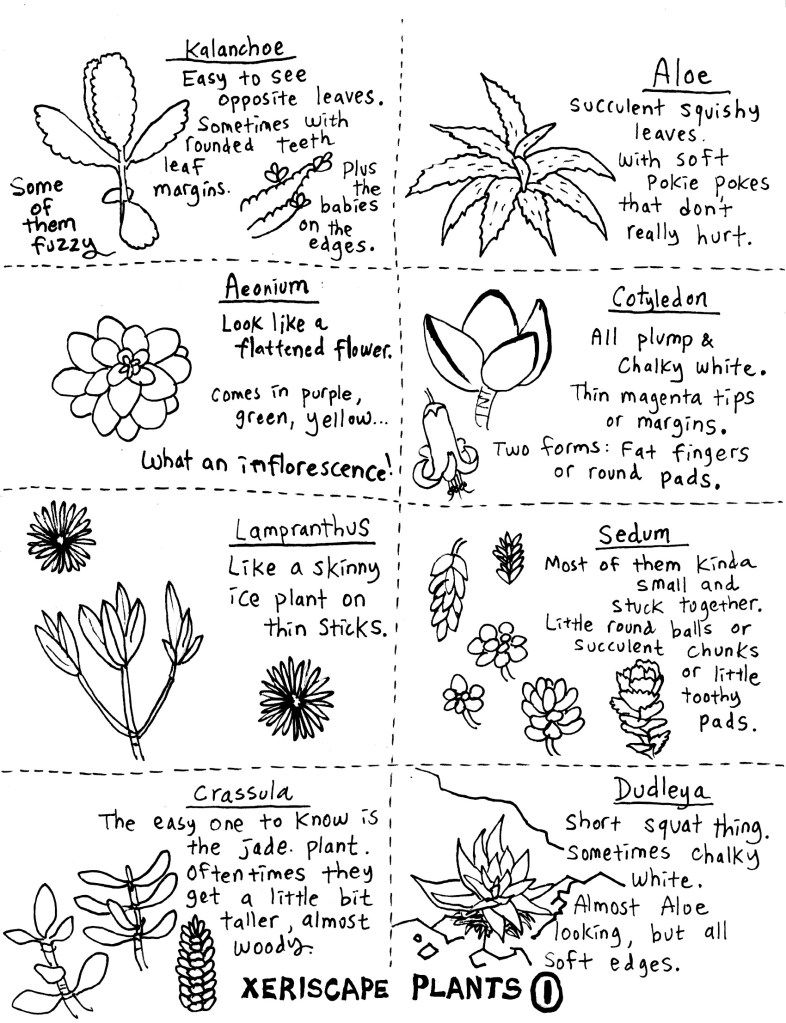
The first set of plants we are going to learn in xeriscaping are the succulent and cacti around town. Heres a few handfuls of basic forms to learn. After that you can specialize in the details and be more fussy about nomenclature. If you get these down, then you graduate and can move on to the next group of plants. Here is about 24 plants plus or minus.
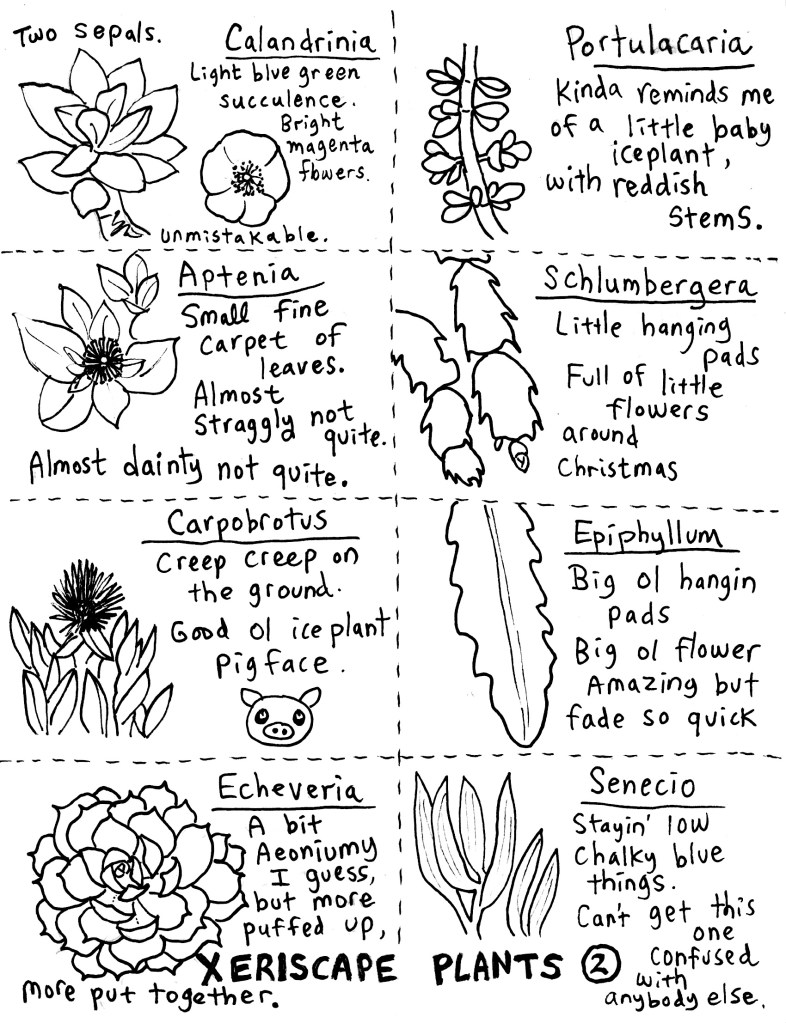
Page one and page two are all succulents that are not poky. Well some Aloes have a bit of an edge to them but they are like spines covered with a dob of silicone or lambskin gloves. Cant really hurt ya. Most belong to this family called Crassulaceae which all the biology majors learn about because of their special metabolism. Its like this – most plants work during the day when the sun is out and rest at night. With the crassulaceous ones, with where they live, its too hot to work during the day. So they do some of the work at night, simple like that. Like those mediterraneans who take a little siesta when the sun is beaming, then back to work and dinner at like 10 pm and the merriment lasting long beyond that.
A few members on page one and two are of the Aizoaceae family which when blooming look like the brightest glowing colors the universe can conjure up. Theres also a couple of cactis on these pages but not the typical ones you think of. They are flat pads of non-poky cactus that grow hanging off the foggy wet barky crotches of high mountain trees. Not living in the desert sands or hard scrabble hills. Hey, theres all kinds…
Page three is the poky poke succulent and cacti around here. The poky pokes range from tiny irritating hairs to large thin spines to fine sharp curved fish hooks to a seven gauge sewing needle with a point on it that spells ‘caution’.
The assignment? Study the pictures. Then when we go out for a walkabout you can look for these new friends and try to make an impression. Maybe pick one up to take home, chat about this and that. Cultivate, grow, reproduce, and share with your mates.
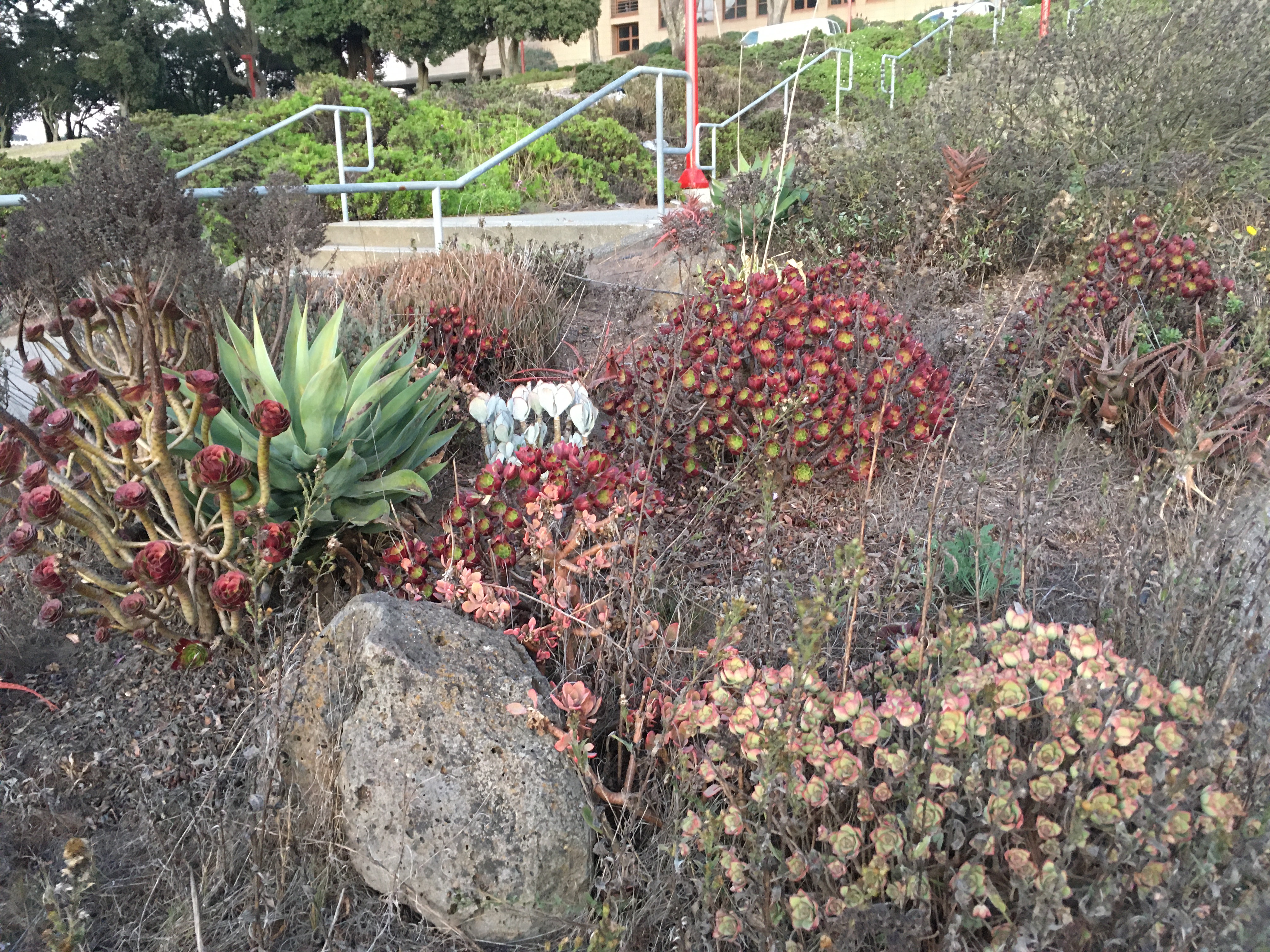
These are stressed out Aeoniums, Cotyledon orbiculata, Aloe arborescens, and Agave attenuata in the flower bed out in front of the college by St Francis of the Guns statue by Benny Bufano.
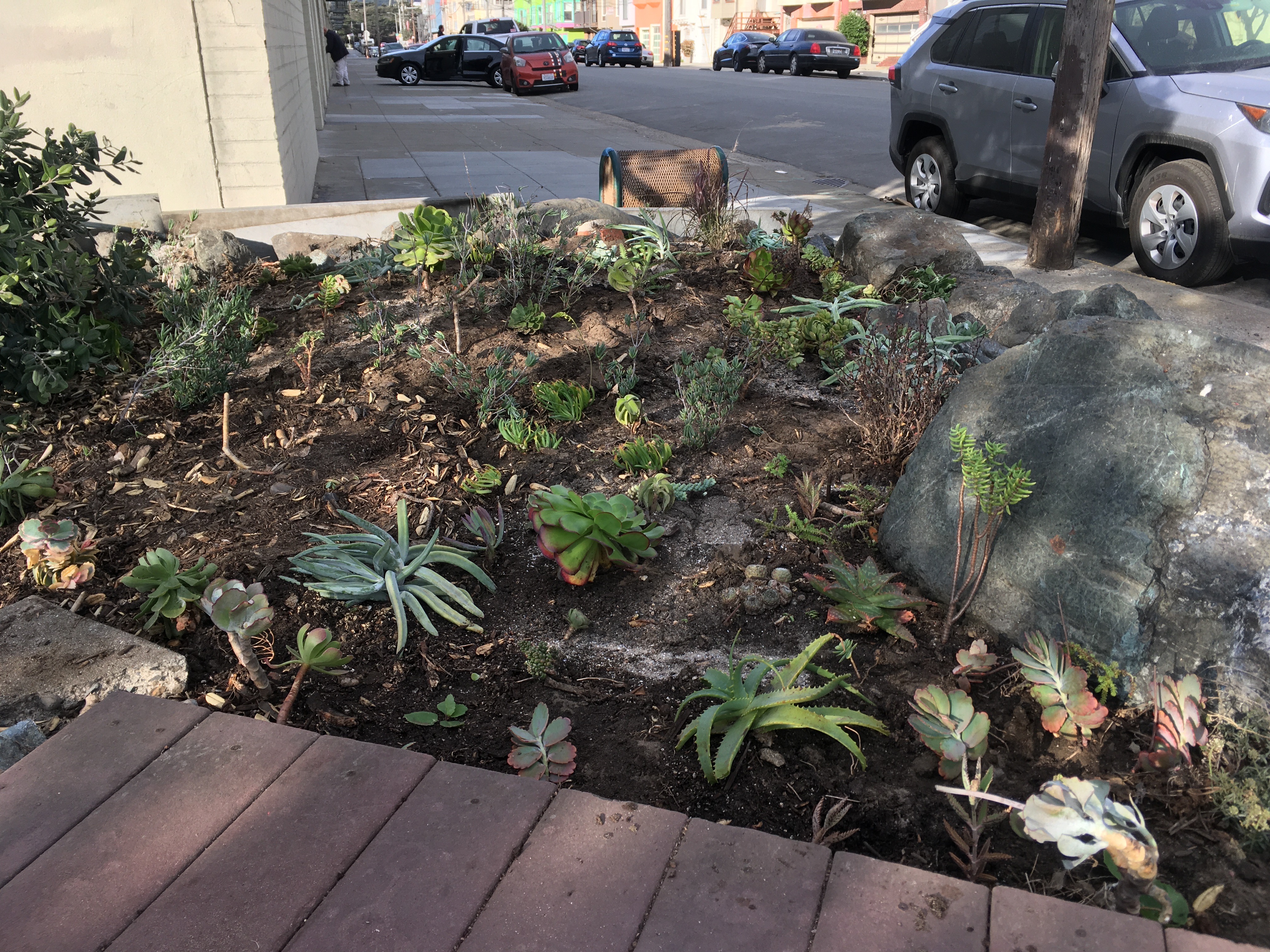
At La Playa Park by Java Beach on Judah and the Muni turnaround, a few of our new friends:
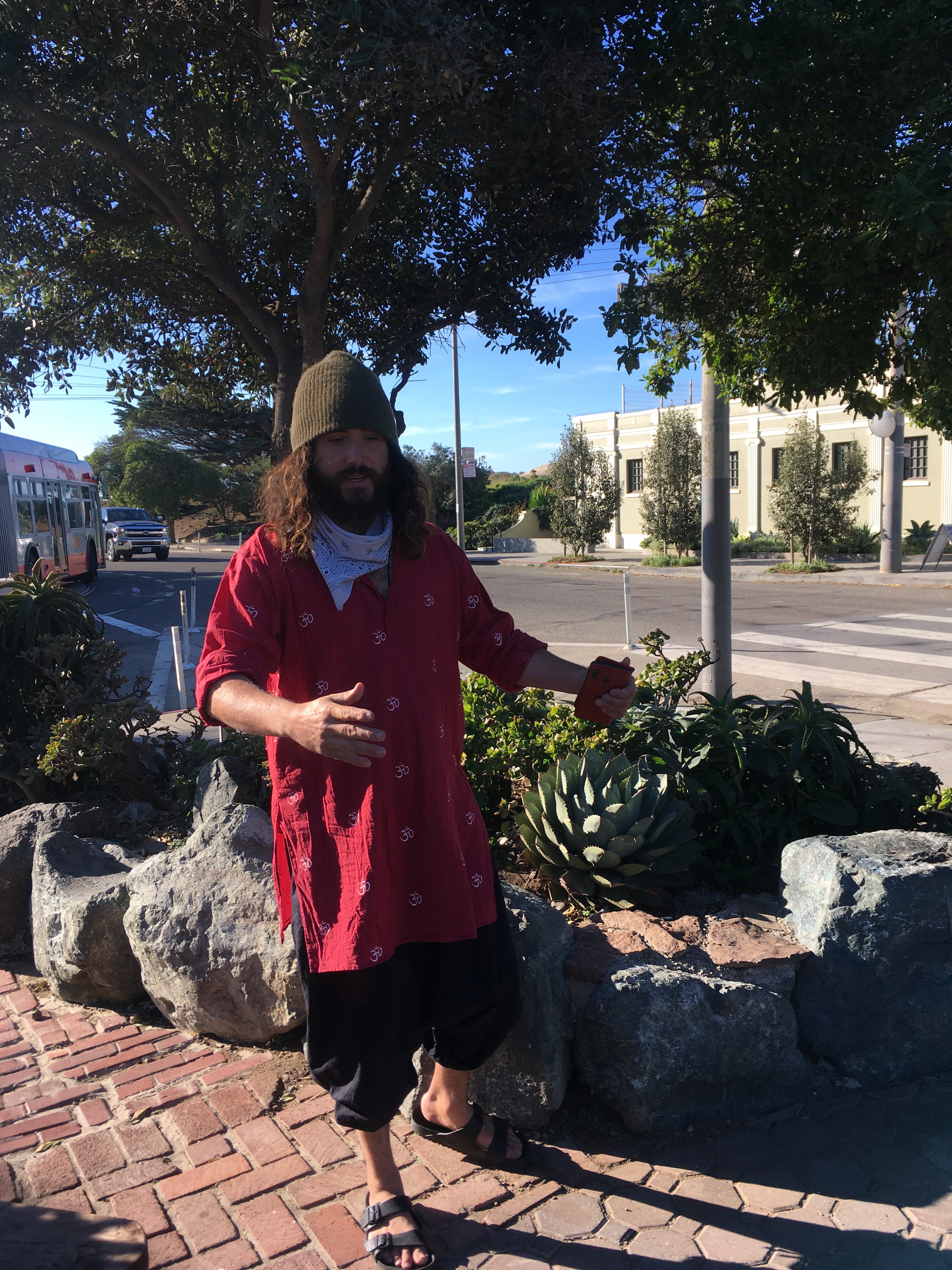
Special thank you to our tour guide and manager of La Playa Park, Anthony Locher!
When you talk about the average rainfall per year, San Francisco and Oakland get around 25”, Los Angles around 15”, San Diego less than 12”, Cabo San Lucas in Baja Mexico gets around 9”. Then you start going inland to Death Valley and the desert and you come in at around 2” per year. In drought years it is less everywhere. During those times water starts getting rationed, folks paint their lawns green rather than water them, and all the feral pigs start dying off along with other wildlife. Even three hundred year old oaks and two hundred foot tall eucalyptus go brown.
As you go north in California, the average rainfall comes closer to the USA average of 38” per year. That is about what Santa Rosa and Sebastopol get. By the time you get up to Fort Bragg on the coast or Willits a little inland we are at about 50”, Humboldt about 55”. All that rain falls on the western parts up north. When you go inland towards the high obsidian peaks of Modoc County then we are back down to 14” or less, and 6 8 10 12” in the Great Basin deserts of Nevada.
So that’s nature, we can’t really control where the rain falls, and how many inches of rain and snow fall a year. But once it falls, culture takes over. Dams stop up rivers, make reservoirs, and control flooding. Water works, pipes and pumps can convey that water to farm land and cities. We can move water from water rich areas to water poor areas. Wells can bring the water deep down below the ground back up again for irrigation or consumption. We can treat that water, recycle that water, contaminate that water, waste that water. Use it as we please.
We do recognize that water is a precious resource, and that water is life. Plus, these days, it costs money. It is money. So we try not to be careless with the substance, and hope that everybody gets a share. People and wildlife alike. However, like any limited resource that varies from year to year, theres fightin’ and arguin’ that goes along with the territory.
When we discuss water issues, it gets messy and tied up with politics and morals and country lines and farmers and fishermen and plenty of emotions. Science, which is supposed to be factual and objective and fair, tends to sway and dance, or just throw up its hands and give up. Theres a reason why river riviere riparia rivus rival forms a continuous stream of words. We’ve been fighting about water and life for as long as people have been people.
You’d think that planting flowers and growing trees would somehow be harmonious and be above the fray. But it too is a culturally bound activity with trends, standards, and tight perspectives. So theres a few topics to explore as we ponder xeriscaping – the plants themselves, our attitudes towards them, and how to make our garden a happy place that works according to plan.
Plants evolved from, and are adapted to, the climates and soils of the world, whether that be the sticky humid southern heat of the bayou or the chilly limestone rock outcrop on a north facing slope. They grow best within a given comfort range. Therefore, in your garden, you try to grow the plants that are suitable for the given area. Some plants like more heat, some less. Some plants dont mind the salty coastal winds, while others prefer the calm protected valleys. So on and so forth; plants are like people, they got preferences. Yes you could grow a plant out of its natural zone, but usually you would have to supplement it with artificial means (extra lights, heat, protection). Or, you would have to accept the fact that the plant will not go about its natural life cycle; it will not give fruit, or it might not flower well. Its not happy, not gonna do its thing.
Every culture has got its own look and aesthetic. Of what is desirable and looked up to. And then within that culture, you’ve got a whole lot of variation too. Of course culture being culture, this standard is not fixed, but changes over time. Sometimes that change is enforced externally, whether by violent means or by mandates of the law. Other times it is something that happens within individuals or tribes because the mind opens up to something new and it is a good feeling. You get that why not grin and give it a shot. So this is true for culture as a whole but also for horticulture. Theres a mold, the mold breaks, another form emerges. Like the insects molting, shedding skins, and undergoing metamorphosis.
Fashion is like this too. Sometimes it is rarity that drives desire and demand. Other times it is some charismatic persons who everybody wants to follow. Could be an ad campaign, could be a viral image. Could be some weird kinda ancestral dream you keep wanting to be a part of. Back in the day, after World War II, prosperity was all around. Given the settlers European lineage, what you wanted was a nice big green lawn. Even in the hot deserts of Texas and Arizona and Cali, a nice green lawn. Its not like people were thinking hahaha I’m gonna waste a whole lot of water and enslave myself to this little piece of earth every weekend. Mow it, fertilize it, aerate it, pest control it, water it, dethatch it, and so on. The lawn was a symbol. It was a remnant memory of a green pasture and lovely expanse of hills filled with sheep and milk and cheese and grains. It was an homage to ancient kings and queens and a fighting spirit with knights and armor and axes and yew longbows and the whole thing. It was worth the investment so to speak. Nowadays the lawn as landscaping has spread worldwide. It is a great place to sit and have a picnic, to play on, to take a nap and look up at the sky and clouds. It serves a function, and embodies a story. Everywhere the lawn goes, it takes on another personae. In Guatemala you got the human machete mowing method. Down in the amazon they like – we always cut our grasses short anyways cause we don’t like snakes hiding in the tall grass near the houses. In Asia’s cheap abundant labor pool you got thirty grandmas and grandmas on their knees wearing bamboo hats with asparagus knives picking at every tiniest dinkiest weed in the lawn, all the while mowing with pairs of scissors like they was a haircutter at the salon.
If you have the neat & tidy, everything-in-a-nice-weed-free-row mentality of farm and garden, then some of the native gardens were totally unrecognizable and probably ugly to you. The accounts that come to us from Spanish chronicles of the 1500’s or the 19th century botanists and writers articulates this view. What seemed a messy incongruent jumble of chaos was perfectly orderly to the west coast locals. Diversity was not some flim flam concept for fundraising, it was about survival. The garden included a myriad of plants for food and medicine and fiber and construction. Why would you go weeding something that would provide edible seeds? Why would you throw away the root that would relieve the painful toothache? Just leave it! Granted that they had limited access to metal tools and irrigation. It just wasnt priority or within their capability or part of the cultural mindset to make it just so… controlled. Relaxed is probably the correct word to describe their relationship with nature. They focussed their cultural efforts, organization, and formal structures on the baskets, the sinew bows, the fishing nets, and the coyote stories.
We are at a junction in the garden. The old ideas are still valid, but need to be tempered and balanced with novel solutions for a crowded and conscientious world. That is where xeriscaping comes in. In a sense, the way it is utilized these days, it goes beyond water conservation in the landscape. It dovetails with native plant restoration, designing with hydrozone principles, and the awareness of the importance of water to all life and habitats. It does challenge the old school green estate aesthetic with other ways to appreciate plants and nature. It does so with methods that are slightly less intense and a little easier on the body. Mostly with intelligent and wise plantings. Given that folks do not keep slaves anymore, and not everyone likes the constant din of motorized blowers and hedgers and chainsaws, this is a normal progression. If you could work less, pay less, have more fun, and still look good, why not?! Okay then here we go…






 Mission Azul