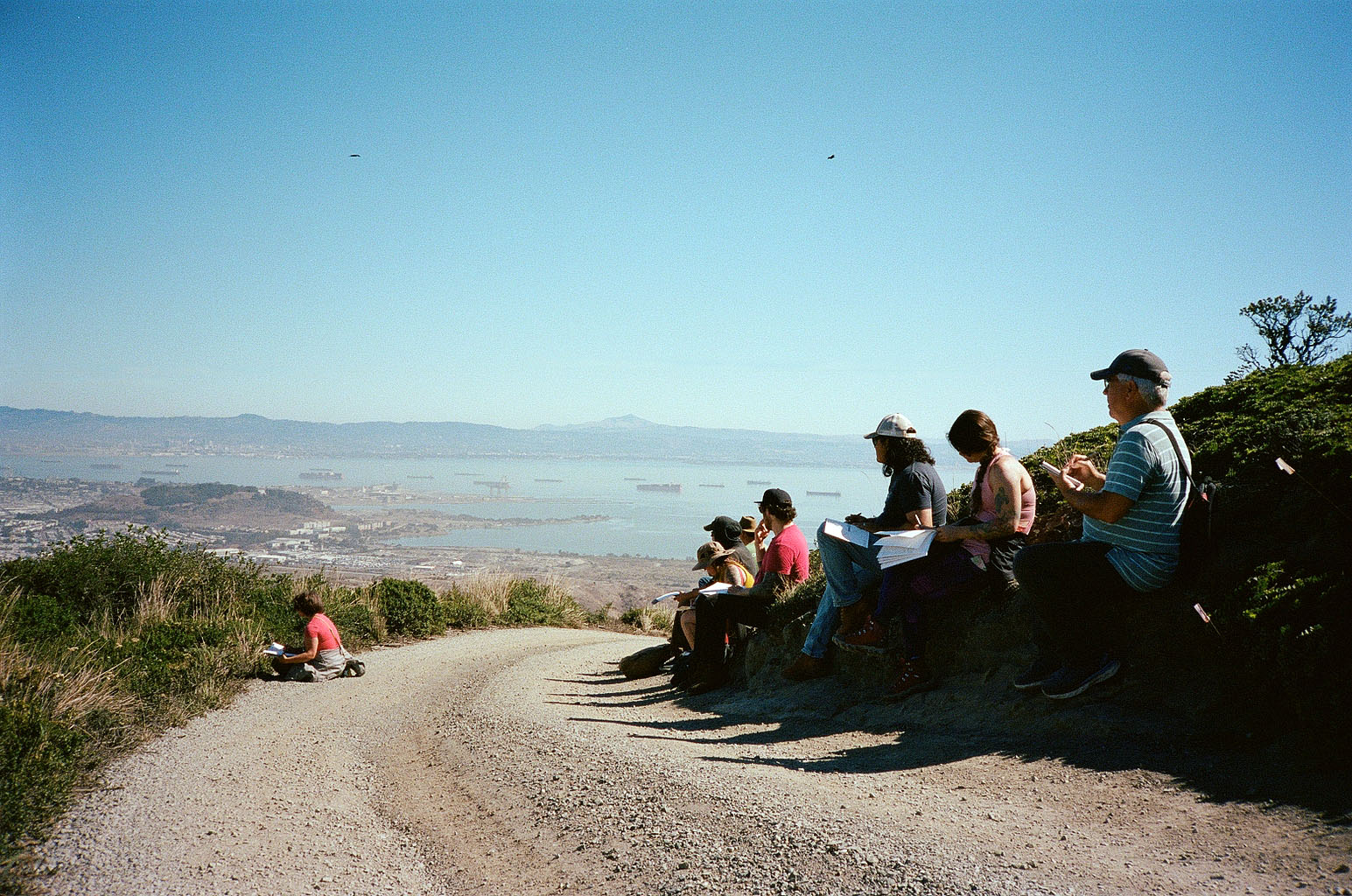
As part of the Landscape Design OH70A class, we take a field trip to see nature’s designs at work.  The place we go to is San Bruno Mountain.  It is close, it is ancient, and it reveals much about our landscape and our history.  We do the summit loop trail to learn about how what plants are adapted to the site, and in what kinds of combinations.  We talk about the importance of soil and drainage, and how all the forces interact to create the magnificent scenes we behold.    We check out the view of the surrounding cities.  Okay, here we go!

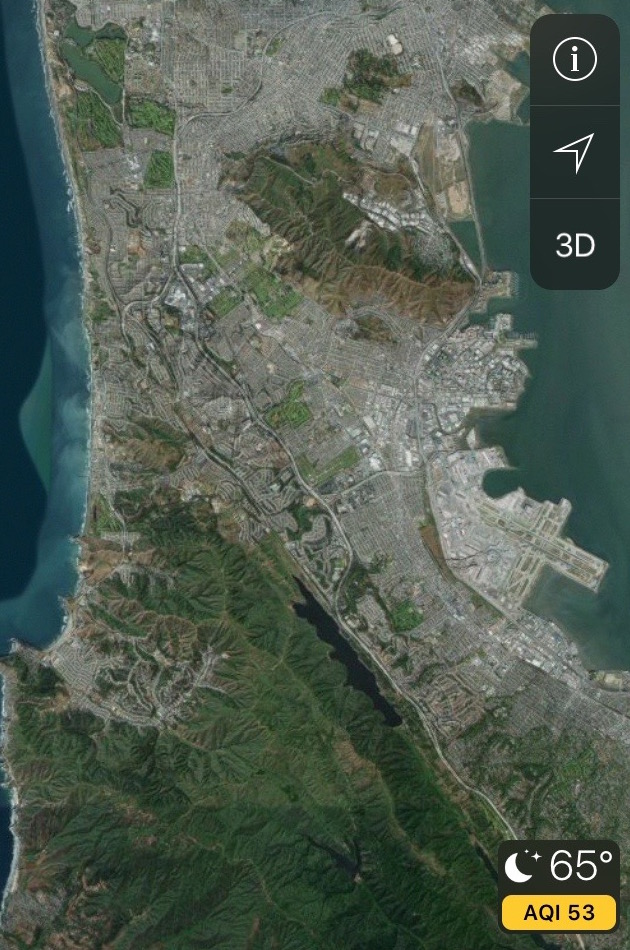
Startin’ off at the summit, you get a good plan view of the tip of this peninsula which comprises San Francisco north, Colma and Daly City to the west, Brisbane to the east, and South San Francisco to the south.

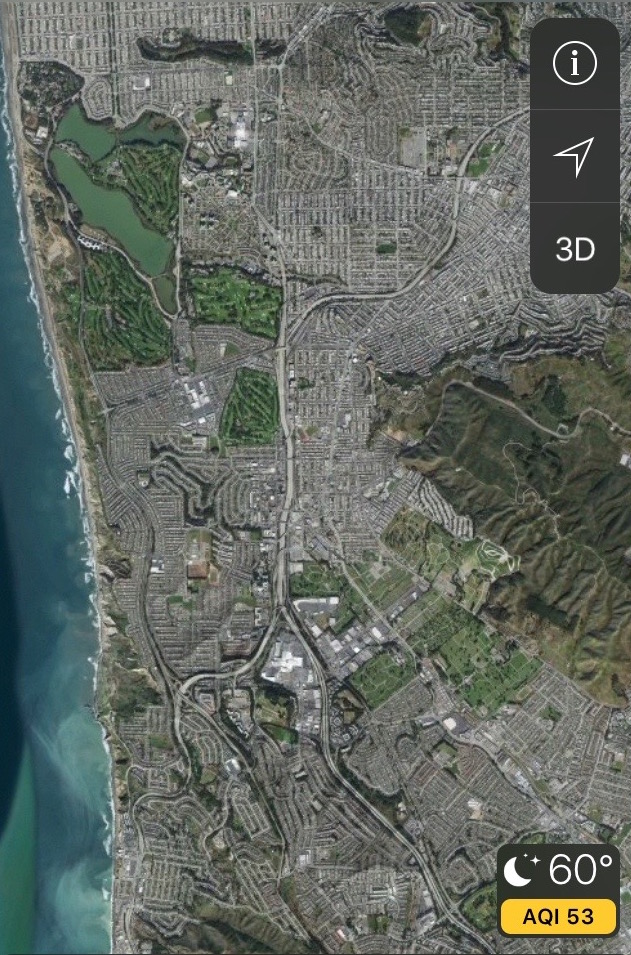
On the west side.  Alright, let’s pick out the main green features.  Theres ol’ Lake Merced, which was once salt water, part of an estuary that mixed with the sea.  The big green spaces are mostly all golf courses and cemeteries.  Theres a few little parks, but in town, most of the rest is houses and retail.  
A.jpg

Yup, thats about it until you go south towards San Mateo and Skyline and Crystal Springs reservoir where ridges of coastal mountains couple with old douglas fir trees.  Note the onshore wind and oceanic fog that influence the plant matrices and how they grow.
C.jpg

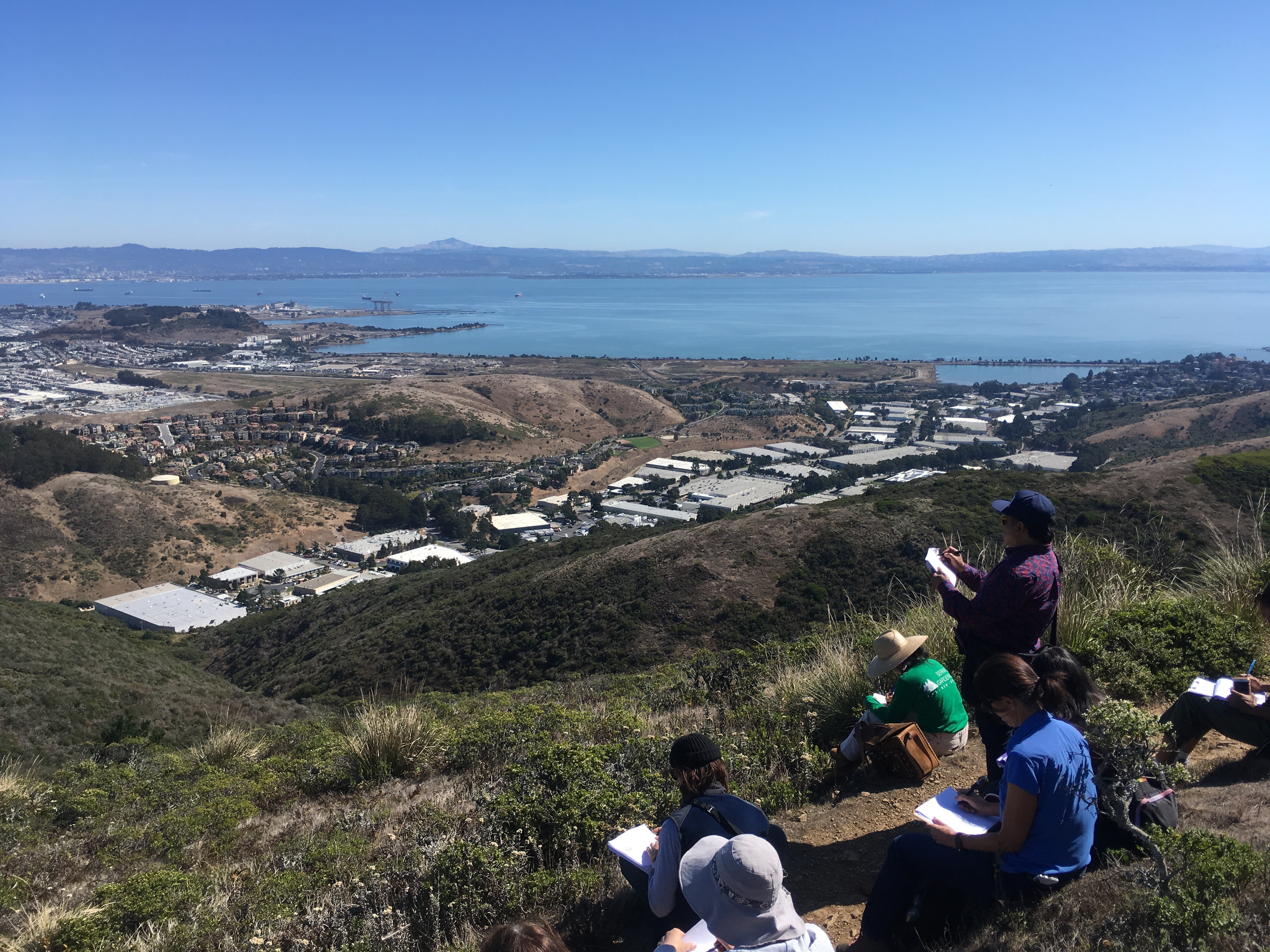
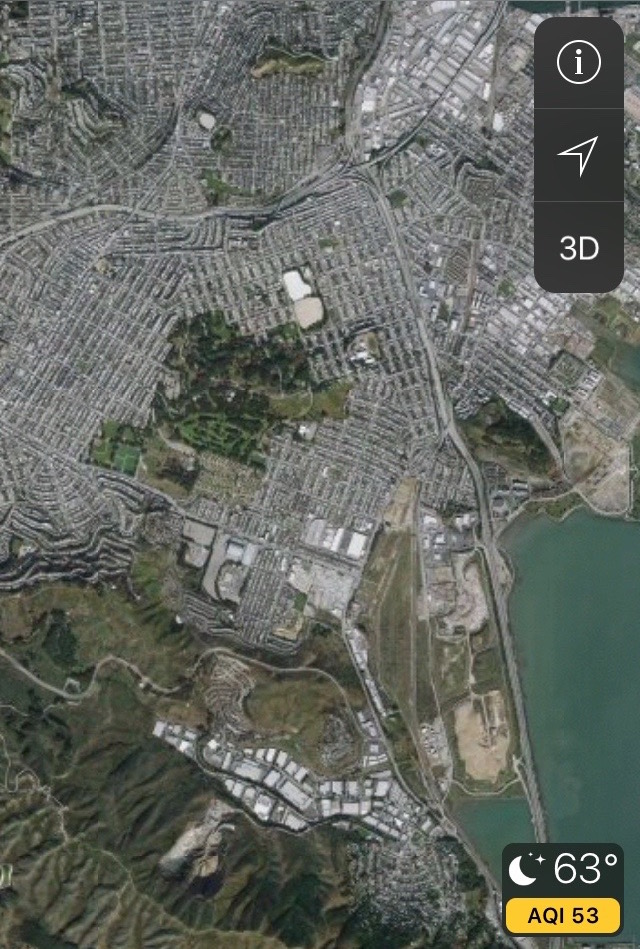
On the east side going north from San Bruno Mountain.  This is the more protected side of the mountain, veering towards shade as the trails start to point north towards downtown San Francisco.  There is the small town of Brisbane, its lagoon, and the dump site by the railroad tracks.  Green space wise, a little northeast of San Bruno Mountain is McLaren Park at 313 acres, and to the east of McLaren park you can see Bayview Hill and the dirt lot that was once Candlestick Park where the Forty-Niners played football.
AA.jpg

B.jpg

North – you can see the forested hills at the tip of the San Francisco peninsula, the Presidio.  And a little to the left of that is a stretch of trees that comprise Golden Gate Park.  Marin Headlands  is in the distance.

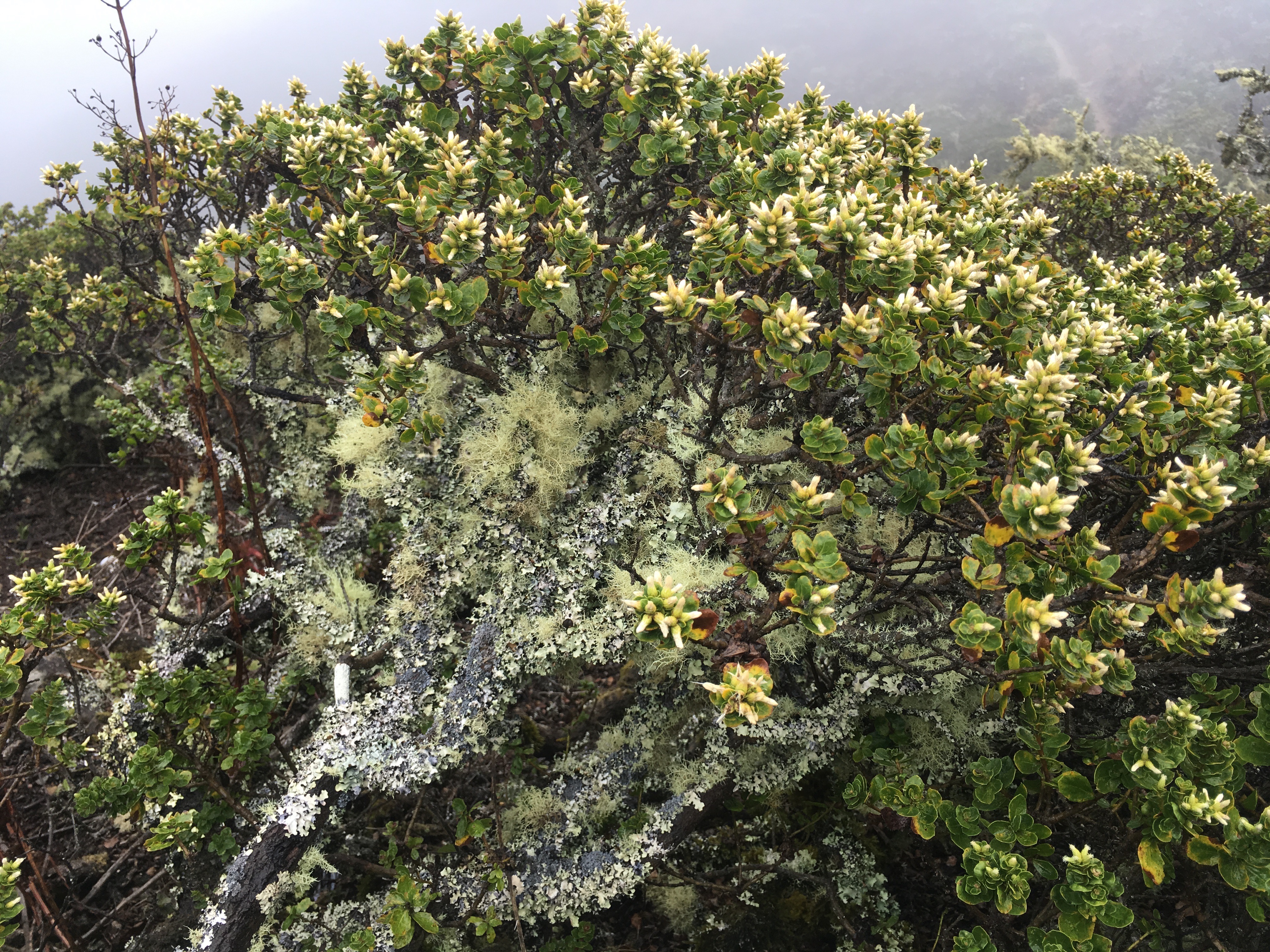
Well the ecologists call em dominants in a vegetation community, some designers like to call them the bones of a design, or the structure.  Oftentimes these plants are evergreen and persistent.  They are plants that course throughout the landscape and give definition to the garden as a whole.  On San Bruno Mountain, in this coastal sage scrub community, the dominants are coyote Bush, California sage bush, monkey flower, lizard tail, and coffee berry. 

This is coyote bush and some lichen friends:
E.jpg

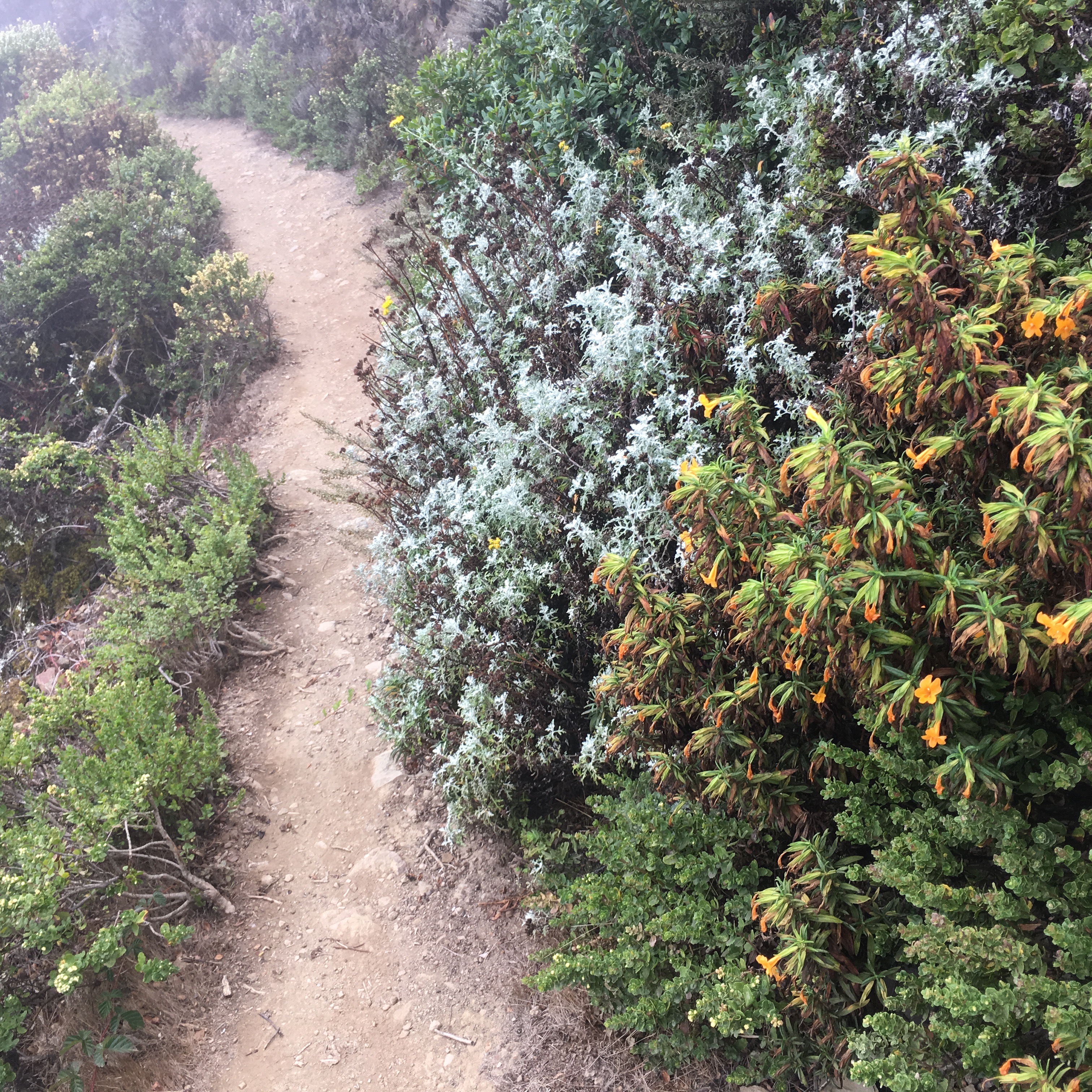
This is the sticky monkey flower in orange singing along with the lizard tail in whitish green, with a pinch of the coffee berry behind both of them:
EA.jpg

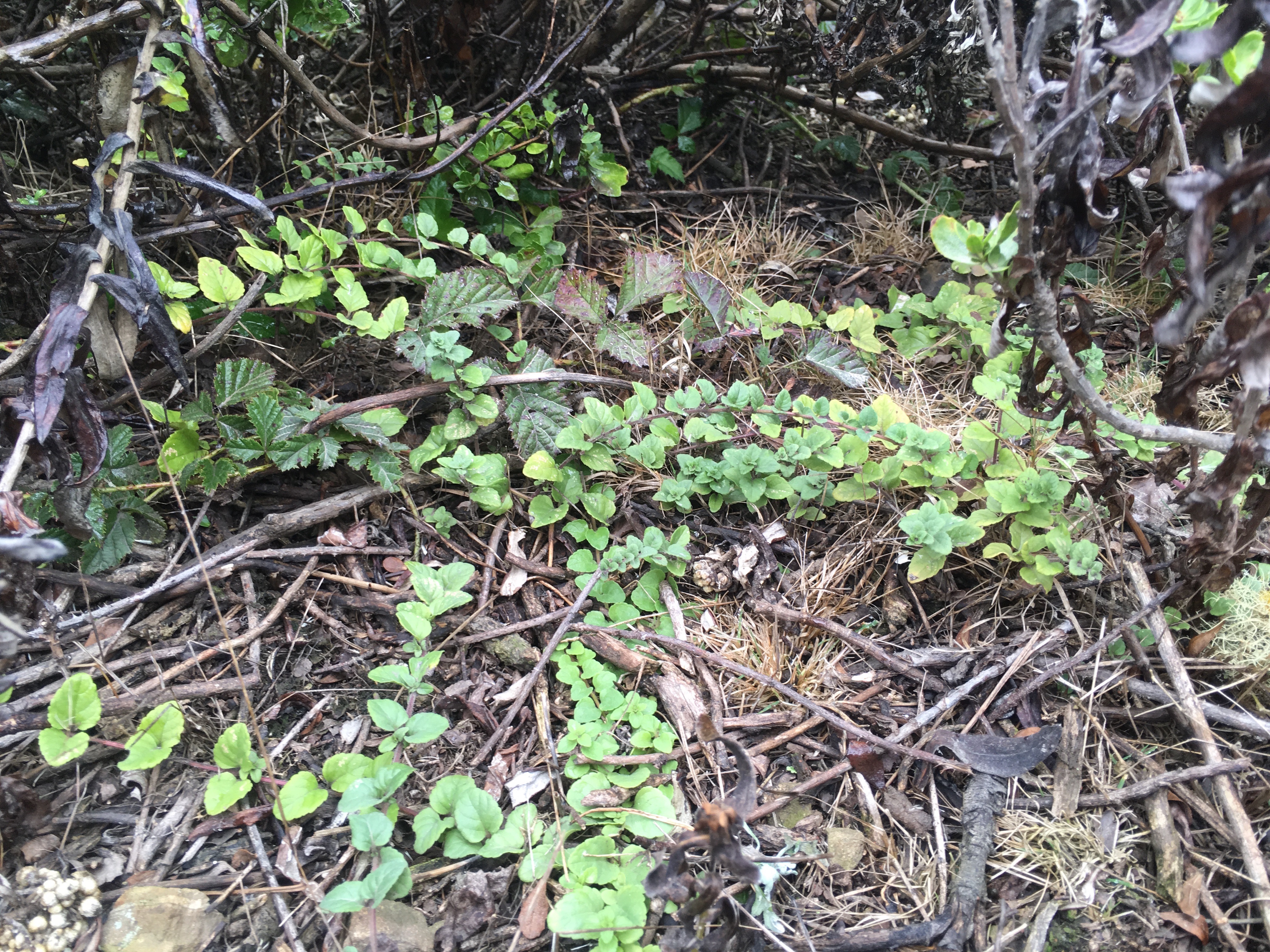
Another neat way to fill the garden with plants is thinking about the space in various heights.  In ecology we would be talking about canopies and understories.  In permaculture design they are always going on about layers and probably stacking functions.  Designers will chime in about how the highs and lows make a garden dynamic and interesting.  So do not forget about the groundcovers that enjoy a little bit of shade from the shrubs above.  A neat plant on the summit trail sneaking underneath the coyote bush is yerba buena – a tidy little crawling mint.  It makes one great tea:
G.jpg

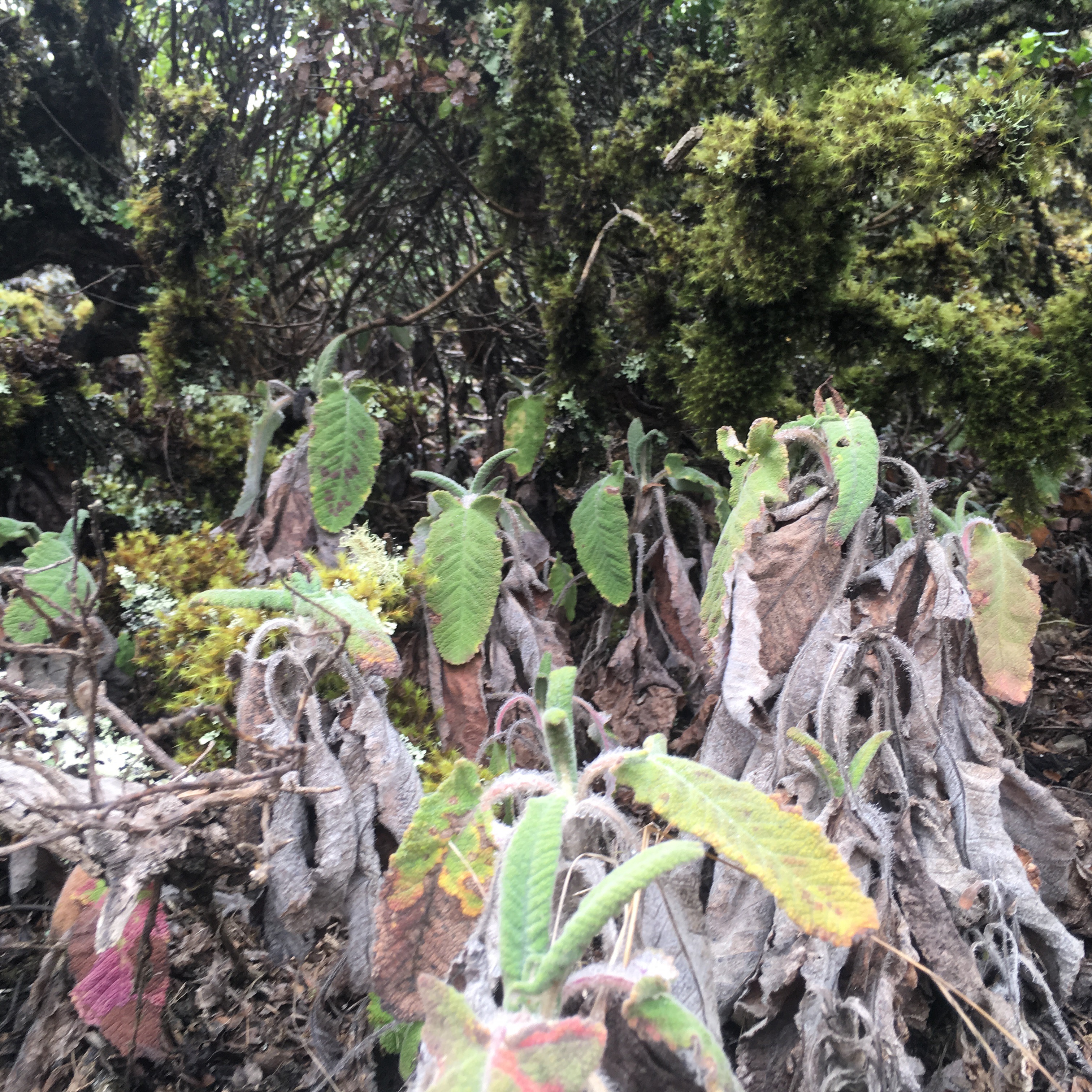
Hummingbird sage with its sweet leaf aroma and pink two lipped blossoms are a treat for any garden.  It also likes to wander under other plants on a north north/east facing slope.  This time of the year it is looking real real dry…
I.jpg

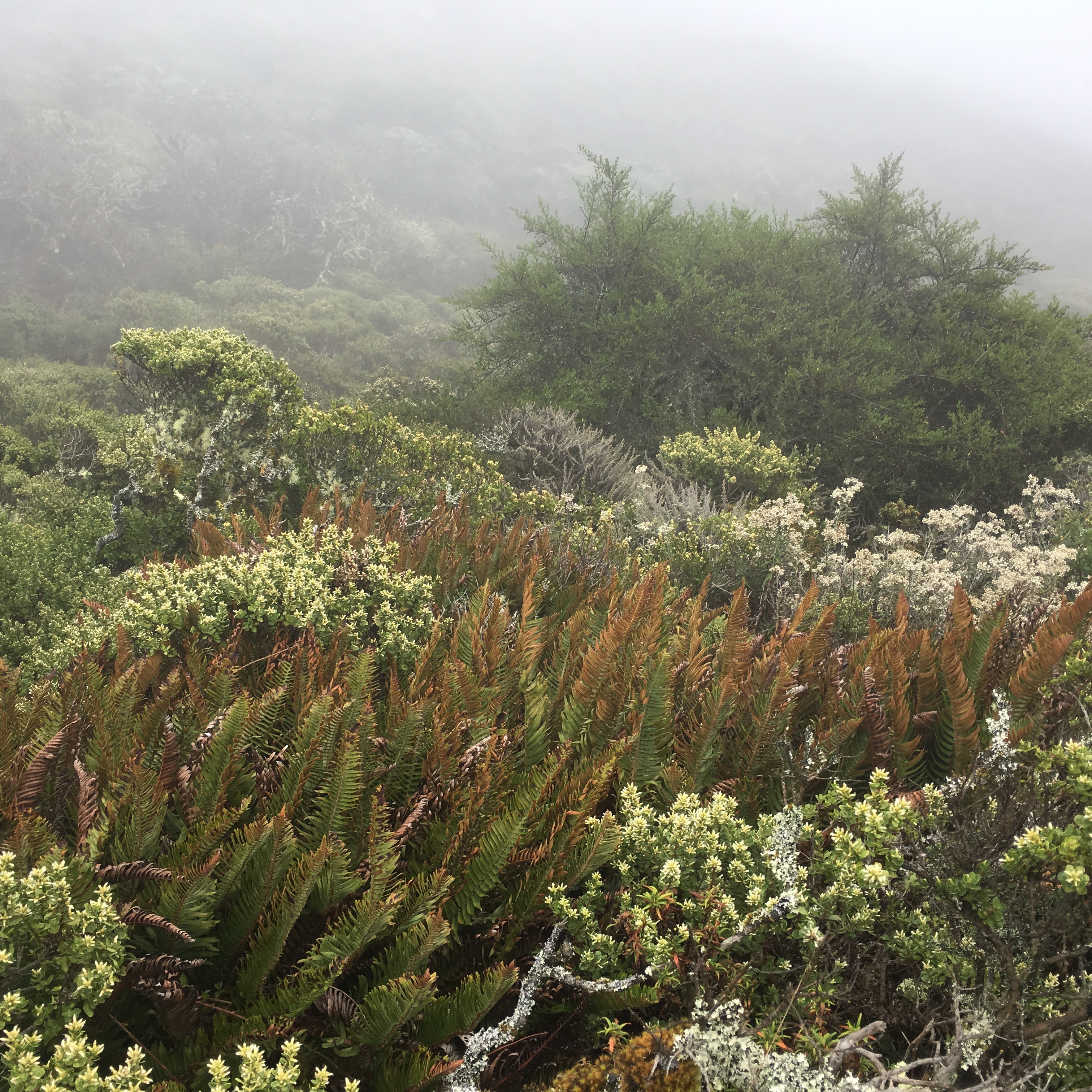
Sometimes, here and there will be a plant of a little larger stature that sticks out.  A designer might call it a focal point or an architectural specimen.  For reasons of space or water or light or all of the above, they are less frequent than the shrubs.  On the summit trail two plants seem to fit this description.  One is California wild lilac Ceanothus thrysiflorus that flowers in nice purple blue.  Thats it in the back there, without its famous blue blossoms.  In the foreground is one nice drift of the sword fern.  What lines!!!
N.jpg

Another focal point is the tree/large shrub that is always in the wet drainage along where two hills meet.  There you will find stands of red elderberry Sambucus callicarpa which was good for making flutes and clapper sticks and cigarettes and bows and all sorts of other things back in Ohlone days.  Thats them in a line with twiggy looking stick branches along a ravine where the water gathers. 
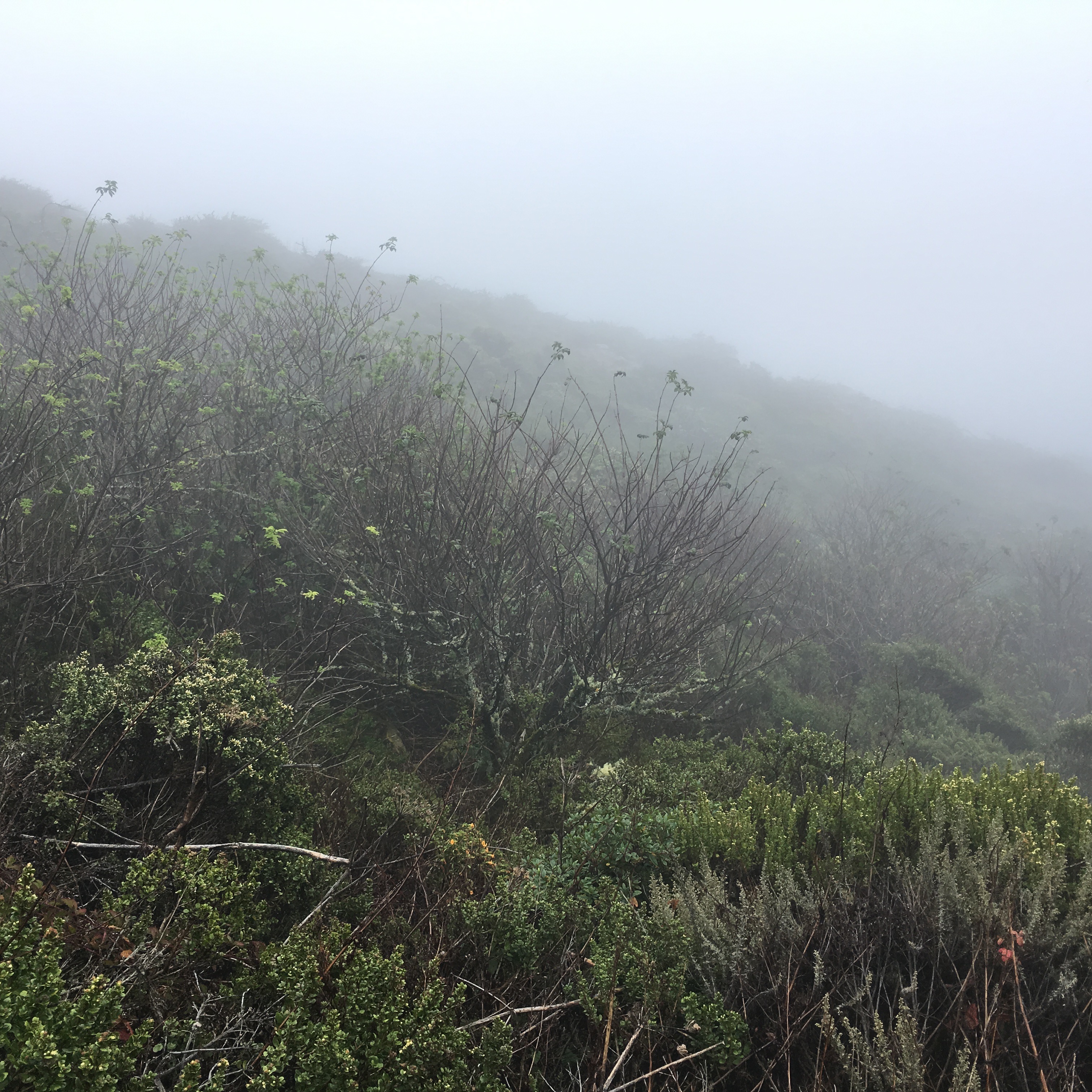
O.jpg

As always it is good to be attentive to small details and diversity.  We came across four species of ferns on the summit trail.  The clumpy sword fern.  The popping up here and there somewhat solitary feeling bracken fern.  A California Polypodium fern on the slopes gripping with furry feet into the dirt.  And around the corner up the road the Polypodium with stiffer leaves the one known as the leather fern.  Yes, in general, ferns like moisture.

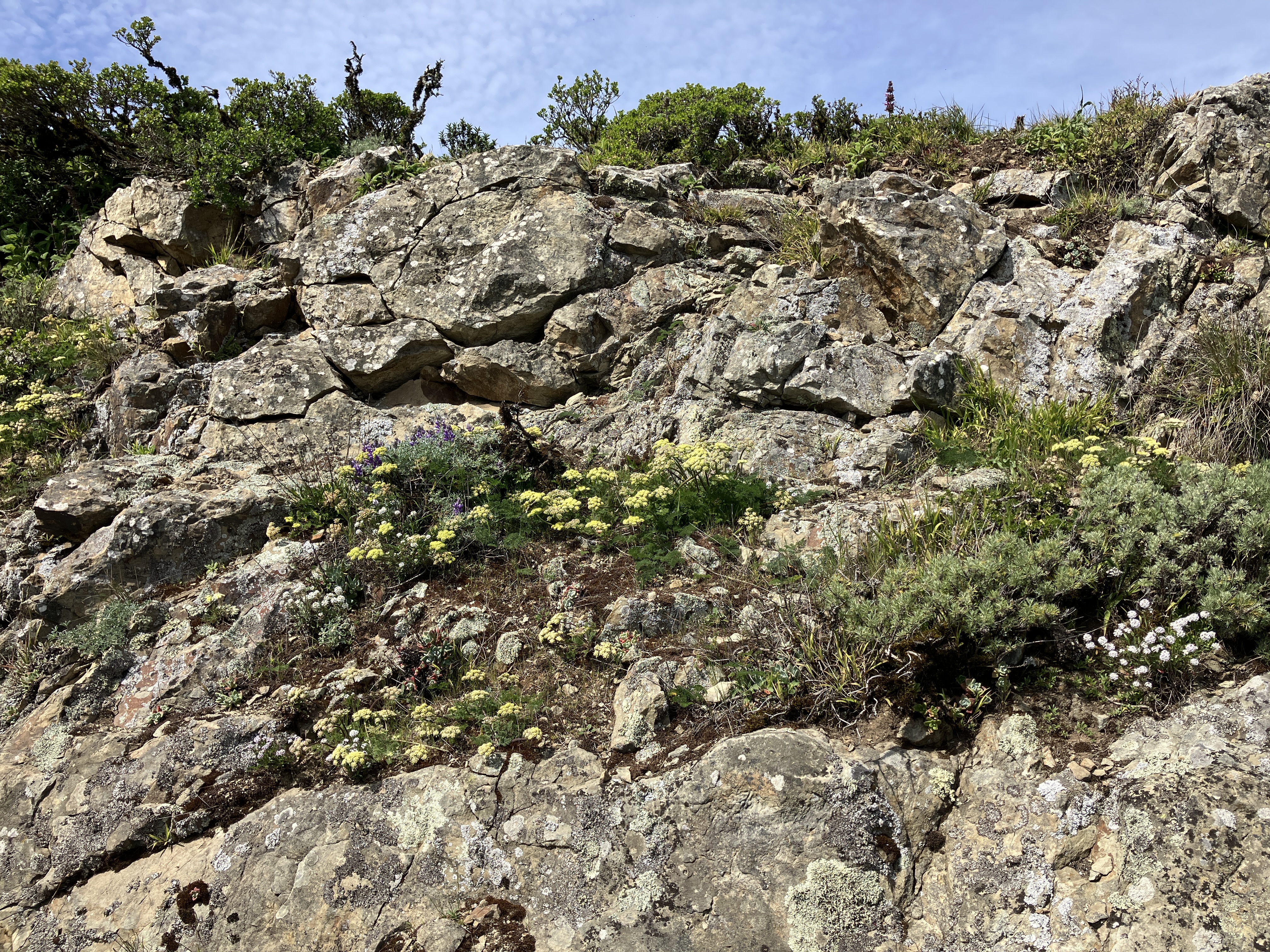
There are two succulents that are easy to spot on the trail if you are paying attention.  Yup, succulent like euphorbias and cacti and jade plants and the like.  But these two have been on the mountain for oh say a few hundred or a few thousand years or so.  One is named stonecrop and is a host plant for the San Bruno Elfin butterfly.  It is here posing with the seaside daisy – a low drought tolerant groundcover with nice purple yellow flowers. 
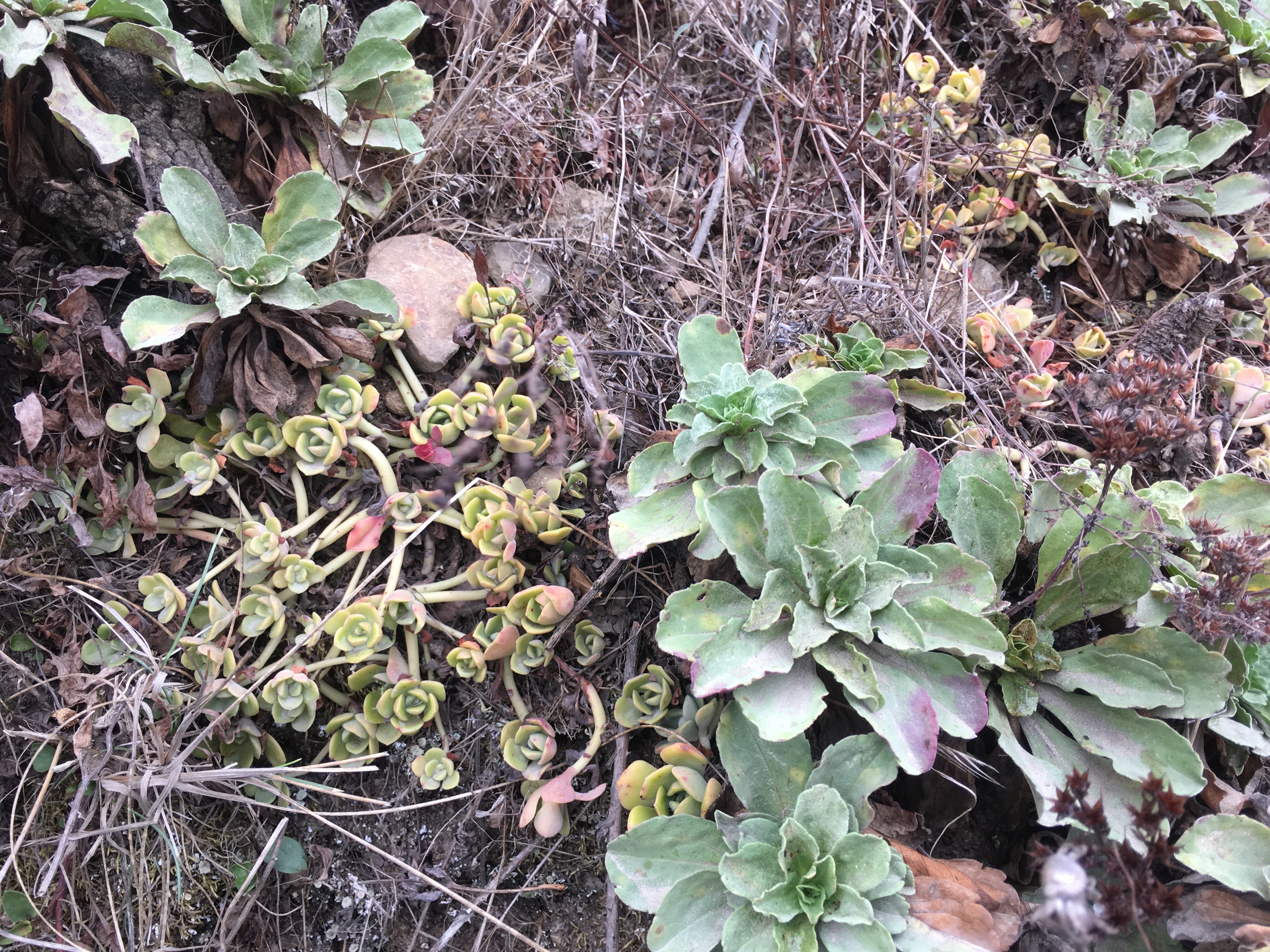
D.jpg

The other succulent is named live forever.  It is really choice. Dudleya farinosa.  Farinosa like farina like white like flour.
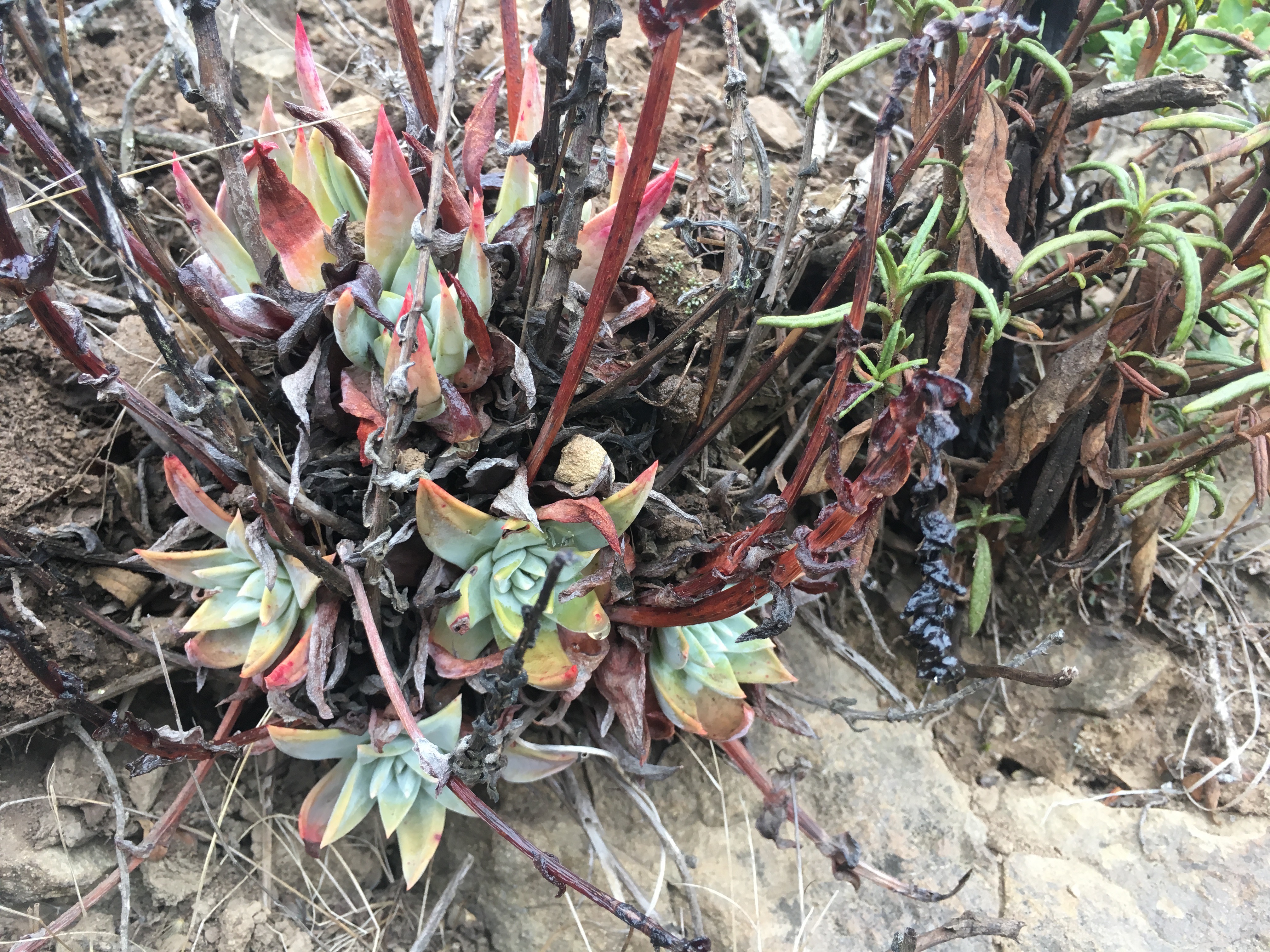
T.jpg

The one plant that you must know if you hike in California is the poison oak plant.  This time of the year it is starting to turn red the leaves.  Leaves of three let them be.  If its shiny watch your hiny.  You are not likely to plant this in the garden because it gives most people rashes.  Plus it is not commonly available at the local nursery.

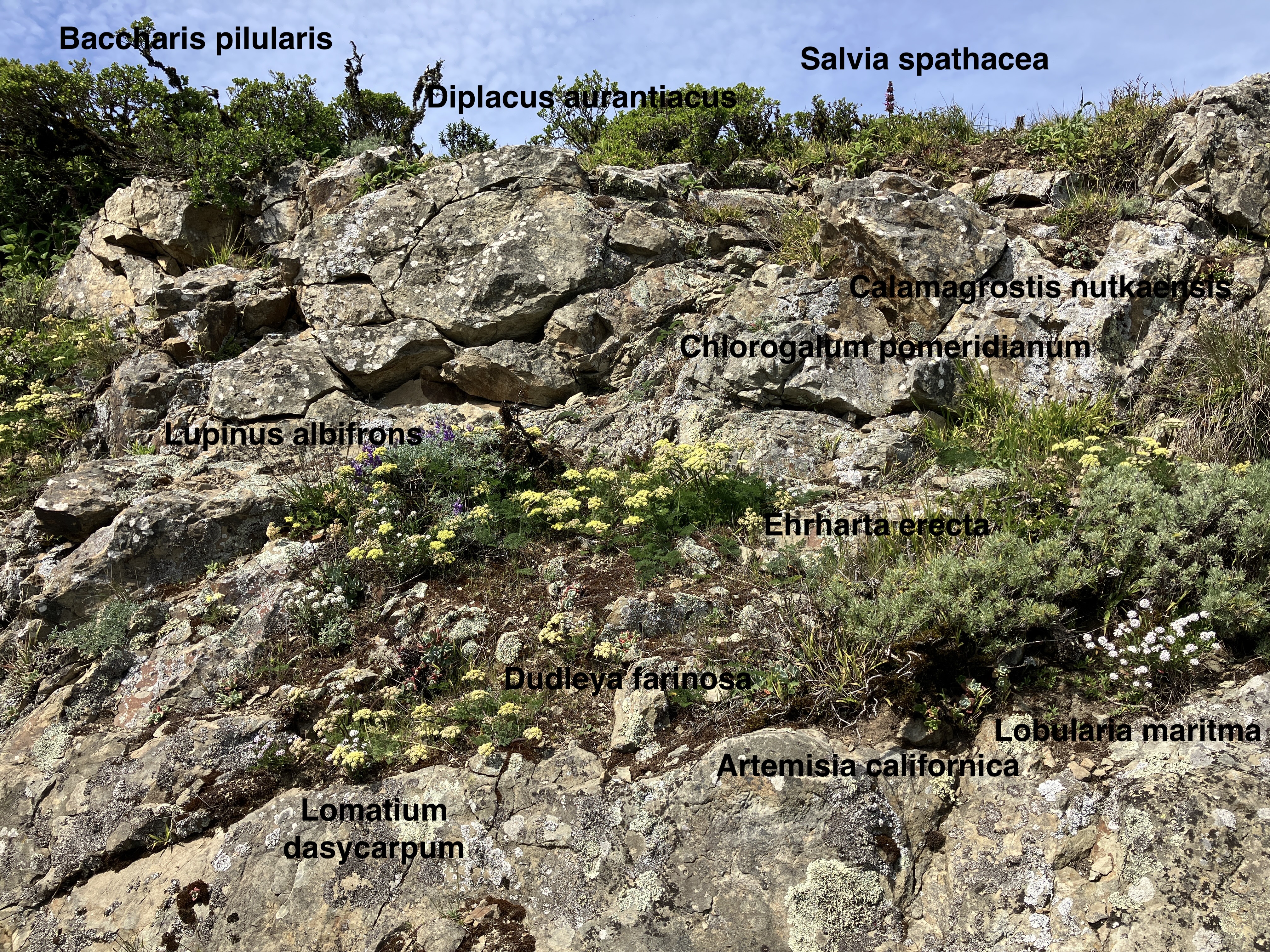
P.jpgAs a designer and gardener,  you want to make memorable plant scenes – combinations of plants that sit well with each other as they drink the fog and twirl in the rocks below.  Some verticals and motion coupled with a rugged yet delicate harmony.  This the the goal.  Try to mix and match woody shrubs with herbaceous evergreen perennials.  Repeating in a curved chorus.  These are a few samples from one of the most epic and ancient places in the San Francisco Bay Area:

Nutka reed grass and manzanita.  Down low is California blackberry and good ol yerba buena.
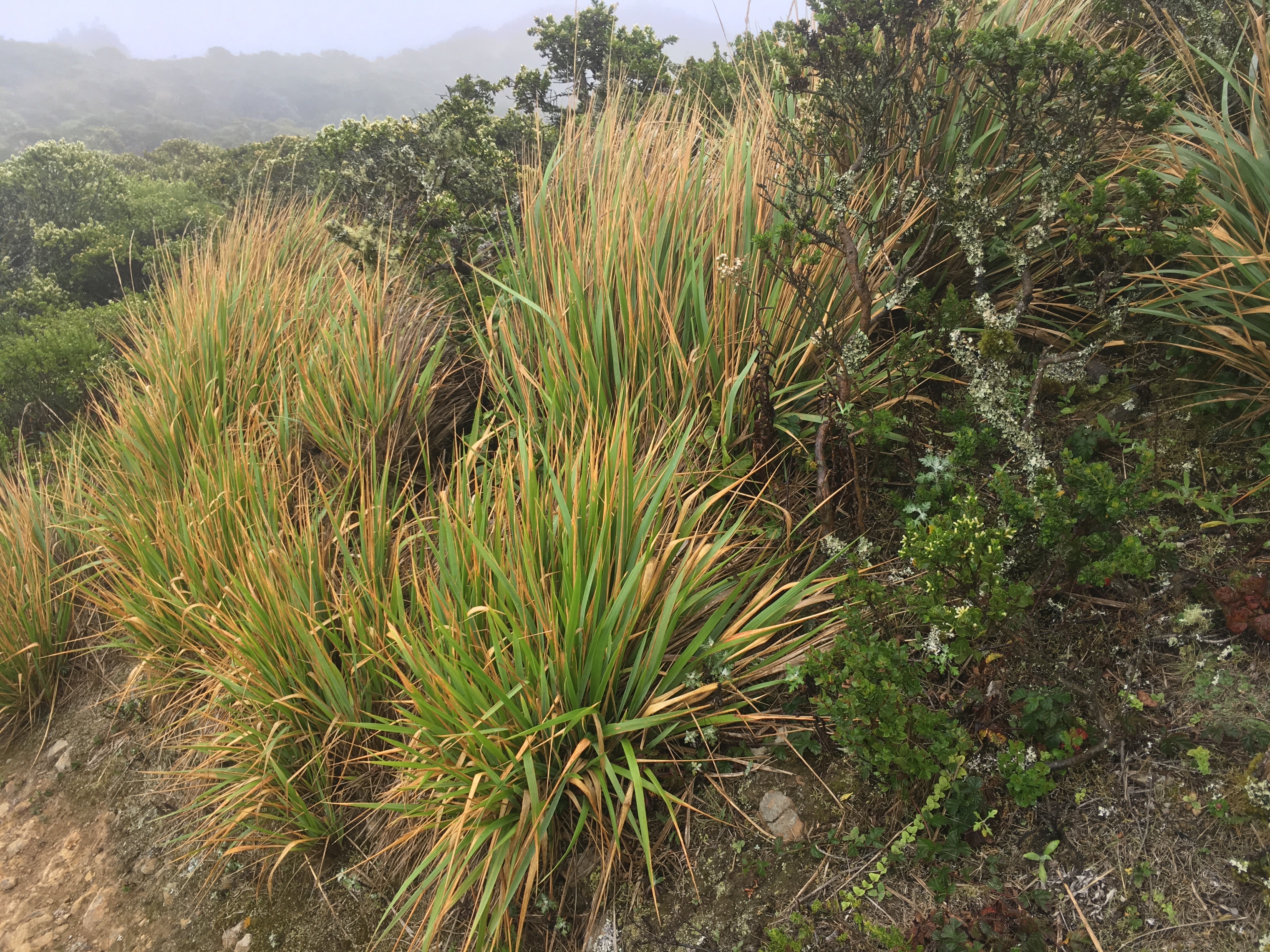
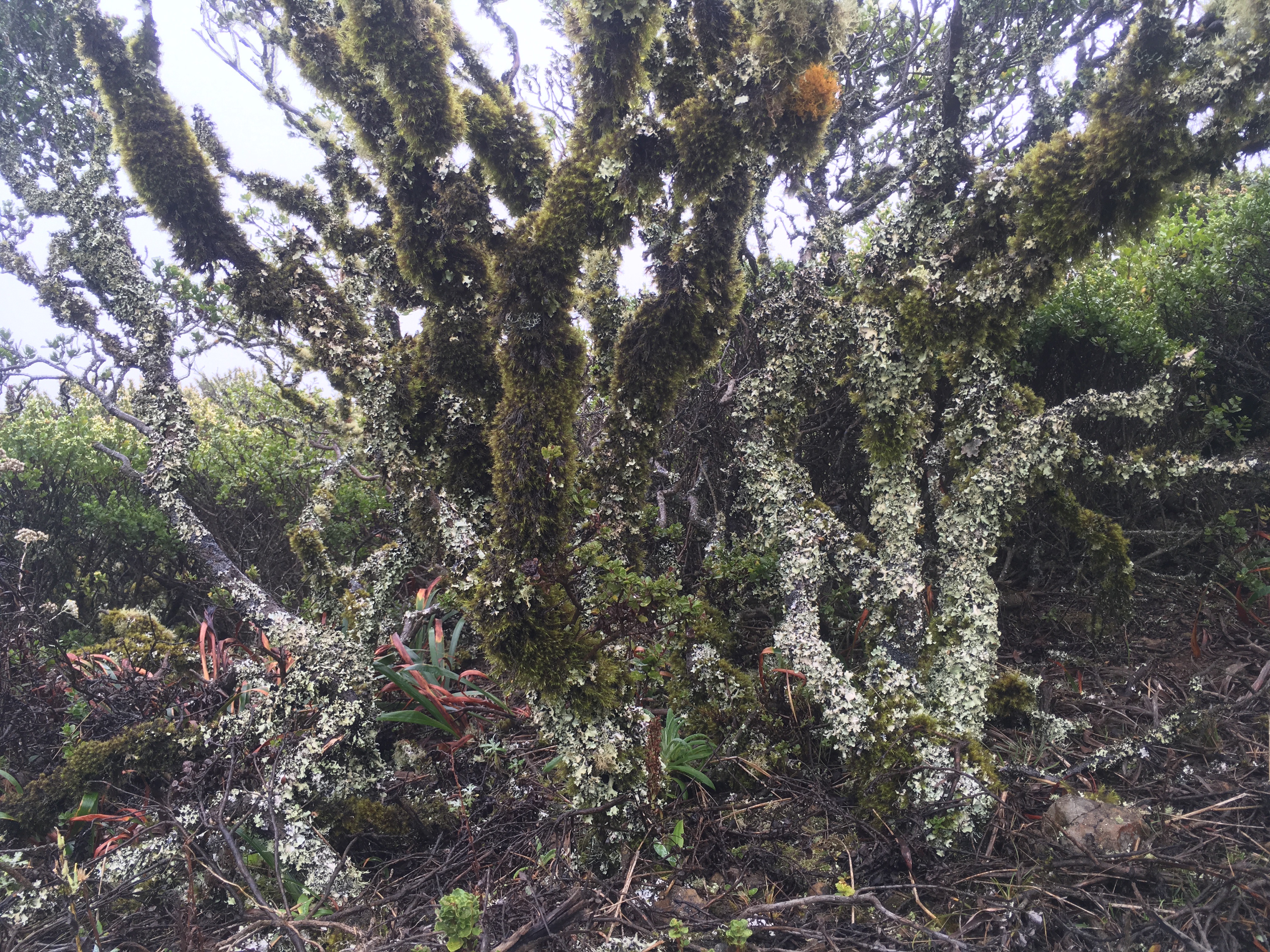
Q.jpgLichen and douglas irs.  This one is a wild garden special.  Gonna be hard to replicate this one in a home garden.  Takes time. Time. And more time.
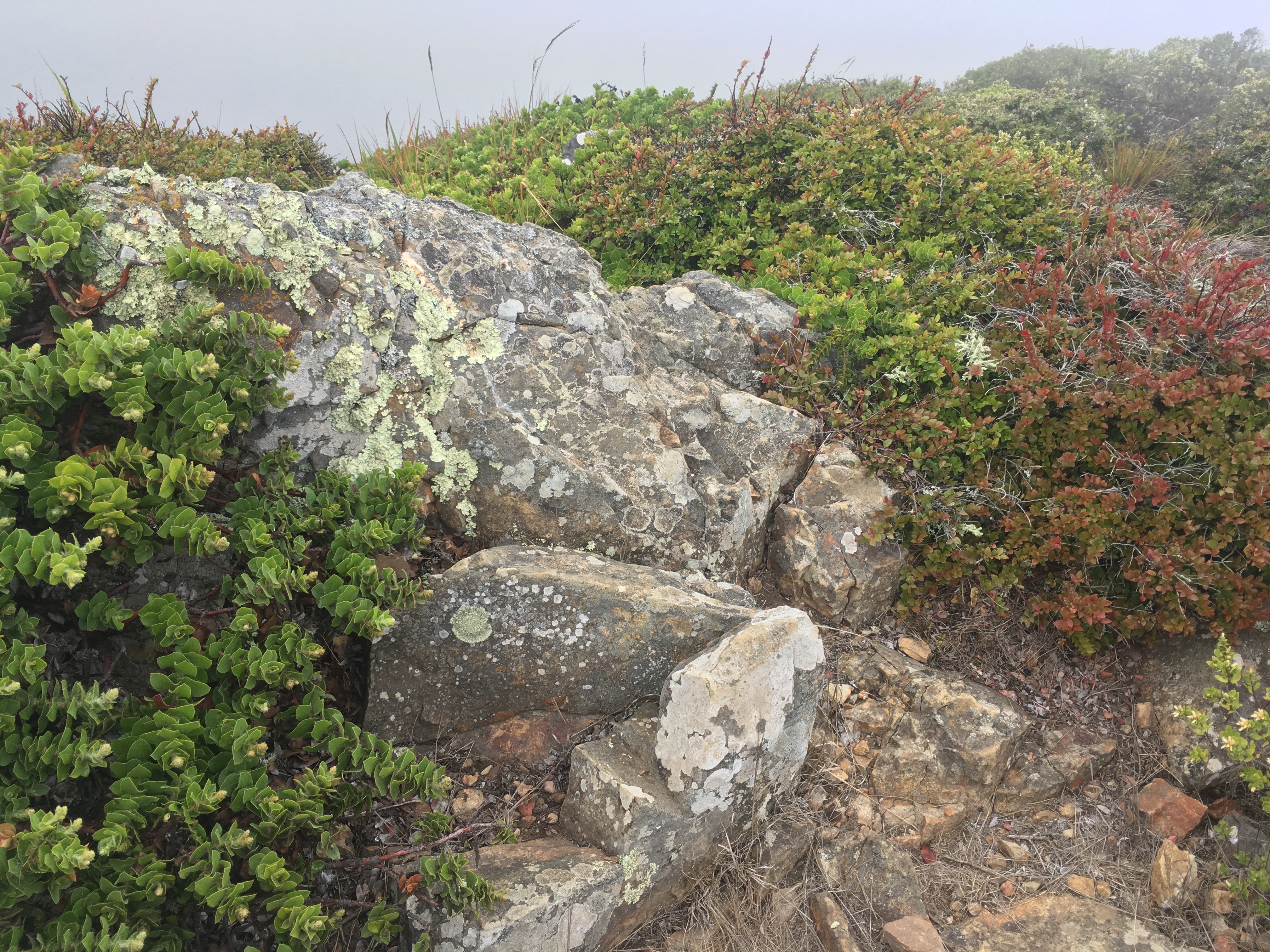
R.jpgThis here is one of my favorites.  Huckleberry and manzanita.  Tucked behind the rocks there is a nice fat clump of live forevers.  Hey this is why we go hiking!
S.jpgOkay.  Nature is the master designer.  Be attentive and all the principles of design can be understood in the crystal filled canyons and fog drenched forms.  Enjoy San Bruno Mountain!!!

IMG_9718.jpg

SBM from Bob.jpg

SBM key.jpg

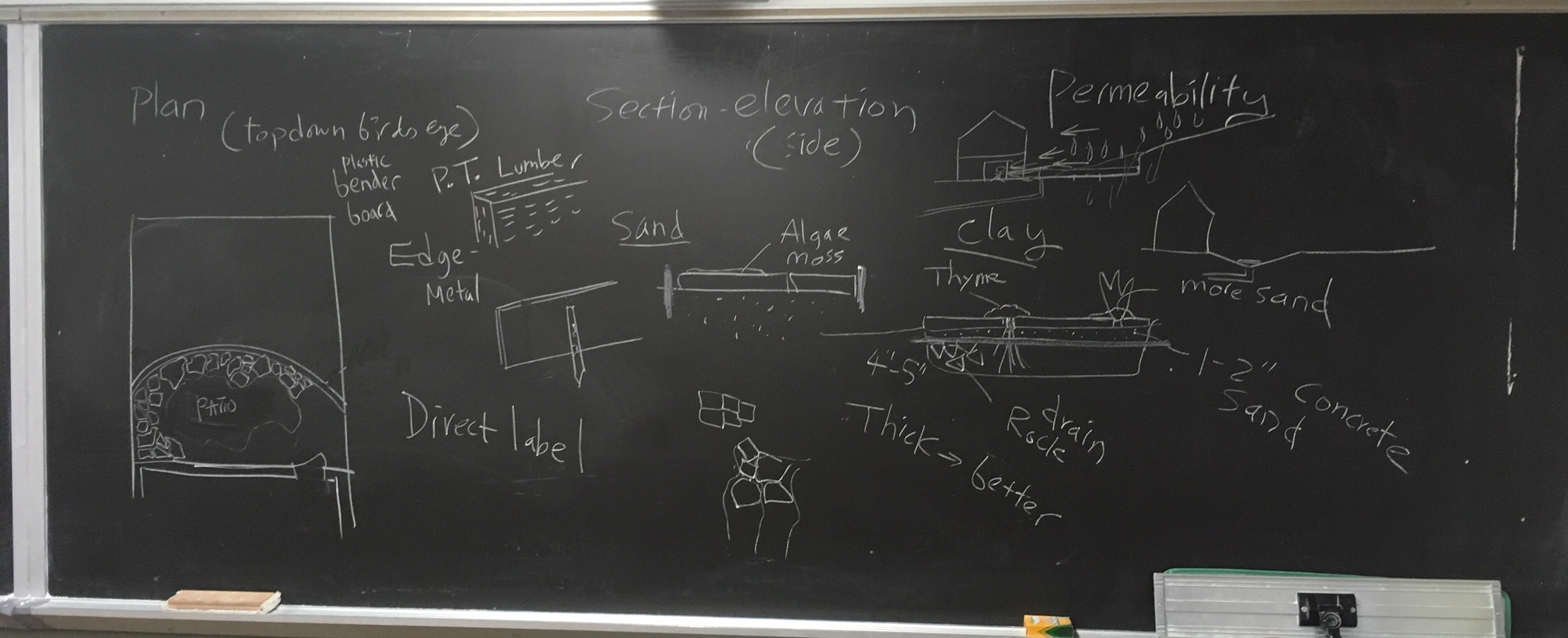
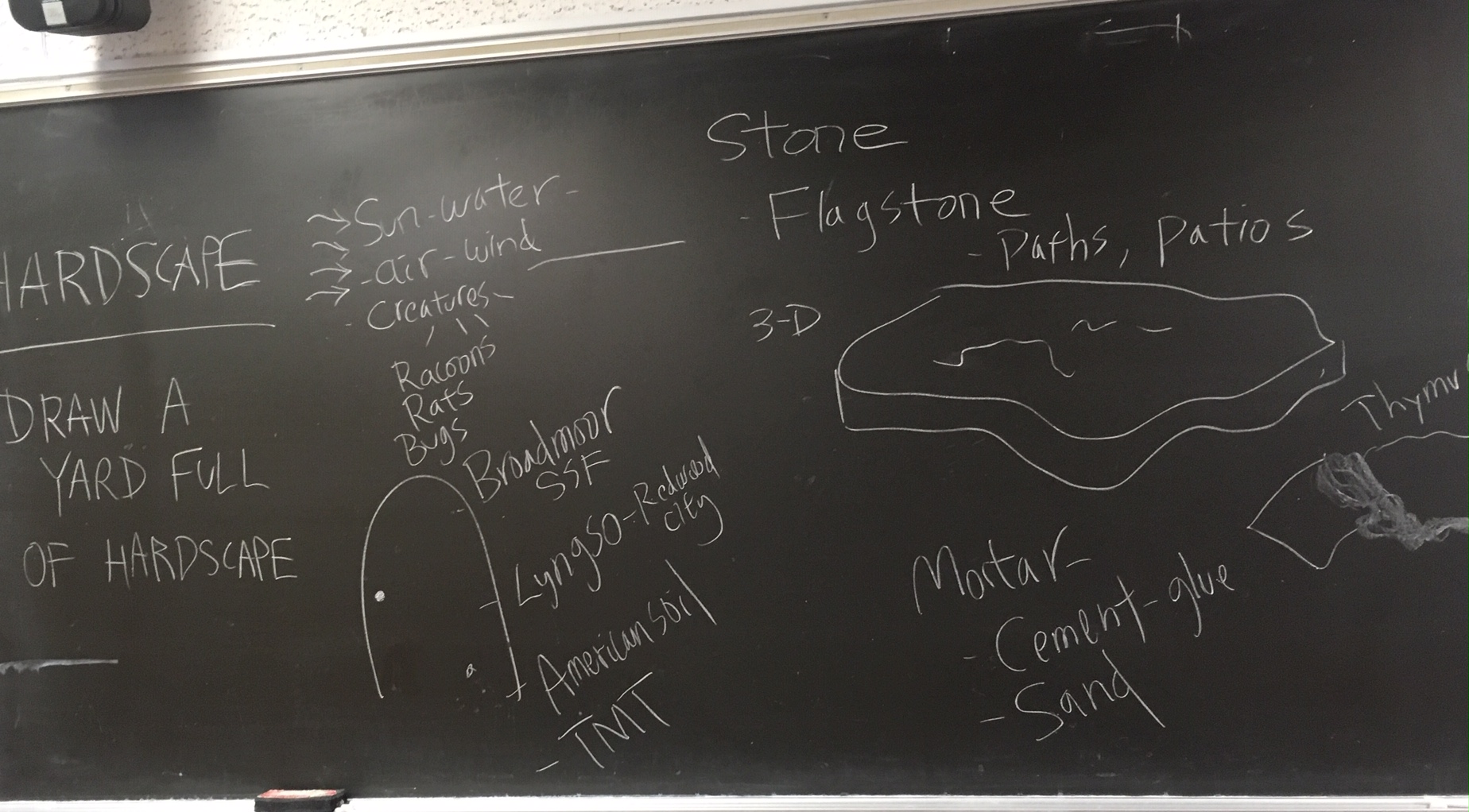
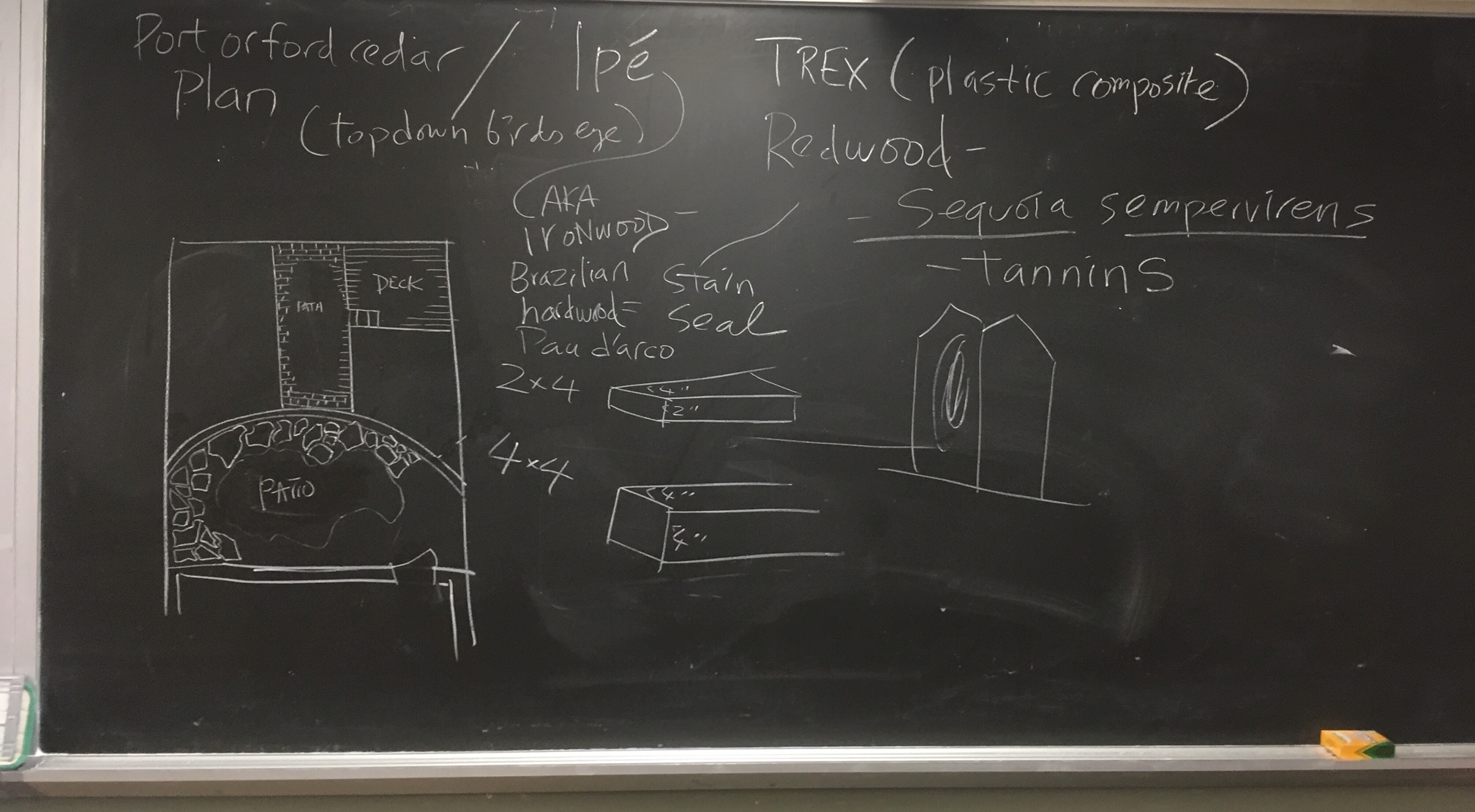
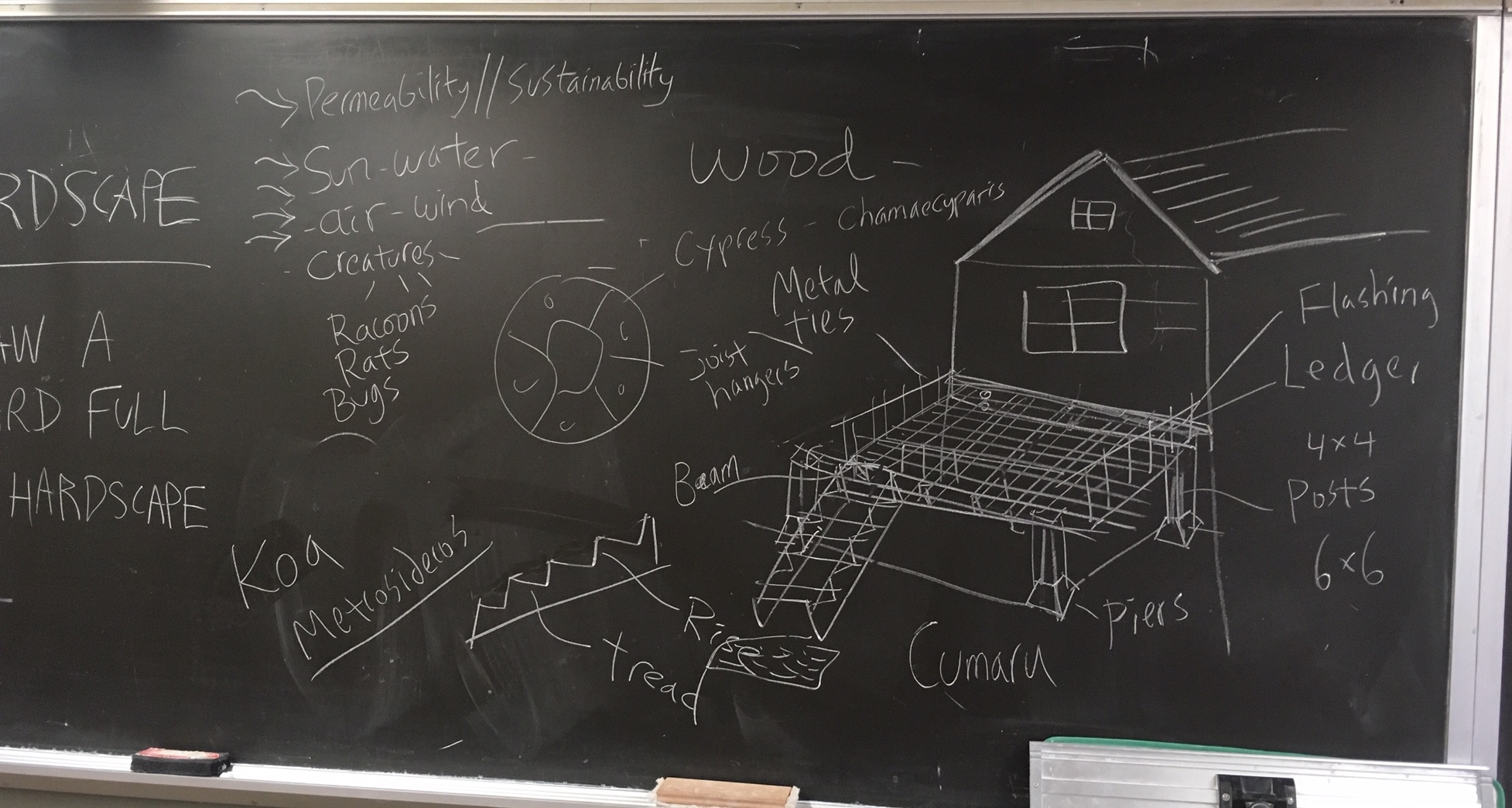
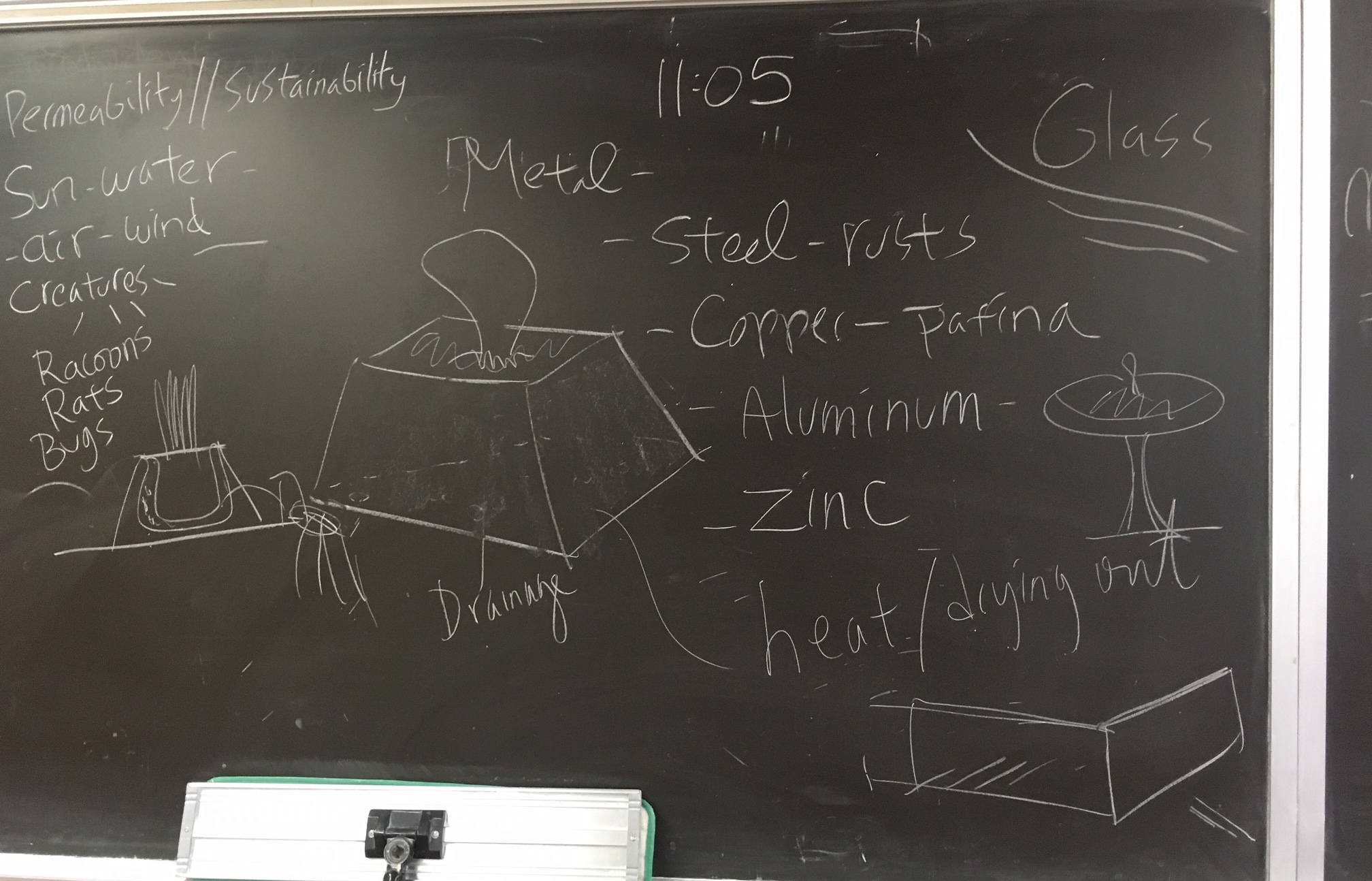
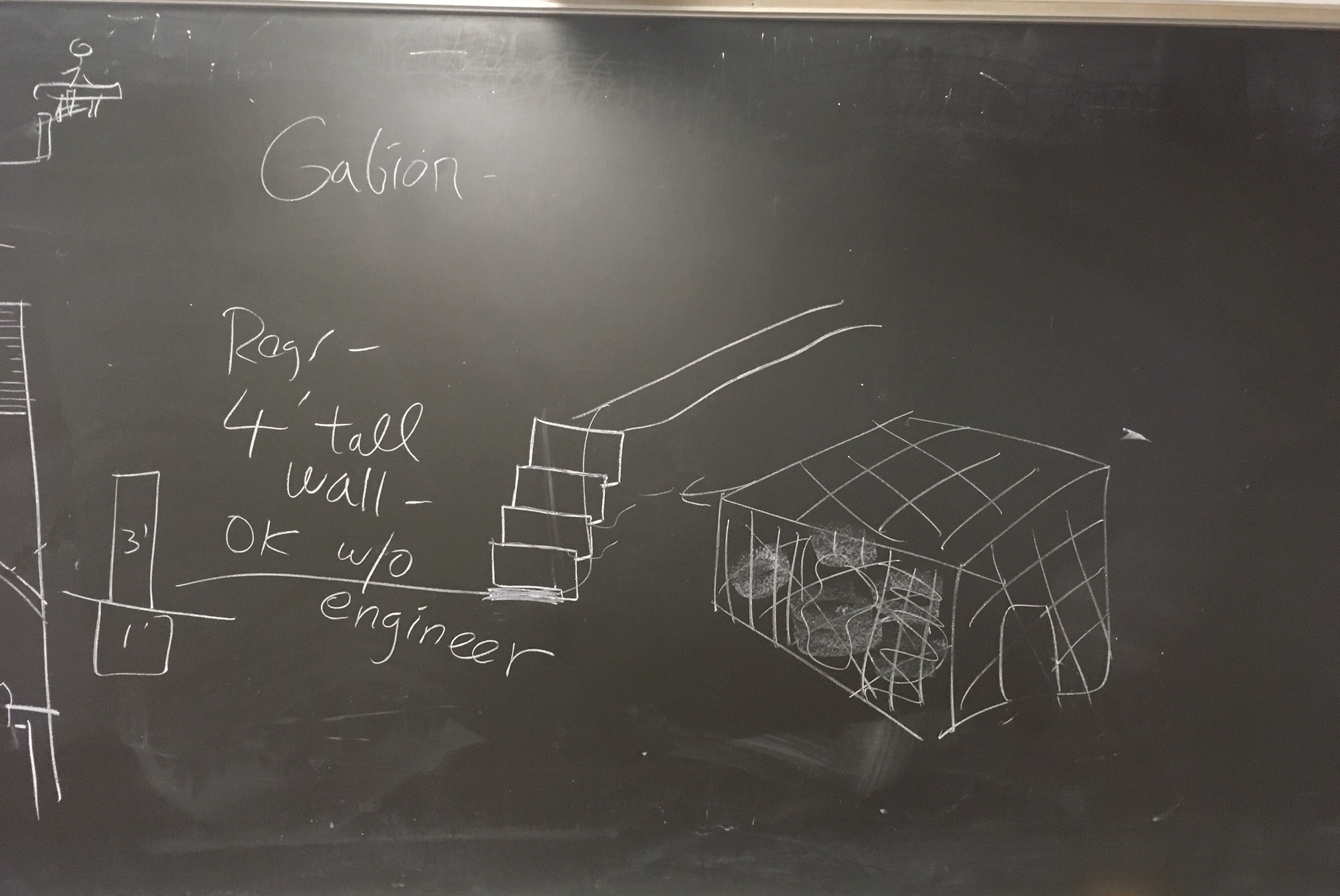
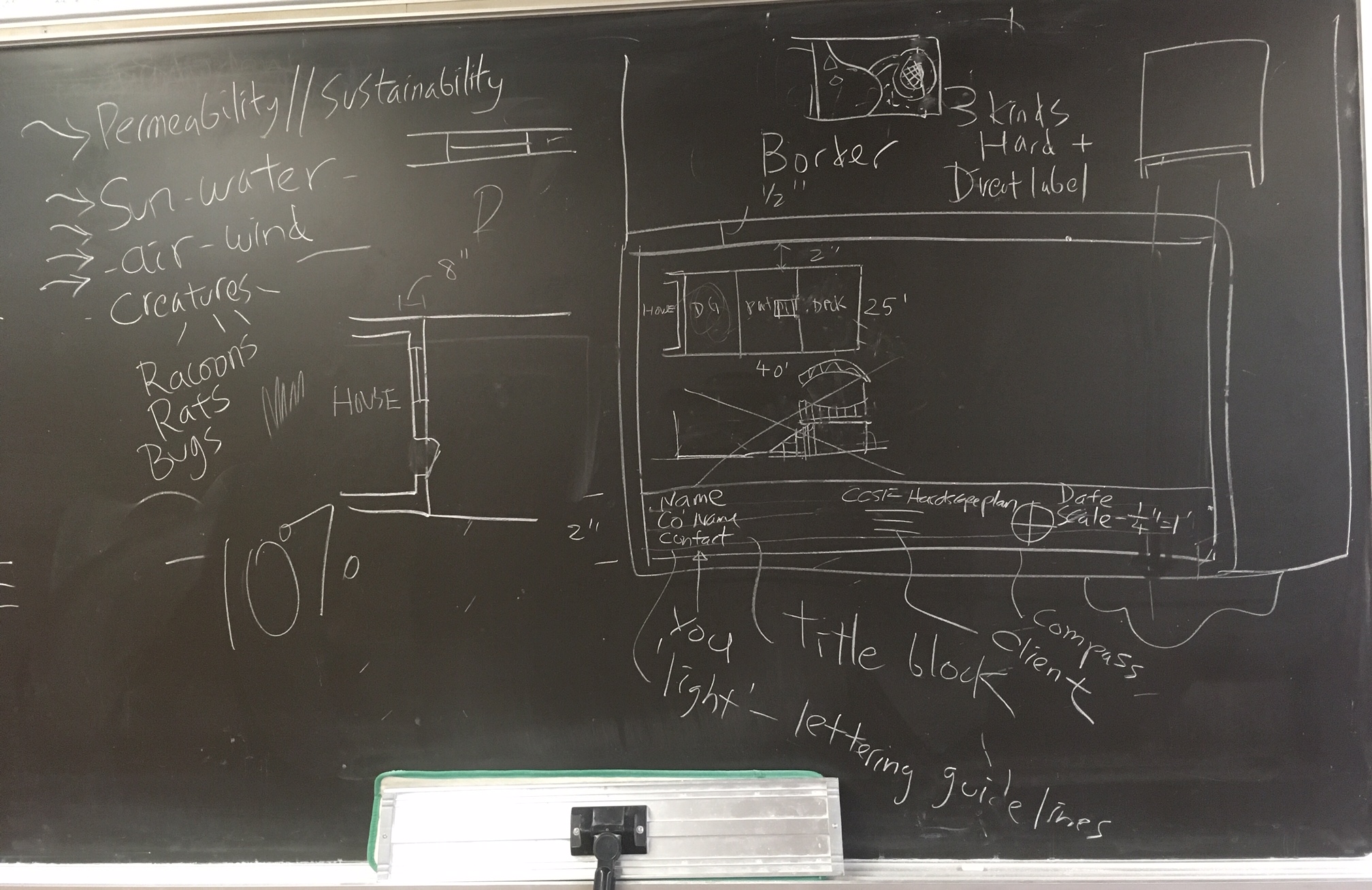
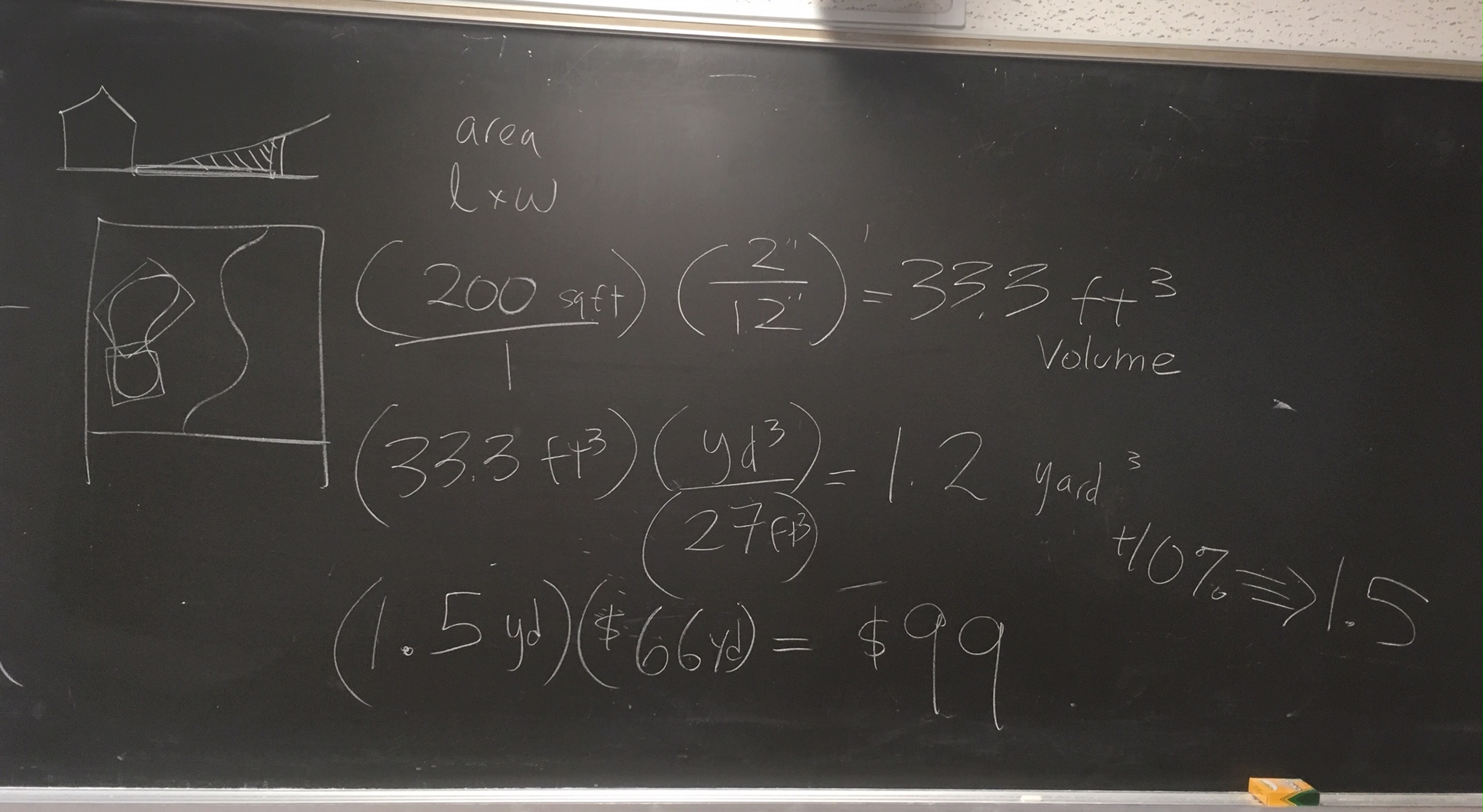
Heres the chalkboard notes for our day of hardscapes.  Stone patios, decks, retaining walls, pebble strewn riverbeds, brick walls, calculations of volume, and more…  The  standout concepts from the day are:

  1.  Whatever you design is going to interact with the world and grow over time.  Swell and contract, erode and and settle, get swamped and drain.  So keep in mind the natural forces of water, wind, warmth and light, soils.  Do not forget about gophers and coyotes, rats and raccoons, wood rotting fungus and termites, as you lay down a layer of wood or stone or concrete over the earth.
  2. A couple big catch words these days are Permeability and Sustainability.  Permeability is the ability of the landscape to breathe and allow water to penetrate infiltrate down down low to the groundwater and aquifer below, filtered through the soil.  Sustainability is a bunch of big question marks – what can we keep using without depleting?  At what rate can we cut things down or pump things out or burn stuff up?  What is the value of an intact primeval ancient river bed or forest?  How can we beautify the world through the design and construction of gardens?
  3. When calculating the amount of hardscape materials needed.  Remember to always multiply using consistent same units.  That is to say, in estimating volume, multiple feet x feet x feet, not feet x feet x inches.  Also, use proper and correct conversion factors.  For example, 27 cubic feet is one cubic yard.  One cubic yard.  Even though at the stone yard they just always say ‘one yard’, it is one cubic yard.

IMG_9427.jpg

IMG_9428.jpg

IMG_9429.jpg

IMG_9430.jpg

IMG_9431.jpg

IMG_9432.jpg

IMG_9433.jpg

IMG_9435.jpg

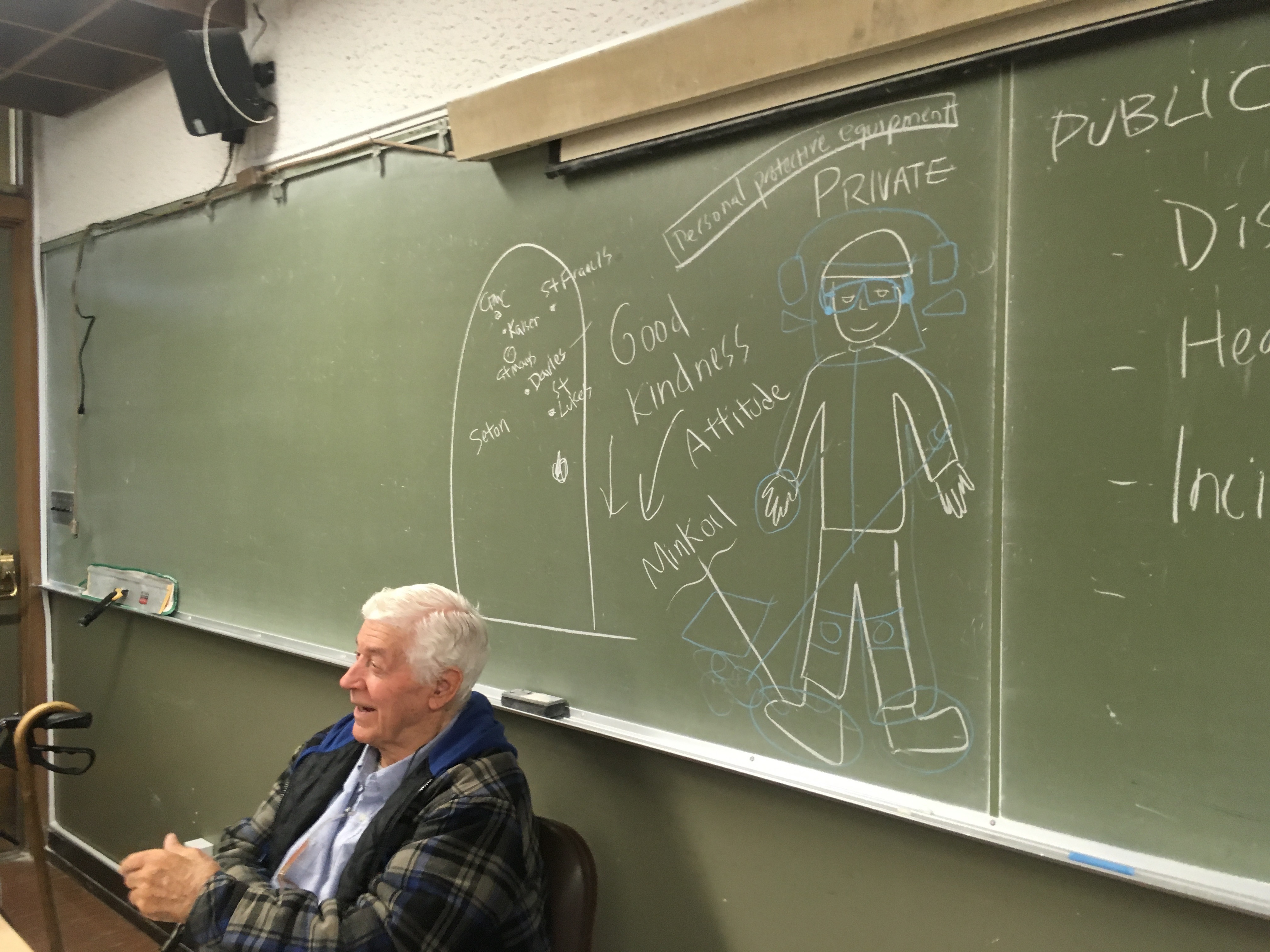
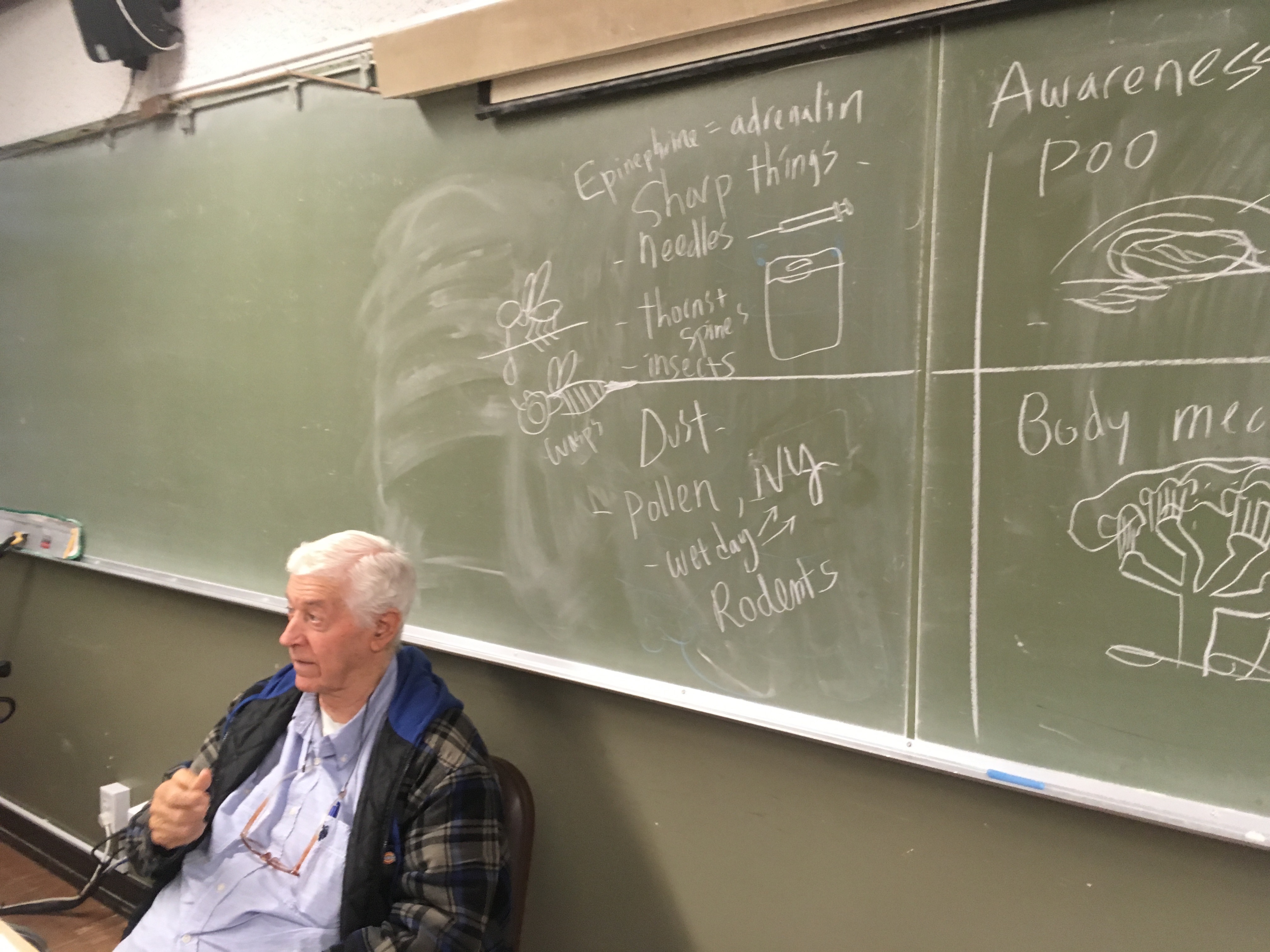
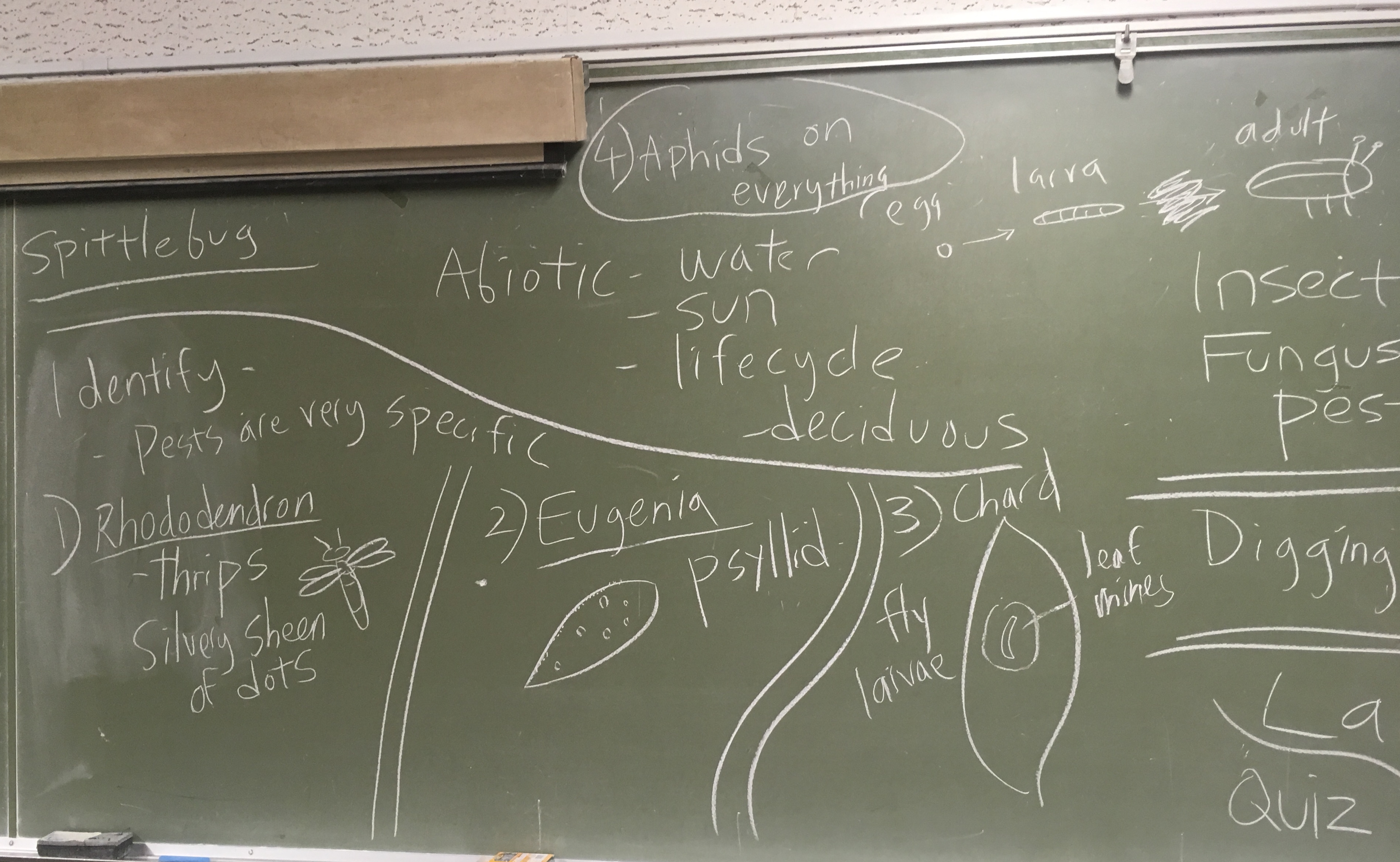
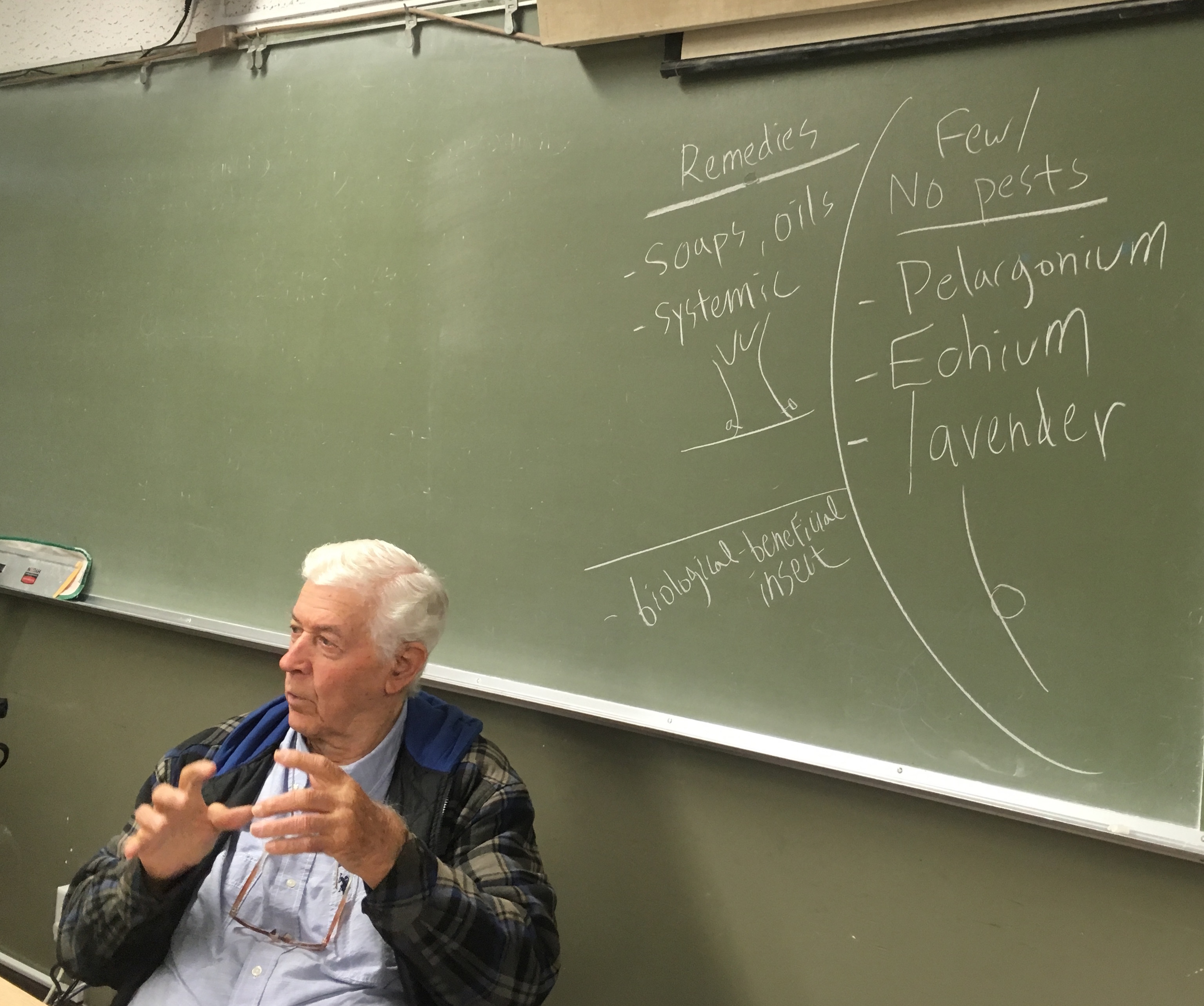
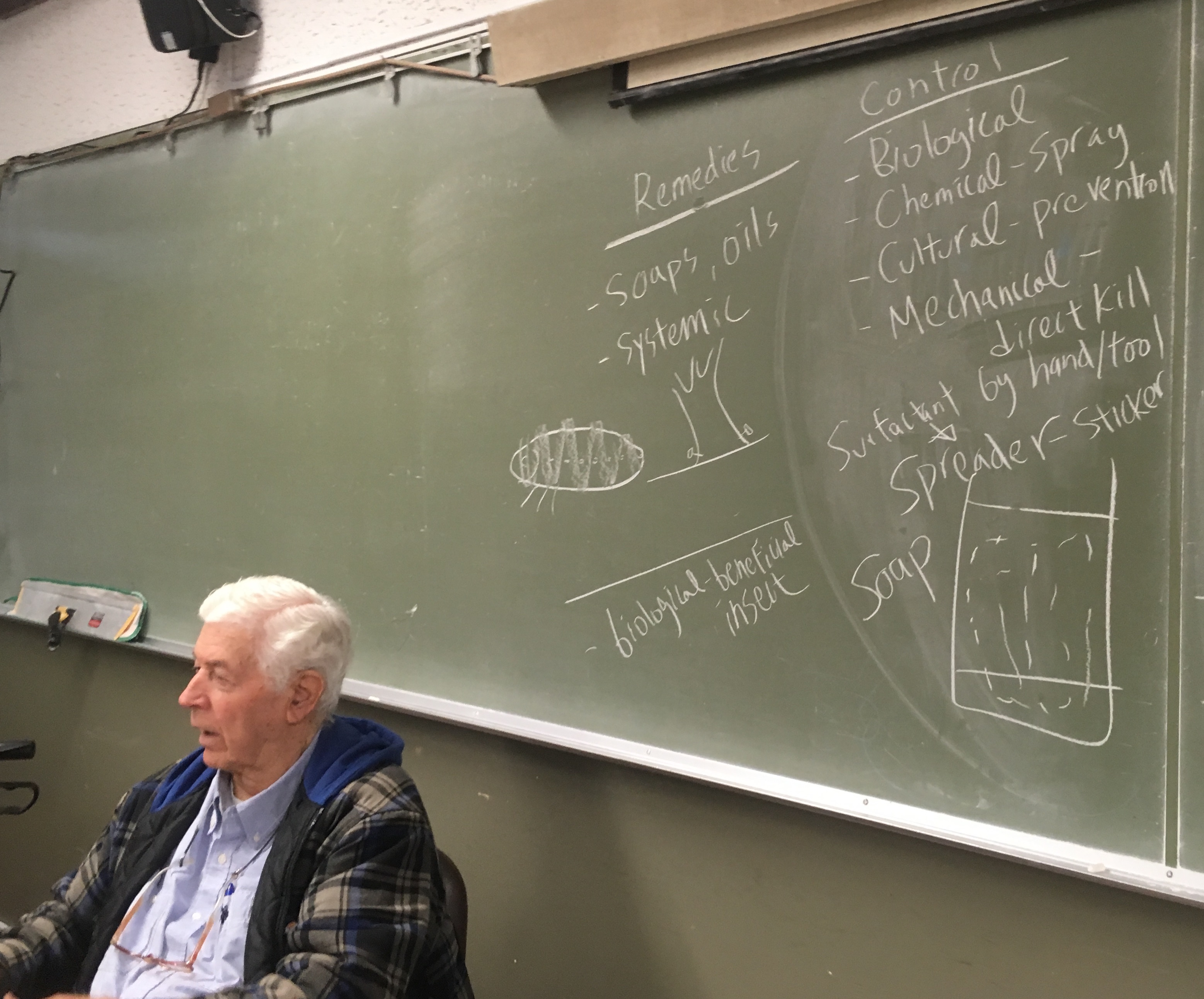
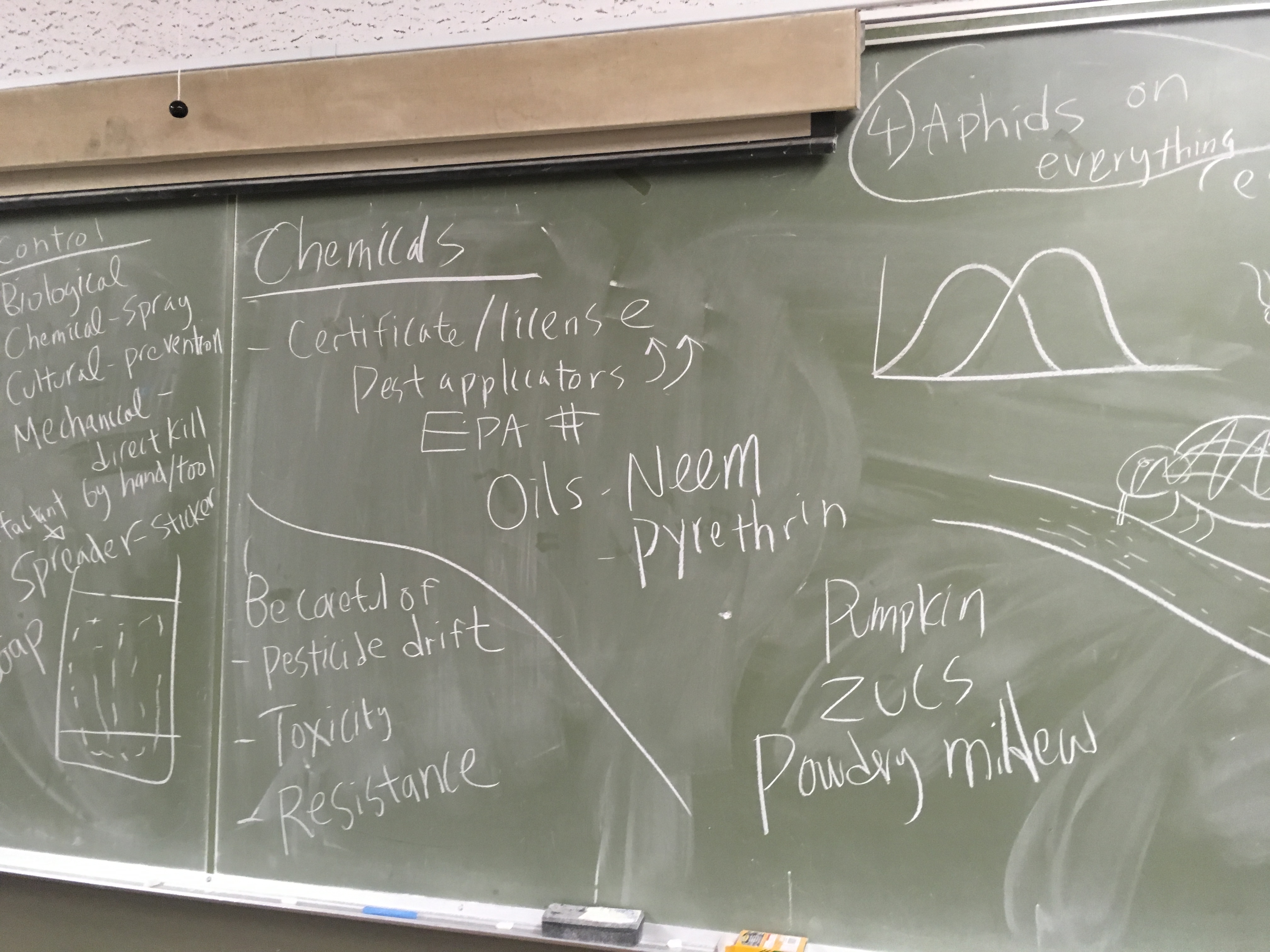
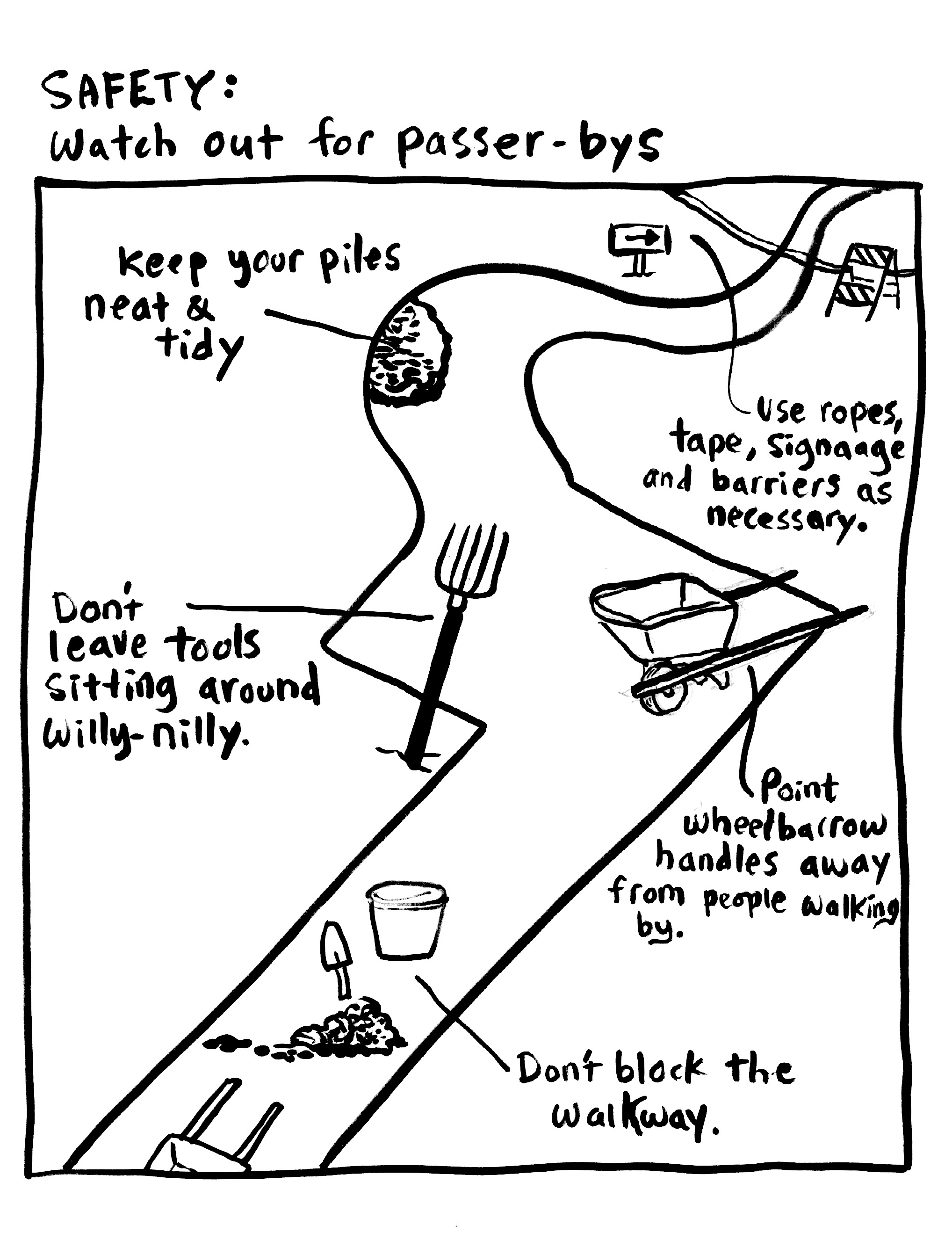
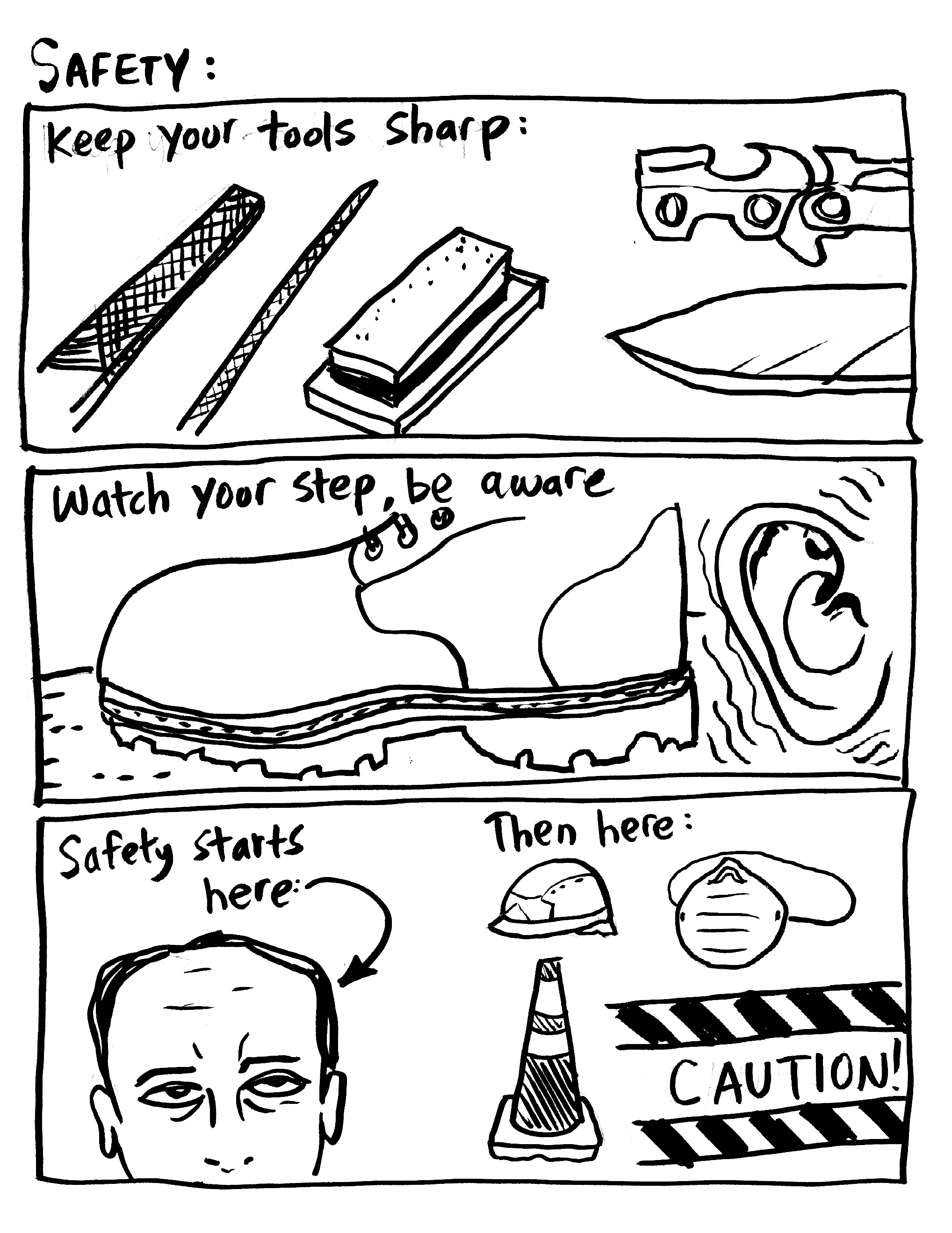
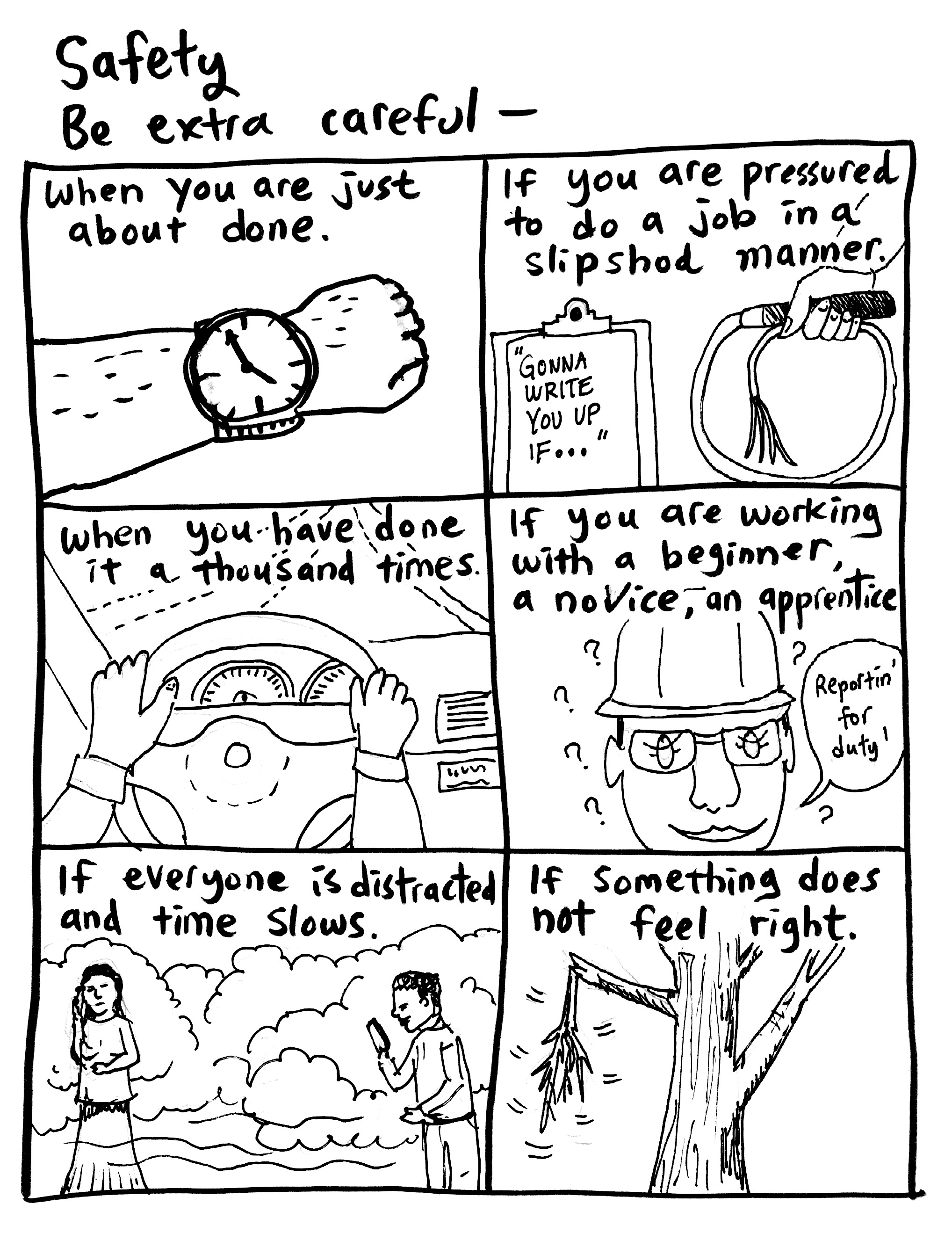
These are the chalk board notes from the OH53 Landscape Horticulture class.  This is our garden legend and hero Gus Broucaret talking about the importance of awareness and working safely in the field.  Sorry you were not in class and missed out on all the stories and adventures at work.  Well at least here are some of the drawings and vocabulary:

IMG_9279


IMG_9281

IMG_9363

IMG_9364

IMG_9366

IMG_9365

Was filling in the curriculum for a class called Introduction to Horticulture.

Here’s a few more drawings for the ‘reader’.  It is specific to residential commercial and public gardening in and around San Francisco.

R1.jpeg

R2.jpeg

R3.jpeg

R4.jpeg

R5.jpeg

R6.jpeg

R7.jpeg

R8.jpeg

R9.jpeg

R10.jpeg

R11.jpeg

R12.jpeg


R13.jpeg

R14.jpeg


R15.jpeg

R16.jpeg

MAINTENANCE IS GARDEN DESIGN

The garden is a dynamic creature, hatched and etched in the mind

The beast is sometimes drawn on vellum or on paper with borders

Drawn to scale one quarter inch is one foot, one eighth of an inch is one foot

It is birthed and grows awkwardly

Stumbling through the natal stages called planning groundbreaking and installation

Well, a garden is not a set, not a one time deal, not an exhibit in a gallery

It is a creature very much alive, a demanding life form that requires care and love and

Maintenance

Imagine the garden as a mutually beneficial, symbiotic endeavor between people and plants

Words can only approximate

The scene behind the magnolia tree the dew hanging poppy and the cheerful summer iris

Maintenance seems a word

Better suited to five years or 50,000 miles, car maintenance

Or keeping up with a certain standard of living – maintaining ones status

There is a monotony melancholy mistaken misery in calling the action filled gardening tasks of

Pulling pruning planting propagating, digging turning building amending cultivating

Maintenance

Do you call tooth brushing facing washing eating breakfast stretching exercising working

The basic duties of life –

Maintenance?  How sad that sounds, where is the joy in ‘maintenance’?

Perhaps there is no better word though

Let’s just fudge and nudge this one, rather than invent something new

Okay garden maintenance it is

Maintenance is design


In the best garden designs

There is a human built into it

Because you recognize that – no human no maintenance no design – it is that simple

Because the tree grows big and grows old

Way past the 10 foot circle drawn on the original landscape plan

A shrub limbs stretches and bows and starts to swallow the sun loving lavender lily loropetalum

A good gardener can prune a shoot here, take a tip there, keep it in line

Then scoot a perennial this way, and move the lemon tree outa the shade

Encourage the ground cover, and meticulously pluck the weed seeds emerging

Mold it, work with it, adapt it to fit, so the design holds and stays intact

The flow the mood the balance the unity  – the design


In the best garden design

The person who thought up the design

Is, was , will be until they die, a gardener

A gardener of dirt imbued with the scent of daphne philadelphus pittosporum

A gardener who has been educated in the finest university lab research vessel of all time:

A little plot of sun lit land putzed over and over and over again

A learning studio of a few rows of daisies and columbines fading and seeding

A rectangular lot with warm rays and moss bit shadows

Tulip tree leaves gathered on the ground in conference 

Tulip flower petals fallen in the sun, unveiling the bare ovary

The best designer is a gardener – 

A plants person trained by time, wetted by rain splattered by mud

Scarred and attacked by berry thorns and yellow jackets stingers and sticky spider webs

They know what plants need, how plants grow, why plants die

These are the forces you have to meet and greet, the forces that you have to work within

To dream up a nice garden design

Field knowledge is foremost, accumulated by you and gardeners like yourself

Working sharing discussing observing experimenting

In a world of experience and stories

Tilting the academic and theoretical knowledge on an edge –

The long charts graphs spreadsheets what the current research says the latest book of facts

Second hand third hand fourth hand knowledge –

The beveled edge cushioned against the mind and the body and the earth heart the earth guts

So stay intimate stay close to whats goin’ down

Be a good gardener playing in the dirt, the fading sun on the left cheek and sweaty forehead

Then you will be a good designer


So to summarize thus far

In garden design, remember that

1)  A person a person a person has to care for the garden over time

2) The garden is a living creation that will grow and change

3) The best designer is a gardener, a maintenance gardener


The worst garden designs – there are so many

Part of the problem is that the design feedback loop is not complete

The circle is not a circle, it is just a climbing wiggly line

The designer does not learn from the mistakes of oneself or that of others

And who points out stuff like that? “If you don’t have anything nice to say, don’t say it at all’

Hard to learn from things gone wrong, when they go wrong not at the beginning

But one year two years three years five years ten years down the line

By then the designer is outa there

And the errors problems methods continue to advertise and repeat and fester and spread

Leaving the clean up improvement rearrangement editing to the gardener

Leaving the yanking butchering root digging ransacking demolition of a garden that never was

To the maintenance gardener


In the worst designs, the designer does not know the site

They do not design based on drainage compaction hard pan runoff rodents disease

They forget to acknowledge the wind and the fog

They dismiss the power of the southern sun and the darkness of the north side

Suffice to say that without an understanding of how life forms fit together, dwell with one another

The design flops

Such a garden betrays the relationship of interconnectedness, forfeits a chance at communion

And, destroys the union of plants and human beings

Nature has her own design principles , they are easily seen – If you take a walkabout

In the mountains rivers foothills forests grasslands scrub vacant lots and open fields

Examine life, and the design patterns will light up


In the worst designs, the designer has no respect for maintenance

Has never done maintenance – pure design

Been to school, but never sowed a seed, made a cutting or scarified a legume

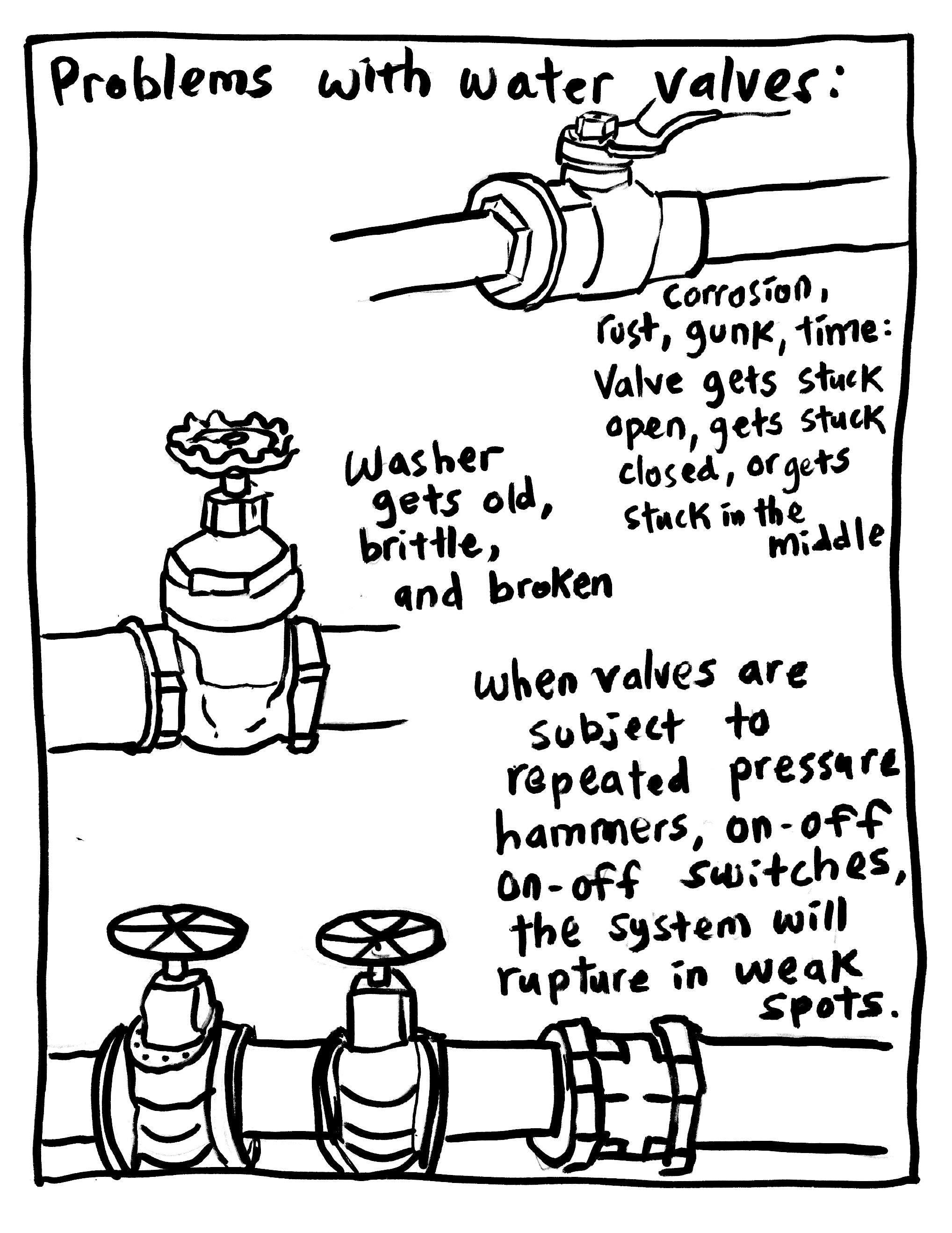
Never fixed a valve on a sprinkler, have a pipe break and have to dig it up

Never repotted a plant or pruned some roots or lowered the canopy

Never had to clean the algae off the walkway or whitewash the greenhouse

Never hauled a half ton boulder, or bucket carried 20 yards of decomposed granite

Never had to clean the gunk out of the fingernails or take a wood splinter out of the hand

Never had sore knees and a pulled back and the shoulders a wreck

Never never never never

Then they design , in the top down style

Of all things, a garden

And you wonder why why why why why why why why why

Who what how who what how who what how

A gardener, a person, takes care of a garden

A gardener must have plant knowledge, site knowledge, and knowledge of oneself

In the garden – the planner and the doer are one, human and design work in harmony

At the end of the day

In the garden, we are sitting around, tools have been put away, hands are washed

We are enjoying the fish tail fronds lit up by pink red orange clouds

While a big white waxing moon smiles in the blue sky

Good designs