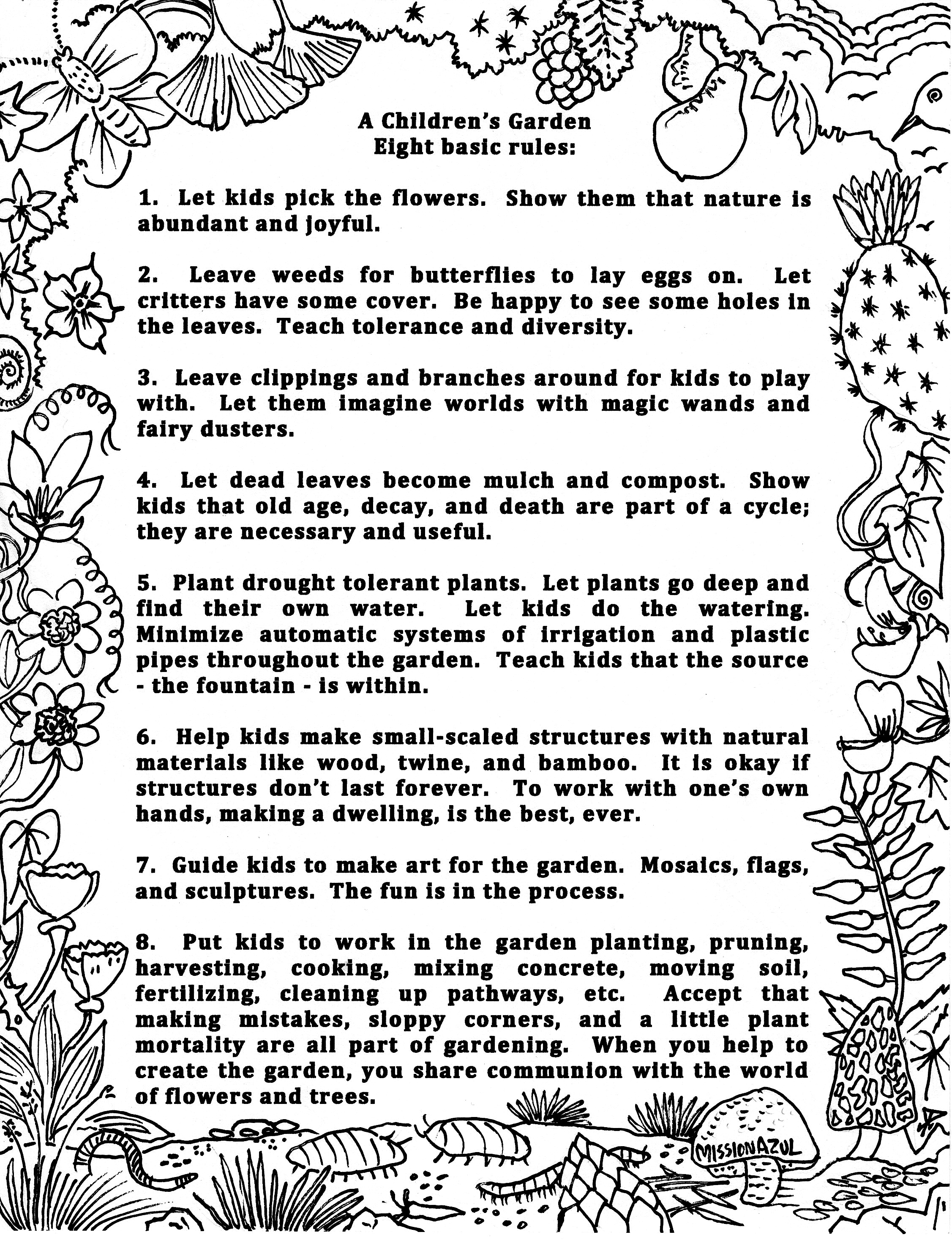
A children’s garden is very different from the commercial corporate landscaping that is sometimes the standard in the horticulture industry. A children’s garden is interactive; it is a place of learning; it is one of the happiest places on earth where one can spend hours playing with bugs and gazing at the sky.
Here are some children’s creations and scenes that present the eight rules in practice:
Rule 1: Let kids pick the flowers. Show them that nature is abundant and joyful.
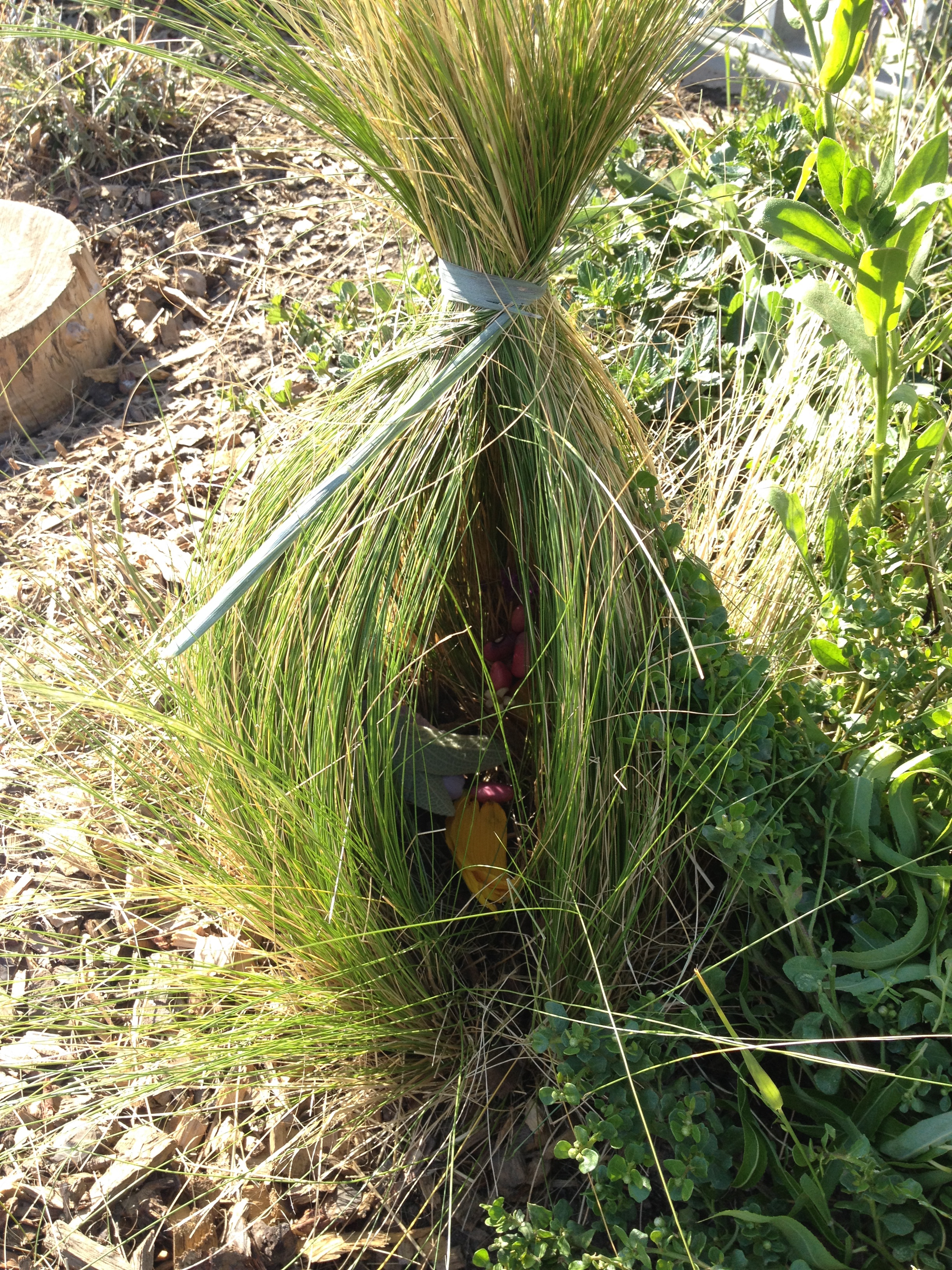
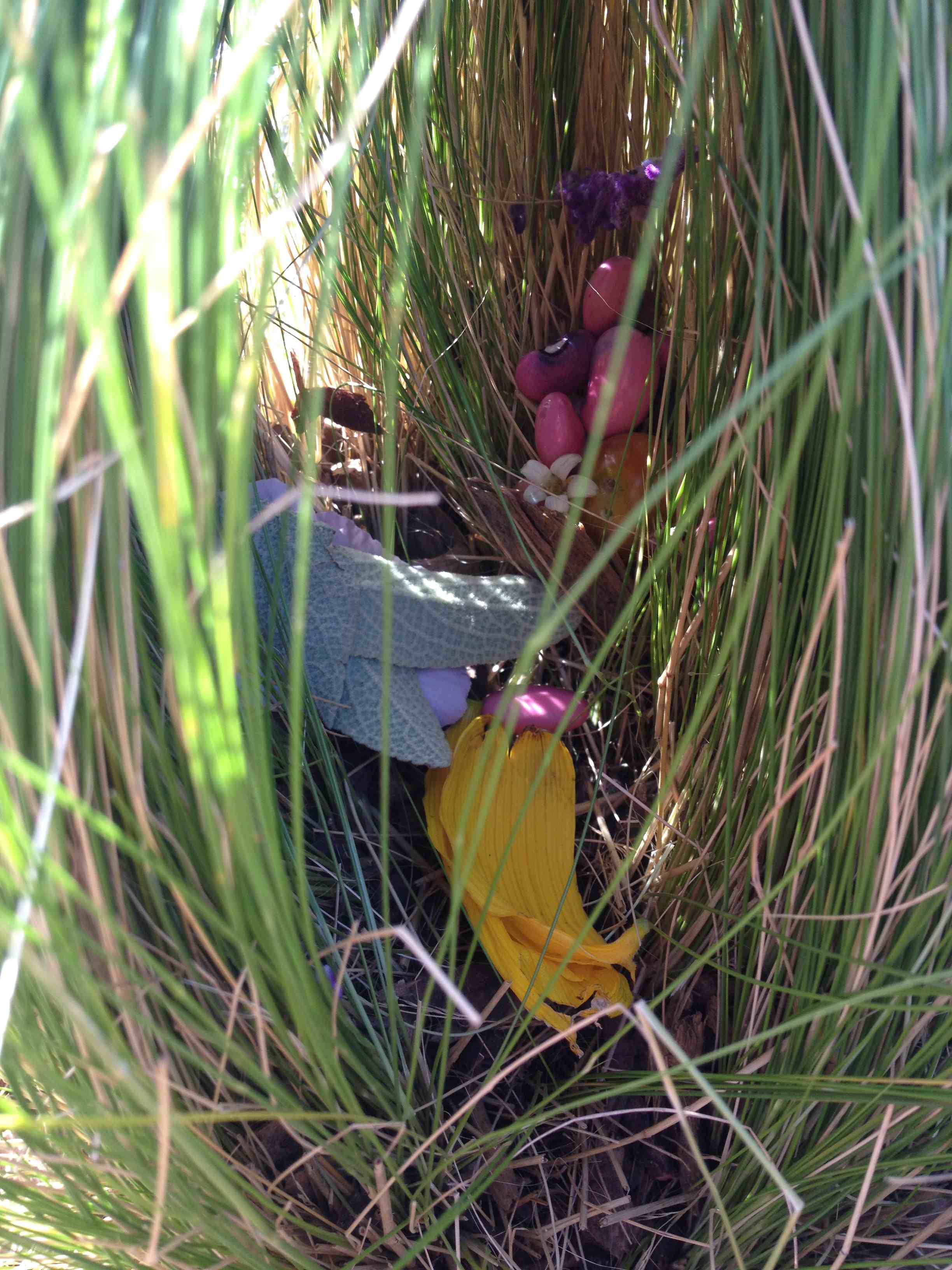
This is a fairy’s house built inside the feather grass lodge.
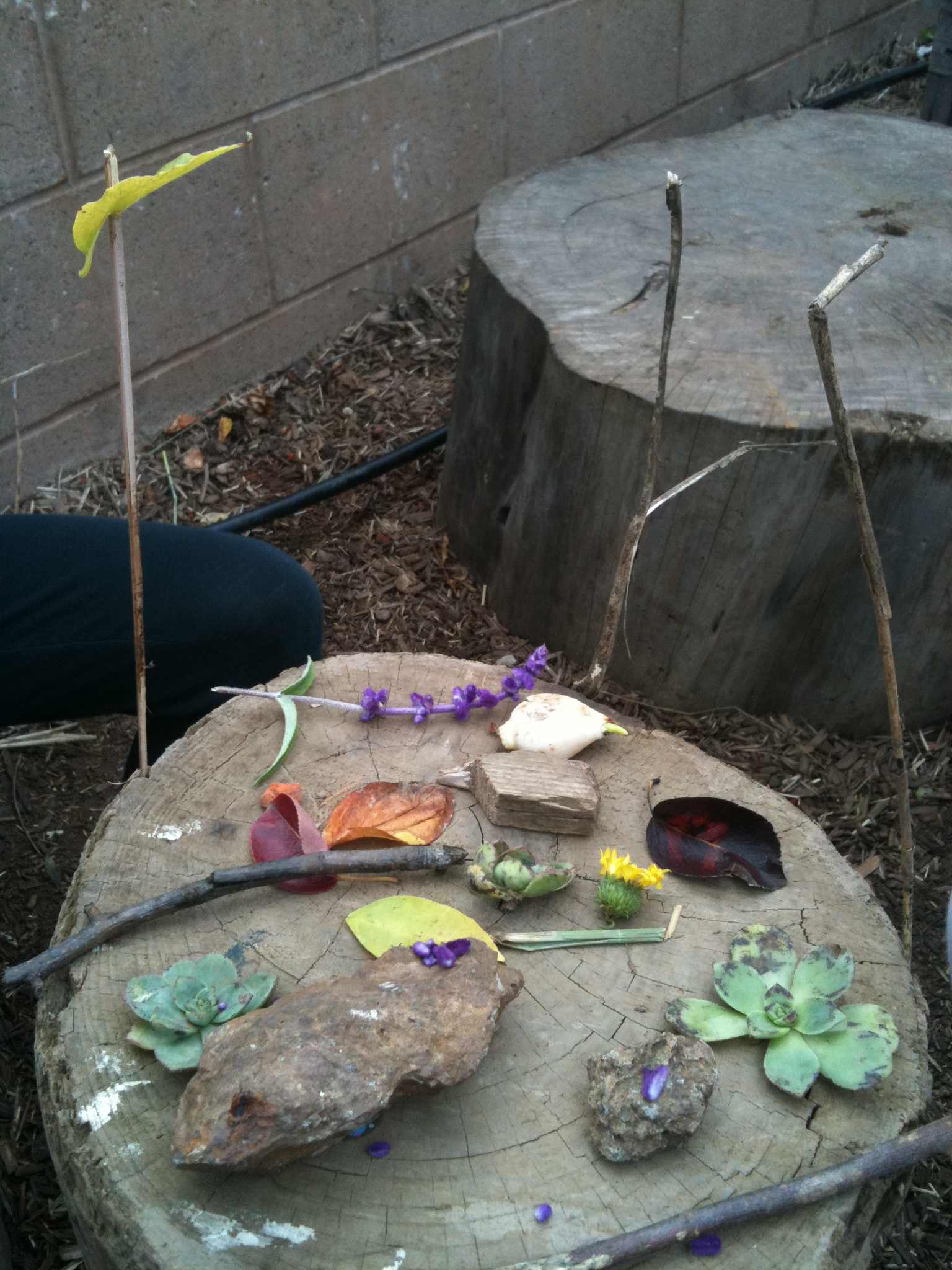
This is the market place where garden goods are bartered and collected.
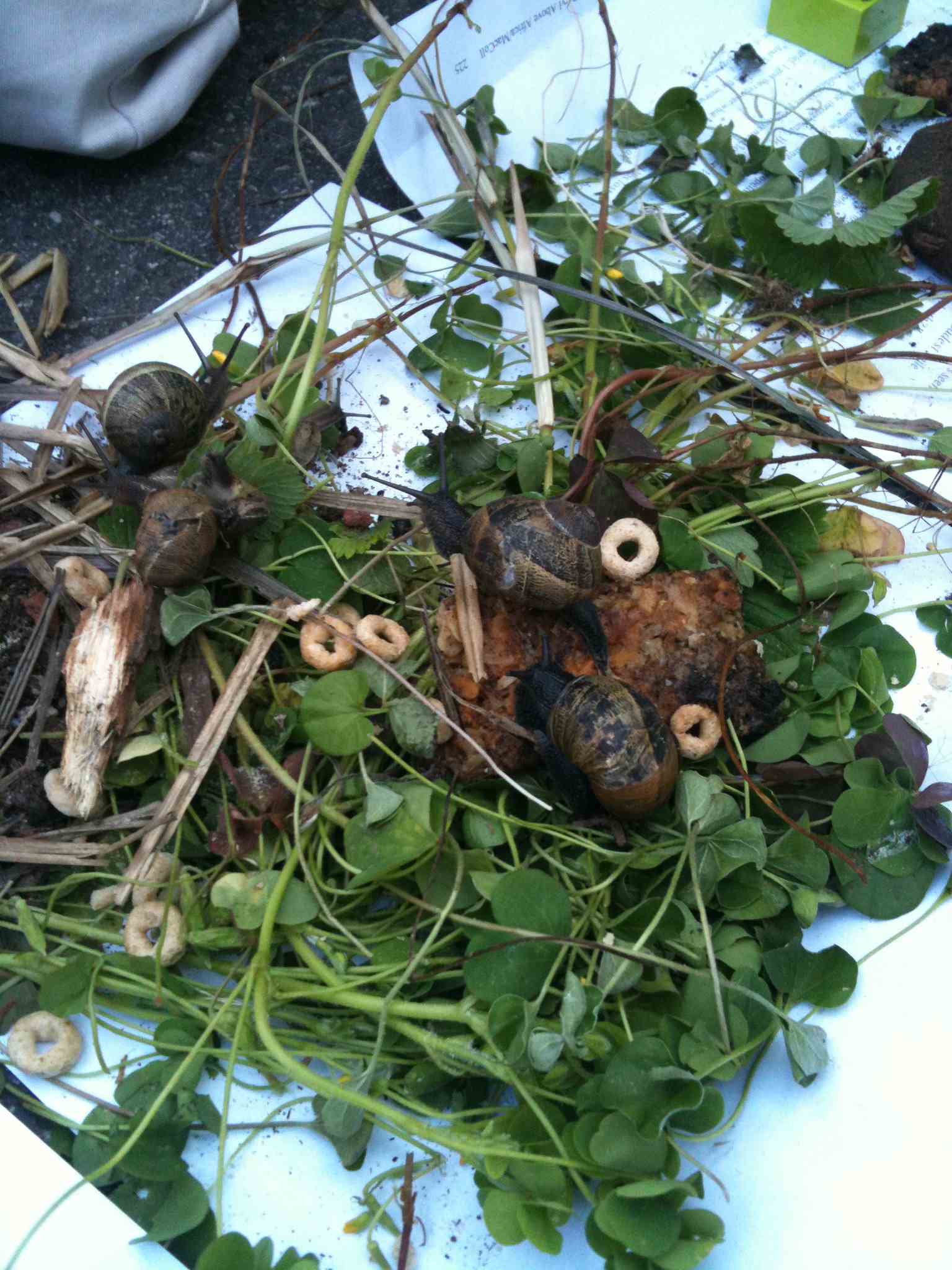
Snails need love too!!
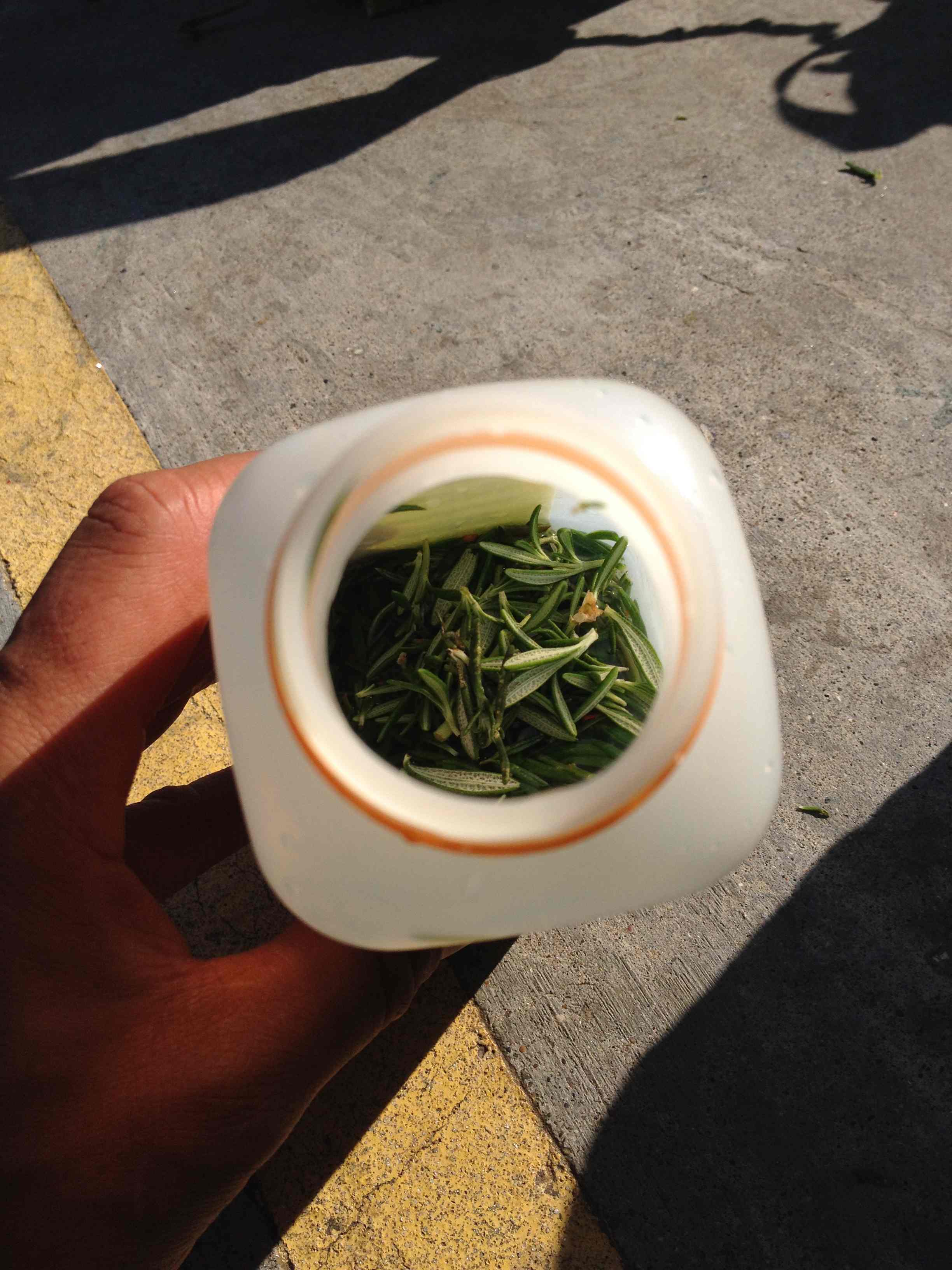
This is a potion made of rosemary, mint, and lavender. Want a smell? Let’s go make a flower mud pie!
Rule 2: Leave weeds for butterflies to lay eggs on. Let critters have some cover. Be happy to see some holes in the leaves. Teach tolerance and diversity.

Can you find the two swallowtail larvae on the fennel?
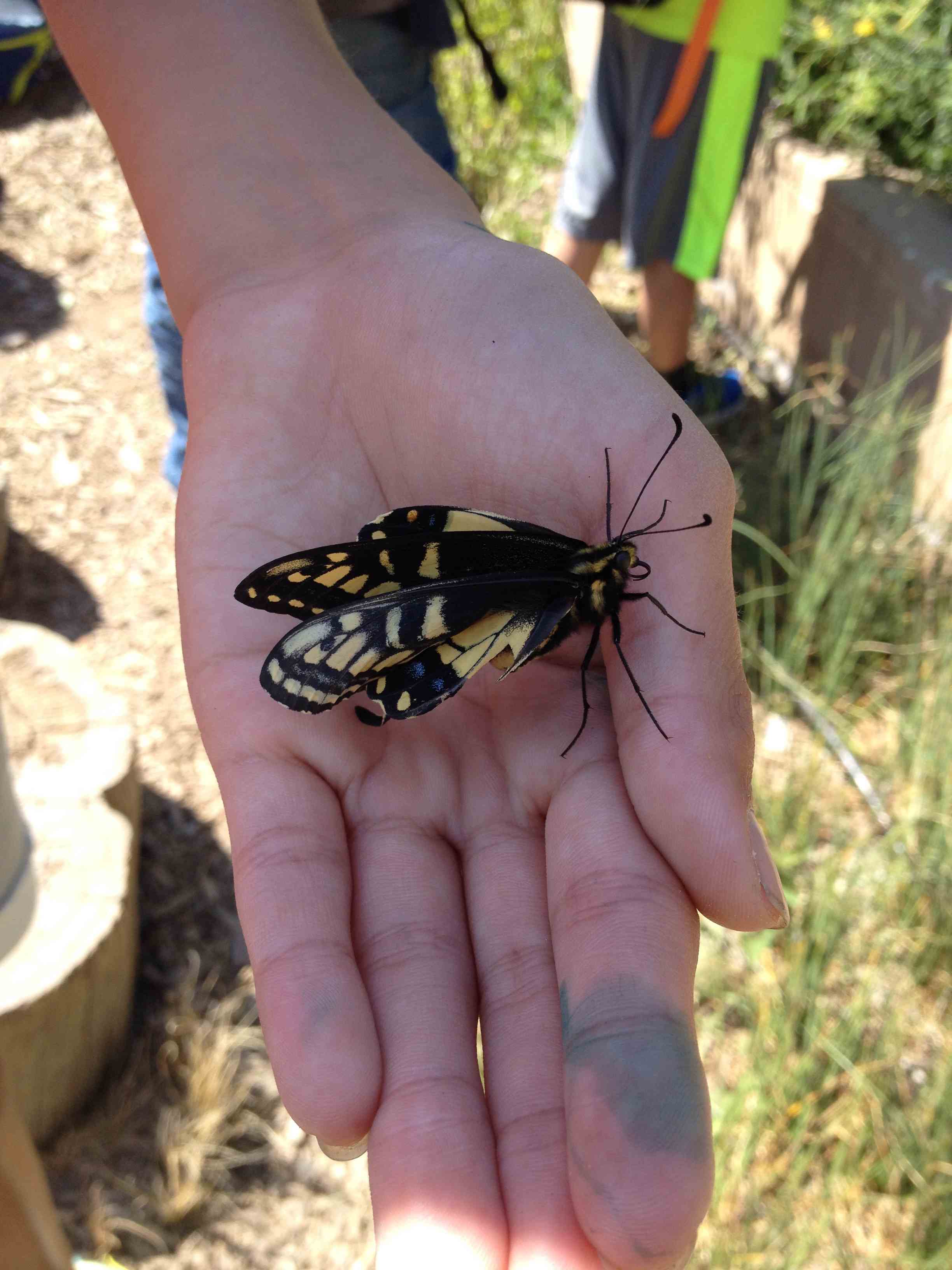
Why can’t this butterfly fly? Its wings did not dry properly when it first emerged from its chrysalis. So sad..
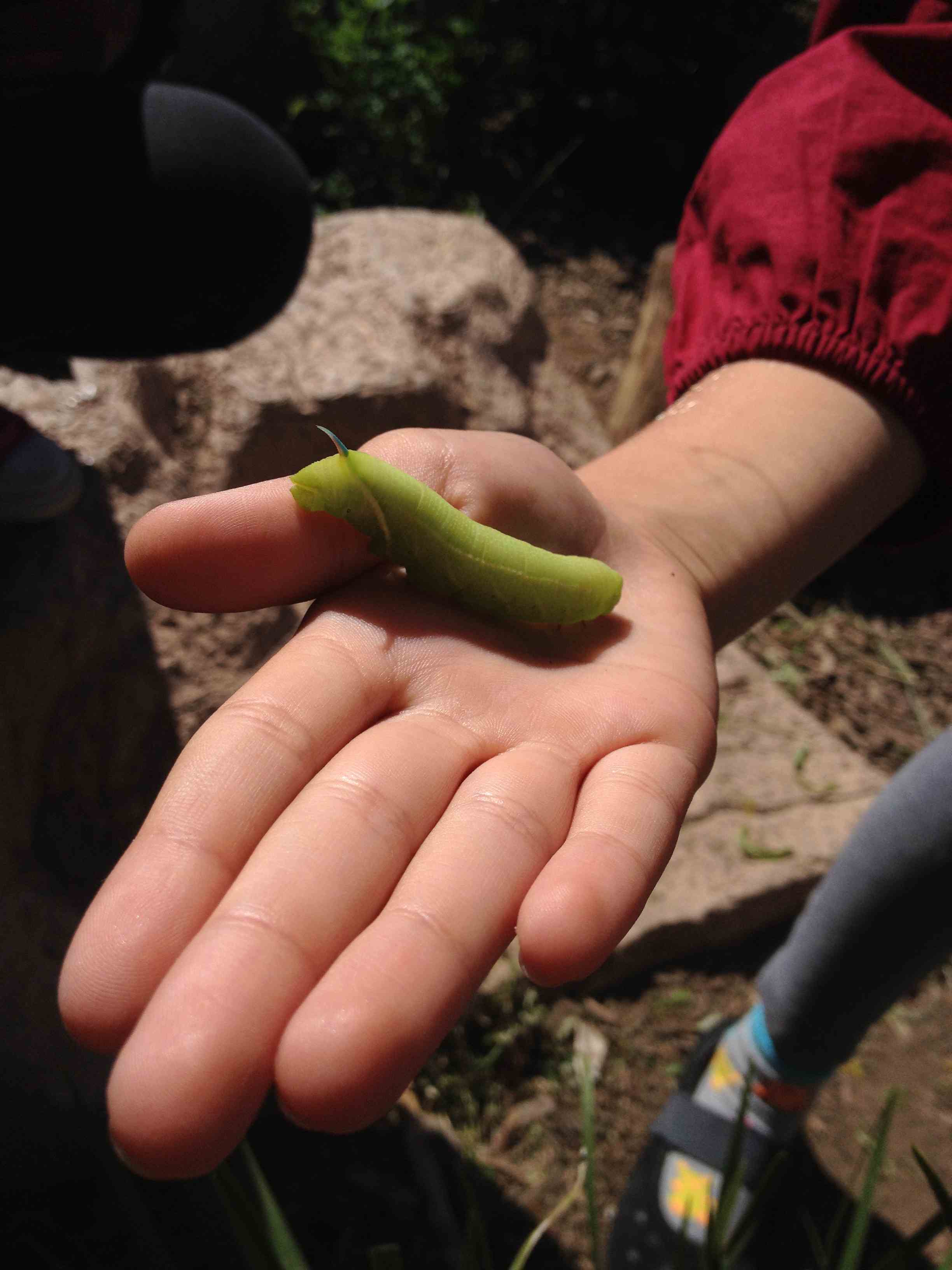

Under the willow tree these little kids were screaming about this huge bug. It was a moth, a one eyed sphinx named Smerinthus cerisyi. The female moth was laying eggs, and in the leaf canopy was a huge horned caterpillar too. Super fun.
Rule 3: Leave clippings and branches around for kids to play with. Let them imagine worlds with magic wands and fairy dusters.

Rule 4: Let dead leaves become mulch and compost. Show kids that old age, decay, and death are part of a cycle; they are necessary and useful.
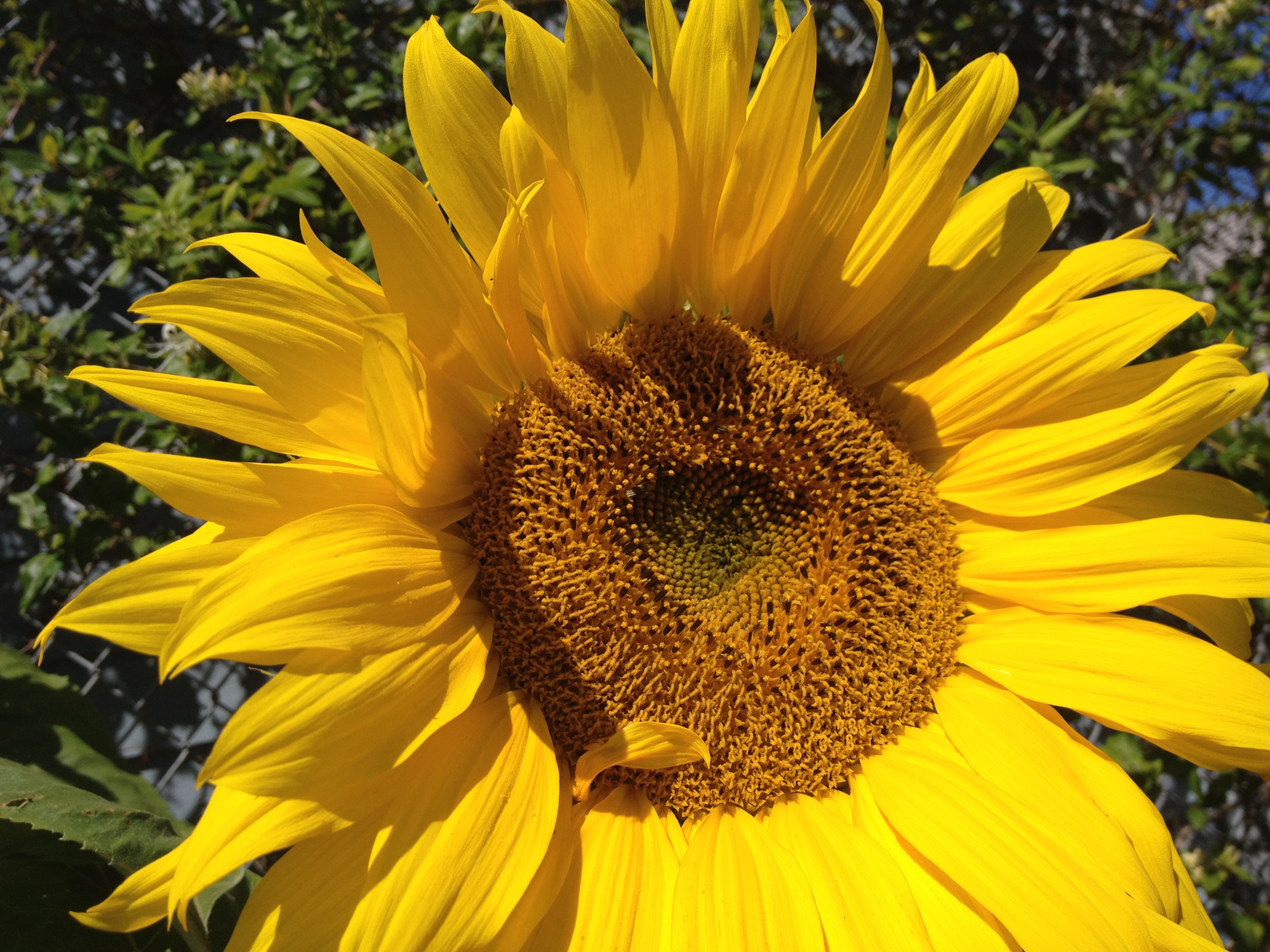
With petals.

After petals fall: new life in seeds, and lessons in geometry!
Rule 5: Plant drought tolerant plants. Let plants go deep and find their own water. Let kids do the watering. Minimize automatic systems of irrigation and plastic pipes throughout the garden. Teach kids that the source – the fountain – is within.

Lion’s tail from South Africa. Great nectar for hummingbirds, zero irrigation needed in SF.

Some California natives: Gum weed, California fuchsia, elderberry and rush. Plus a Felicia for blue flowers. They have found the groundwater that is eight inches below the surface.

South African honey bush in the foreground, Mexican bush marigold in the back. Sweet nectars and abundant fragrance. The only irrigation they need comes from the sky. Got to cut them back every year. Sometimes twice.
Rule 6: Help kids make small-scaled structures with natural materials like wood, twine, and bamboo. It is okay if structures don’t last forever. To work with one’s own hands, making a dwelling, is the best, ever.
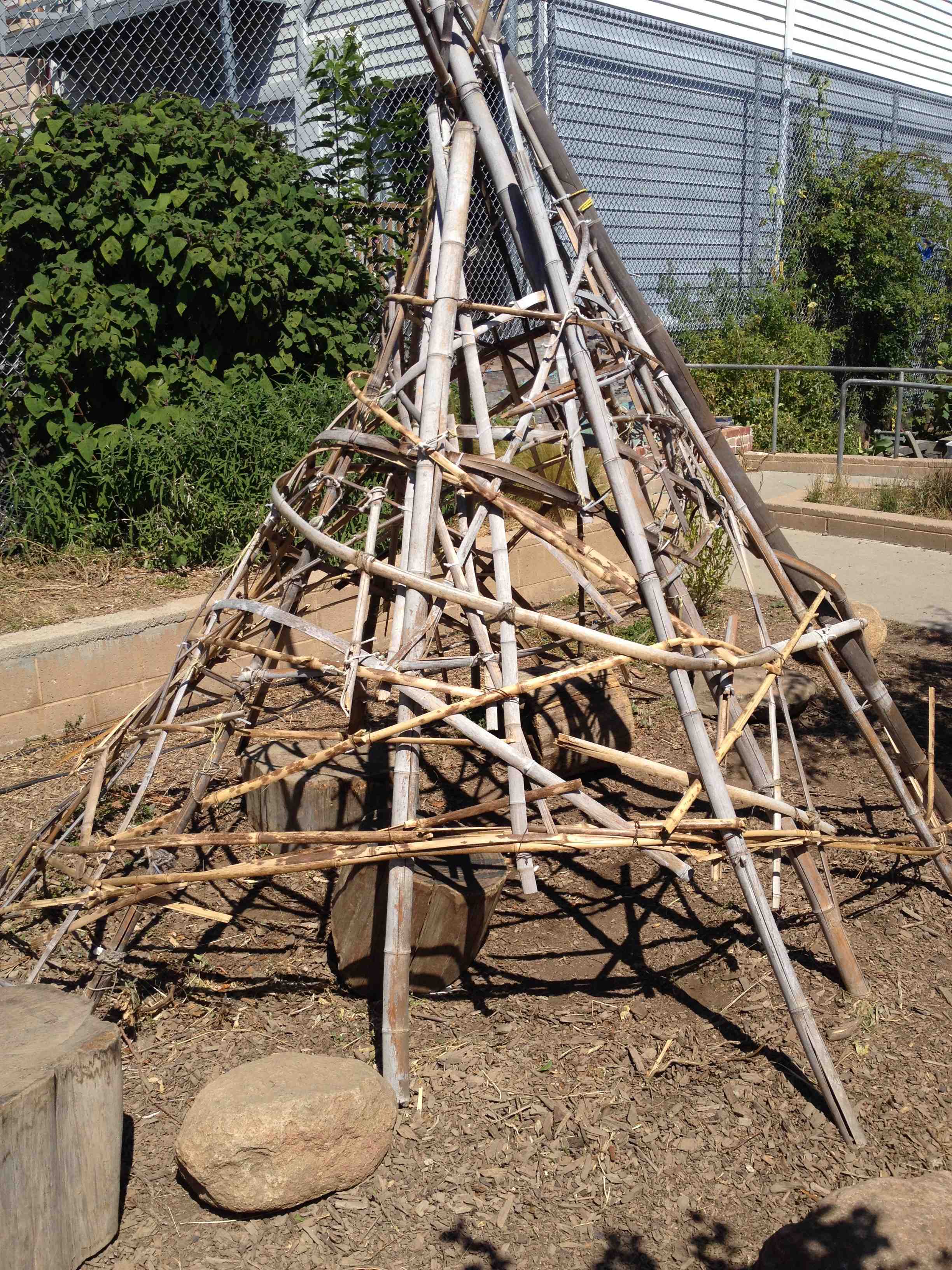
Let us sit in council, express our feelings, and make some red dust paint.

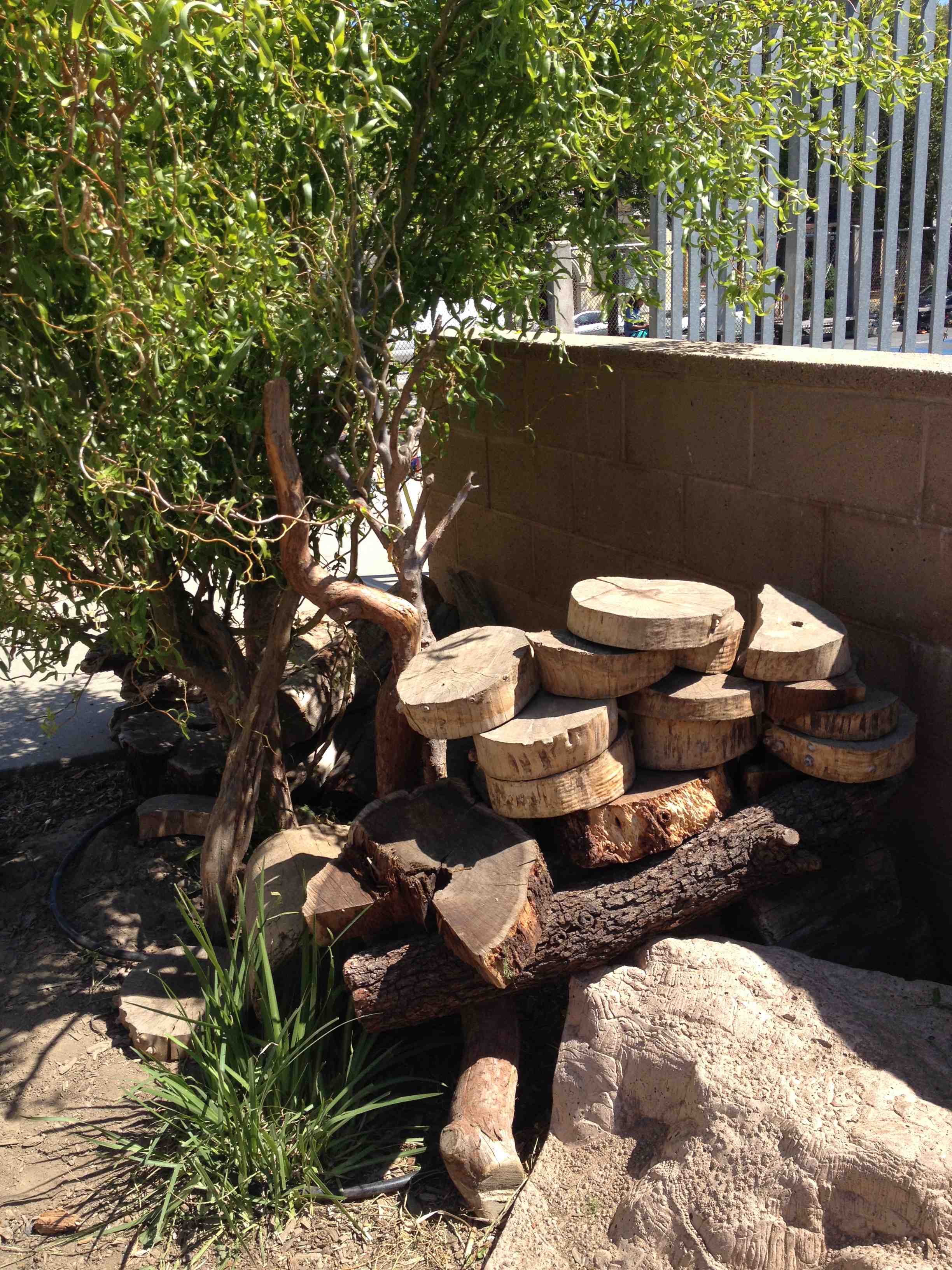
Here’s a good fort!
Rule 7: Guide kids to make art for the garden. Mosaics, flags, and sculptures. The fun is in the process.
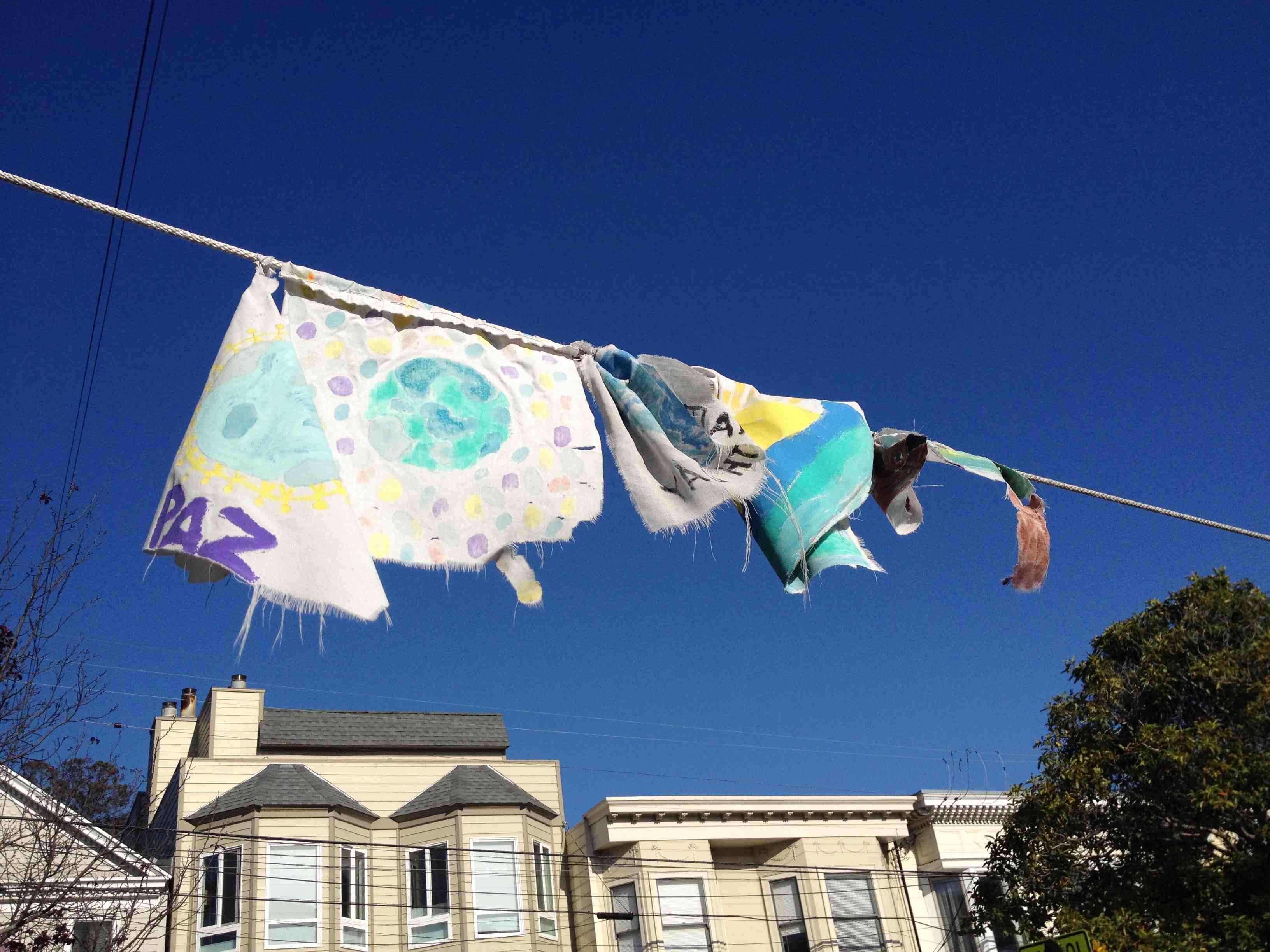
May the wind spread children’s prayers of peace and goodwill throughout the world.
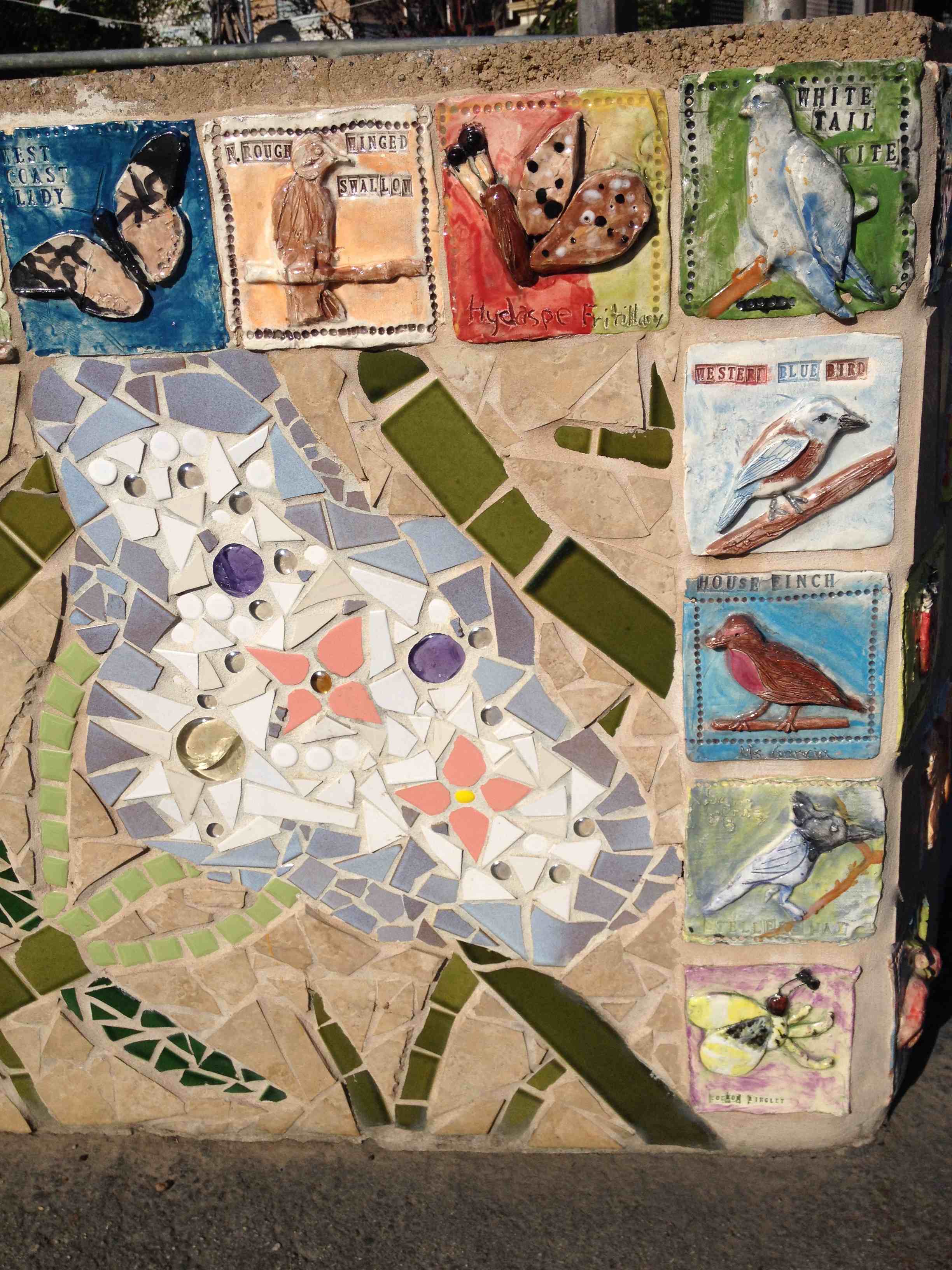
Here’s a great collaboration between little kids and one epic great artist. Go Dan Stingle!!
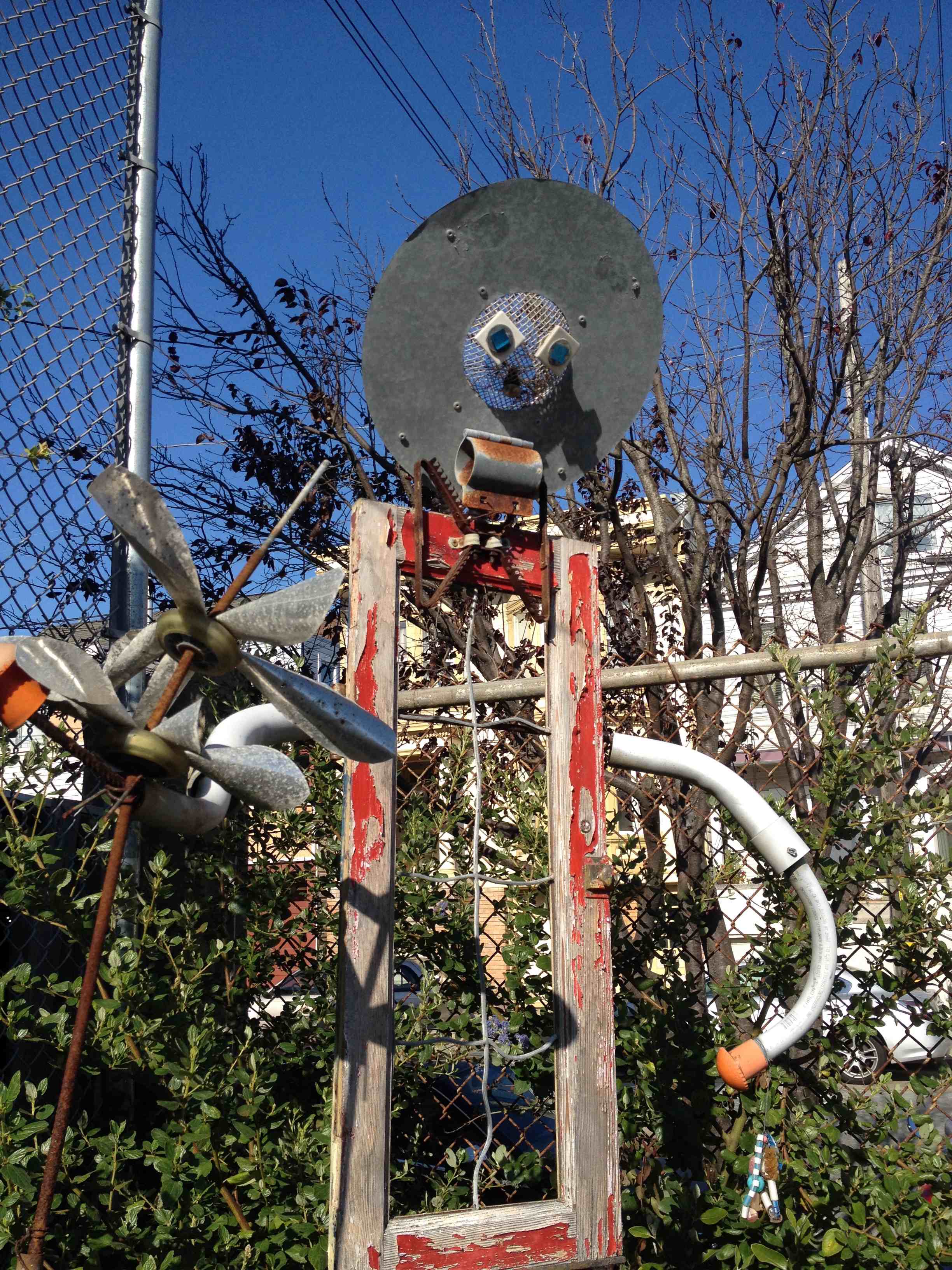
Rule 8: Put kids to work in the garden planting, pruning, harvesting, cooking, mixing concrete, moving soil, fertilizing, cleaning up pathways, etc. Accept that making mistakes, sloppy corners, and a little plant mortality are all part of gardening. When you help to create the garden, you share communion with the world of flowers and trees.
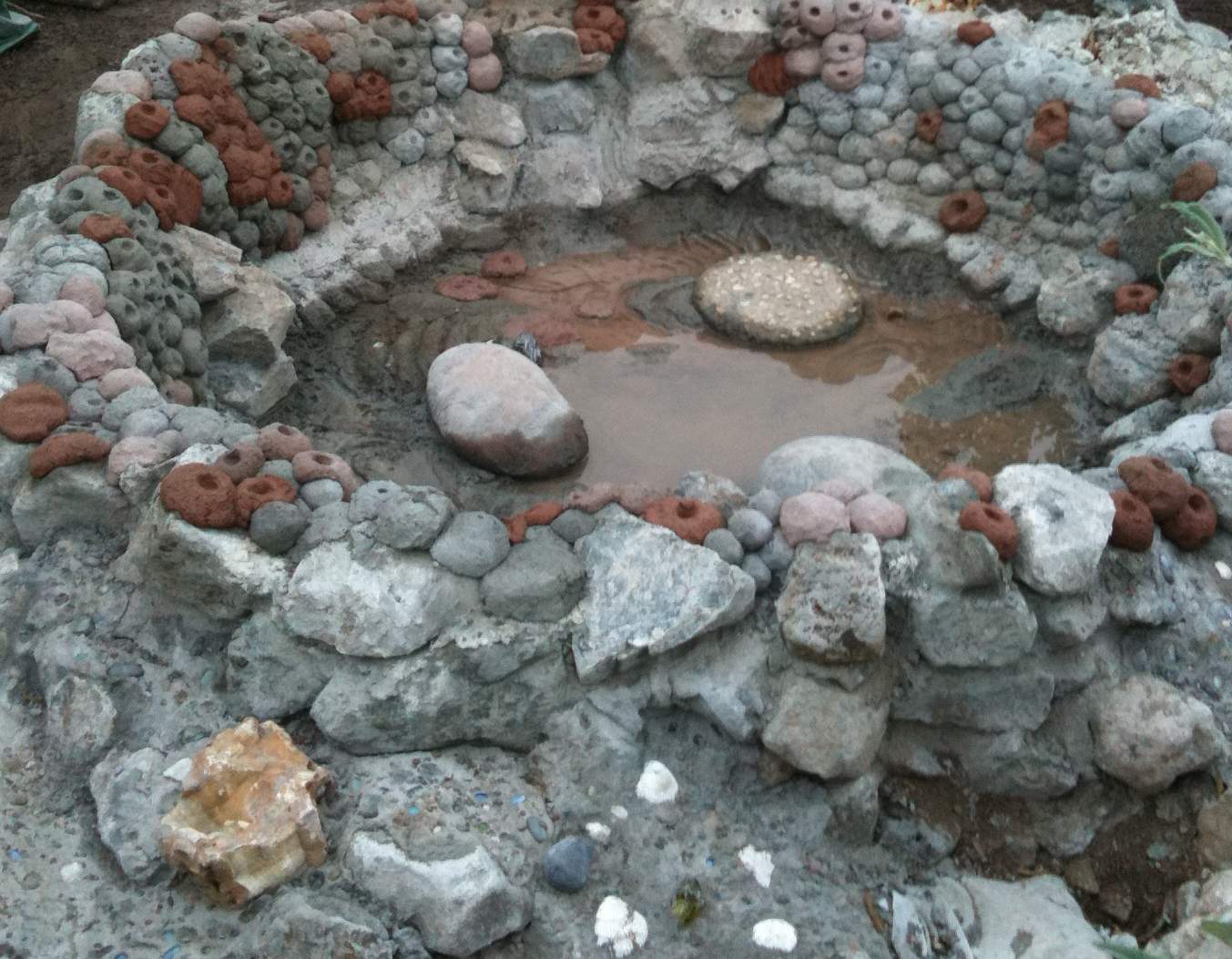
Kids can make concrete balls and a pond. The materials are sand, gravel and cement. The lesson plan touches on chemistry, geology, history, and much more.

Kids learn how to mortar bricks,paint stencils, and cut lumber in making a bench. The lesson plan involves the third little pig and the house he built, the safe use of hand tools, and the joy that comes with working together on a project.

Kids planted apple trees and flowers from seed. The curriculum and standards fulfilled were in botany, plant physiology, and a course titled Respect for Nature.
Here is an example of a garden for a residential landscape. Its audience/client is different, as are its goals:
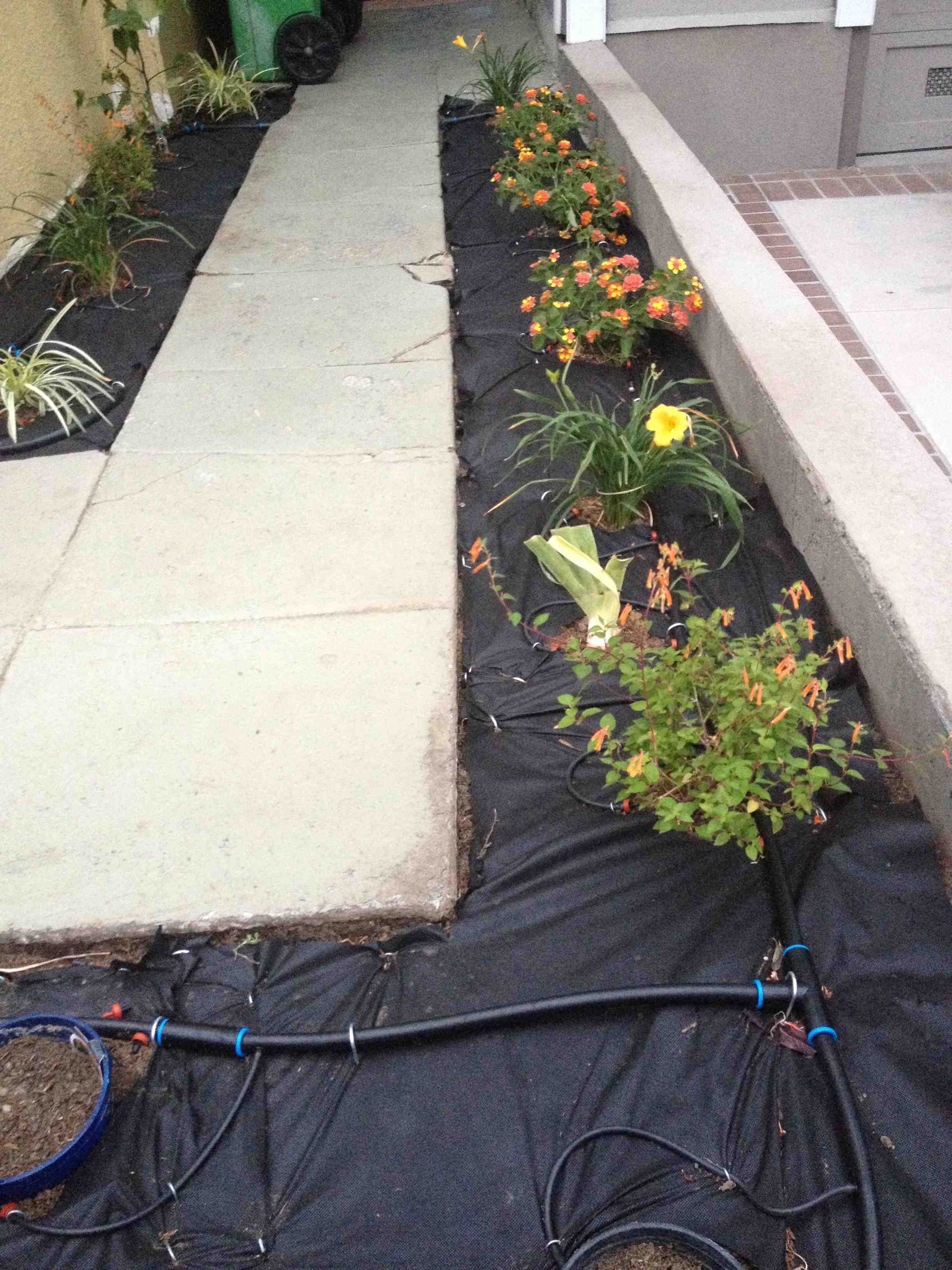
Adults – In a CHILDREN”S GARDEN, do you want your kids playing on an earth covered by plastic? Clean and orderly, but no butterflies, and no roly polies?! !












 Mission Azul