As part of our Tree Care class we teach a smattering of things for students to look out for when trying to identify a tree. The form from a distance, the bark, the leaves, and so on. Learning your trees around the neighborhood is one of the most fun things you can do since they are massive dynamic beings always growing and changing. Part of the goal of the class is for students to then take the certified arborist exam with the International Society of Arborticulture, and pass the test. Here in central California, the list they test from is as follows, extracted from the wcisa.net website:

Wow! That is a lot of trees to learn. What?! No Acacias, no Eucalyptus, no Ficus?! Where’s the Pittosporums and silver trees, the Douglas fir and madrone? Norfolk island pine, Azara and Maytens? Well, no test can take into account the local diversity and variation, so this is the list we will build off of. To make it a bit simpler, I categorized these trees based on leaf and fruit/cone characteristics. This part works okay to get you close, but to know the difference between species, you will still have to go say hi yourself, touch them, cut them, and know them hands on.

So many pines in the world!
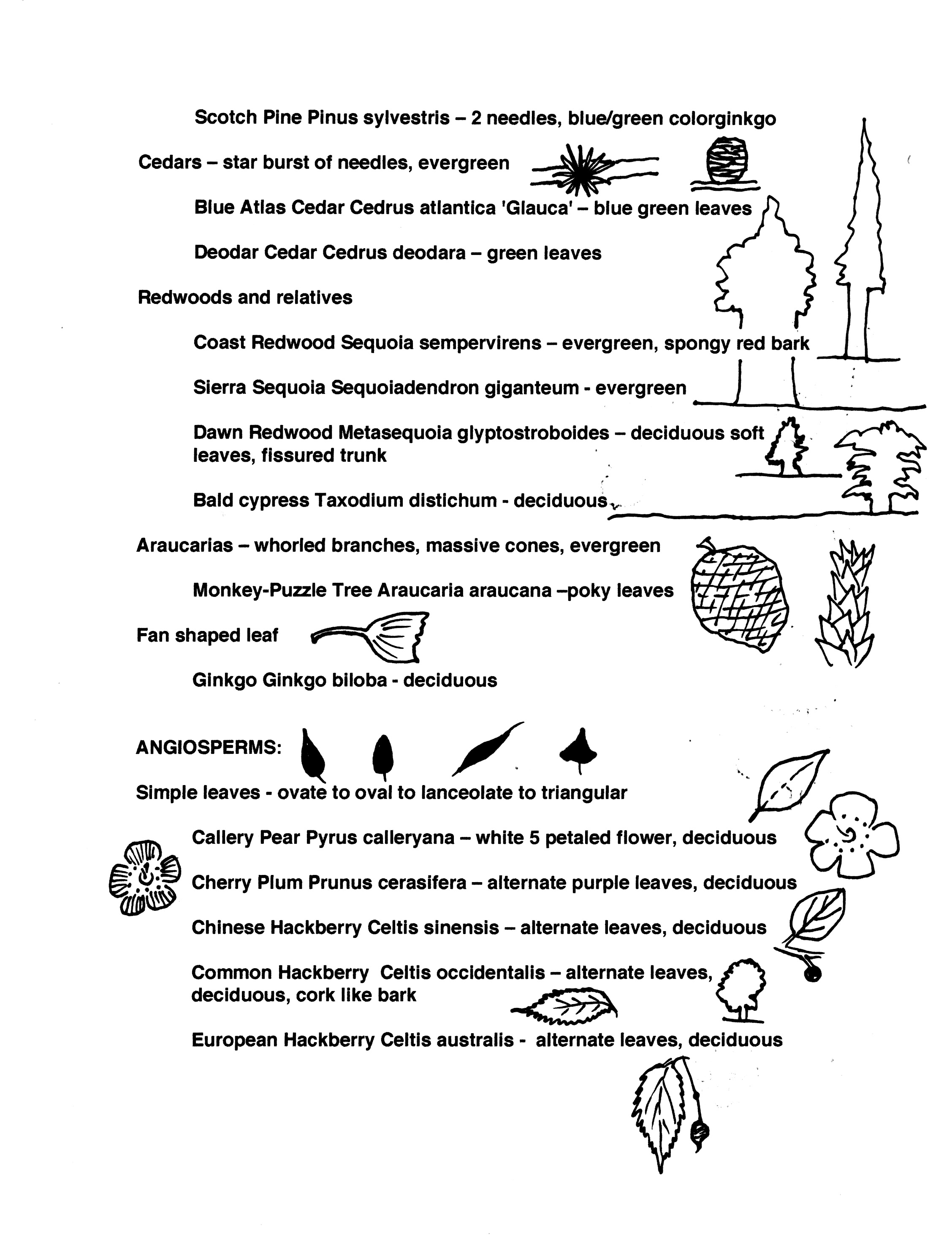
Not too much Celtis in SF, check the Botanical Garden!

The magnolias are in bloom now! Go see them before the leaves all come out.
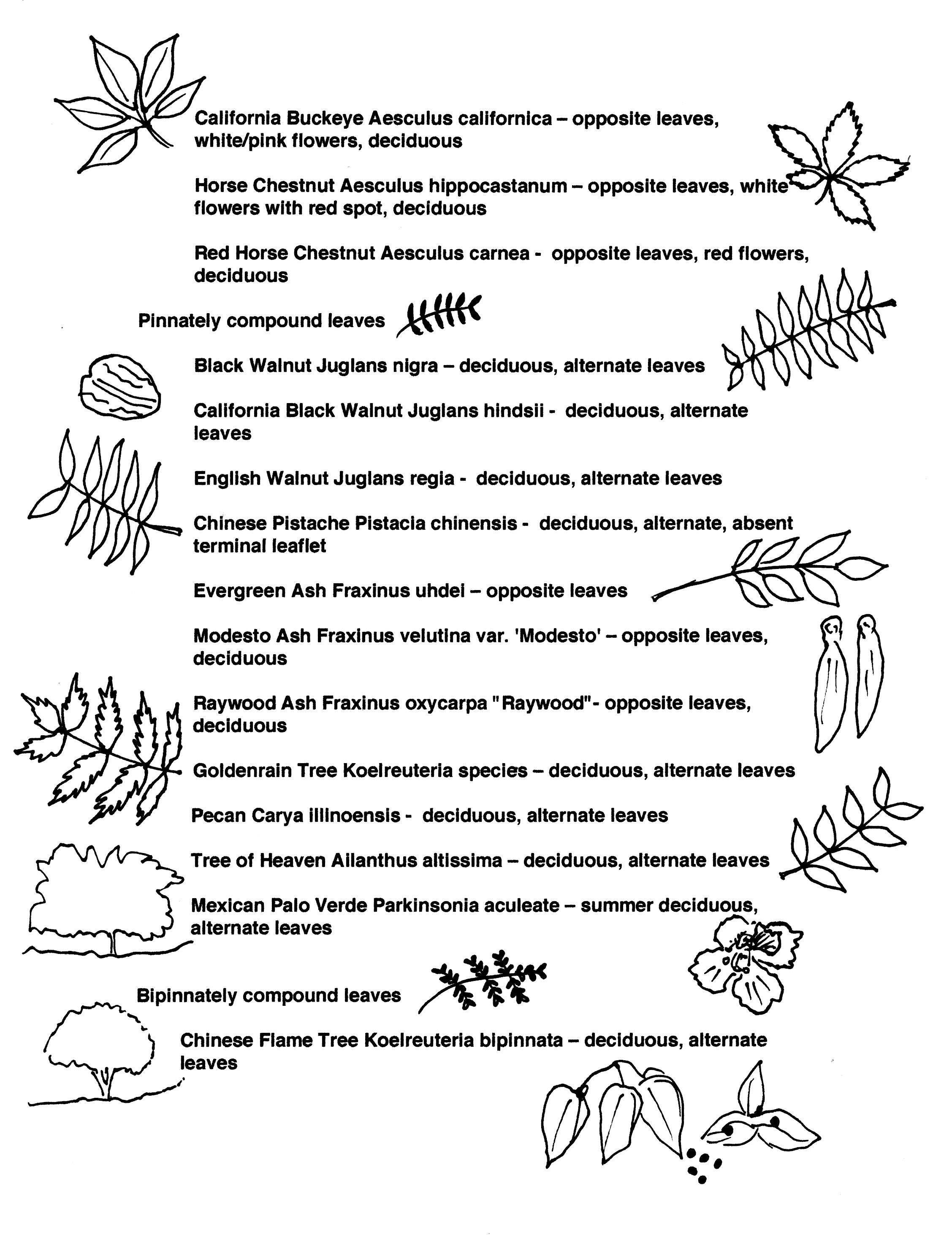
Best place to see the flame tree and golden rain trees are south or east where it gets that nice hot summer sun. SF stands for Summer Fog. And the Palo Verde, go to San Diego!
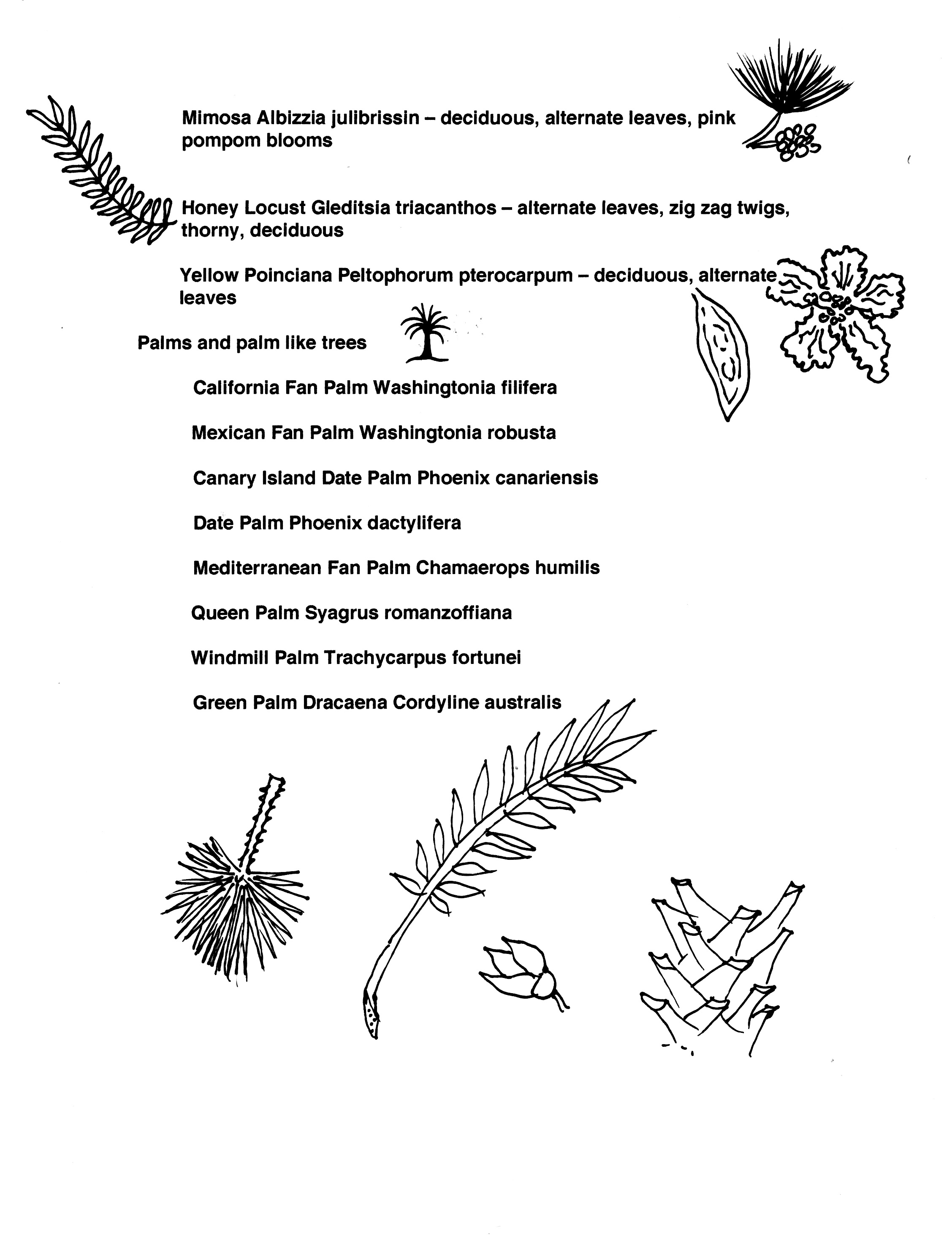
We want more palms! Chilean wine palm, king palm, fishtail palm, rattan!! We miss ya!
So, a big step in figuring this out is the structure holding the seeds. Is it a cone or a fruit? If a cone it is likely a conifer.

The difference between the leaves of cone folks (gymnosperms) and the fruity folks (angiosperms) is not always clear. So be observant and willing to accept variation and way out there boundaries.

Here’s a look at the angiosperm leaves, based on trees from the ISA list. The dogwood has the slinky like veins.
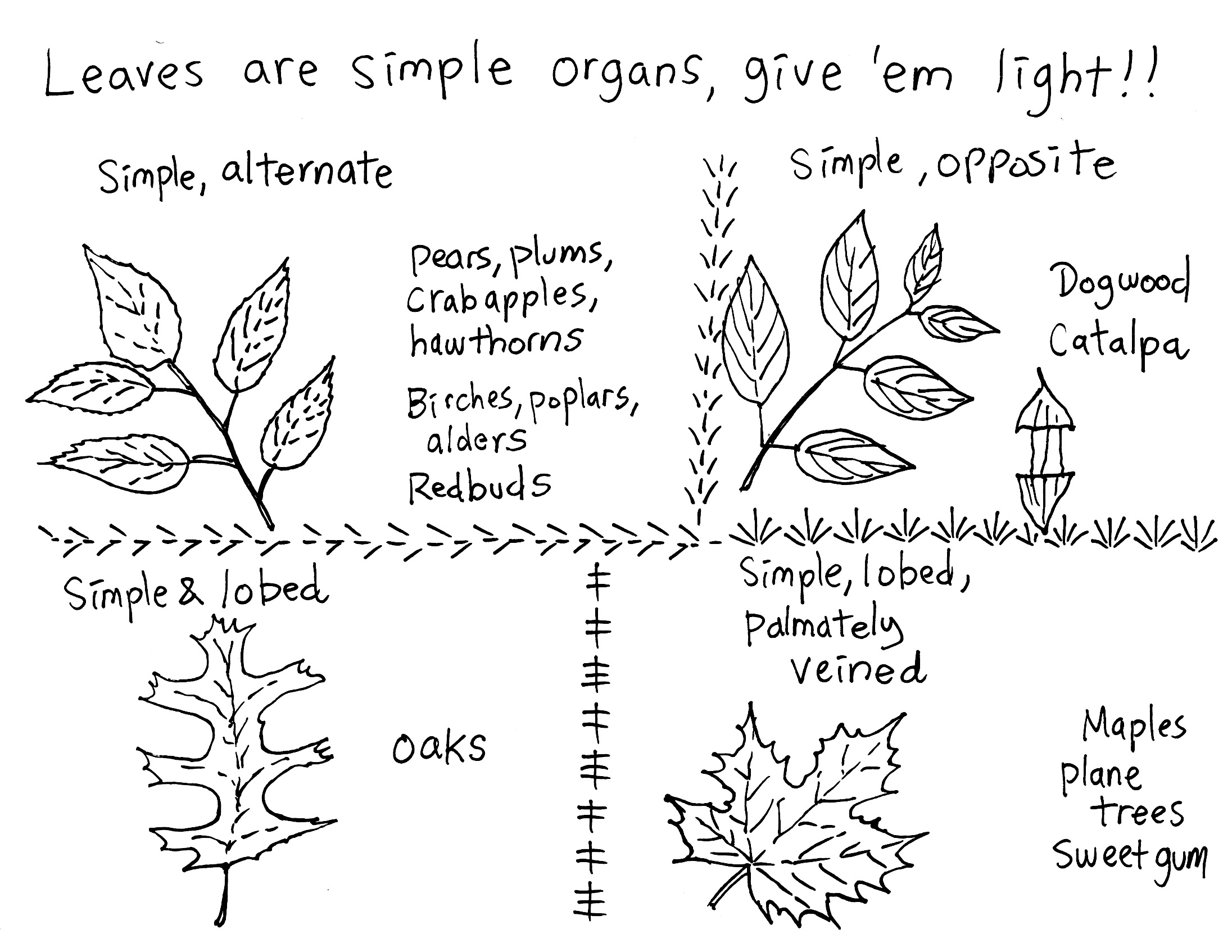
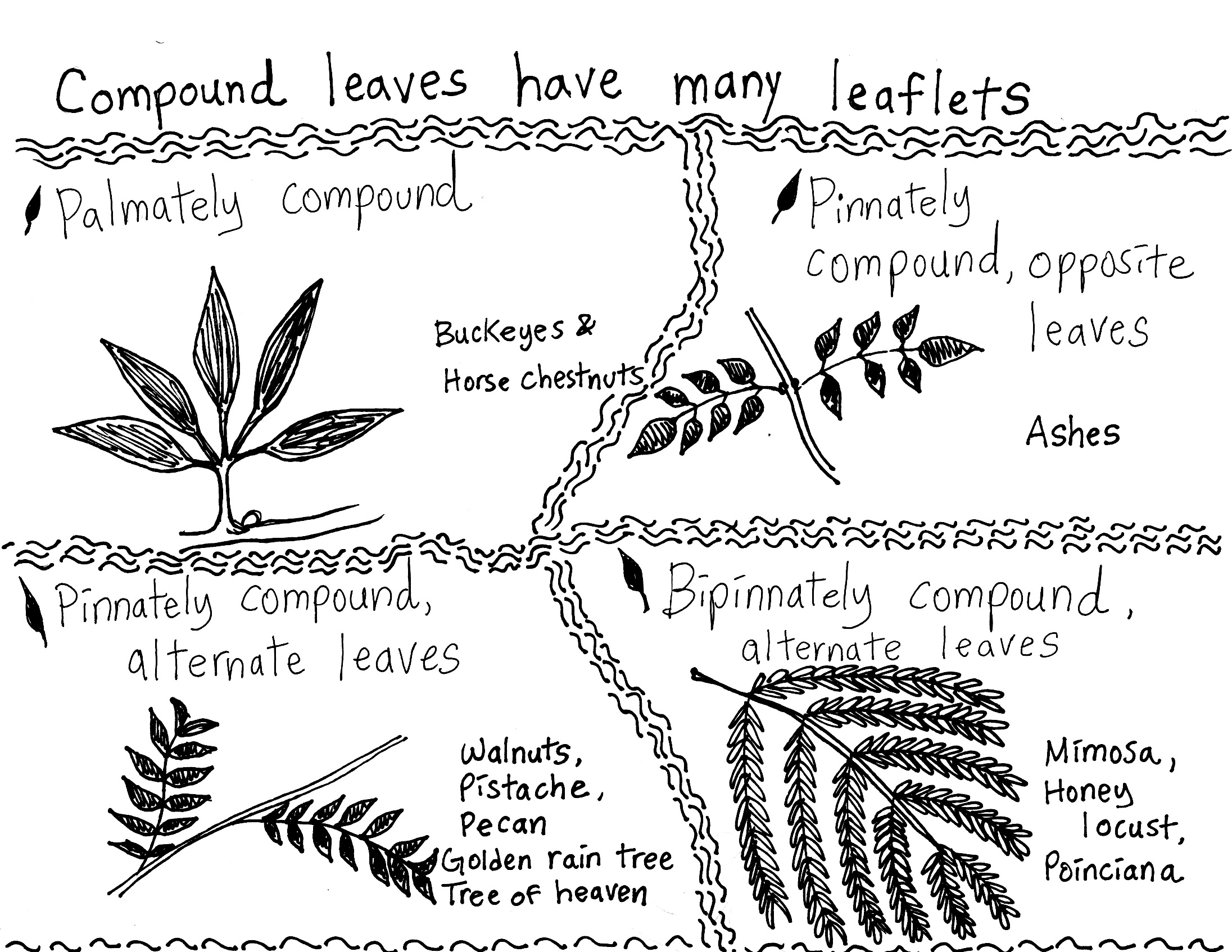
After the simple, the compound.
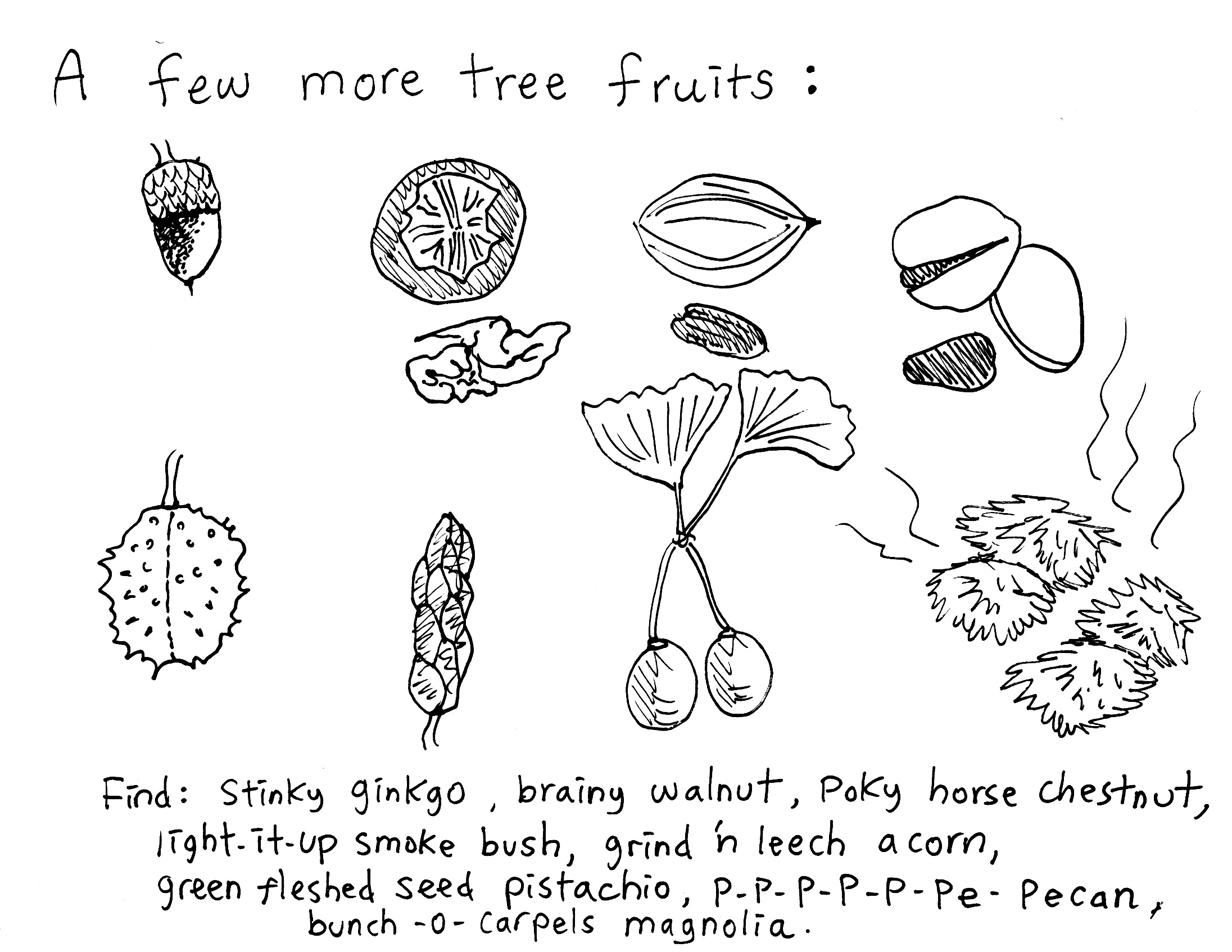
If the leaves don’t tell you the whole answer, sometimes you gotta meet the fruit.
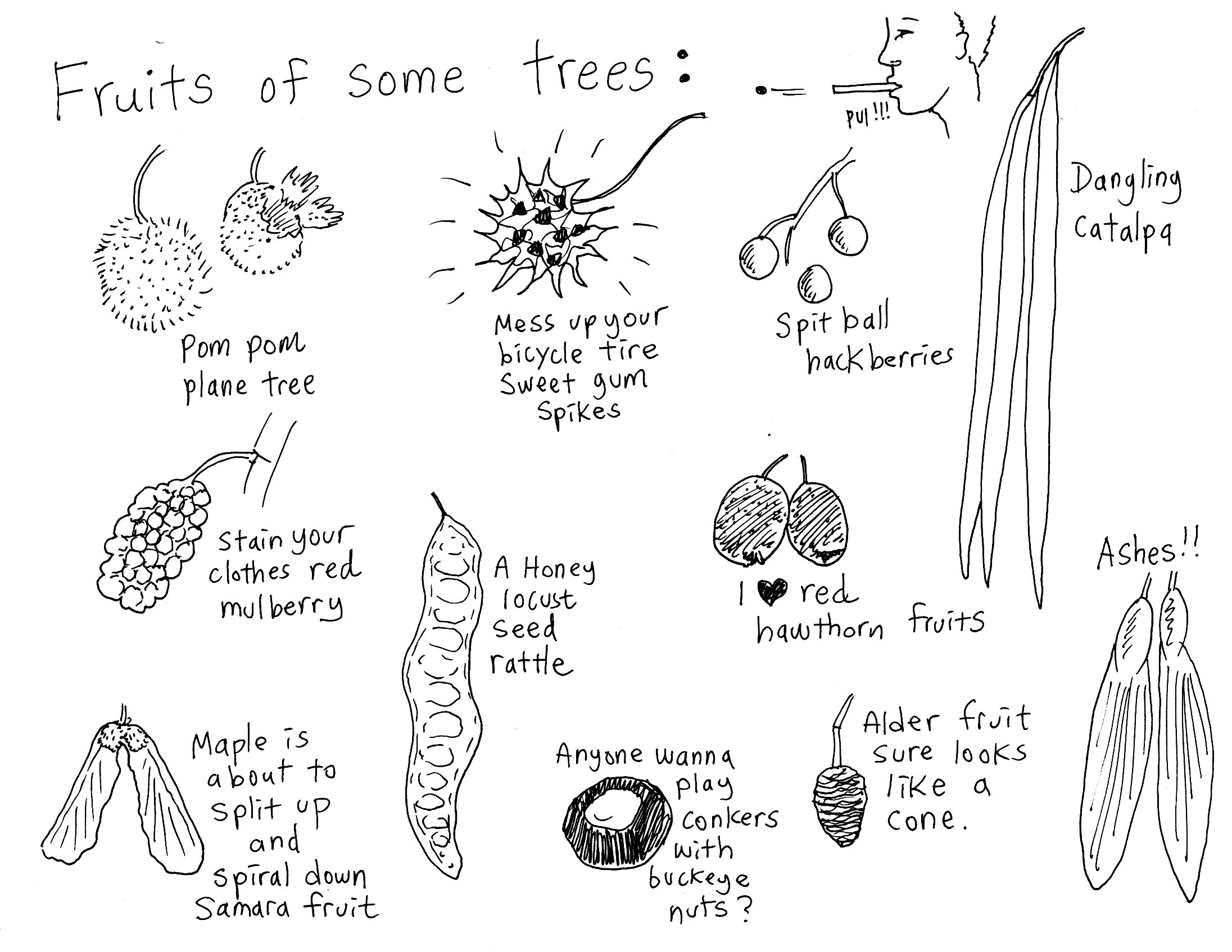
So many kinds of fruits.
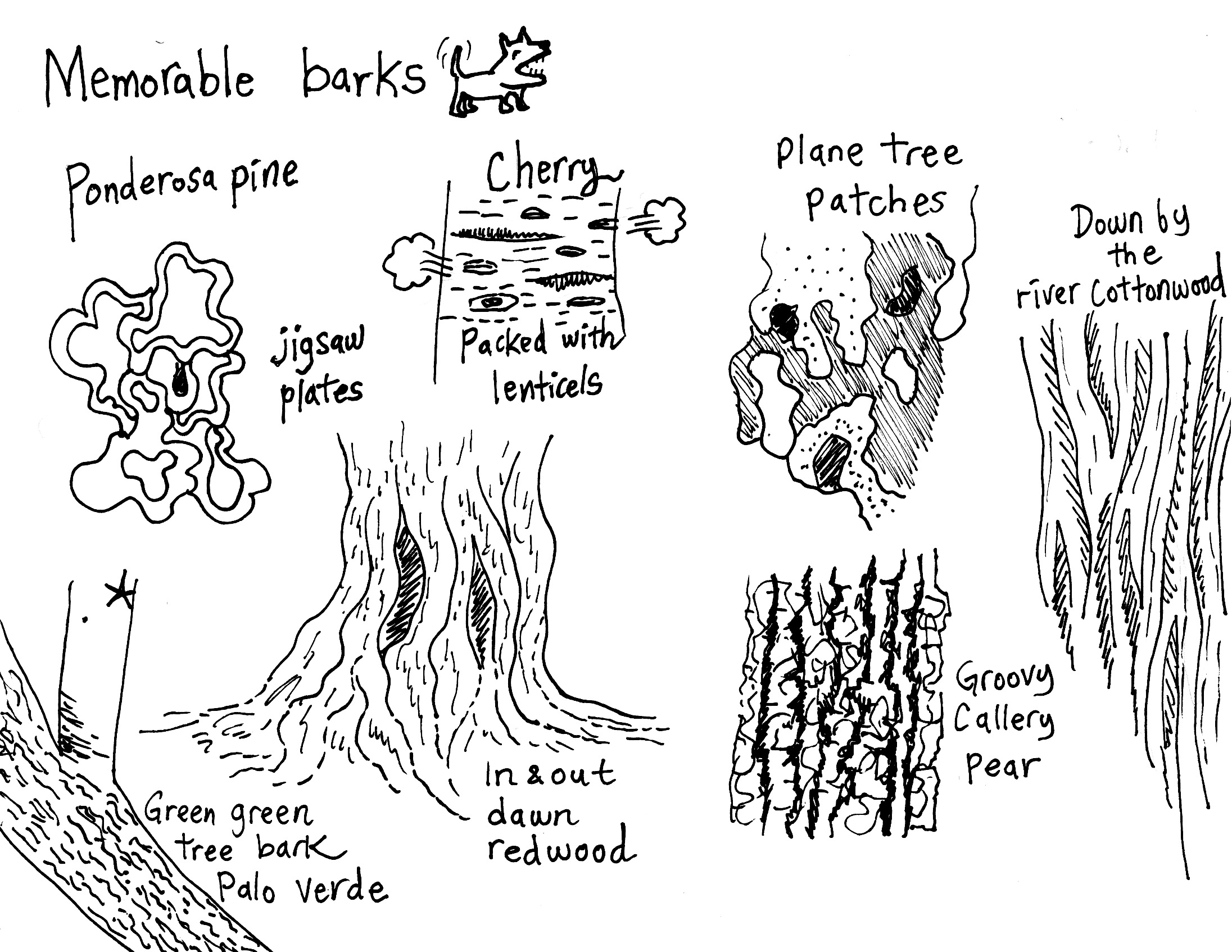
Maybe the tree has no leaves, just twigs and trunk. That’s okay, let it rest.
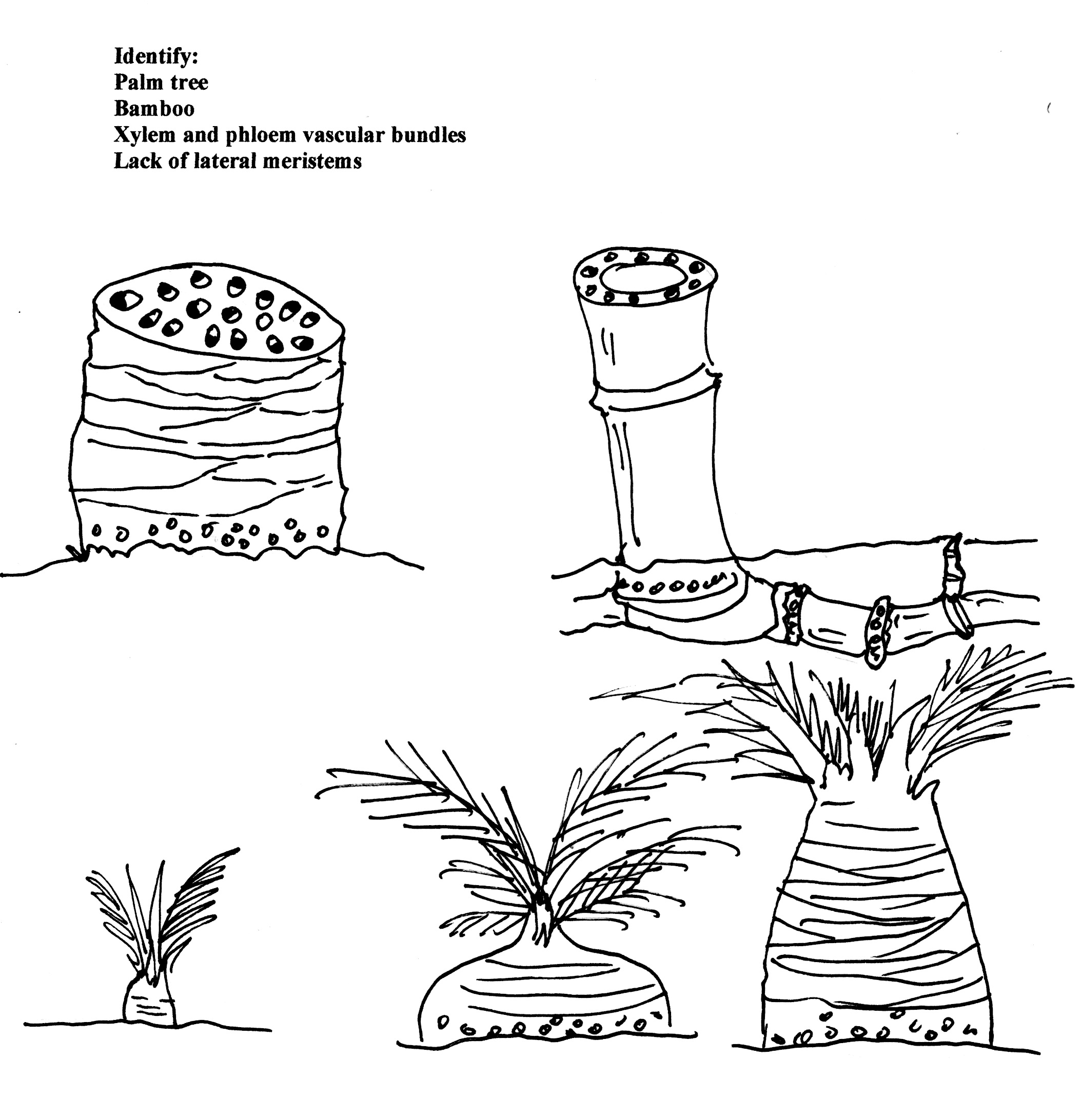
So we are back to the palms. I love palms! Coconut, Astrocaryum, Tagua, Jessenia!!
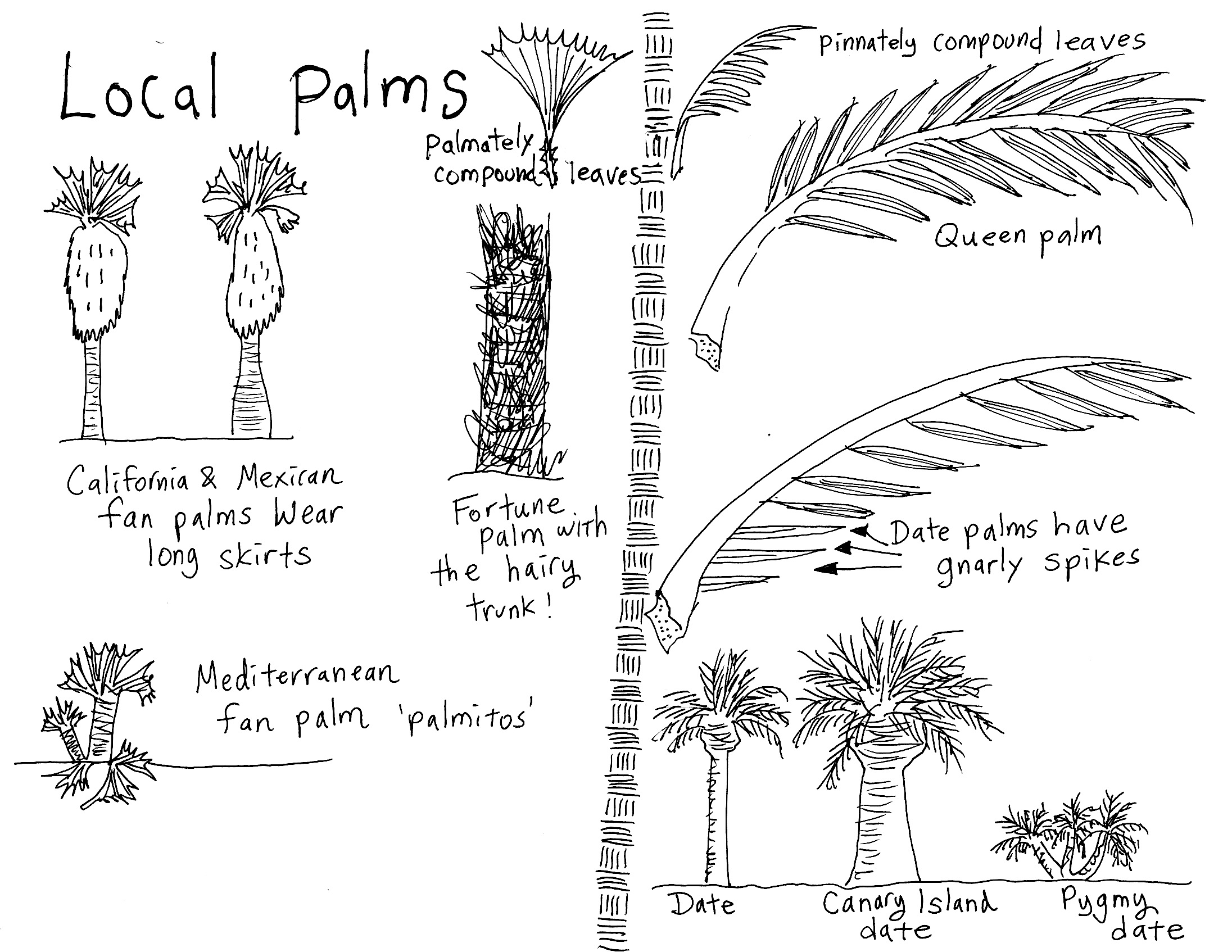
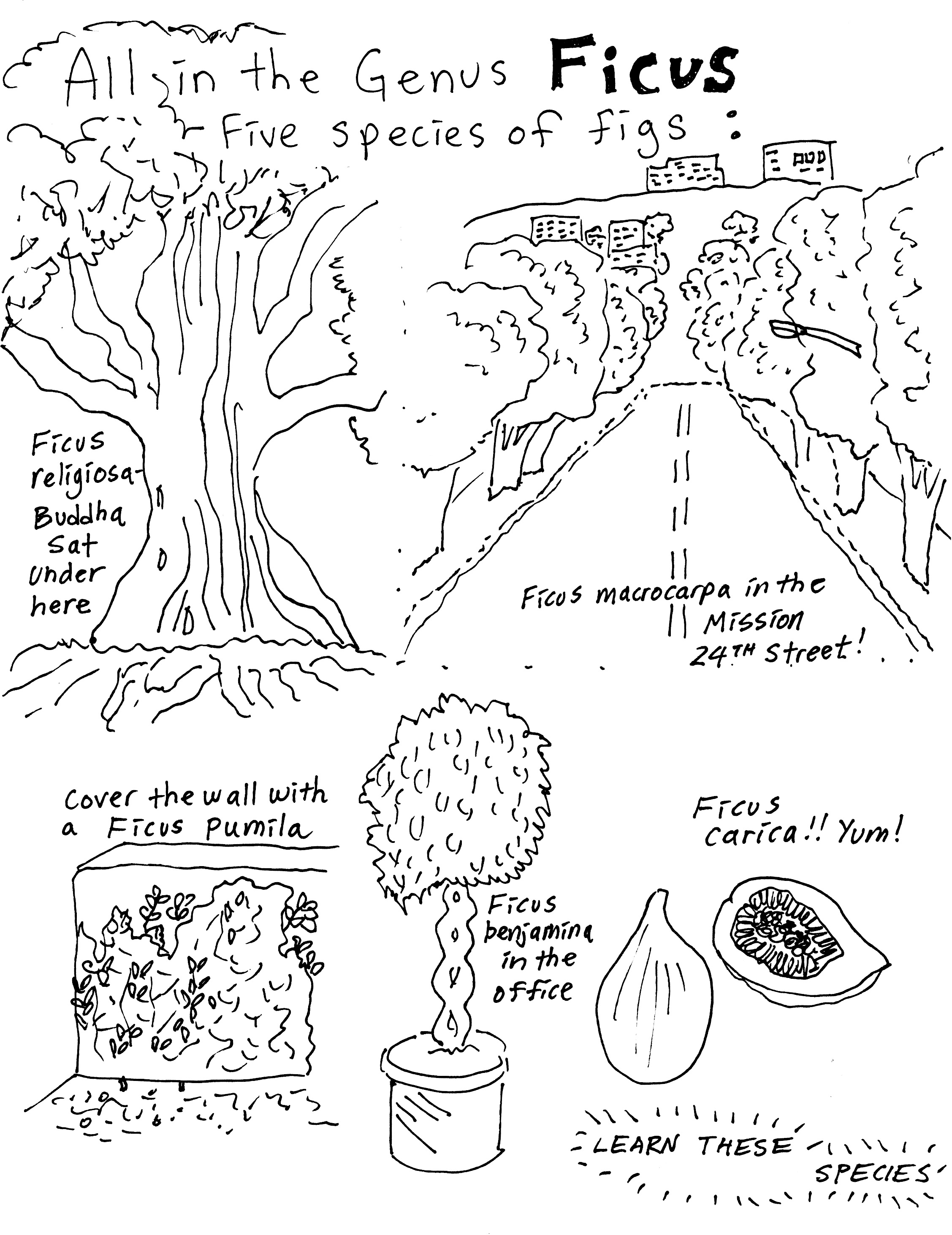
In learning the trees, remember Genus and Species/specific epithet. Long words in a foreign language. Say them over and over again like mantras and incantations and pretty soon you will be surrounded by friends. Well grounded buddies that give us food and air. Good luck!






 Mission Azul