Every tree is a distinct and unique entity.

In town, people love to grow trees.  We love trees because they clean the air and create oxygen.

Image

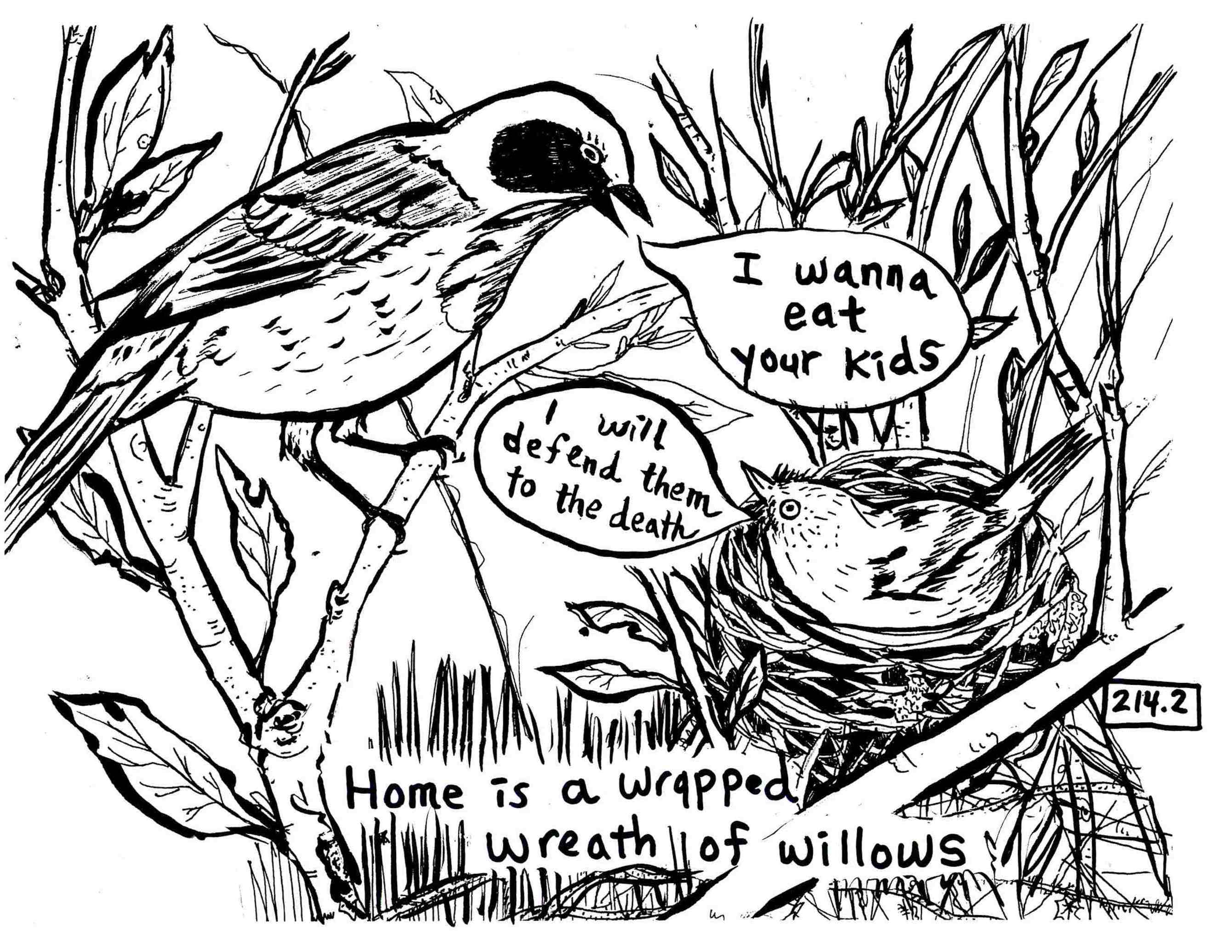
Trees give shade on hot summer days, and provide a place for songbirds to sit, sing, and raise their young.
Image

The love of greenery, and the serenity it brings, goes back to primeval times.

In town, there are many reasons people do not like trees:

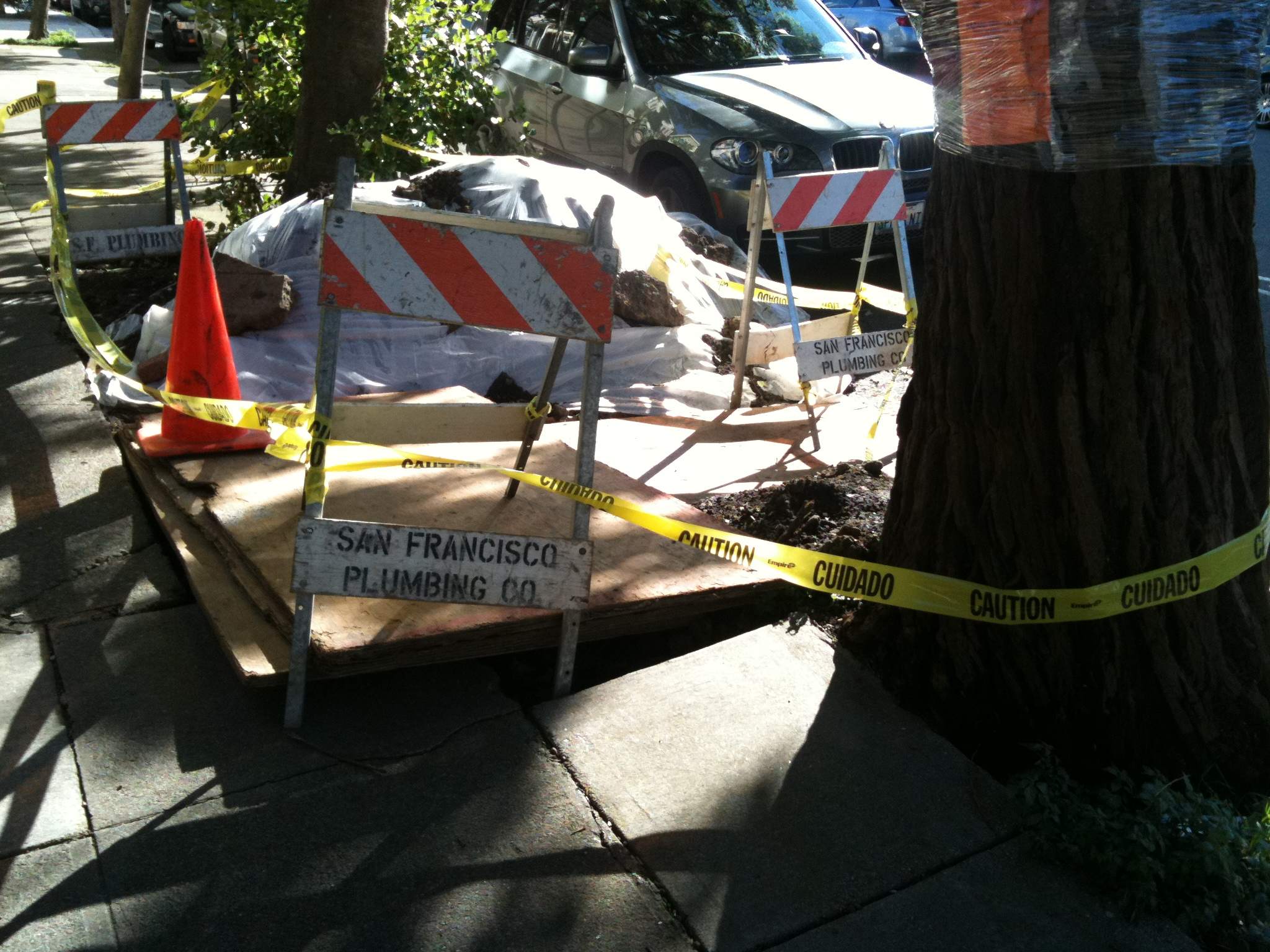
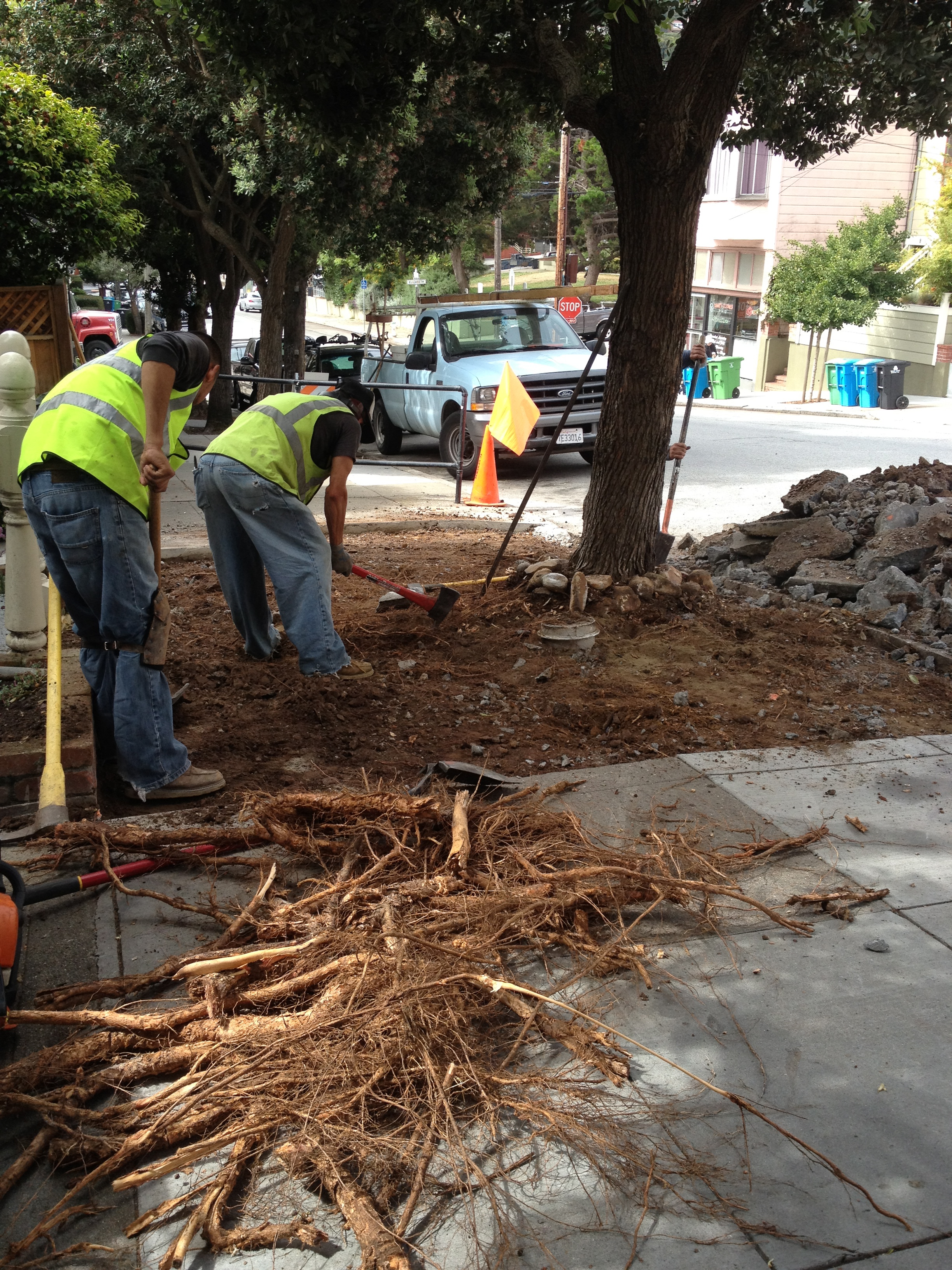
Trees bust up the sidewalk and invade the sewer.
Image

Image

Trees block views and reach out for the high voltage electric cables.

Image

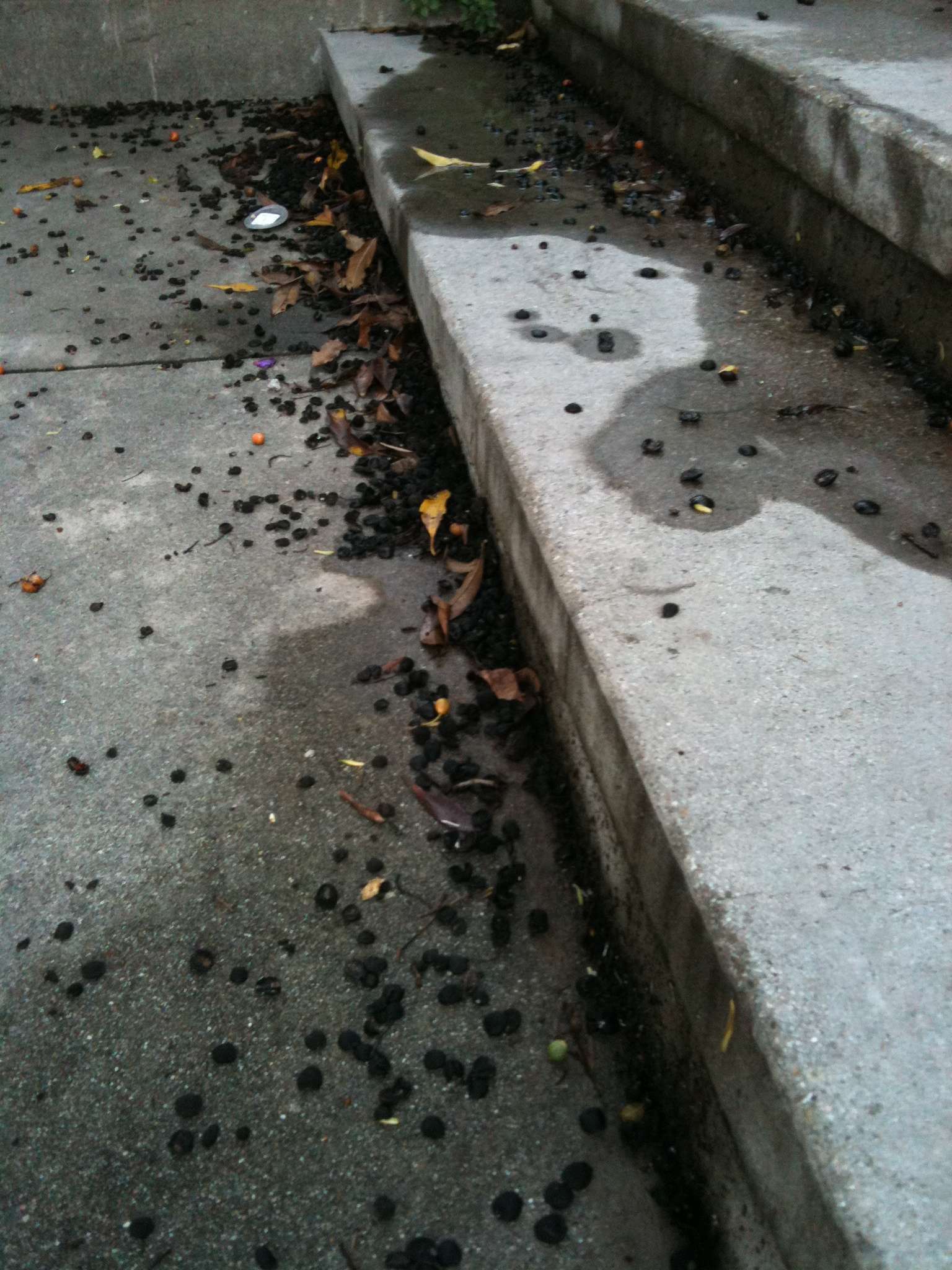
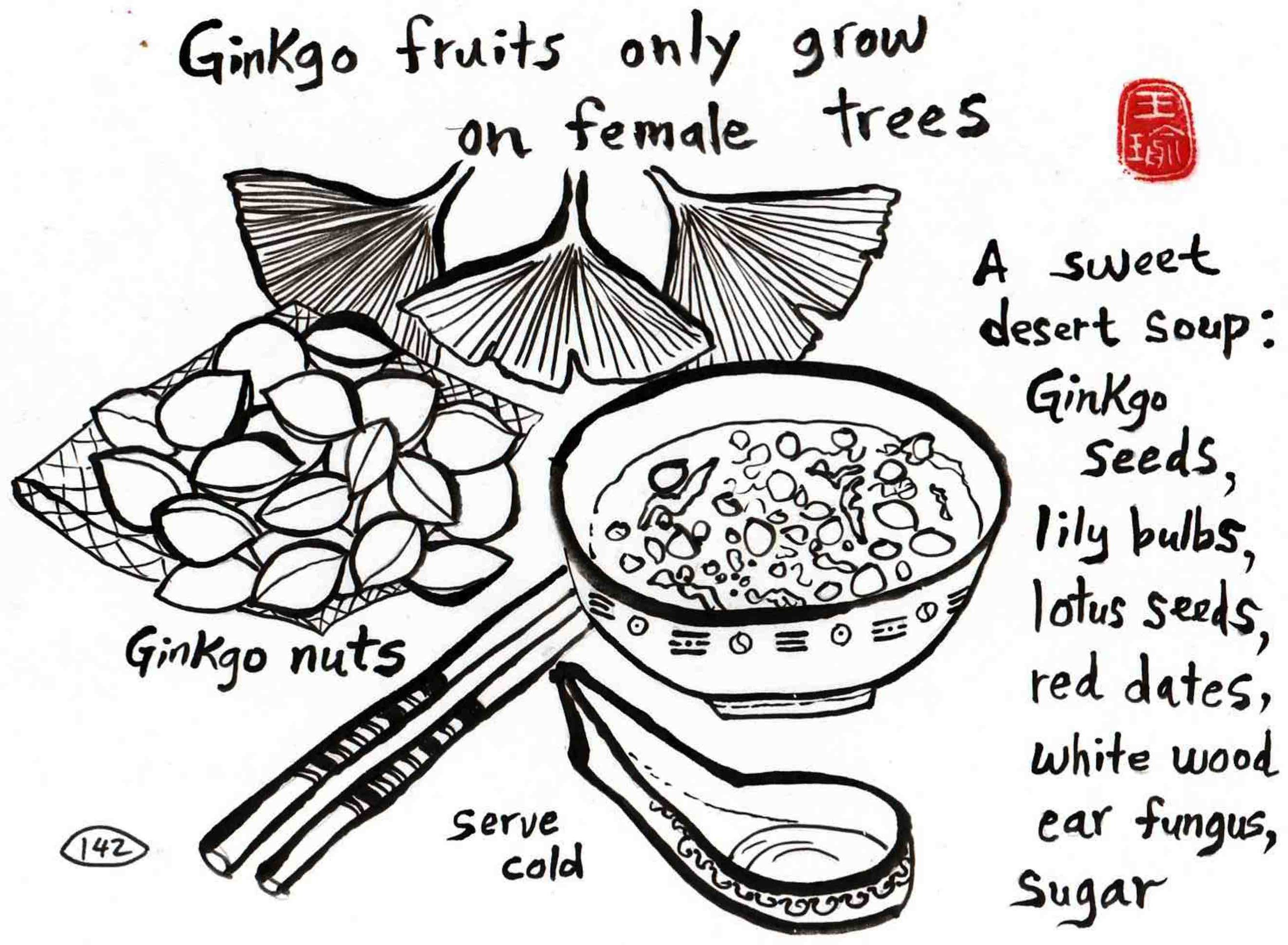
Trees drop messy leaves and fruits.

Image

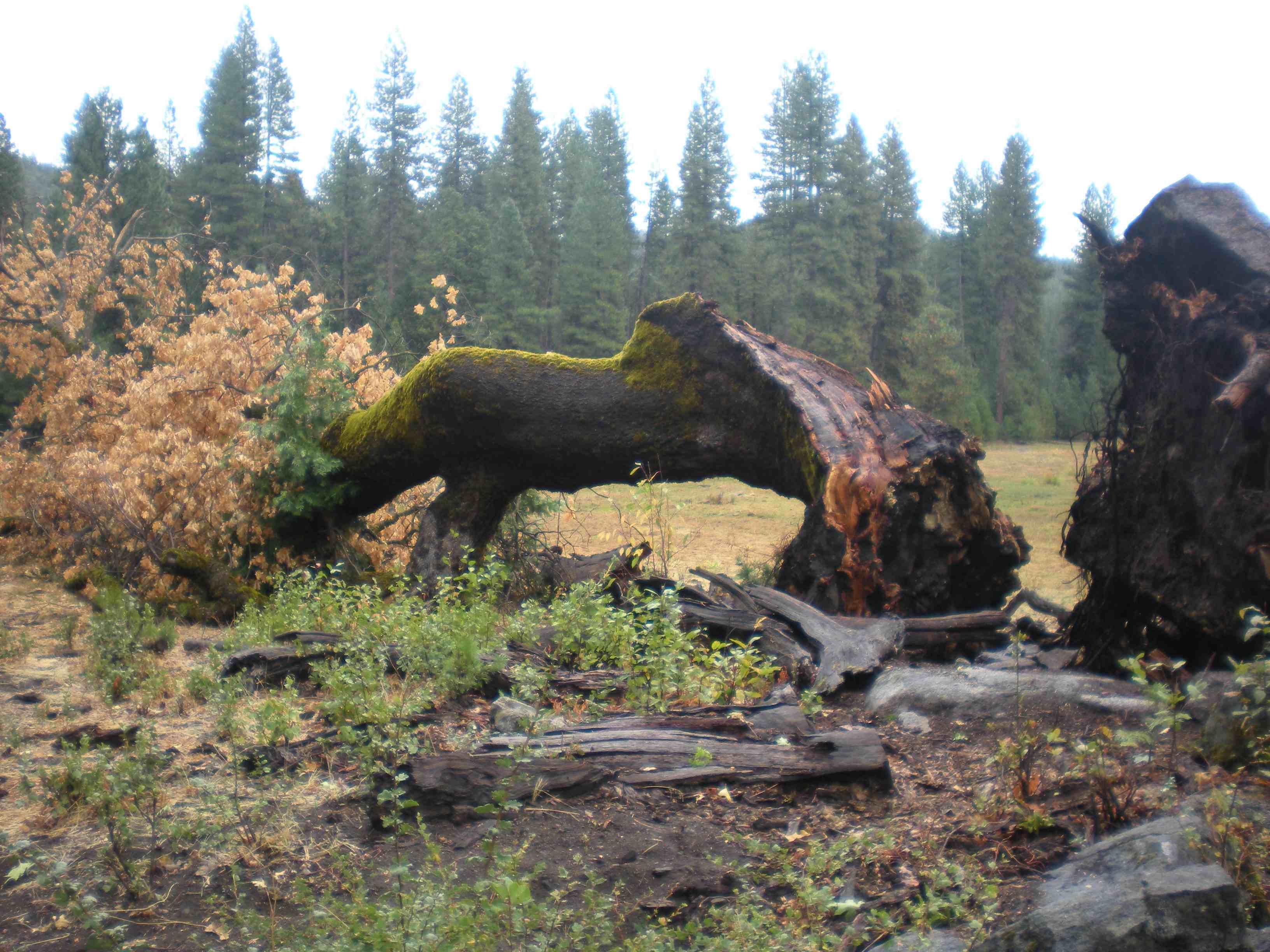
Trees grow old and weak, and fall on cars, people and houses.
Image

Unfortunately, town folk do not always understand the wild aspect of being a tree, and do not give a tree the care it deserves to survive several human generations.   We are conflicted about inviting such a large guest into our surroundings.

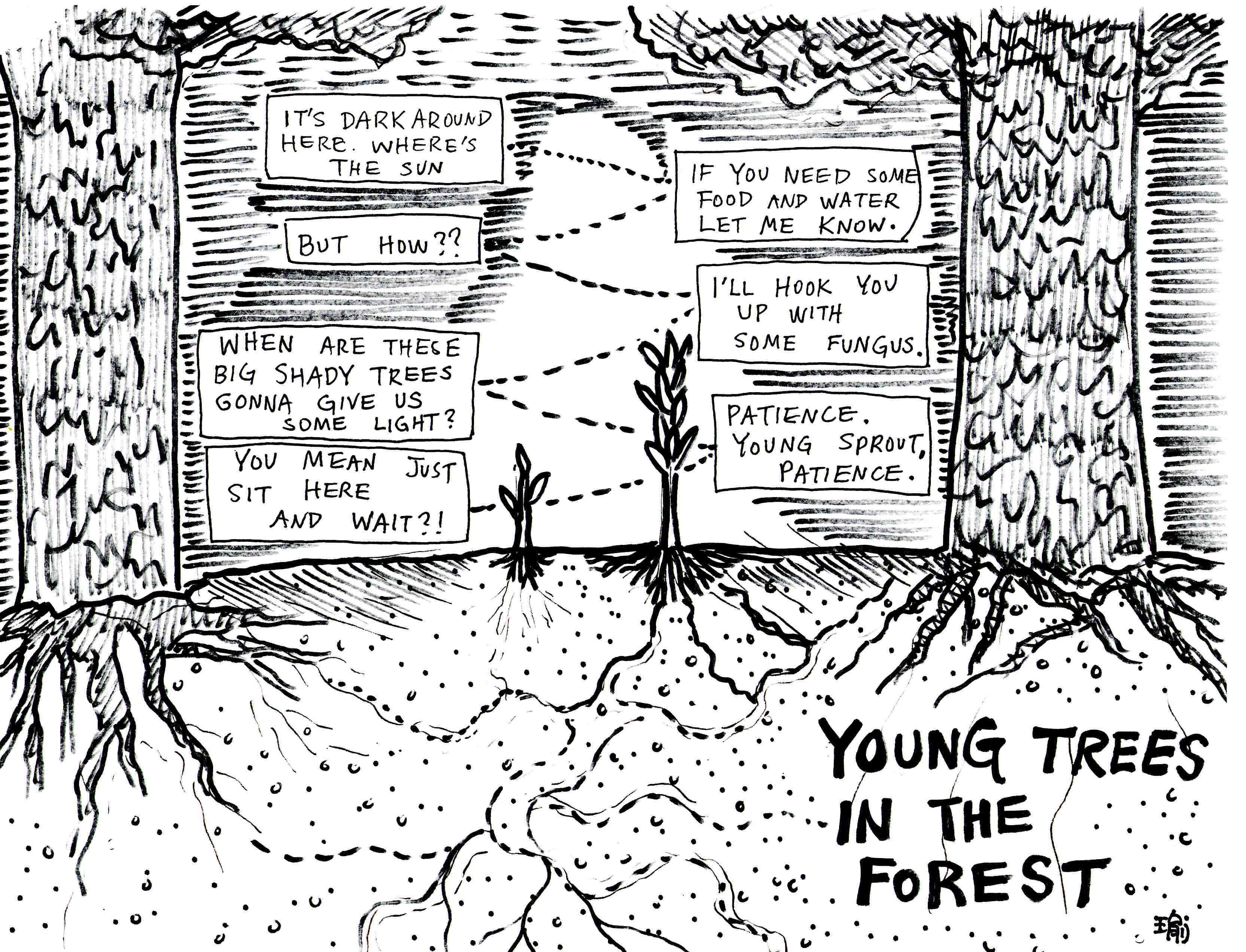
Young trees in the forest grow under the shade of the adults.  They are often sustained by fungus in the soil, and wait their turn to rise up towards the sun.
Image

Deer may nibble at the tips of trees; nematode worms suck at their roots; fires scar their bark.

Image

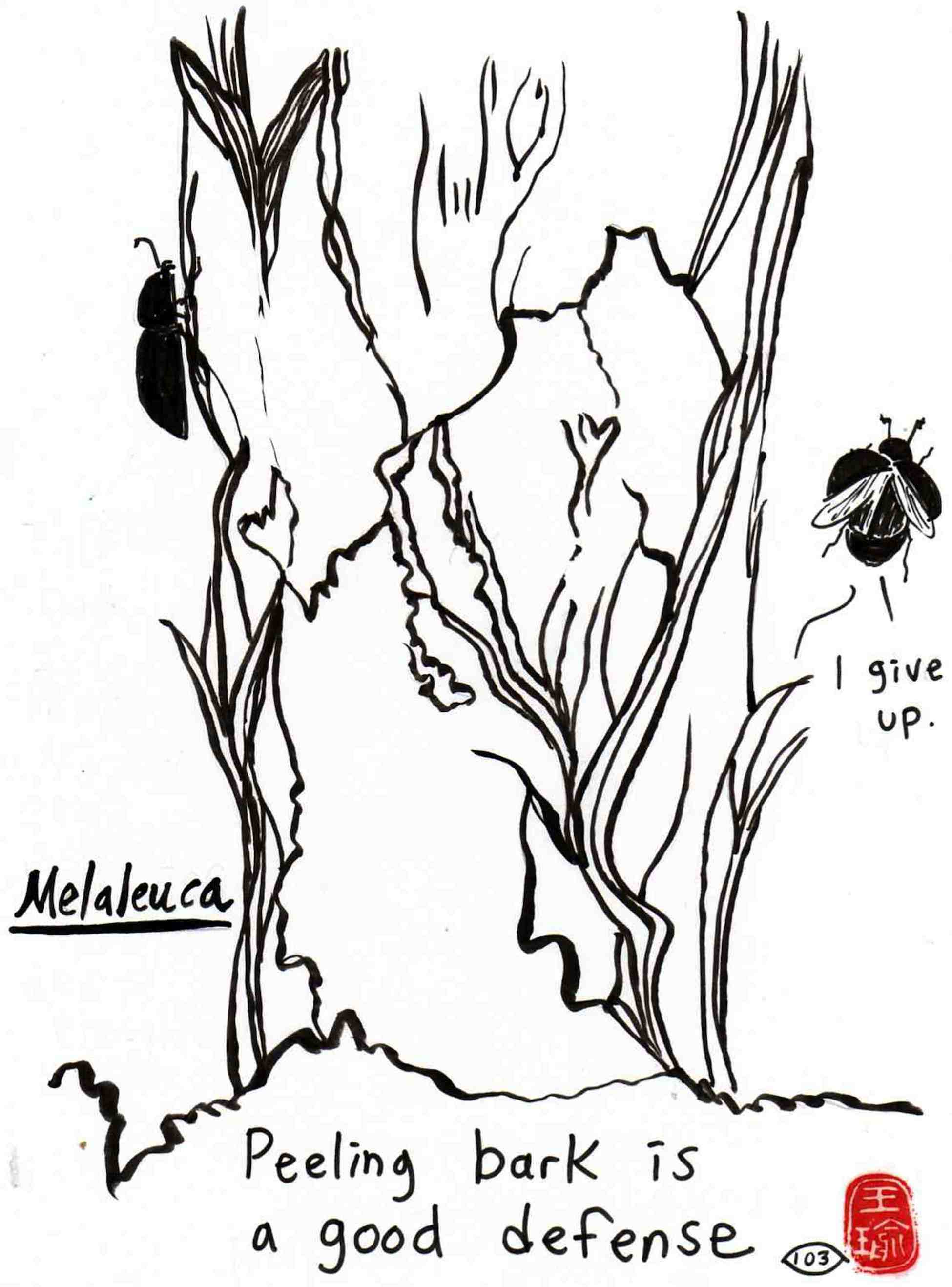
Unable to get up and run away, trees embed toxic chemicals and hard fibers in their leaves and bark, grow irritating hairs and spines, bleed sticky saps and gums, and shed their bark of parasites.
Image

Young trees in town face challenges and situations they would not meet in the forest.  A car door opening or a vandal with a saw could mean the end of life.  The daily stream of dog urine on the roots is not fertilizer, but poison.  Humans protect the trees with barriers of wire, wood, and steel.  We give young trees rations of water to quench their thirst.  We cut and shape the trees to fit in town.

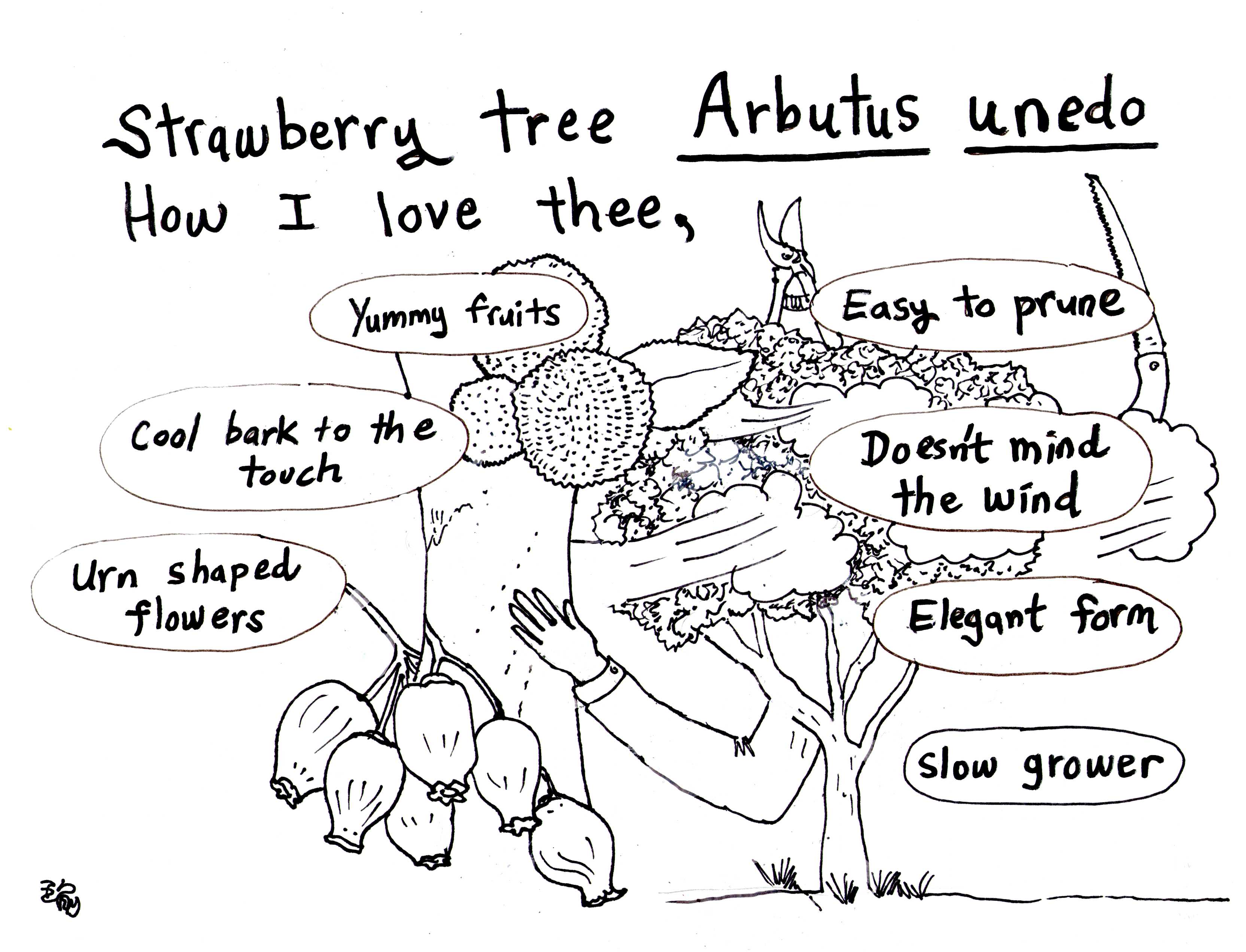
Some species of trees thrive, and reach maturity.  My favorites trees in San Francisco are slower growers that take pruning well; trees adapted to our coastal winds and cool summers; trees that serve as food and medicine.
Image

Image

Other trees in town live like tree-zombies, tortured but alive.  The human need for control and discipline are evident in our care of trees.

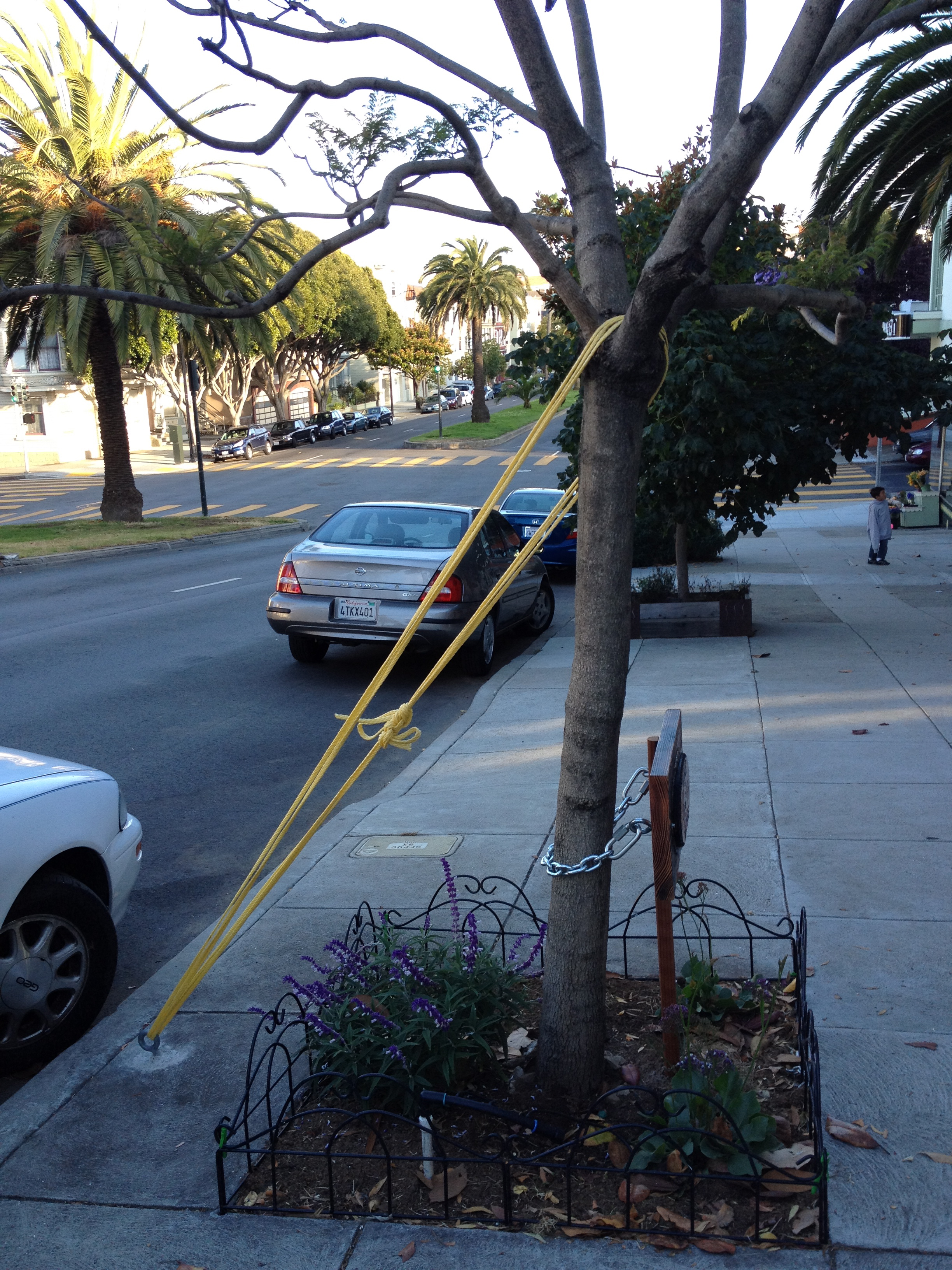
Trees are anchored and chained to the sidewalk.
Image

They are caged by metal.

Image

They are tied and squeezed.

Image

We feed them metal posts and poly rope.
Image

Strangled for life in a 2’ x 2’ square.

Strength in the trunk and stability in the roots come from the tree’s interaction with the world.  As the wind blows the tree back and forth, its trunk grows thicker and roots anchor into the earth.  A tree that is free is able to strengthen its core.

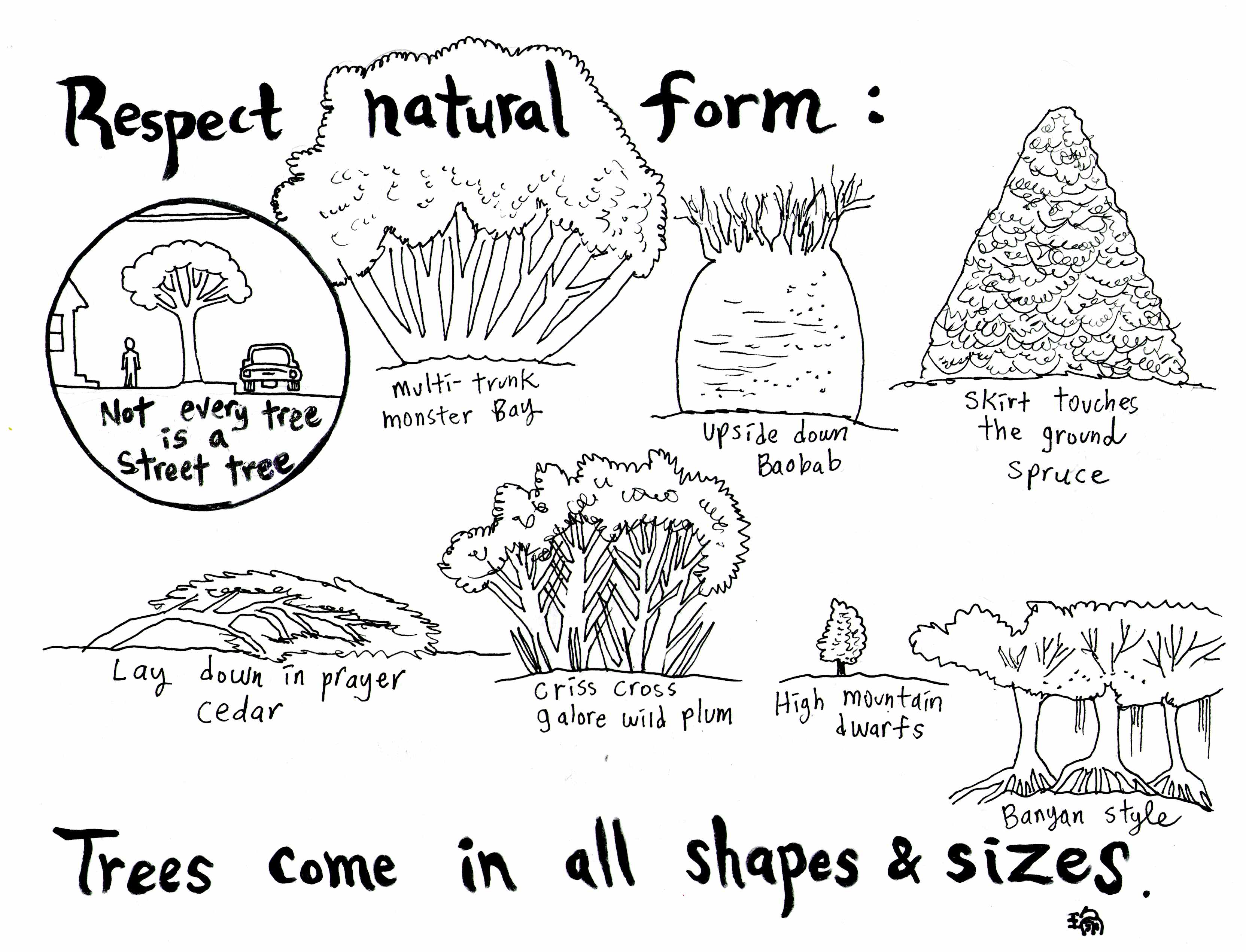
In town, our invited guests, the trees, need to be pruned time to time.  If we do not take responsibility for them as they grow and age that will mean more and more trouble down the line.  In town, a healthy tree with good structure and stable roots is a safe tree.  A weak tree with rotten branches and a diseased core is a hazard to everyone.  Before pruning, observe and learn about:

The tree’s natural structure and form
Image

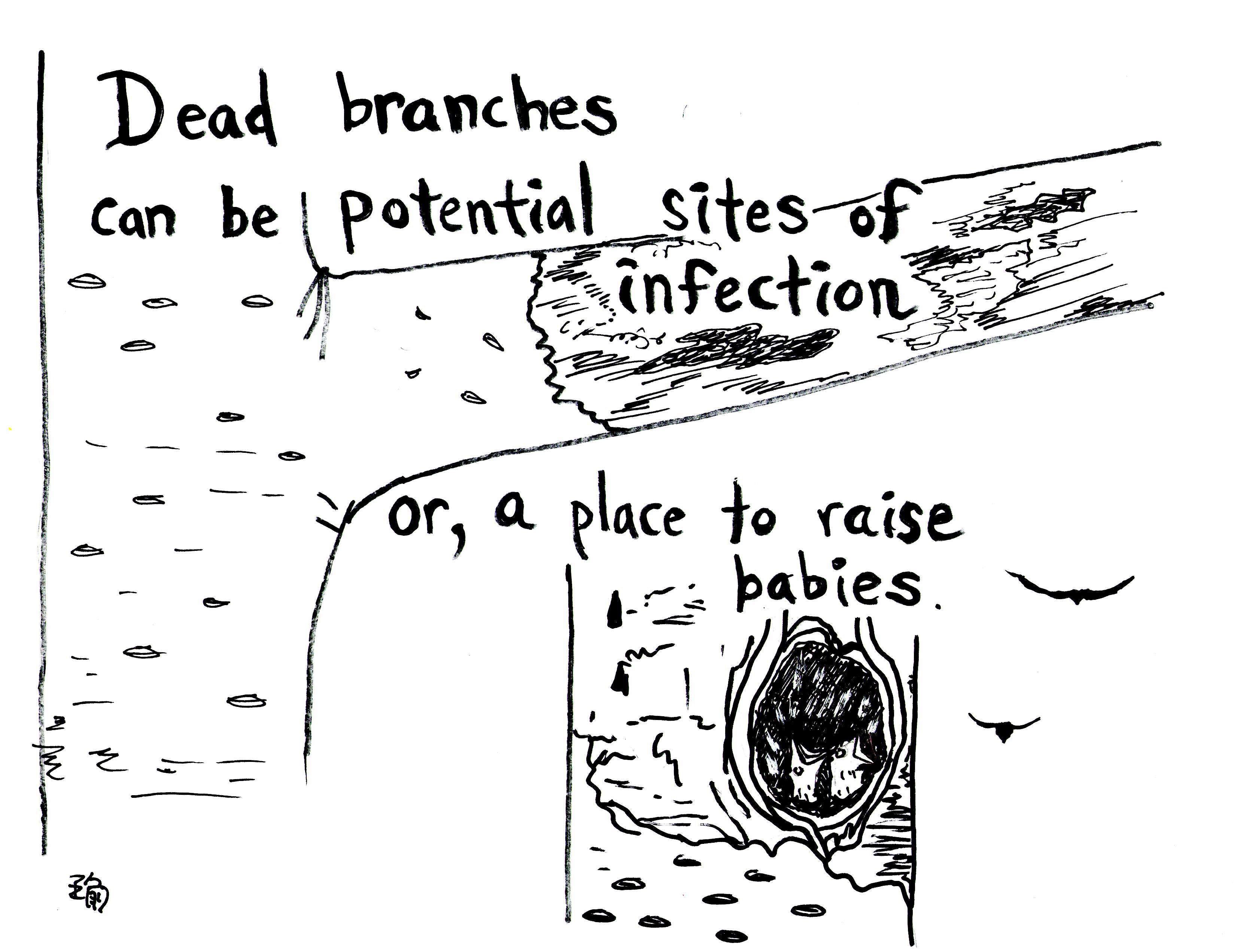
Dead wood

Image

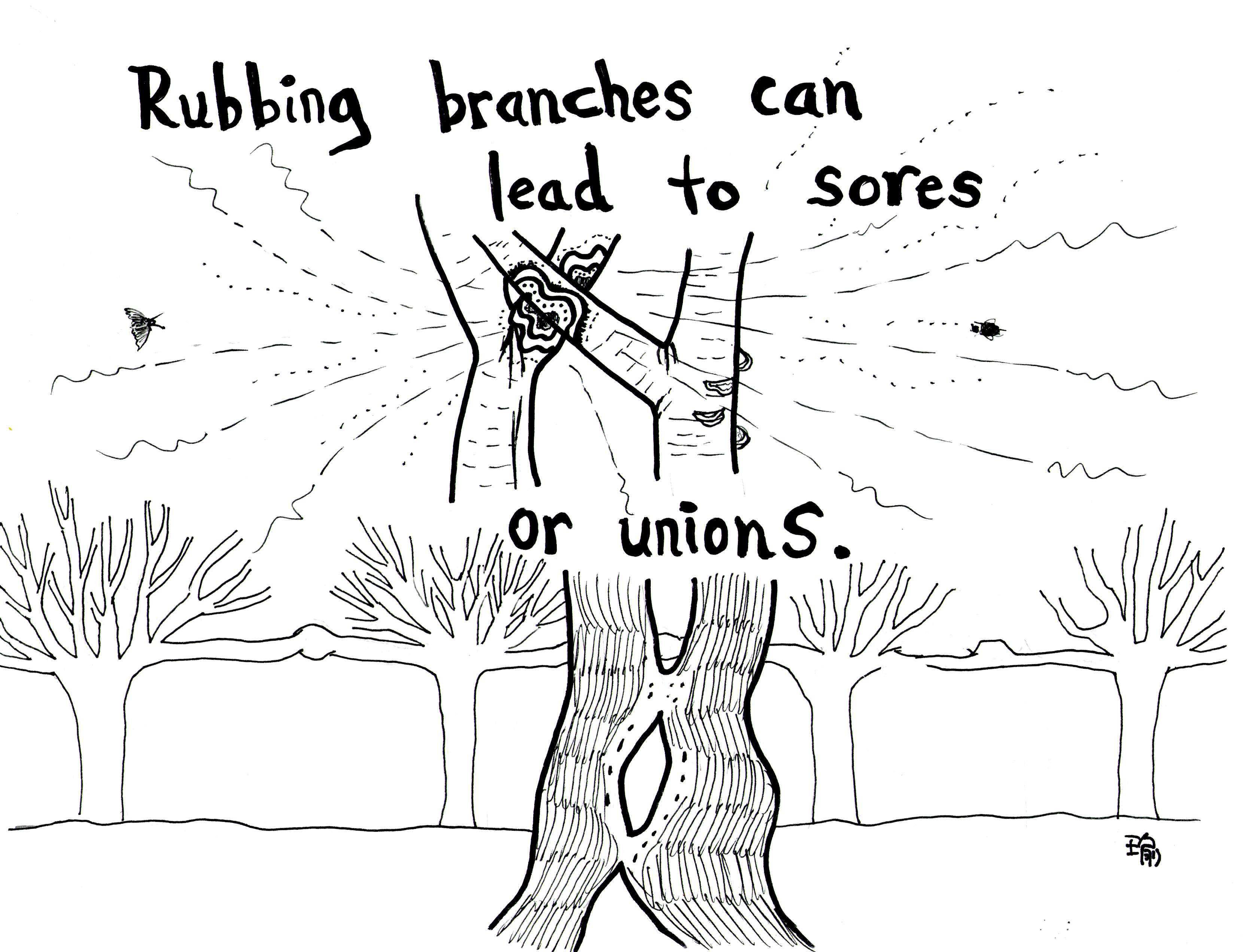
Crossing branches

Image

Tree defenses

Image

In the old days, people who pruned trees professionally were called “tree toppers”.  That is to say, a part of the job entailed cutting the tops off of trees – cutting off the upper growth in the canopy and usually leaving thick, bare, stubs.  This was not always the prettiest pruning job, more like a buzz cut or what we might call a “hack” job.  Nevertheless, a tree that was too tall was taken down this way.  Nowadays, the tree industry is much changed and has strived to improve the standards and aesthetics of tree care.  Professionals are now called “arborists”, and topping is strictly forbidden.

Every tree has a different response to having its head cut off, so to speak.  In the forest, a falling tree, a lighting strike, or a climbing bear could all break out a tree’s top.  When topped, a tree has large wounds open to the interior wood.  The tree is then susceptible to infection by bacteria, rot by fungi, and attack by insects.  To protect itself, the tree closes off gates and channels to the cut, and activates energy reserves.

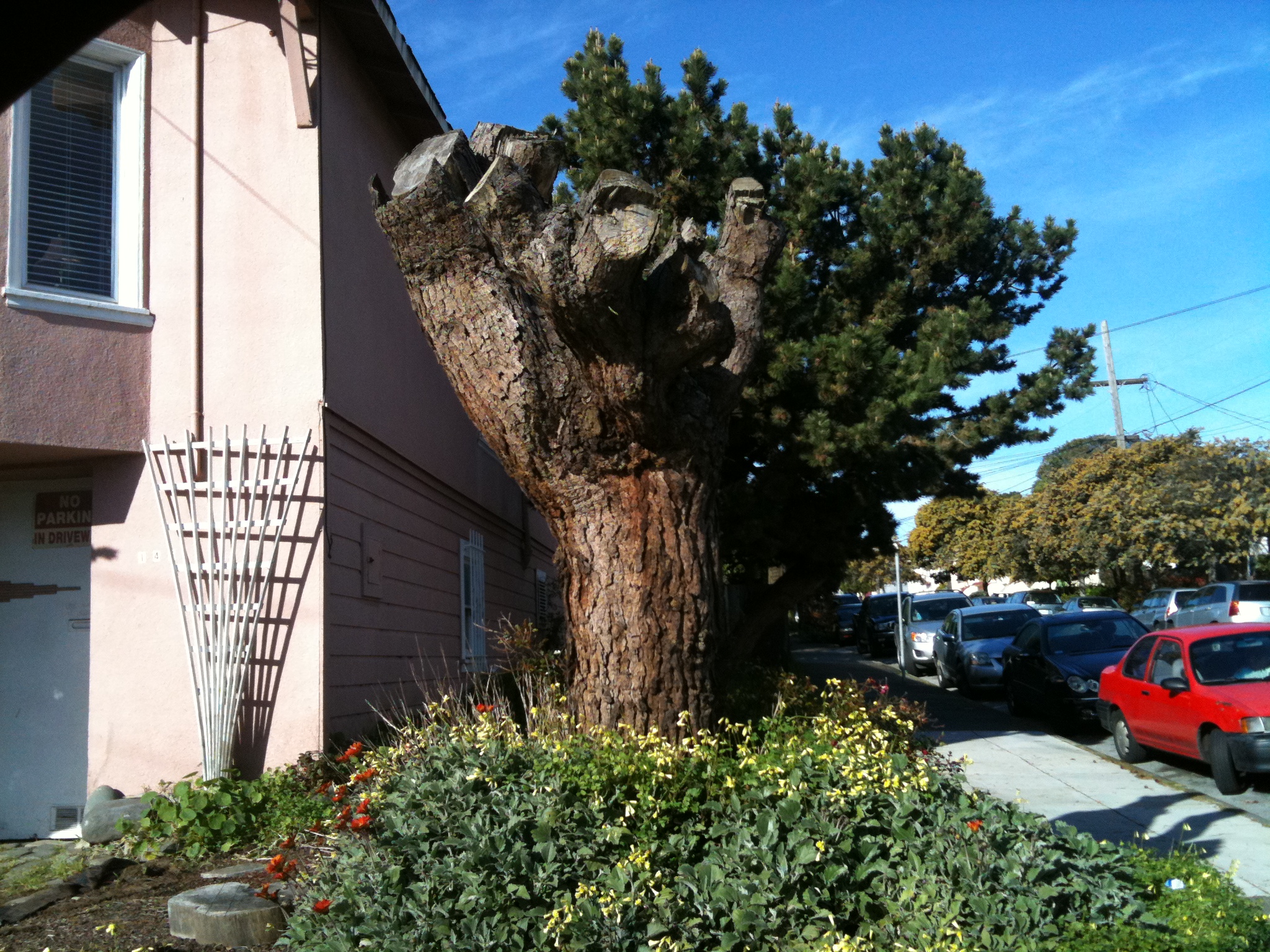
This pine gave up living altogether and became an art sculpture.
Image

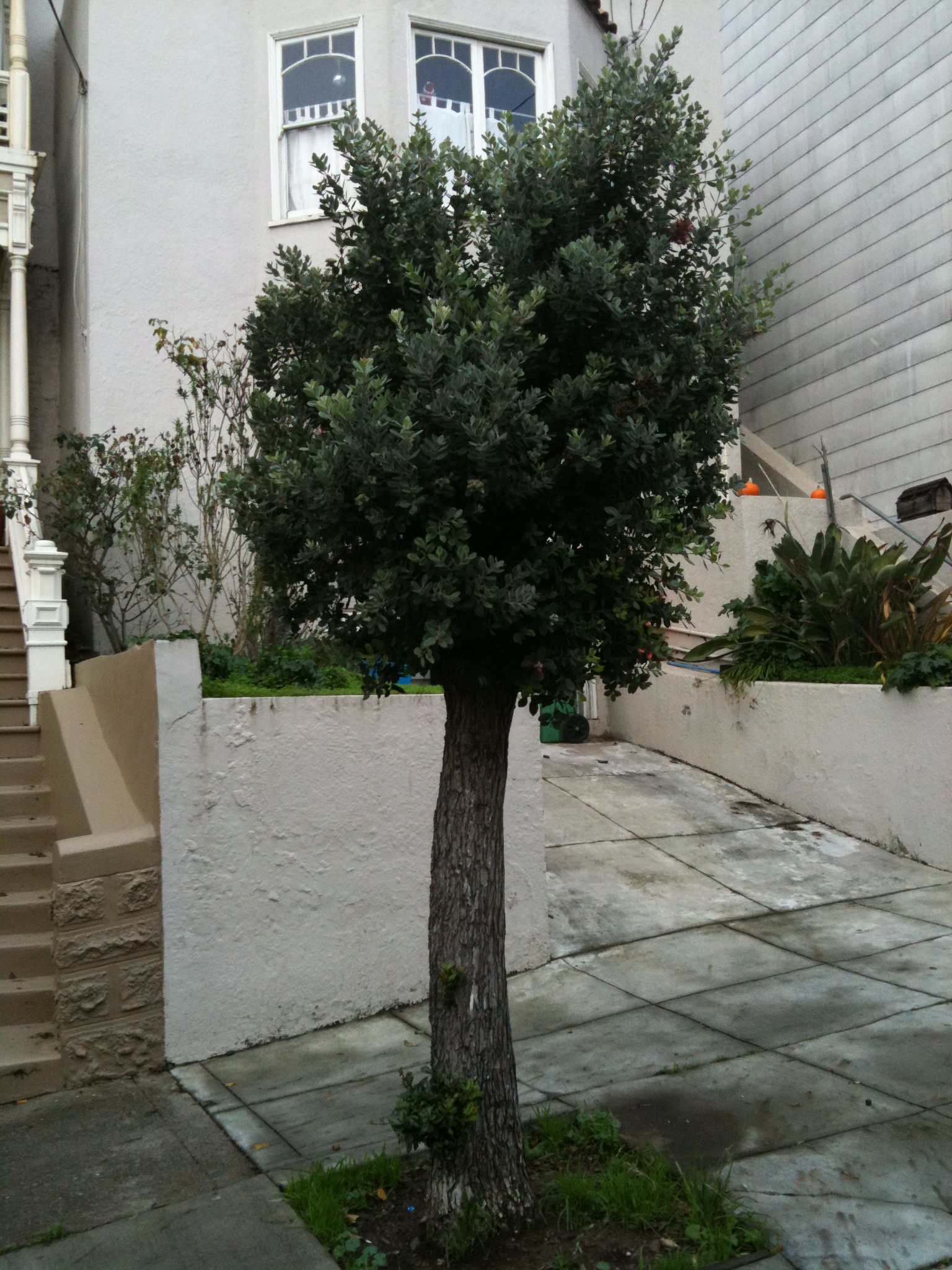
This New Zealand Christmas trees sprouted vigorously from the topping cut, and its canopy was shaped into round balls.
Image

These Poplars in the Mission district sent up numerous shoots as part of their recovery.

Image

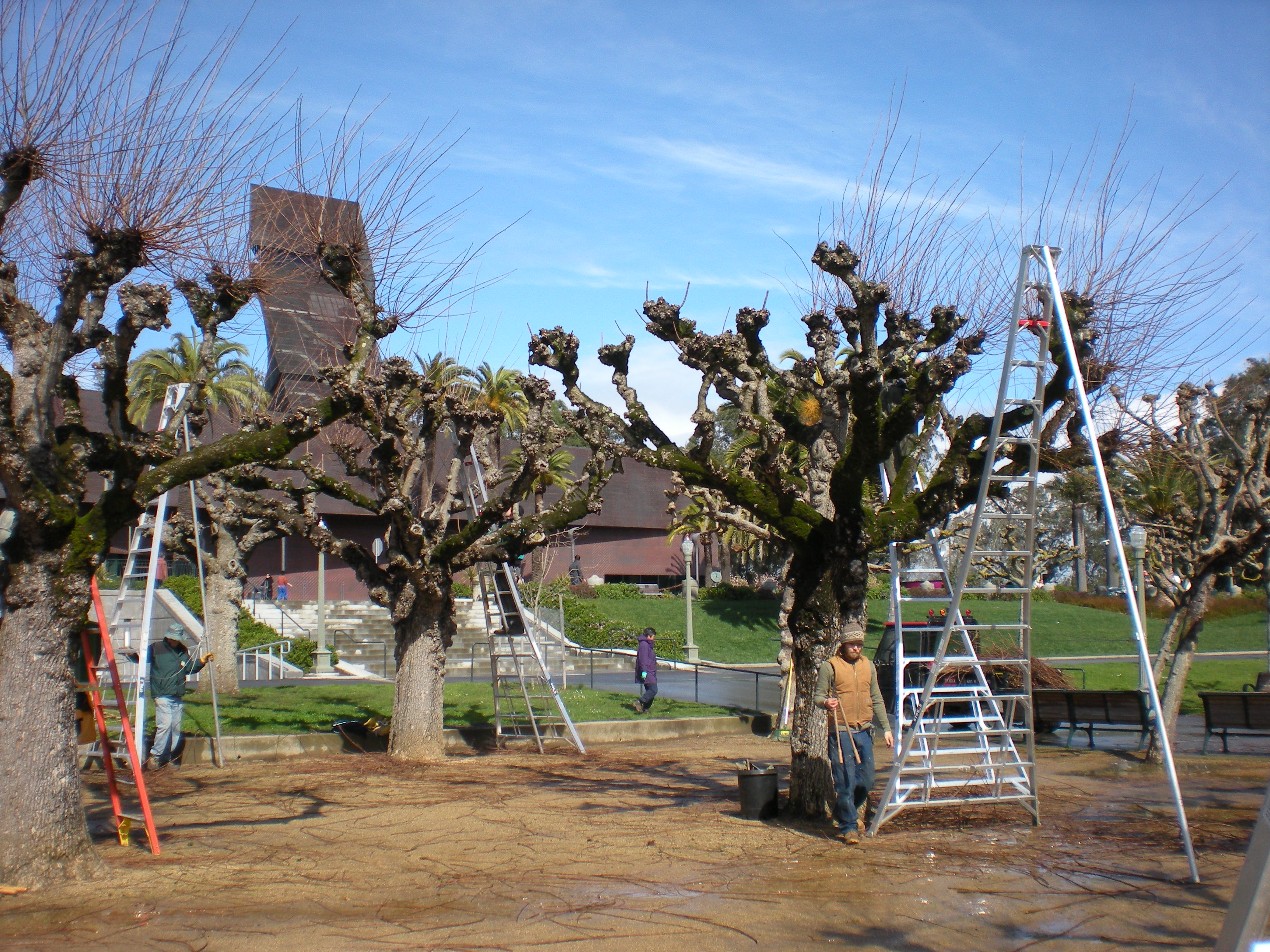
These Sycamores in Golden Gate Park formed hard nub balls of wounded tree tissues.  They grow shoots off the nubs.  The shoots are pruned off yearly in a style called pollarding.  If the shoots are not pruned off, they will grow thicker and thicker every year.  These shoots will eventually resemble trunks, and possibly break off in heavy winds.
Image

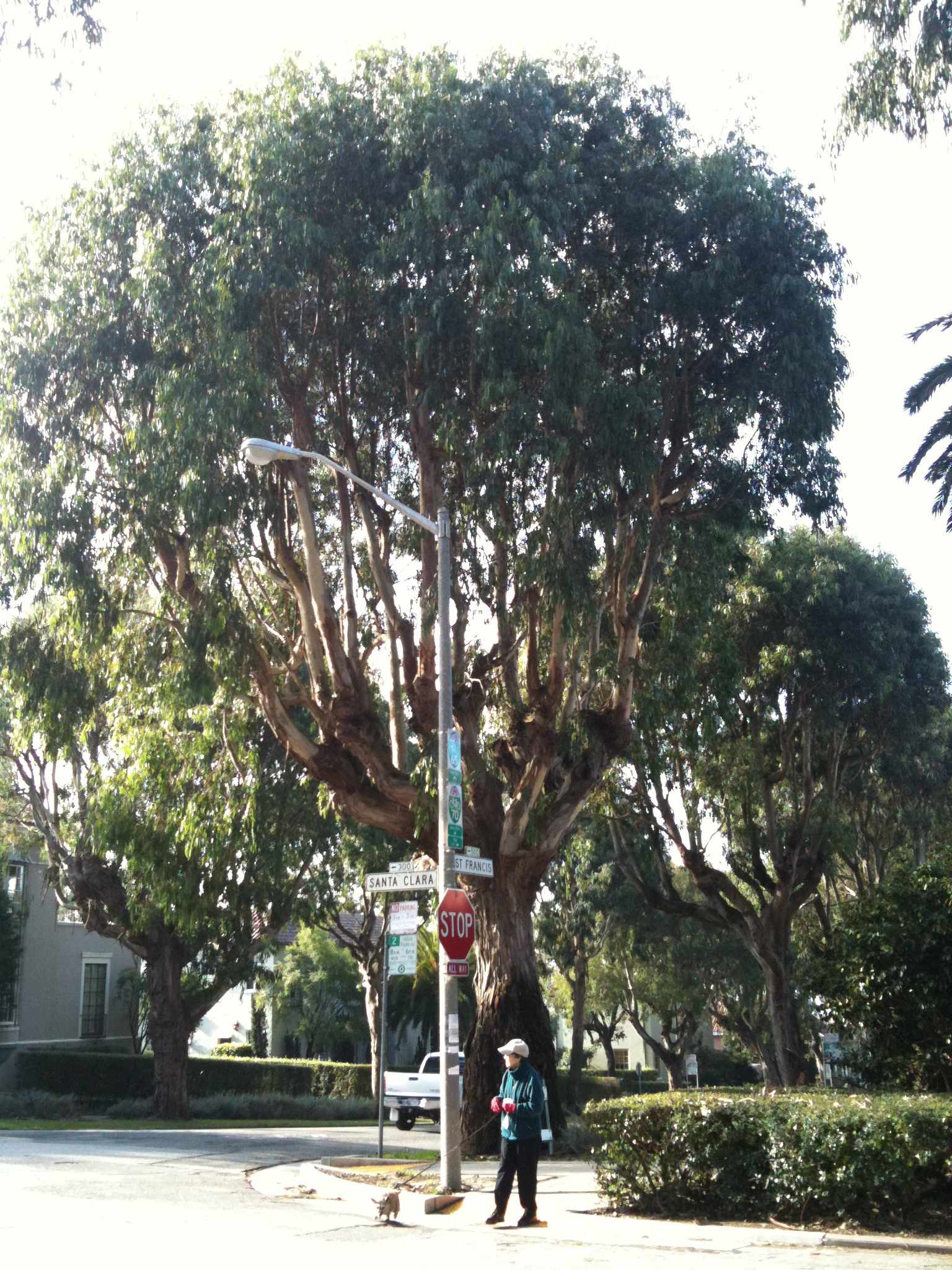
Can you see where this eucalyptus was topped?  Check out the trunks coming off of the old wounds.  Keep your eyes on these Eucs, watch for falling branches in a storm!
Image

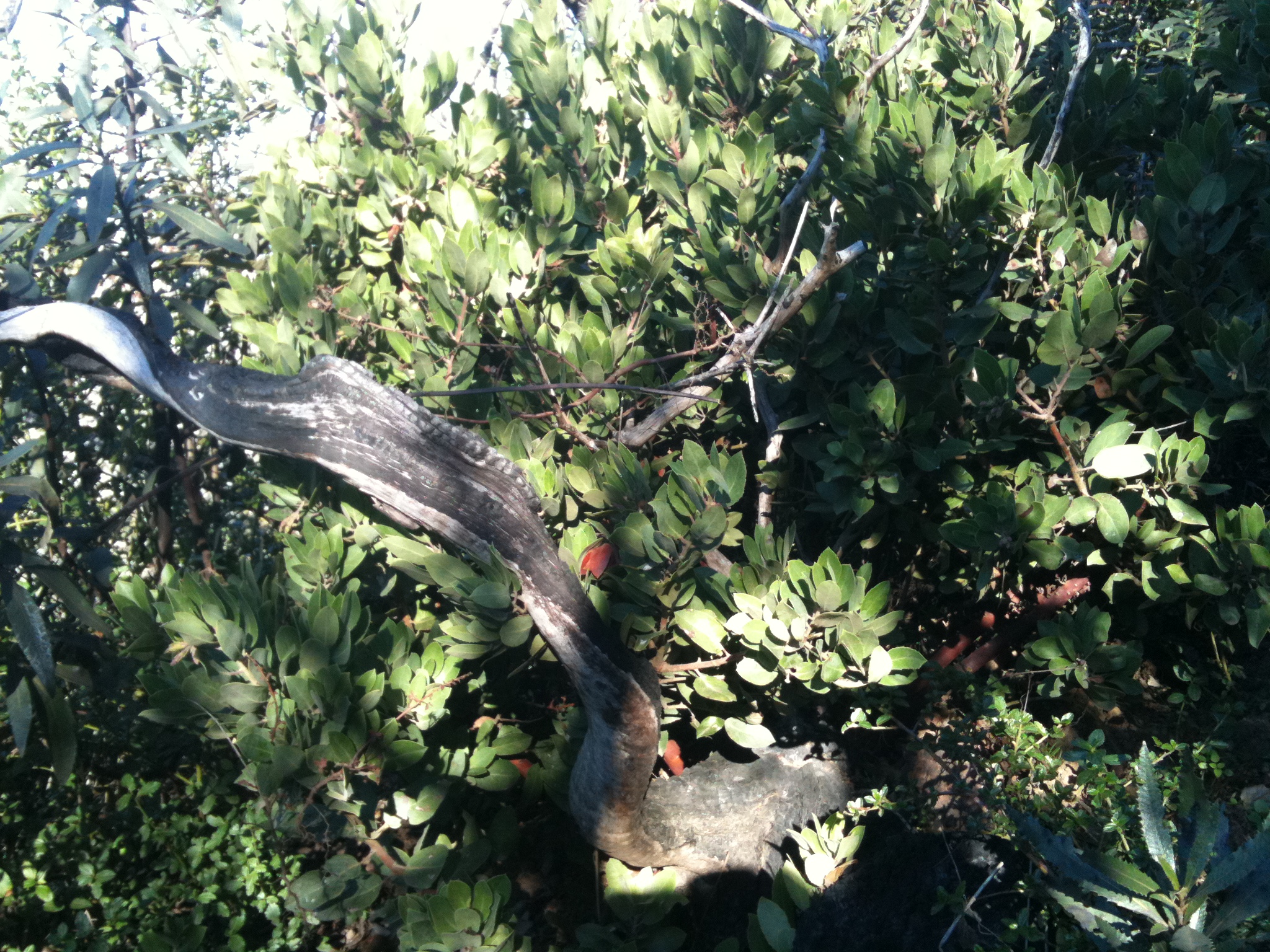
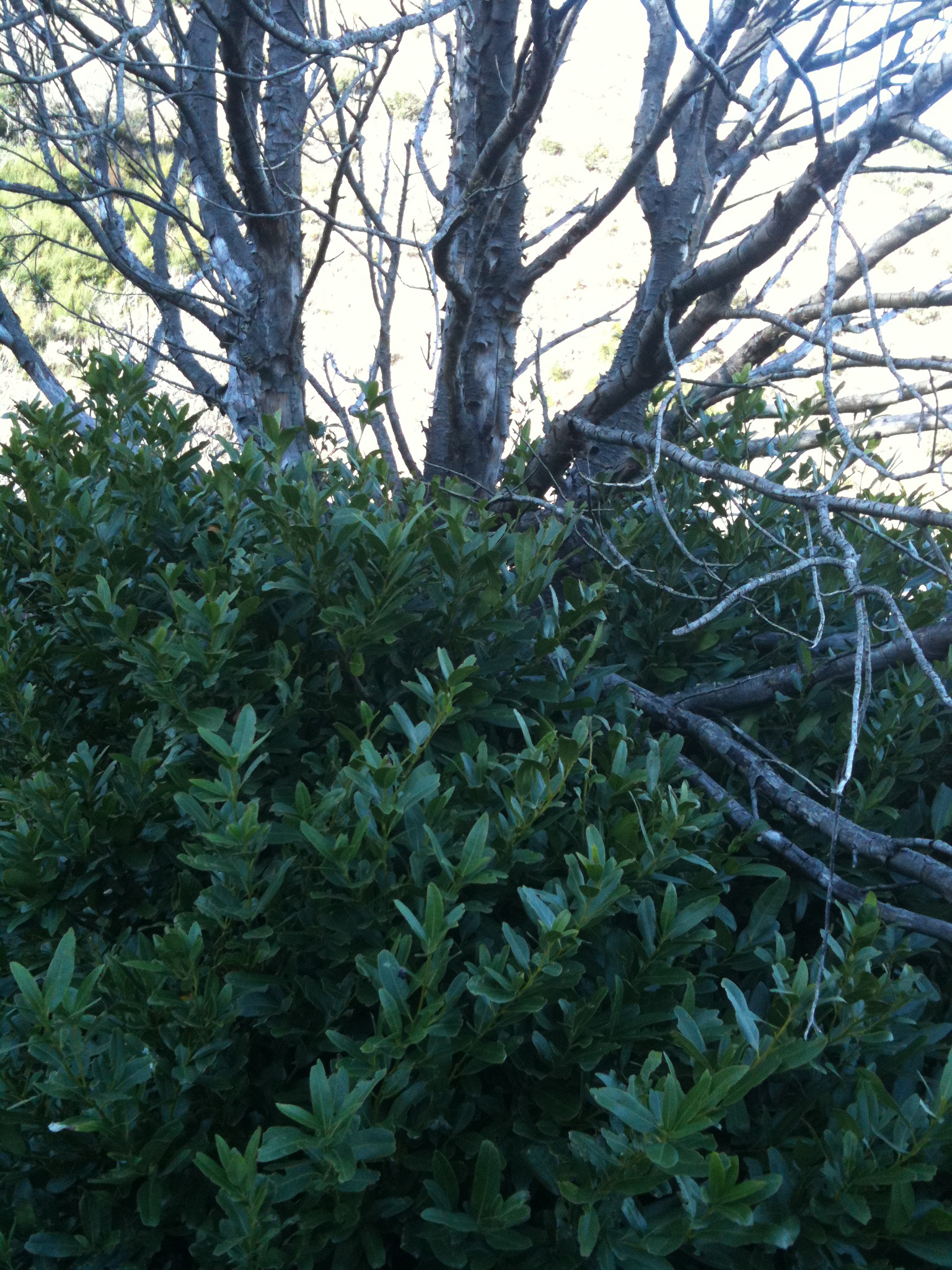
This bottlebrush tree is sprouting back from the base – an adaptation it learned over thousands of years of fires in Australia.

Image

Take a look down your street, how are the trees doing?  Who do you recognize by name?
Image

Hang out in, and with, trees, they are good teachers. Go to the country to enjoy the majesty and power that is a tree.

People are walking trees.  Every tree is a distinct and unique entity.

In the old times, plants important to human cultures were attributed to divine forces.  Stories articulated these simple themes:  plants are heaven’s gift to people; people and plants are one; plants are energy beings with power and knowledge.  In the end of the stories, there was usually something to be learned about wisdom, and the place of human beings in the cosmos.  Here are a couple of plants whose origins reach way back into mythical time:

BAOBAB:

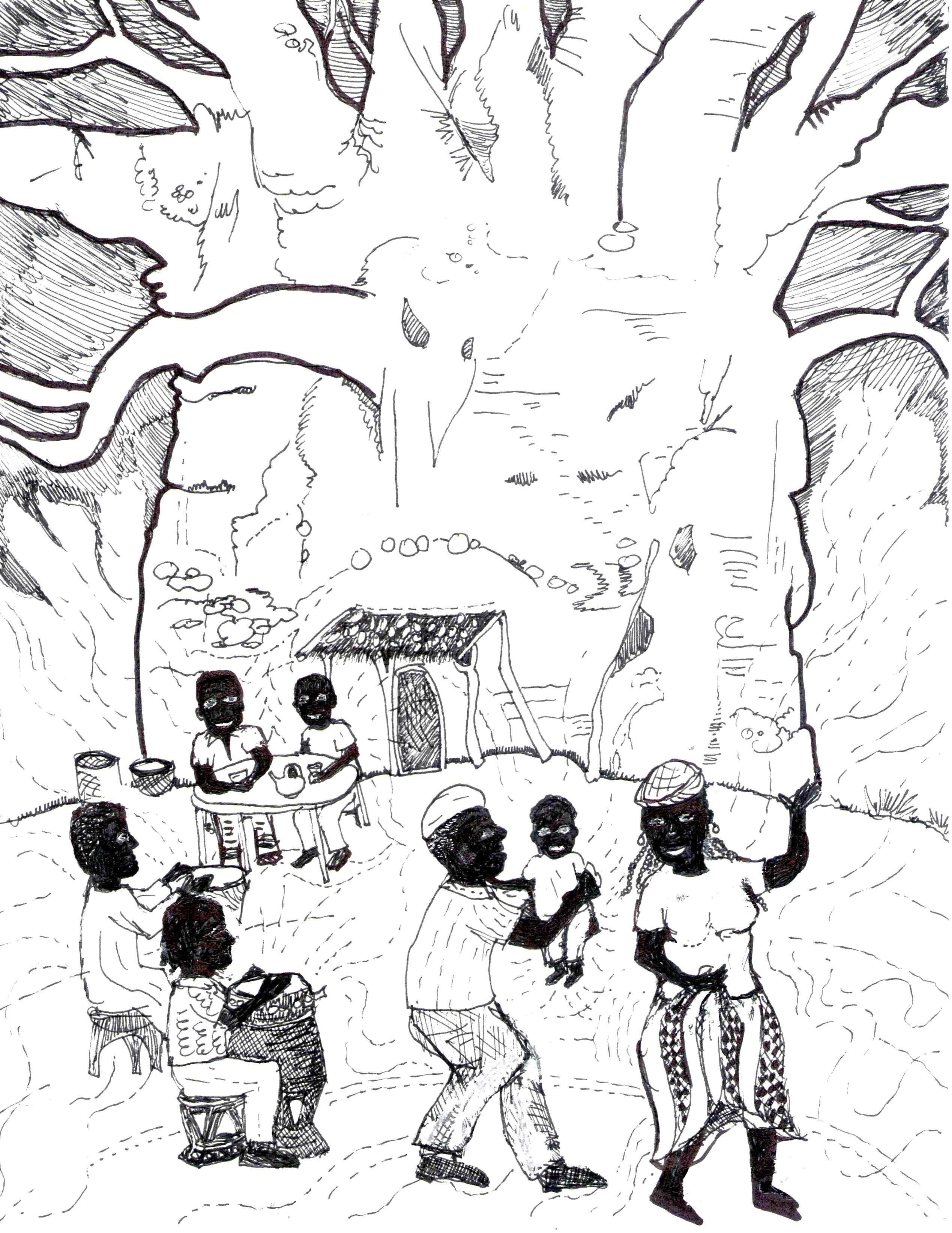
The baobab tree sprouted and grew up by a mirrored lake.  Baobab saw his own reflection, and he did not like what he saw.

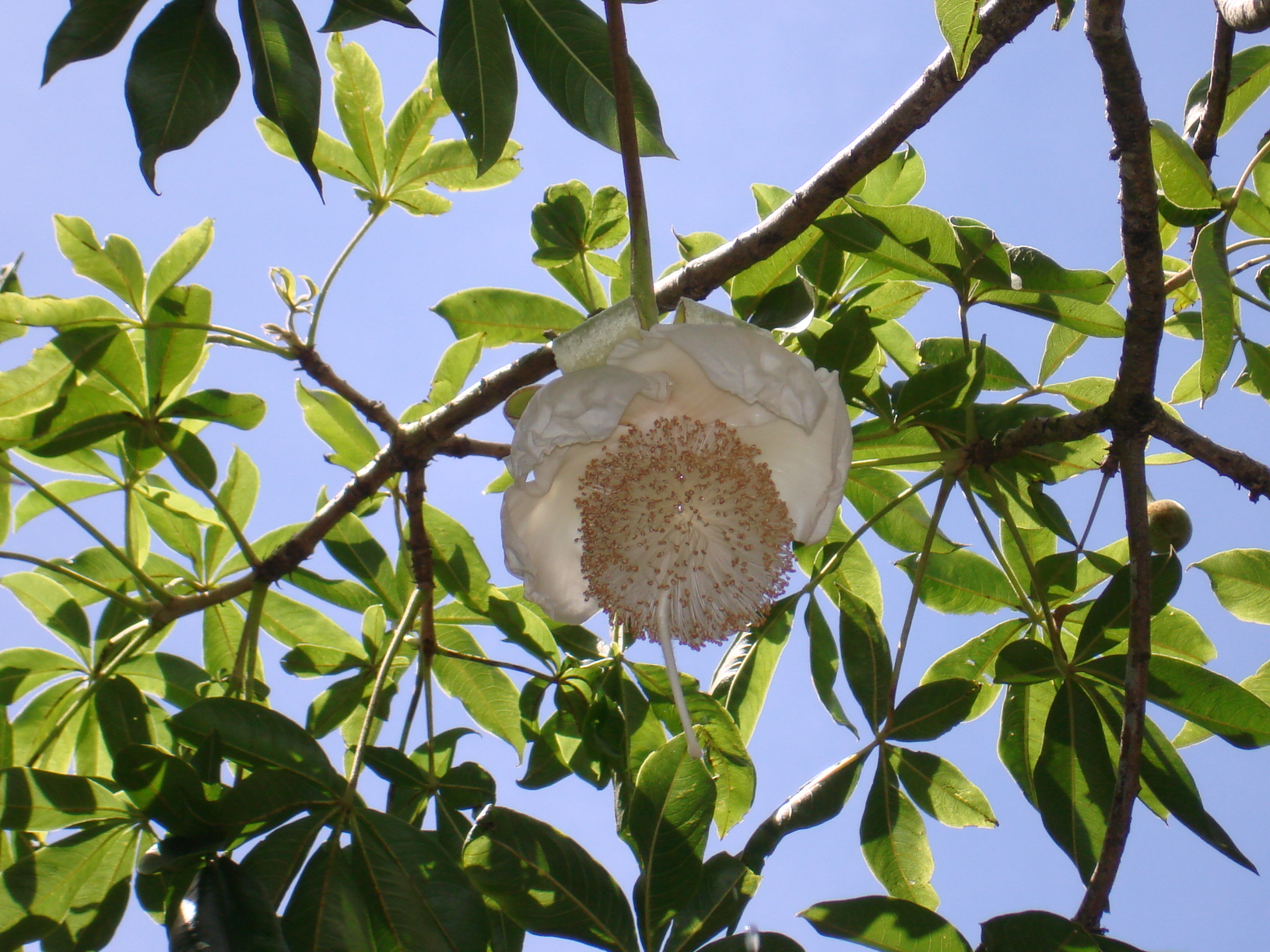
Baobab desired the showy red flowers of the flame tree.  He was jealous of the palm’s slender and regal form.   He wanted the shiny and smooth skin of mahogany, not his own wrinkly elephant hide bark.  Night and day, Baobab complained and complained to the Creator.

Image

Creator was tired of listening to Baobab’s whining.  The creator gave the tree to hyena.  Hyena pulled Baobab from his roots, and planted him upside down.

Image

Thereafter, Baobab quietly served humanity, and gathered the community together for all the important events.

Image

Know silence.  Respect elders.  Create unity.

Image

YAGE:

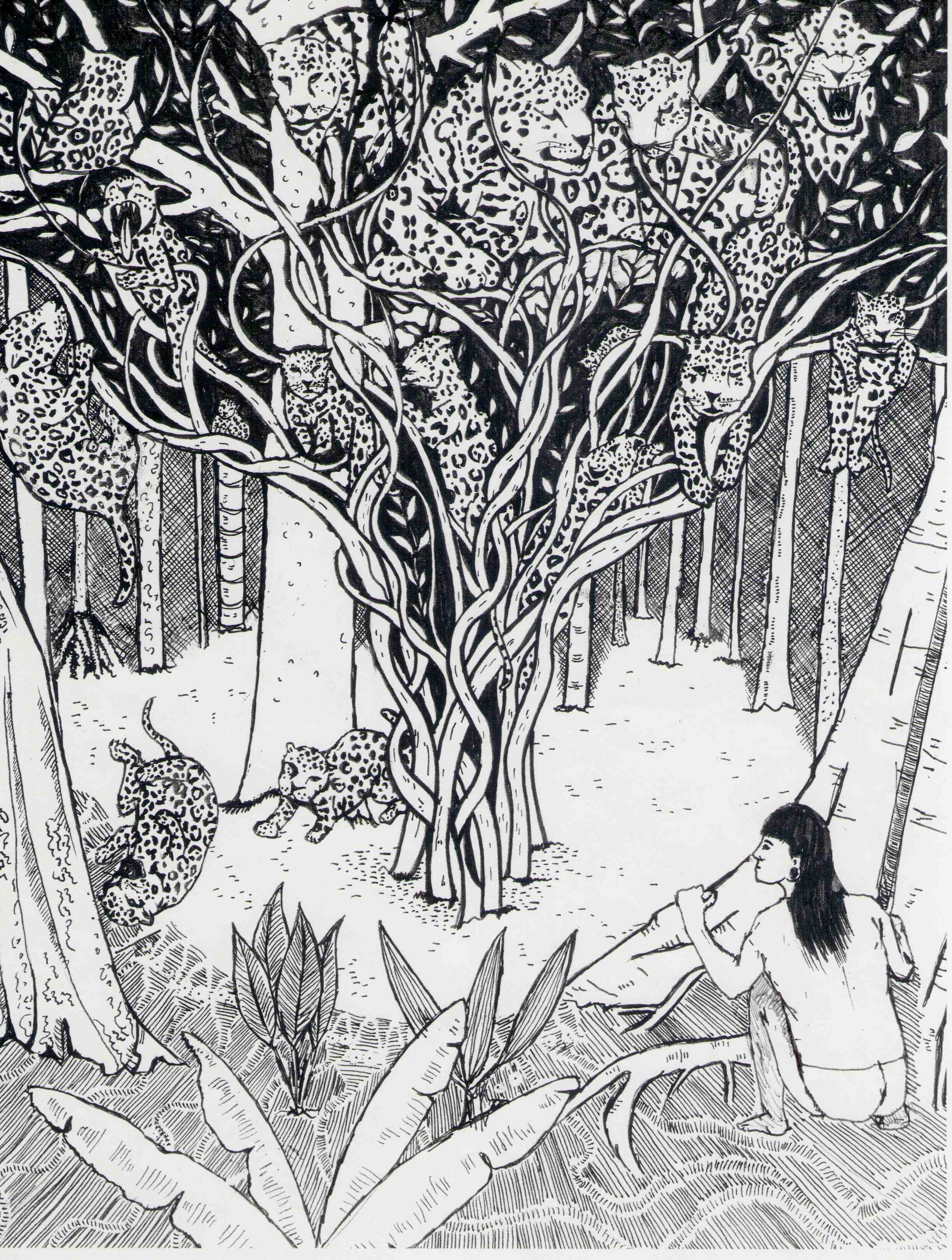
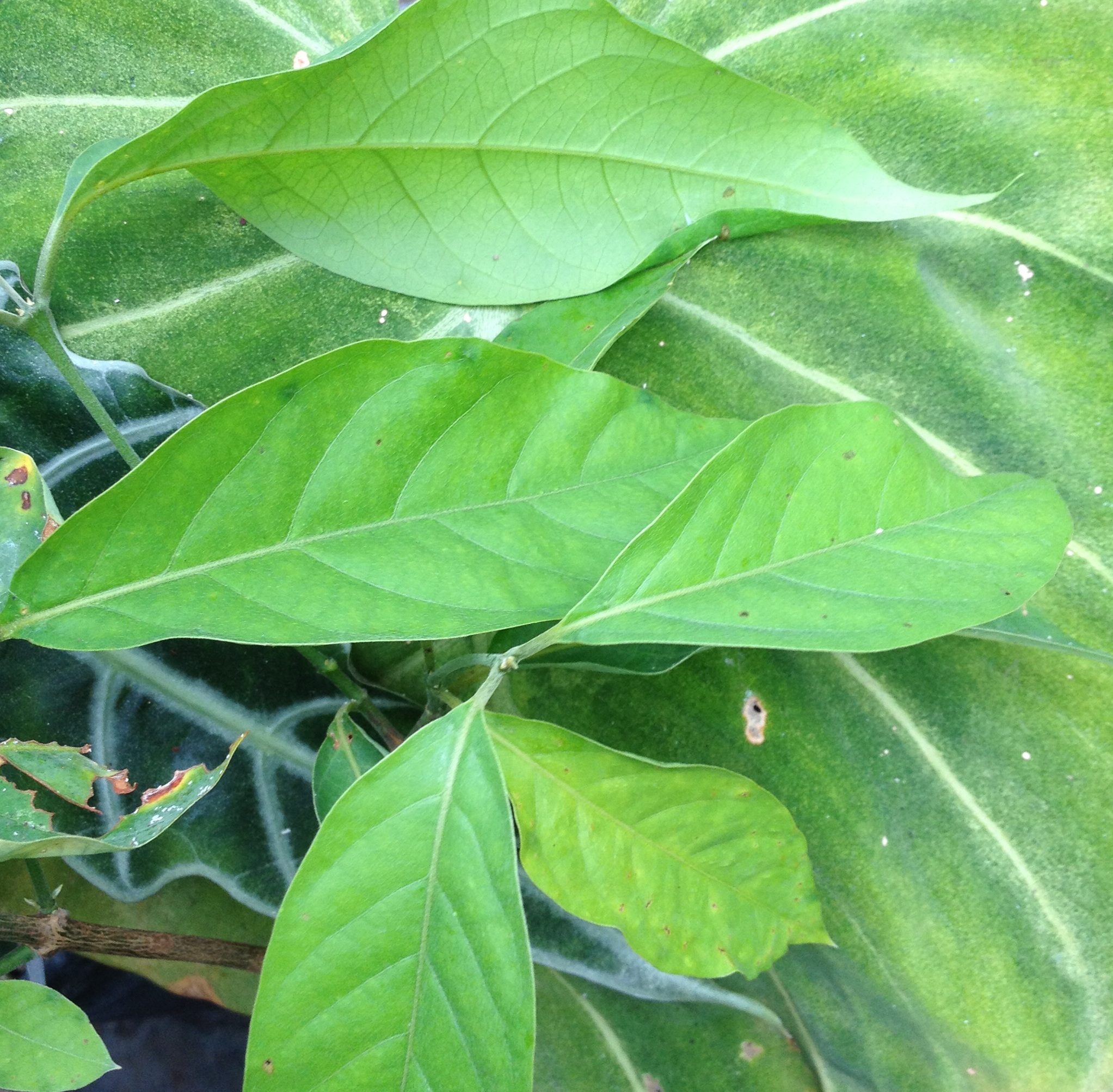
The vine of the soul sprouted from the blood of the rainbow serpent’s tail.

Image

As it grew, it gathered power and attracted the jaguars of the forest.

Image

The spirit of  yage is so strong that it can carry you into the realm of the dead, or up to the sky to converse with the spirits in the milky way.

Use this plant, if at all, with caution and respect.  If you use the vine in anger and greed, your life and that of others will be ruined.

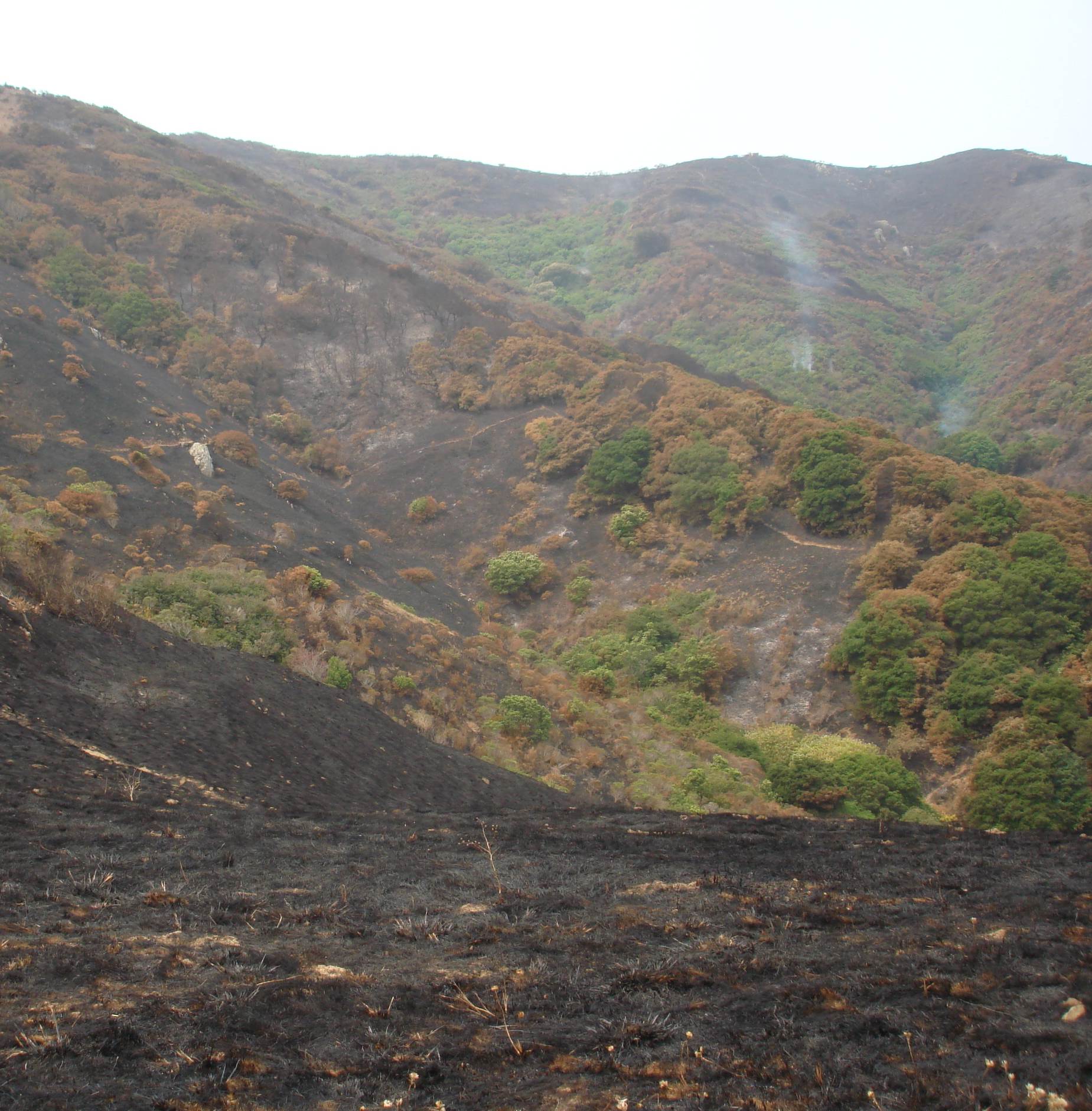
One summer day in the year 2008, Coyote was dreaming in a hole, underneath an oak tree on San Bruno Mountain’s Owl Canyon.  Flames came roarin’ up through the cherries.  The fire jumped from oak to manzanita, hopped onto fescue, and snuggled with lotus.  Coyote said, “My prized cave!”

Image

Coyote slid in by some crystals, next to horsetails and ferns, and waited for the fire to pass.

Image

Canyons of dense green leaves turned into black earth.

Image

It all went up in smoke.

Image

After the fire cooled, Coyote followed old trails and ate a few broiled snakes.

Image

The blackened earth went green soon after the first rains of the fall.

Three years passed.  Blue blossom seeds buried deep in the shade made dense thickets.

Image

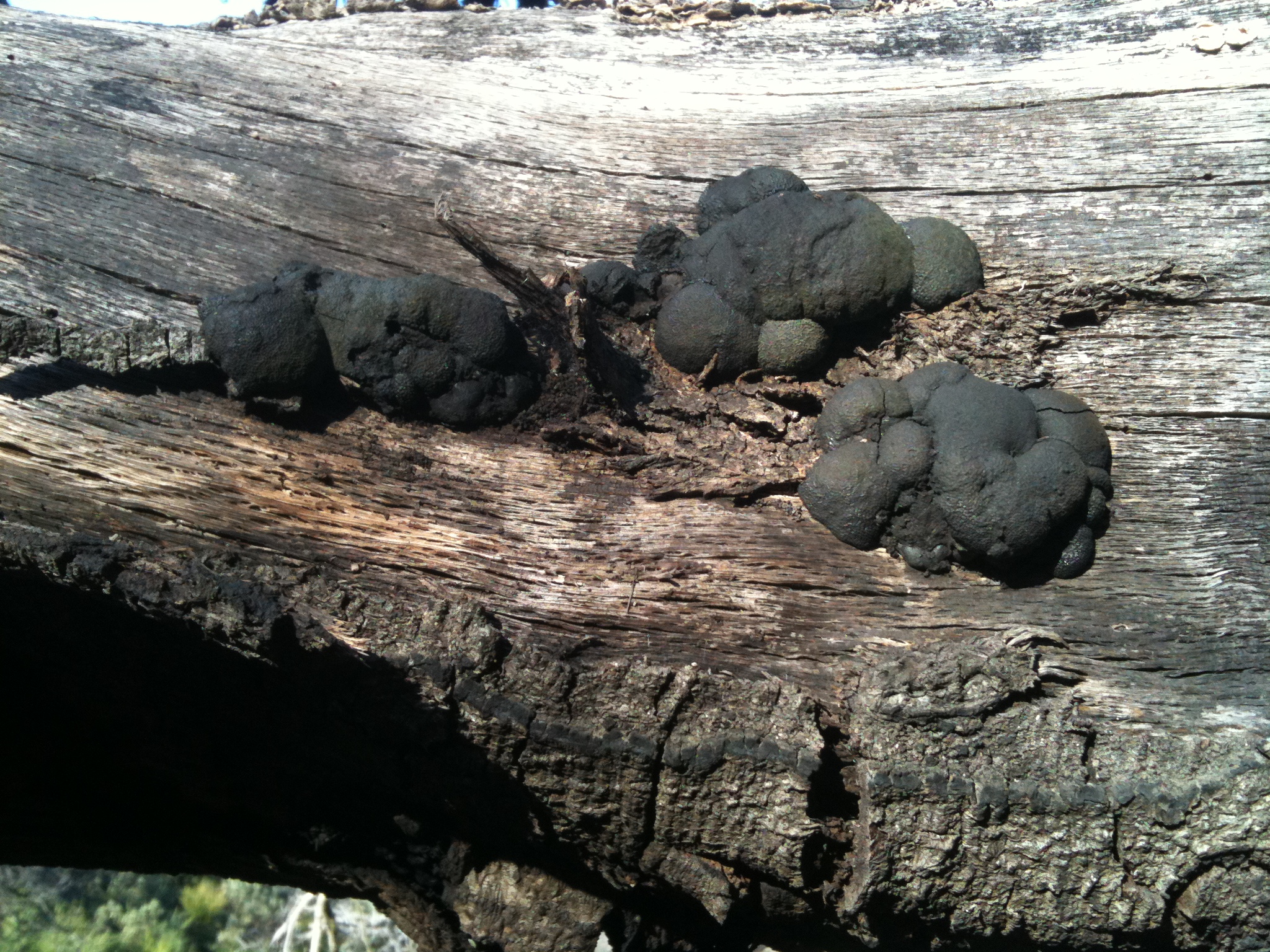
Cramp ball fungus ate dead oak trees.

Image

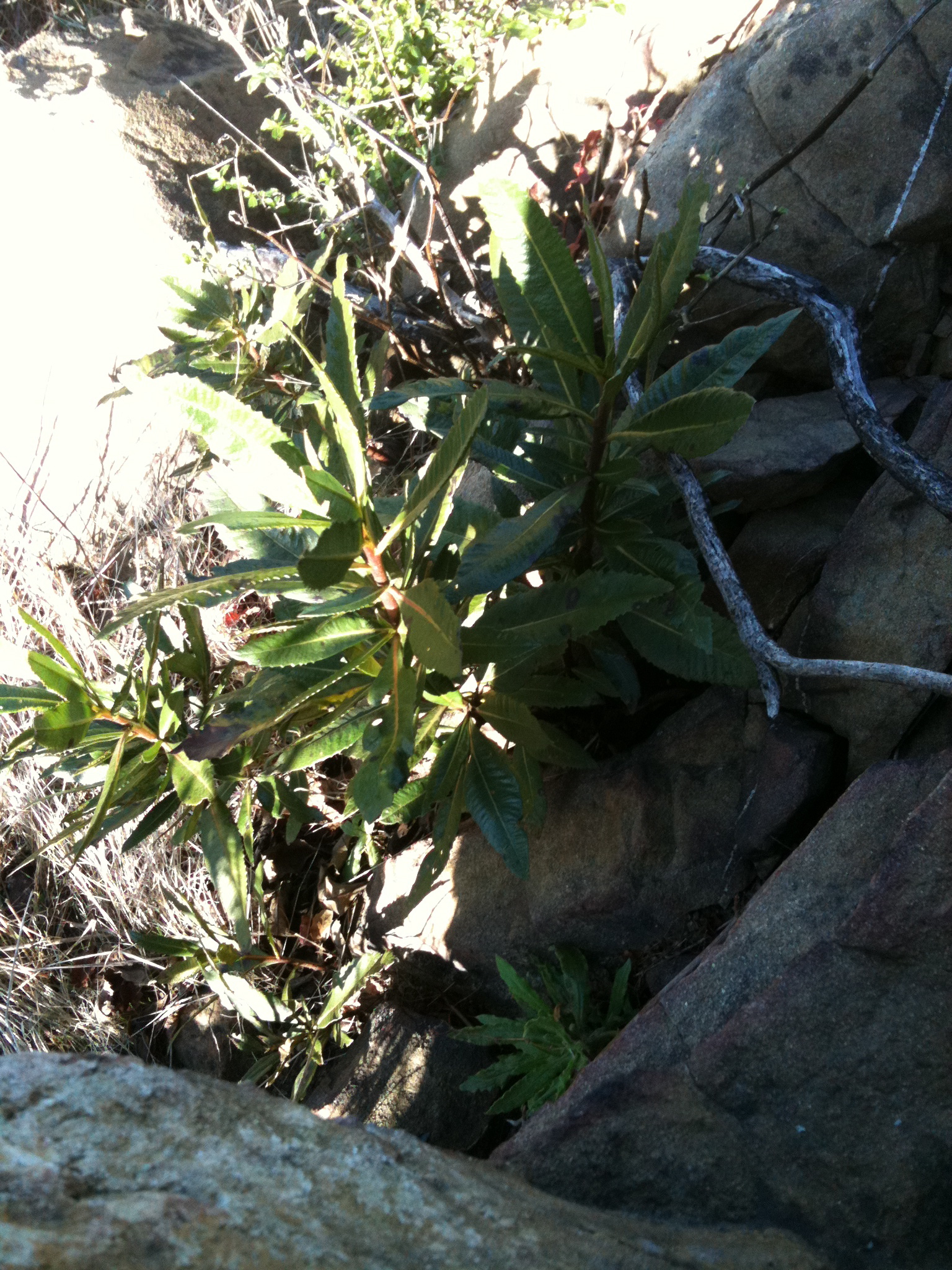
Yerba Santa, who hadn’t been seen around these parts in many years,  bathed happily in the sun.

Image

Fat and ancient black heads of fescues sprouted tender thin leaves.

Image

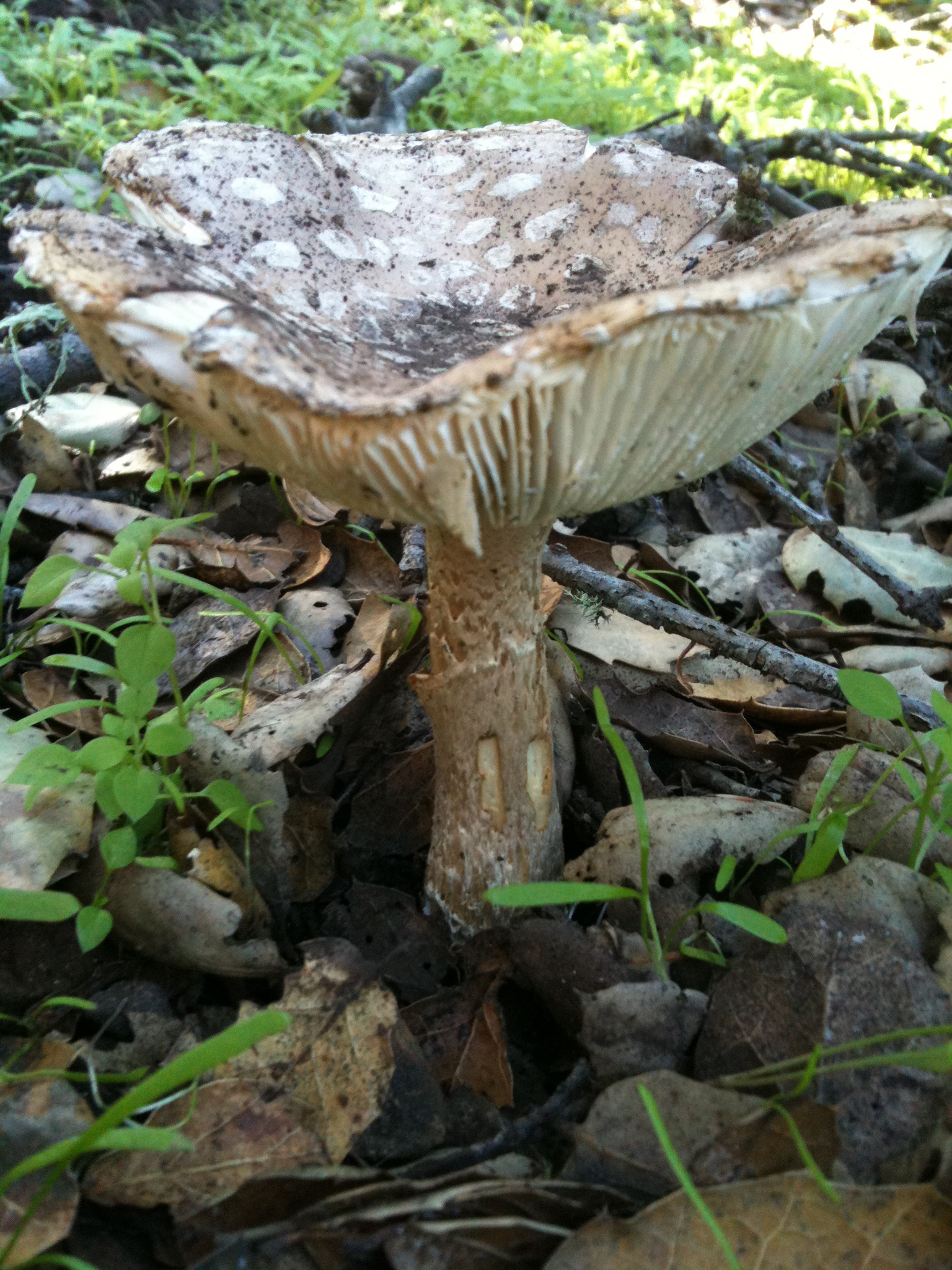
Panther’s amanita bulged under the oak trees.

Image

Coyote smiled at fire’s footprints and remains.  What is Fire?  Fire is mother earth’s gardener.  She rakes clean the leaves.  She prunes the trees and shrubs.  She fertilizes the earth with carbon and phosphorous.  Fire scars dormant seeds and bathes the land with light.  Shady woods open their canopies.  Old trees turn into a fungal feast.  The young burst forth in grasslands rich with diversity.

Image

Tired manzanita branches are burned to the ground.  The new leaves come up from the base.

Image

California bay is not dead, just renewed.

Image

Fire is a chrysalis.  Fire is the light of destruction.  Fire is frightening.  Fire is a being of energy.

Coyote came to an overlook, and saw this strange animal.  Crouched in reverent prayer, or perhaps preying on her gophers?!

Image

What is so funny?!  This is home.

Image

Image

Working in the garden growing vegetables is a grounding experience.  The hands move soil and the smell of mints and sages knock you back into the earth.  Thinking like a plant, you follow the sun, and work within the limits of your unique climate and geography.  Pulling a carrot or cutting some chard after many quiet hours of labor is an exercise in thankfulness.

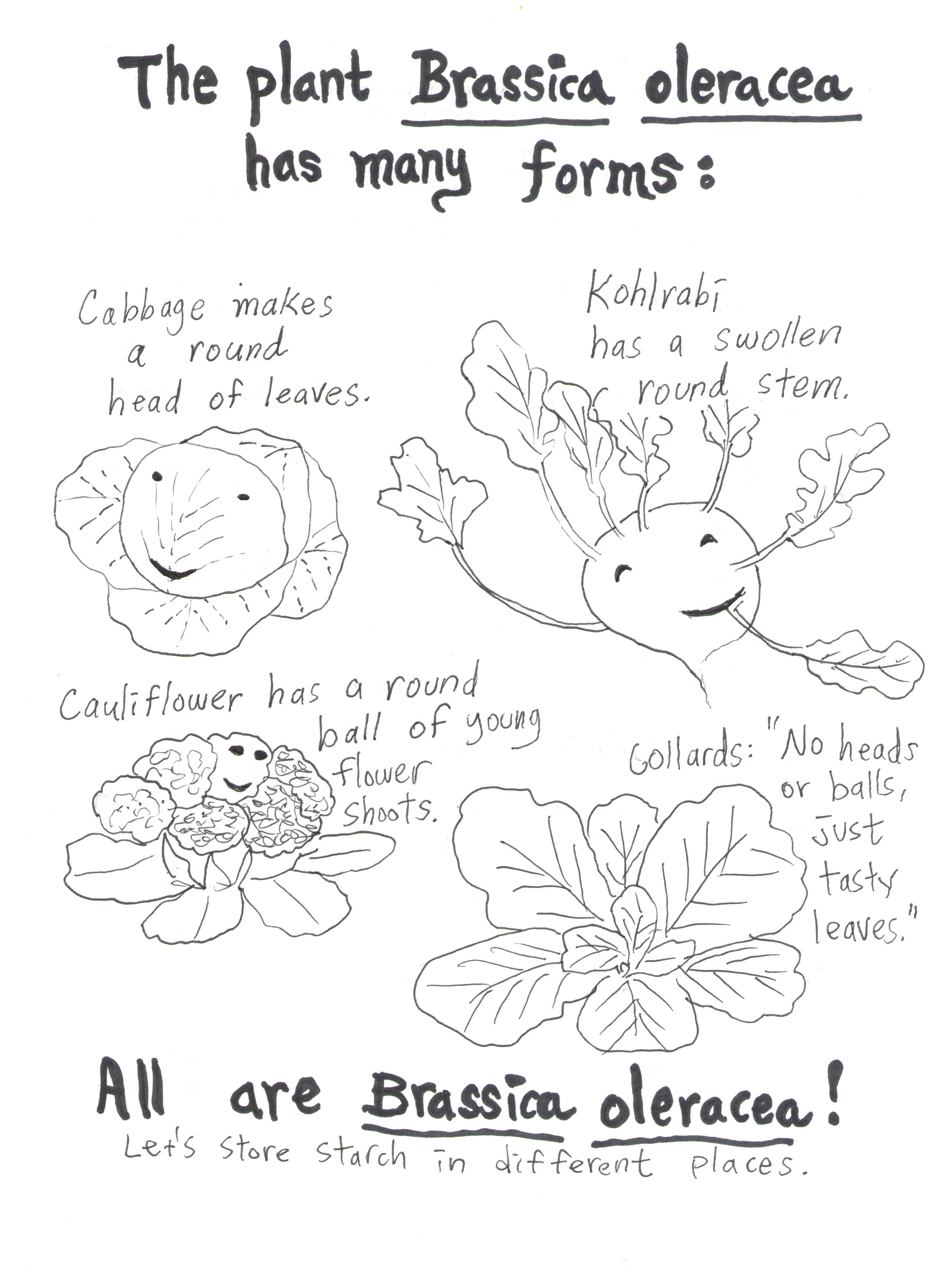
One of my favorite garden crops is a group of cruciferous vegetables known by many different common names.  It encompasses coleslaw and sauerkraut, fresh tossed kale salad and creamy cauliflower soups.

Image

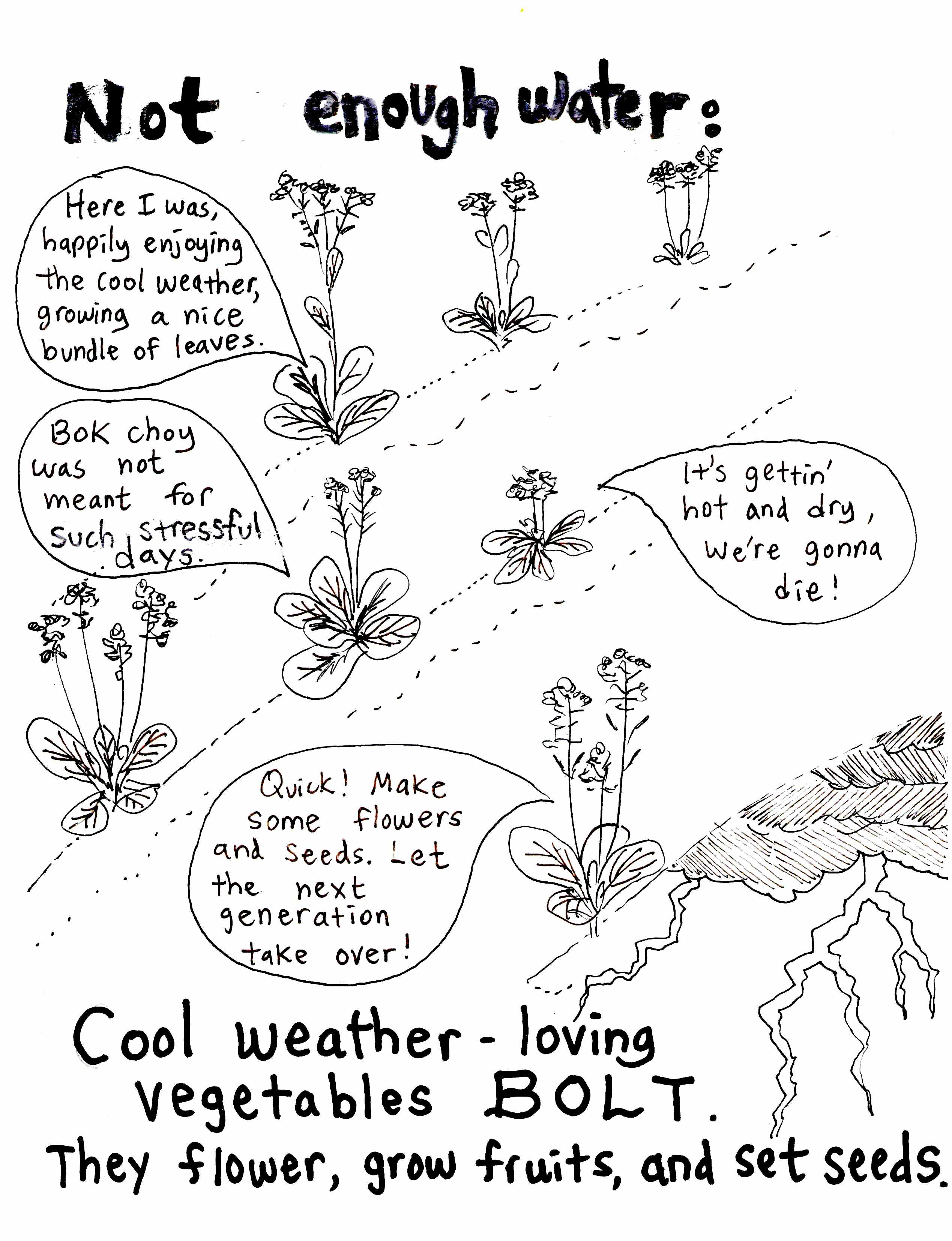
There is always some uncertainty in growing vegetables.  When do you put seeds in the ground?  Is there going to be a heat wave?  What happens if snails attack?!

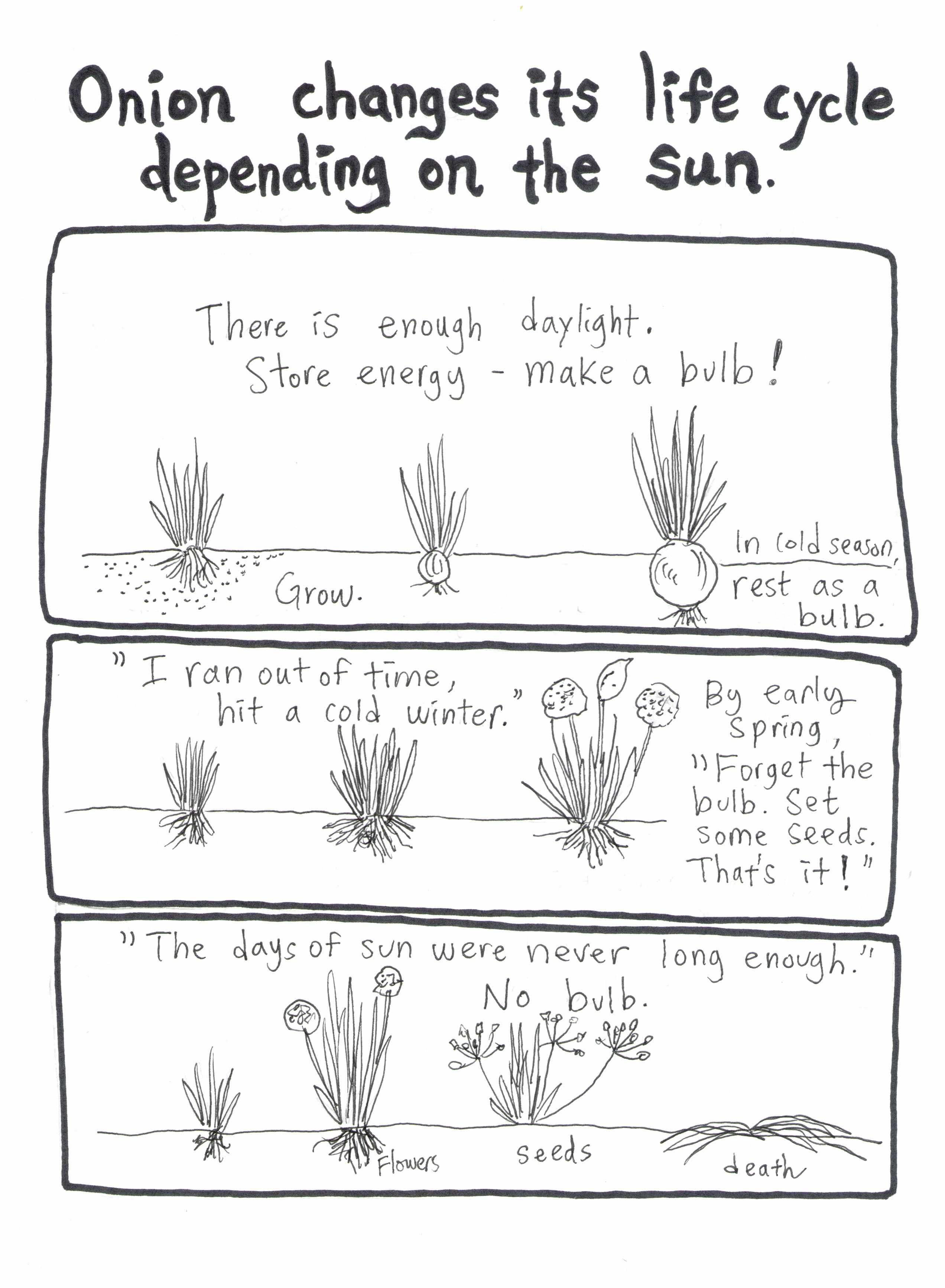
The bulb onion lives for around two years; it is are called a biennial.  We harvest them when the bulb is big and then sliced them up.  Depending upon our skill and luck as a gardener, our plans can succeed, or not.

Image

Plants live a balanced life with varying strategies for survival.  There are mechanisms for coping with conditions that are not suitable for growing leaves:

Too cold?  Go dormant!  Rest until the sun returns!  Go alpine!  Get low low low!

The cherry tree cultivar ‘Akebono’ has massive blooms in San Francisco’s Golden Gate Park in March and April.  It is known as a flowering cherry.  But the cherries we eat do not grow around these parts.  Gotta go somewhere with a warmer summer.  June, July, August – at the road side farmer’s market!

Image

The sun and heat make fruits fill with sugars.  In my dreams I see bright fields of winding green leaves and snaking tendrils, watermelons and honeydews ripening on the ground.

The opposite is also true for other types of fruit trees.  They need the cold, the chill, and the frost to make the jump into spring.  A period of winter rest says, “Okay, it’s safe now, send out flowers, bees are coming for a visit.”  Imagine that you put out buds and shoots before it’s time, and a cold snap comes and kput!  Kills all the young growth.  Oh well, better luck next year!

Image

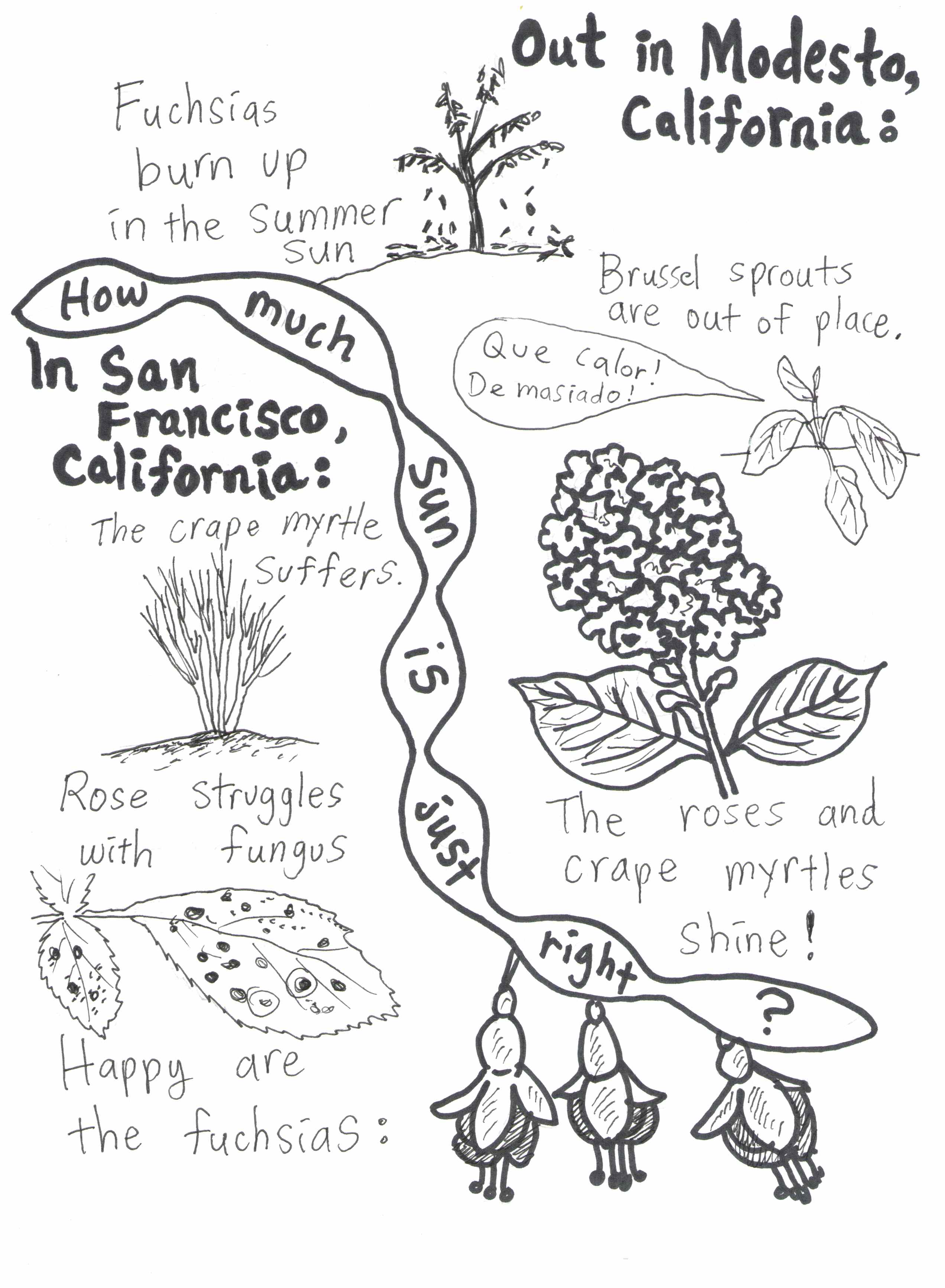
There are zone maps to help gardeners determine when and where to grow what plant.  These maps take many factors into account:  how cold it gets in winter, drying winds that blow out to sea, valley sinks of cold air, creeping low fog, dripping wet heat, and so on.  Apply existing knowledge, but do not be afraid to experiment, that is part of the fun.  Find your window of opportunity to put seeds into the ground and smile with flowers.   Where is the best spot for the maiden hair fern?  In other words, how do I best mimic its natural habitat – the shade and protection of oak trees, a meandering creek, and wet soils?

Image

Say hello to the sun, receive the blessings of pure light.  Catch!

Any chance to play with water I am there!  So washing dishes comes easily to me.  Restaurant, home, or camp site – they are all good places to do some chores.  Luckily there is the magical stuff called soap, otherwise the  greasy film on the pots and pans would drive me nuts!  The plastic forks and tupperware containers, boy they really hold on tight to the oils.

The water molecules gather around the tail of the sodium or potassium part of the soap, and keep the soap molecule suspended in the water.  Meanwhile, the other end of the soap molecule grabs onto oils and dirt.  Soap helps make an emulsion – a mix of two liquids that do not usually blend together.  Then it’s off they go to the sewers, treatment plant, bays and oceans.

Image

Another day I was working in the garden, cutting tree branches.  Saw dust was flying in my eyes, the saw teeth were trying to jump on my arms, and the weight of the branch was starting to pinch.  What is this stuff that is so strong?  When I understood, I drew this picture.  It is all in the structure.  Wood shares some similarities with rebar and concrete, bones and muscles, wood frames and drywall.

Image

There are organisms that like to eat wood and break it down into tasty morsels.  Fungi!  Some are picky eaters, and they only relish the brown lignin cores.  They are called white rotters because they leave a bunch of stringy white fibers after their feasting.  Here is one of them:

Image

Fungi comes in many forms and colors, and can be found everywhere.  Fungi loves moisture.  Nature’s house cleaners take care of the dead, and sometimes parasitize the living.  The dry rot that eats my deck is a brown rotter.  It will slowly eat the cellulose (and hemicellulose) until the deck crumbles into little brown cubes.  Arrgggghhh!  Should have used redwood….

Image

Here is a story about parasites in the Mojave desert.  There are beetle larvae that take up residence in bee nests.  It is a little disturbing, but still suitable for younger audiences.

Image