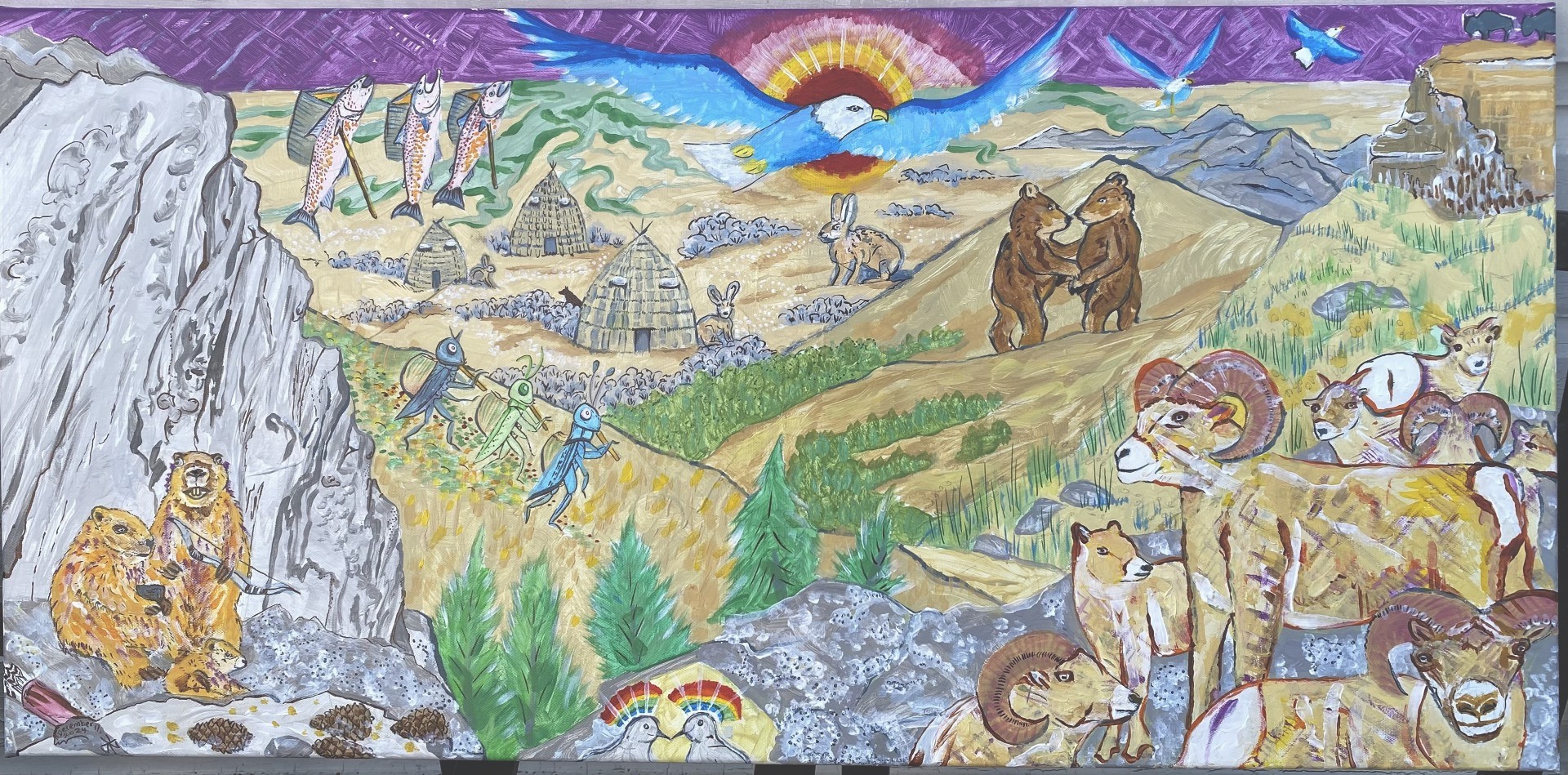
Hopi footprints led north towards the back door of the continent walking the rounds overland in a swastika spiral migration to reach the center
Following the sawtoothed mountain spines I came across basins and bowls salt lakes and sage brush flats dimpled with junipers wind coming off distant ridges and folks playing hide and seek amidst grass covered lodges
The rivers snaked east then wound north and south my hard working salmon brothers were goin up river to visit relatives portaging past waterfalls and resting under ledges I walked alongside, and chatted about the state of gravel
Wanted a better view, up on high and so up past a wash of blazing stars I went it was spring by now, bugs whistling tunes tall green grass obscured all sights wheat, rye, june, fescue, needle and good ol sacaton
Up on the rocky bluff a family of Shoshone was just in from a hunt we shared pine nuts and groundhog heart in a stone bowl in that morning light, all I could do was dream of tracking sheep meanwhile soaring in the sky was eagles on thermals
This here an interpretation of stories from Frank Waters, Oswald White Bear, and other Hopi elders from the 1960’s or so. Hope is alright and not too far off the path.
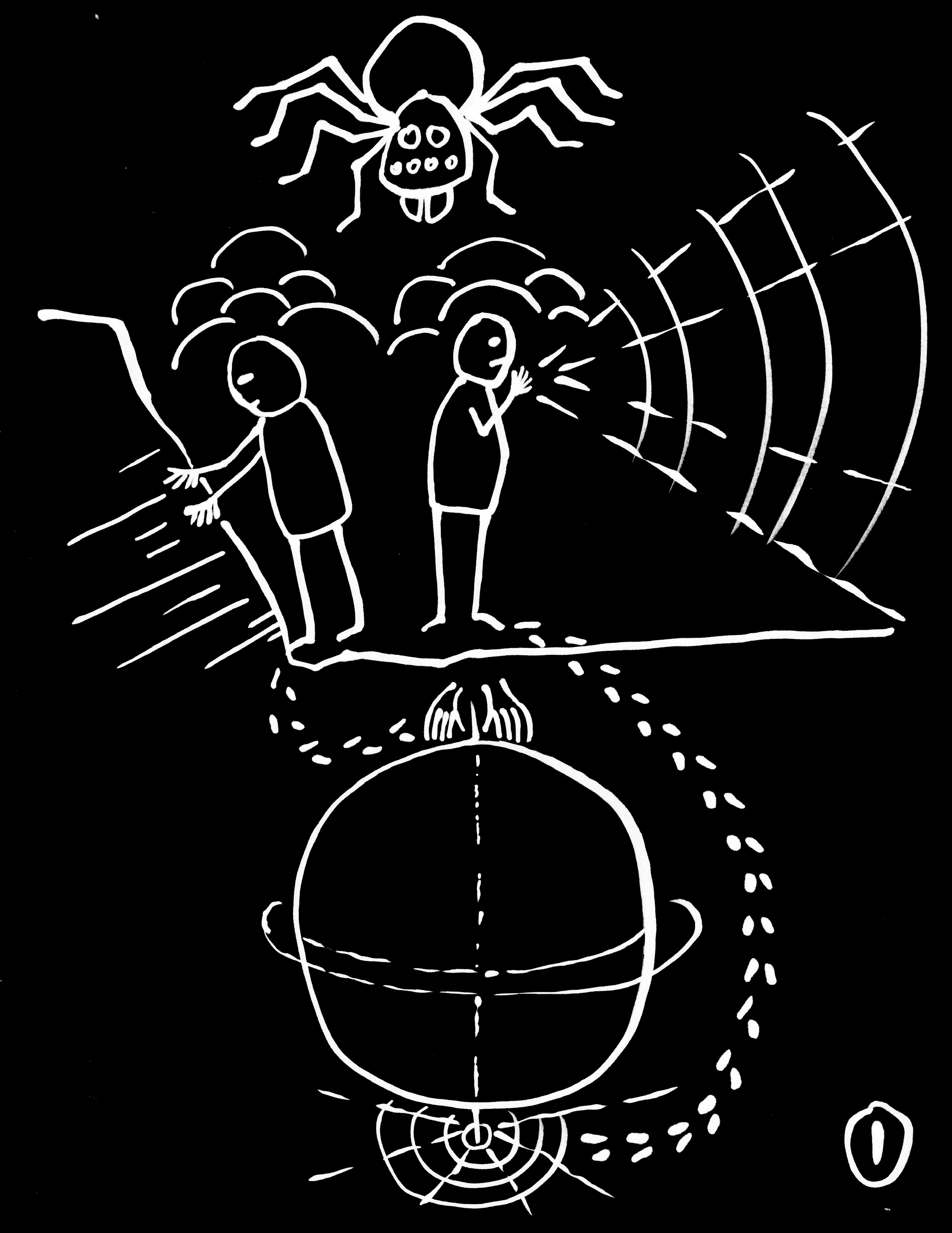
One Spider woman created the twins one solidified the earth through touch the other charged it with primordial vibration and sound they settled at the axes of the earth and kept the world spinning in planetary motion
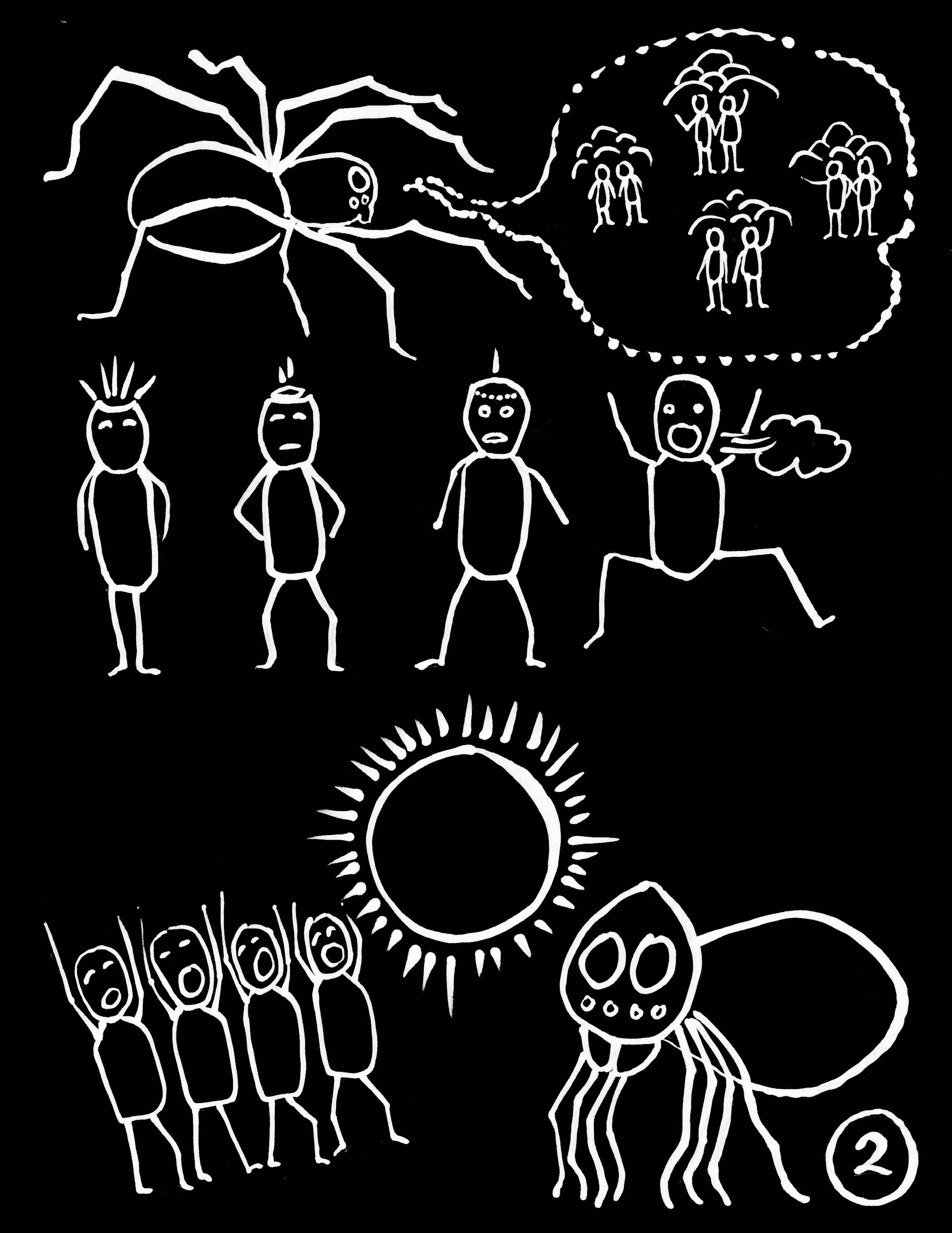
Two Spider woman made humans from earth of four colors yellow red white and black and sang them into being at the dawn of Creation during the time of dark purple light
As the humans awakened there was still a dampness on their foreheads and a soft spot atop their heads slowly, life entered them as breath, in and out it went at the time of the yellow light
In time the sun appeared humans’ forehead dried and the head hardened this was the time of the red light when humans faced the Creator for the first time
Three The earth was mother humans suckled at her breast corn was also their mother her kernels became their flesh and the sun was father
Four The earth and humans are both imbued with vibratory centers along their axis centerline the centers reverberate the ancient rhythms of the universe in motion for humans the first center is at the top of the head it is the open door with which one communicates with the Creator
The second center is the brain thinking, analyzing, pondering wondering how best to conform to the plan of Creation
The third center is the ear nose throat mouth breath and life it is is used to sing and speak praises for Creation
Five The fourth center is the heart it pulses beats and thumps with sincere purpose and all of life’s goodness that is the One Heart there are also those of Two Hearts they have allowed evil to enter and no longer serve Creation
The fifth center is under the navel it is responsible for the basic functions of humans eating digestion and excretion and reproduction it is the throne of Creation itself
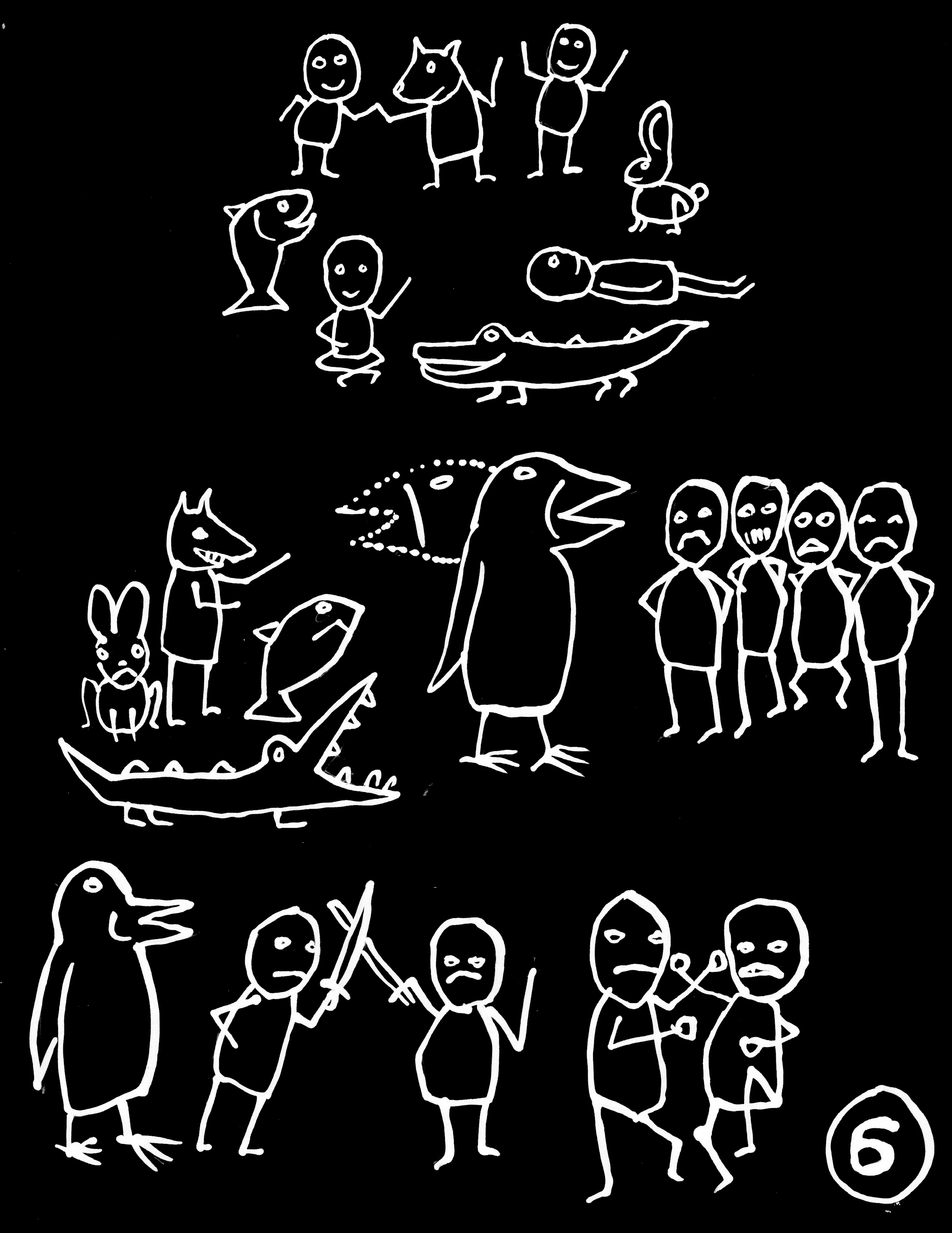
Then along came the yak yak talking bird and the handsome big headed snake things were about to change
Six The talking bird created strife and division amongst all life where once humans and animals were friends they now became separated from one another where people once appreciated each others different colors customs and languages they now became distrustful of each other and became enemies
Seven The big headed snake as handsome as he was introduced humans to suspicion, doubt, gossip and fear soon, there was no rest and no peace anymore
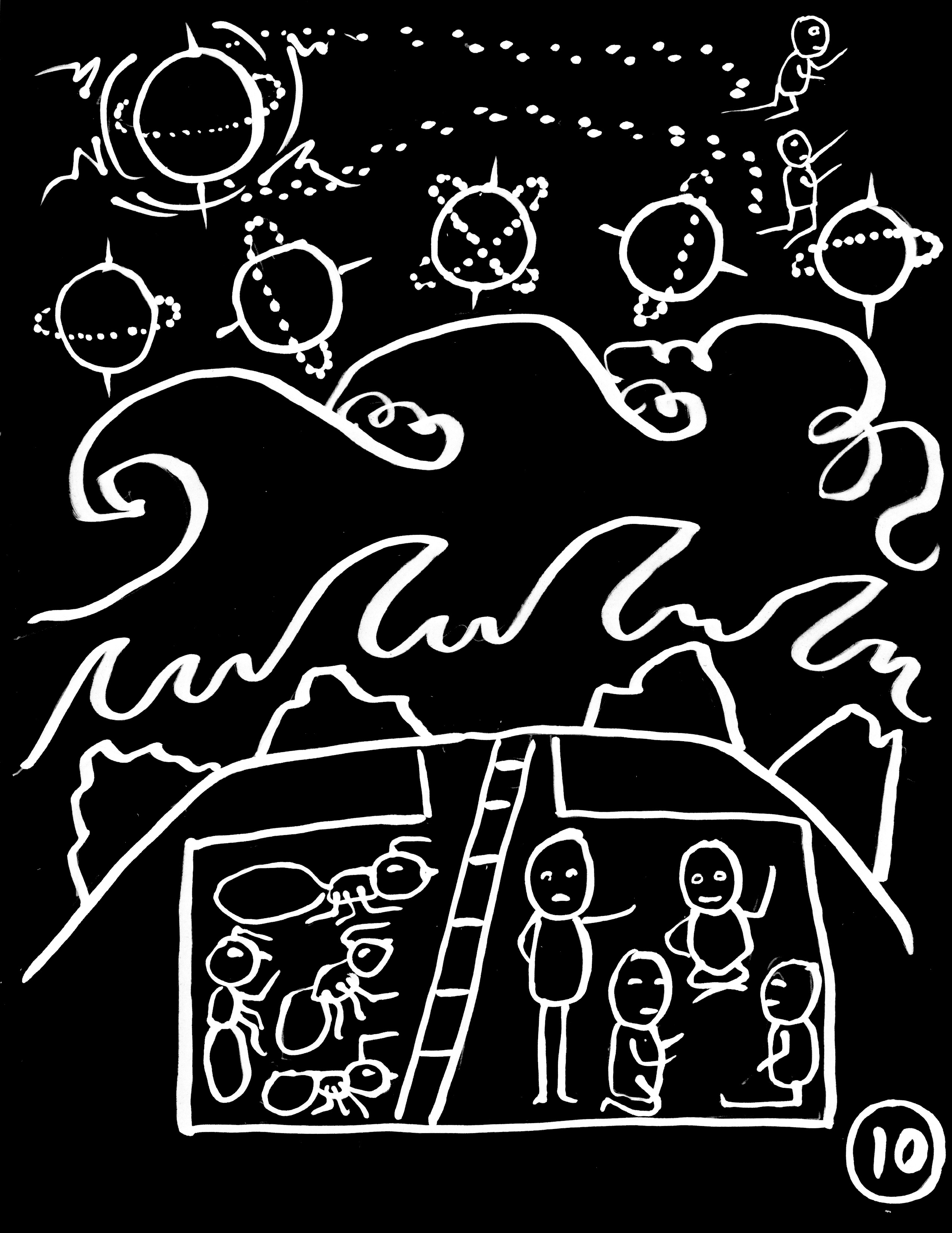
Eight The few good people who still lived according to the plan of the Creator went to live and hide underground in a kiva with the ant people meanwhile, fire rained down volcanoes blew their tops poison gases filled the atmosphere ash dust and lava covered the earth the first world was destroyed
Nine The humans emerged from the kiva into the second world the plant ruler of this world was the spruce tree the bird ruler was the eagle and the animal ruler was the skunk in this world humans prospered – they built houses, had baskets of goods, armloads of weapons and all the food they could eat still, they were not happy and fell into the ways of the Two Hearts they forgot the Creator’s plan and started the same ol arguing, fighting, and killing business
Ten Again Creator shook its head and sighed and this second world was destroyed while the good folks hid underground the twins fled from their pole positions north and south and the axes floundered and spun out of control crazy orbits, heaving magnetic radiation, solar storms of unbelievable magnitude mega tsunamis, fast moving glaciers, freeze numbing cold, asteroids amok everything gone and that was that
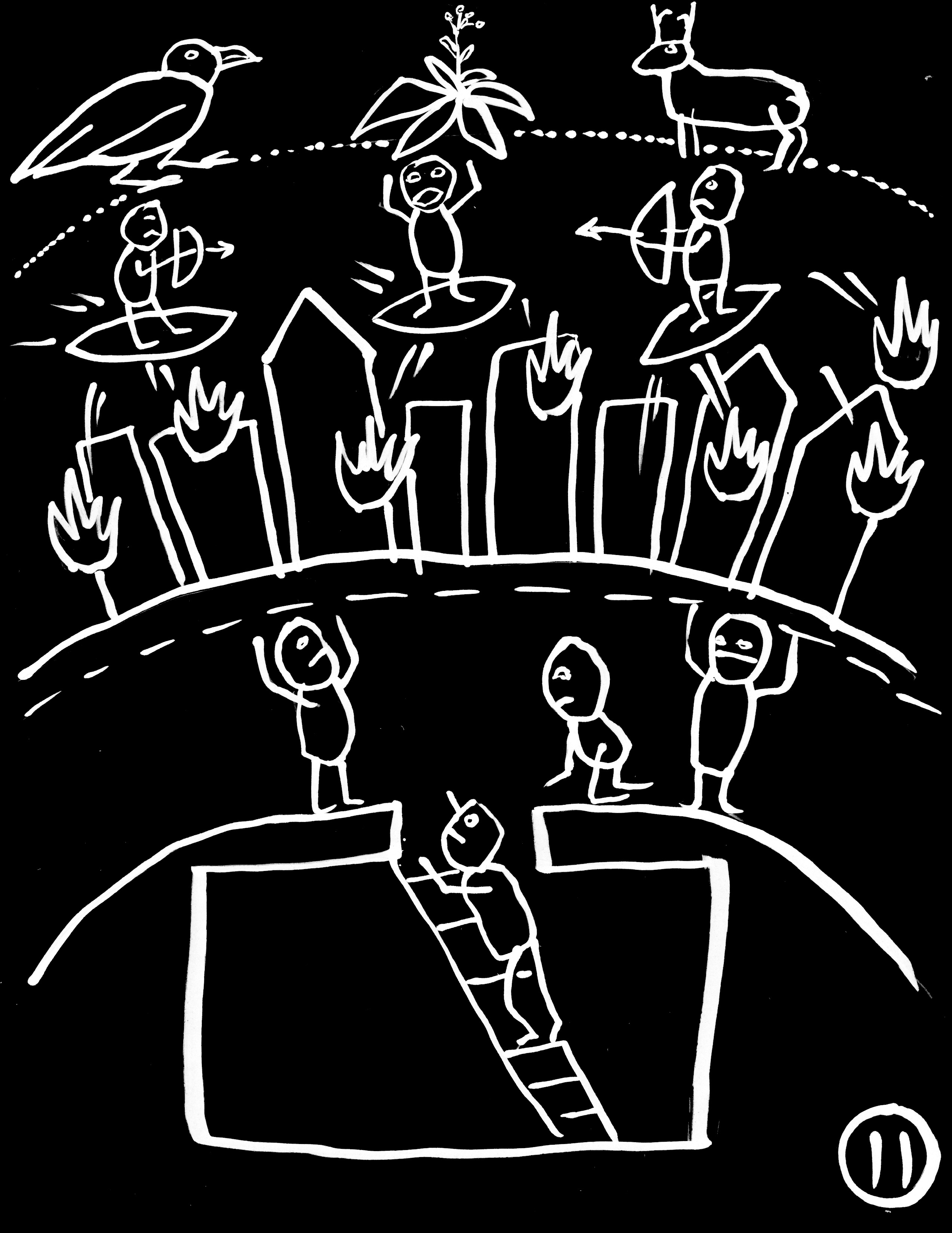
Eleven Humans then emerged into the third world the plant ruler of this realm was tobacco the bird ruler was the black crow and the animal ruler was speed goat pronghorn antelope this was a world of fantastic techo material progress enormous tall buildings, colossal cities, extraordinary roadways and transport people flying in the sky atop ellipsoid shields shooting fire arrows, waging warfare and raining fiery death down on one another
Twelve Well you can already guess what happens next this time the world corrupted so quickly that the Creator was in a hurry to act no time to send humans to go underground with the ant people Spider woman put the good people in reed tubes a floating sealed in with a bit of corn meal and the rains started coming down and kept coming and coming and coming until it was all water and no more land for a long long time everything drowned
Thirteen The humans travelled for who know how long in their reed tubes bobbing up and down until the waters slowly began to recede and bits of land popped up here and there they were heading east atop the waves they kept the top of their heads open to receive and give thanks for instructions from the Creator soon enough they landed on solid land and started walking in spirals in a migration to find their homeland and that is the present day in the fourth world we are now living in…
Once in a while I cross paths with the extensive complex of ayahuasca purveyor, facilitator, medicine people that are thickly concentrated from los angeles down to peru and at this point worldwide
and watch an occasional video online of a magnificent gleaming jungle lodge resplendent with attendant western trained doctors, healthy vegetarian food, pool and spa, view from a hilltop, amazing musicians, gorgeous tended garden, and well planned itinerary
the day after the ceremonies – be listening to testimonies from folks full of amazement and calm, somewhat relieved of whatever had burdened them for many years, eye opened a bit to another realm
kinda funny, never thought you’d take a fancy vacation to go throw up and diarrhea with a bunch of strangers and pay good money to do so. uggghhhh! that is usually what you dont want to happen on a trip. perhaps something missing in regular day to day society and lifestyle that an ancient bitter amazonian entheogenic brew allows to emerge.
well I ve only drank of the vine pot full of designs a handful of times. in spots that feel more dirt sand and gravel rather than waxed hardwood floor. sorta more boiled wild game without spices instead of organic chef prepared meals. a bit more ‘anything can happen’ rather than ‘you are perfectly safe’. I mean, after all, you are entering the abode of spirits and battling with good and evil, within and without. its constant. thats life and hence the importance of ceremony and reflection
Anyhow I will just turn it over to a couple of friends who know that world much better than I, and have more experience in opening gateways to the celestial as well as wading in the putrid rotten realms fishing people out of their misery.
One feller I just met, his name is Neil Logan and he outa Hawaii, long time ethnobotanist who was friend to Richard Felger my hero of the Seri and Yaqui deserts. This is an article he wrote about varieties and characteristics of the vine of the soul based on indigenous knowledge and modern scientific know how research. Yage by the way is not the same as ayahuasca, they got different geographic lineages, method of preparation, ceremonial protocol, and so on . Even though in common usage people be like ??? you mean like doctor pepper vs coke? is there pepsi option??
This second author is an old time buddy named Sparrow who has been a pioneer on the path for a long time and is still at it. This here an article he wrote about some onca mundial tigre feline prowling about, hungry.
If you want to go on a walkabout, hang out with some natives on their own land steeped in history and tradition, and drink a strong gourd full of yage ( or two or three or ten) where the jungle is fully vibrating alive… Happening near the end of this month, well here we go!
This is an introduction to a group of plants that live in places with occasional inclement conditions, and hence have some sort of underground storage organ to hold over during the hard times. This slideshow is mostly about the plants with BULBS. We start off in the kitchen and describe the basic bulb structure and life cycle, then showcase the common species around here that are sold in nurseries or seen in gardens. We take a journey into California inland chaparral, Cascade forests, and Franciscan grasslands for the bulbs much appreciated by the natives. Afterwards, its off to South Africa for the incredible beauty and diversity, and Central & South America too. End our tour in the Mediterranean with that winter wet, summer dry climate. Somewhere in here is a plug for the Pacific Bulb Society too. Corms, rhizomes and tubers another time.
Patios and pathways, driveways, outdoor ‘living rooms’ , retaining walls, stairs steps and landings –
its all HARD scape
the flat part underneath your shoes,
the vertical thing holding back the hillside,
the big stylish boulder
all HARD, not SOFT (like most plants…)
for this essay, we will focus on gravels n rocks and pebbles,
save wood and chips for another day
Lets go
First you gotta be able to identify concrete, stone, and brick
and tell em apart
well concrete is a more or less uniform industrial product
made of cement, gravel & sand ( together called aggregate), air and water
looks like this, kinda crumbly gritty evenly holey
sometimes though they do a real nice job finishing the concrete
troweling and floating the cement to the surface, buffing it sanding it down what have ya
work it good and long with a vibrator to get all the air out
and it ends up like this, super smooth and polished stone like, almost
its still concrete, just a bit pricier cause it got special treatment
you like wowwwwww
yeah me too
it gets trickier
in the old times concrete was just gray, boring gray
easy to identify
I mean, theres literally sidewalks and buildings and bridges full of the stuff
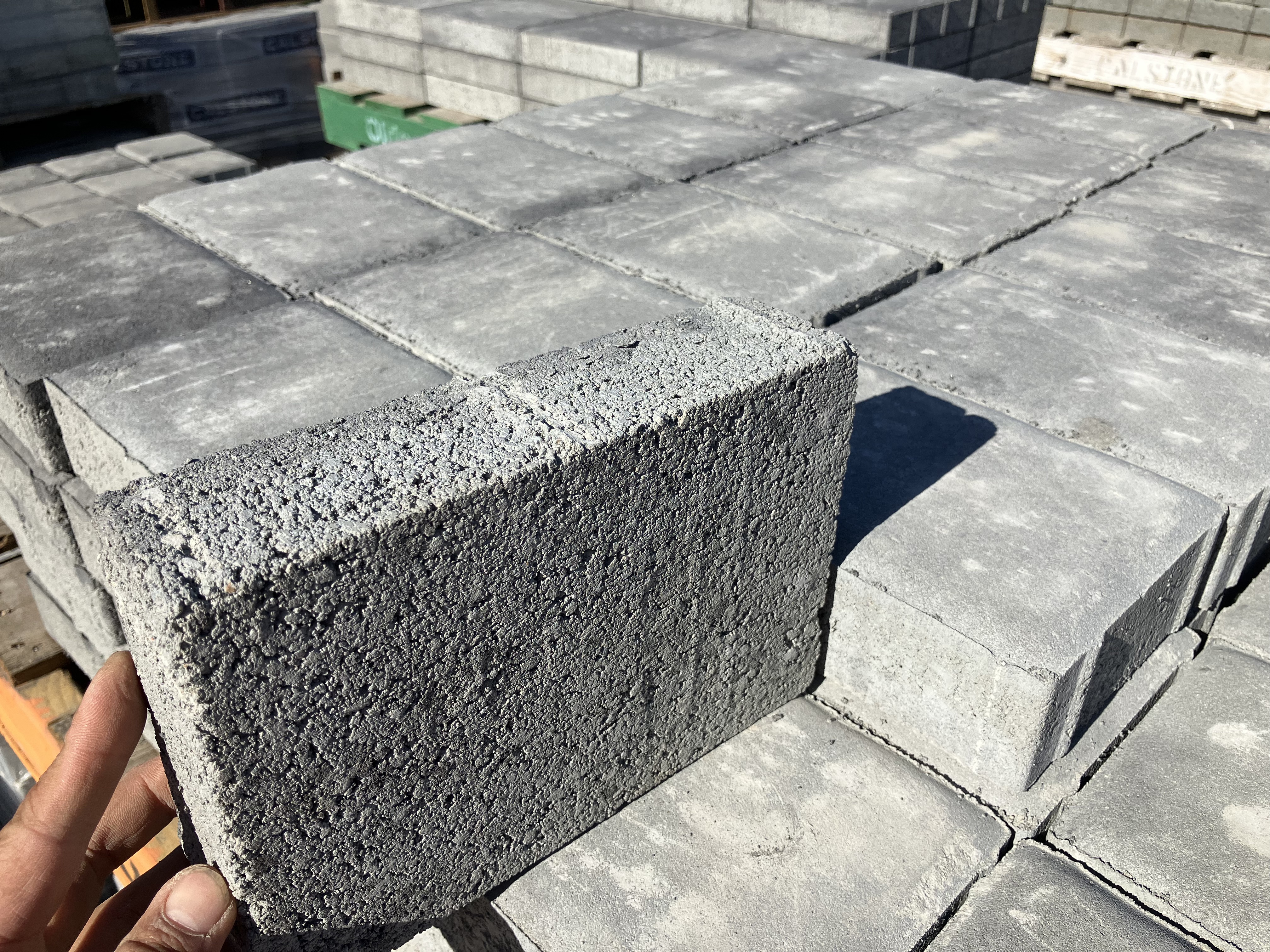
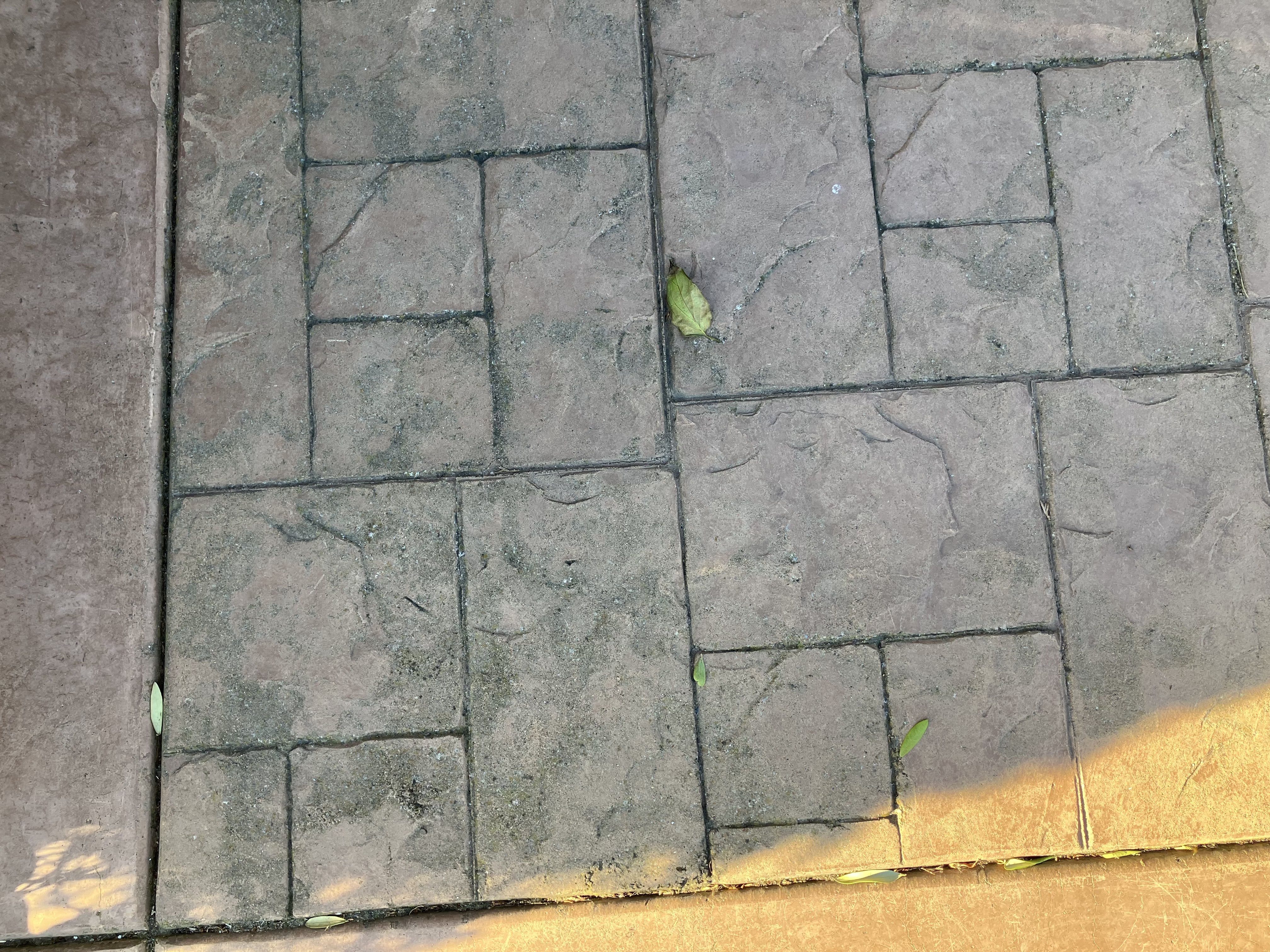
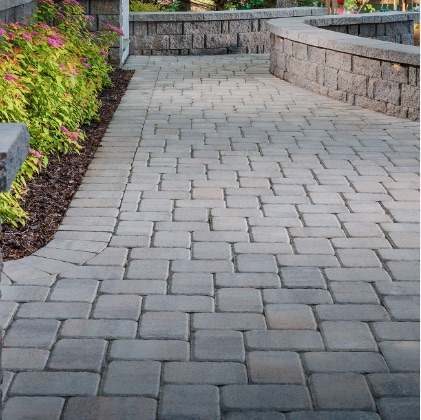
nowadays they color it, or stamp it to look like stone, texture it, make it in different shapes
and make em into pavers that look like bricks
sometimes they even call em brick pavers even though they are concrete but in the shape and size of a brick
heres some of those examples of concrete that can confuse you if you dont pay attention to the details
here is stamped and colored concrete, yes concrete!
Tell tale is to check the joints and their depth…
heres pavers – not brick or stone, concrete!!!
Good lookin eh
Alright enough of concrete for now
move on to stones and rocks
rocks in general are more expensive
its usually dynamited out of a mountain quarry then cut and transported for use
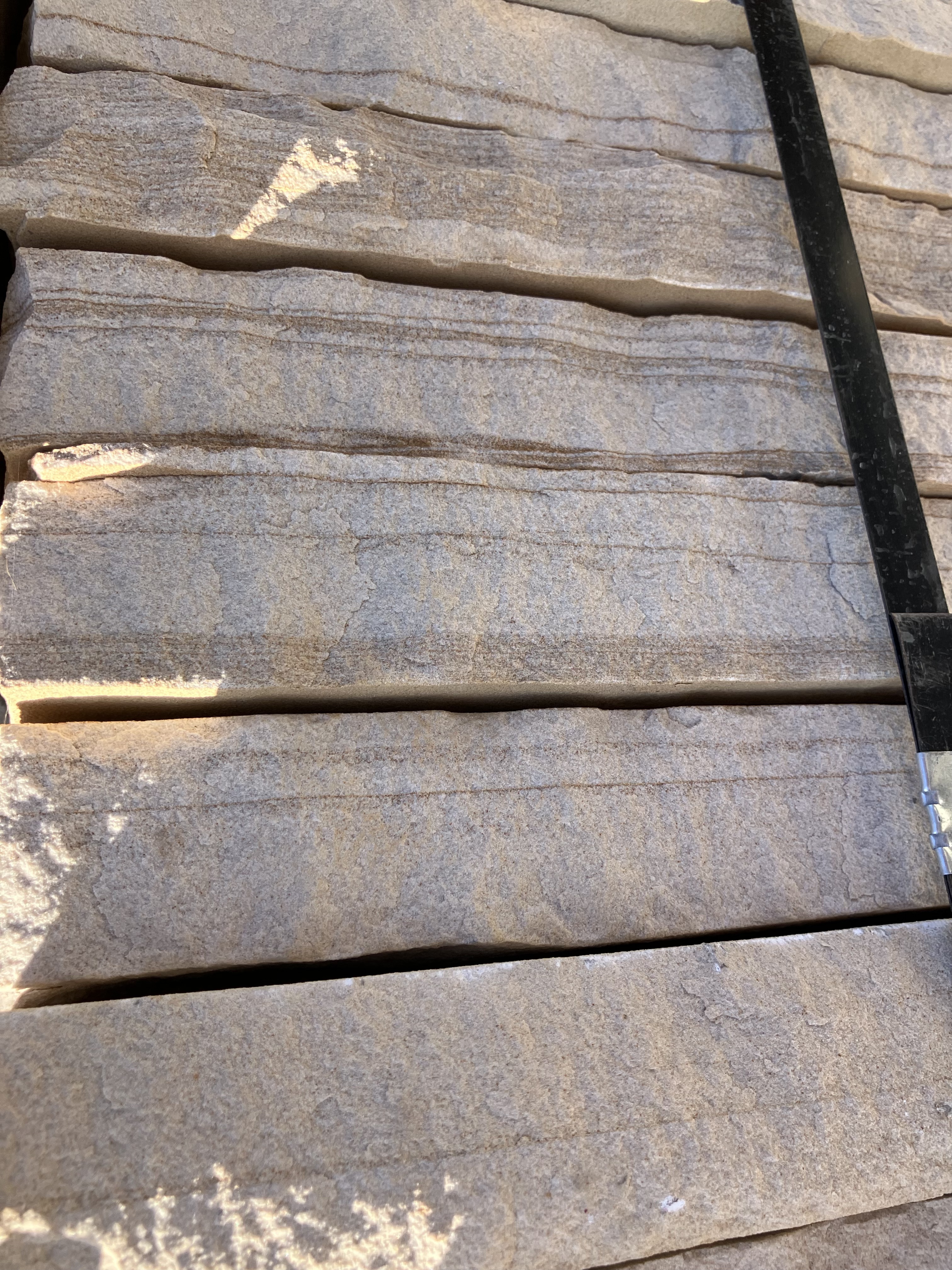
sedimentary rock is usually softer and got layers, real distinctive
sandstone, limestone like that fancy italian travertine, bluestone, brownstone, all sedimentary
got lines like eons of dead shells, dust and clay all settled out
This one here’s trade name is antique black, it is also a sedimentary rock
thats the bottom you are looking at, grooved for easy mortaring or gluing and sticking:
One more really red really pretty sedimentary rock:
Theres a few metamorphic rocks to get to know too
maybe you are not a rock hound or interested in any of this geology earth minerals stuff
and it dont make no difference to you if its sedimentary or metamorphic or igneous
but when you are cutting or installing that stone, hardness matters to the saw and the operator
as does how the stone might crumble or break or flake apart and such
slate is one such metamorphic rock also used in mostly old times for roofing tiles
nice color:
Dont worry too much bout the term flagstone
its one of those generic catch all words for a bunch of different kinds of layery rock used for landscaping
Last but not least you got igneous rocks, cool rocks from lava and magma and volcanoes
in landscaping we see mostly granite, basalt, and lava rock
granite we see sometimes as like cobbles or boulders,
its super easy to know cause of the white and black speckles, plus its super hard
meaning if your metal blade is dull and you dont have your file or sharpening stone
you can get a decent edge on that bevel just running it back and forth on the rough granite
you probably care about this one too if you are one of those sticky shoe wearing
rope hauling belaying rock climbers
here it is:
and where you park the cars on the curb there it is again:
we will get back to basalt and lava rock later when we discuss smaller sized rocks and pebbly things
With stones and selection, you can go geometric squares and rectangles almost like tiles, or go au naturel with uneven asymmetrical shapes in the garden
the clean boxy look:
Or the more messy natural look: (thats the one I prefer)
Heres a lil detail that’ll make you seem like a seasoned pro
take a look at how the stones are cut
makes a difference in price and ‘clean edgieness’
not sure it really makes a difference once its sitting on the ground covered on the edges with gravel and plants but
some people with really sharp eyes notice and care about these things
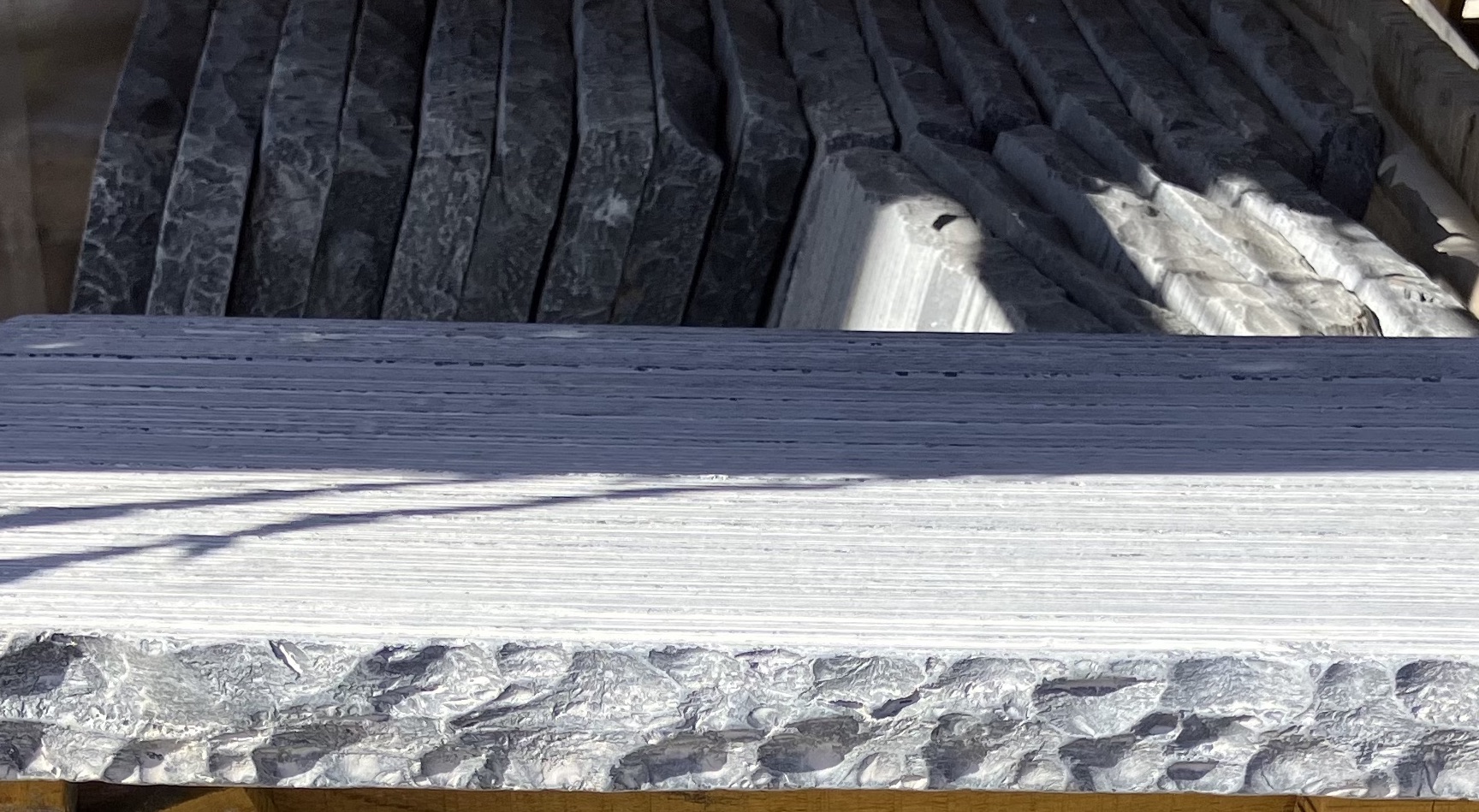
the roughest cut, kinda hand chiselly, is this one called ‘rockface’ cut:
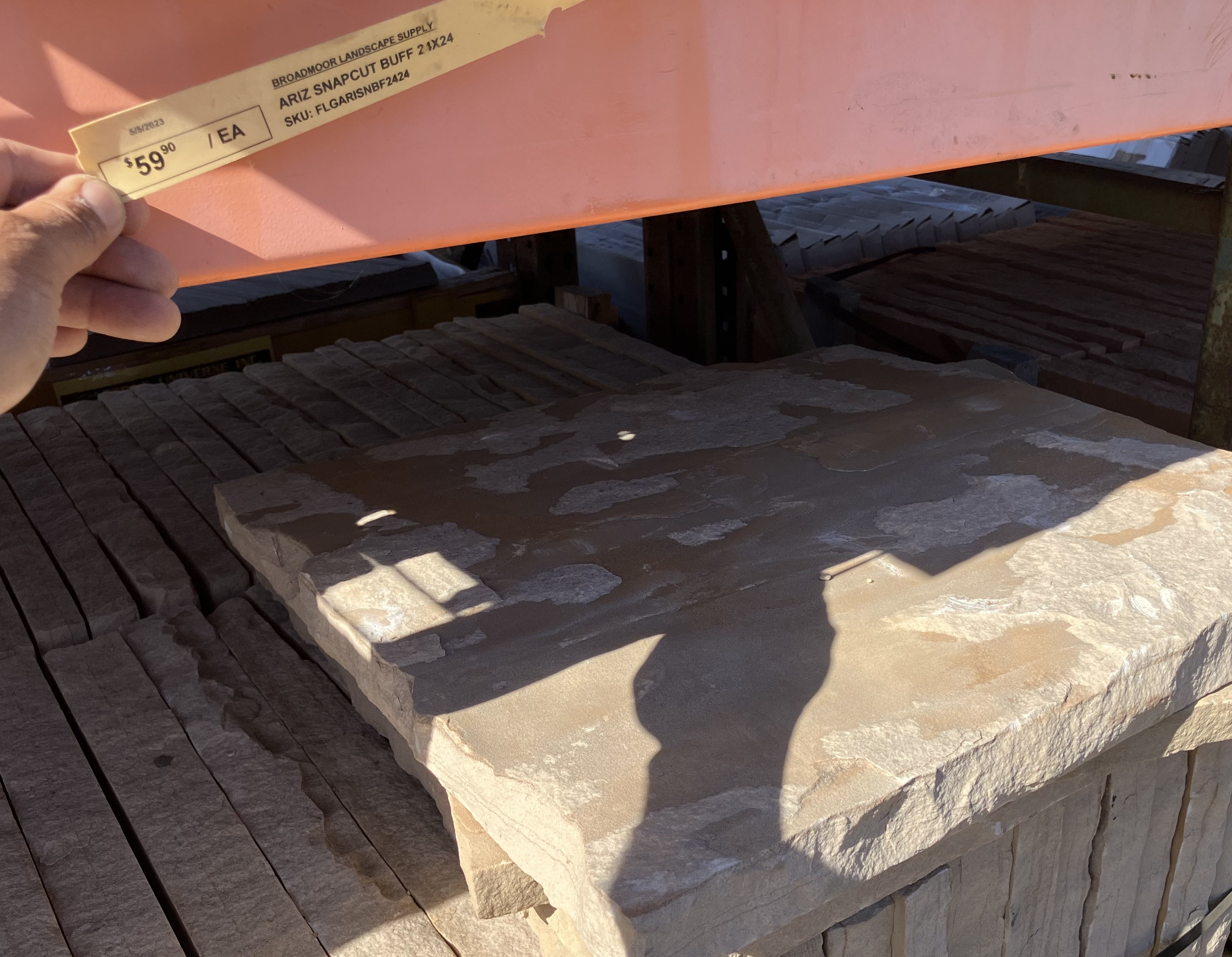
next up is ‘snap cut’, kinda like how you’d cut foam board for a school project, or cut tile with of those manual cutters
not quite as rough, but not super fine either:
Then its the ‘saw cut’, well, cut with you know what:
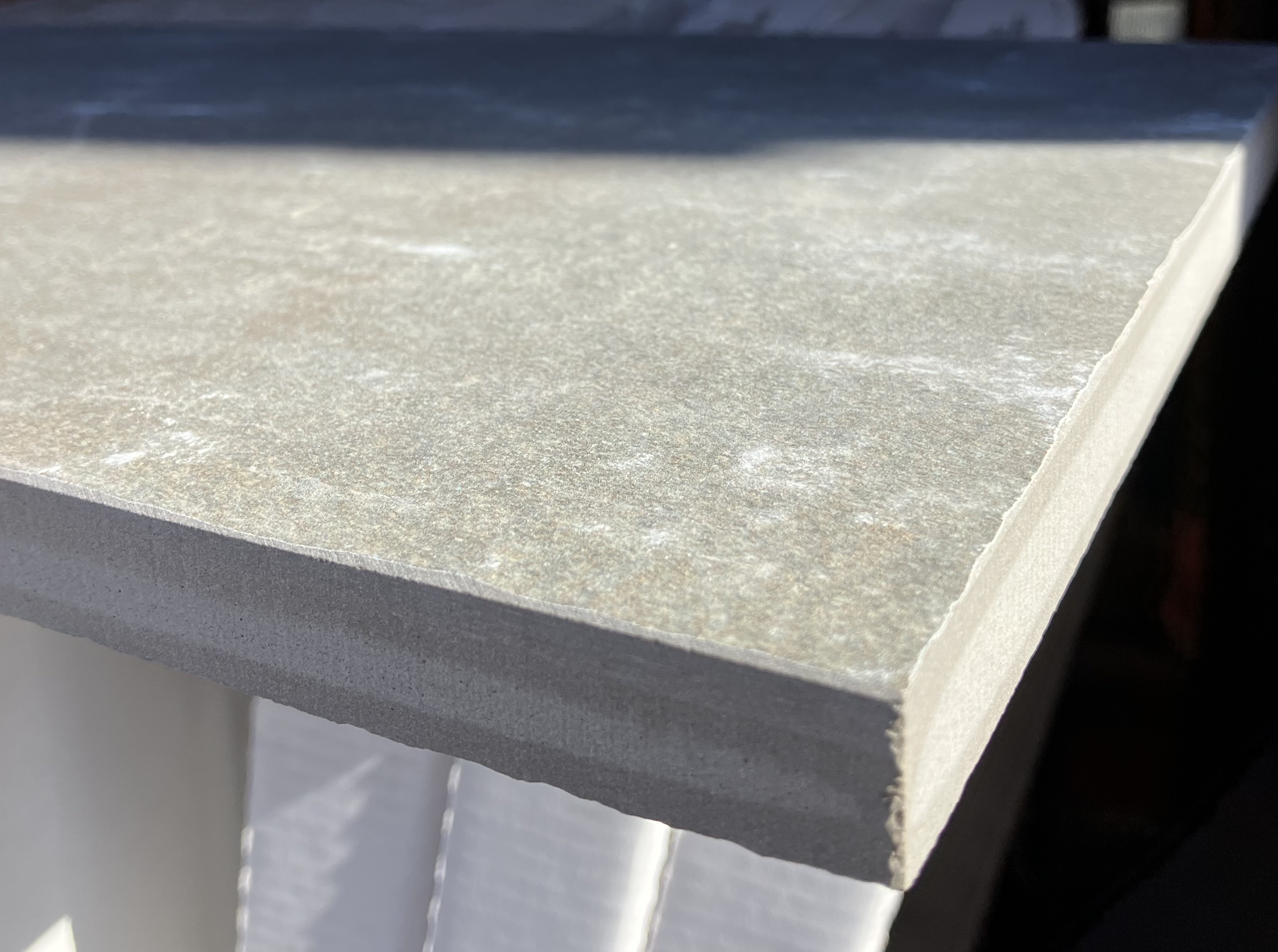
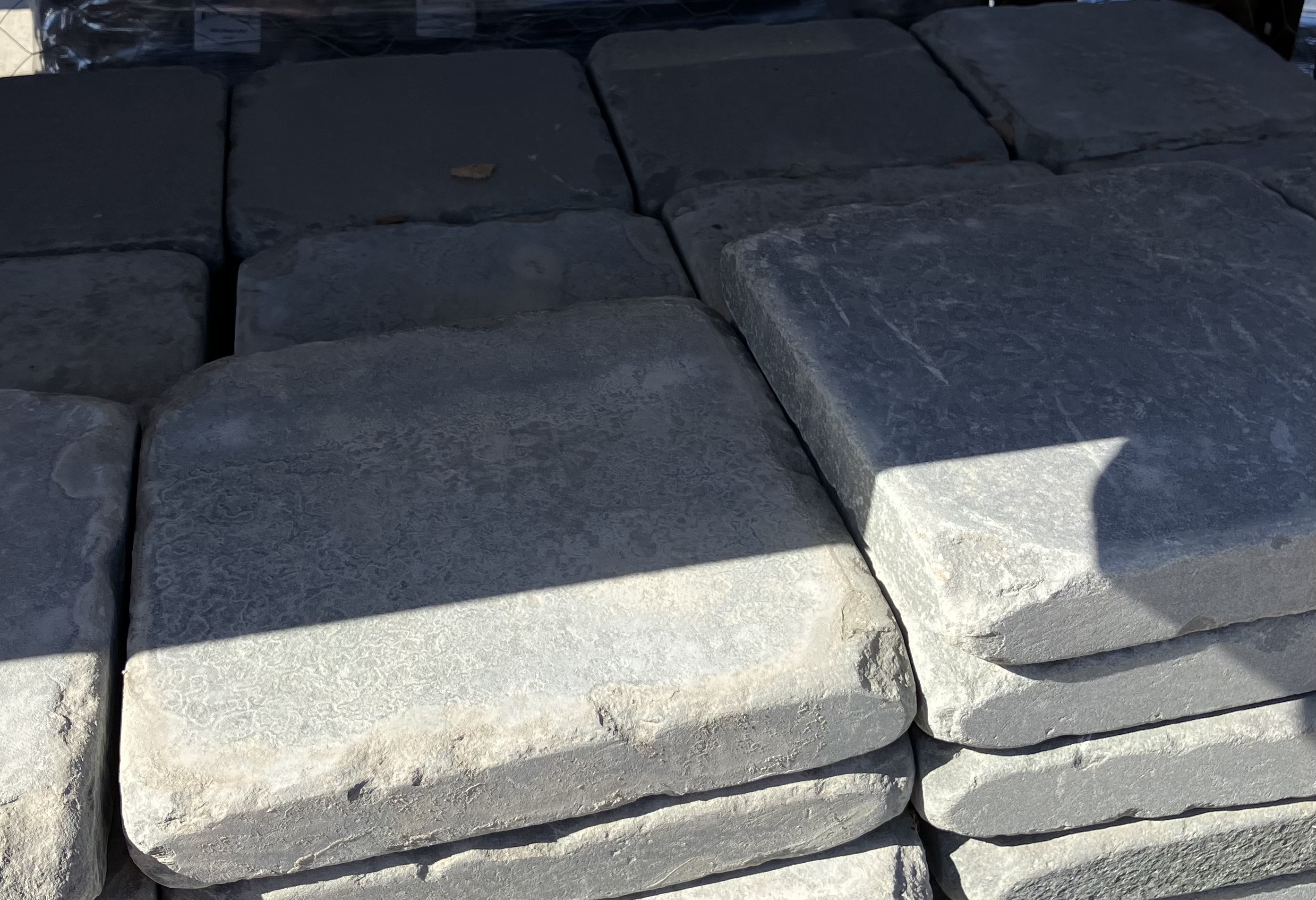
After the cutting, some stone is ‘tumbled’ to get that nice soft rounded edge:
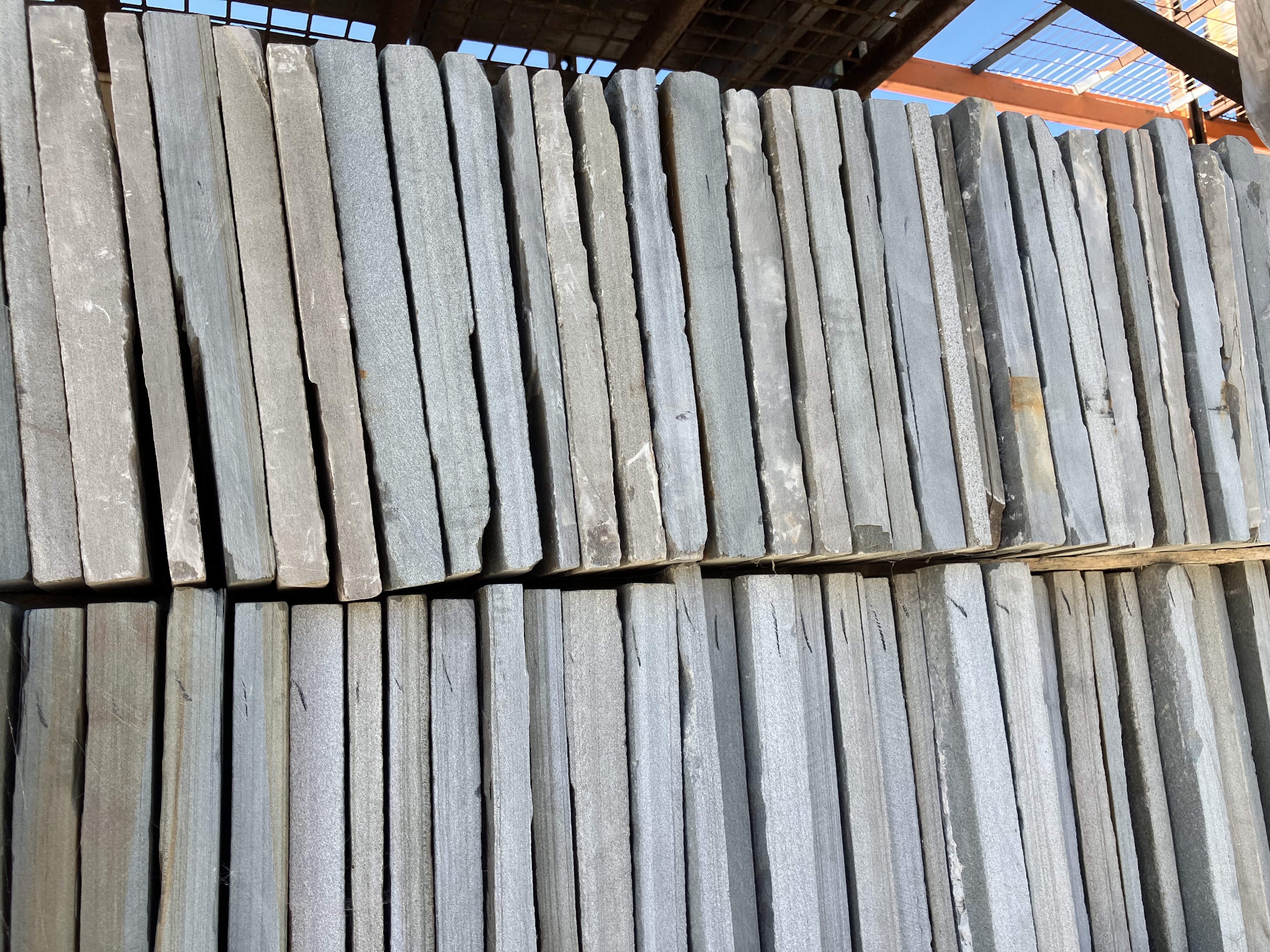
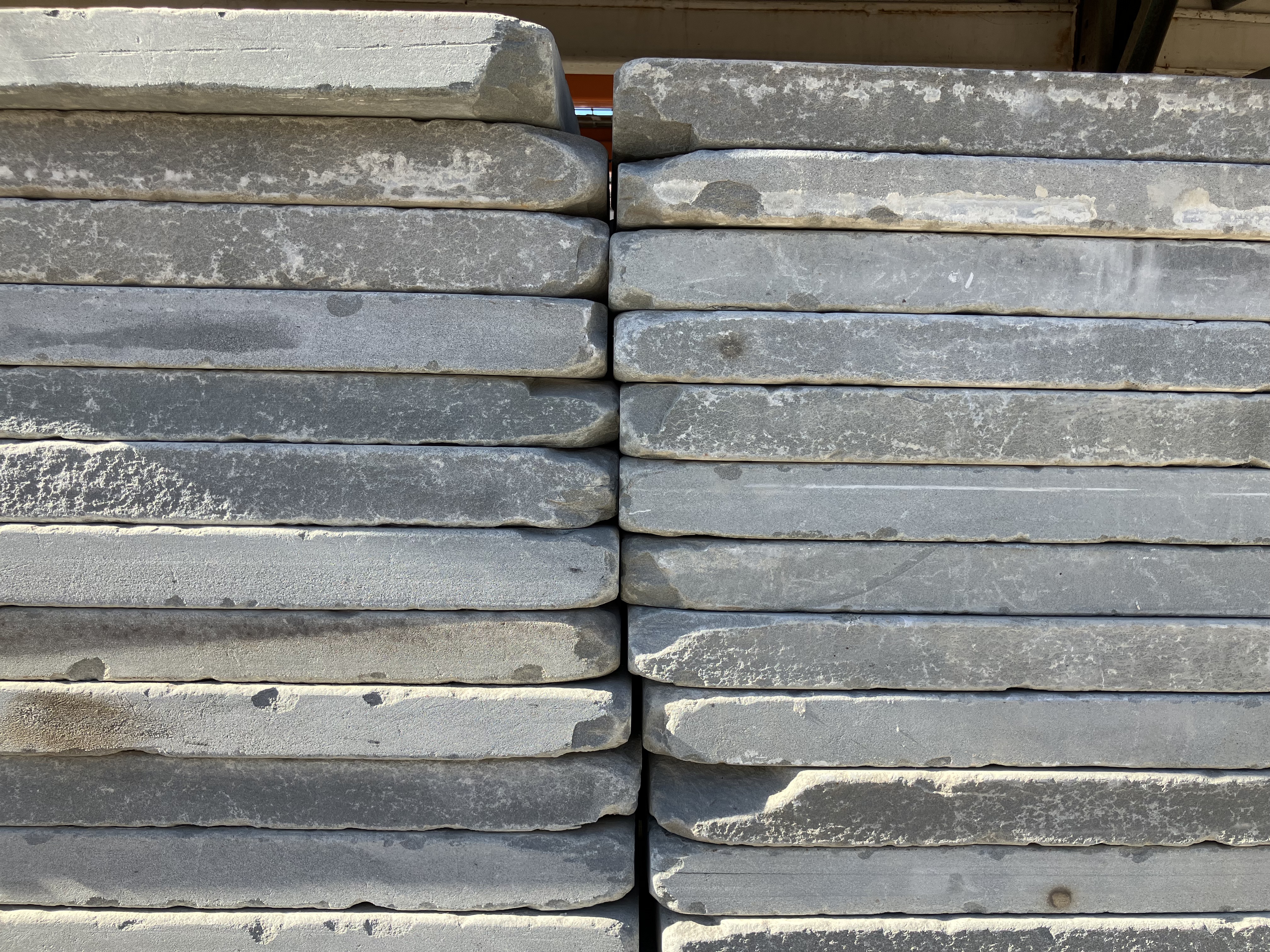
Another thing that matters quite a bit in stone selection is the thickness of the stone
it comes thin, medium, and thick
from about 1/2″ – 3/4″ or so to 2-3 inches
thin:
medium:
thick:
from a clients angle
you thinking
whats cheaper?
whats more durable? whats not gonna snap and break?
will it be even and level enough to set a table atop it,
and have a dinner party outdoors with lights and dancing
from a contractor angle
you thinking
what base am I gonna lay this stone on top of?
compacted rock and sand, or a concrete slab?
am I gonna be able to lift the really heavy pieces through the house without breaking em
(cause some san francisco houses have no side gate or easy backyard access)
do we need to rent a crane?
can I make more money on the thicker or thinner stone?
and so on
Other stone considerations might be:
is algae and moss gonna grow on the stone?
is it going to be slippery when wet?
is it easy to clean and scrub?
Thats all for now for stone, onto bricks
bricks are made of clay that has been fired in a kiln
its one of those very ancient materials with a classic lineage that is warm and comforting on the eyes
i love bricks, they remind me of hearths and pug mills and gas kilns and happy country places:
it is not so good in our earthquake prone area for tall buildings
but its fine for short walls, fences, patios and all that good stuff
theres a lot of different kinds of bricks
baked and fired from different kinds of clays with varying amounts of iron, silica, and so on
I remember falling in love with a clay called black mountain, real dark bodied clay
bricks got a lotta variety from a kinda rustic old timey feel to very crisp sharp edges and solid colors
typical standard brick size is 8″ x 4″ length by width, 2.25″ high
actual dimensions closer to 7.625″ x 3.625″ length by width, 2.25″ high
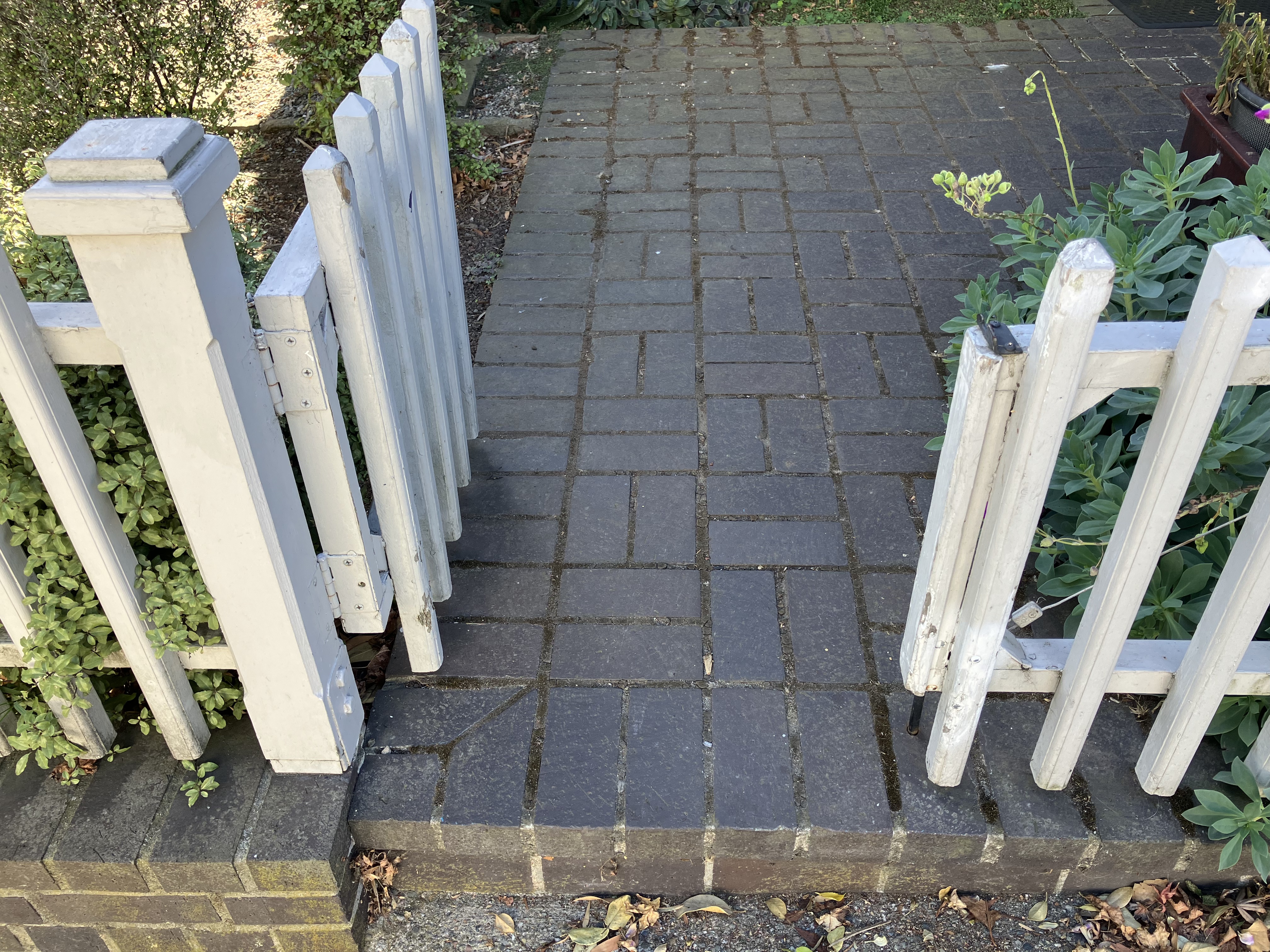
in the landscape, well installed, they look like this,
this example is a “basket weave” pattern, two up down, two sideways on down across the patio:
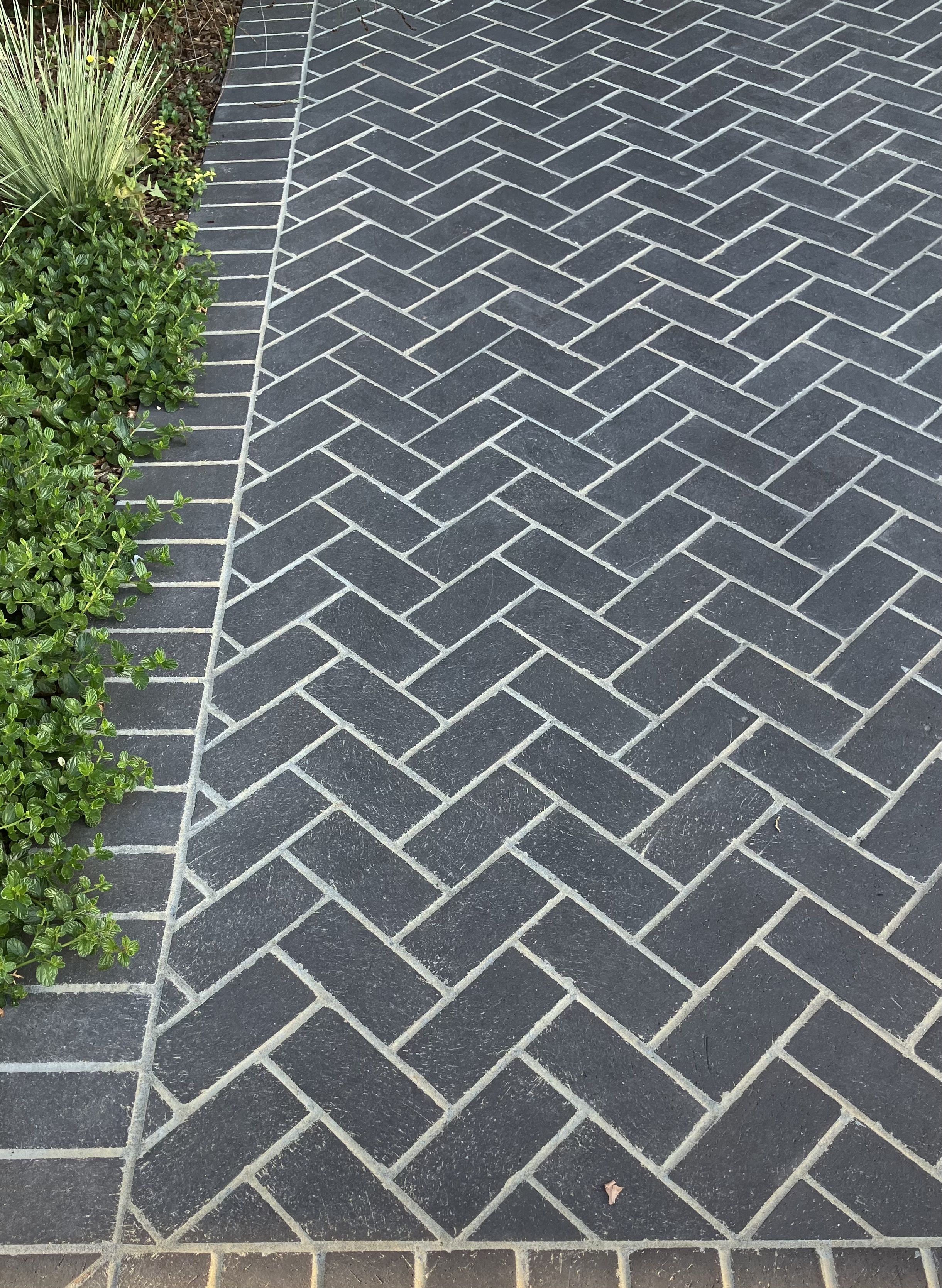
This pattern is called “herringbone”:
Stylish eh
so far we’ve mentioned concrete, stone, and brick,
they are the kinda larger building blocks for a garden hardscape project
how about the little pebbles and gravels and sands?
they are important too
for a few reasons
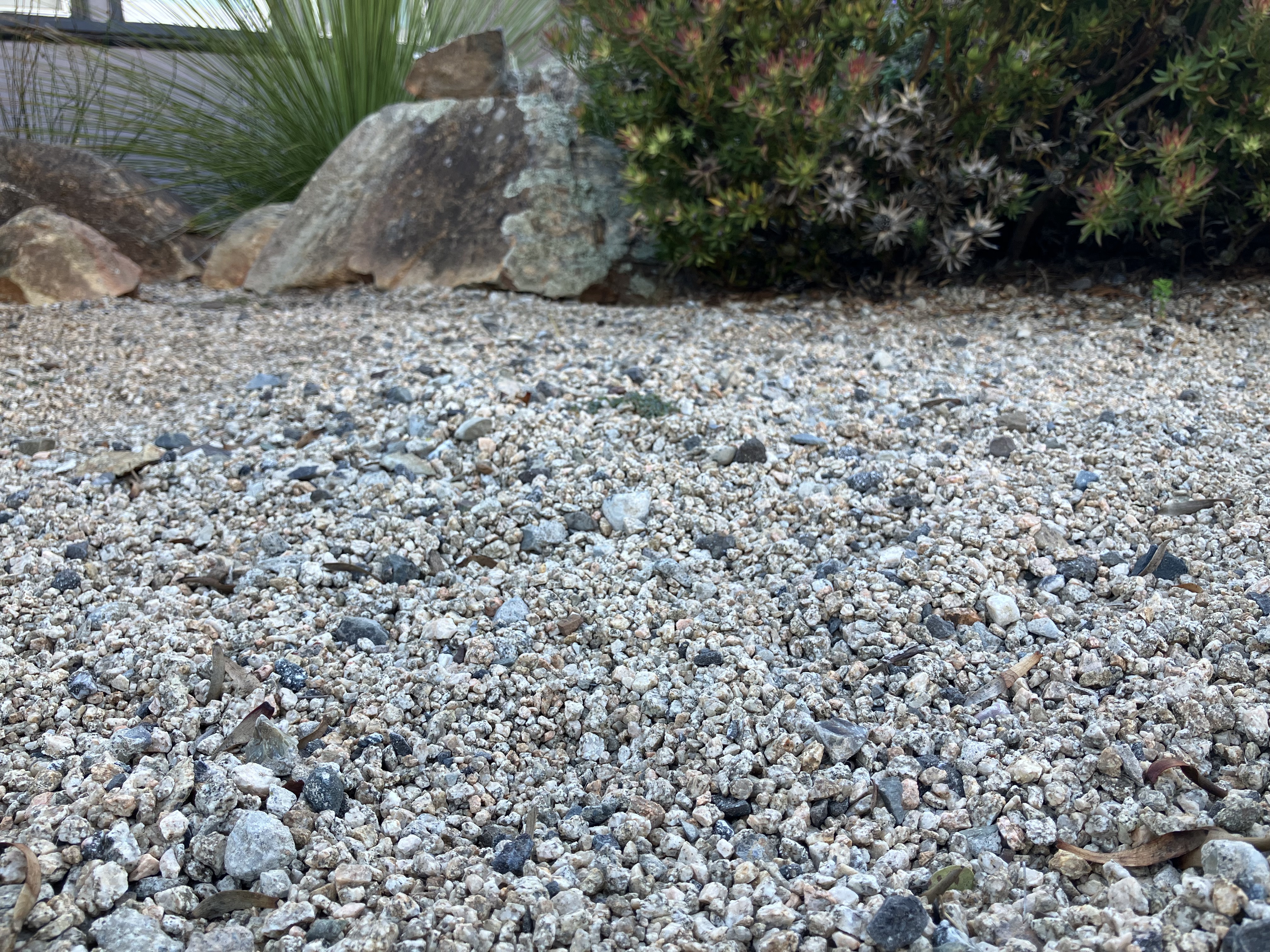
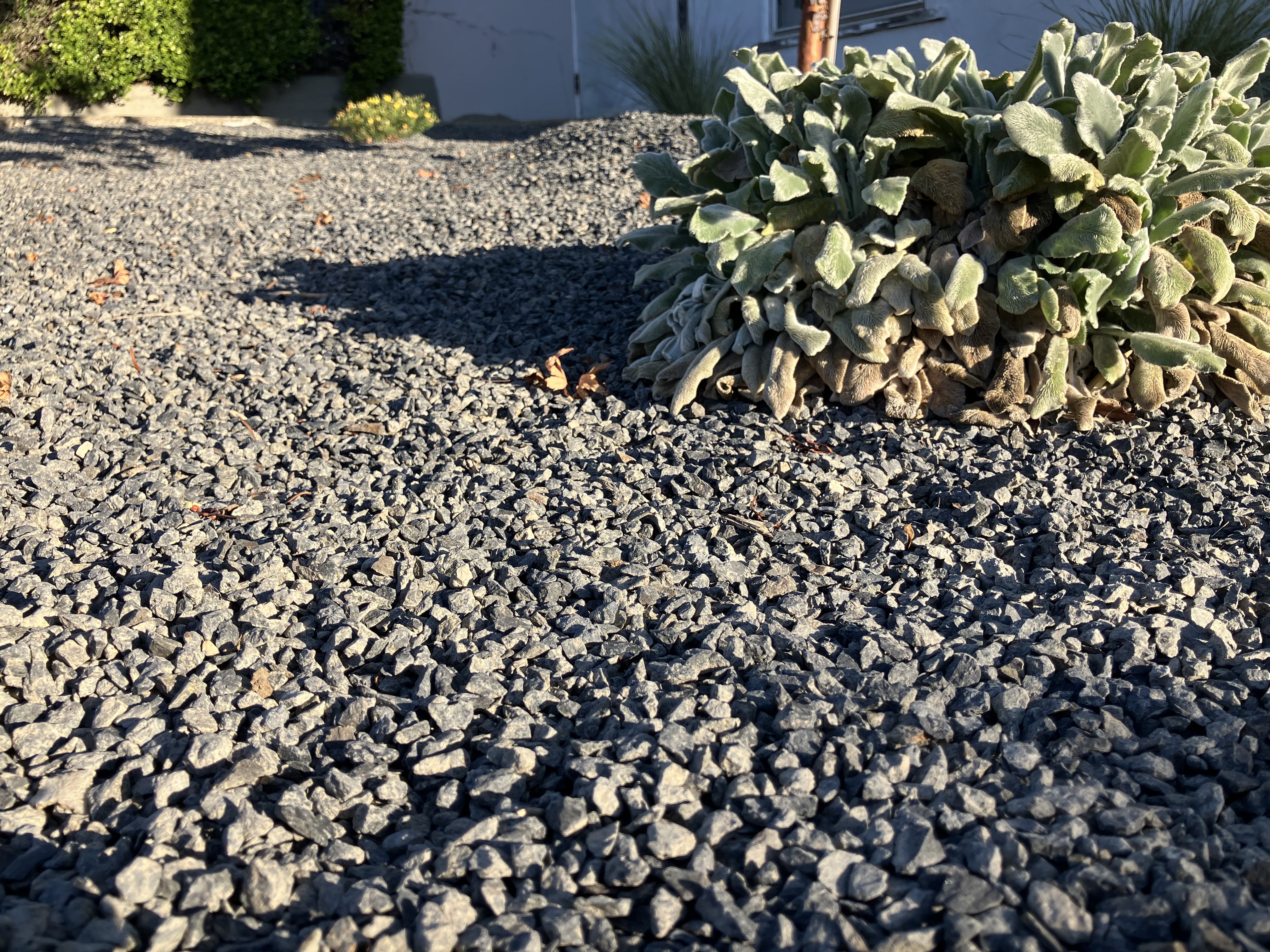
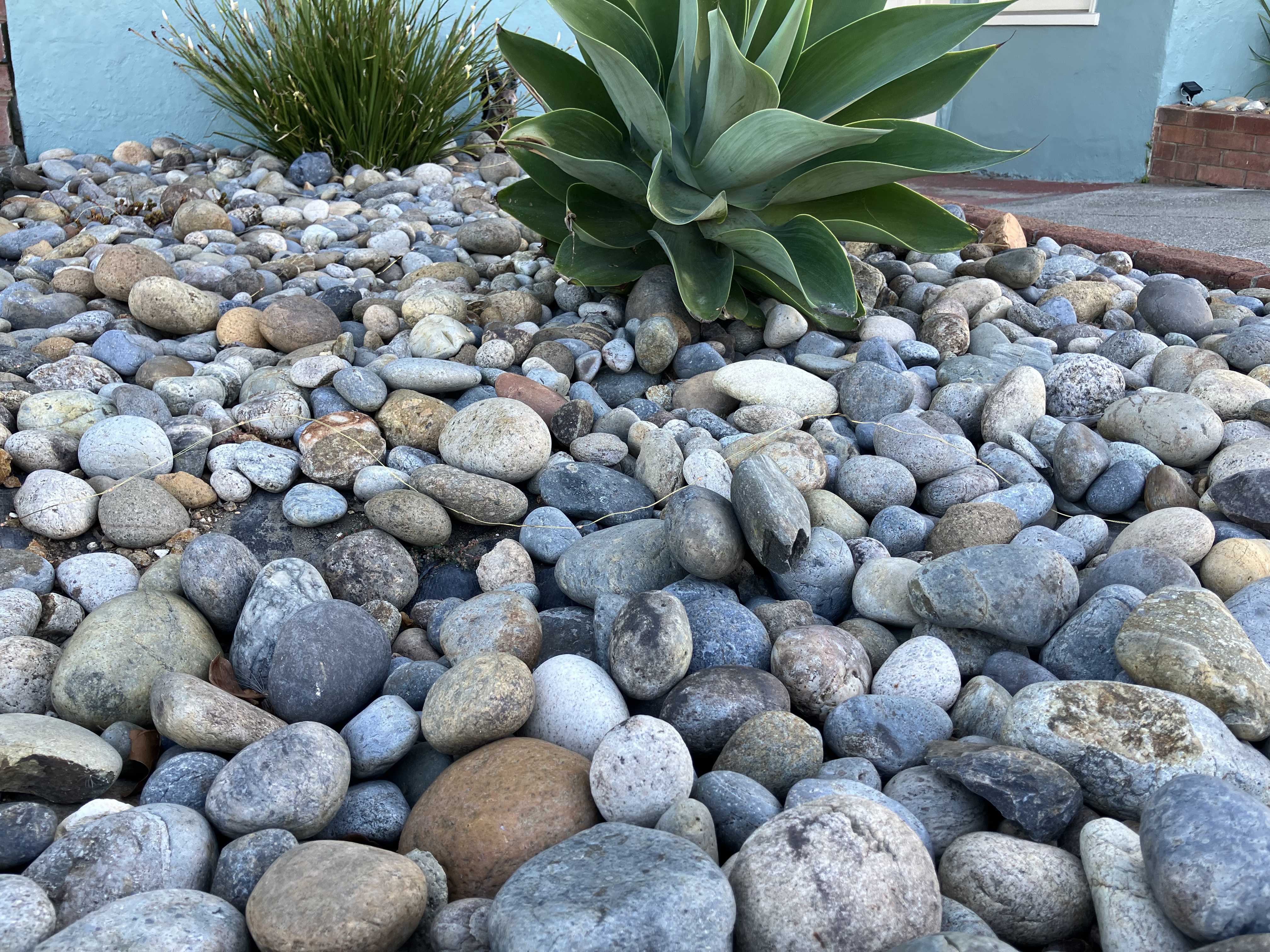
one is as a mulch or top dressing, to cover up the earth
so no or fewer weeds grow, or cause you like the desert dry ‘look’
something like this:
or this one:
Or maybe something a lil bigger, a lil rounder, a lil more ‘riverbeddy’:
The second use for the lil hardscape type pebbles and gravels is as a pad or as a fill underneath a brick or stone or concrete paver patio or driveway or path
they help the drainage somewhat
and form part of this massive hardscape foundation that is more stable over time
moves as one cohesive unit
keeping the bumps and uneven contours and movement at bay
so you dont get dips and warps and sinking and things like that in your 40,000 dollar patio
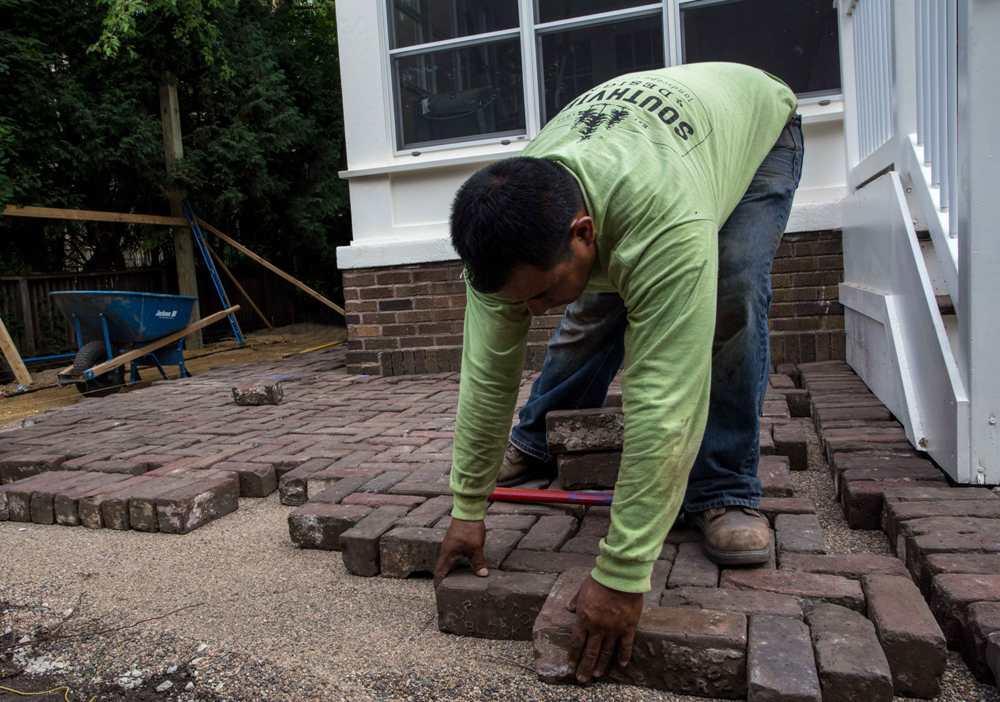
well theres all sorts of ways to install a patio, from the DIY to the professional
from Southview Design
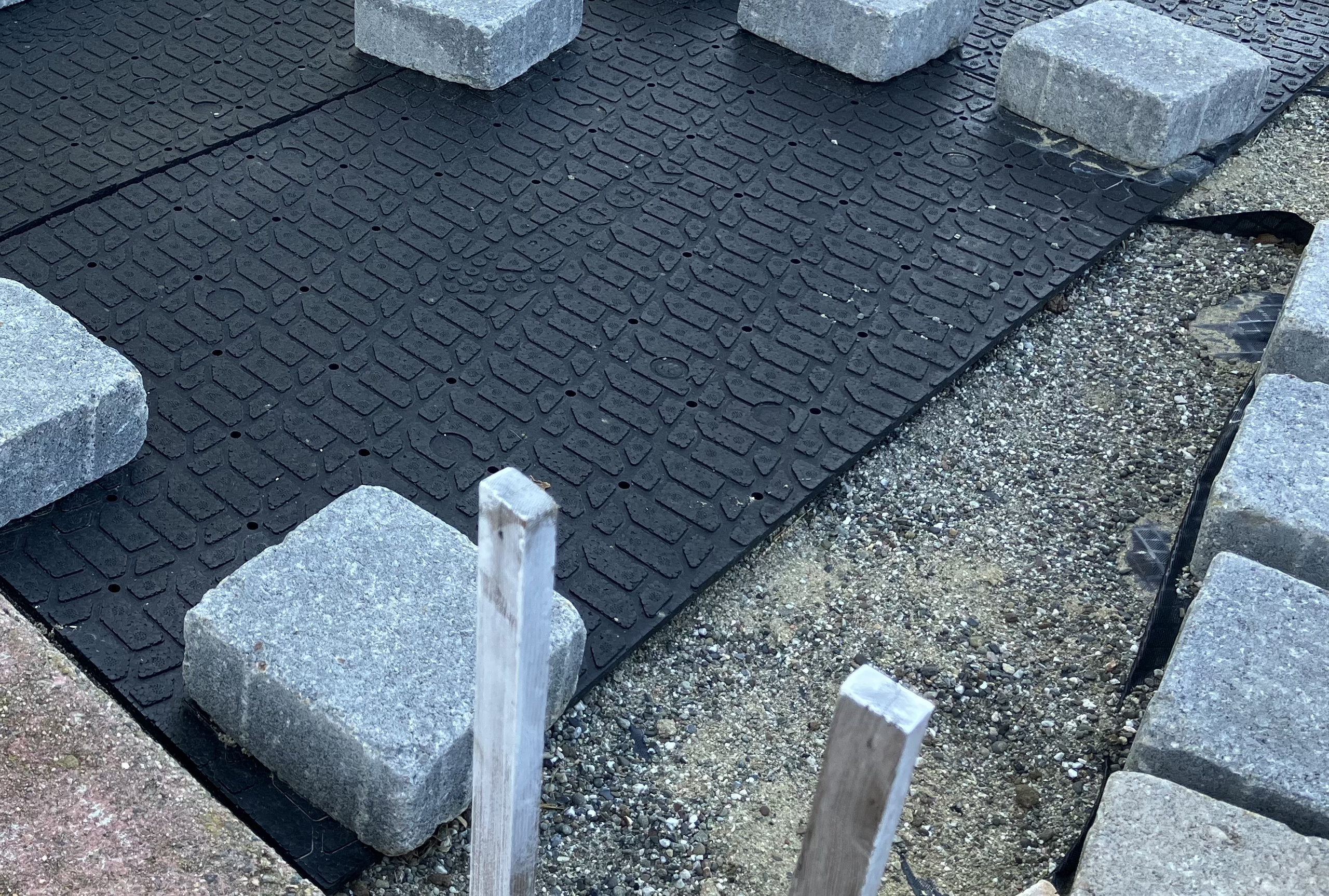
from Paver Patio Site Prep – Seattle Outdoor Spaces
Do you use 1″ of sand or 1″ of 3/8″ gravel beneath the pavers as pad/base?
Use concrete sand or decomposed granite or olympic sand or polymeric sand or silica sand or beach sand or?
Do you use the foam paver panels or not?
Are you in a cold frost and freeze prone area or not?
Do you use weed cloth or not?
Will you be actually planting the spaces and joints where the stones meet up? with thyme or tradescantia or babys tears or?
and the questions go on and on
then ask ten different contractors, see what they say, what are their experiences?
who is telling the ‘truth’, who is scamming and making it up, who is knowledgeable and speaking from a lifetime of observations?
lets just stick to the materials and discuss their intrinsic properties instead
to better understand their characteristics and differences,
and plan a common sense practical way forward
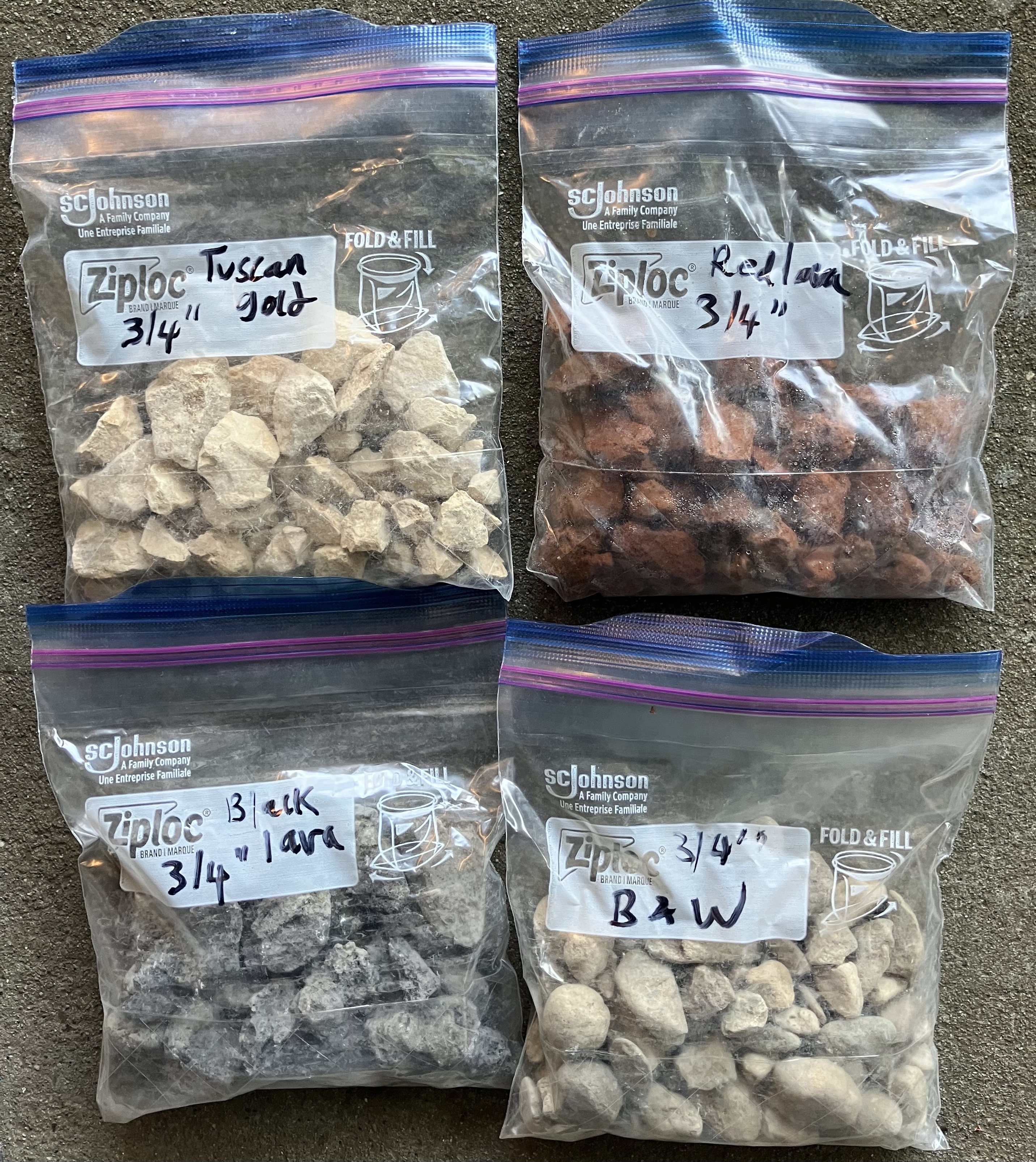
We will start with rocks with a relatively jagged angled shape, in the 3/4″ size
These all 3/4″ sized rocks, mostly used for decorative top dressing:
Two of the bags are lava rock – that is
igneous rocks from magma, but unlike granite which is born deep in the earth and cools slowly
lava rocks are made above ground when lava reaches the surface
basalt is similar but a specific type of ‘lava rock’
yeah basalt like the Giants Causeway in Ireland
Organ Pipes in Namibia, or the Devil’s Post Pile in California
or those fashionable hollowed out basalt fountains:
from the Pond Guy
The Tuscan Gold and Black and White (B & W) are a lil heavier
lava rock has a light porous feel from its quick cool volcanic origins
you also find it sometimes in a smaller size as pumice in potting soils
or we might use it to mound and give drainage to cactus or cycads we are growing in the ground
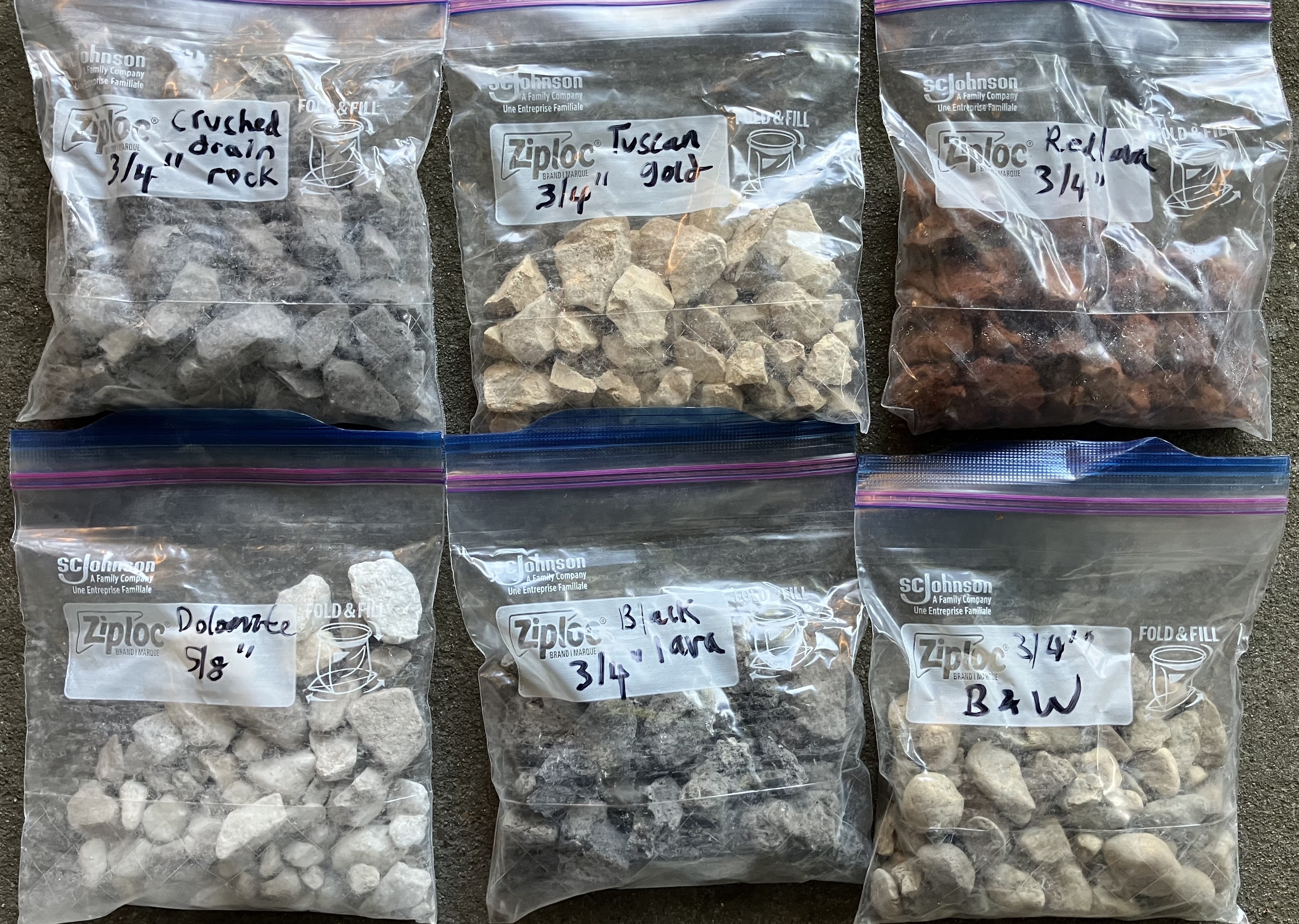
This next picture, on the left is 3/4″ crushed drain rock, on the right is base rock:
aside from a slight difference in size
what is the main difference that you see?
if you say one is clean and open and full of pores for drainage
and the other is filled with all sorts of sized aggregate and sand for dense packing and compaction
you would be correct
for a trench or a french drain, which would you use?
for under a concrete paver patio, which would you use?
and from mother natures angle,
what happens over time,
to all the open pores in the earth, as rain falls and ground waters flow?
Heres the same set of rocks, with the addition of 5/8″ dolomite
dolomite? isnt that a mineral supplement some folks take for magnesium and calcium?
Questions
are these rocks all more or less interchangeable, in terms of basic function in the landscape?
what is likely the cheapest rock here?
what is it about angular rocks that makes them especially good for a base that is compacted? (hint: Schlage, Master, Yale, Kryptonite)
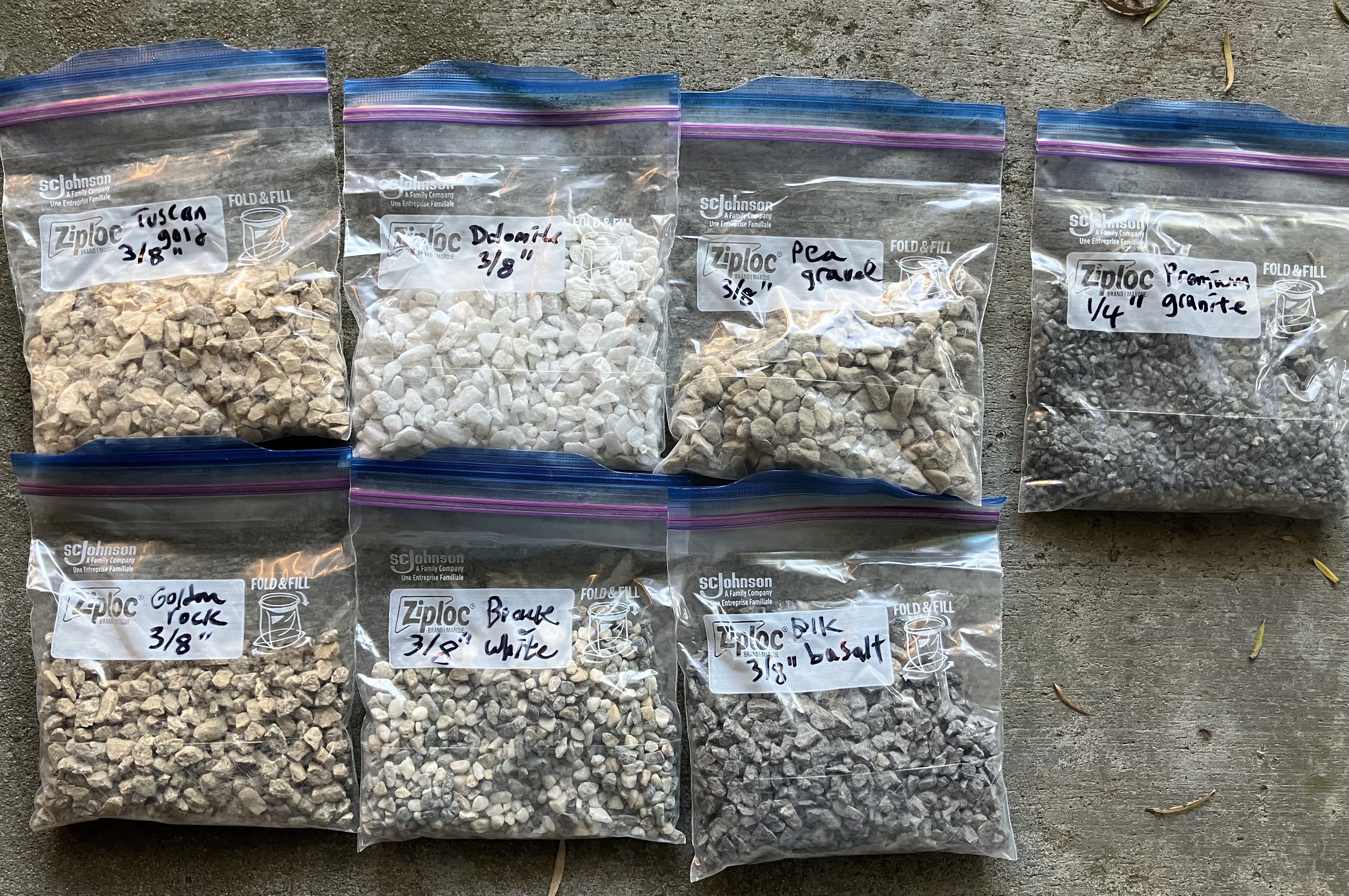
The next size down are similar angular rocks in 3/8″ sizes, and one sample in 1/4″:
Questions:
Besides color and cost, functionally, do these materials all perform similarly?
which would you like to have as a mulch in a garden bed?
which would be somewhat okay to walk on as a path material?
would any of them feel okay with bare feet walking atop it and a cup of coffee and bagel in hand?
which is likely the hardest rock(s) in this set?
could you use any of em as a sand substitute for the layer right beneath the paver or brick?
hmmmmm
Switching gears to rounder rocks that are more pebble than rock
rocks that likely come from a dredged river somewheres
worn down by the creek or river waters
take a look, most of these are used just for top dressing mulches
too round to walk on or tamp down
nice to use a variety of sizes if you are trying to mimic natures variety and diversity
whether for a water feature or dry river bed or what have ya
those salmon bay pebbles from Alabama have a translucent glow to em that light up when wet
and pami from Montana with the red purple hues is quite charming too
hard to beat a rock with a sweet name like ‘button’
Lastly we go to the fine grains small specked hardscapes
useful for paths and tree wells
good for the pad/base layer between the paver or flagstone on top and the angular foundation rock below
as an addition to some soil mixes that like drainage and dont mind the weight
for stucco masonry mortar
playground sand, and more:
‘Fines’ is another way to say decomposed granite, or DG
comes in a variety of colors
think its just the small screened bits, not sure why its called ‘decomposed’
guess its easier and better sounding than ‘eroded’ or ‘weathered’ granite pieces
‘stabilized’ means its got some kinda binder stick-stick-particles-together in it
it can be a more natural type glue or a more plastic resiny type glue
Questions
which one of these samples is the cleanest, with minimal dust and fill and tiny matters?
which ones if wetted down and compacted, will likely stick together the best, over time?
which ones have probably a more angular shape, and which ones are more rounded?
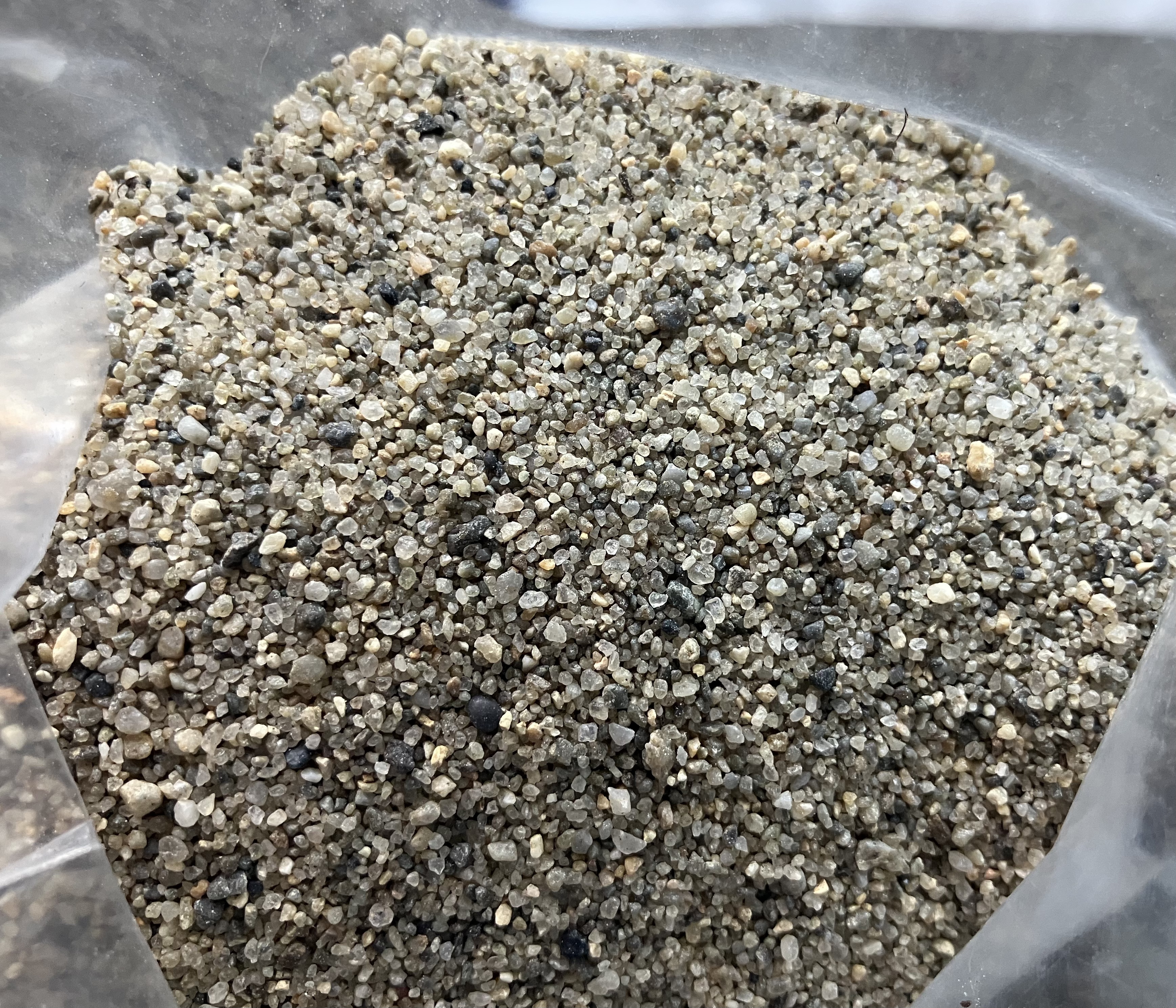
Well, if a particle of sand was bigger, they would call it gravel
sand is small, and has a range of sizes from about .05 mm to 2 mm
if you look close, it is many colors, very beautiful stuff
the whole universe is there
Okay
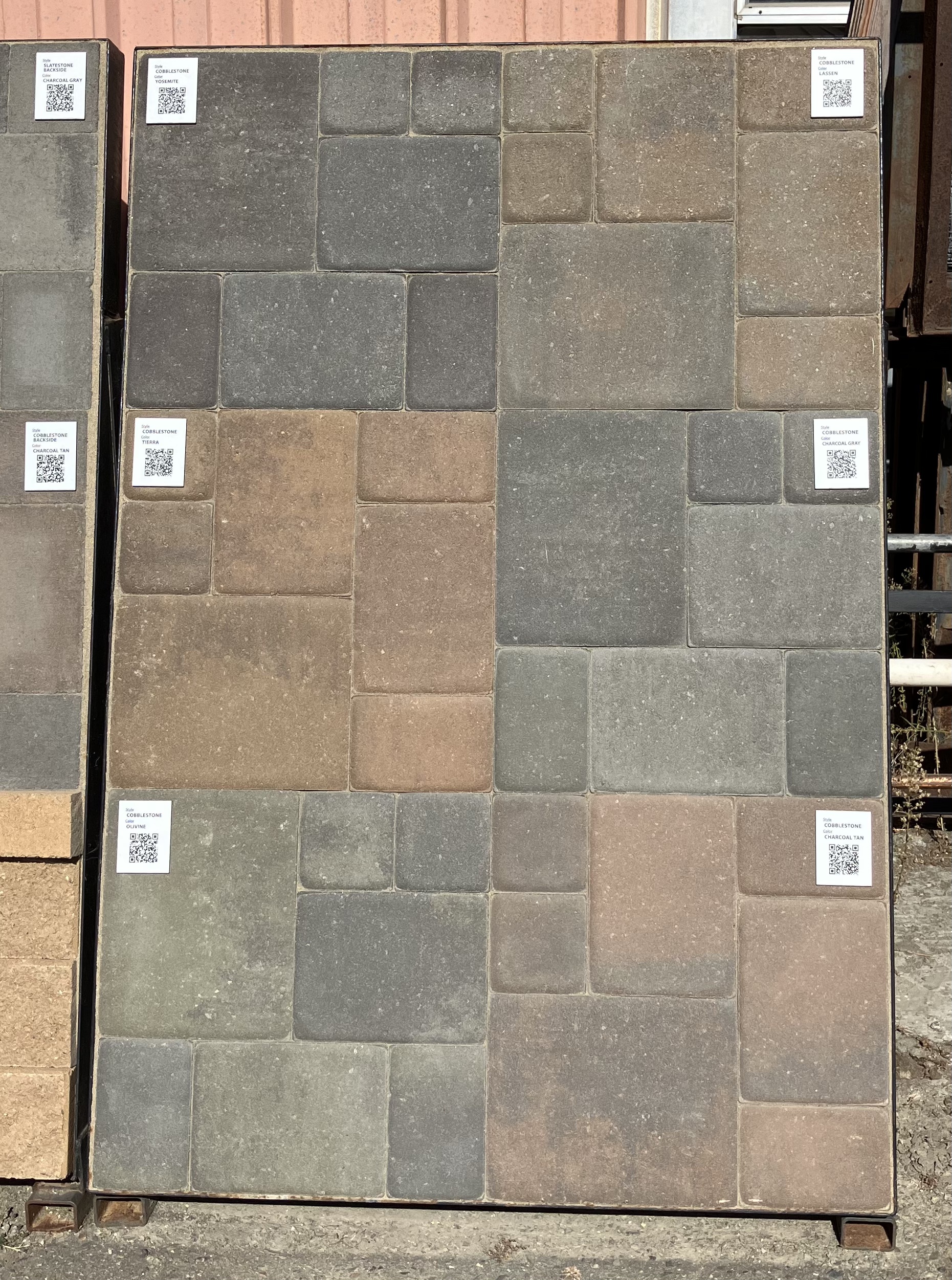
next up is recognizing patterns in hardscapes
we already presented the ‘basket weave’ and ‘herringbone’
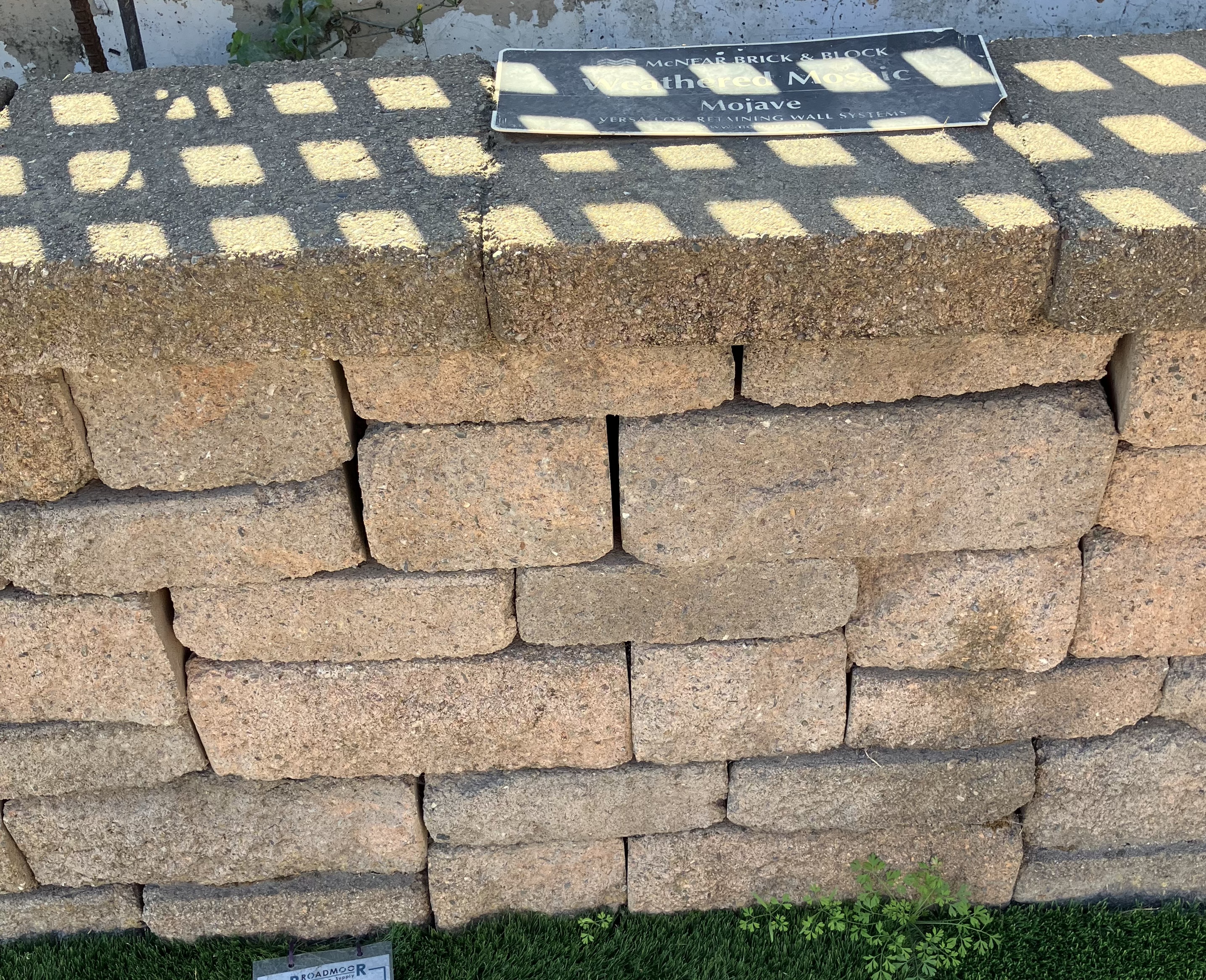
In this next picture, check out the concrete retaining wall
the name is ‘weather mosaic mojave’
Never mind the top row of blocks which are the capstones
Questions:
Do you see the rectangular pattern made of four blocks that repeats over and over again in a staggered pattern?
How many different sized blocks are used to create this pattern?
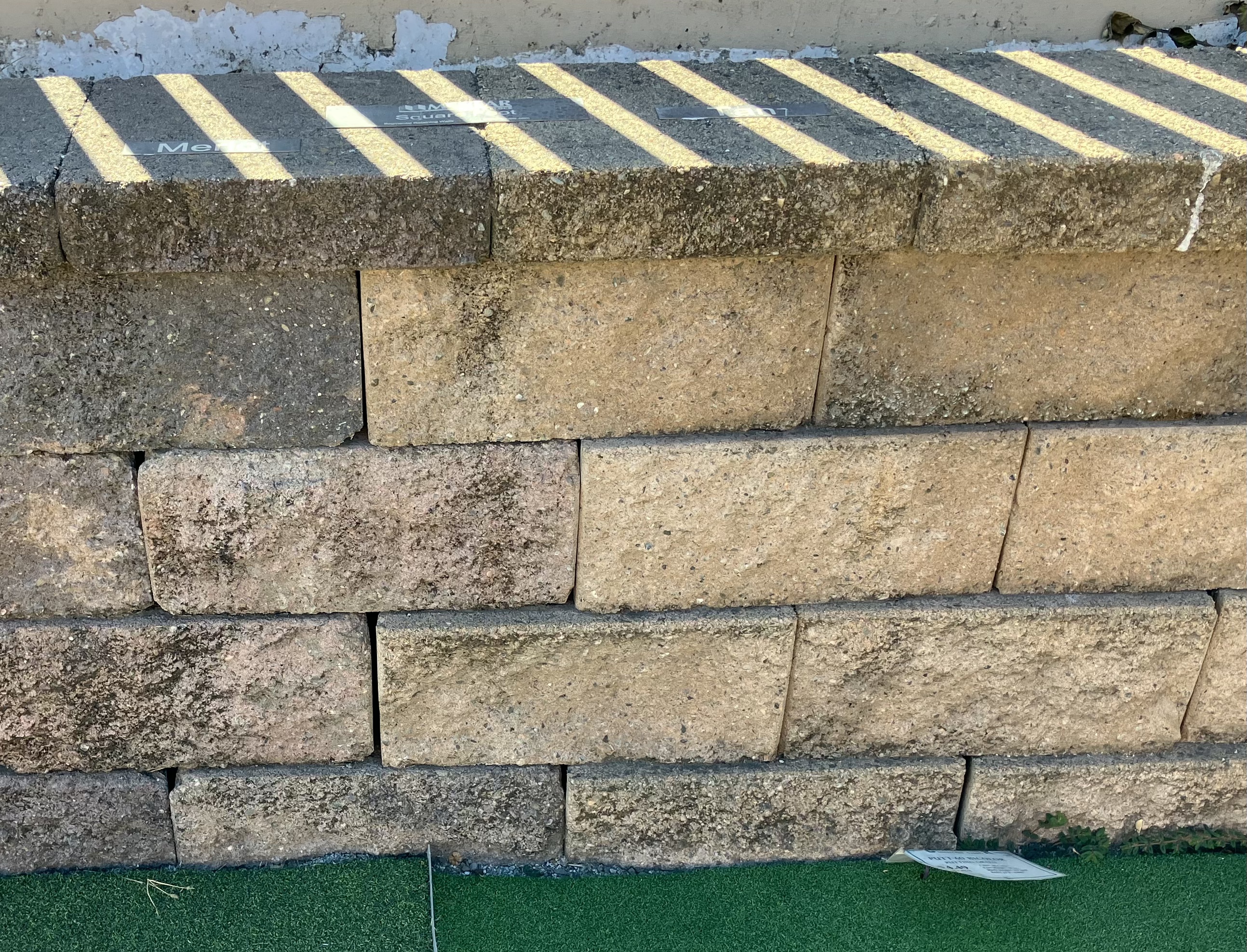
Now try this one:
How many different sized blocks are used to create this pattern?
The following picture is one of the most basic patterns, it is called ‘running bond’
sod is laid in the same way, staggered for strength
Once you order your hardscape materials
you may choose to bring it to the clients house in your truck
or you may have it delivered
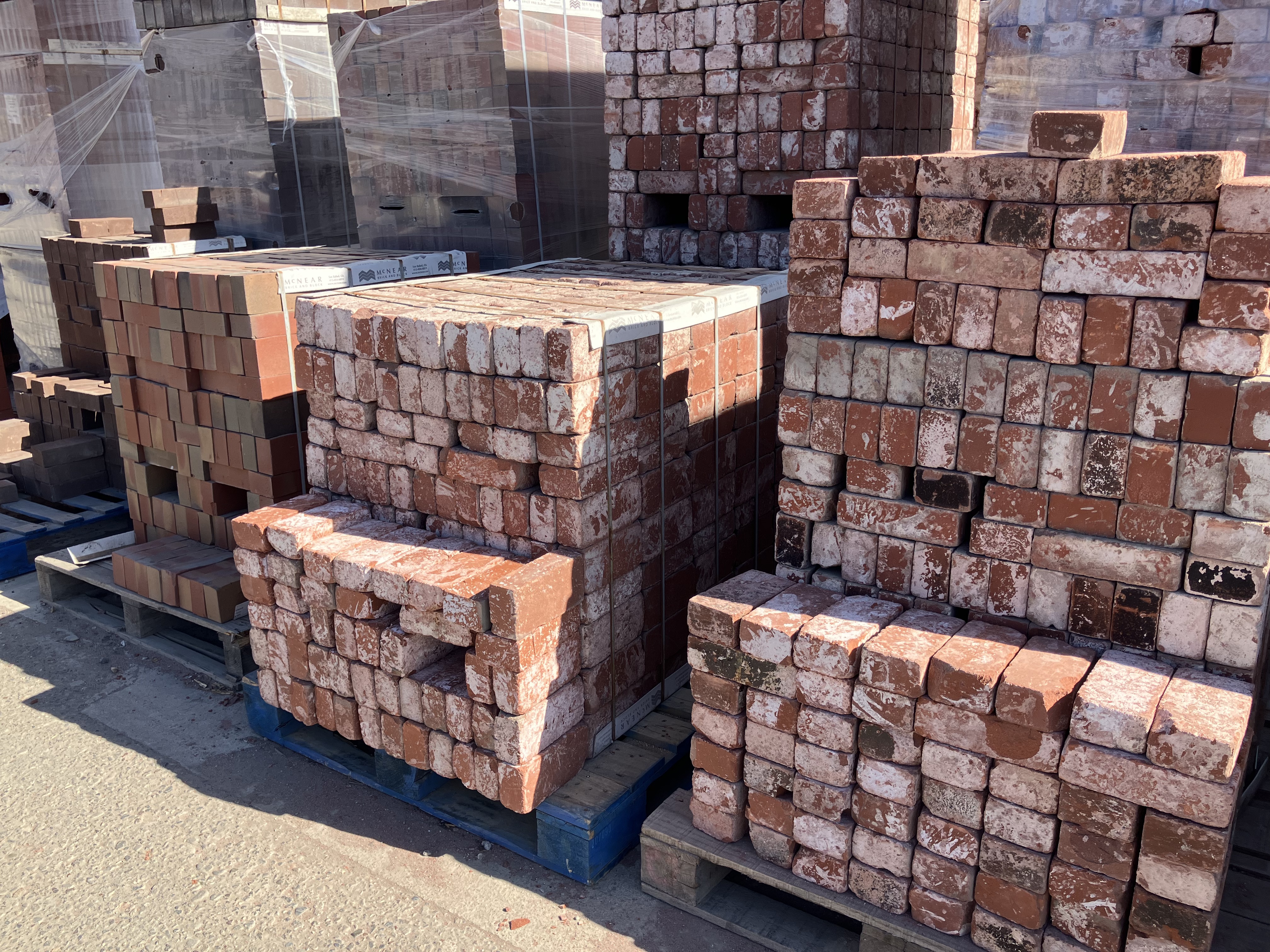
around here that usually means getting a palette of rock and blocks or a pile of granite in a parking space or driveway in front of the job site:
Questions:
what day of the week is street cleaning day? Do they ticket for stuff like this?
do you have the people power to move it all inside to the back yard right quick?
before the rains or thieves come and the wind picks up?
can you do it in small loads to prevent injury? in buckets? does a wheel barrow fit through the house? ramps?
do you gotta lay down plywood or plastic over the carpets and flooring inside the house?
how is your stamina and endurance and joints?
Something clients, contractors, designers and architects forget time to time
is that they are dealing with Mother Nature
and it is she who calls the shot
by Mother Nature I am not only talking about the wind and rain and rivers and streams underground and scorching UV rayed sun and material expanding heat and sweating humidity and bone chilling contracting cold
but also her frequent helpers allies creations like algae mold gophers ground squirrels rats mice dandelion cats tongue bermuda grass and all the rest who are all constantly rummaging around even whilst we are sleeping or eating
they can all wreak havoc on our hardscapes and our ideas about control and management
so….
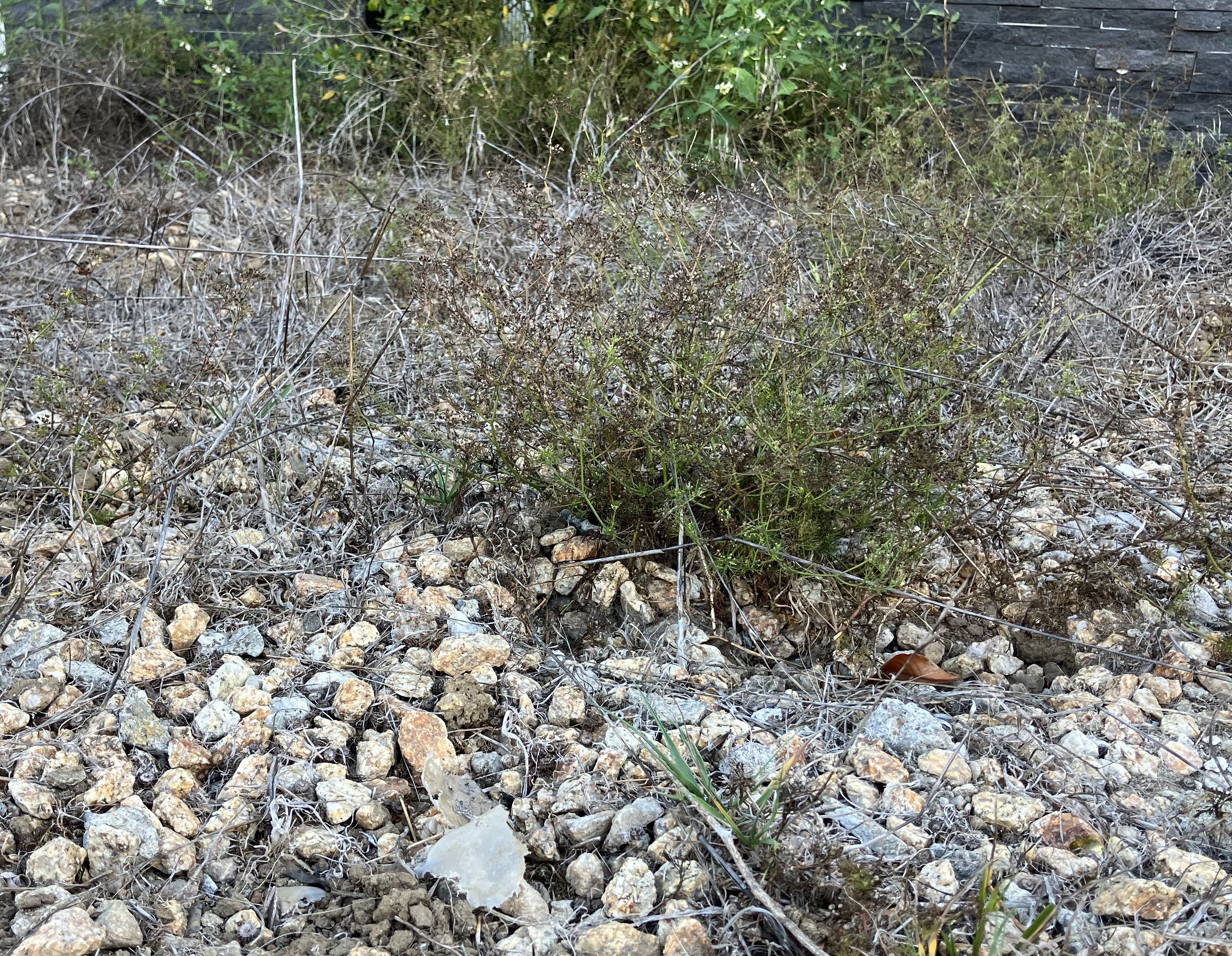
What happens if you lay down gravel mulch, but forget about maintenance?
If you dont plant something in the open dirt, who will?
Cute design and all, but who is going to move in asap?
How do you clean up the leaves and dust that falls atop the pebble gravel mulch? Do you use a blower or a broom or a rake or?
maybe you want to just resin/polyurethane/clear coat the whole darn yard? just plastic coat everything
‘nothing moves, nothing changes, nothing lives without my permission’
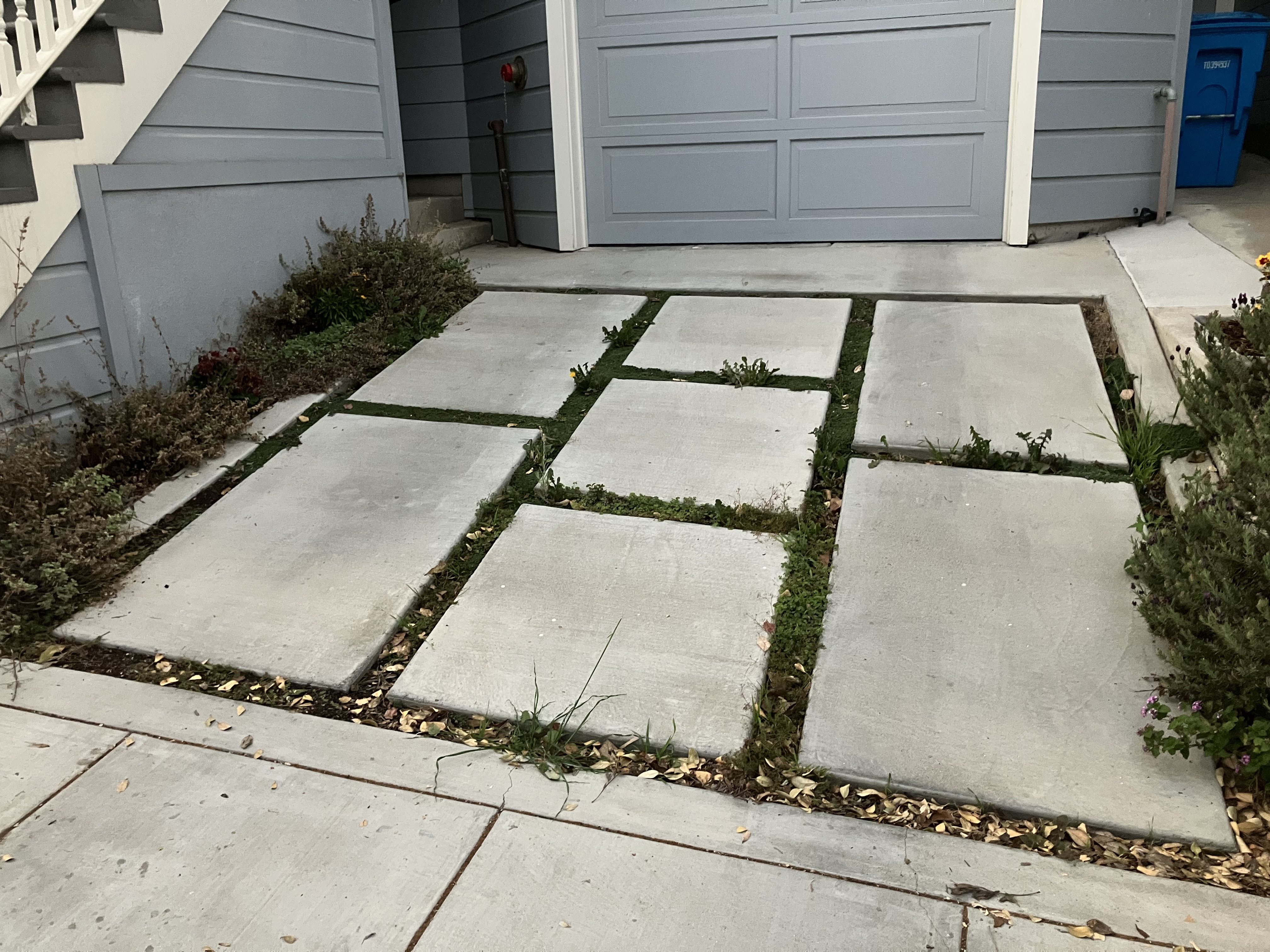
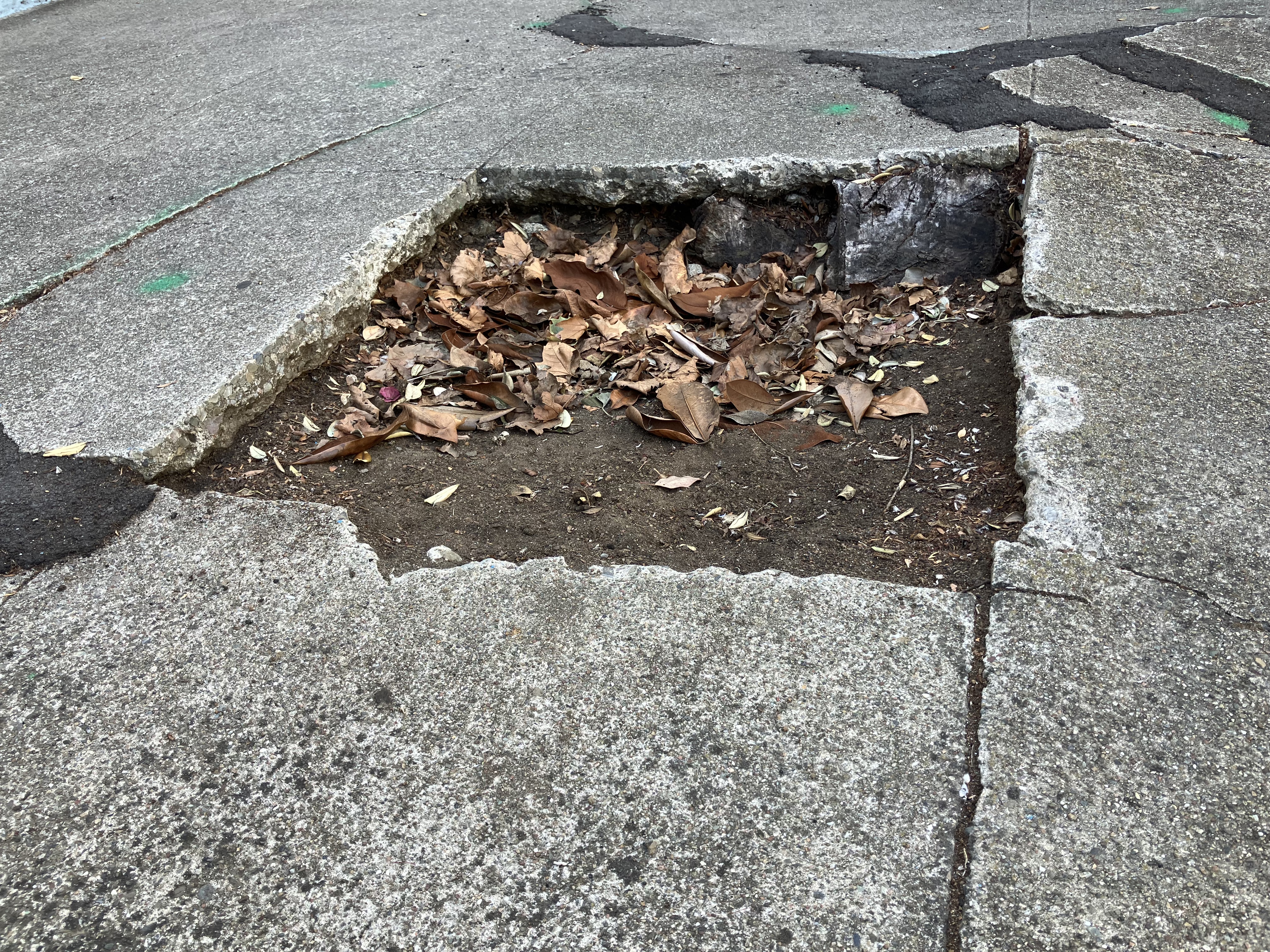
Who can crack and break up a nice thick and strong layer of concrete and uplift that hardscape?
Who grows in the tiniest cracks in hardly any space at all?
besides reaching for that bottle of herbicide, can you figure out any other solutions to this problem?
thats about all for now
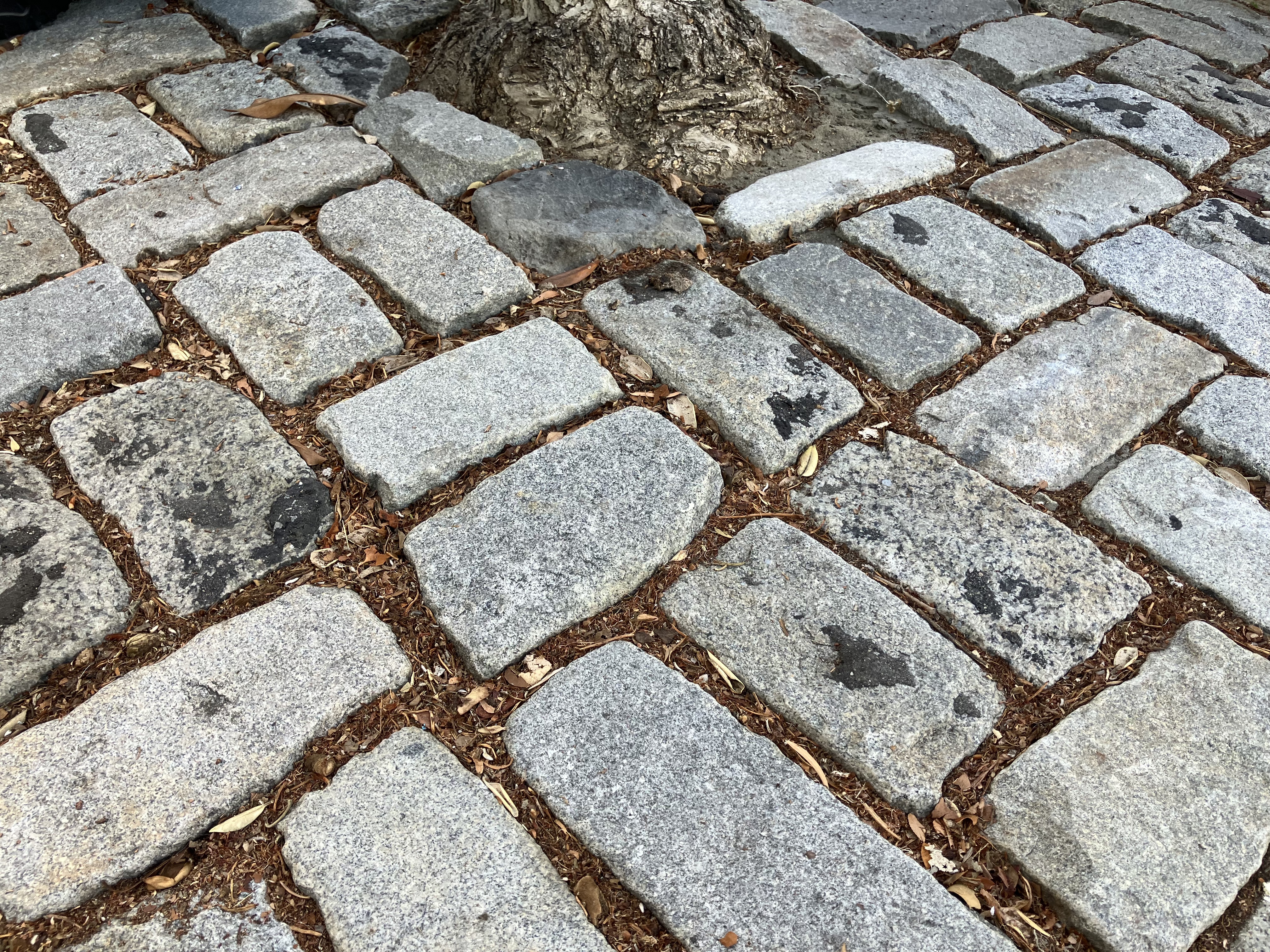
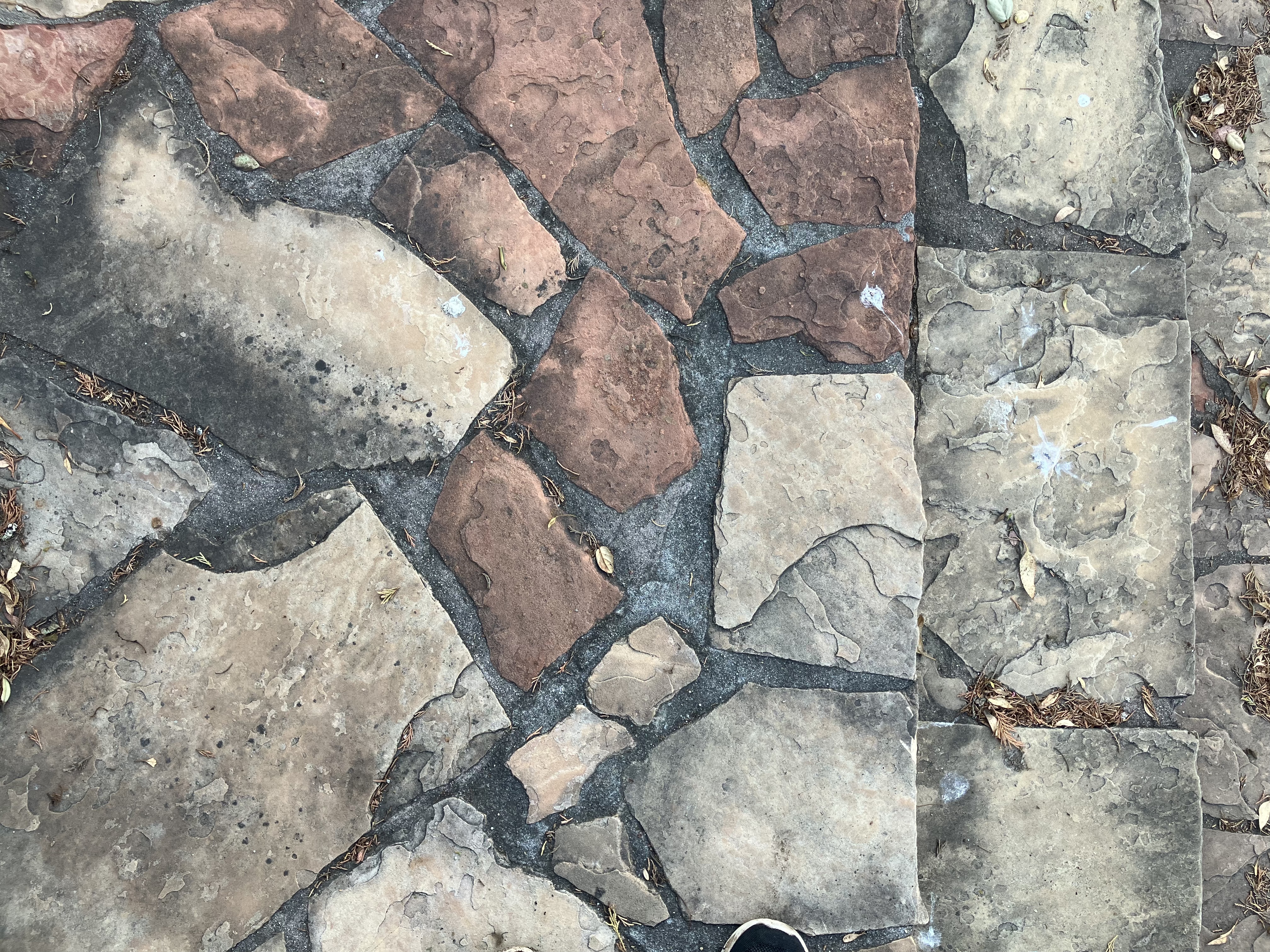
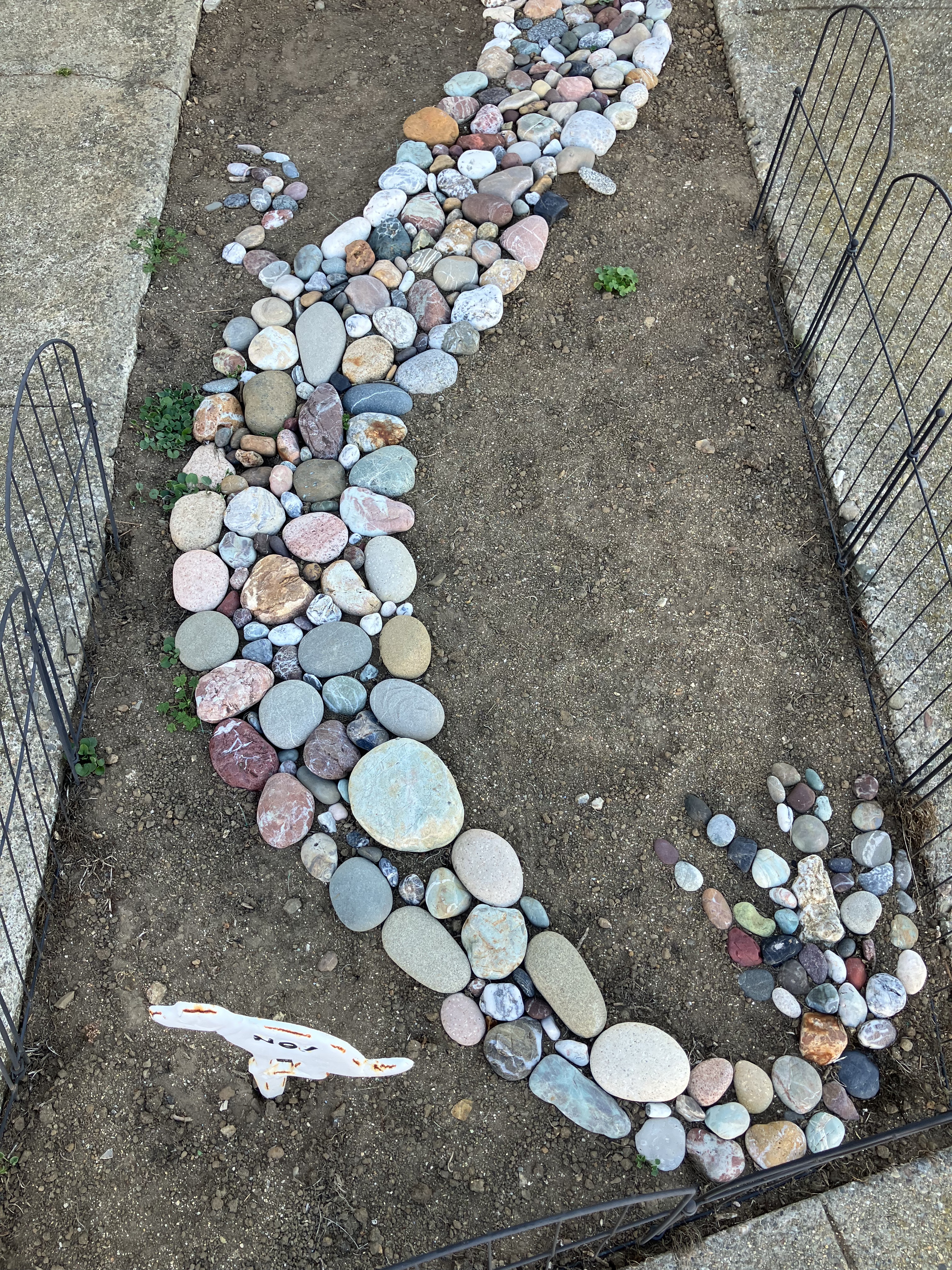
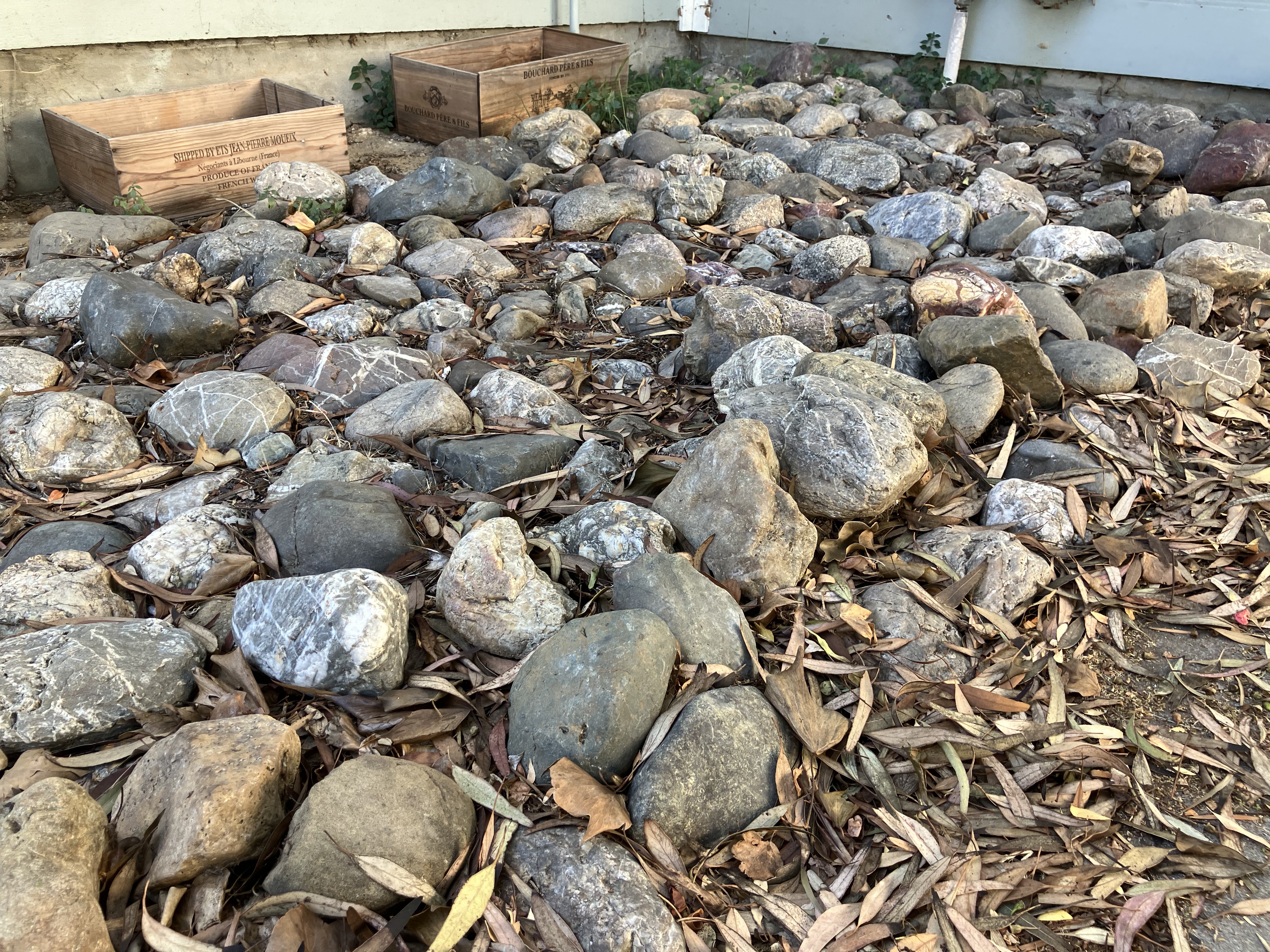
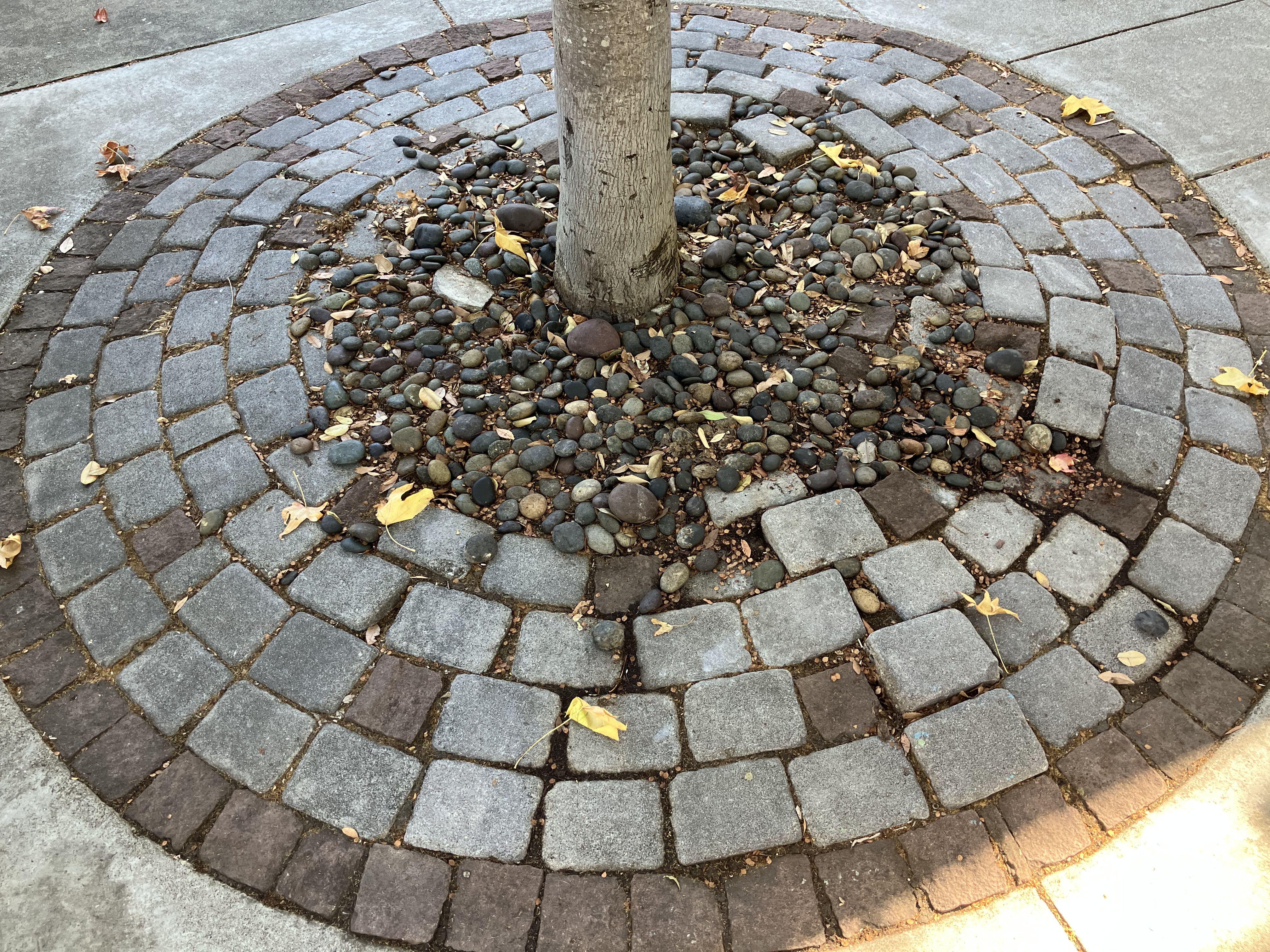
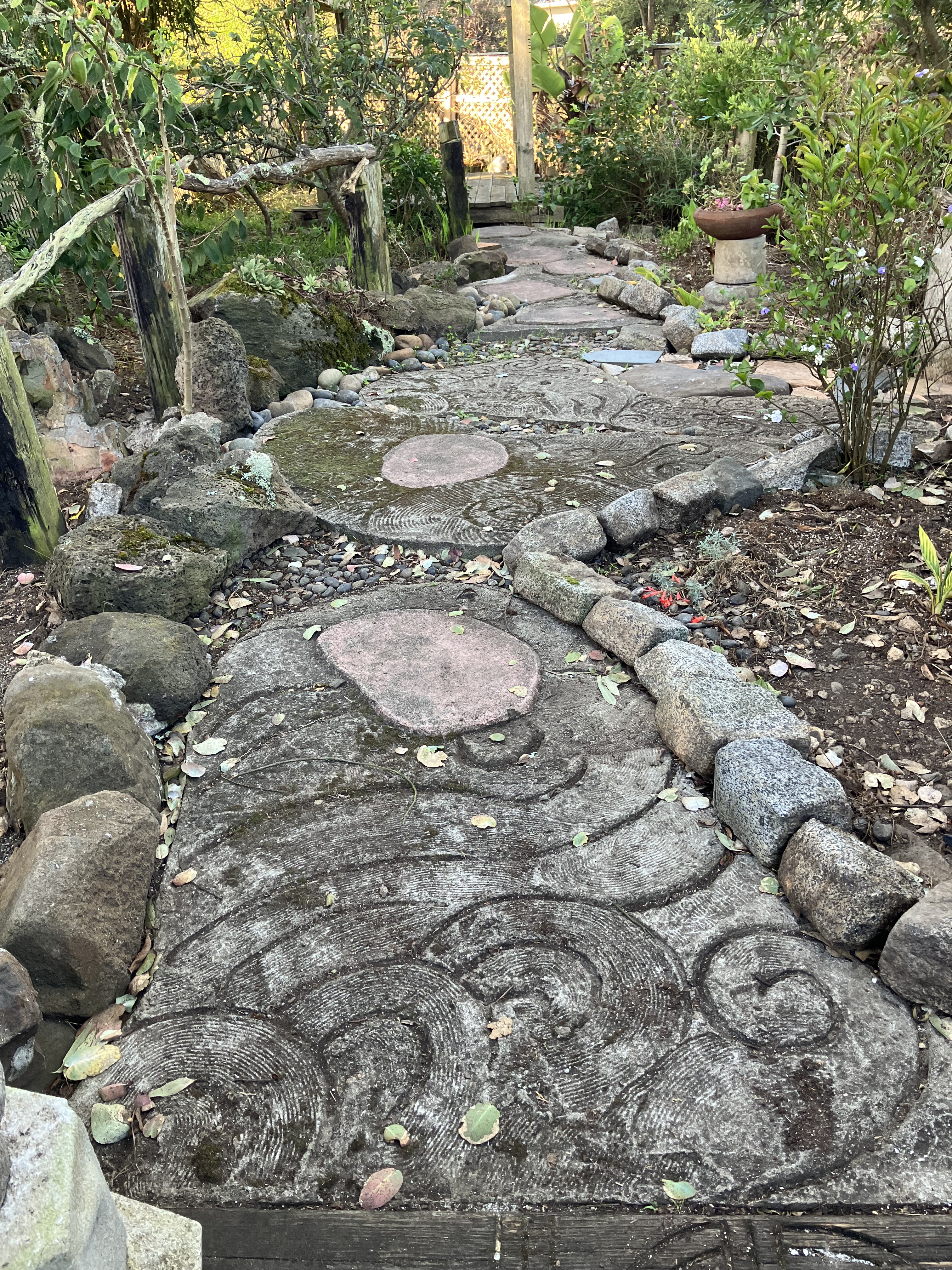
heres a couple of pictures to close it out then
thank you for reading all the way to the end
and thanks to Broadmoor Landscapes for the samples and supplying our local landscapers
























































 Mission Azul