Site inventory:

So we looked at this site, and squared it off like a rectangle for the inventory, to make the first time easy and encouraging.  Just this part, not the L of the plant bed goin around the corner.  You can do the same at any spot.  Start to observe the plants and the basic elemental forces that surround them.

IMG_4217


What do you see?

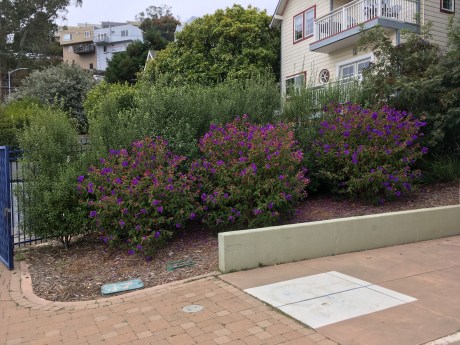
Plant wise, we see three princess flower bushes in the front, and about seven trees of Pittosporum tenuifolium kohukohu tawhiwhi as a hedge behind it.  A tree in the back corner coming from the neighbor is catalina ironwood, and underneath the ironwood some irisy looking things – chasmanthe.  On the ground are chips.

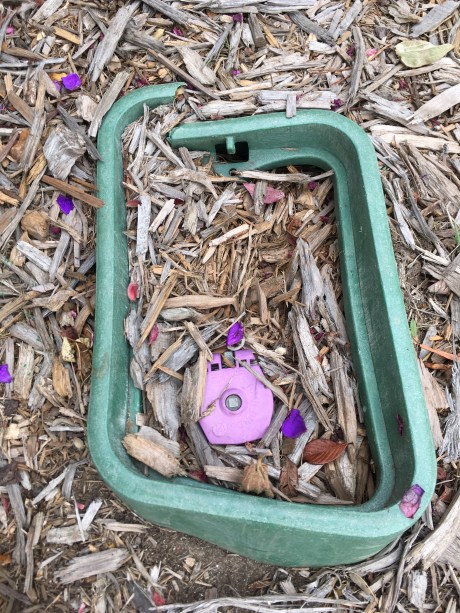
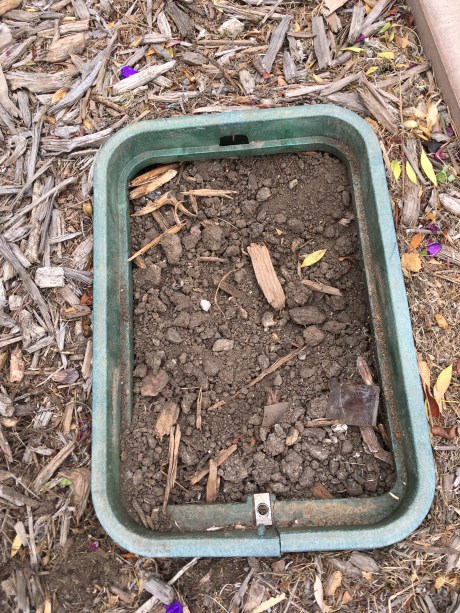
Water wise there are two irrigation boxes, one open with a purple headed quick coupler showing.  And another box not sure what is inside.  No visible signs of sprinklers or drip system, at least initially.

Hardscape wise there is a sitting wall retaining wall there on the right. Say about two feet tall or so.  And the blue metal fence behind it.  Lets look at it from another angle:
IMG_4218


We took a compass reading.  If you were one of the princess flowers with your back to the pittosporum hedge, you would be facing east.  So it is pretty protected from the onshore wind with the hedge and the hill and houses back behind it.  It is not out in the open like full on southern exposure but not too shady either.  Protected.  Not a bad spot that is why these purple flowers are blooming and blooming and blooming.  Alright, goin in for a close look.  Heres one box.  Purple color indicates the water inside is recycled water.  Meaning that it was flushed out one time to the water and waste treatment plant, they cleaned and disinfected it, and now its back watering the landscape.  Not drinking water, recycled water for landscaping:
IMG_4220

This the other:

IMG_4221

And hope its okay to take a look.  ????.  Pass.
IMG_4222


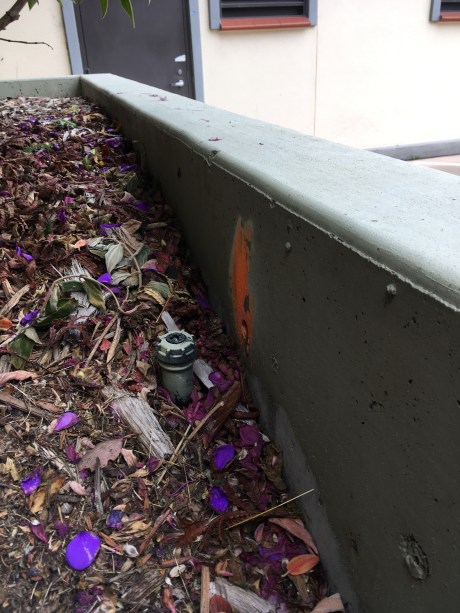
Go on up to the back, aha! Found a pop up sprinkler.  Not sure when it comes on…
IMG_4226


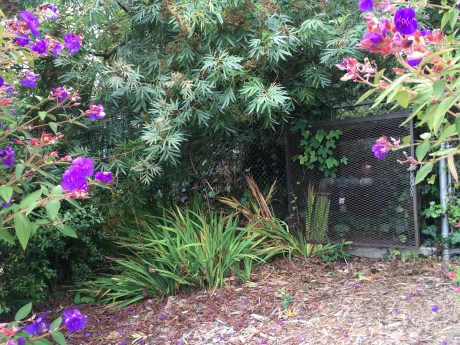
Beneath the ironwood is a large metal cage.  It is part of the water system, a backflow prevention device.  We will illustrate the principle and practice at a future time.  For now keep an eye on it, once you have seen one, you will see them everywhere.  Parks, schools, museums, etc.
IMG_4224


It would be nice to dig around in the soil and see what you are dealing with.  The day we went it was foggy.  The soil at the surface looked all wet.  But as soon as you dug down less than half an inch it was dry as a bone.  What does that mean?  When is a bone dry?  In the desert yes but usually it is moist and getting gnawed on by rodents for its calcium content.

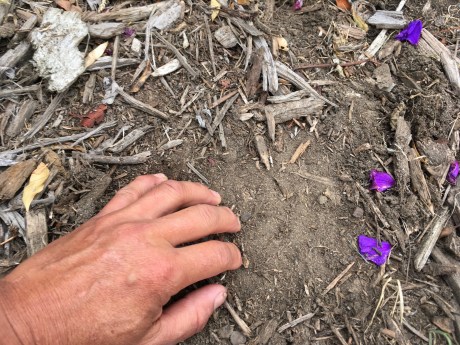
Anyhow, when I went back later in the day to take pictures, even the surface had dried.  Like this – a thin layer of mulch, a little bit of sandy soil.  Should have had gloves on.  Sorry.  Safety first!
IMG_E4219


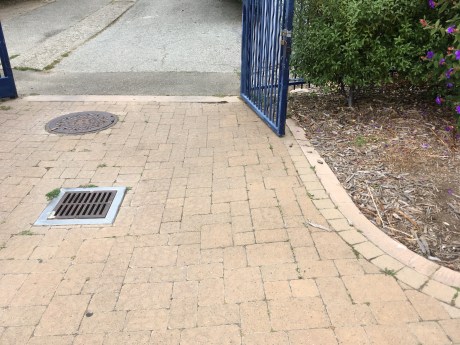
If you stand a little ways back you can then see the how the hardscape and the garden slope and irrigation run off would drain into a grate and catch basin.  The man hole cover there leads to the sewer:
IMG_4223


So a rough drawing not to scale would look something like this:

IMG_4245

Thats all for site inventory.  We will do them over and over again until you are intimate with the world and for all intensive purposes become a flowering plant.  Or a fern if that is your preference.

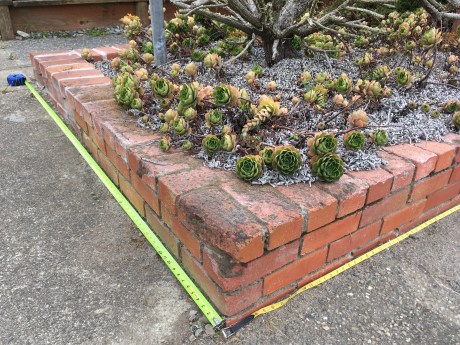
Now we are going to get a little bit more accurate and less rough.  When you set out to measure the yard, it is helpful bring some graph paper.  Overlay the space  with a grid with an x and y axis.  Bring your graph paper. Easiest to have two long tapes and stretch em out if possible.  Nice to work with a buddy system.  This way you will be able to measure existing plants and structures with ease.  We will use this brick raised bed as an example.  I see a metal post on the left, aeonium succulents all around, an echium that was pruned hard that did not or has not come back yet (the bare thing of all branches), a santolina the gray silver foliage plant on the right, and some wooden fencing.

IMG_4247

So let’s stretch out the tapes.

IMG_4234


Length is here.  Thirty feet!:

olength


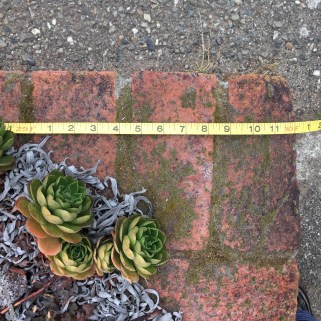
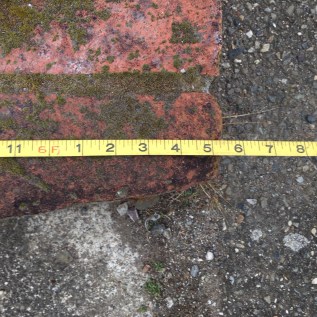
Width is here. Six feet ahhhh six inches.   Round up.  Close enough!
width


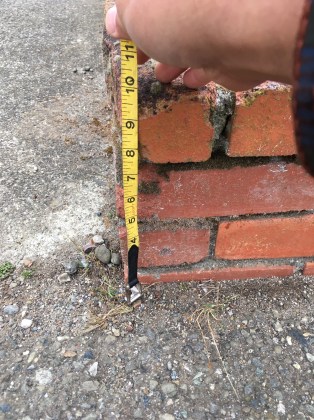
And lastly the height. Let’s say 10″ tall:
height


Now you can put this on your graph paper.  And write copious notes all around to try to remember this site.  Do note that I am drawing with a  thick sized sharpy marker for online communication and emphasis.  Don’t do like this in the real world!  Use a nice pencil or pen, not a marker.
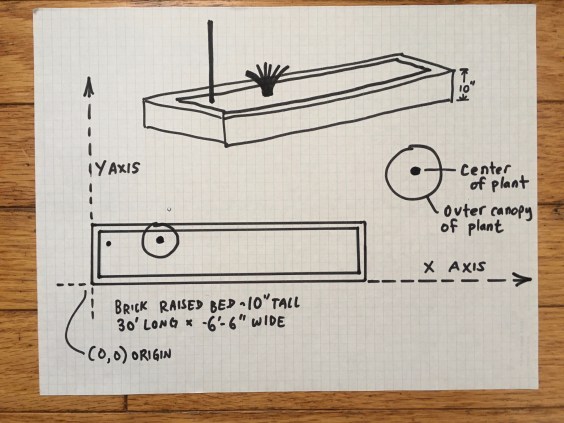
sorta


Lets say we want to draw the existing metal pole in our plan.  You would look on the x axis of where it lines up.  Looks about 1′-4″ here.
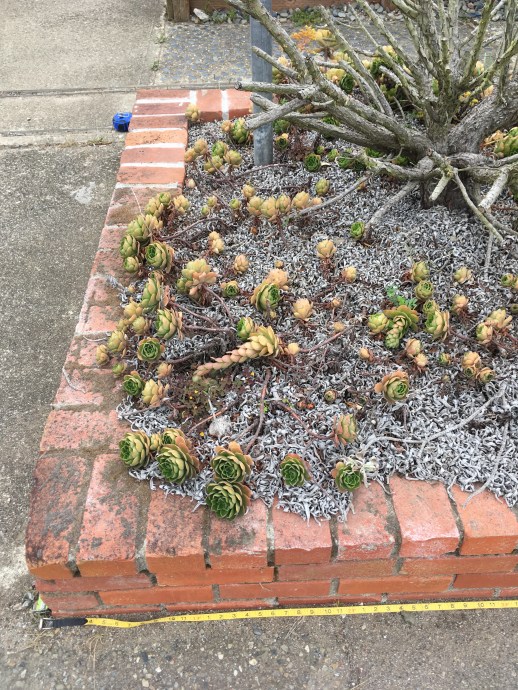
IMG_4236

Then along the y axis.  Looks like it lines up at about 4′ -2″.  What is the diameter of the pole?  Two inches?  Got it.  There you go…IMG_4237
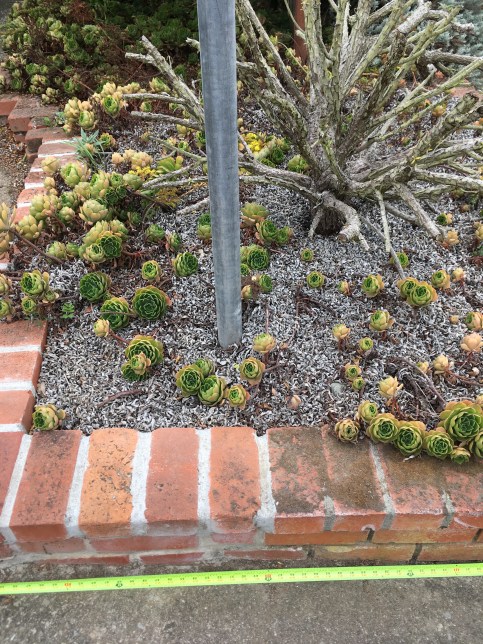
 

So for every site, when you are doing your site survey and taking your measurements, just overlay, impose, layer a grid on top of it.  This will improve your accuracy and make sure things are drawn to scale.  Pick a nice origin (0,0) and go from there.  Start at a square corner, take it X and Y.  Even awkward diagonals and circles and curves are easier this way.
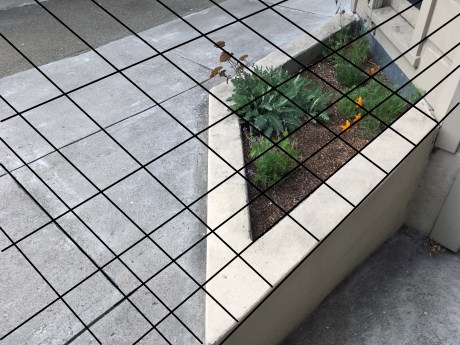
gridoverlay


Now on to drafting.  And eventually transferring that drawing on graph paper and that rough sketch into a presentable form.

These are the basic tools you ought to have.  The white thing is an architects ruler, not an engineers ruler.  Make certain of that.  The little numbers on the ends should say things like “1/4, 1/8, 1/2, 3/16”, not “10, 20″ and so on.  Standard measurements not metric.  There’s two plastic triangles here:  one is a 45 45 90 degree triangle, the other is a 30 60 90 degree triangle.  I prefer the orange one for our class.  We will use it for an isometric drawing later in the semester.  The black ink pen is a specialized technical drawing pen for drafting purposes.  They run about 1.50 or 2 or 3 bucks, each.  They are good in that their ink dries right away so it doesn’t end up smearing your paper, and they usually dont bust out on you and leak link out the tip like some ball point pens do.  .5 or .8 mm are nice sizes for the pens.  Underneath is a drawing table.  The table should be able to fit paper that is 18″ x 24”.   Ideally you have a quiet studio space to work, maybe even a drafting table that tips up real cool like so you don’t get as bad neck strain.  But if you do not you will have to make do with a dining room table and its surface and edges.  Perhaps pad it with the piece of cardboard that comes with the pad of drawing paper.
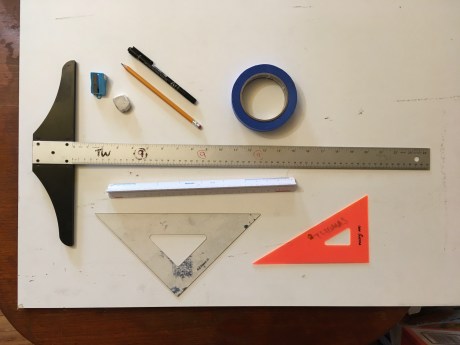
IMG_E4195


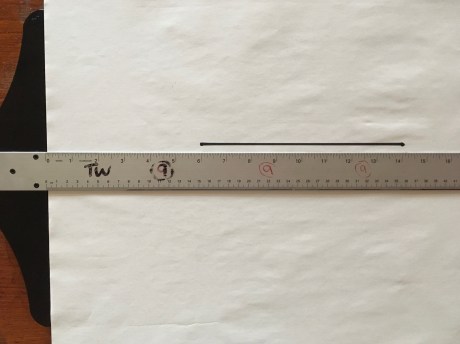
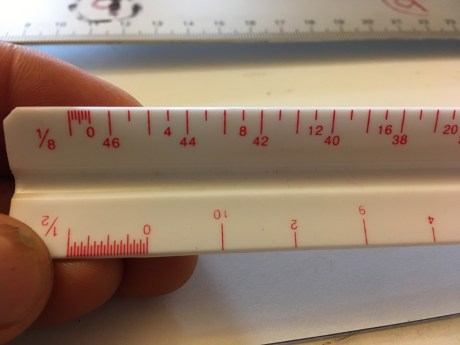
Scale.  The whole idea of scale is that you cannot draw a garden life size on a huge piece of paper.  Sure that would be cool as a modern art project but it is not practical to show a clients such a thing. So we will shrink it down so that it fits on our piece of paper.  It must be accurate, to scale, so that a contractor can look at it and be able to figure out how big the deck you designed is, or how much concrete has to be brought in, and where to place so and so plant.  So get your ruler out and look at it.  Flip the triangular toblerone shaped ruler until until you find the one side that says 1/4 on one side and 1/8 on the other.  The 1/4″ scale goes from the right and proceeds left.  It is the lower row of numbers here that say 0 2 4 6 8 and so on.  Ignore the 46.  So if you want to draw something that is 8 feet long, start at the 0 and draw the line to the 8.  The bunch of fine lines to the right of the 0 are to indicate the inches within one foot at 1/4 inch scale.  It is a common mistake to start at the very right.  Do not make that mistake!  Start at the zero 0!!!IMG_4196


Heres the ruler on the left side with the 1/8 inch scale. This scale runs left to right.  Use the numbers on the top row this time.  Where it says 0, 4, 8, 12, 16, 20, and so on.  So an 1/8 scale is half the size of an 1/4 inch scale.  These are the two scales I am asking you to draw and practice for this lab.  You can fudge a little bit in the drawing when it comes to itty bitty inches.  Say if something is 14′-2″ you just go between the 14′ and the 15′.  Half way between the two is 14′-6″.  From 14′ to 14′-6″ you go about a third of the way and that is 14′-2″.  Engineers are like what!?  You landscape designers are so inaccurate!  It should be down to nearest .0001 mm!!  But this is a garden we are talking about.  If you are off by 2 or even 3 inches it is usually not that big a deal.  You can always make adjustment in the field by pushing a bit of dirt that way, adding half and inch, half and inch there and making up the difference.  On the drawing itself, the pencil or pen line is already as thick as an inch or two even in the garden.  So do not sweat it.  The minutiae.  Move on.IMG_4197
 

Here is an illustration of some of the scales on that same architect ruler you have.  It is depicting what 40′ looks like at various scales:
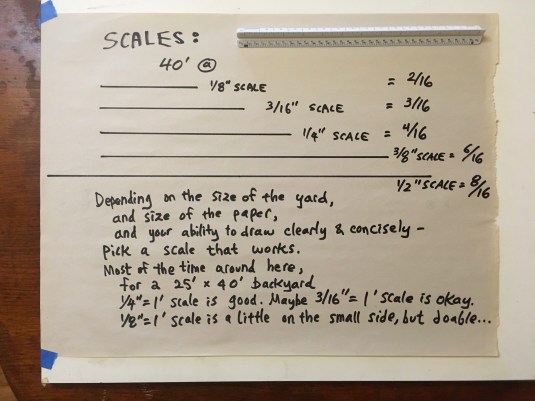
IMG_E4244


Okay lets draw.  We will start off with how you are not supposed to draw.  If you just tape your piece of paper on your drawing board all willy nilly then it will look like this.  Your lines will not be square with the paper.  Everything will be tilted as if it wants to slip off the side of the hill.

IMG_E4198


Then as you continue to draw the headhouse, you may be tempted to draw in all of the dimensions.  To be thorough, to show that you are doing a lot of work.  And the labels too!  It may look like this after a while of intensive work.
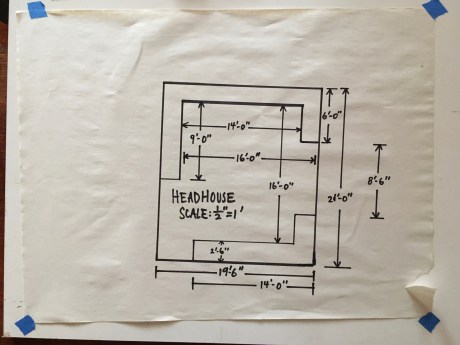
IMG_E4199


You are thinking I am going to go over the top and get extra credit.  What about if I put some plants in there too and hardscape and make the whole thing into a garden?!
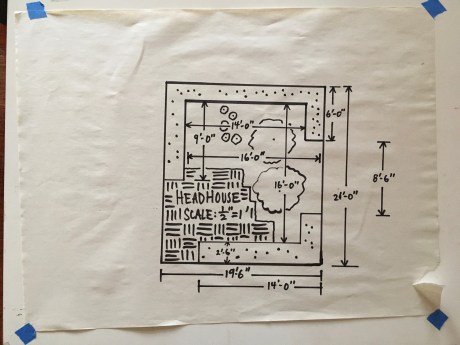
IMG_E4200


You have now gone way too far over the top and it is time to start over.  Lets start at the beginning again.  Again?!  Crumple up the mistake and throw it to the compost and worms.  They love cellulose.  Fit your new sheet of paper to the drawing board by feeling along the edges so they all line up tight and square.  Tape em down.

IMG_E4202

Edge like this:

IMG_4201


If you know the dimensions of the plan you are going to draw, a helpful hint is to cut out a piece of paper of the same size, and put it on the paper.  This way you can space it out so that is is centered and looks just right.  This is a good method if you have two or even three separate drawings all fitting on the same piece of 18″ x 24″ paper.  Layout.

IMG_E4203


Then you start to draw.  Make two dots, connect em.  Connect em in one smooth stroke one smooth breath.  No thinking just go.  By the way I am drawing with a fat sharpy permanent marker so that it shows up well on the screen.  On your drawing you should be using pencil.  Later we will go over it with an ink pen.  For now pencil.

IMG_E4209

Boom

IMG_E4210


You will be using the ruler as you go, to get the correct measurements on paper.  Sometimes I will run it along the top this way so that it is straight.  Make sure your T square is set firm against the edge of the board no wobbly actions, or else lines will turn out crooked.  Then its eraser marks and frustration and maybe ripped paper start over again.  So draw light pencil lines that are visible but do not put too much weight behind it.
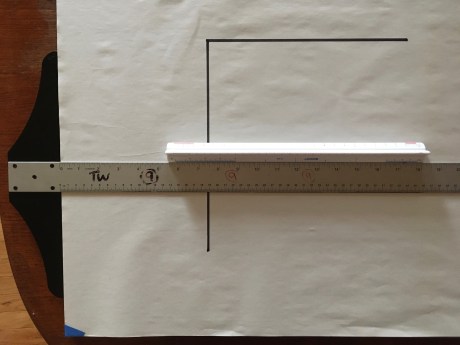
IMG_E4205


You can also use the triangle like this if you do not want to have to move the T square from side to side then up down then side to side.  I did smudge the marker there.  You can avoid smudging by using the technical ink drawing pens, and also some people tape pennies underneath the T square so it is slight teeny bit elevated and smudges less.  So the ink does not get trapped underneath the hard flat edge.

IMG_E4211


So just take the dimensions I’ve given you and draw the figure.  I’ve simplified it here a bit but it is the same idea.  Draw the dimensions lines indicating the length and width.   Just those two are fine for our purposes.  Too many dimension lines will take away from the overall CLARITY and CONCISENESS of the drawing.  If a contractor wants to know how big the patio you have drawn is, they can pull out a ruler and measure it.  The drawing is to SCALE.
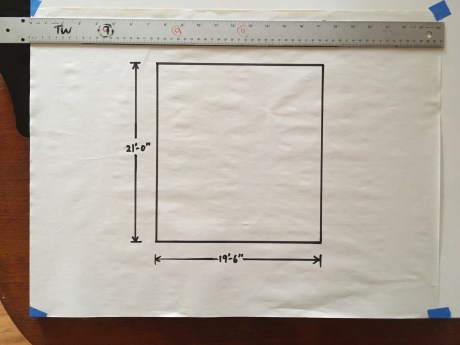
IMG_E4206

These extension lines indicate the extent of the dimension lines, the end points.  The termination point is indicated with arrowheads or a dash.  Choose your own style, just be consistent throughout your drawings and dont switch it up back and forth.  CONSISTENCY.

IMG_4208

Finish the labelling and you are done.  Easy clear simple and concise.  That is what we are striving for.
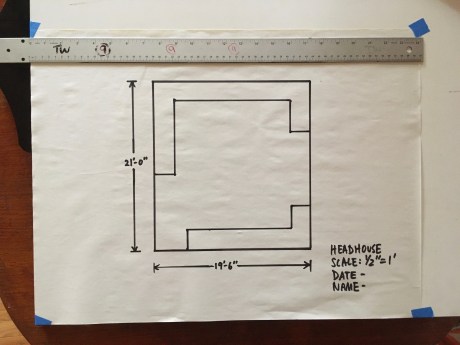
IMG_E4207

Here is a student’s sample from last years.  Thank you Josephine!  Okay give it a shot.  Notice how the 1/4 inch scale is bigger than the 1/8 inch scale.  Those are doors swinging open.  If you were here I could show you the door to the back classroom, the door to the shop and garage, and the double doors that lead to our greenhouses.  Alas…
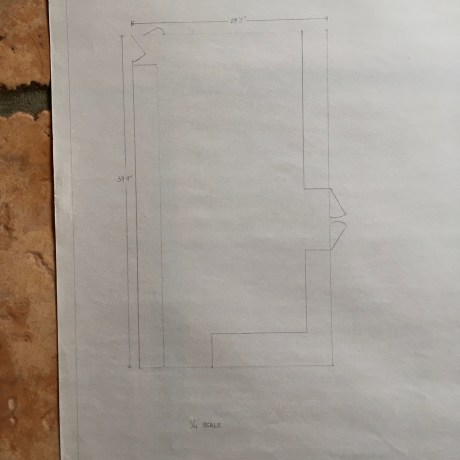
IMG_E4215

C’est tout!  Fini!  Hopefully not too bad for a first draft.
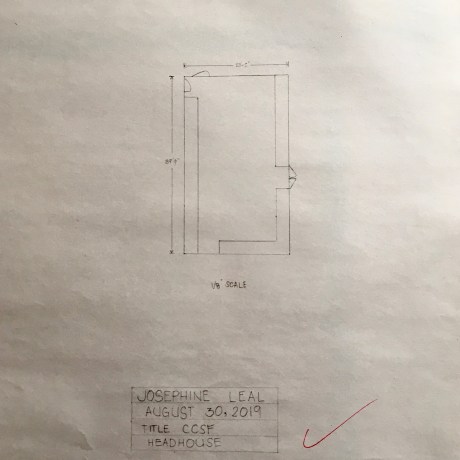
IMG_E4216


SAFETY

With regards to safety. Safety starts with awareness and your mind in sharp focus. A pair of kevlar chaps and carbon fiber hard hat and a thousand barricades will not help you if you are not present. You have to acknowledge that nature and the world we live in is dangerous, and can cause harm to you. This can happen if you are not careful, but can also happen because it is some crazy fluke. So you want to be prepared irregardless, and try to avoid getting hurt.

Hazards in gardening are many. The soil is full of bacteria. Some of it is helpful, others can get inside of you and try to take over and eat you alive. You will swell up with an infection, the bacteria will make their way into your blood, sepsis amputation and death are not far off. Lucky these days hospitals are equipped with antibiotics made from fungus and precisely other soil bacteria. Otherwise lights out. Many people who reminisce about the old times, or who have an idyllic vision of nature, often get into trouble because they want to put their bare hands in the soil and be one with mother earth. Maybe out in the country but in town it is right dirty and best to wear gloves. If you have an open wound for sure avoid contact with the soil. If you get an open wound or cut from a hori hori knife or a long barb of blackberry remember to wash it out good with soap and water. Not sloppy either wash it good.

Another common hazard is stinging insects. Around here the worst is yellow jackets that nest in the ground cause sometimes you don’t see em till its too late, you’ve already stepped on their nest and they come roaring out really mad. It really sucks when they go up your pant leg or chaps, are trapped, and really panic and sting and sting. Then you have to drop your drawers in the middle of the park and hope your underwear is not too unsightly. It would be a good idea to know if you are allergic to the venom. You can get tested by a doctor or wait and see if you have never been stung before. If you are allergic and persist in the great outdoors get an epi pen which is a shot of epinephrine which is adrenalin, so that you can inject yourself in the leg and not go into shock. Then get help. Just so you know bumblebees can sting also, as can of course honeybees. These are all insects in the colonial matriarchal clan called the hymenoptera. Ants are in this group too. Lucky here we do not have the stinging red ants in the south nor the massive conga paraponera bullet ants of the tropics. So before you go into a patch of ivy to weed it, observe to see if some yellow and black bugs are flying here and there. Watch where they are going. Preventive practices is a big part of being safe. Black widows are a concern too. So watch out for irrigation boxes and cleaning out the potting shed that hasnt been touched for a decade. Mostly with the spiders it is like with the moray eels, don’t just stick your hand down in some place some hole you cannot even see. Give em some warning, stir around with a stick. You are not superman or the widow whisperer.

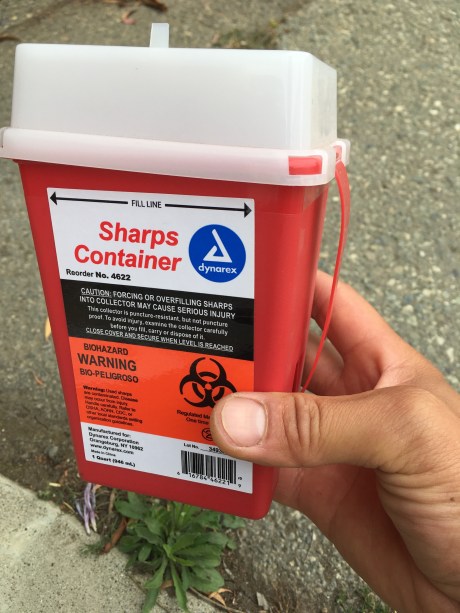
Something along the lines of stinging things but human created is hypodermic needles. Around here there used to be a clean needle exchange. You bring in a dirty one, you get a clean one. Then it went to you bring in a dirty one, and they give you four clean ones. Now folks working on the street tell me its unlimited clean ones. So the needles, after being used to inject plant based chemicals, end up in the litter, in the ground. And if you are gardening, sweeping raking leaves and branches, that needle will likely end up jabbing you right in the hand as you go to pick it all up. So what do you do? Use a scoop shovel, use a rake, avoid contact. Bring a sharps container for such days. Until public health starts to care about you, you gotta care about yourself and take precautions.

sharps
Branches and trees are a big safety uh oh. Any tree worker can tell you stories. And stories. And stories. Its not that trees get mad and want to kill us, its just that they are so big and sometimes rotten and unpredictable. Yes physics and leverage and the lean are all important to know, but some trees… Eucalyptus in particular… Then when you are dragging branches or cutting a hairy trichome covered limb, you realize that wearing some eye protection does not make you a nerdy weenie, its just being safe. Like my buddy Gus says, “You only get one pair of eyeballs”. Haven’t heard of eyeball transplants or artificial AI eyes or stem cell grown eyes yet. Protect them. And hearing protection goes along with that too. Of course both Gus and I are probably a little guilty of this, and so do as we say, not as we do. So many good friends be jackhammering, shooting their 12 gauge, running that chainsaw, going to a rock concert, with no hearing protection at all. It takes a while but sooner or later. You are trying to talk to them. “Hey! Hey! Hey there you over there!” But nothing, they cant hear you no more! They see you motioning, and they smile back, but they are in a cloud. Sigh.

There is endless hazards working in the landscape and garden (rodent poo, human feces, poison oak, holes in uneven terrain, etc) and I won’t bore you with much more about safety. Just pay attention and dont rush things. I’ll finish this section with a story about an accident that occurred a couple of years back.

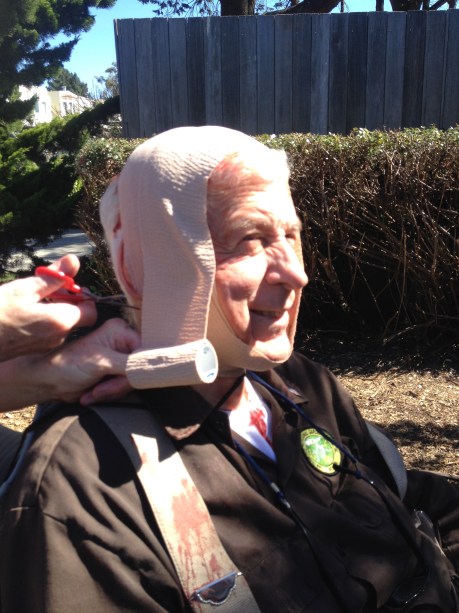
We went out to do our labs after lecture. The lab was pruning. One student went to prune the Lophostemon Brisbane box tree out front of our compound. He had a long 12’ fiberglass pole pruner and saw combo, and was pruning this tree from below. “I know what I am doing, I do this all the time”. Gus is supervising from a distance, sitting in his little electric cart. Then as the student pruned a small branch, it was falling down, he wanted to catch it. So he let go of the pole and the pole saw came down right on top of Gus’ head, hitting him square, luckily with the blunt part of the metal end not the sharp part, otherwise he would have died right then and there. Now Gus is one tough codger, born 1934, been through polio at 19, and been through all sorts of garden arborist diving fishing hunting accidents. So he took it like it was nuthin, still smiling and conversing with the students. Blood gushing and staining his white hair all red. I think some students were about to faint; we had some super competent nurses Nancy Lewis and Ana Trejo and Arete Nicholas as students in the class, and they luckily helped him out good. Scott took him to the hospital. If Gus was a wee bit younger he probably would’ve just shook it off and wrapped it with some duct tape and stayed to finish the job! So lessons were learned by everybody. No use blamin’. Gus learned to position himself a little further from the action, and wear a hard hat. The student learned not to let go of the pole saw. And I learned that I should tighten up the supervision and keep hammering on about the importance of safety.

IMG_7945

Addendum to the works of Maestro Tom Perlite
regarding the location of greenhouses
August 26, 2020

The nursery that I started off working in was at the San Francisco Botanical Garden. I worked there as an assistant nursery manager (grunt) under the direction of Dr Don Mahoney. This was from 1995-1997. The nursery was built in the lowest part of the garden, next to the California native plant garden, redwood grove, water reservoir and pump house. Cold air is denser and tends to gather in the low spots. On cold winter days all the bunchgrass meadow in the native garden would be white with frost. There were a few freezes too but not many. When a really cold snap was forecasted Dr Don would go around wrapping the really tender plants with blankets or plastic tarps and the like. Why they put the nursery there in such a cold place I do not know.

On the nursery grounds, there was a small glass greenhouse, an enclosed area with plants outdoors, and other structures that housed ferns, epiphytes, rhododendrons, the electric cart, and so on. Half of the greenhouse was used for plants. The other half was the boiler for heat, potting tables, a tiny gas burner for making morning coffee, a tiny bit of office space, and a meeting space with a table. It was the break/lunch room for the workers.

Next to the greenhouse was another covered structure that used to have fiberglass roofing which was replaced with polycarbonate. It was protected but cool, with no heat. It had doors that could open if too hot, and closed if too cold. In this room were more cutting beds, palms and cycads, vireya rhododendrons, begonias, vines, bromeliads, and others.

In spite of the somewhat shady and cool conditions we grew a great diversity of plants. So rather than growing things that needed a lot of light, we grew things that needed less – like cloud forest plants and under the canopy shade plants. Plants that were adapted to the weather in the western part of San Francisco, inner Sunset district. Specific genera that did well included Cuphea, Tagetes, Cestrum, Iochroma, Fuchsia, Salvia, Psychotria. Alpines such as Raoulia, Edelweiss, Sempervirens, Androsace.  The fertilization regime was mild, it was not like some nurseries that are fertigating every single day. We would use both synthetic fertilizers like osmocote, as well as organic ones like blood meal.

The nursery was split. Part of is was overseen by the chief nursery specialist growing plants for the garden itself. The specialist was an employee of the City of San Francisco, a civil service job. The other part of it was overseen by the society, managing garden volunteers who were growing plants for the plant sales to raise funds for the society (was the Strybing Arboretum Society, now San Francisco Botanical Garden Society). When I started, the nursery specialist was a gentleman who loved to grow orchids named Alek Koomanoff, he is a friend of Tom Perlite’s. Later, this position went to a nice lady named Jeanne Rich.

It was neat because the plant specimens we grew were unlike those grown in the wholesale and commercial nurseries. The goal was conservation of and education about plants. Many plants were collected in the wild – brought back from expeditions by Don, botanists and curators, or local enthusiastic plant nerds who kept good records. Some plants were truly ornamental and had that horticultural potential, others were just down right weird or obscure but oh so interesting. “Have you ever seen anything like this?!” was a common refrain on the lunch table when some lil ol lady brought in a flower that bloomed for the first time. Sometimes we knew that it probably wouldn’t sell but that did not stop us from growing it. By “it probably wouldn’t sell” I mean that it might have had small not so showy flowers, a habit that was not tight and compact and garden like, a size that would only work in a large arboretum, it appealed to birds and butterflies but was otherwise lackluster, or it was difficult in cultivation. So it was appropriate for a garden full of plant and nature lovers, but would not work out for people who are looking for something that was low maintenance or commonplace and ‘easy’. There was that experimental edge – not necessarily looking for what always looked good (what the chinese call ‘saving face’), but more the feeling of ‘try it and see’. And of course, with plants, you may not know the results until thirty or forty years later. So this philosophy of planting is a more plant centered view of the universe so to speak…

There was a huge book shelf of specialized books and Hortus in easy reach. Wandering traveling botanists and gardeners would somehow show up at the door and engage in excited plant discussion about the awesomeness of the flora here in California and specifically San Francisco. Don would answer most or all of the questions and often set off for the garden in one of them flat electric carts in search of or in reference to some unusual unheard of plant from Indonesia. Or upland Mexico. Or hinterlands of China. Conservation in action.

don

Location wise it was convenient for volunteers who would drive down the service road and park right in front of the nursery. At that time there were maybe 10-15 regulars, split up over three days, and so everybody somehow fit okay. It was a fringe thing basically that had little to do with fashion trends. There were volunteer work days every Wednesday, Friday, and Saturday. Volunteers were in charge of the various plant departments: orchids, ferns, California natives, perennials, rhododendrons, alpines, roses, passion vines, salvias, geophytes (bulbs corms and rhizomes), grasses and grass like plants, cactus and succulents, fuchsias, and trees. The average age of the volunteers was something in the range of the 80’s, like 82 or something. Most were ladies but some men also. They were treasure houses of knowledge in their particular realm of expertise, and had a passion for flowers which seemed to make them immortal and full of the get up and go. Just think of it, a Salvia master who was growing two hundred plus species of Saliva, helped out by one or two apprentices. Making cuttings, sowing seeds, weeding pots. Every department was this prolific. All done for free. I do not remember any of of them ever complaining. Although sometimes they would have quibbles and tussles over territory and space with each other. So then Dr Mahoney would have to play referee. Lucky thing he worked for many years in a mental hospital before committing himself to the garden.  The volunteers came, worked hard, left with smiles. Eighty ninety year old elders with dirt in their fingernails.

There was very little vandalism back in the day because most vandals and thieves really do not target plants. They did target the nursery when we got a high pressure sodium grow light, and broke the windows on a couple of occasions to steal the light. Other than that it was a very mellow and secure place. The main ‘pest’ was algae, algae growing on the roofs and algae growing on the walkways inside the greenhouse. My job was to scrub the walkways with some bleach, and to scrub the roofs with a brush attached to a really really long stick so that I could reach the top of the roofs while standing on top of a ladder. Then get the hose and rinse it all off. Another pest was mice eating the seeds. So a plexiglass wire cage was built to keep the seeds safe.

As more and more plants were grown, and the sales grew, the nursery expanded to encompass the higher upper terraces above the greenhouse. Volunteers rigged PVC pipe, bamboo, and polyfilm to create several makeshift greenhouses, mostly for the cactus and succulents which like it with a little bit more heat and a little bit more dry. Very very DIY style.  The posts are galvanized steel fence t posts connected to the white curved PVC pipe.  cross supports are bamboo and more pipe.

IMG_4185

All in all it was a good location because it was a happy place where people were able to gather together and share their love of plants. Our plant sales would all be down there next to the nursery. So before the sales we would pull out tables and fill them with plants, in anticipation of the Saturday shoppers who would walk down to the nursery. So in a sense it was restricted and constricted – in traffic and in cash flow. You could not pull right up with your car and load it with tons of plants in a frenzy. You had to carry the heavy potted plants in your arms back up the hill through the garden, or bring a little red cart with four wheels past the bamboos and dawn redwoods and monkey hand tree and silver tree and manzanitas. It had that old time feeling of civility and camaraderie.  A place that worshipped not the king who is money but a place that paid homage to the queen who is the earth and plants.

At the time, the only employees on the society payroll working in the nursery were Don full time and myself part time three days a week. It took Don ten years working there to get enough raises so that his pay was equal to that of a gardener. That is as a PhD botanist in range management from UC Berkeley. Funny. So like Mr Perlite says, “You are not going to get rich in this field”. It was very low key and you might say low pressure but highly productive and highly energized by great energy and fantastic people.

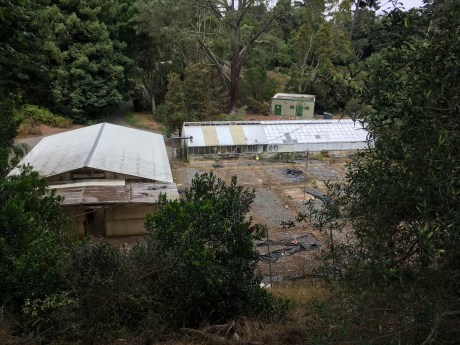
In the early 2010’s the society fundraised for a long time to build a new nursery up top by the Children’s garden on the west end of the botanical garden. This would have made a lot of sense since there is already a gated entrance there which would be useful for supplies and delivery and construction and such. Additionally it is sunnier and a much larger space. For one reason or another it never happened and time ran out on that project. Then recently they decided to build a new nursery where the old one is currently and that is what is happening now. Operations have temporarily shut down. The nursery volunteers are no longer there, Don Mahoney retired to his double lot apple orchard botanical wonderland in the east bay, and the nursery sits empty for now. Architects have drawn up plans and there is active fundraising in the works. Stay tuned… This is a picture from the final days.  Some of these volunteers have been there for over thirty years.  And you know what?  They look the same youthfulness as when I was working there in 1995?!  Plants I tell ya, they are amazing healers.

IMG_1665

A few other greenhouse location stories are as follows. These are as accurate as my memory serves. If I have made mistakes in the telling of these stories I apologize. Let me know and I will make corrections. Thank you.

One year we went out to visit Four Winds Growers in Fremont, around year 2005. They are a citrus nursery. Location wise they sit right next to the pipes that conveyed Hetch Hetchy water from the Sierras to Crystal Springs Reservoir and San Francisco. In the early years they were able to tap the water and use it to grow their plants. This was great! It is high quality water with little dissolved salts. No contaminants. Then later, the city tightened up and the nursery no longer had water access anymore. And had to go to regular groundwater which is how most counties and municipalities get their water in the Bay Area. San Francisco’s water rights and allotments are changing as well as money centers shift away from the City. A neat thing I remember about Four Winds was their greenhouse cuttings room. They had stock plants growing in the ground, both for the dwarfing rootstock as well as the scions for different citrus fruits. They would graft the two pieces of almost leafless rootless wood with a rubber band, and leave it in a greenhouse with 95% constant humidity. They said in 6 weeks it would be a joined plant with roots that they could then pot up and put outside. I was amazed! Think about where citrus trees originate in the subtropical wet monsoon climate of southeast Asia it does make sense. Checking on their website it appears they have moved operations to Watsonville.

When I worked in the San Francisco Recreation and Parks Natural Areas Program, our main goal was the restoration of native vegetation throughout San Francisco Parks. I was the nursery person for three or so years, collecting seed and growing them in a shade structure, not a greenhouse, in the Park Nursery in Golden Gate Park. At the time I was also in charge of the natural areas of McLaren Park. Next to McNab Marsh in McLaren there was a whole block of greenhouses that were rented out to a scattering of peoples. There was one grower of shiitake mushrooms, and another orchid grower. But for the most part the greenhouses seemed a little bit abandoned and in disuse. The people who owned the greenhouses offered them to Recreation and Parks for super low rent, like a dollar a square foot, but Recreation and Parks did not want them. I told my boss Lisa Wayne, c’mon Lisa! Lets get em! We could grow all kinds of mushrooms there! For bioremediation! For medicine! For fun! But Lisa who works in the refurbished emergency hospital where Dirty Harry went to get cleaned and stitched up, Lisa who is John Wayne of Peacemaker Colt’s niece. She said no. And looked at me firm, shaking her head side to side. No Thomas. Oh well. I tried. So the land got sold and if you go back there now it is all houses. Somewhere close to Bacon or Cambridge or Amherst street.

Lastly there are some greenhouses in Richmond that were worth checking out. There is a really inspired lady named Robin Parer who runs a nursery called Geraniaceae. She is in love with all the members of this family. She grows both the garden Geranium and Erodium as well as the ones from South Africa called Pelargonium. We would always see Robin and her booth at the San Francisco Flower and Garden Shows. We went to tour her greenhouse in Richmond by the railroad tracks on a field trip with CCSF students. They were a series of long wooden greenhouses, similar to Tom’s. I recall her saying the rent was $500 a month for a whole green house. $500 a month!! What a bargain. This was back in 2005. Still.

In the greenhouse she had every Pelargonium you can imagine, and more. In hundreds of scents and textures and forms. She regaled us with stories of wild collected seeds and specimens, and many students bought plants from her that day, including myself. Before this I had only seen like the same five six species of Pelargoniums everybody has. I’d witnessed fancy new hybrid cultivars but not totally different species!  That day blew my mind a little bit more open about what is out there in the world.  Diversity and possibilities!

There is another very successful grower in Richmond who runs a shop called Annie’s Annuals. It is certainly worth a look if you like plants. But last we visited, she does not grow in a covered greenhouse so that is off topic here for this class. But investing in a slightly more inexpensive location, making it secure, then finding a way to direct traffic to your site safely (in person or by internet and mail order), that is certainly relevant to location.

Found this on the internet about the Richmond greenhouses:

https://nextcity.org/features/view/richmond-bay-area-transforming-brownfield-into-green-development

as well as this PDF about the Sakai Nursery:

Click to access ca3549data.pdf

This last and best story comes to us from Jeanne Rich, the former Chief Nursery Specialist at San Francisco Botanical Garden. In her own words:

I went to school at Butte Community College originally to become a landscape designer because I had a four year degree in Art and I loved plants. Thought it would be a great fit using my drawing skills-back then there was no Autocad programs or a lot of computer design programs. That tells you how old I am. Luckily I had an awesome teacher like Thomas who recognized my abilities and steered me in the right direction. He first encouraged me to join the Hort Club and then asked me to become the Horticulture Manager in the greenhouses and Plant Sales Manager. I was hooked immediately and I never looked back. I was responsible for three large single gable greenhouses-at the time state of the art with all the bells and whistles.

After I got my degree I knew that my passion was for taking care of plants and starting my own nursery. I was living in a small town in the Sierra Nevadas and had a small family-one son and husband. I was full of ambition and took my savings and a small refund from taxes and started my own business in my back yard in Chester, California. It is a place that sits at about 4500’ on the western side of the Sierra’s, where huge amounts of heavy snow can occur any year. I managed to have great success with my business and put up a Quonset style 20X50 greenhouse in my back yard. Many years we have very little snow and some years huge amounts. We call it Sierra cement-heavy with water. When the Sierra cement came down we would have to go out and shovel the snow from around the sides of the greenhouse to allow the snow to shed from the roof, so the greenhouse would not collapse. I managed to go for twelve successful years with my business, despite having to get up in the middle of the night to stoke fires in the wood stove, and keep the snow cleared. But unfortunately one bad year with super heavy snow did me in. I was drinking my coffee one morning and getting ready to go shovel some heavy snow off the roof of the greenhouse. I looked out my window and saw that the greenhouse was gone? The whole greenhouse not only collapsed but it inverted itself! It was amazing, and it only took seconds. Moral of the story, even if you have great ideas and a good business, you need to study what greenhouse structure will work best for your needs, your location and your climate.

After that experience I got pretty discouraged because I hadn’t had the smarts to have insurance. I decided to sell my business and move to a much better growing climate. I got a job as a gardener with the GGNRA at Fort Mason for 2 years, then was encouraged to apply for a gardener’s position for the City of San Francisco. It took a while, but they hired me and I worked at Buena Vista Park for a few years. Then my boss at the time knowing my background in Nursery Management, told me to apply for a greenhouse position for the City. I started work at the Conservatory of Flowers in San Francisco as a Horticulturist/ Nursery Specialist-which I loved. But then my boss recognized my experience with outdoor plants and took me aside and offered me a position at the San Francisco Botanical Garden as the Nursery Manager. It was a much better fit for my knowledge and skills and I accepted immediately. It was a great experience in propagation as well as greenhouse management.

The greenhouse that I was responsible for was an old Lord and Burnham glasshouse from the late 50’s or early sixties. Aluminum purlins and glass. I believe it was made in England, and I suspect at the time it was top of the line. In todays’s standards it is old and outdated and is being replaced by more modern, state of the art technology. What I liked about it was the simpleness of design and ease of operation. Sad to see it go but it fulfilled many great years and memories for Strybing Arboretum and now San Francisco Botanical Garden. I am now retired and have moved back to my home town in Chester, California and will always have great memories of my career in the Nursery business. Although it is a much more complex world these days, I still believe if you have a dream of being in this industry you can be successful if you are willing to study hard and work more hours than are in the day! Just kidding, maybe 12 hours a day? Good luck!

– Jeanne Rich

IMG_4182

IMG_0541

Supplementary notes to
California Master Gardener Handbook
Chapter 2: Introduction to Horticulture pages 22-26
PLANT GROWTH
Water and light, those are key. In places that are dark and dry not many plants grow. Plants can tolerate the cold as long as there is also a warm period for them to grow and make more babies. If it is cold all the time – no good. Then they hunker down, slow it down, don’t do anything. They are still finding seeds in the arctic and Siberia from 30,000 years ago that when planted today are able to germinate. 30,000 years of Rip Van Winkling!

Plants survive on a variety of soils. From a granite crack in the mountains to the constantly flooding thin soils of the rainforest. From the icy permafrost tundra soils to shifting sand at the beaches. In general, its easier for plants to tunnel through loose soils compared to dense hard soils. That is why you plant your lettuce radishes and tomatoes in friable (easily crumbled) compost rather heavy clay hardpan where it would be strugglin’.

In some cases, the size of the plant above ground is reflective of and similar to its roots under the ground. Imagine the root systems of those oaks on the brown hill ranches all over the state. Four hundred years of massiveness. In other cases a small and nondescript plant above ground may have a huge long root system underground hidden from view. Think about a two hundred year old tiny little alpine plant that lives at 8,000 feet. Its small aboveground because of the wind and weather and snows, but down below it is snuggled and snaking deep into the rocks. You are caressing it saying “Oh you are so cute” and the plant is expressing “I’m old enough to be your grandma five times over”. Depending on its ecology and evolution, plants have a preference for either nutrient rich soils, or junky nutrient poor soils, and everything in between. Soils in riverine valleys that receive the floods and muds of centuries tend to be on the rich side. Soils that are ancient and worn down from millennium of erosion tend to be on the poor side when it comes to basic nutrients.

 
PHOTOSYNTHESIS
Simple sugars made by the plant are glucose, composed of carbon, hydrogen, and oxygen.  Sugars are inefficient to store, hence the plant converts them into carbo hydrate starches, oils, and fats. These are the seeds, grains, and fruits that we are familiar with: Oats, wheat, rye, rice, soy and corn.  Coriander, pepper, nutmeg, cardamon. Olive oil, sunflower oil, canola oil, safflower oil.  The same foodstuff we feed to our cows, pigs, chickens and sheep.

Plants combine sugars with nitrogen and sometimes sulfur atoms too, to make proteins like pinto beans, garbanzo beans, lentils, almonds,  chia, walnuts, and broccoli. It also combines the carbon hydrogen oxygen with nitrogen to make alkaloids such as caffeine (coffee), nicotine (cigarettes), quinine (gin and tonic), mescaline (peyote or san pedro cactus), theobromine (chocolate), tubocurarine (blow dart poison and surgical anesthetic). Well you get the -ine idea of the alkaloids which are basic in pH and have a bitter taste.

Plants transform sugar molecules into plant hormone molecules. The plant hormones help the plant to grow roots, ripen up, elongate and develop, and enter or exit dormancy. In addition, plants make a wealth of other compounds useful as detergents, dyes, tanning agents, waxes, medicines. All of this from photosynthesis and from nutrients absorbed from the soil.

RESPIRATION
Respiration is what we all do, we breathe. Breathe in oxygen, exhale carbon dioxide. This is true for bacteria, bugs, worms, animal, people. This is not true for a group of bacteria which like to live in places with no oxygen at all, those are the anaerobic bacteria. The anaerobic bacteria thrived before plants took over and spewed tons of oxygen into the atmosphere. They did not like that.  Nowadays these anaerobes are still ever present, but just not as dense or as visible. The best way to acknowledge their presence is to put some cut flowers in a vase and let the flowers sit. Let them sit until the flowers are all wilted and go brown. Let it sit for a few more days. Then go and smell the water inside the vase. There you go. Anaerobic bacteria eating the decaying plant matter. Yuck dump it!

Plants breathe in carbon dioxide and breathe out oxygen in photosynthesis. Plants can also breathe in oxygen and breathe out carbon dioxide when they are respiring, and using some of their stored energy to grow and develop. They are producers of food and oxygen, as well as consumers.

CYCLING OF PHOTOSYNTHESIS AND RESPIRATION
Photosynthesis is like – a gain, you are making food and storing it. Respiration is a minus, you are spending the energy. As a plant, if you spend more than you make bad news, you get stressed, and go dormant or die. Your balance, going forward, must be positive.

WATER AND NUTRIENT UPTAKE
A nutrient like calcium is present in the soil as whitish chunks of rock or tiny bits of dust. Nutrients like magnesium iron zinc potassium and copper are metals that are present in the soil bound up in some mineral chunks, or present as a crystalline solid by themselves in a vein. When water comes along it dissolves these substances and they become a part of the water flowing through the pores of the soil. The plant roots are turning this way and that way, digging with the lubricating goop tip of the root cap, while the root hairs spread out to suck up any available water. There is an exchange of electrical ion activity at the root zone and the nutrients are pulled and start going up up up into plant.

 
TRANSPIRATION
The movement of water up the stem or trunk of a plant is similar to you sucking on a straw at the milkshake in a cup. Or, it is like trying to siphon gas by sucking through a plastic tube. In a plant it is the leaves with the stomata open, breathing, that sets in motion the movement of water up up up. Imagine that the sun is out, theres tons of water in the soil, and your energy factory (the leaves) is in full swing. So bring up that water, breathe in that carbon dioxide through the stomata, and make food make food make food! Move it! Store it! More food more food! When the sun is not shining, then the stomata are closed and so is the energy factory. Time to rest.

TRANSLOCATION
Plants need particular compounds in particular places at various times in their development. When it is actively growing green leaves, the plant needs nitrogen for those new sprouts. And if nitrogen is in short supply, the plant will move it from the older leaves to the younger leaves. If it is in really really short supply, that is when you will see stunted plants or leaves going yellow green in color.

PLANT DEVELOPMENT
In general we divide a plant’s development into two phases – the vegetative phase of getting bigger and growing a lot of leaves, and then the reproductive phase of flowering, fruiting, and dispersing of seeds. This can happen very quickly on a one time basis for annual plants that live a few months. Boom and bust. In a long lived plant the phases alternate back and forth, back and forth. And if the conditions are not ideal the plant will sometimes skip the reproductive phase and hang out until the conditions are right. Or they may give a a one last hurrah and just all in, go for it, but then die afterwards. These phases often coincide with planetary cycles of warm and cool or wet and dry.

Supplementary notes to
California Master Gardener Handbook
Chapter 2: Introduction to Horticulture pages 10-22

INTRODUCTION TO HORTICULTURE

The relationship of care and sustenance between people and plants comprises our everyday life and existence.  Materially speaking, we are inseparable from plants and horticulture.  The fruits and vegetables in the market are horticultural products, as is the morphine drip in the hospitals. Horticultural or agricultural work drives peoples across state and country lines to pick and harvest. In the recent past, the need for labor in plant work moved peoples from Africa to the Caribbean and North and South America, it moved Filipinos Portuguese East Indians and Japanese to the Pacific Islands.  Or, in the case of plant disease, a sickness of the potato brought the Irish to the Americas. Or ask some elder folks in Appalachia about all the dead chestnut trees in the woods at the turn of the 20th century. Horticultural cultivation of plants drugs like coca, marijuana and opium fuel economies and cultures worldwide.  Stimulants like coffee, yerba mate, and tea keep everybody awake for work. Horticulture is also beauty and pleasure – the blooms of forsythias and roses, a grand row of magnolias along the street.  The importance of horticulture is absolute.   Our lives are totally and completely dependent on living and dead plants.  This is not to mention oxygen, fossil fuels, meat production, rubber, pharmaceuticals, and other industries wholly or partially originating from, and dependent on, plants.

WHAT PLANTS ARE

According to the amazonian indians, plants are sentiment and conscious beings who are more ancient than us, and are our teachers. This view comes to us from a culture that evolved in the rainforest for the past 15,000 years + alongside about 40,000 different species of plants. Plants of course do not speak our language or have concentrated focussed intelligence centers like our brains, nor are they ‘mobile’ in being able to walk around. But you may say that their ‘intelligence’ is spread out through their roots and connected to the soil and all the creatures that create and enable life on this planet. This has been the direction of recent scientific research into communication and the ‘mind’ of plants. Plants have been around for about 470,000,000 years, while we are a relatively newcomer at 200,000 years. Ratio wise plants are about 2350 times older than us.

An easy way to observe the cementing agent in plants known as pectin is to make jam. Many fruits when cooked, boiled down, and cooled, gel together nicely. That is the pectin in action. If a fruit is lacking in pectin you can buy some to put in the pot while you stir it. Try to make some jam with either the ripening blackberries around town or lesser known fruits of garden plants like strawberry tree Arbutus unedo, autumn berry Eleagnus umbellata, or fuchsia berries. Make it a fun day long activity that starts with a hike and baskets, pauses in the kitchen in the middle while jam is cooking, and ends with a PB and J on the sofa for dinner.

PLANT STRUCTURE

MERISTEMS
Meristems are the actively growing cells that make a plant grow wider or grow taller. The taller you get or the wider you spread the more leaves you grow – the more food and energy you can make.

ROOTS
The roots are usually in the soil and anchor the plant in place. Another function of roots is to spread out in the ground and gather whatever water and nutrients it can find and suck them up into the plant. Nutrients are dissolved in the water as electrically charged ions. Kinda like that vitamin water is always advertising. The ion nutrients have names like calcium, phosphate, magnesium, and so on.

They say some 85% of all plants have an association with fungi in the soil whereby they are friends and help each other out. The plants give sugars to the fungus, and the fungus will channel and give the plants water and nutrients from miles and miles around. This is a symbiotic and mutually beneficial relationship. Roots can go very deep and very wide. The fescues in the Midwest prairies have roots that go down 10’+, and a big 100’ tree can have roots that extend outwards to three or four times that (300’ – 400’). Sometimes you will see roots growing right from the trunk itself out in the air. Around here it is most prominent on the commonly planted street tree called New Zealand Christmas tree. If you see these long red strands hanging off of a tree, those are roots wanting to reach the ground and become another trunk.

STEMS AND SHOOTS
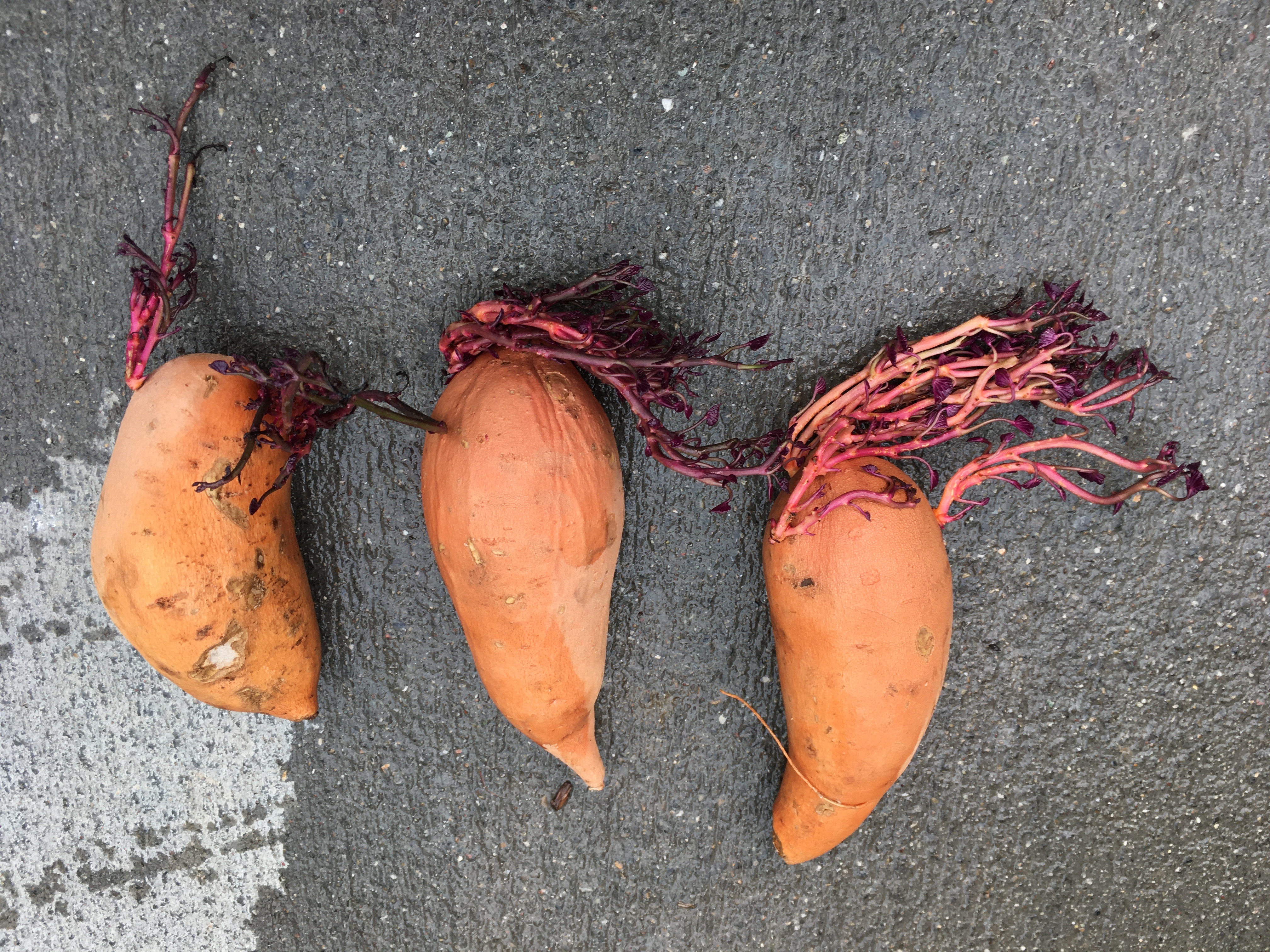
Stems conduct materials up and down the plant. On the stem are buds from which emerge leaves,stem shoots, flowers, and sometimes even roots. When a stem goes sideways above ground it is called a stolon, like on Bermuda grass lawns. When its underground going sideways it is called a rhizome, like bamboo or ginger. When it becomes swollen with the food energy it is called a tuber like in a potato.

It is confusing – the potato stem tuber, versus a sweet potato, which is classified as a tuberous root. They both just look like swollen chunks of starches. Well the best sense I can make of it is that in cultivation and growth they are different. The potato tuber has those little sunken ‘eye’s all over it, each is buds that can sprout. So if you cut it up into a few pieces they can all grow. It can grow from all over. But a sweet potato, a tuberous root, has a more up and down orientation whereby only one part of the chunk grows. It does not have buds all over it.

sweet pot

When you look at a stump or a piece of cut lumber, you can see the growth rings which show this system of channels moving substances up and down. In general, there is the xylem tubes which conduct water and nutrients, mostly going up. Then, there is the phloem tubes which conduct sugars made by the leaves down, up, and even side to side. This depends on where the plant wants to store it, or on where the plant wants to use it as an energy source.

When you tap a sugar maple tree in the springtime, you are catching the rising sugar sap in the xylem. Aside from the xylem and phloem there are also other tubes in which flow other substances. The thick sticky gooey stuff that comes from a cut wound in pine trees – that is a resin or pitch. It is good for making varnish, for incense, or for hafting a stone ax to a wood handle in the olden times. With time it turns into amber. The sticky resin on the hairs of cannabis flowers – that gets made into hash which is a big commodity in North Africa into Europe. Latex is a white sap exuded by plants in order to defend against insects eating it. Chicle chewing gum is a natural latex, as is the rubber used in tires.  Especially tires in airplanes.  The dried substance from opium poppies is also a latex from which both legal opiates as well as illicit ones are derived.

BUDS
If you look or feel a branch you can sometimes identify the buds readily. They are funny little nuggets or bumps that are all along it. They are arranged in different ways that make a plant easily identifiable even if you cant see the leaves or flowers. In some plants the buds are hidden under the skin the bark, but as soon as they are called upon to activate they will spring into action. They are called dormant or epicormic…  Say theres a sunlit opening in a gap of the shady canopy.  Grow that way!

LEAVES
Leaves are the energy factory of the world. Plants breathe air through little holes on the leaf called stomata, and leaves receive water and nutrients though the roots, stems, and veins. As light passes through the stacks of green cells called chloroplasts in the leaf, the plant is able to make sugars from the carbon dioxide it inhales and the water it sucks up. It then stores the sugars as starch or as oils for hard times, and it exhales oxygen as a waste product of its energy production.

Carbon dioxide makes up about .04 % of the gases in our atmosphere. It is a product of stuff burning and dying. It gets released into the atmosphere when volcanos blow, forests catch on fire, and bodies decompose. In plants, that same carbon from the CO2 gets strung up or bound in rings into the molecules we call sugars and carbo hydrates.  The oxygen in our atmosphere that we all breathe is made by algae and trees. It is about 21% of our atmosphere’s gases.

FLOWERS
A showy flower attracts insect or bird or animal pollinators with pollen, nectar, smells and colors. Pollen is male plant sperm which is a yummy protein rich food for many insects. Nectar is sweet liquid, sugars good for energy. Smells can be really sweet and come on only in the evening for moths, or smell like putrid flesh if the flower wants to attract flies.

Many flowers are not showy. They do not have to attract anybody because they rely on the wind and occasionally the water for pollination. These flowers are often small and insignificant and produce copious pollen because their method of pollination is like a scatter bomb approach.

Many plants do not have flowers at all. These are the cone bearing plants like pines and firs, the ferns and mosses and horsetails, or the weird cute little plants in moist places called liverworts. These plants also rely on the wind and water to get together.

Pollination is the touching of male and female parts of a plant. The male pollen touches the female sticky part called the stigma. After the parts touch, eventually the sperm makes it to the egg cells. This results in fertilization which means the plant is gonna make babies. The babies are called seeds. And the seeds are usually sitting in some kind of a structure. The structure is sometimes a woody cone whose scales open when mature to reveal the seeds, or the structure is some kind of a container or vessel called a fruit. The fruit can be juicy and tasty, or it can be dry and hard, or any number of other variations.

SEEDS
The seed is the product of sexual reproduction. Female and male. Many plants make seeds sexually through pollination and fertilization, but also reproduce asexually (without sex) by cloning and dropping themselves on the ground in some way. Both strategies are useful and help survival. Seeds are comprised of the baby plant itself (the embryo), a little bit of food to help it along in the beginning, and a coat that protects the whole package.

FRUITS – OR CONES
After fertilization, the flower fades away because its job is done. Then the ovary of the plant which is the storehouse of the seeds grows big and becomes a fruit. There are yummy fruits which attract bats or rodents or elephants to eat them and disperse the seeds in the dung. There are exploding fruits which throw the seeds several feet away like the squirting cucumber or the impatiens. There are fruits that can float on the sea for years until they dock on desert island sands like coconuts. Sometimes what we call the fruit is not the swollen ovary but the plant part at the base of the ovary, like in a strawberry fruit with its little seeds all on the outside not on the inside.

CLASSIFICATION OF PLANTS
We will lump the classification of plants into three broad categories. (1) Folk, (2) horticulturist/gardener, and (3) scientific. Folk is what everybody around world does – teach their kids about the plants useful in day to day life. That way when you are out foraging, you dont take the poison hemlock root home thinking it is a white carrot root crop. Or when you are gathering firewood, you don’t pick up all that light pithy termite filled wood that is no good for cooking and burning and keeping warm. You want that dense hard wood. Some cultures developed their folk classification systems to a very high level. One such culture was documented by the local botanist Dennis Breedlove along with anthropologist Robert Laughlin in the book The Flowering of Man: A Tzotzil Botany of Zinacantán. The following is category (2) – the ways gardeners classify plants:

GROWTH HABIT
More appropriately lifespan when talking about annual, biennial, and perennial plants.

STRUCTURE OR FORM
When you go to the nursery, usually this is how plants are grouped. Trees are in one section, vines in another, and so on.

LEAF RETENTION
If you lived in a place that got really cold in the winter with the sun low in the sky, then at some point it is a waste holding onto all them leaves because they are not doing anything. They are not making energy or doing work. Better to drop em and grow them again come warm spring. This is the fate of many trees with names like sweet gum and oak and maple and beech and larch.

In another scenario it gets so hot and so dry in the summer that the leaves are breathing and breathing and pretty much gonna endanger the whole plant because its losing tons of water. So then the plant decides to drop all the leaves and grow them again in the fall winter months when the rains come. This is the fate of shrubs and trees with names like sagebrush Artemisia and red bud.

All of these are deciduous plants. Winter deciduous or summer deciduous. In the wet tropical rainforest the plants are more likely to be evergreen, not deciduous. This means that they keep leaves on all year, but still they will drop a few leaves time to time – the old leaves, the leaves that are not working so well anymore cause they are in too much shade.

CLIMATIC ADAPTATION
Look up zone maps. There are two that are commonly used around here, one is by the U.S. Department of Agriculture, and the other is put out by Sunset Garden. Look both up, and see if you can figure out what ‘zone’ you live in.

USE
Use is going back to folk classification, category (1).
One more system or criteria we neglected here is based on the plant being ‘woody’ or herbaceous. Woody is hard and stiff, breaking when sufficient force is applied. Herbaceous is soft and bendy. Trees and shrubs – woody. Leafy perennials like anemone heuchera pansies – herbaceous. Taken as a whole, you can have an herbaceous evergreen perennial, for example new zealand flax. Or you can have an herbaceous deciduous perennial that dies back to the ground, like a hosta. Maybe somebody would say well that is not deciduous.  Sigh.  Okay.  Then herbaceous diebackalacious perennial.  How about the banana tree? Herbaceous or woody? Gotta go squeeze and push on one to find out…

BOTANICAL OR SCIENTIFIC CLASSIFICATION
This is the classification system which grew out of Europe in the 1700’s and is now worldwide. It groups plants into families based on the characteristics and structure of the flowers, for the most part. For example there is the Brassicaceae Cruciferae family with flowers that are four petaled and shaped like a cross. A crucifix. There is the Lamiaceae Labiatae family with flowers that are like labia with lips up and down, and often but not always square stems. Sage, mint, rosemary, oregano, thyme, lavender, and basil are all in this family. Go check out their flowers!  The current estimate is about 300,000 species of plants and anywhere from 150 – 200 – 400 families. Botanists do not agree on the number because nature is very diverse and the plants do not fit easily into boxes.

Within each family are its similar members grouped into genera and species. In cultivation we further classify particularly useful individual clones/populations as cultivars (cultivated varieties). The cultivar is always written with single quotes like this   ‘ ‘. So in apples there are European crab apples Malus silvestris, and Japanese flowering crab apple Malus floribunda. The apple we eat is Malus domestica. Domestica means something like lives with people. And by the way sativa means cultivated.  The apple cultivars have names like ‘Red delicious’, ‘Gala’, ‘Pink Pearl’, etc. You can do this same exercise with wine grapes, plums, and so on.

If you are going to be a designer or landscaper it is good to learn the names of plants using their scientific names. Not only is it cool to know a little bit of Latin and Greek, it will also ensure that you are talking about the right plant when communicating with others. Not “Yeah the one with the blue flowers, you know, blue bells or blue devil or blue eyes or something like that. The one with the green leaves. Let me show you on my phone. Grr… the battery is dead!”