If you want to learn the different names and kinds of hard materials we use in the landscape, best to go to the rock yard or the lumber yard. They showcase all the gravels pebbles decking flagstones bricks boulders and blocks and such you could ever dream of.

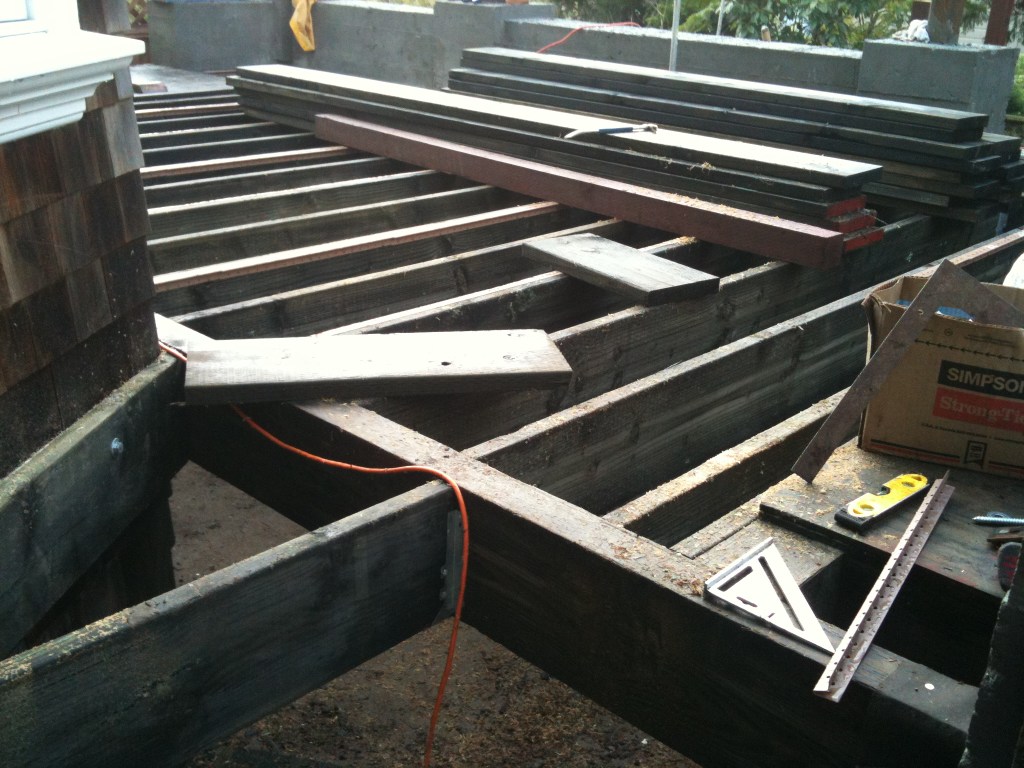
If you want to see how things hold up over time, go walk around the neighborhoods and parks and see the hardscape in action. How they weather, how they perform with use. If you want to see how things are built, then you will have to sneak a peek during the construction phase. Here’s a few pictures to get started. With the caveat that the whole world is your classroom if you keep your eyes open and have your observation skills honed razor sharp.

What happens to a concrete paver driveway if the base was not prepped properly, then water and earth move in the layers below?

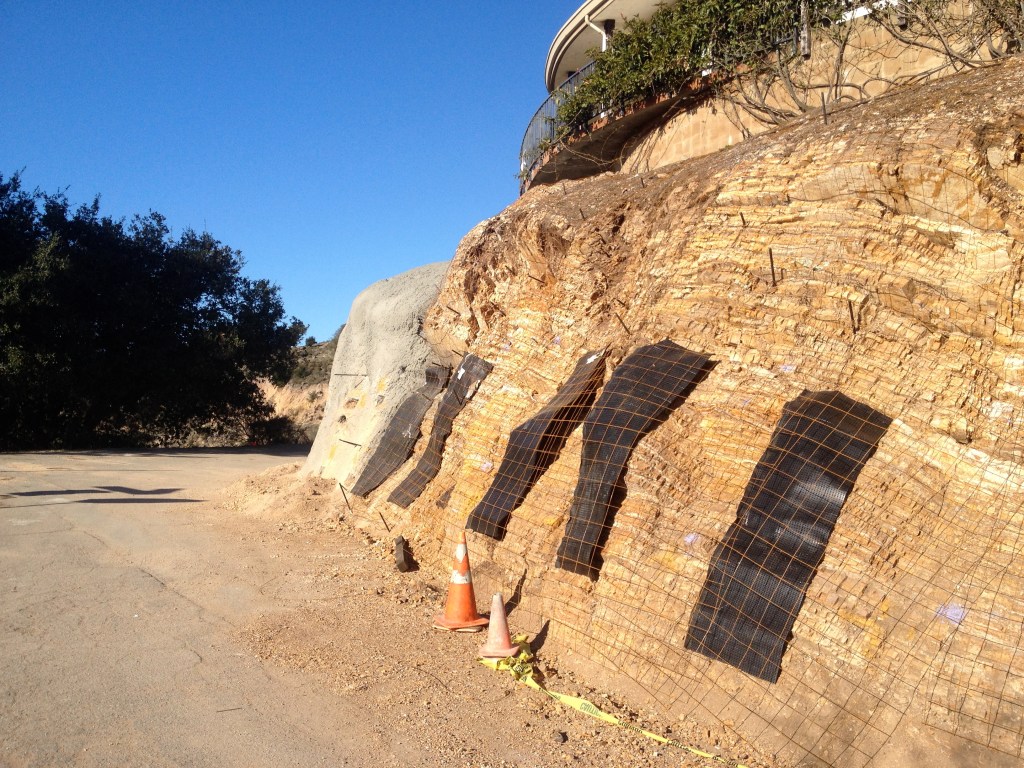
What happens to a retaining wall over time if the weight of soil and water is too great and there is no way the wall can release that pressure? (The wall is not permeable in any way)

What are two ways to make a raised bed planter? Which one is permeable?

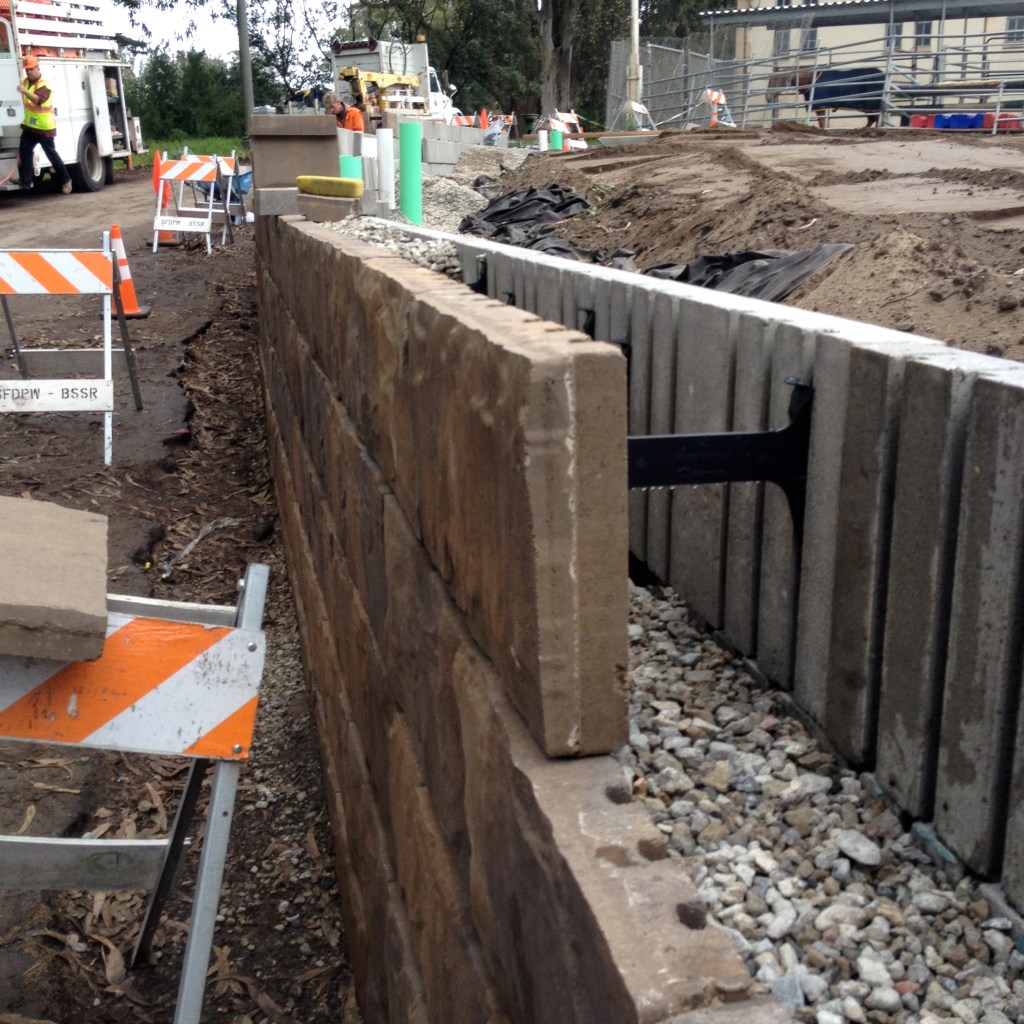
What about a new modular type system for building a retaining wall that is faster and easier than hauling huge blocks of heavy material or making a massive wooden form?

Dry stacked is the retaining wall made with no mortar. This way it is permeable and allows built up pressure to be released.

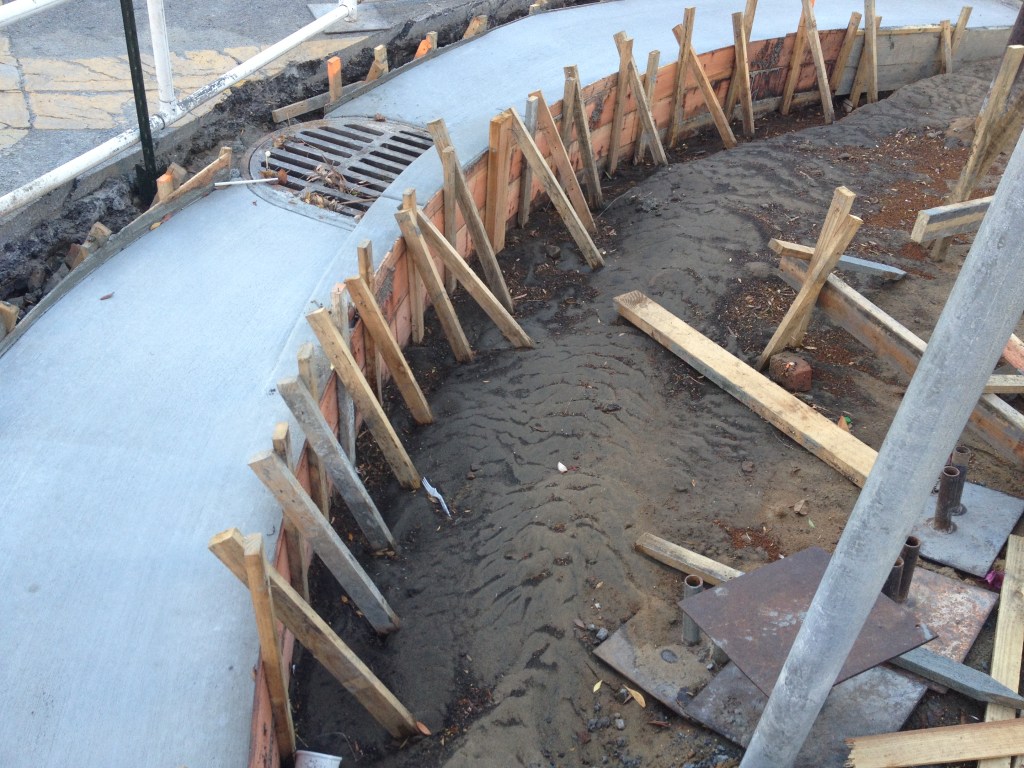
How do you make a curved concrete structure?

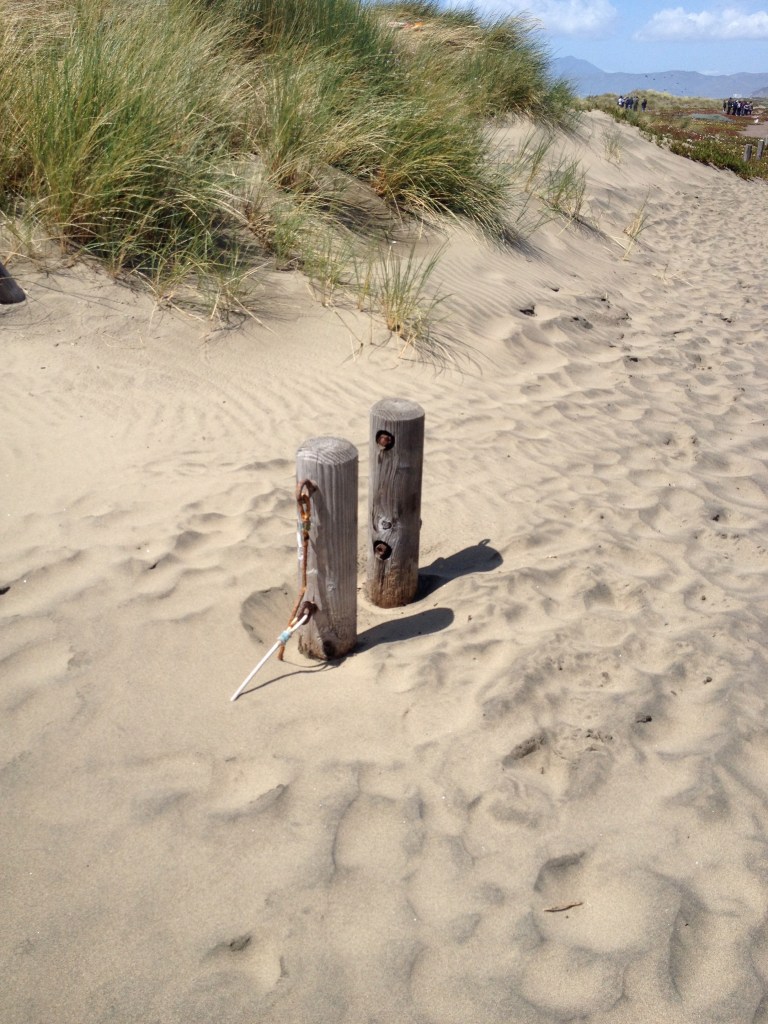
What happens to four foot tall fence posts or trail posts in a windy and sandy area?

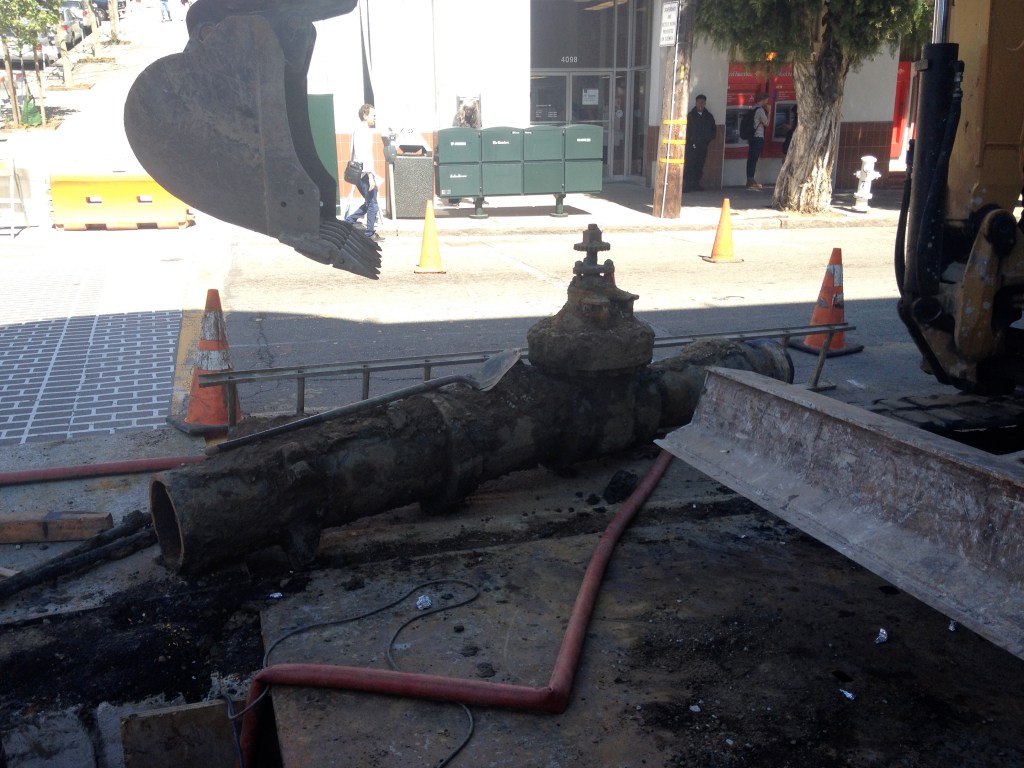
What lies underground where tree roots go?

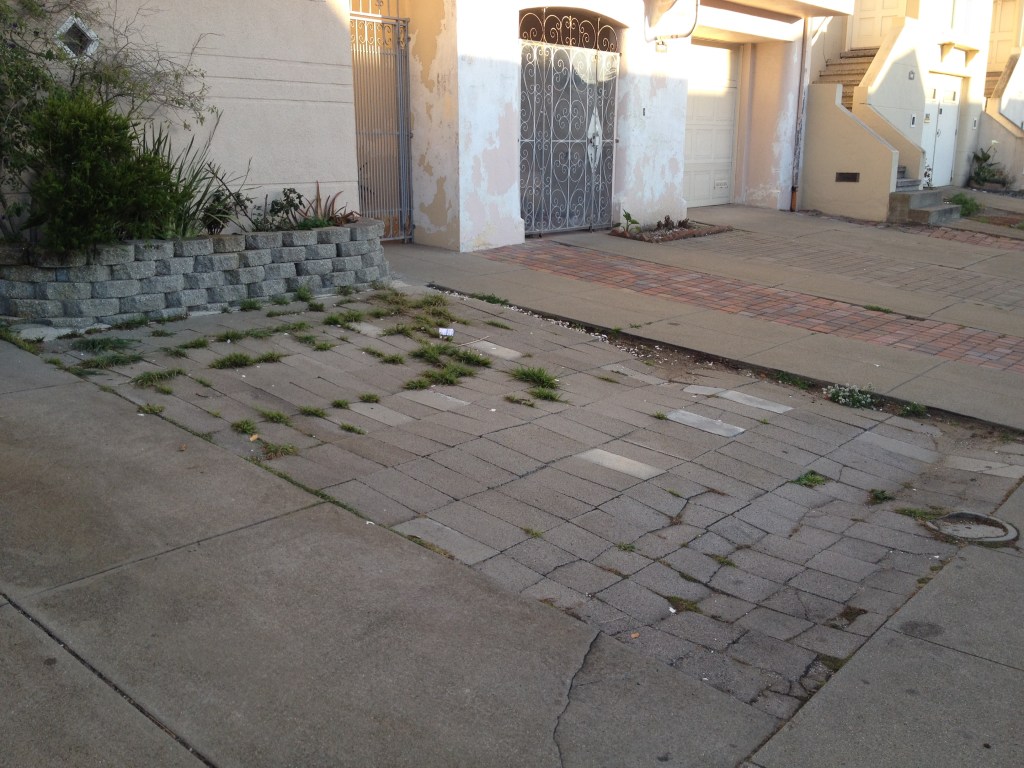
Who invades my beautifully done stepping stones and walkways?

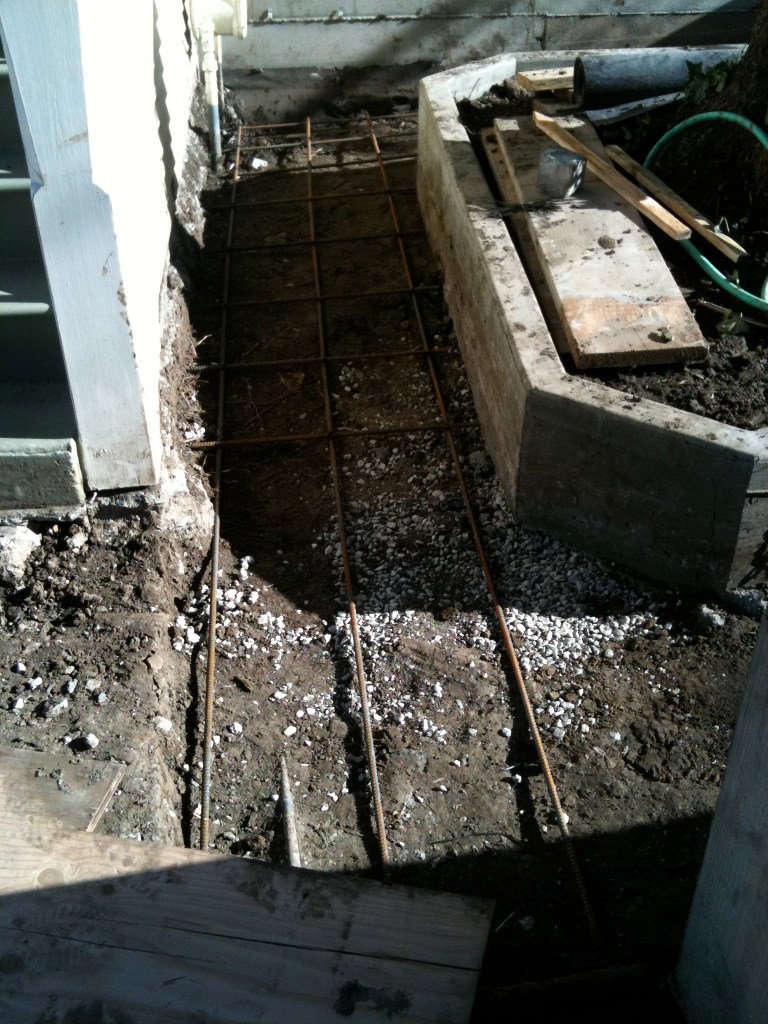
How do you give strength to a concrete structure like a slab or a wall? What kind of a skeleton must it have?

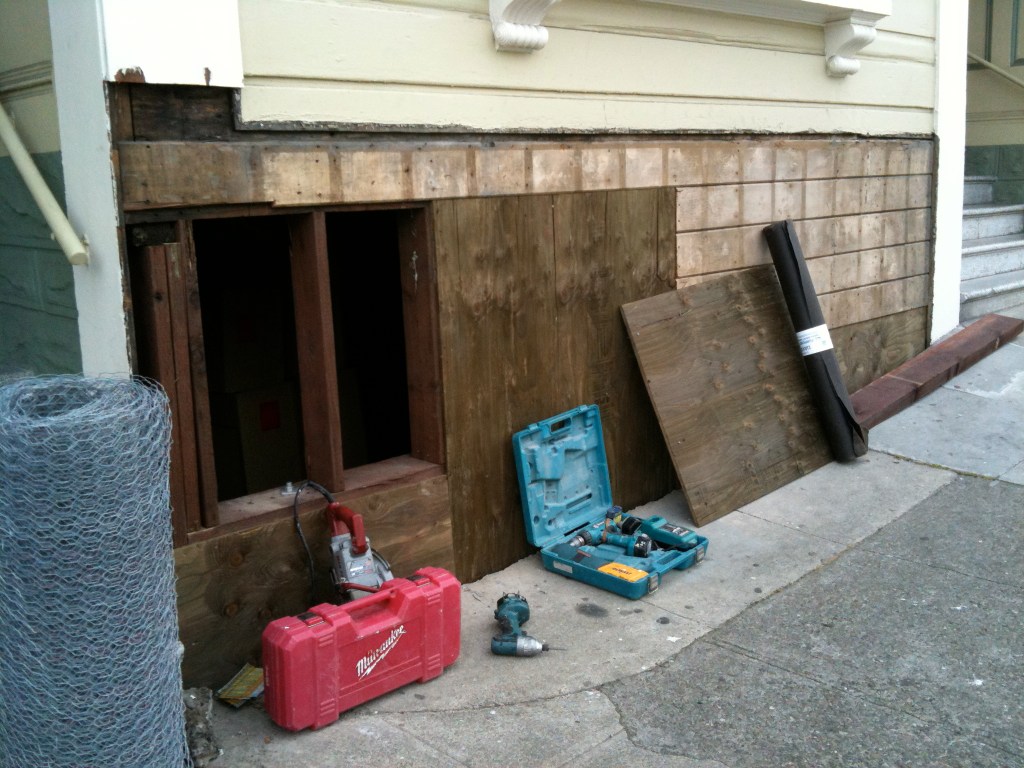
Can you tell the difference between pressure treated lumber and regular lumber?

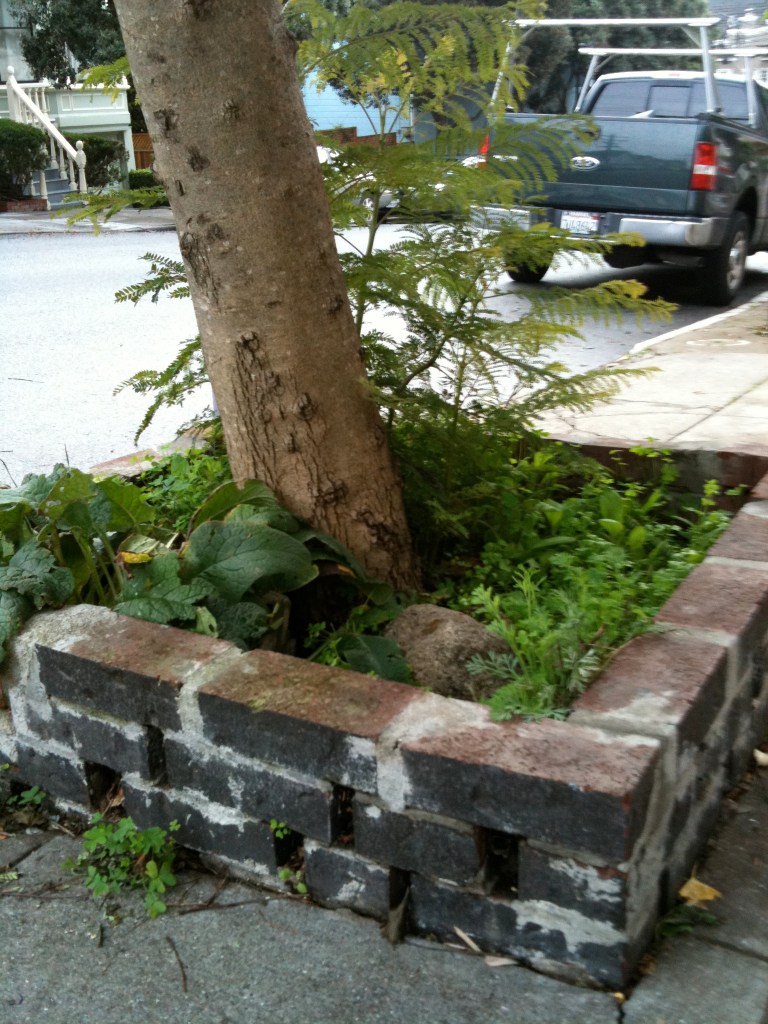
What kind of edging is used here? How many different kinds of hardscape do you see?

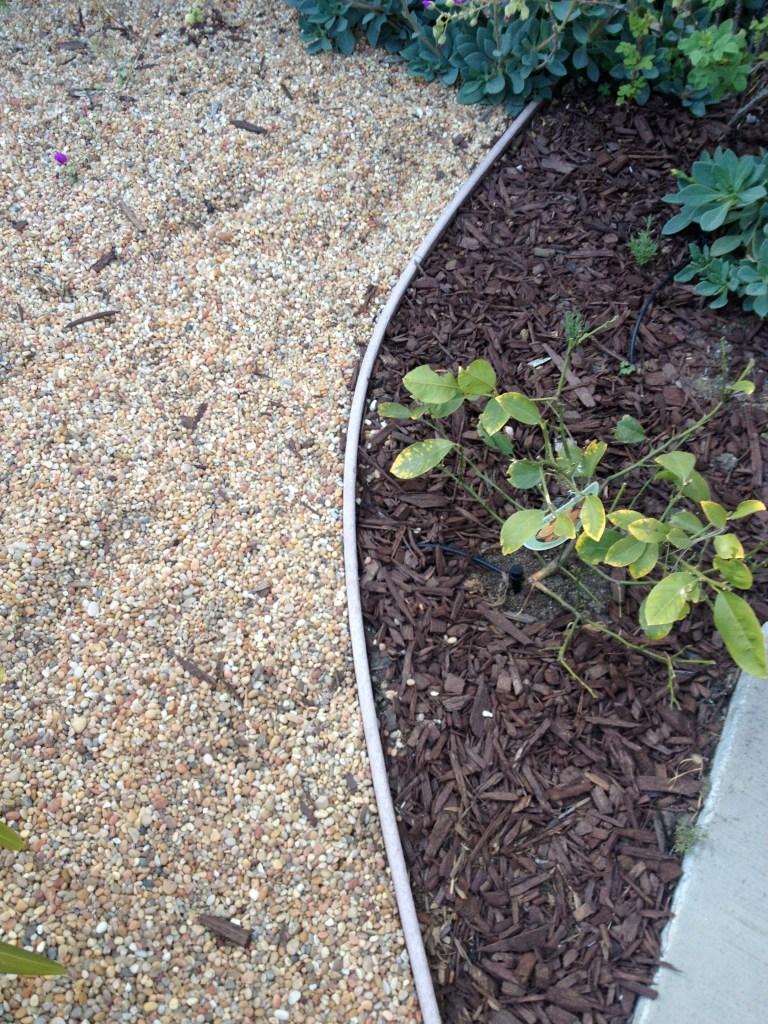
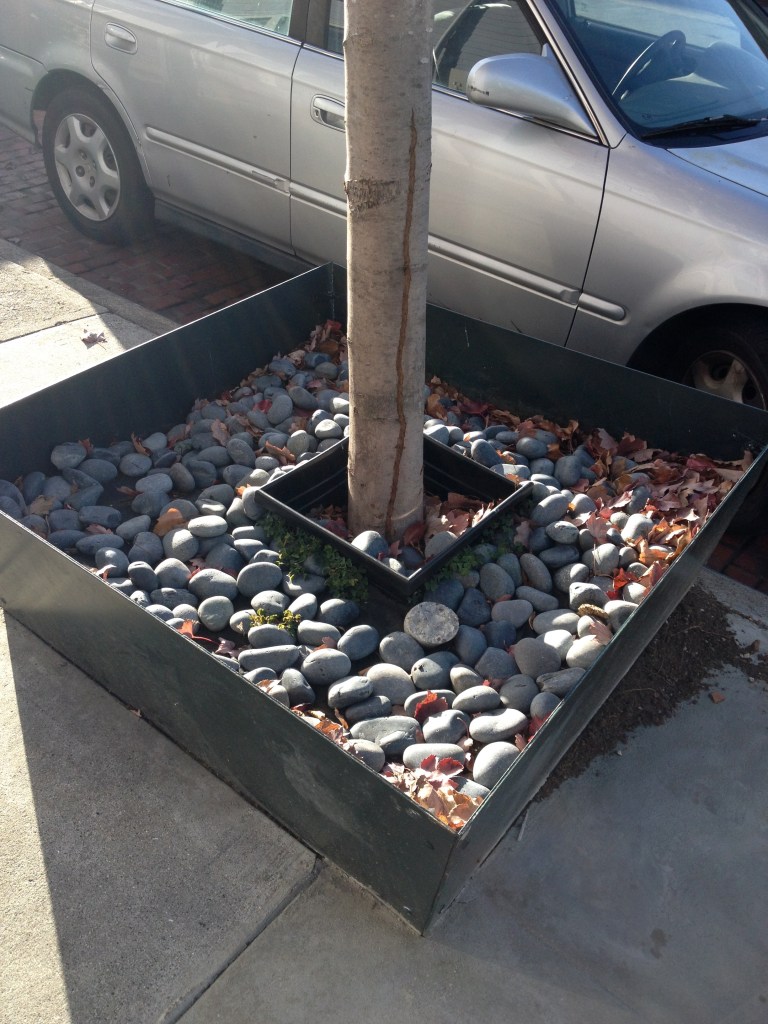
And here? What kind of edging? What might be a potential problem with small round pebbles as a hardscape surface? Do you see the two areas (mulch and pebbles) as staying discrete over time?

Is the decking attached to the house? Is there appropriate flashing? Will it hold the weight of a thousand pound pizza oven imported from Italy? And all the people gathered there to partake of the bounty?

Is the flagstone on a stable base? Will the surface drain well when the first rains hit? Is it thick enough to be durable and not snap? Does it sit flat and even so that theres no tripping hazard, especially after a few glasses of wine and some fresh baked pizza? Are the joints between the flagstone filled with sand or grout? Is the flagstone mortared to a concrete slab? Permeability and drainage!

What grows on the wood walkway that sits under the shade, with overhead irrigation and rainfall?

How do you like the always green, never needs mowing turf?

For some reason student was having difficulty

seeing the parts of a flower

mainly the female and male parts

this is part of the challenge of online instruction

whereby something relatively simple

becomes complicated

whereby a lab exercise that is fun and shared

becomes an exercise in isolation, clicking and wondering

anyhow

flowers are still blooming everywhere

so do a walkabout, make some new friends

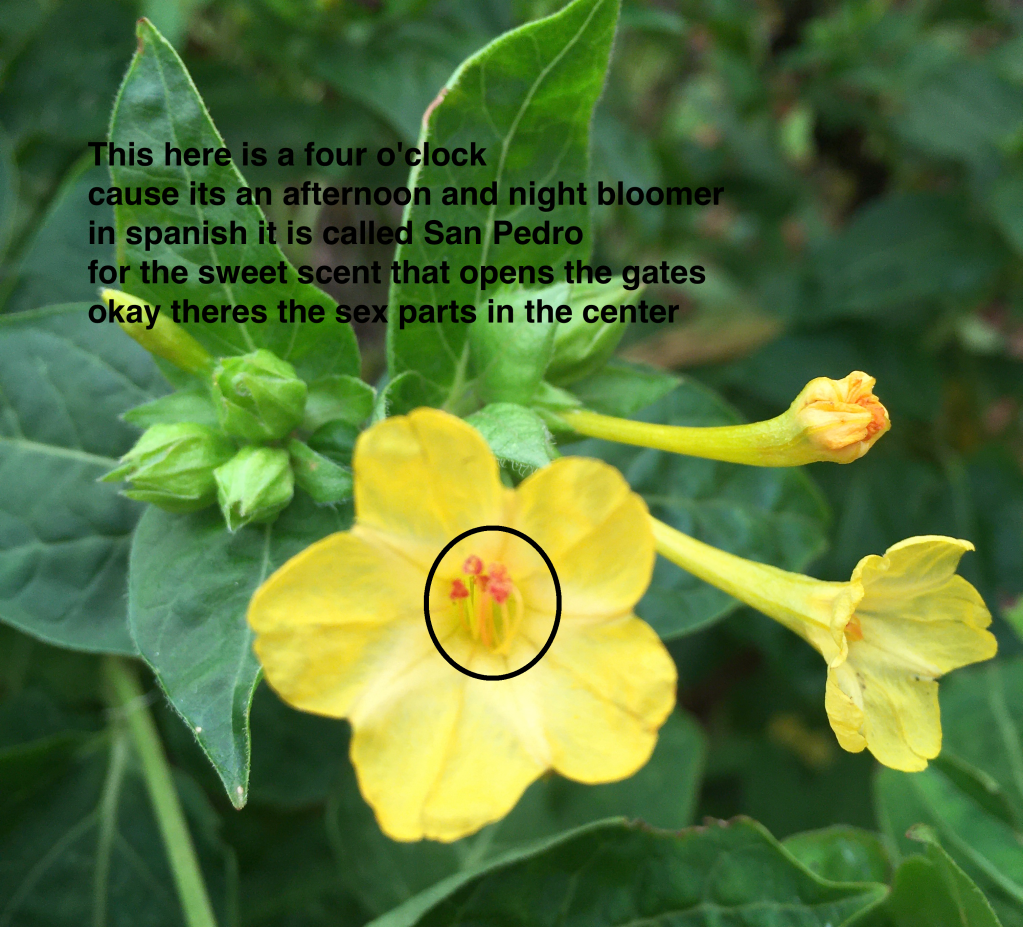
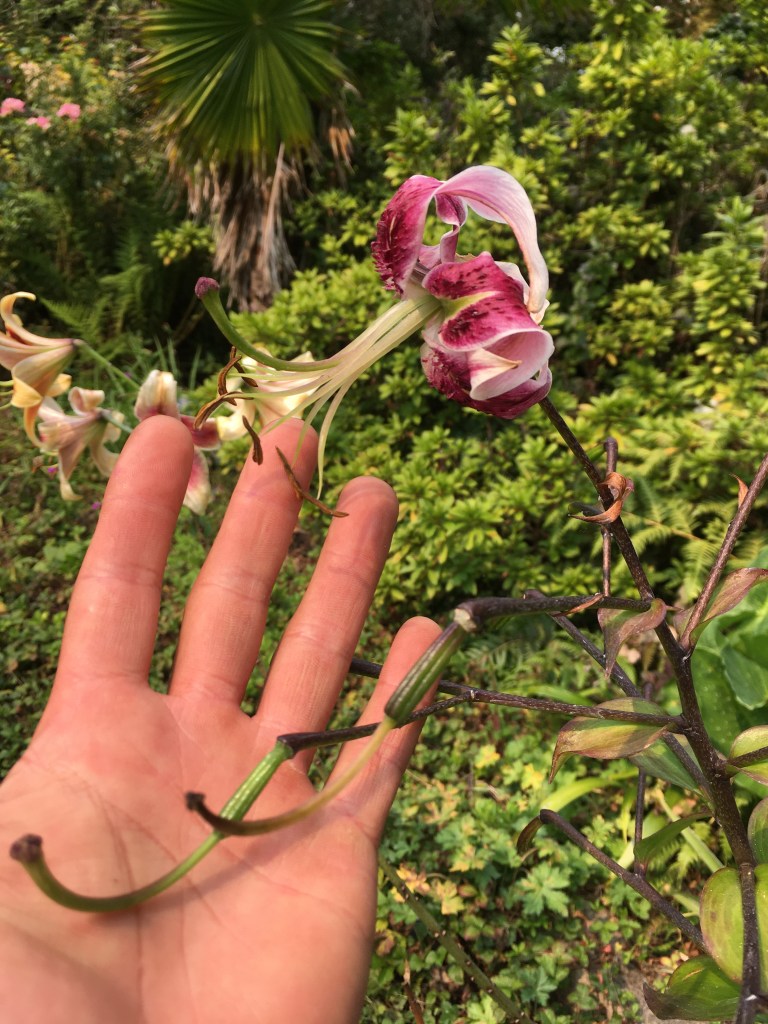
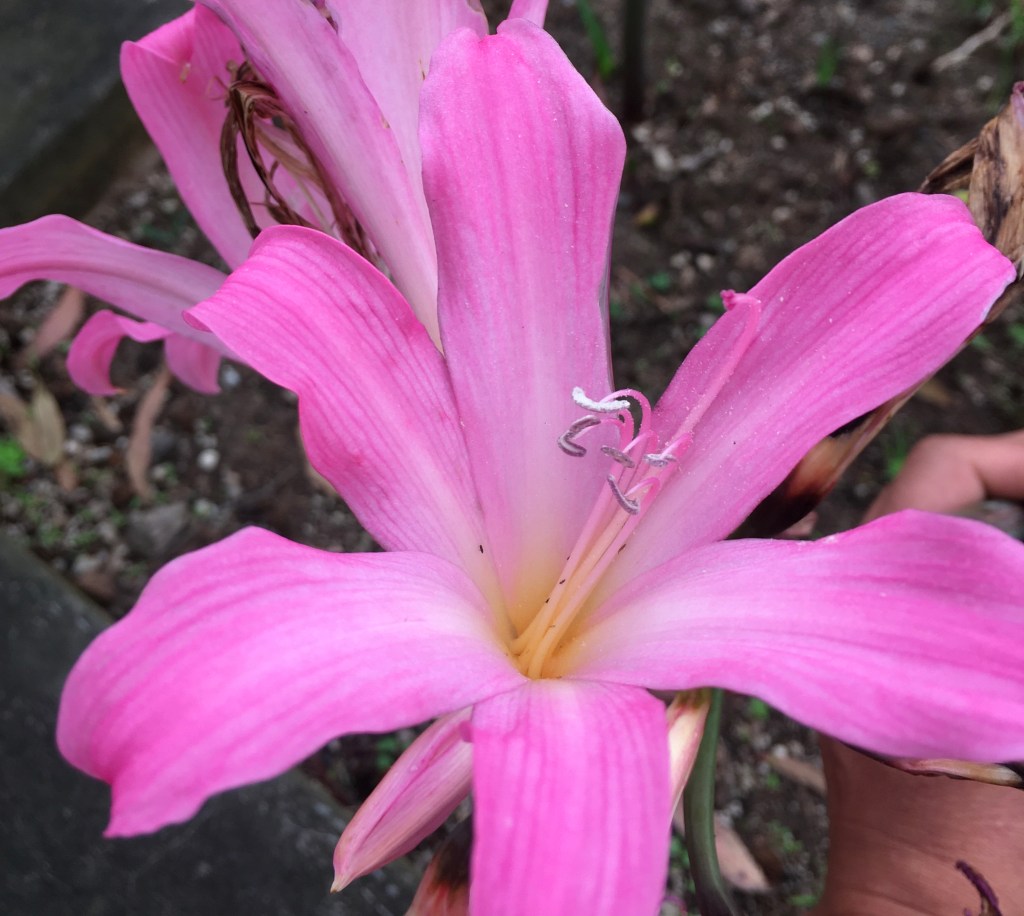
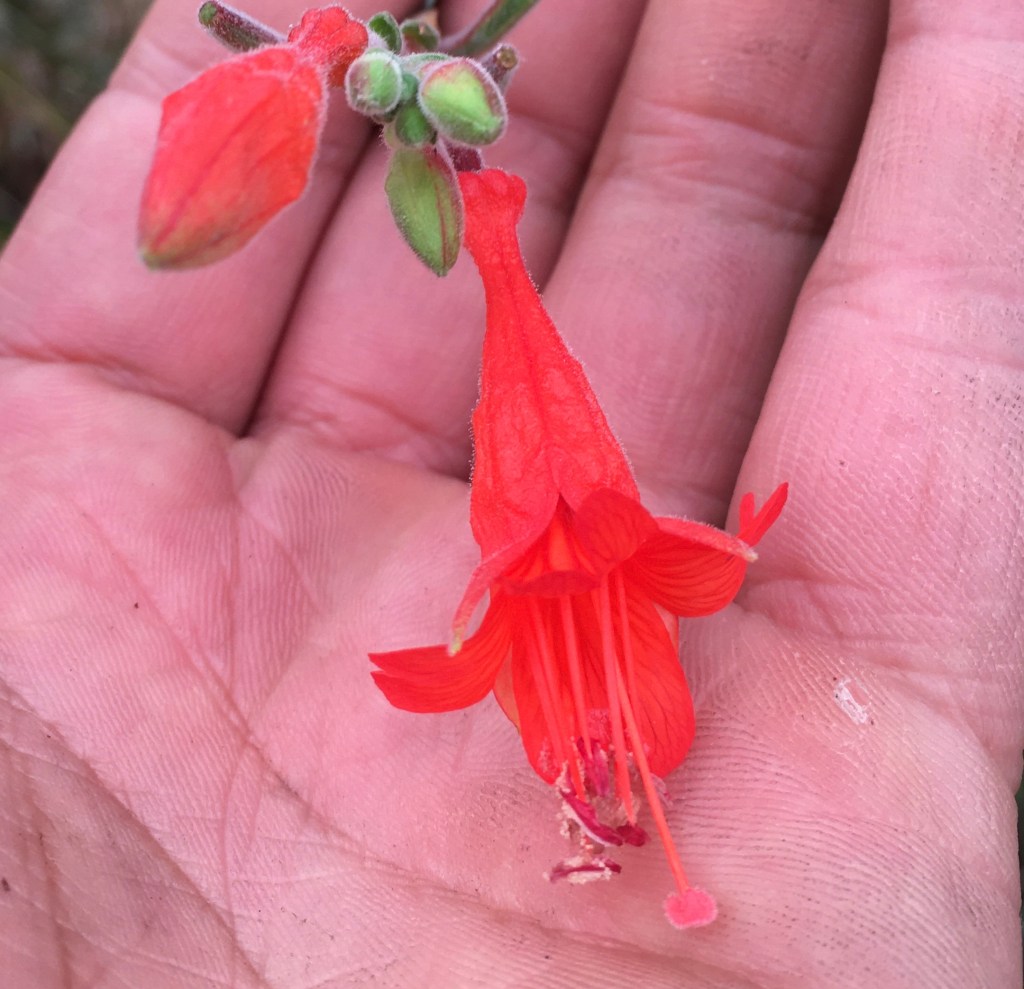
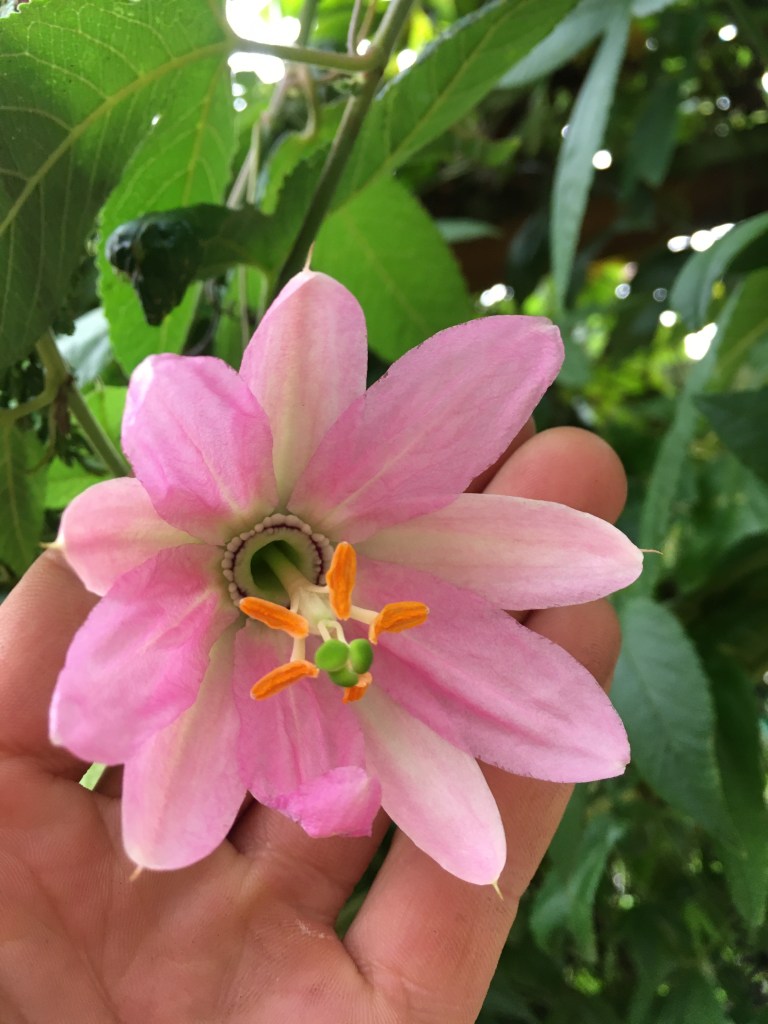
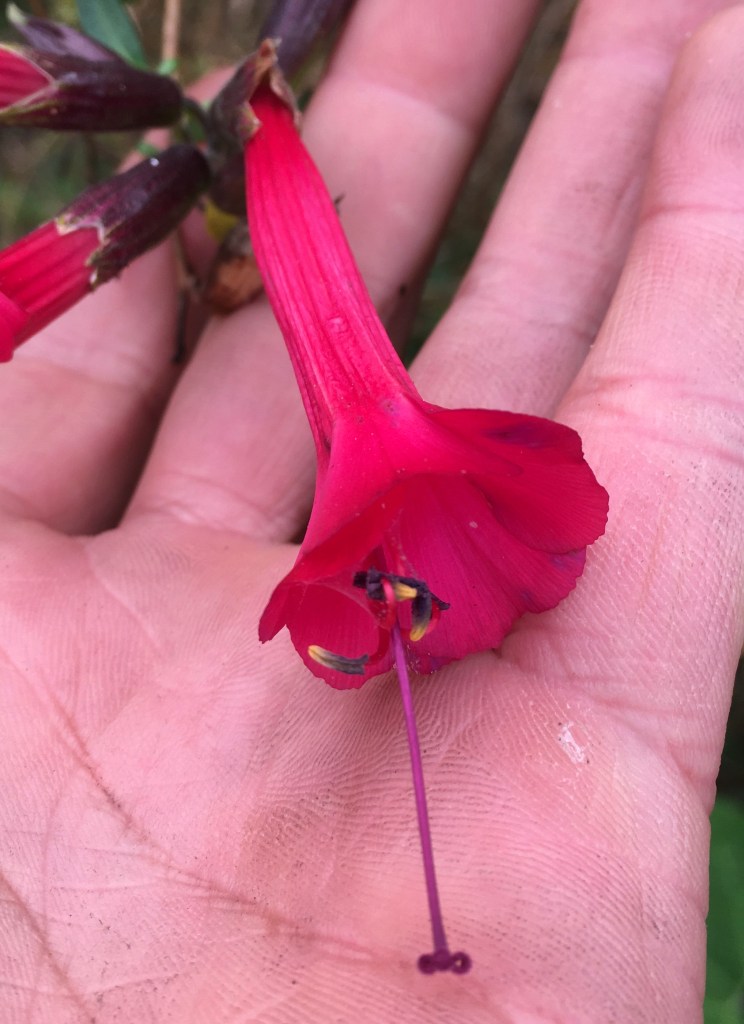
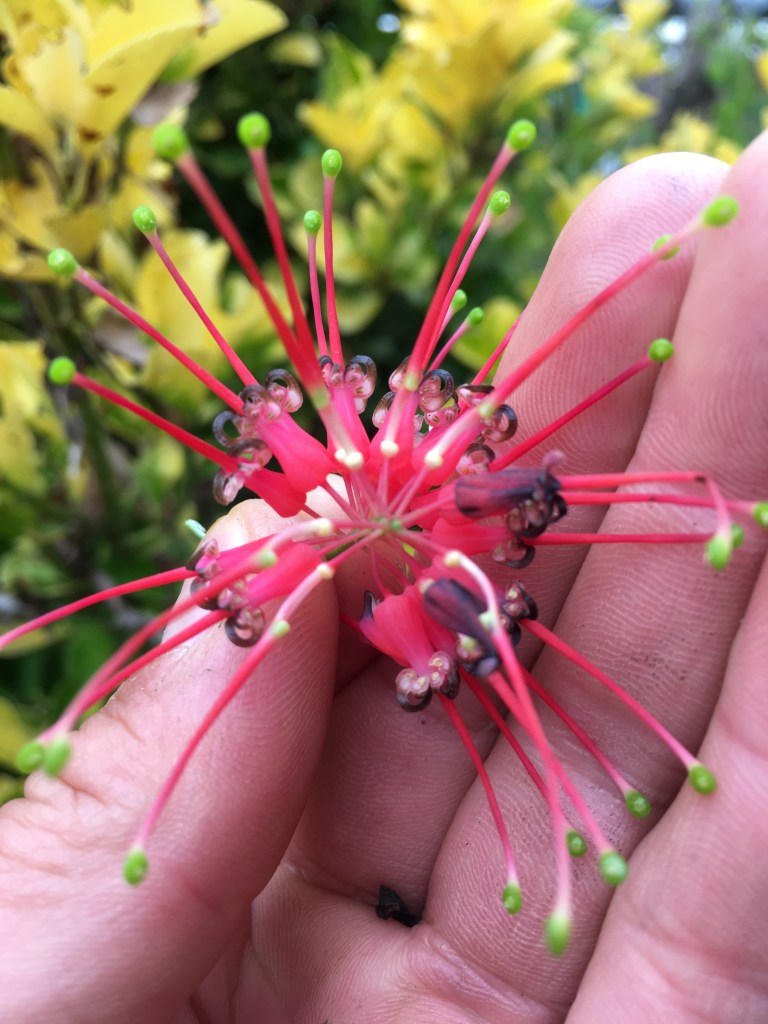
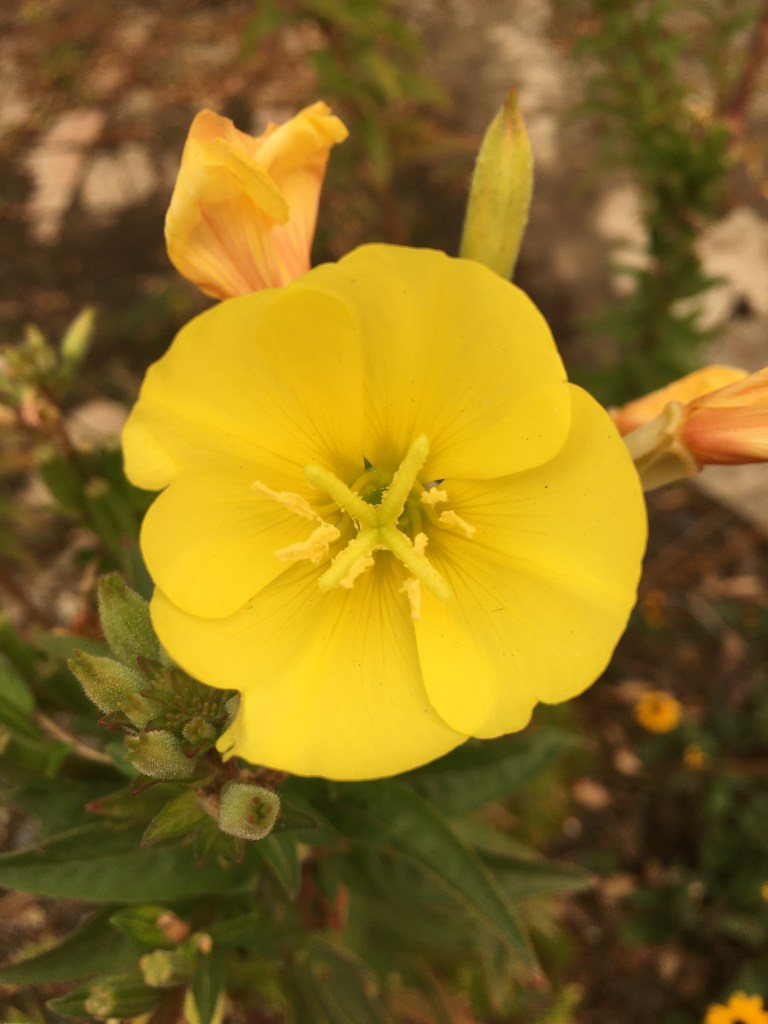
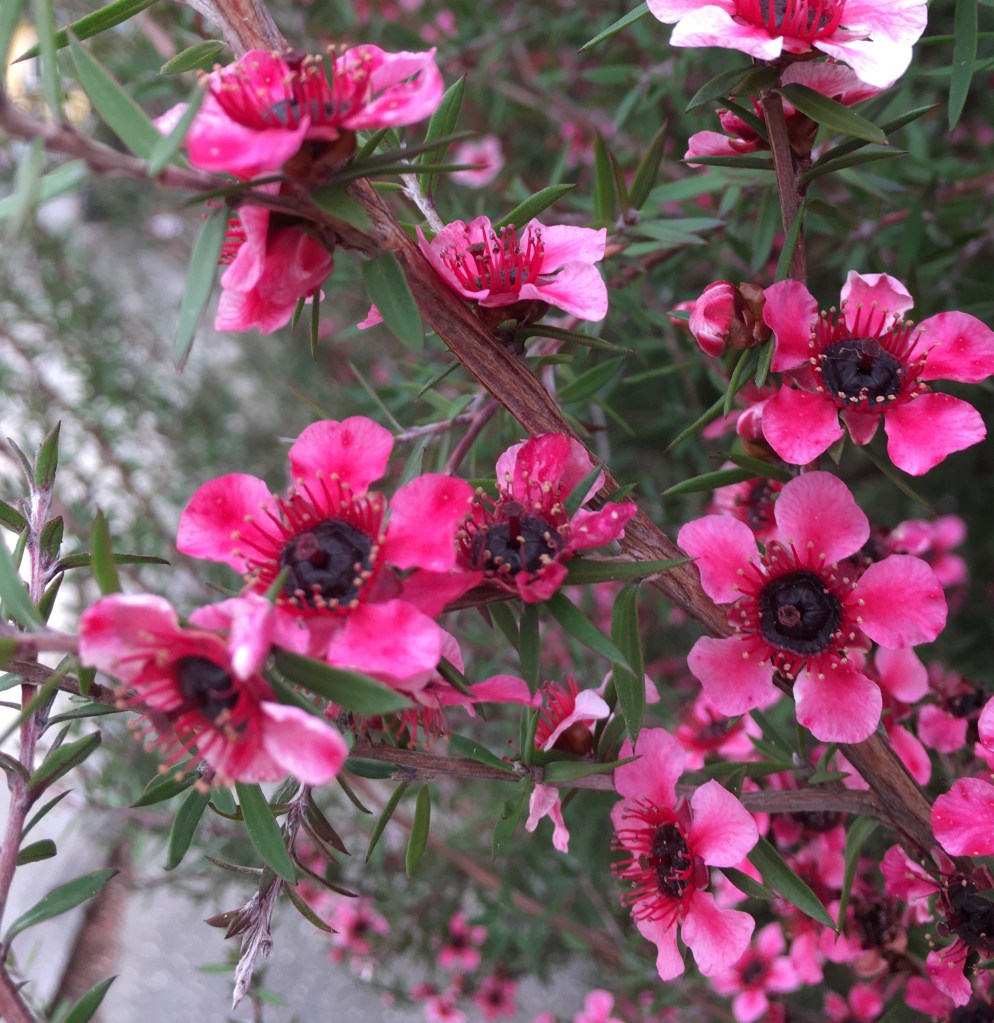
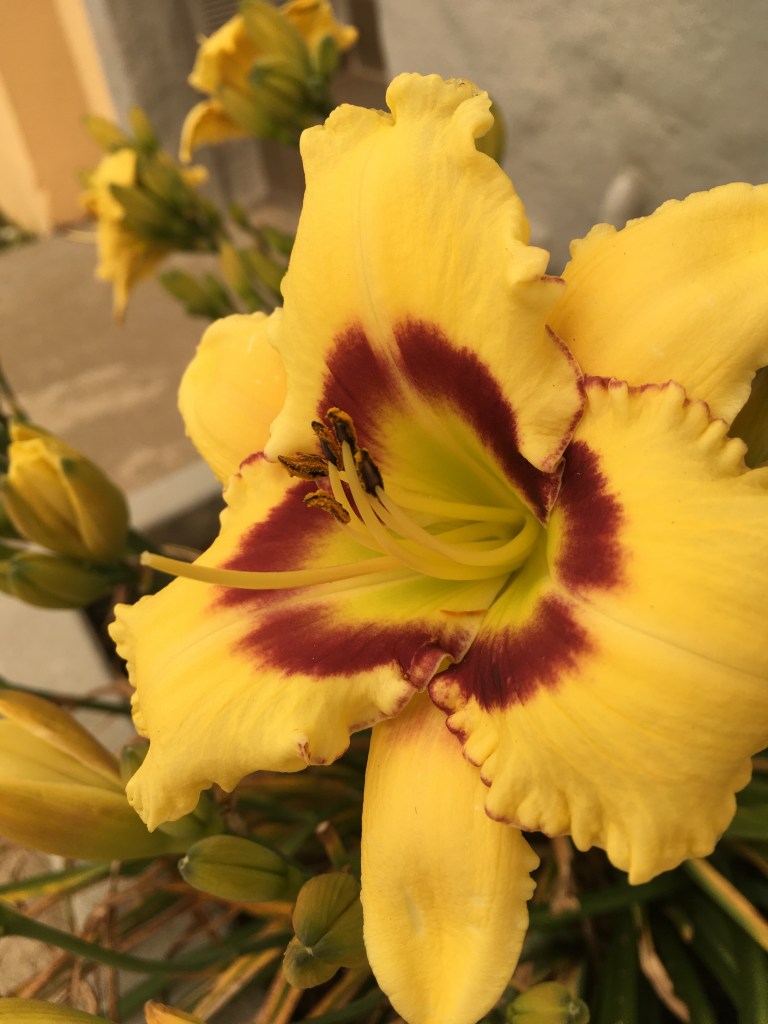
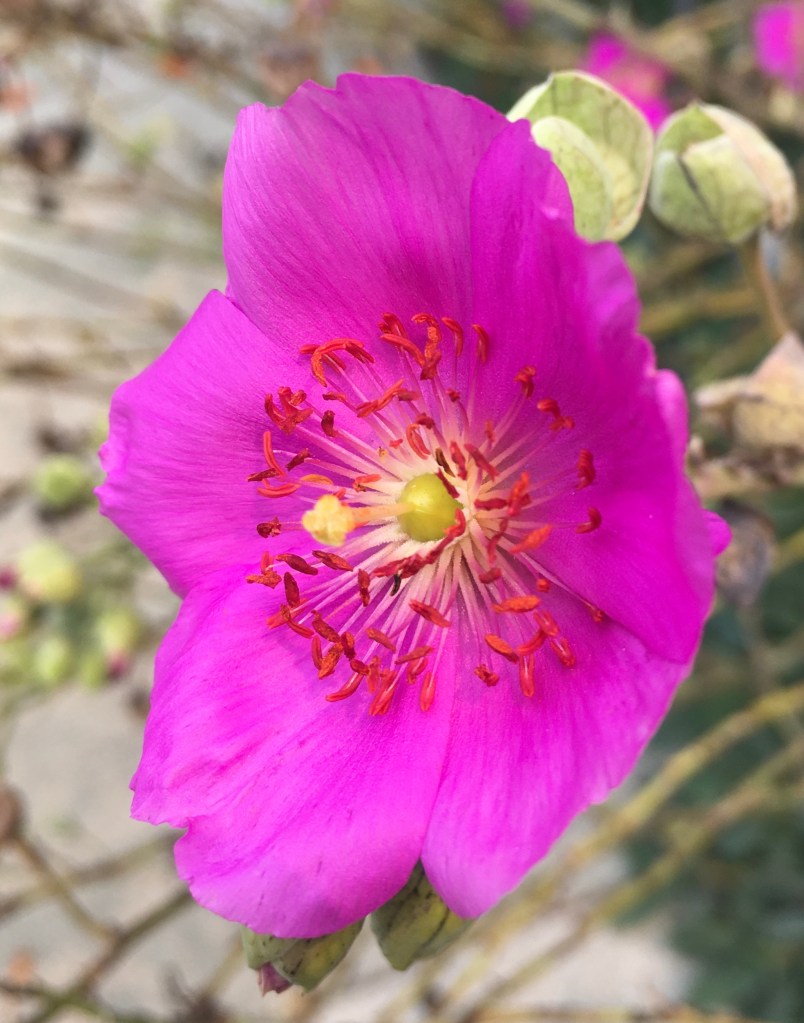
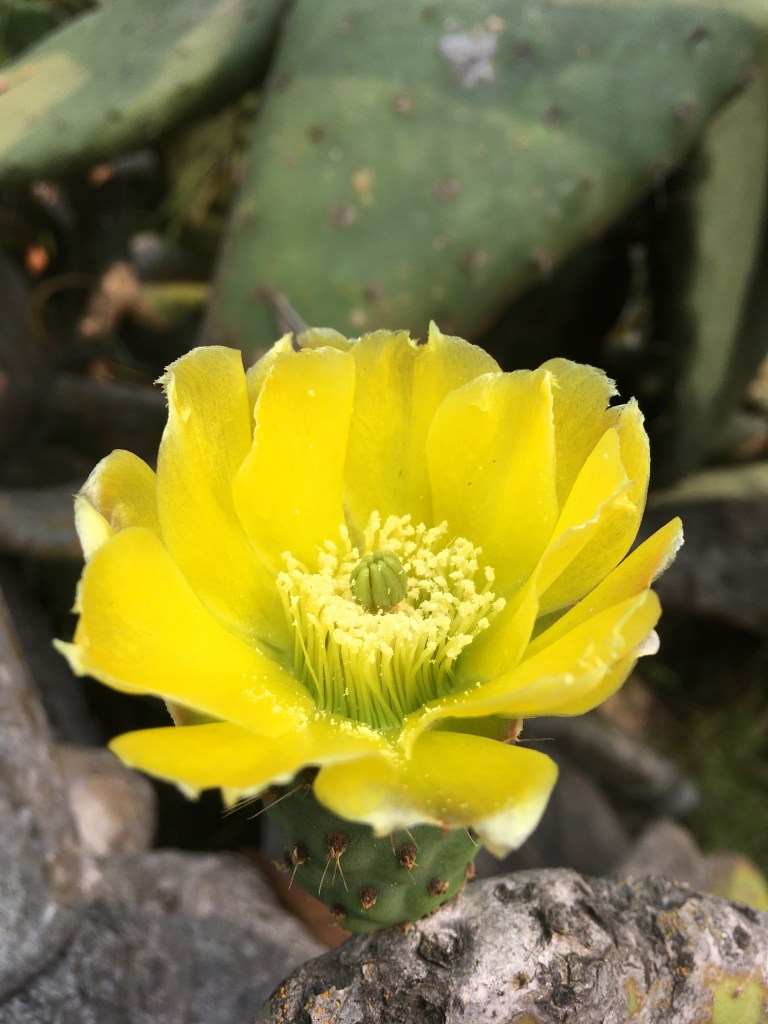
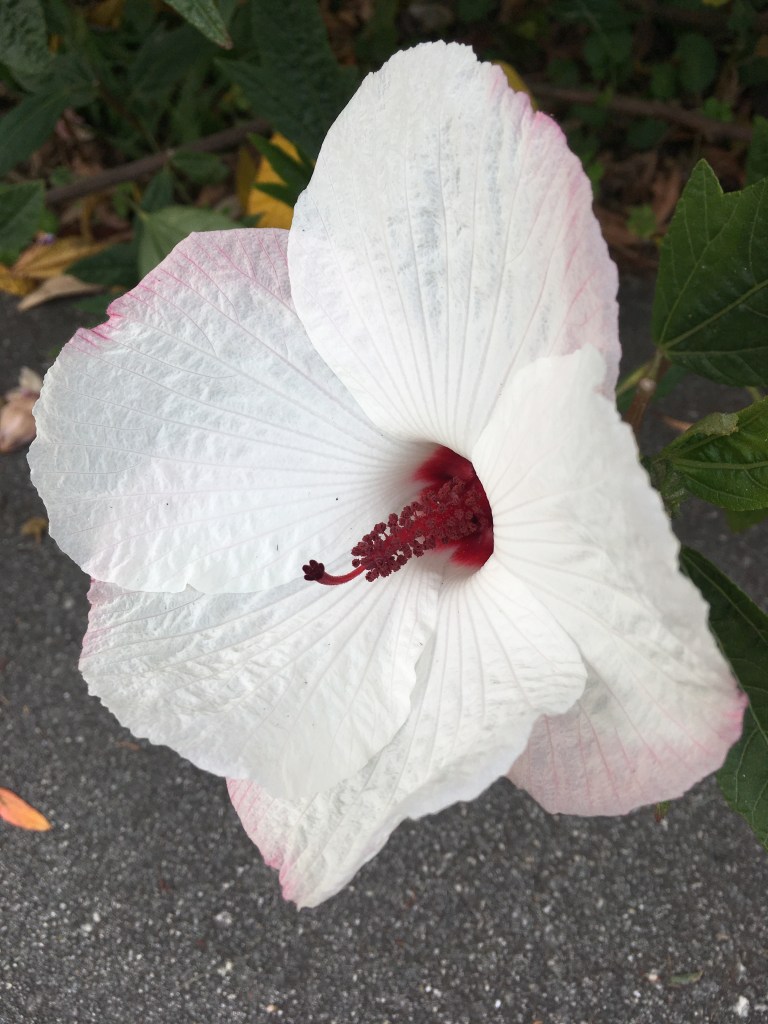
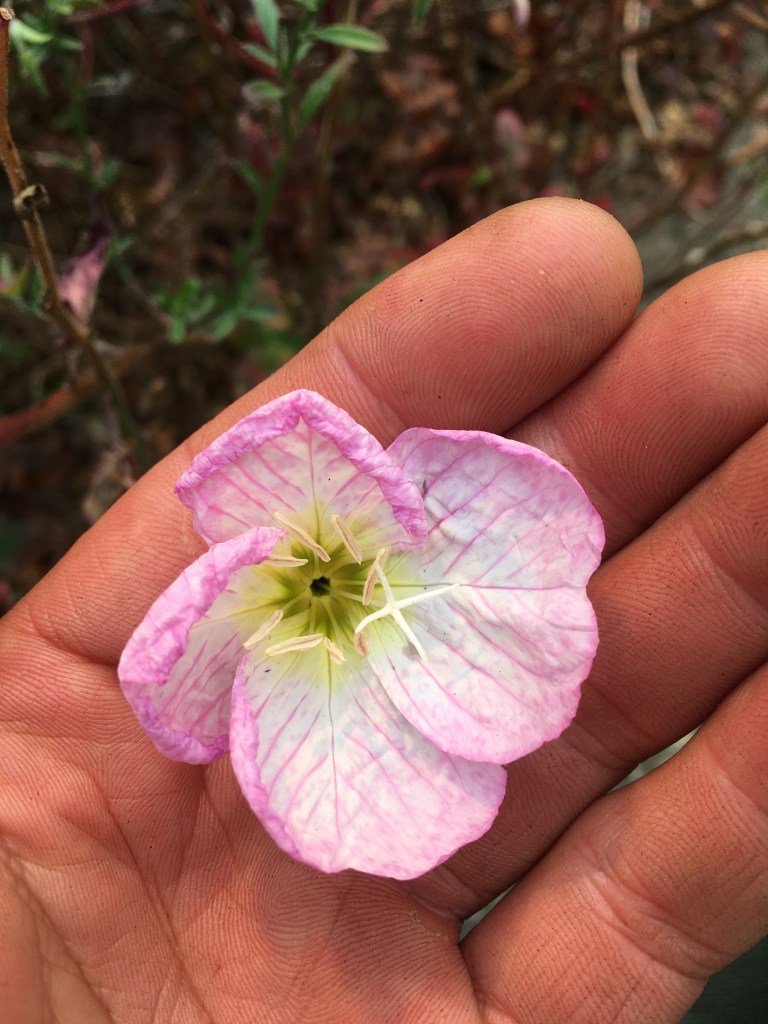
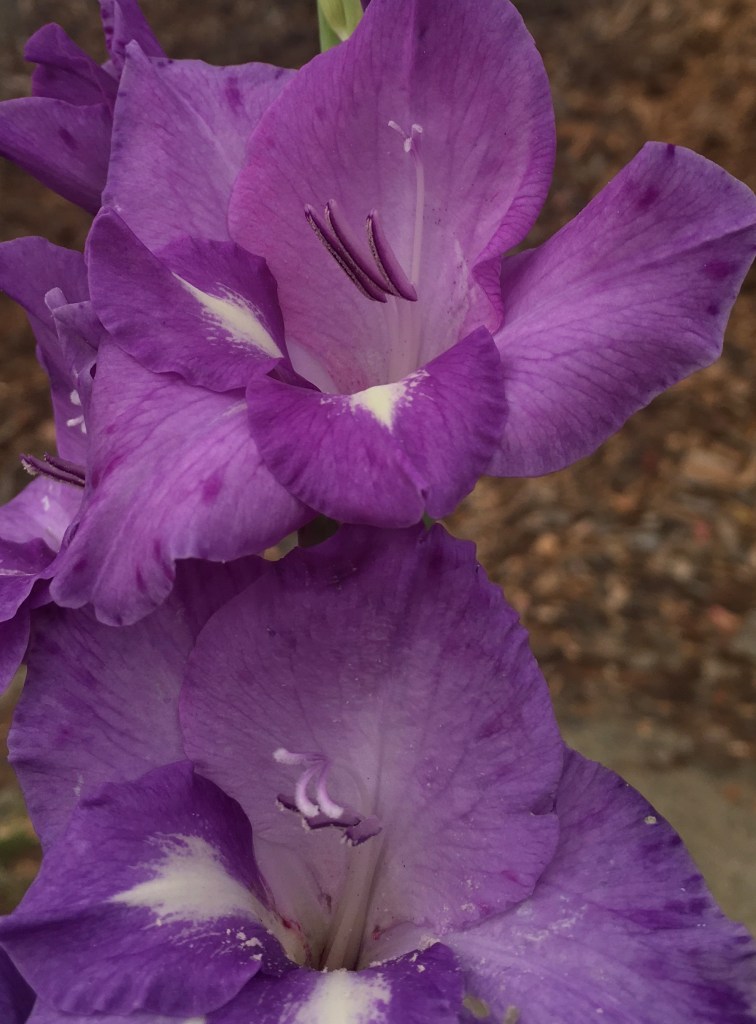
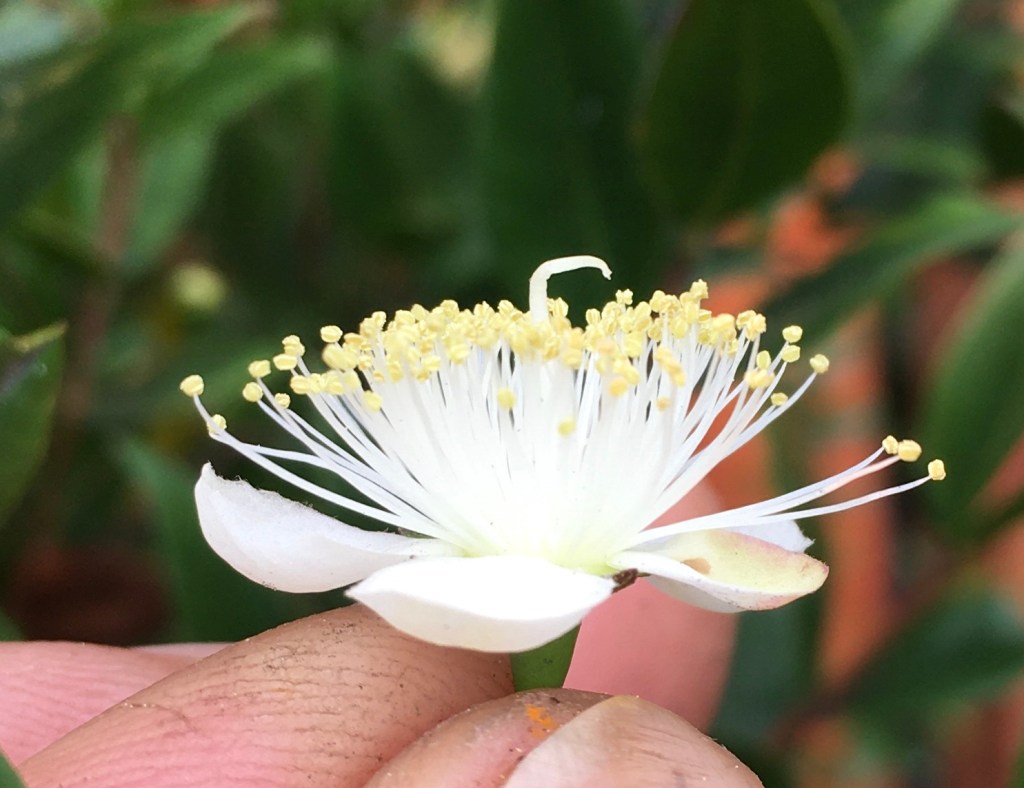
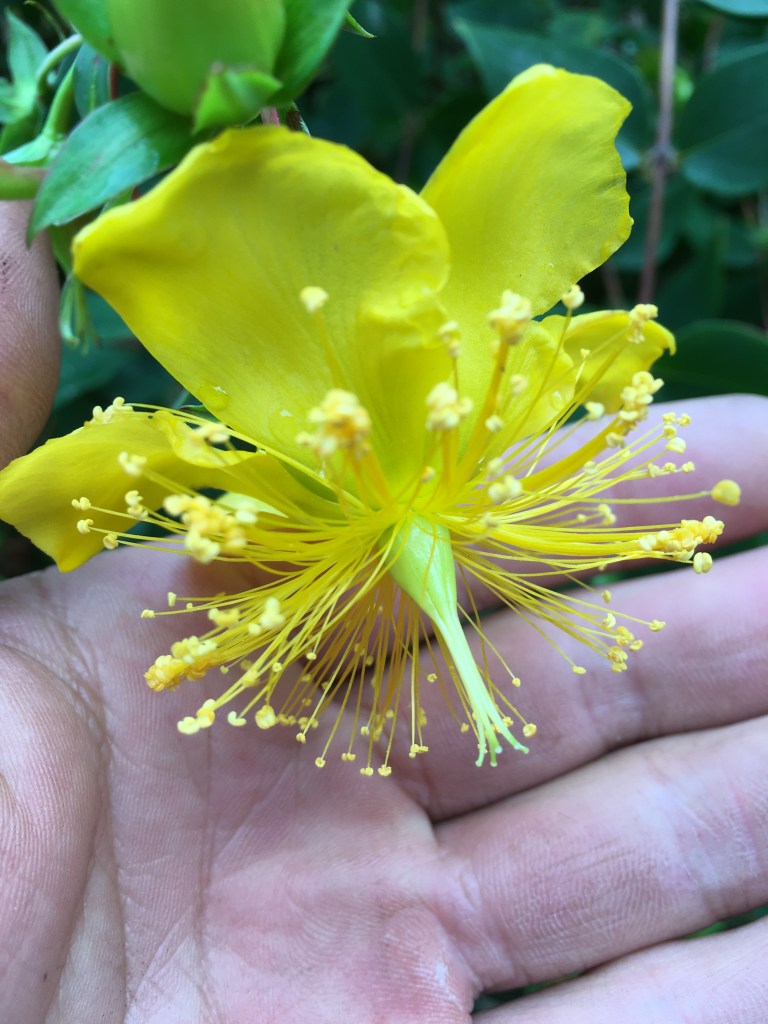
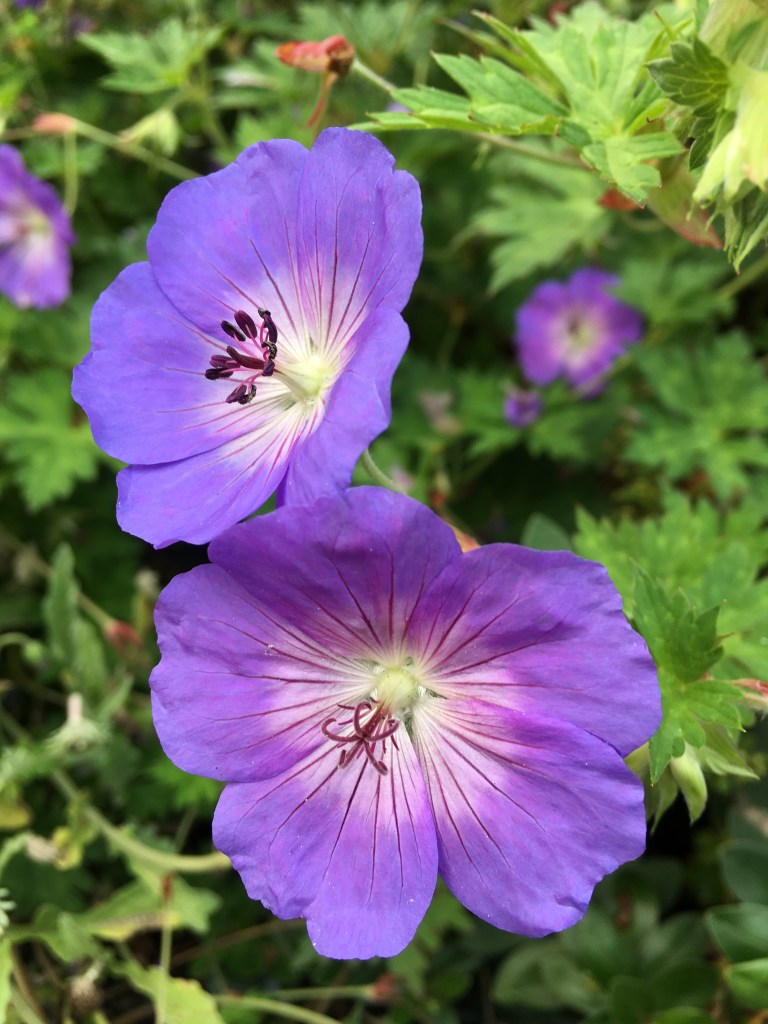
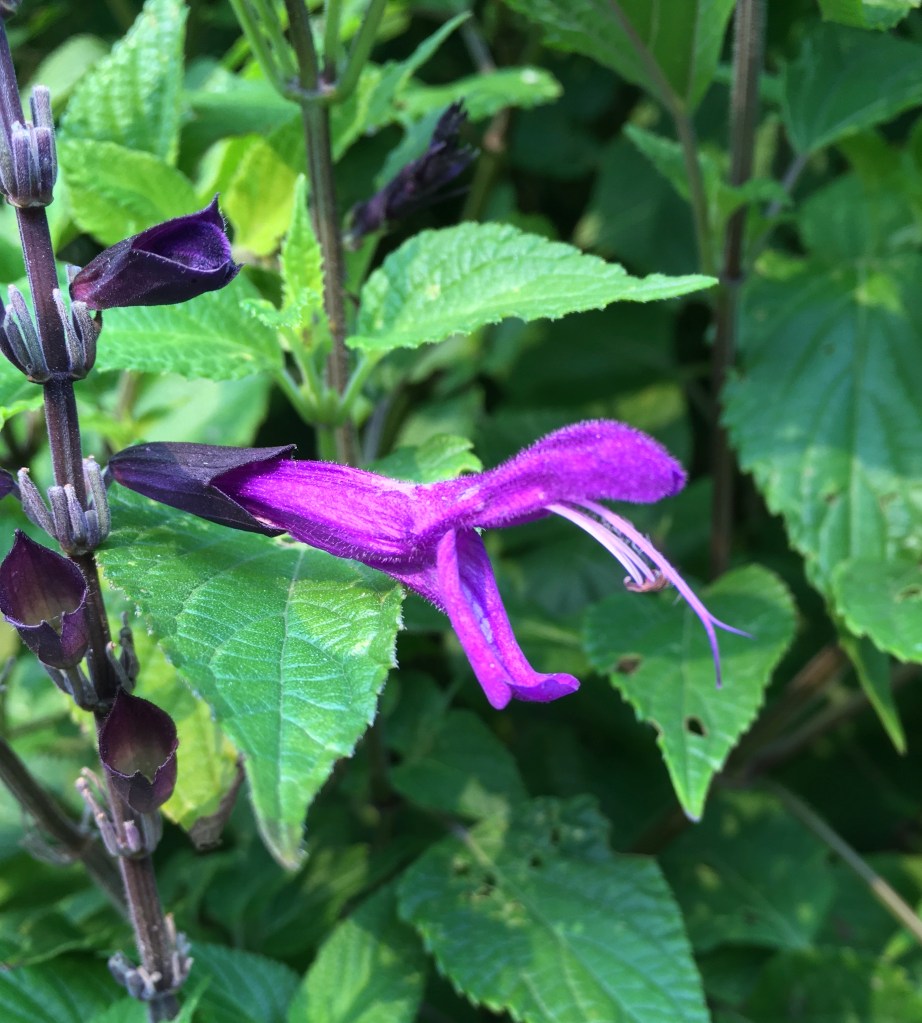
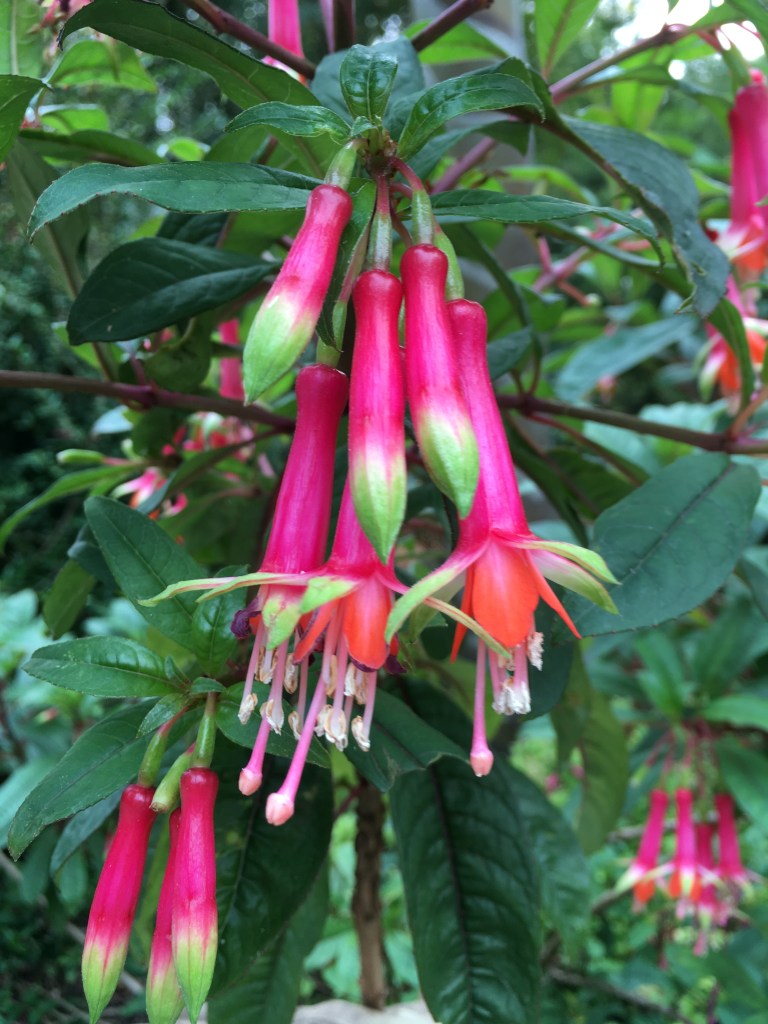
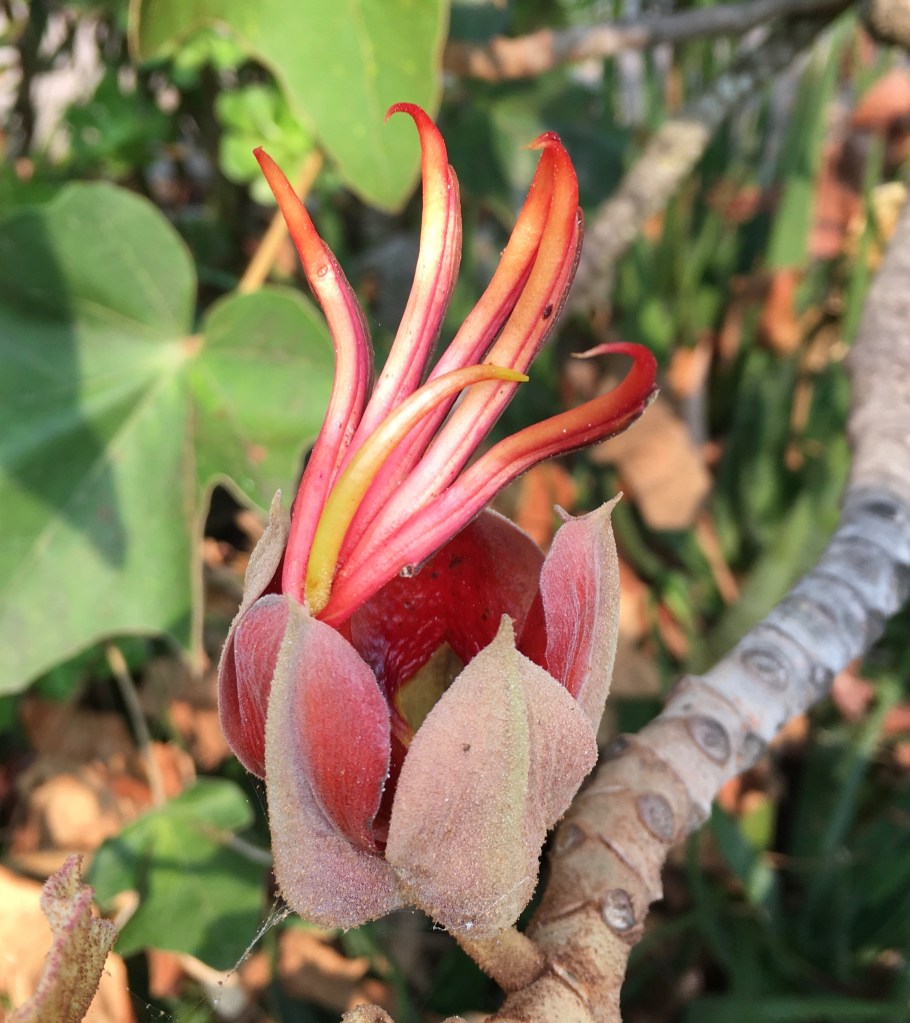
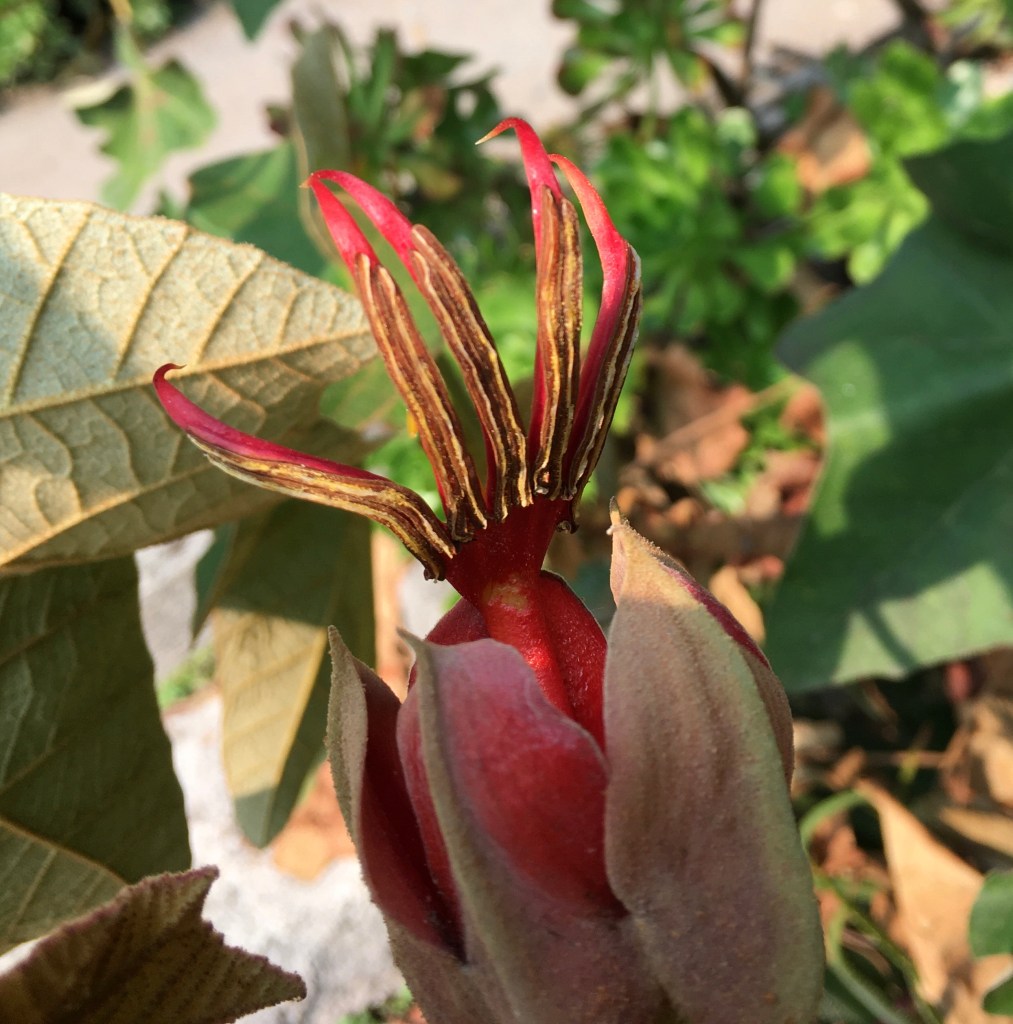
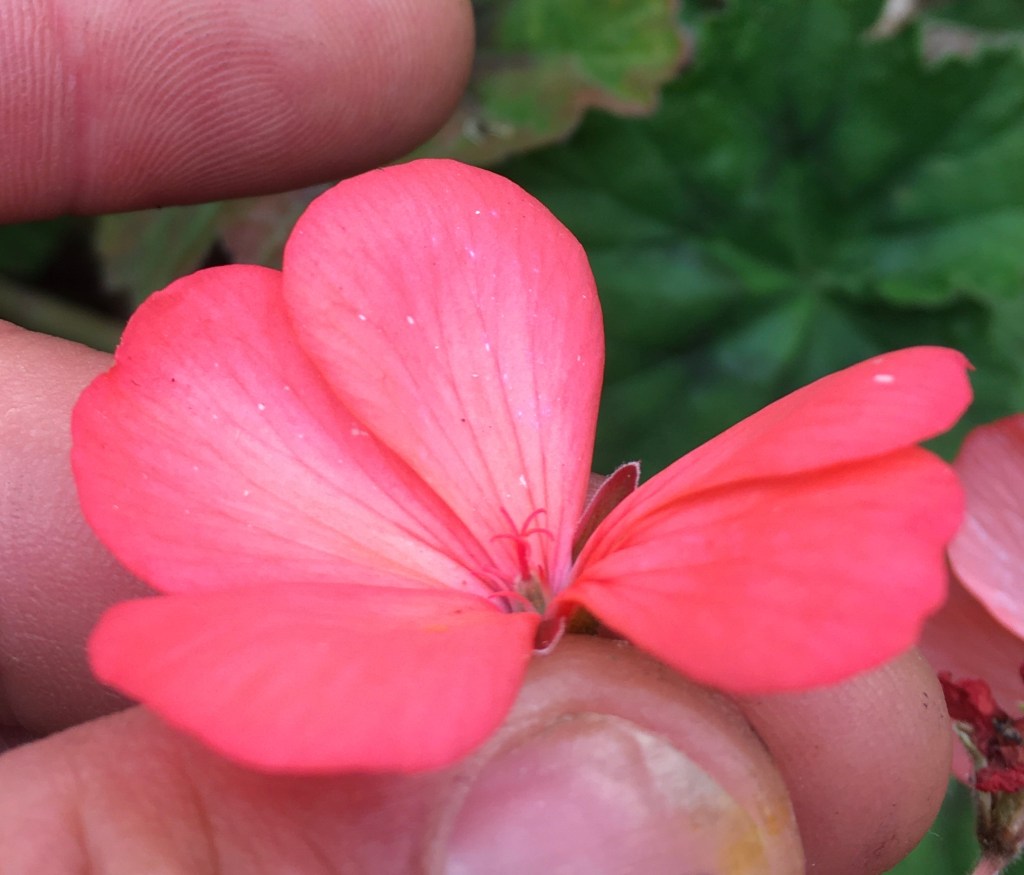
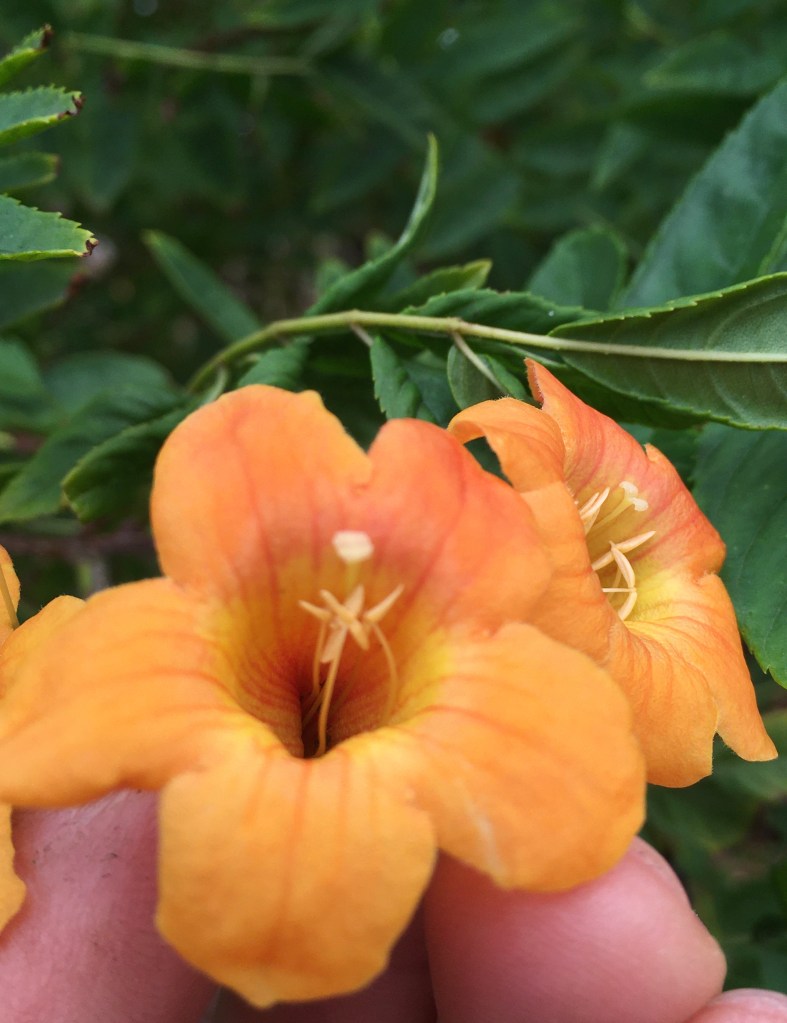
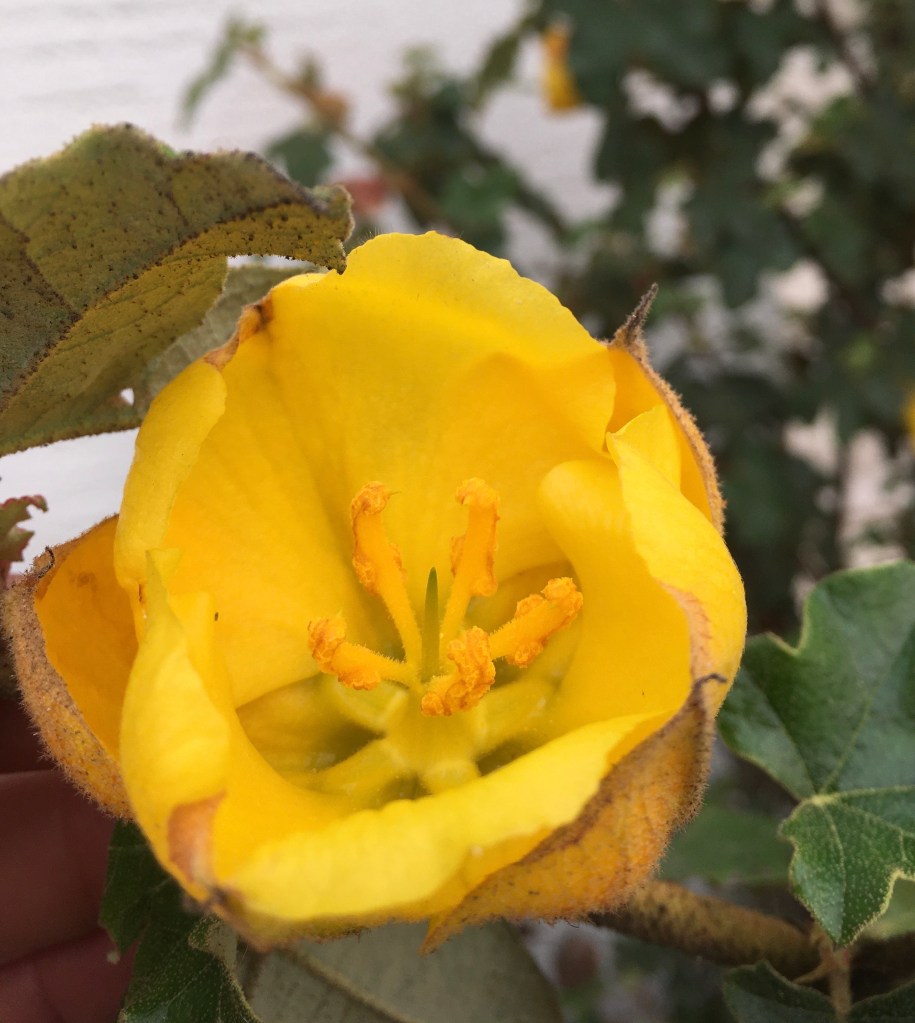
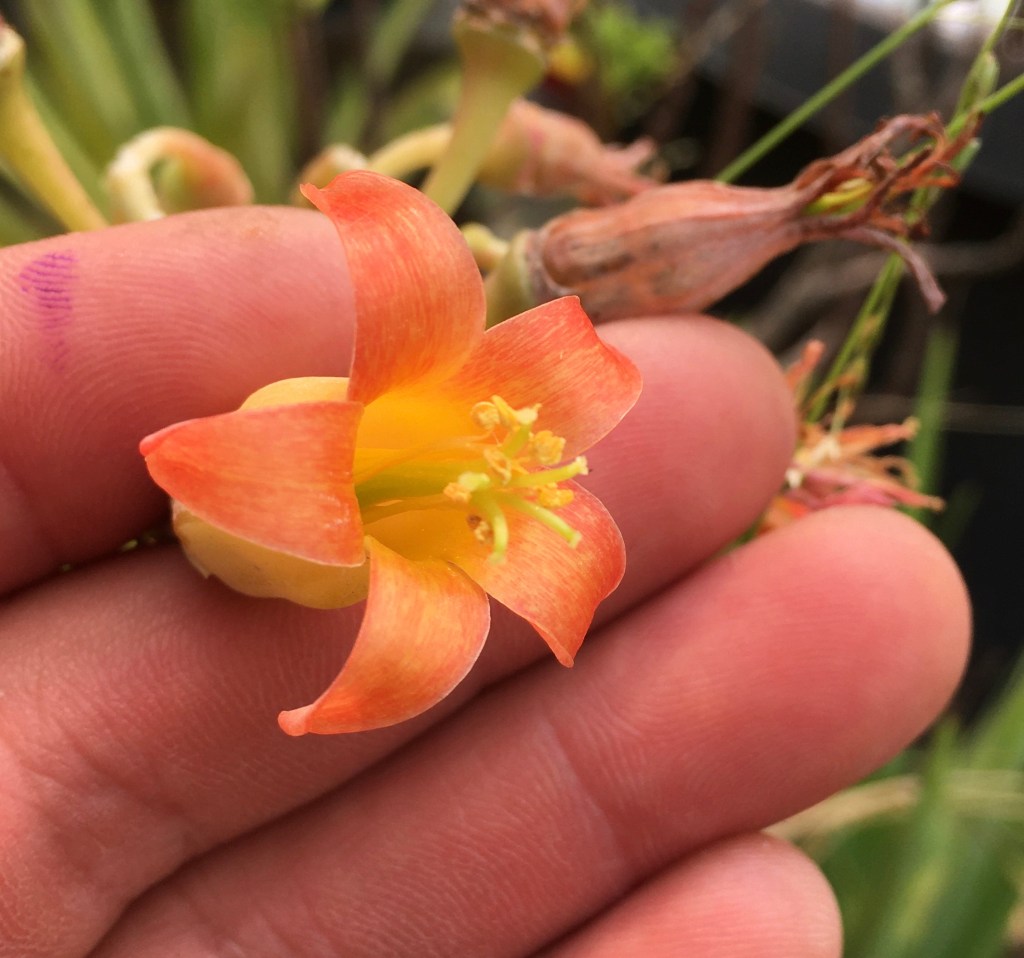
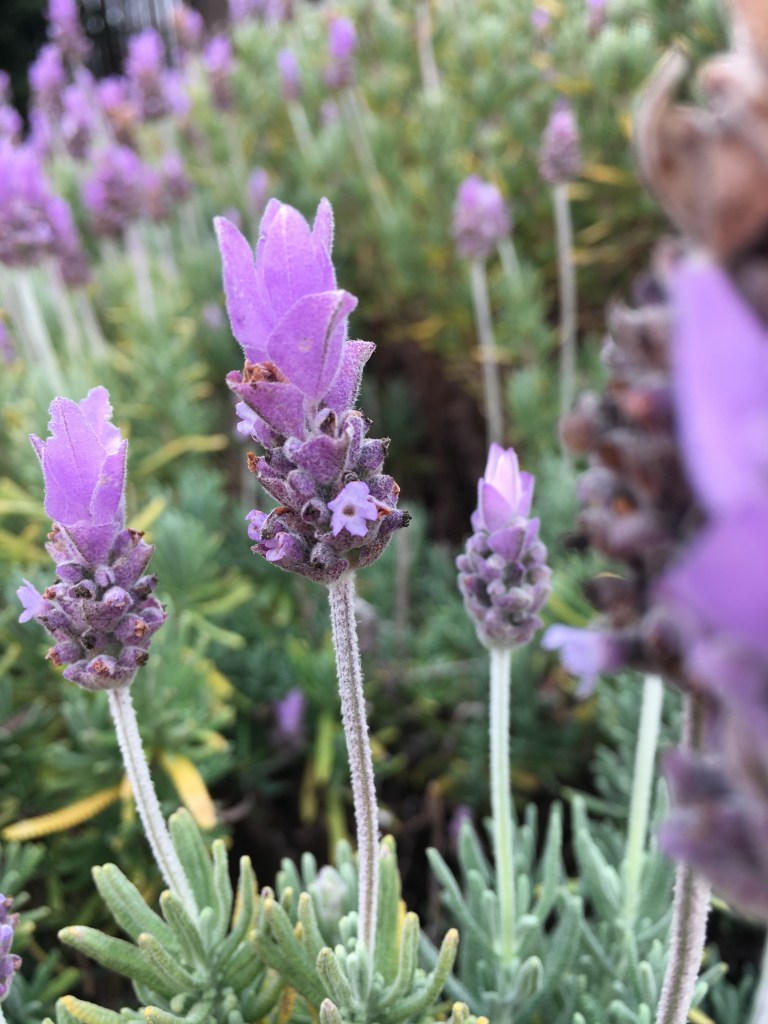
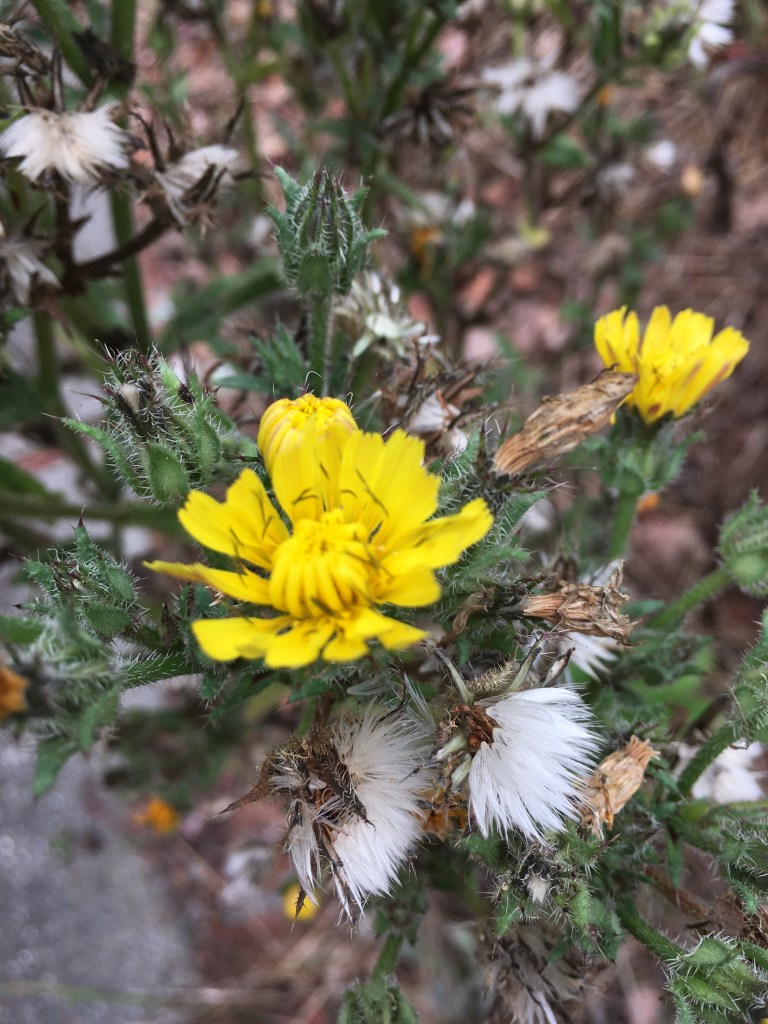
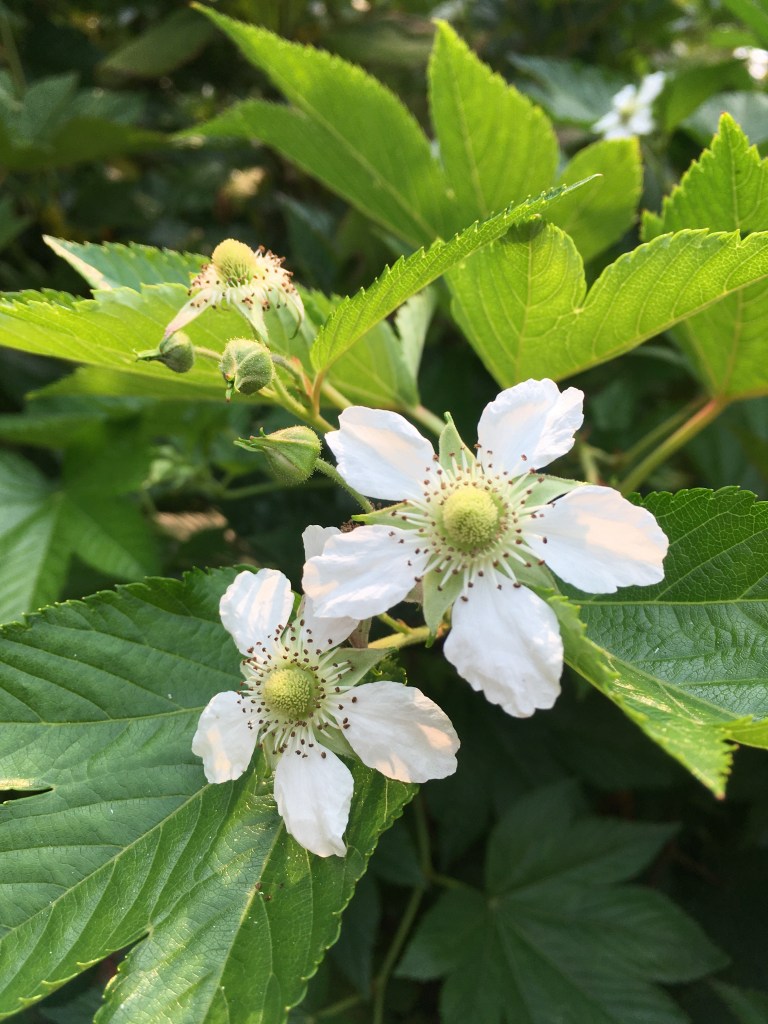
I went around and took pictures of flowers to show you

was going to label them all, but that would take all the fun and challenge away now wouldn’t it?!

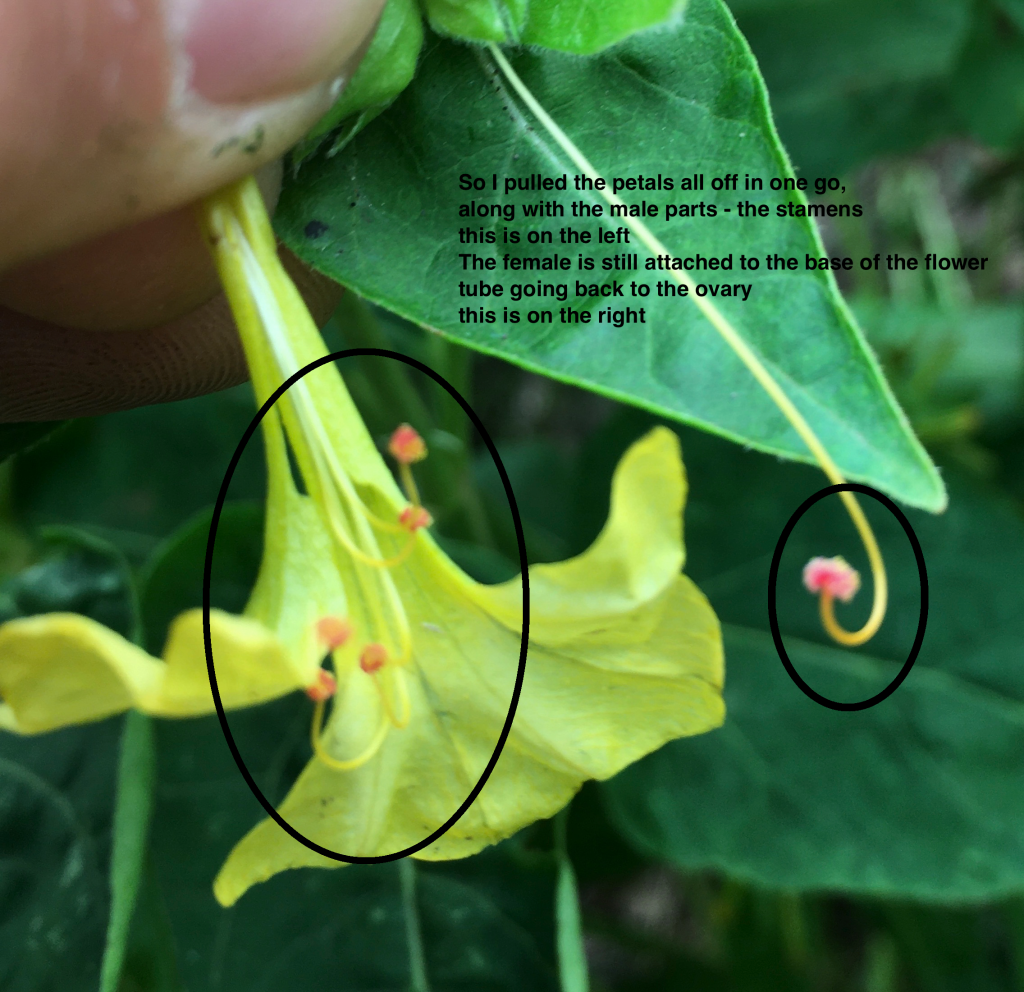
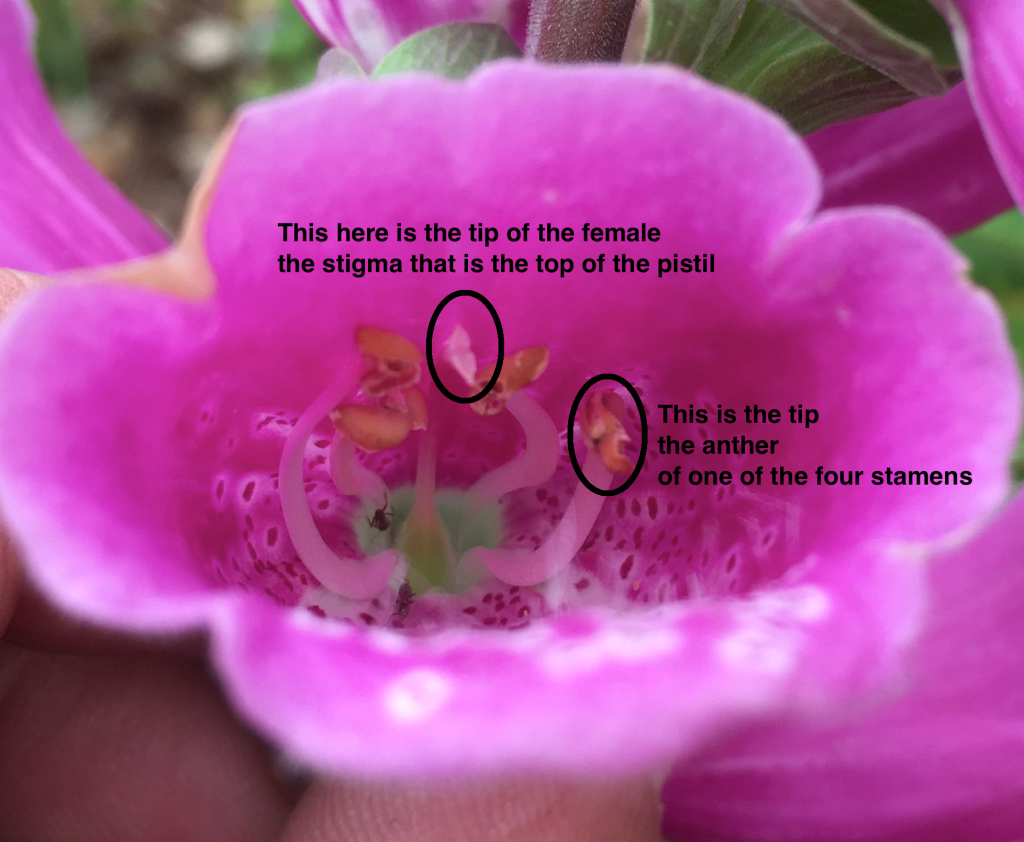
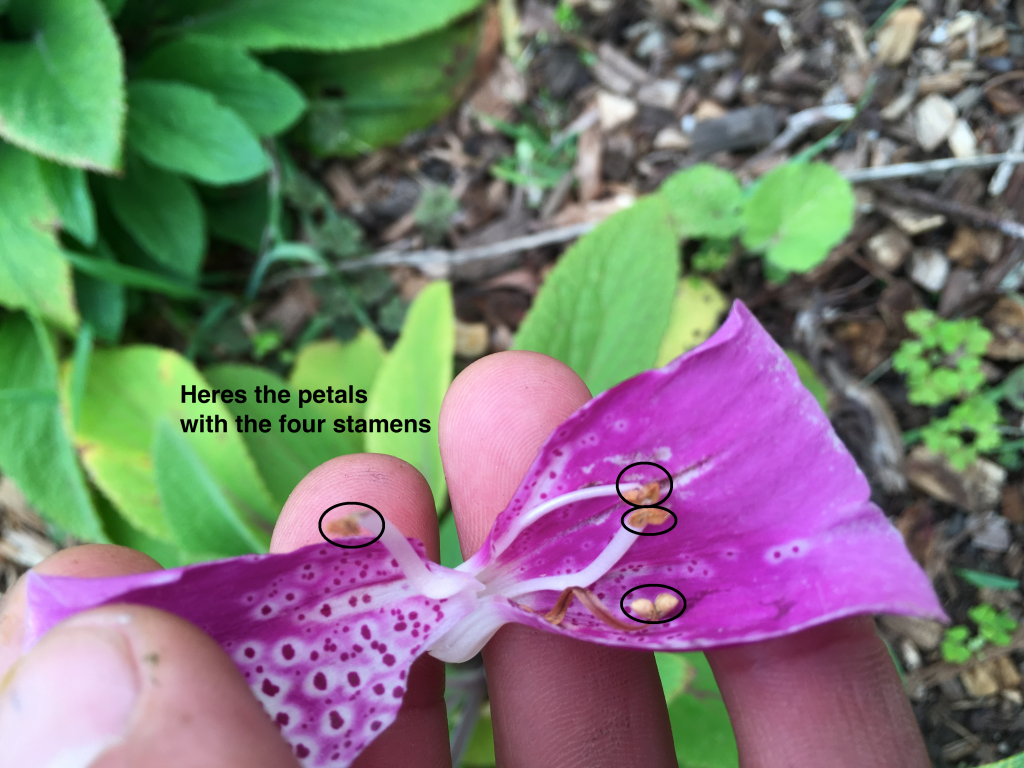
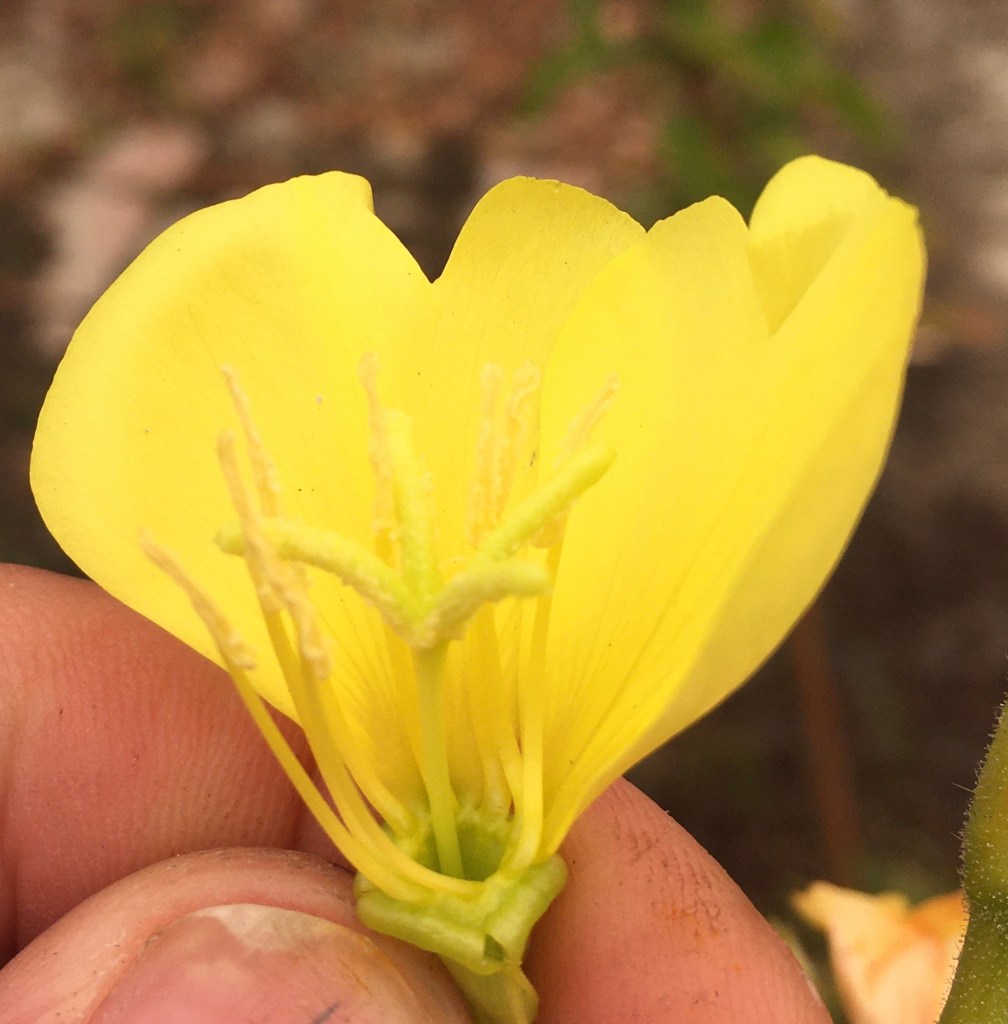
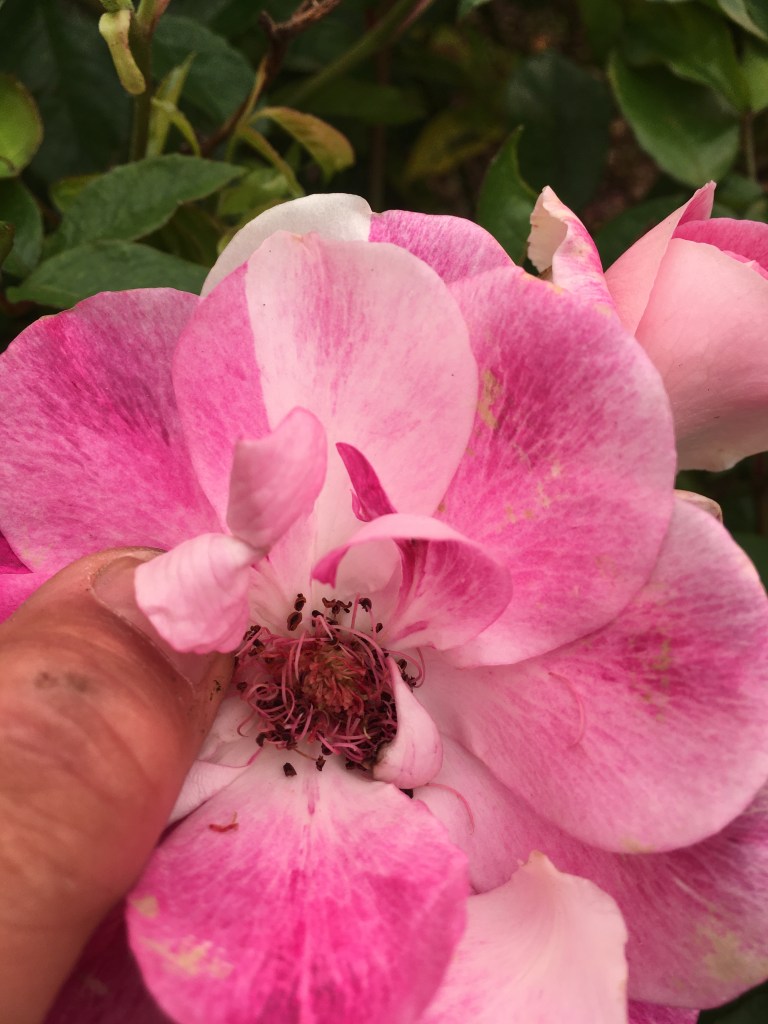
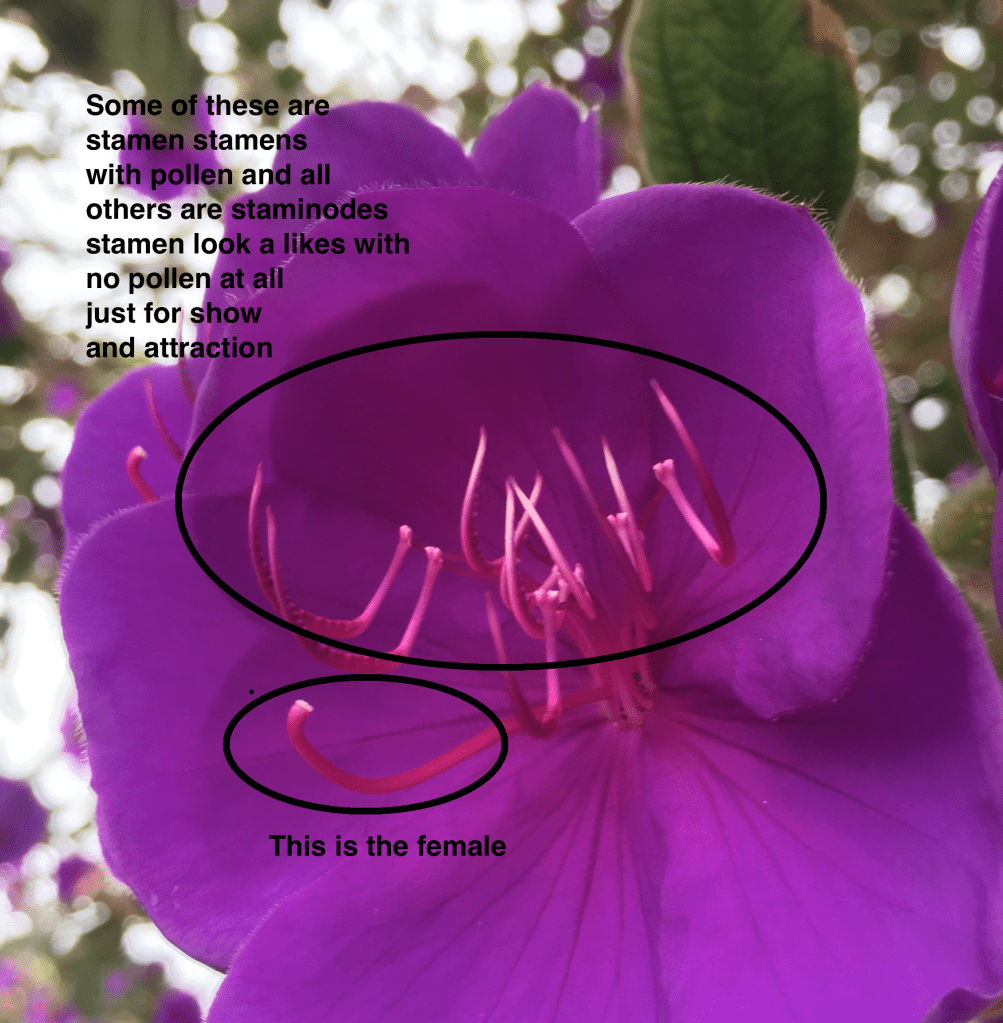
take a good look, keep an eye out for the male stamens

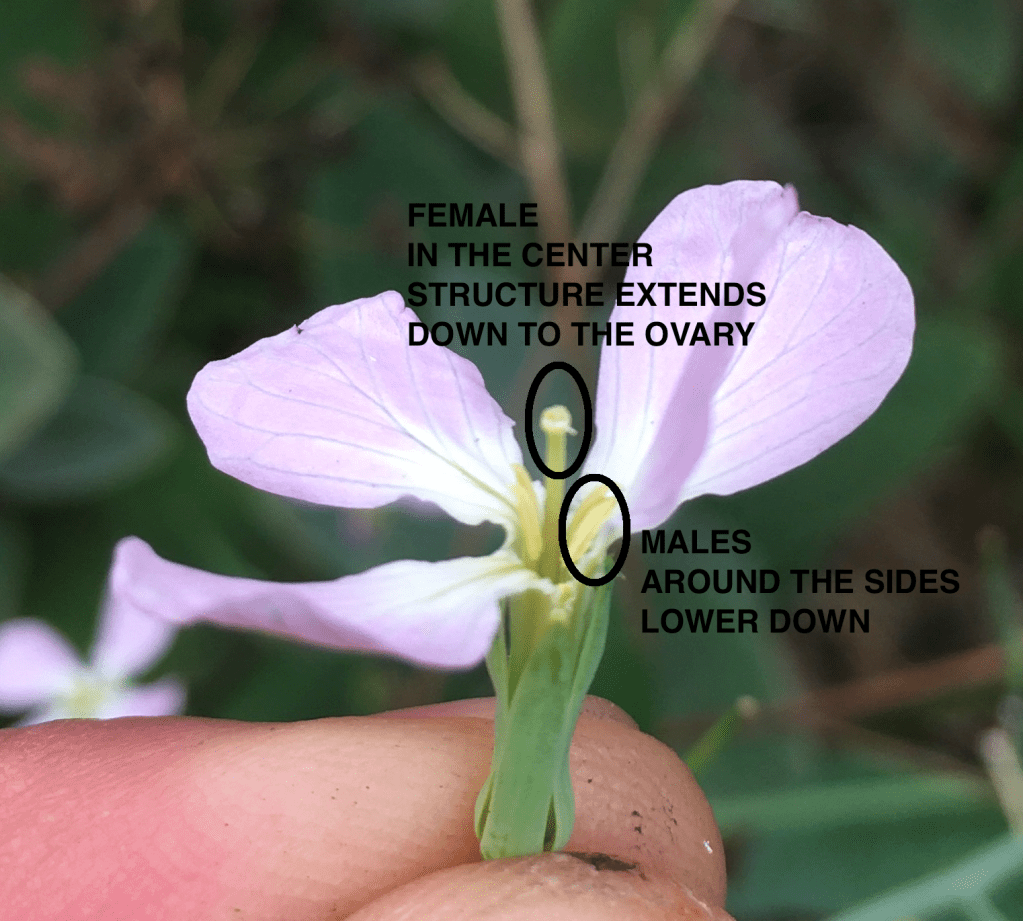
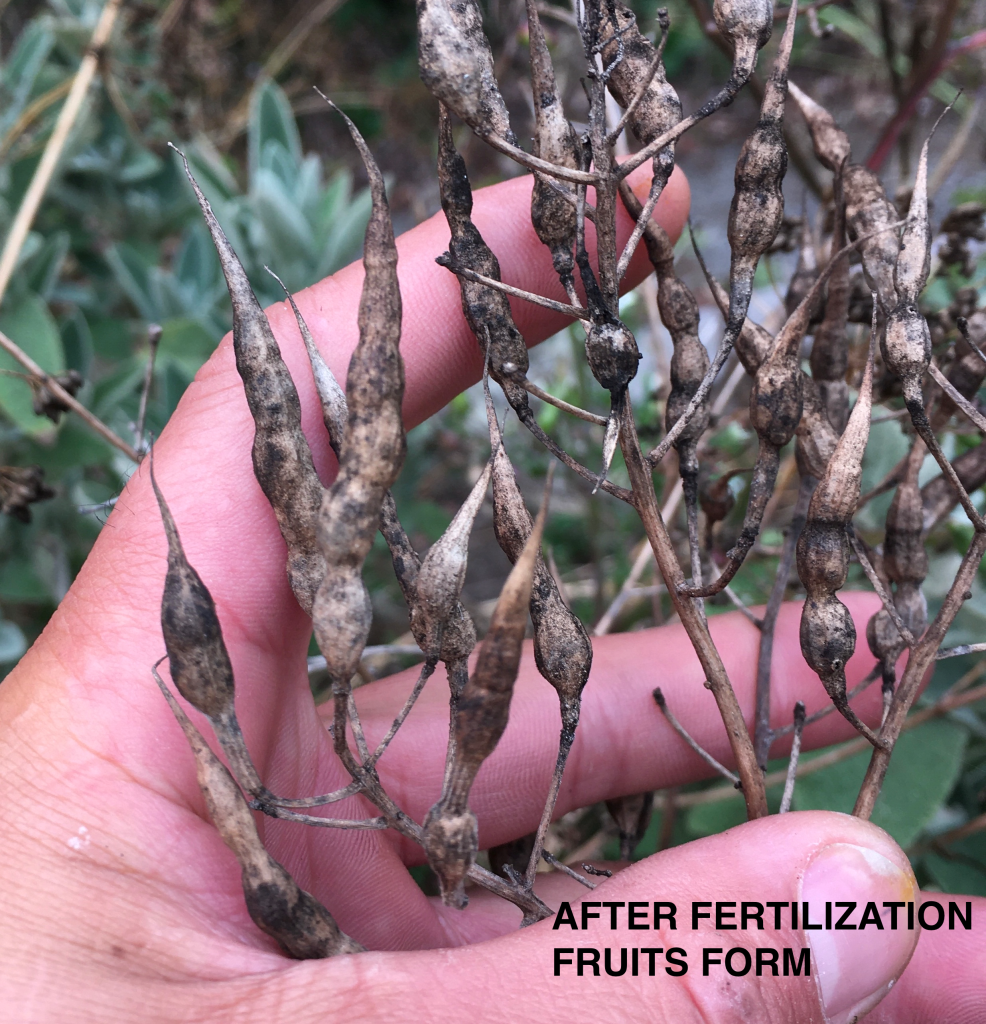
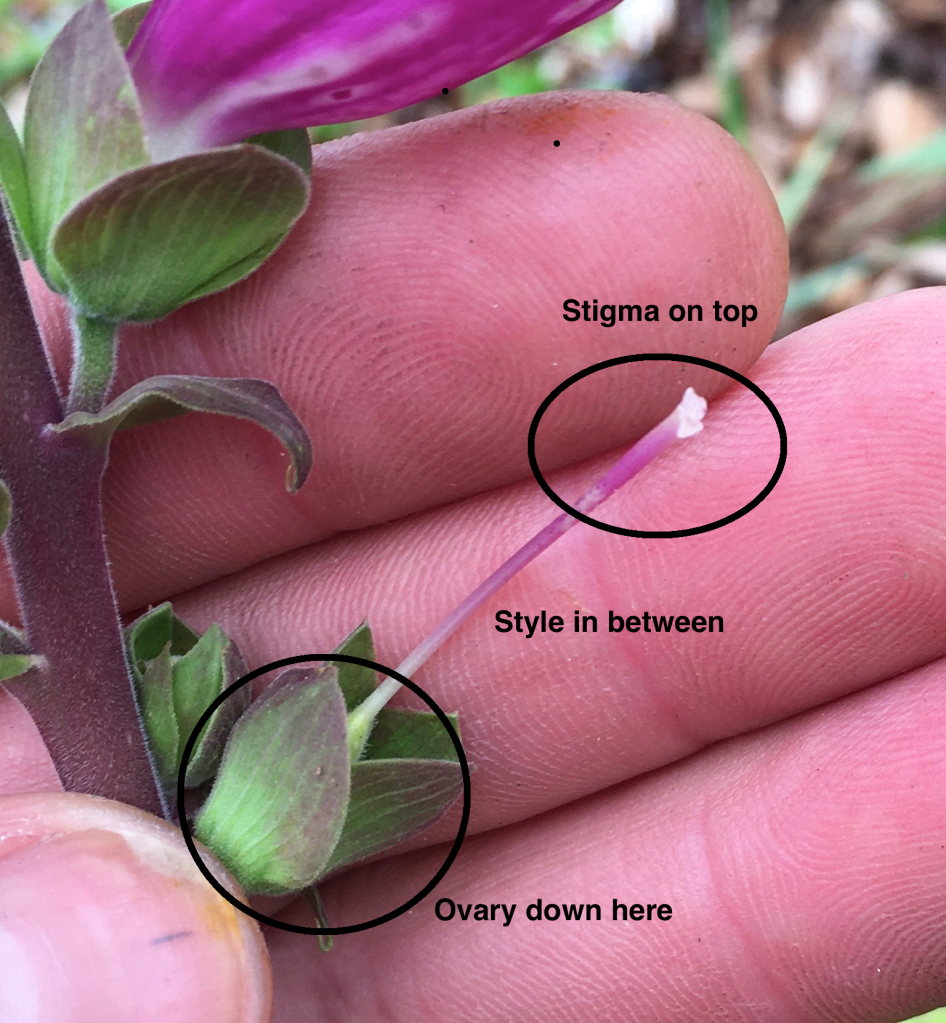
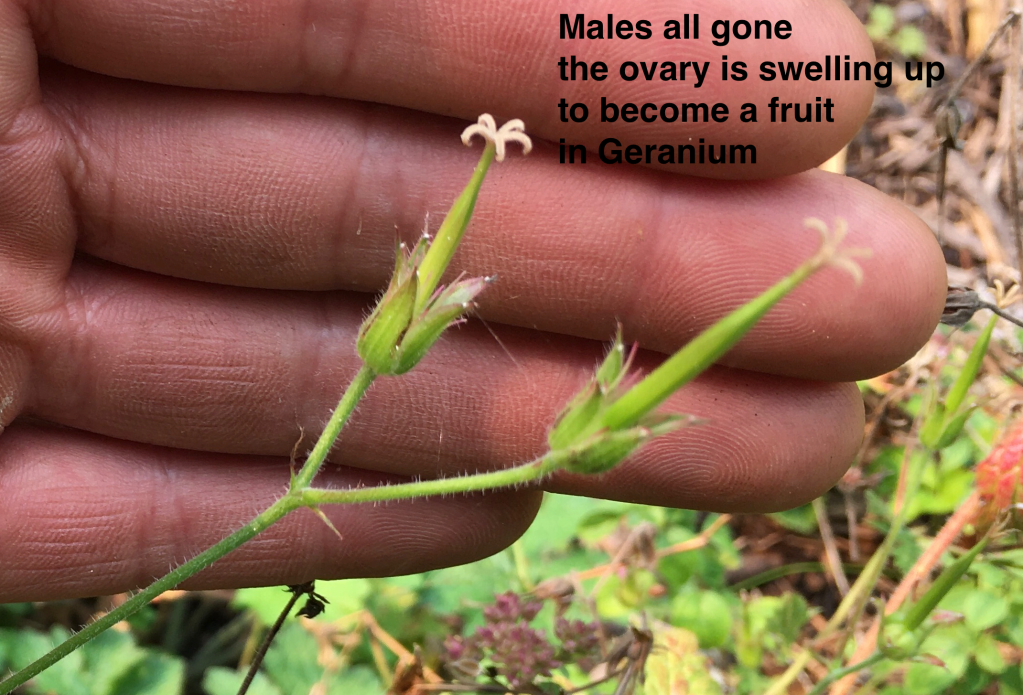
and the female pistil with the ovary at the base

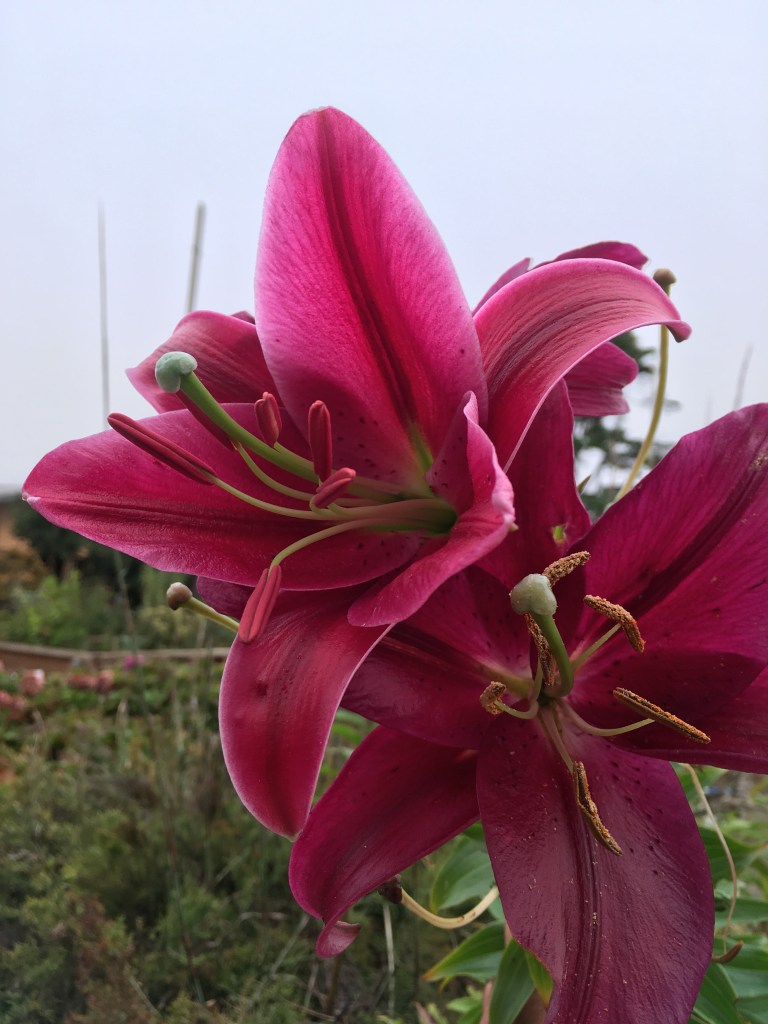
males can be few to numerous, with a bit of fuzz look to them cause of the pollen, you are looking for a long oval with a slit more or less

females are in the center

the tip is sometimes a little club, or divided into a fork, or a cross, or partitioned further

also note that the timing is sometimes staggered

that is to say, the males may be ripe and mature, while the female is hardly developed

in another flower, the males may have already faded and dried, along with the petals, while the females are just starting

we will start with a few pictures labelled

then the rest is up to you. good luck finding the sex parts on flowers:

The following flowers

I skipped em

cause the parts are easy to see in person with a razor blade and a hand lens

not so easy for me to show you online

The rose family is tricky

cause theres sometimes a whole lotta pistils all cluttered together

plus the way the breeders hybridize em

the parts can be a mess to discern

heres a couple of rose family flowers:

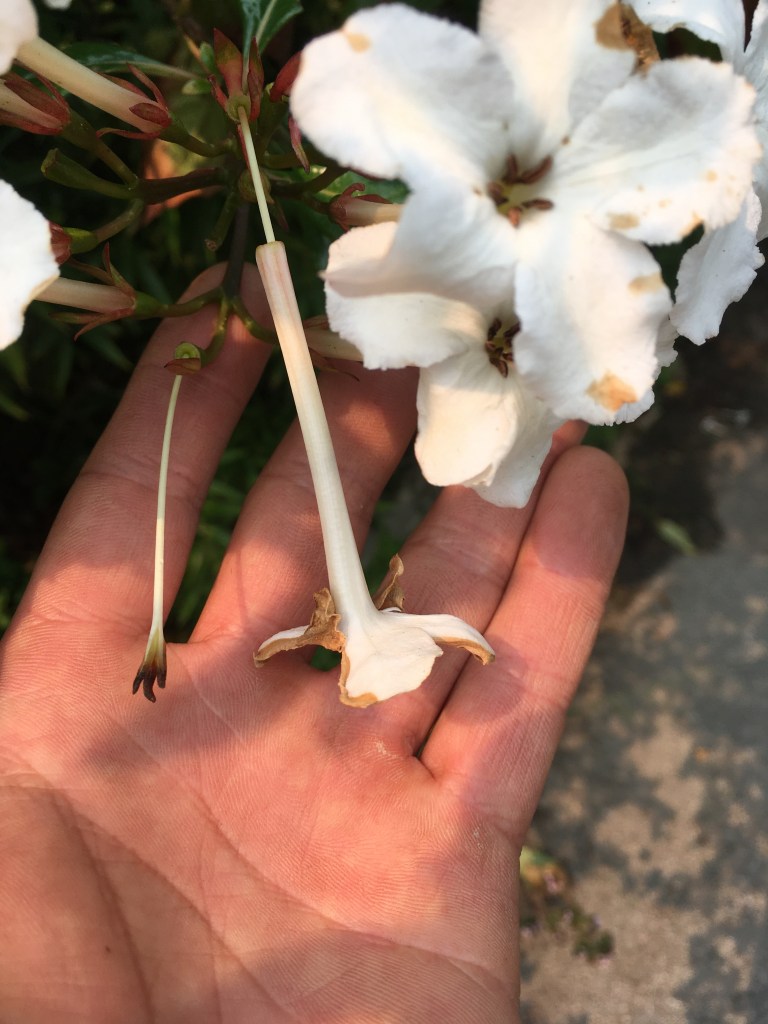
Once in a while you run into one of these around town

a princess flower

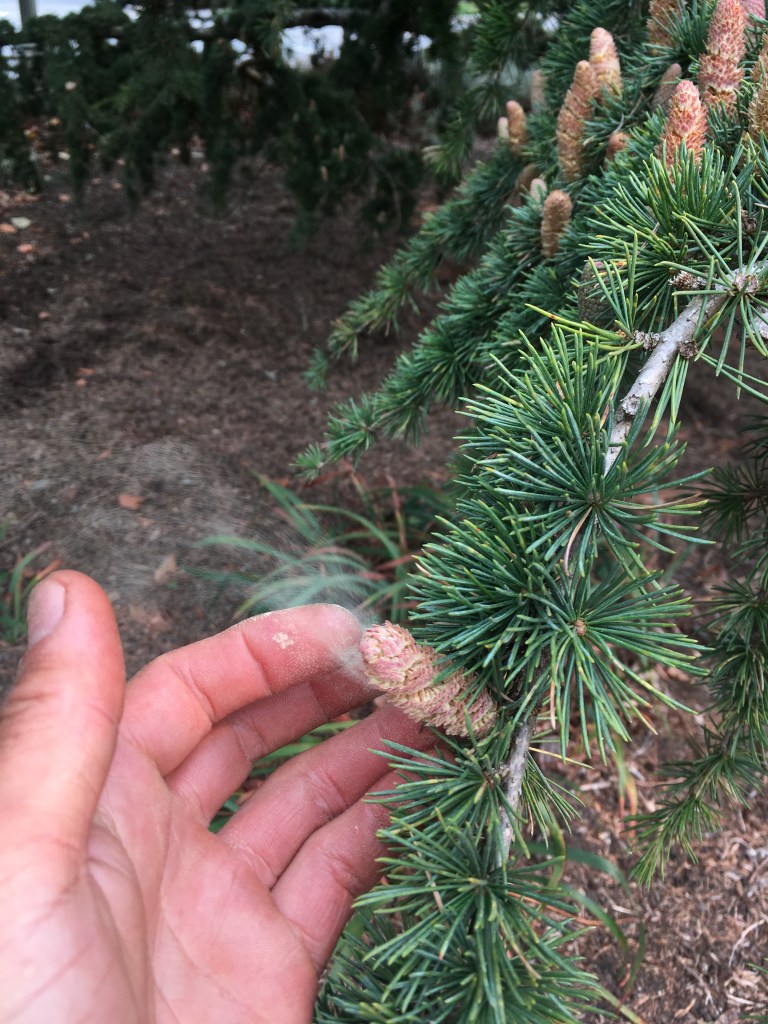
We will end this entry

with a puff of plant sperm pollen

aaaahhhhcccchhhhooooooooooooo!

Addendum to Greenhouse Coverings
September 5, 2020

Ultraviolet light basics

About a billion years ago ancient plant ancestors called algae formed or came to this planet and started to multiply. Their energy making activities created oxygen gas as part of the photosynthetic process. This gas became part of the protective layer called the atmosphere that blocked out most of the life destroying ultraviolet rays hitting the earth. It also allowed the proliferation of lifeforms that depended on oxygen to breathe and survive. The dominance of plants continues to this day. Plants and algae create, maintain, and protect the conditions to make life viable on our planet.

Most of us cannot see the light waves that are not in the visible spectrum. What we can see with our eyes is a tiny portion of what is happening. We see red orange yellow green blue and violet. Plus the mixtures of colors like pink magenta and turquoise. Scientists investigating the properties of light found that there was something happening at the extreme ends of the rainbow of light. Above the purple violet was something else – they called this ultra violet. Ultra meaning more than/extremely/excessive, like Ultra man! Beyond the red part of the rainbow they found another kind of wave – they called this infrared. Infra meaning below.

As the scientists made more observations, they discovered a wider range of waves in this electromagnetic spectrum that is the energy reaching the earth from the sun. They identified waves of energy with super short wavelengths like gamma rays and x rays. Waves that were so short and tiny and full of energy that they could easily penetrate bodies of living organisms. Scientists found waves of energy with long wavelengths, like microwaves and radio waves.

Over time, we have harnessed and made use of the physical properties of these waves: x rays at the doctors to see past the muscles but see the dense bones; microwaves in the kitchen to excite the water molecules and heat up your supper; microwaves for radar to detect motion and measure movement and velocity; radio waves for radios, mobile phones, wireless networks; infrared waves for night vision scopes and heat seeking missiles.

Of the ultraviolet rays of light hitting the earth from the sun, much of it is absorbed by the atmosphere composed of nitrogen and oxygen gas. This is good, because otherwise most of life on land would be dead. The UV waves that do make it through can break chemical bonds and damage cells in humans. This is why we ask you gardeners to wear sun protection. Long sleeved shirts and a nice wide brimmed sun hat, not a baseball cap. Otherwise the tips of the ears and back of the neck are uncovered and often susceptible to skin cancer melanomas. Folks with darker skin can produce more natural sunblock which is melanin, they do not burn so easily. Fairer folks ought to wear sun block and reapply accordingly. Otherwise the sunblock wears off with time, and the sun’s UV rays start baking the skin cell/sunblock residue matrix. But UV light is not all bad. Vitamin D is made when your skin is exposed to the sunlight and that little bit of UV; Vitamin D helps you absorb calcium, magnesium, and phosphate. It also helps your immune system and protects you against disease. So some sun is good for you.

In the garden we also harness UV light for its beneficial qualities. In a pond system we will use a UV light alongside the filter to kill the algal spores in the water. This keeps the pond water nice and clear and not green. UV light is also used to disinfect and treat water at the wastewater treatment plant before discharging it or before it is channeled to the recycled water stream. In entomology class we collected scorpions at night by shining a hand held black light while wandering around the desert. Scorpions fluoresce and glow in response to the UV light, and are easy to catch this way.

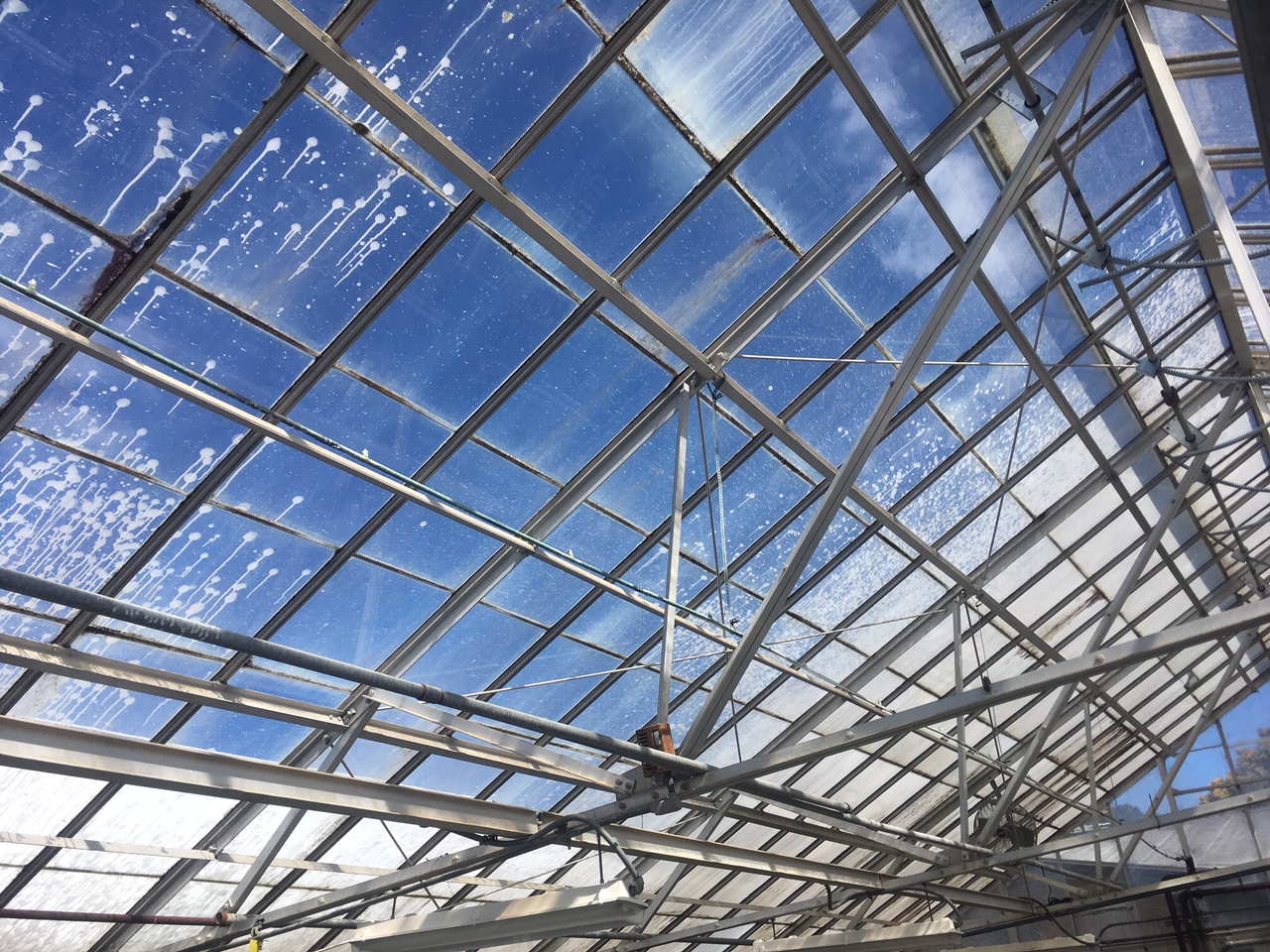
So back to coverings. Glass has the excellent light transmission. It absorbs and blocks all of the shorter wavelength UV rays (UV-B) but lets in most of the longer wavelength UV rays (UV-A). The plants in the glass greenhouse get all the light they need to proceed with photosynthesis. Glass, composed of sand, limestone, and sodium carbonate, is great stuff!

In a poly film covering, however, the plastic covering is composed of long chains of carbon and hydrogen; it degrades and breaks down in the presence of ultraviolet light. Before long the plastic is discolored, cracking and falling apart. Therefore, a chemical compound that absorbs the UV radiation is added to the plastic in the process of manufacture to prolong its life. These are similar compounds as found in sunblock and cosmetics. This way, your plastic greenhouse holds up over time, and you can grow happy plants.

Yes it looks nice and neat. The enclosure probably keeps some of the animals from urinating or defecating close to the tree also. And, you may be able to sit on the edge and eat your lunch there on a sunny day. But, how would you like it if your most important interface – where the base of your trunk meets the earth and soil – is damp and wet all the time? Covered and piled up with rock and gravel and dust and dead leaves and weeds. Trapped and held in with nowhere to go.

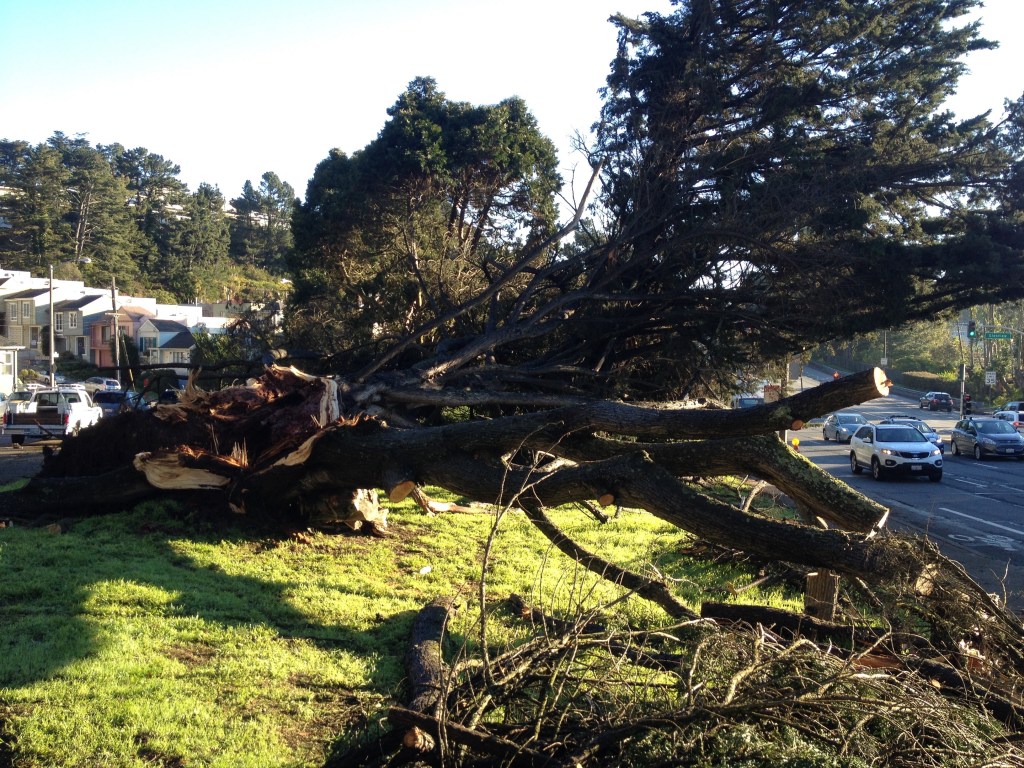
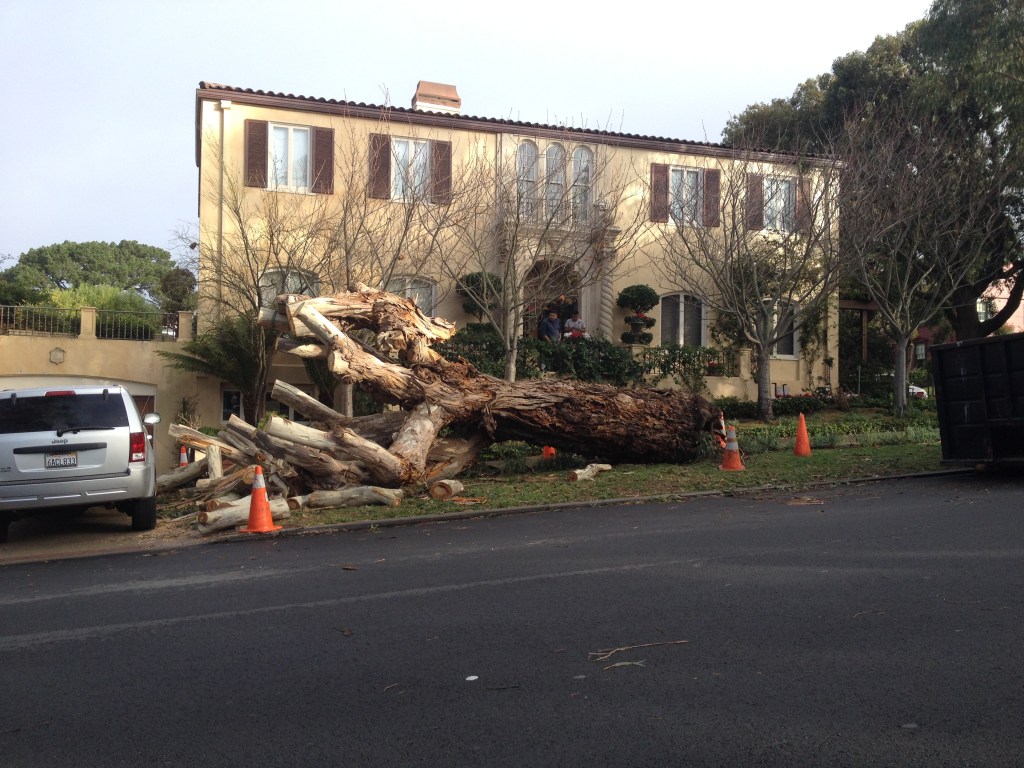
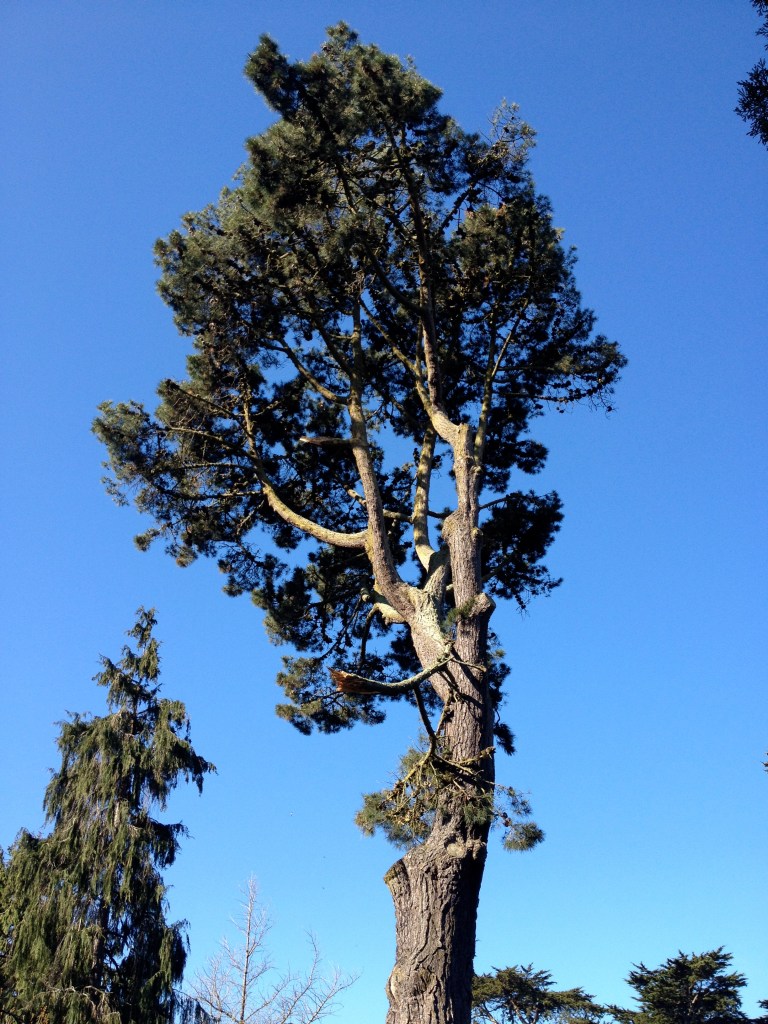
Sometimes trees fall down and hurt people and property. Occasionally they fall down and miss everything all around ‘em. Often, the cause is natural – they are old and sick, they are growing unbalanced in the loose sand, el nino storms are strong and water has saturated the soil. Other times, human care and maintenance may play a role in the outcome. Hard to say. What is important is that while you are working and playing around these massive huge creatures, you pay attention and watch out. Lest a broken branch fall and hurt you. Do you see the hanging limb caught in the crotch here? Imagine it comes loose and tumbles down. If you are a gardener – best to caution tape and cone off the area until the arborists can come and take care of the problem.

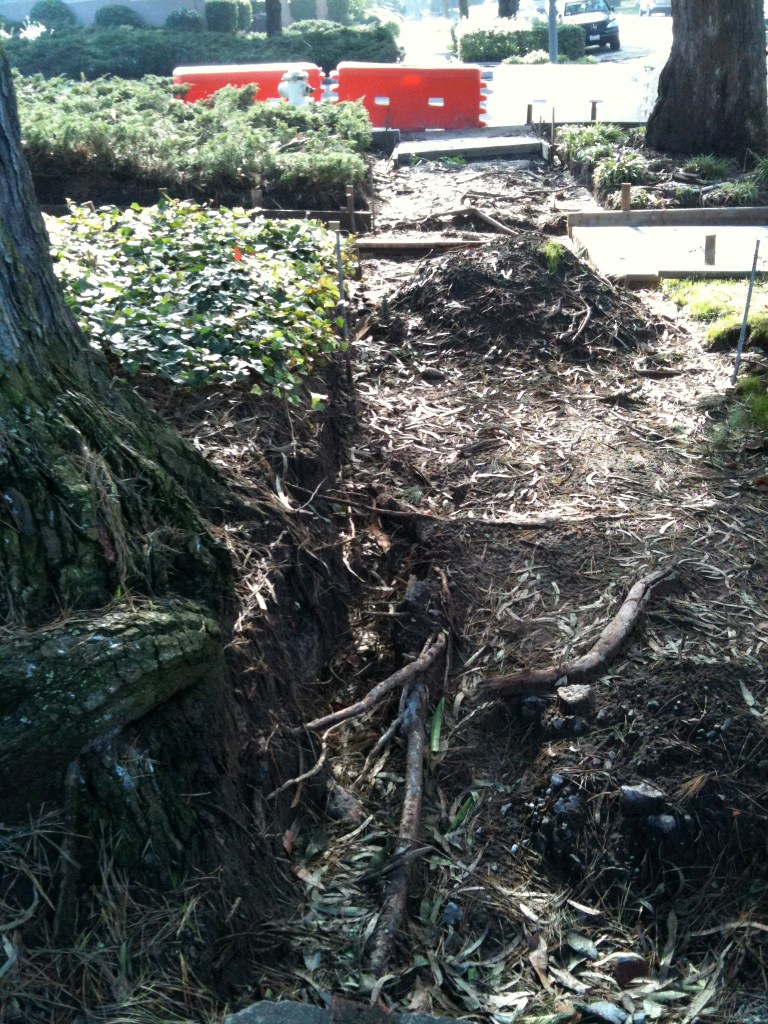
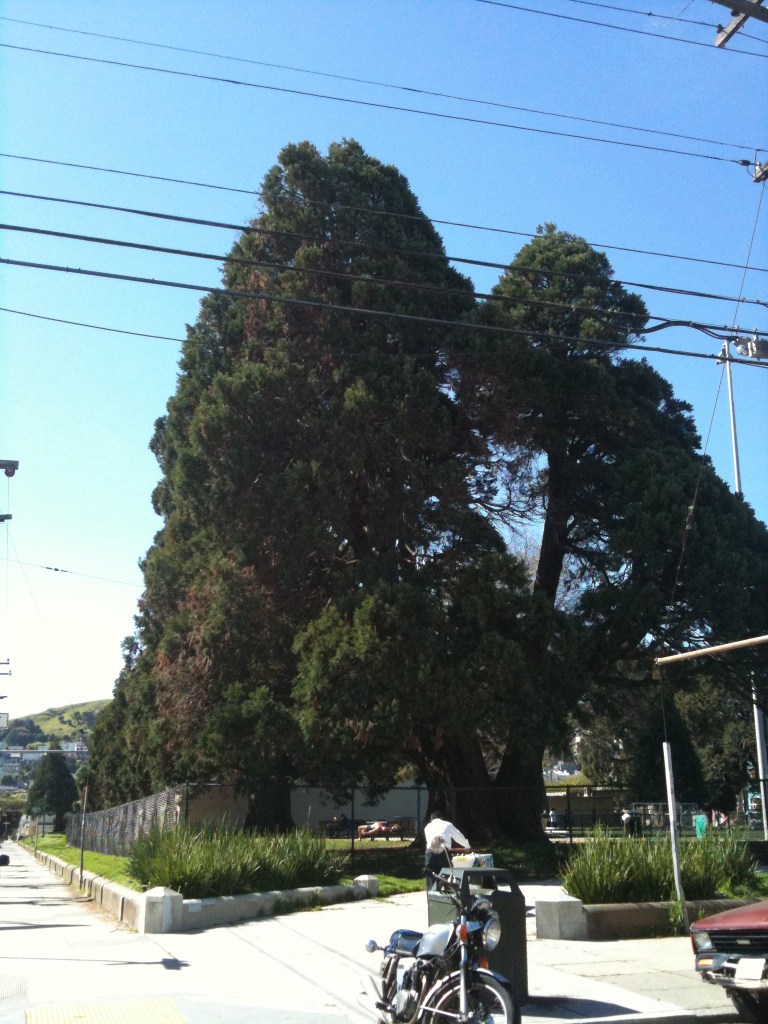
You plant a big tree in a small space. It ain’t ever gonna fit right. It ain’t ever gonna stop growing till it dies. It ain’t ever gonna mature at 15’, more like 80’ then start growing sideways. As the tree grows, roots swell, and the sidewalk cracks. Gotta fix it. So you bring in the jackhammers and forms and bags of concrete. The reciprocating saw cuts the roots in the ground real good, and the saw blades are cheap. You cut the roots off clean and level. Some of the roots you cut are the fine fibrous roots in the upper surface. Down lower, you cut some of the larger thicker anchoring roots five six inches thick to almost a foot wide. Then you pour the concrete over the top. Once the new concrete is screeded and dry, nobody hardly even takes a second look.
But like Gus says, “the damage has been done”. It might take five years, ten years, twenty years before the tree succumbs, fails, and falls. By then people are blaming the weather or the canker disease or something else. More likely if you were a real detective you could trace it to the big root cuts, or the big pruning topping cuts, performed years before. That is where the disease got in. That is when the rot started. So design and plant with size and proportion in mind. The ol gardener refrain goes –
“Right plant right place”.

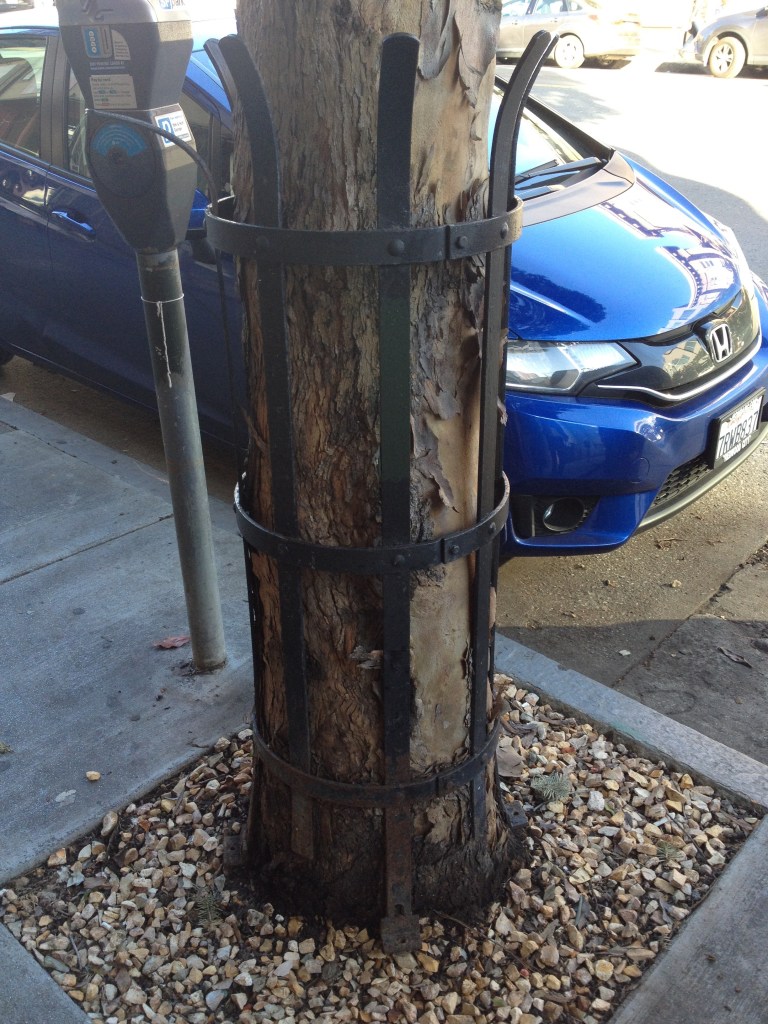
The tree planters. They do it with the best of intentions. But the follow up is so so. They think “We are saving the earth and planting trees. We are going to protect you (the tree). You are going to grow up straight and tall. We are going to make sure of that by binding you nice and tight!” But they forget to come back and loosen the straps or the bars or the cage or the grate. They forget that as a tree grows, it gets bigger. They do not recognize that a tree needs to move, needs the wind to blow it back and forth, for its roots to grow strong and firm into the ground. So then one day, five years down the line, somebody finally removes the stakes and the ties that were too tight to begin with. And the first wind storm, the tree falls over because its roots never rooted on its own, never went looking for water on its own. It was dependent on external supports placed there by an undependable human. Oh well, better luck next time!

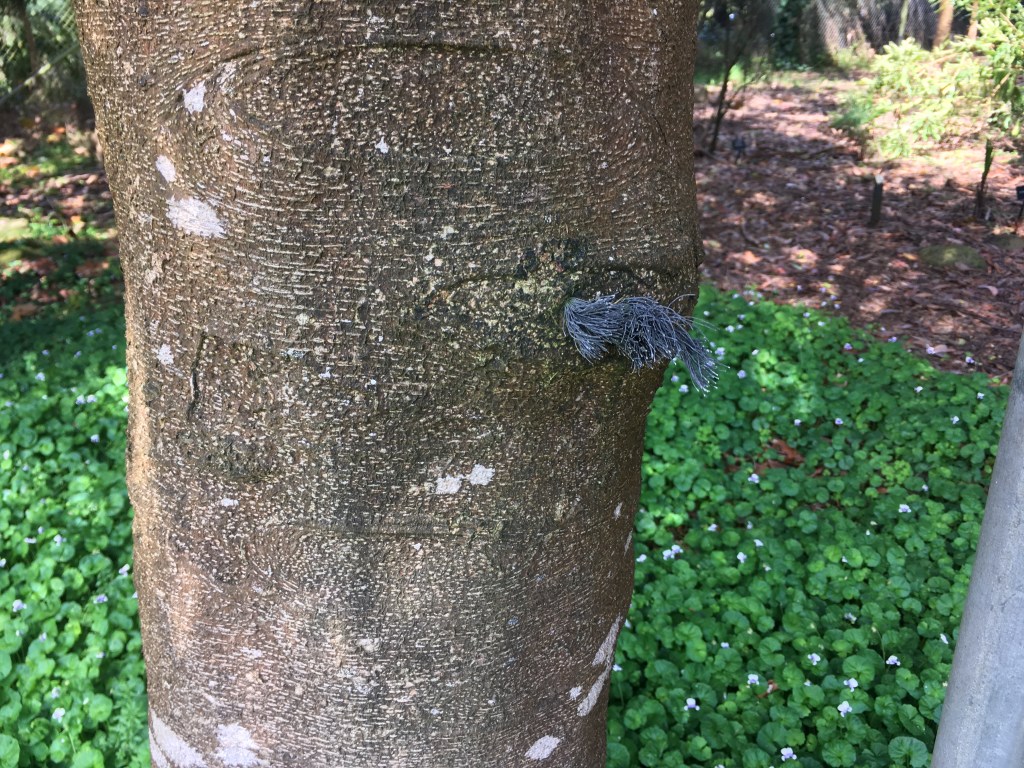
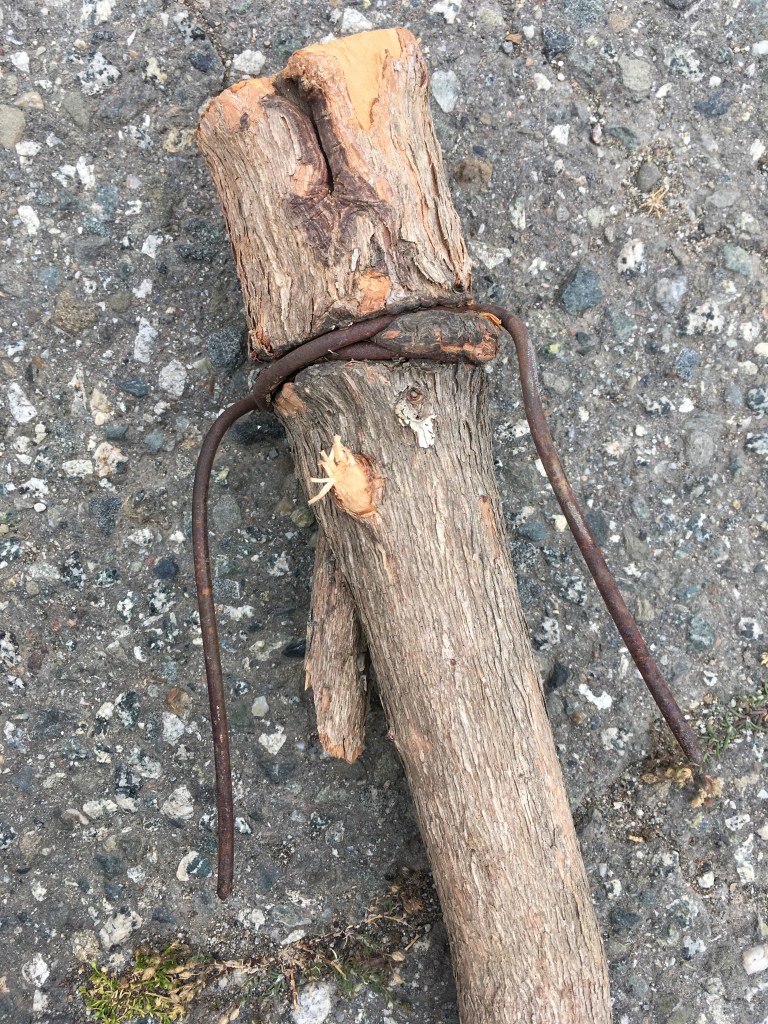
Girdling is when the tree gets sick and dies from strangulation. The conduction of water and nutrients gets stopped up and jammed. This can be from plastic rope that got tied around its trunk. This can be from a root in a container that went around and around until it choked itself. This can be from a piece of wire that would not let go. If you care for your trees, this does not happen. Loosen the ties. Prune the circling roots.

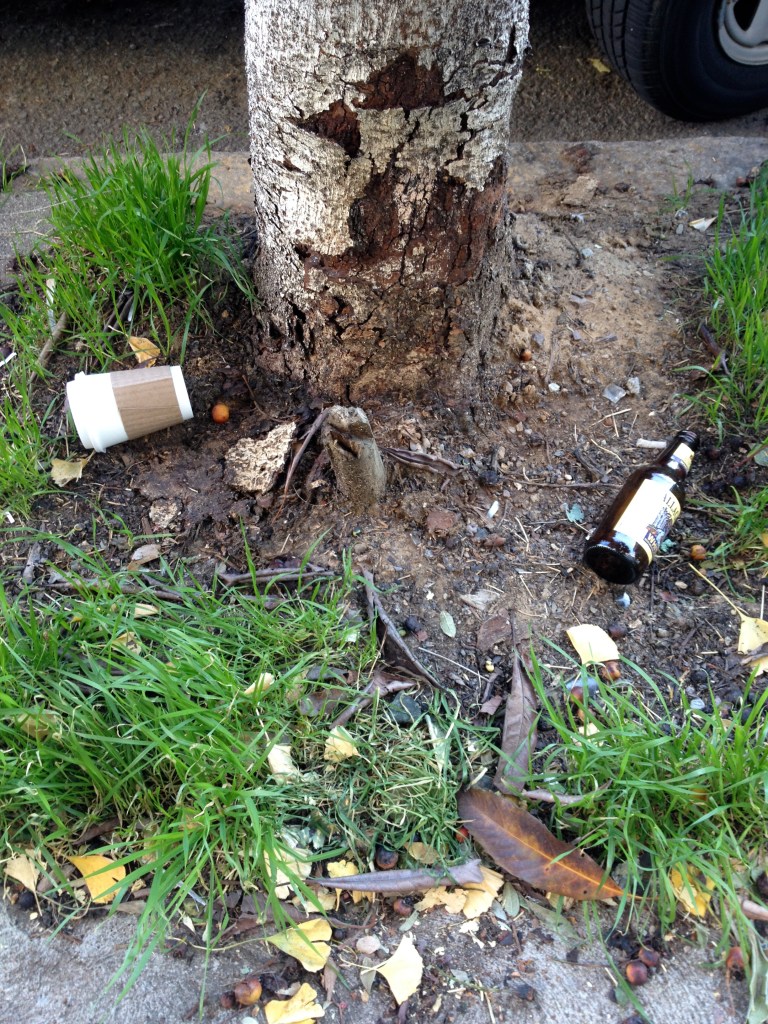
If you view a tree as a thing, as an object, not as a living creature, then you will treat it as such. You may see the trunk as a fire hydrant, and be unaware that dogs are burning the tree with their nitrogenous waste stream, burning it until the bark peels off. You may use the tree basin like a trash can or an oversized ash tray which it resembles. You may plant a tree too close to the house because you thought it was like a sculpture that would always stay the same size. You may fill a tree cavity full of concrete because you figured the problem was one of hardware – like the tile and the grout, the shower tub and the caulk, or the drywall and the spackle for the nail hole Most of these things, most of these treatments, the tree just accepts and tolerates, and keeps on growing!

The bud union is where the tree was budded. That is to say the bottom part (the rootstock) is one plant, chosen for its disease resistance, its ability to dwarf the size of the tree, or other qualities. The upper part is another individual plant (a bud), chosen for its pretty flowers or tasty fruits. The two were stuck or taped together back in the day, and now they grow together as one. Where they meet is often a bump of a swollen scar. The union. You can commonly observe this on flowering cherry trees, roses, and fruit trees.
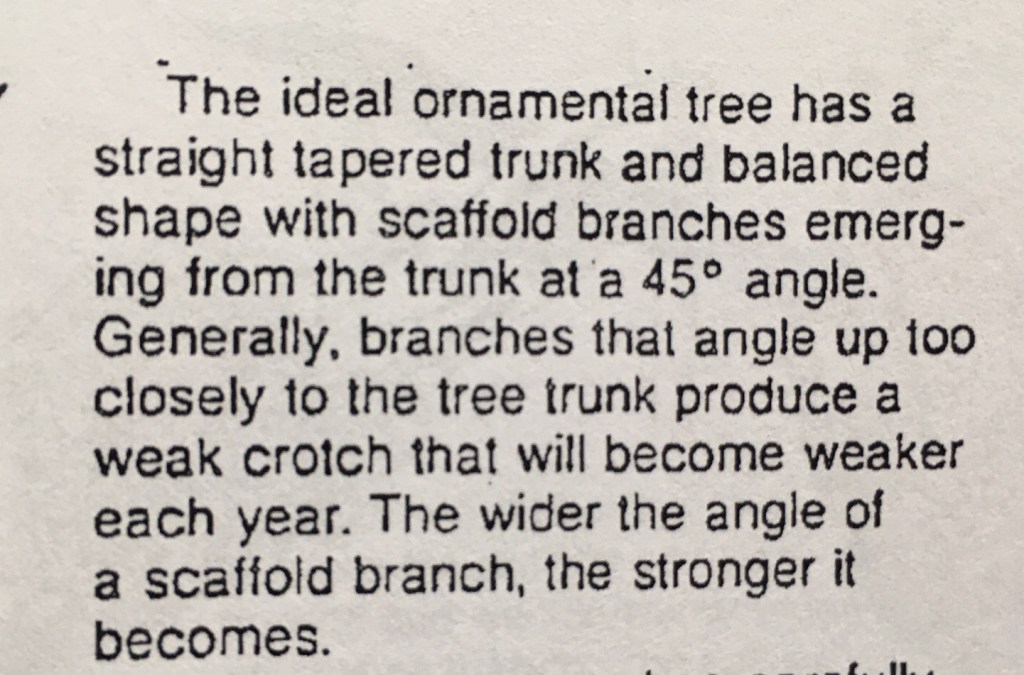
A weak V shaped crotch is a tight narrow angle between the two trunks. It occurs commonly on the sweet gum tree Liquidambar. Sweet gums have the maple looking leaves and a fruit that resembles a small mace ball with spikes all over it. It has a fruit that will pop your bicycle tire’s inner tube. When your crotch is narrow like that, the growing bark becomes rolled inwards with the years, eventually resulting in a a weak crotch that is prone to splitting. When you put a two hundred pound arborist climbing in the tree pushing hard at that junction then kaboom – half of it breaks off and down goes the arborist. So be careful around them especially if they are rotten.


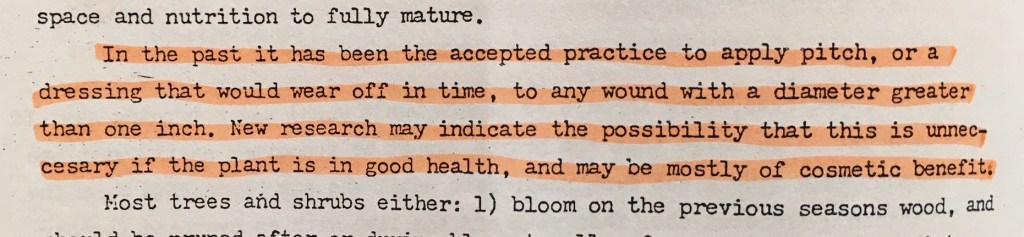
These days it is not fashionable to leave a stub. This is based more on aesthetics and cosmetics rather than health. Some people will say that if you leave that ‘dead wood’ stub it will attract fungal pests and infect the rest of the tree. Not really. The tree will usually compartmentalize that chunk, slowly suck out its nutrients, and let it die. Most any organism that lands and eats it will be a saprophytic dead material eater, not a live tissue eater. In the country farmers like to leave a little stub to hang a hat or a jacket or a tool, so that stuff don’t get lost in the bushes. But in town, it is best to leave no stubs for looks and for the standards…


Double leaders are tricky. If it is an older tree, and the crotch angle is U shaped and strong, then just leave it. Trees do not have to have only one strong leader, they can have two. But if it still a young tree, and the leaders are thin and not yet really developed, and you want to nip one of them, then go ahead.


Spurs. Once, a beginning gardener was asked to prune an apple tree in the springtime. He thought it was no big deal even though he had never done it before. He did not even ask for advice or look it up in a book or use the internet. He just went for it. He finished pruning and it looked real good. Most of the year went by. Then the client called to ask why there was no apples at all this year. Gardener felt a little bad, shrugged, and went to look up what spur wood looked like…


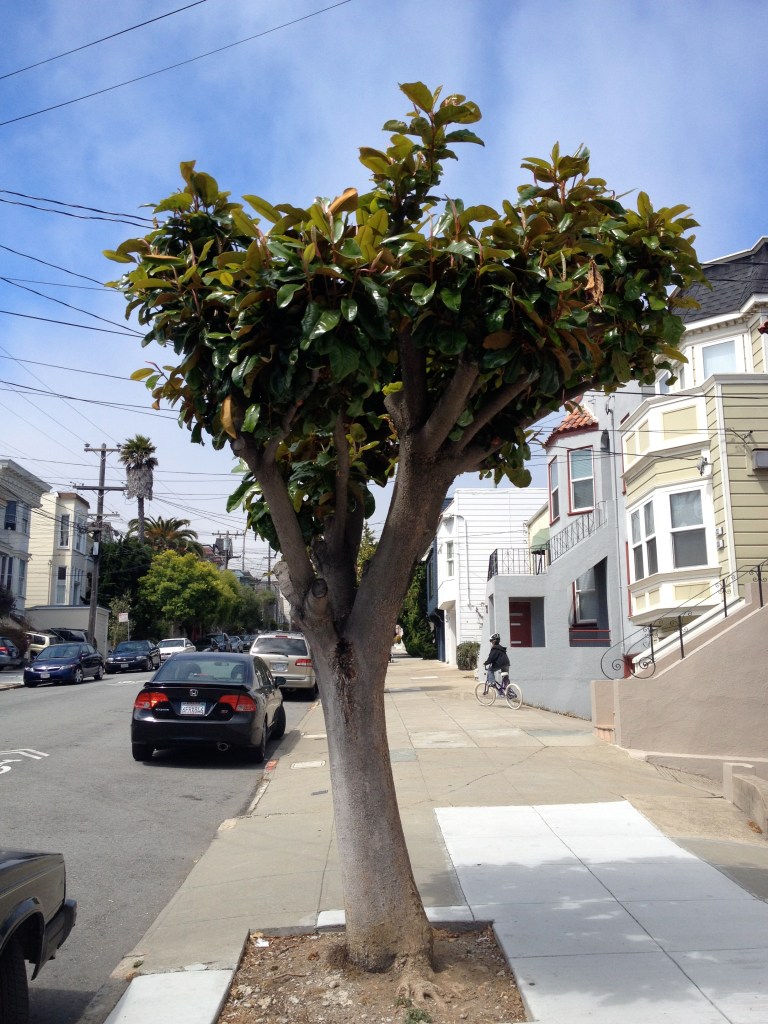
Here is a Magnolia tree that has been topped. What do you think? Does it look okay? Why would you top a tree? Did you know it is technically illegal to prune in this manner? And that you can be fined hundreds of dollars?

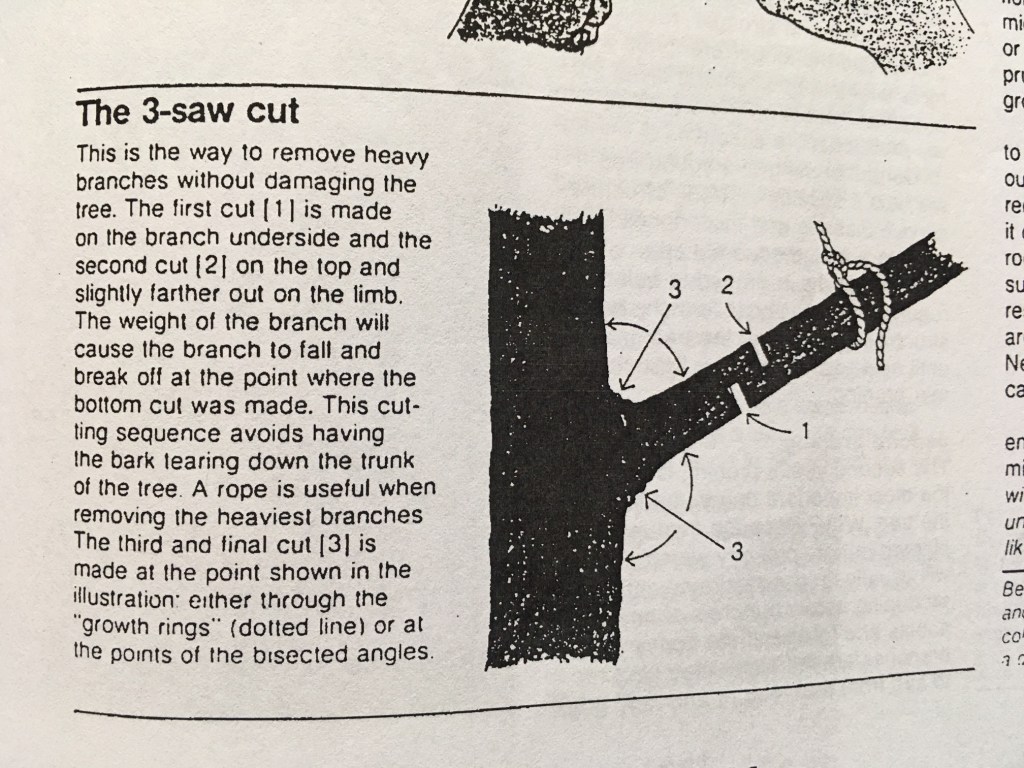
The three cut method is still a good and valid way to prune larger limbs off a tree. Only change in recent years is this: On the second cut, prune it right to the undercut, not a little aways like in the illustration. Straight shot to the cut, not letting it snap where the cuts are separated.


Couple of changes here. New standards recommend no fertilizer for the first year or so. Let the tree get used to the site first. And the backfill – use all the same local native soil you dug and excavated, not a 50/50 mix of native soil and organic matter. The logic and theory is that the tree will adapt and do best in the stuff it has to live in, not some compost leafy barky organic matter that is going to decompose and let the root ball subsides and sink deeper. This way the trunk base – soil interface does not get covered with dirt and soil and moisture and rot. Better to plant the tree a tiny bit high rather than low.

As we progress in our knowledge of trees as living organisms, we have made changes in how we treat them near our dwellings. We are emphasizing tree health over simply tree cosmetics. We are broadening our view of what an ornamental tree is, and what is ideal in a given landscape. We are seeing trees not only from an engineering model’s stand point, but also seeing a tree as a tree.

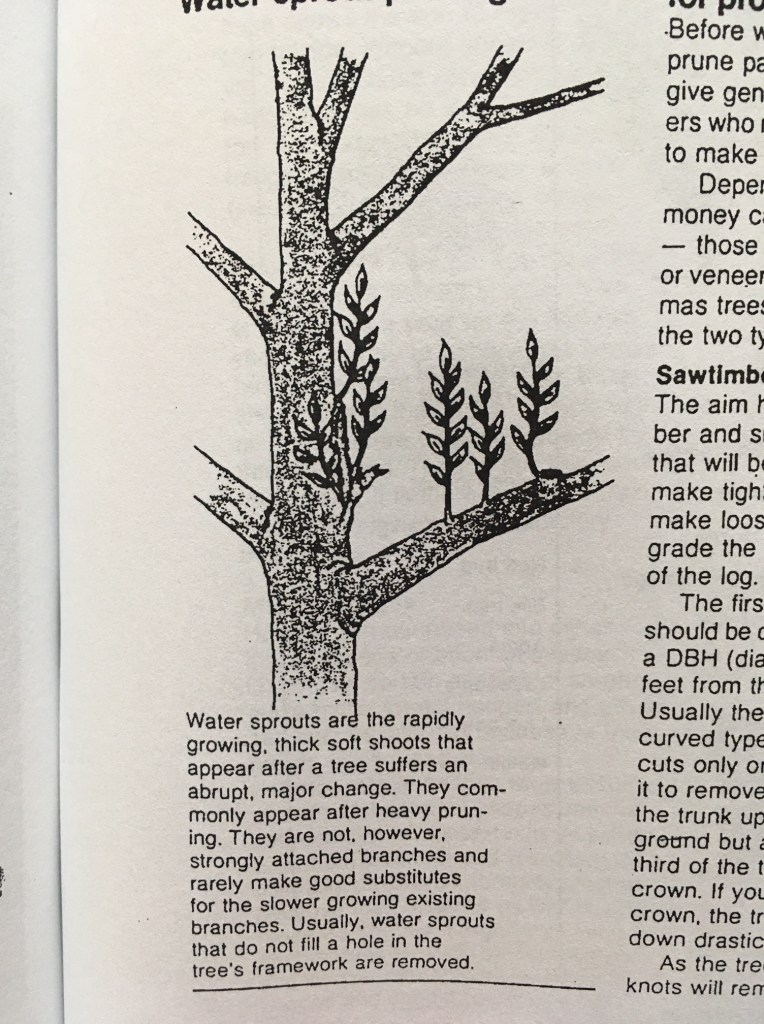
Have you ever seen a wild old plum, one planted by itself on the edge of a field? Have you seen how it is a dense thick tangle of trunks and branches crossing meshing and exhibiting a sort of mad exuberance? Well that is its natural wild form. Even the domesticated town plums would like to look like that a little bit, but most of the time us peoples don’t let them. “Stay in your little square!” So when we prune them hard in an effort to ‘correct their poor structure’, they fight back with a ton of new sprouts, thin woody upright sprouts on the branches, sprouts we call watersprouts.
The tree is filling out all the pruned-away empty space with energy producing leaves. It is filling in gaps in its canopy where light is being wasted. What we call “wrong’, ‘ugly’, ‘incorrect’ and ‘bad’, the tree knows as ‘good’. Good for survival, good for making food for itself.
Ornamentally speaking, sometimes a light natural prune is more beneficial over time than a heavy hard prune that will set you down a path where every year you are fighting to make the tree do what you want it to do. This instead of letting the tree do what it has done for the last hundred million years just fine, and just helping it along as a gardener to make it look its best.
HAND DRAWING LANDSCAPE DESIGN PLANS

Sometime I get people asking me
why y’all still draw by hand?
its so tedious, and slow
and if you make a mistake you gotta start all over again
why don’t you change up
get with the times
go digital
use computers
they are so much more
efficient, uniform, and perfect
compared to the human mind and hand

This is true
and we offer two courses at our community college
in landscape design
in the advanced class we get into some software
and click away at the screen
importing 3 d plants from a virtual warehouse
visualize a space while orbiting and zooming in and out
snapping lines of exact 8’ – 2 1/2” straight retaining walls with ease
these are good advancements, improvements
we evolve with the times, and the new clients’ expectations and wishes
I do not dispute this, nor its importance

On the other hand
we have many students who are
ex accountants ex chemists ex doctors ex IT specialists
ex software engineers ex architects ex ex ex
who have spent many many too many hours at the keyboard
and don’t really want that anymore, at least not all the time
they want a balance
they want to be with fluid nature not rigid culture
they want to know the world that functions as a web of connections
take a break from the boxy world of top down hierarchy
so they turn to plants, hoping for some new connections and friends
some sweet scents and down time
the last thing they want to do
is to sit back in that ergonomic chair, hooked up
or we have many students fresh out of high school
who have already spent countless months, perhaps years,
with shows and video games and movies and social media
probably more time with a screen than sleeping
probably more time with a screen than with people
so to get them to learn the basics of drafting, and the origin of the art and science of horticulture
we start at the beginning
we start with simple hands on objects and basic observation skills of the outside world
allow that process to take hold
and grow like a vine

Moreover
there is a warmth and person feel
that comes from a hand drawn picture
in the big architecture firms that can afford it
the renderings, the perspectives, look at how they beam
they are hand drawn, not machine drawn
a good artist can bust out a drawing
and exceed the speed of a computer’s drawing
a computer plan may have to be
photographed uploaded edited imaged cropped moved and saved
whereas the hand drawn plan is relatively simple to execute
paper, pen, straight edges and ruler

In addition
in those human drawn lines
there is emotion and manna and mana
embedded in the picture are a persons experiences and trials
maybe a person working through their traumas and fears
they are all there
its kinda meditative really, a drawing
a process with a defined start and finish
a relatively straight one, not one full of zig zag mazes and infinite scroll down loops

drawing by hand, there is less of an inclination or ability to
edit and change, save and redo, paste and track, copy and rename
it is more of ‘bang’ shot beginning to end
less of a strain on the mind doing the this or that, analysis, more this or that
nor is there as much the anxiety of a plan that seeks to be perfect
every little detail, perfect
yes a person did this, it might even have a tiny tiny mistake or two
the gist is that
we are drawing a plan, a preliminary idea, something to get us off the ground
something to ground us and root us, into the earth
thats all
we are not drawing the blueprints for a high tech science instrument to the milli milli accuracy
we are not designating the specifications for an advanced prototypic 3 billion dollar machine
we are just
making a garden

Plus
computer designs are good at the straight lines
not so good with the
the gentle curves or serrated edges or dynamic flows
that is part of garden design
thats the softness, the gentleness, the peacefulness
we seek in nature
maybe one day there will be cookie cutter factory designed gardens
custom clicked gardens
gardens you can just swoosh through the email and plop down
instant garden
one size fits all garden
rubber molded garden
eternal never changing garden
plastic never dying garden
really, is that what you really want?
ponder this a little bit longer, what you are getting into…
a garden is a personal thing, ya know…
it is a treaty a compact an agreement a covenant
between a sanctuary and people
it is installed by a contractor
maintained by a gardener
and designed by you
a visionary who can weave all the disparate elements together
and sink it down deep deep deep

So back to the hand drawn plans
you get to touch tools and learn their special function
tools that are not icons, tools you can touch
you get to make mistakes and crumple up the paper all mad
no you shouldn’t break the computer that cost 1000 dollars, throw it out the window
no matter how frustrated it makes you…
you get to see a vision in your mind travel through your nerves and muscles and become reality
you get to be actively engaged, whole body married to the creative process
the whole thing is so cool and fun
tactile, textured, full of vibrant colors
this is why we still
draw by hand
at least initially… in the first semester of class
yes I know, I am with you
I am not a luddite resister going around town in a horse pulled buggy
using a hand cranked flour mill and sitting around a wood fire
yes, the year is 2020…

Addendum
There is something else. In art and design classes they use this one book called Drawing on the right side of the brain. It challenges you to see things in different perspectives, as a way to balance the right and left spheres of your brain and become a better artist.

Well for those of you who did not grow up learning this stuff – the left side of your brain controls the right side of your body, and the right side of your brain controls the left side. Funky right? Also, the left brain is more associated with the analytical logical ‘rational’ side of behavior. What we think of more as ‘the head’. So science and math and languages. Theres the left brained engineer, investment banker. Leaders in big industries and tech, business. Whereas the right brain is more associated with creativity, intuition, visualization, spatial abilities – more ’the body or the gut or the heart’. So art and music, sports, poetry and stories. Not as much valued in our society today, materially speaking anyways. Besides sports. We are primarily a left brain dominated culture. A right handed culture.

Imagine the left brain sees the world as geometric shaped boxes, black lines on white paper. Squares and more squares. The right brain is full of beautiful colors, but not well structured. Splatters and stuff everywhere. Put the two of them together, and you have the world and life and a garden. That is the design. On many occasions scientists have visualized the solution to a problem by seeing images in their dreams. These are the scientists that have the left and right brain interface well bridged and working together.

Having come across this in high school, I am not sure of the research and source at this point, but simply retelling it as a point of interest. Back in the day they were investigating the brain and treating the mentally ill with whatever they could think of. One of the methods they came up with was cutting off sections of the brain, this was called a lobotomy. They hoped that in so doing they would be able to restore function and health in some way shape or form. In the course of these experiments, they did an interesting study of the right and left brains, stimulating parts of the brain and seeing what happened. When they stimulated the left side the patient articulated language normally, when the equivalent right side was stimulated they would cuss, ‘like a sailor’. That is to say, these cuss words in our vocabulary, normally avoided by most of us civilized folk in day to day life, come from another part of the brain. They are emotion charged and you might say primal, having to do with scatological or sexual phenomenon that is common to all animals. So these words serve a function beyond mere insults. Out of the right brain emerges a punctuation mark in the midst of chaos, expressing equalizing and decompressing the mind and the situation. Basically the right brain is a little bit repressed and neglected in our culture, and so in designing and drawing a plan, we hope to give it some light and find that balance. This is not to say that you should go around the house screaming profanities at the top of your lungs cause you are stimulating your right brain this way. Its just to recognize this tilted scale and bring it back up to level.