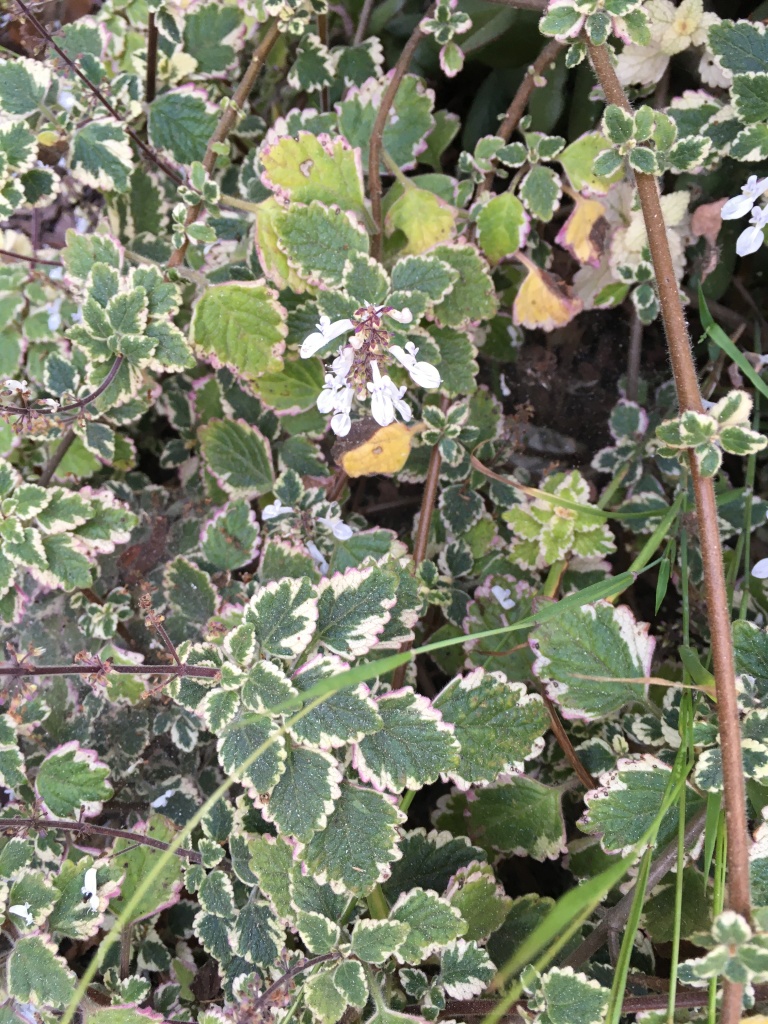
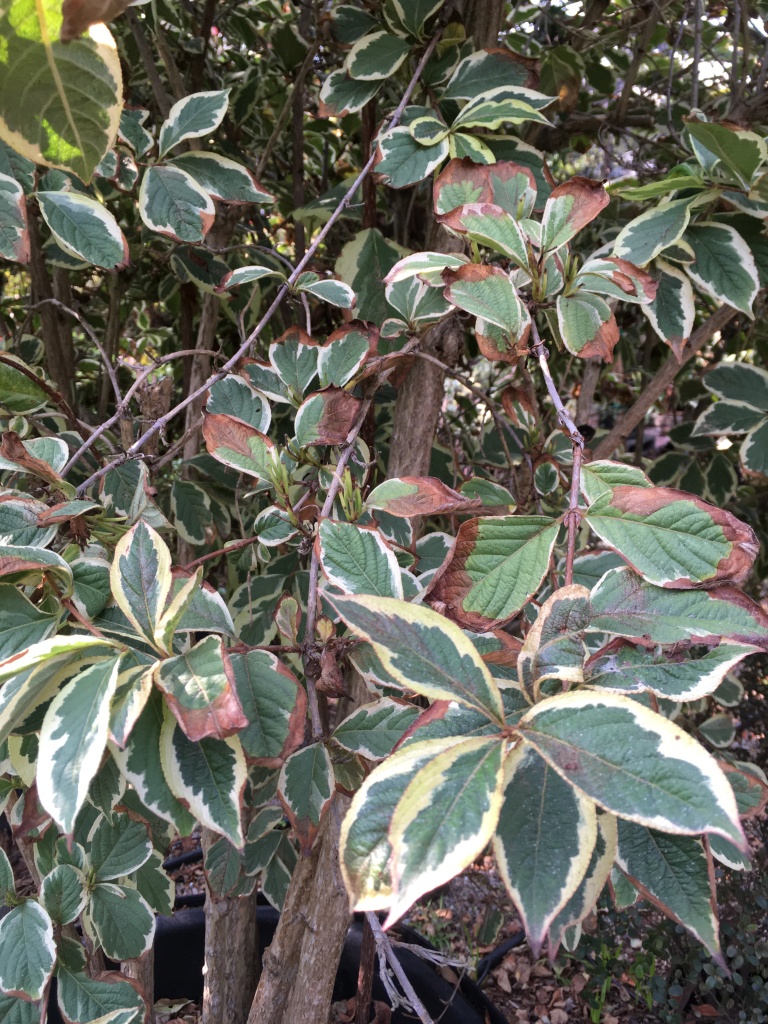
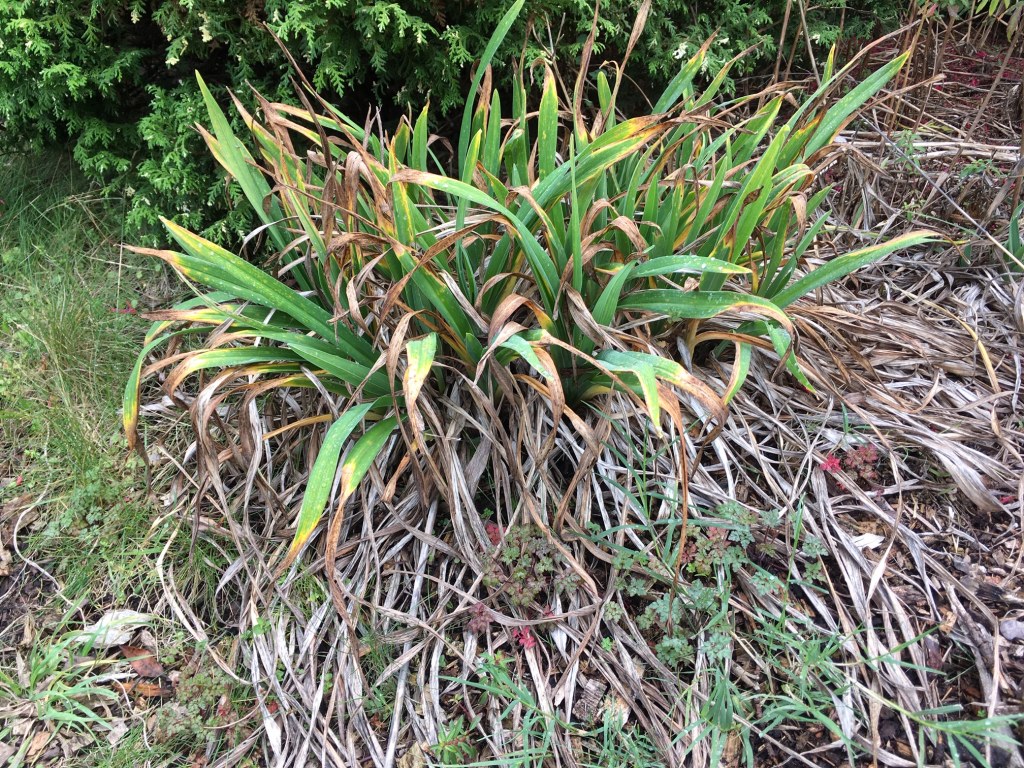
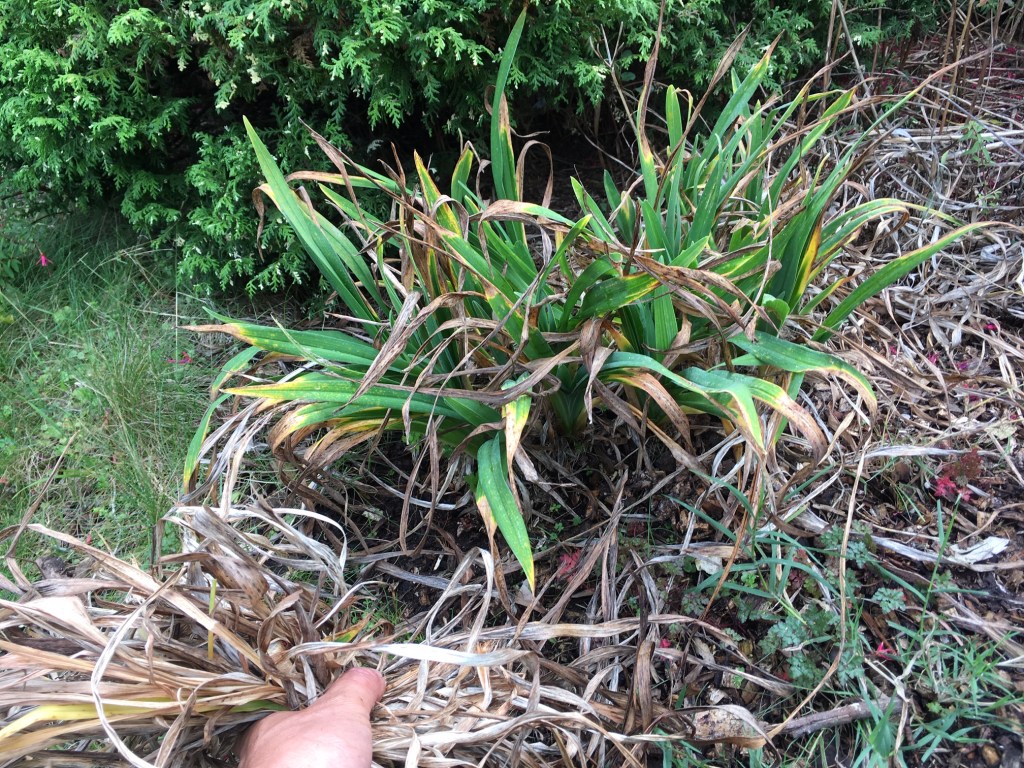
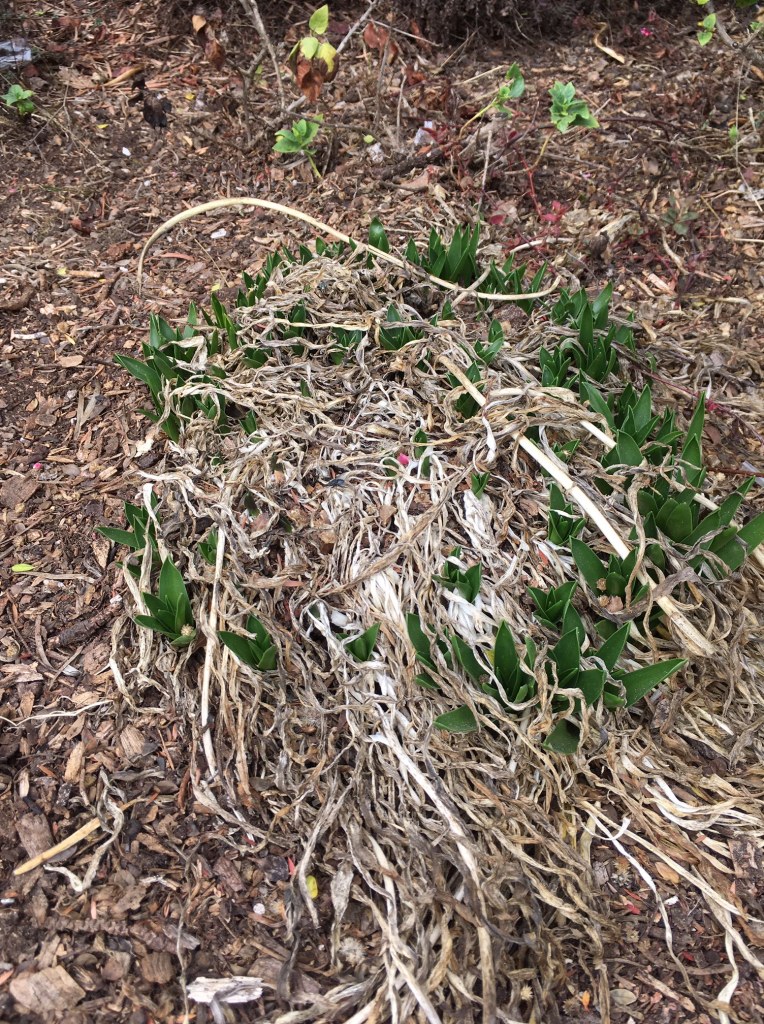
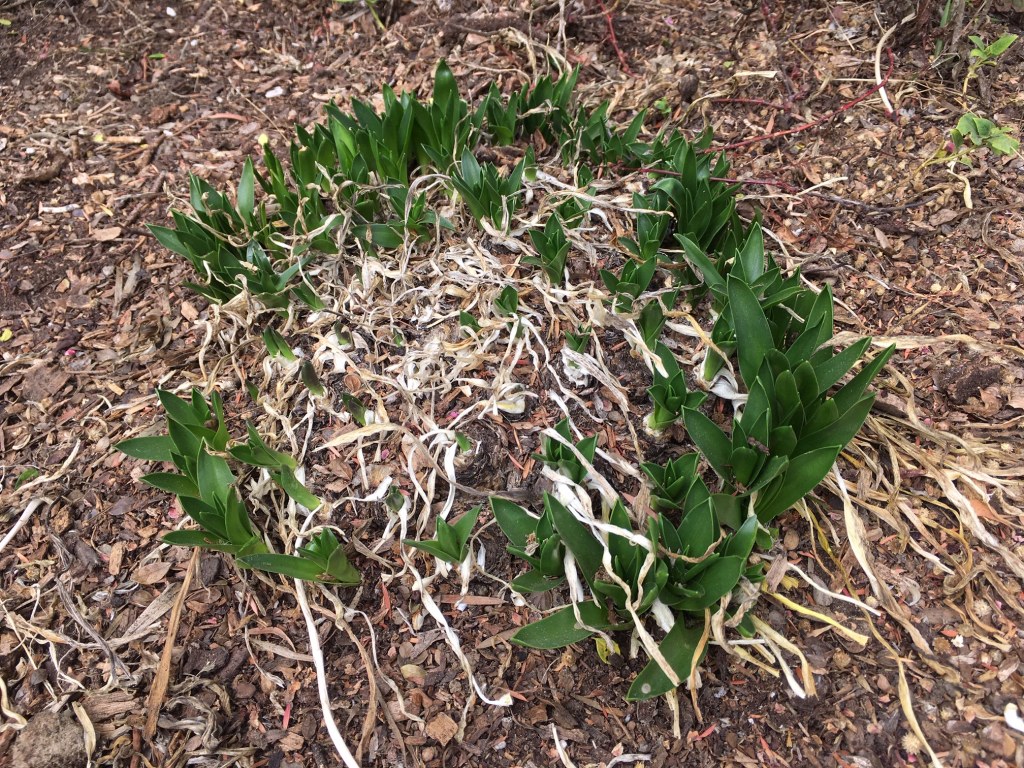
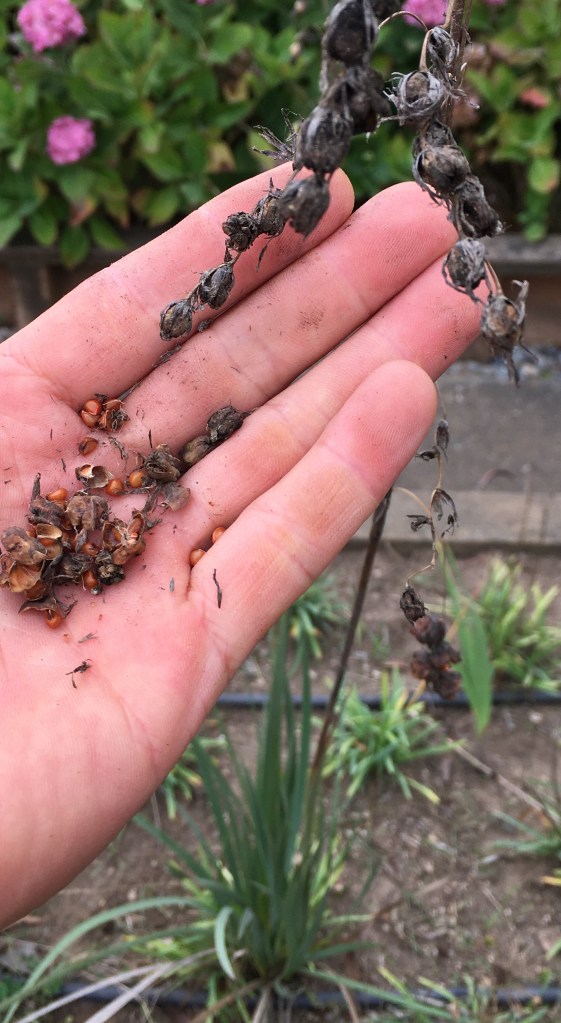
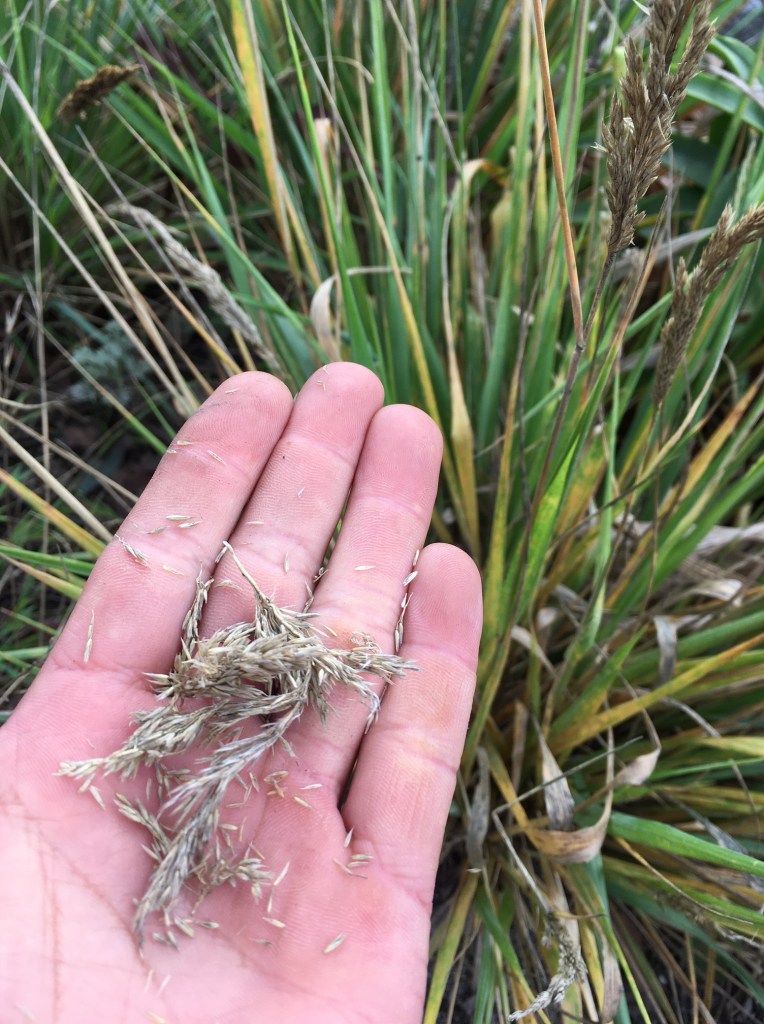
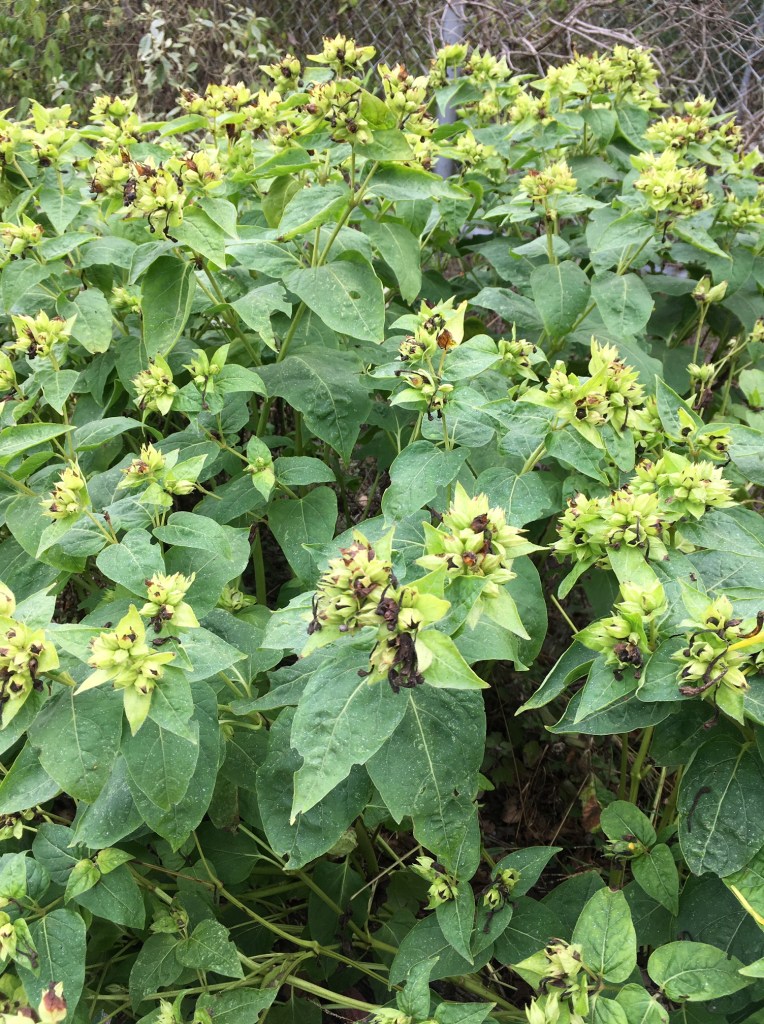
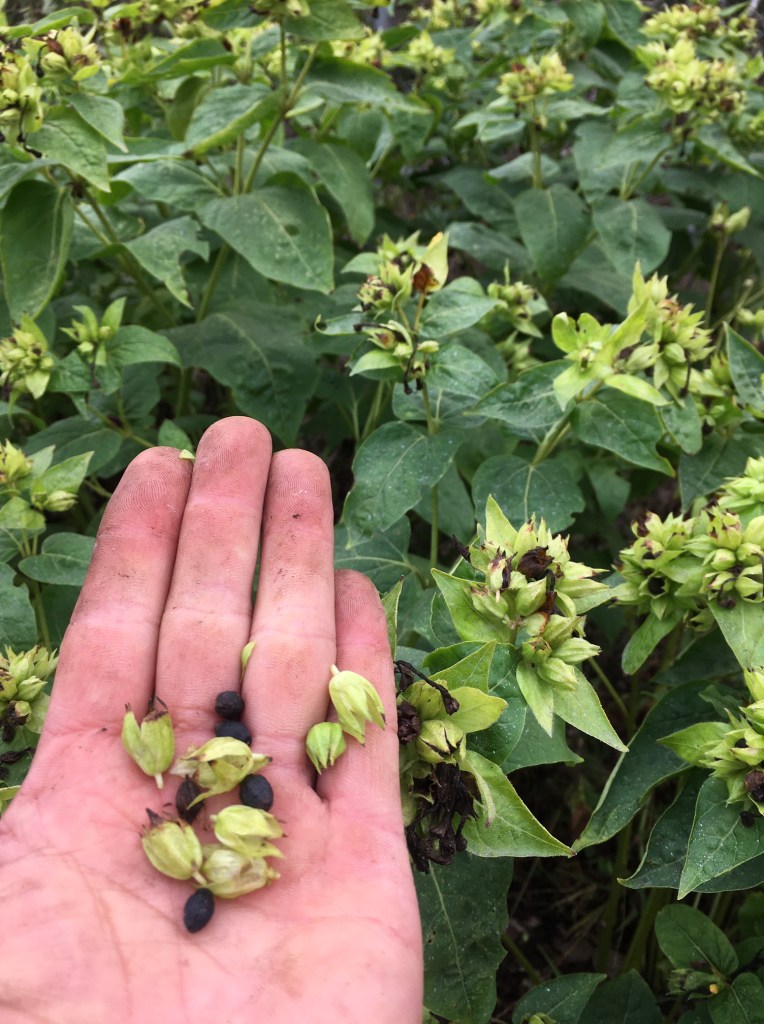
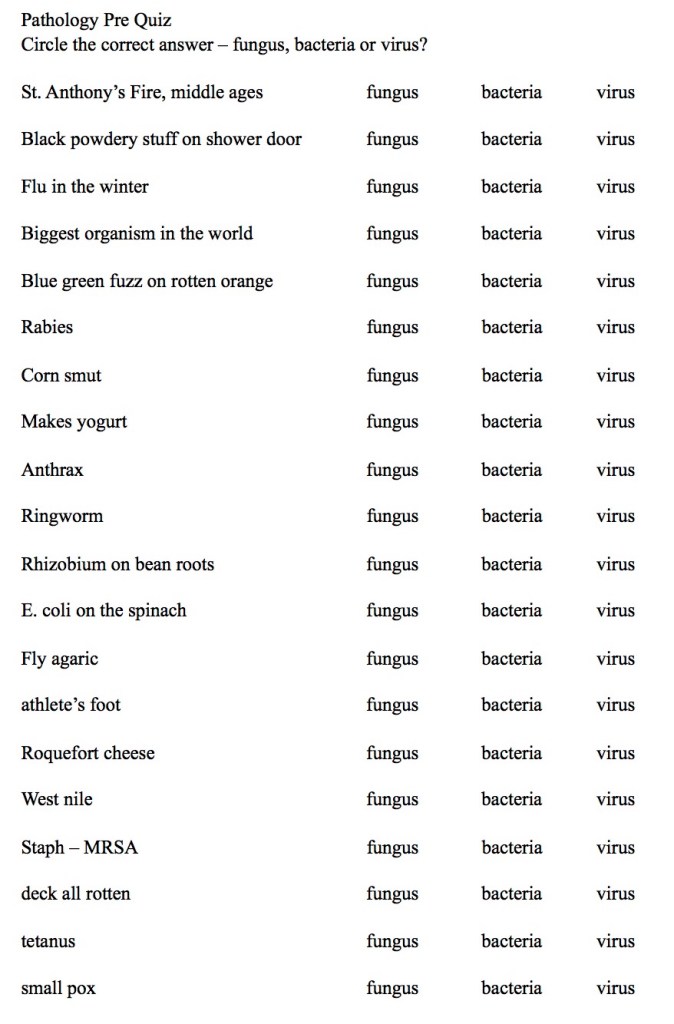
Please take the following quiz with your mates. Do not look up the answers. Ponder it, discuss it, and make your best educated guess. Afterwards, read the stories.

Addendum to plant pathology chapter

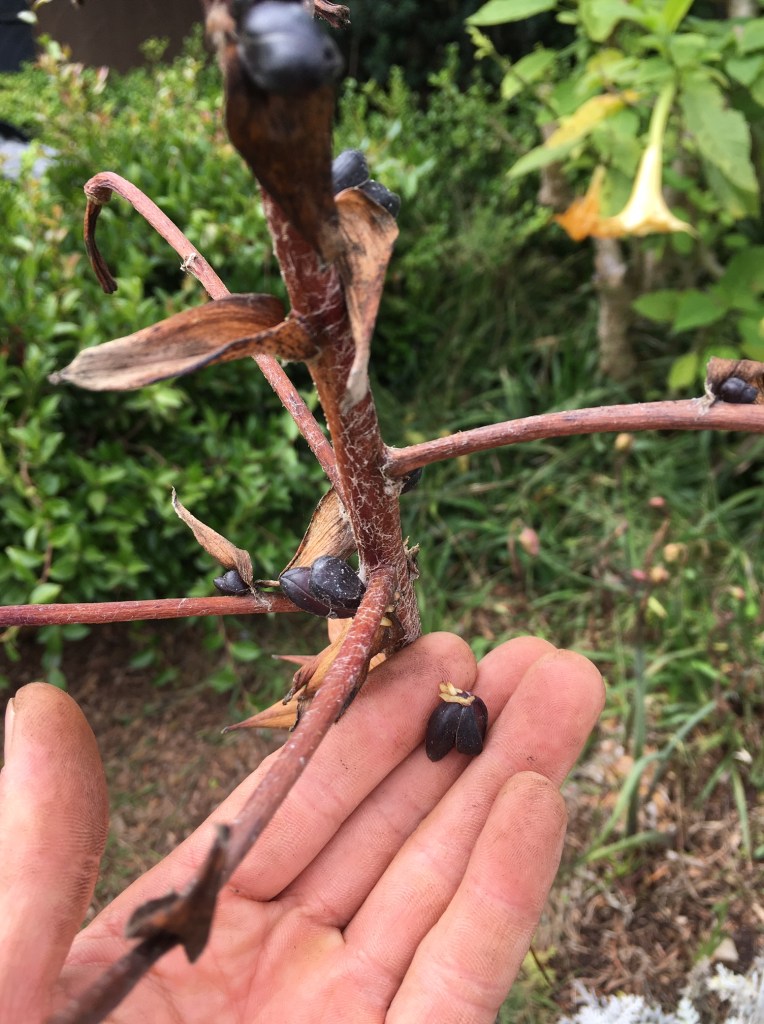
St Anthony’s Fire: Back in the middle ages farmers grew a lot of rye and barley for food, for alcohol, for fodder (animal food). Some years the rye seeds would get a browny black purple fungus growing on it. The fungus was called ergot Claviceps purpurea. If you were rich, you could afford the high end contaminant-free rye. If you were poor, you might be stuck eating it. If you ate it and was poisoned by this fungus-ridden rye, then you would get seizures and spasms, throw up, and go crazy. As the blood vessels tightened and narrowed and constricted you would get dry gangrene of the limbs, and hallucinate – feelin’ like all the demons of the world were tearing you apart. And sometimes you would die. From the 1500’s up to the 1800’s, ergot was also used as a medicine in a smaller dosage to induce labor and speed up childbirth.

Around the 1940’s, a plant chemist at Sandoz Labs in Switzerland was investigating ergot for other medicinal uses when he accidentally self experimented and ingested a form of the ergot alkaloid called lysergic acid. It was during WW II and automobile use was restricted so he rode his bike home with his assistant, the whole time tripping hard. The hills streamed by in distorted and curved shapes, rainbows of geometric colors drummed through his mind. The world became conscious, alive, and animated. Plus, he had a strong urge to faint. It was down right frightening for an educated man of science. Time became non existent or at a standstill in an infinity loop.

Well later this drug became known as acid for short. It was used as some kind of a truth serum and interrogation aid by the military and CIA; was sold at grateful dead concerts on blotter paper by folks yelling ‘family crest’; was stuck to the forehead of Jimi Hendrix as he played guitar, and become a ritual for folks like Timothy Leary or the Merry pranksters of the sixties. It is still a schedule I drug here in the USA. Like its discoverer called it, it was his “problem child”.

Roquefort cheese: Old time story says a young french shepherd, playing his flute and herding his sheep, ducked into a cave to wait out a rain storm. Sitting there, hungry, he chowed down on the cheese and bread he had tucked in his pockets. Then the rain stopped, a rainbow shone bright in the sky, and he went running outa there all happy singing “alouette” and “frere Jacques” and “une souris verte”. He forgot his half a chunk of cheese and left his crumbs all over. He returned to the cave a few months later with his sheep, and found his cheese. By now that cheese was full of streaks of blue and had a stinky smell. Well the boy being a boy, a French boy endowed with natural curiosity and a fearless palette, took a nice big bite of that cheese. Um um good it was! There you go – Roquefort cheese. A union between the milk of ewes, and a mold of the caves.

Fly Agaric: The peoples who lived in the arctic, like people everywhere, would taste test plants animals lichens and fungi to see if it was edible. Or medicinal. Sometimes a person would die after chewing some white root with the purply splotches. The others would remember this, and pass on this knowledge to future generations. In addition, they might start experimenting with the particular plant, to see if maybe it would be useful as an arrow poison.

In ancient forests of the arctic there was big ol stands of birch trees alongside the spruces larches and firs. In the winter time next to the trees would pop up these red capped mushrooms with white button specks all over. Was this good to eat? What were its properties? So they ate it raw, ate it dried, threw it in the soup, smoked it, chewed it in quids, stuck it up their orifices, ground it to powder, etc. What they found was that with proper preparation, eating the red fungus turned them into super human beings. It gave them unheard of strength and vigor, and you would be laughing and laughing and laughing and laughing. Tromping through stomach deep snow with a hundred pounds of moose meat relaxed on your shoulders. All of this in the depth of winter when there was hardly any sun in the sky all day long, and you were mostly confined to a bark shack or a house of ice with your family herd of stinky human beings. Eating dried walrus guts, sucking on whale heart, and chewing chewing that seal blubber.

Even back then, there were rich folks and poor folks. The haves and the have nots. Only thing is, being in close proximity to one another, you had to get along, and there had to be ways to equalize this pressure and inequality. So they started drinking piss, each others piss. You like wait, pause, you are serious? Yes very serious business.

When the mushroom eaters would go outside to take a leak, the folks who didn’t have mushrooms would be there with a wood bowl, catching that yellow liquid. With a sparkling glee they would down it. So the funny thing about the so called magical properties of the red capped mushroom is that it is not metabolized (broken down) in the body, and so it passes through into the pee. Still with its potency. After a while of this, the whole sad and depressed village was all out playing in the snow. They got their arms around each others shoulders, singing songs and smiling telling jokes. This goes on all winter long…

Even the animals found the urine delightful. After the partying humans went to bed at who knows what hour cause it is the arctic in winter, the reindeer and squirrels would come for a lick and a slurp. Under that pulsating aurora borealis they would be on the ice, feeling like they too were of divine origin.

Eventually the tales of this mushroom and its power spread to other parts of the world. The vikings ate em before going into battle, the hindus venerated it as sacred, while some folks just soaked em in milk to kill flies out at the farm house. And Super Mario. Well you know about Super Mario. As the Russian explorers dog sledded across their territories, they recorded the strange and wild peoples and their mushroom rituals. Their journals document a reindeer charging across the floes, killing a man who was taking a piss, and then begin to slurp slurp slurp. Really, this was too much for civilized people to bear, and in time vodka replaced the mushroom as the inebriant of choice.


This change happened all over, as old sacraments gave way to new ones. Truly, who would have dreamt up such a scenario?! So the mushroom went under cover, underground. Nature gods gave way to monotheistic God, and rivers and mountains became saints and symbols only. One particular Germanic saint, Saint Nicholas, was the bestower of winter gifts, light and joy. He was a chunky round figure clothed in red, specked with white buttons, and flew in the sky with prancing reindeer. These days we see him at Walmart or outside of Safeway around December, ringing bells and asking for milk and cookies or spare change. Santa Claus we call him. If you think about this for a little bit, you will understand the origin and tracks that flow from one era into another.

Just so you don’t get any weird ideas. The fly agaric grows in a mycorrhizal fashion with pine trees Pinus radiata in our area. If we get some good rains, and you are out hunting foraging, you may see them. For some one reason or another they are not ‘magical’ here. They will put you in a comatose sweaty state, or worse, and it is nothing to be happy about. Do not go down the rabbit hole! So the recommendation is: “Don’t try em, don’t eat em!” Simple. If you want to go flying in the sky and get ‘high’ there are any number of other legal substances. Or, try running or meditation or fishing or another access route to awaken that – divinity within.

Fungus. Wow. Gotta love em.

For full credit, please also read one of following stories about fungus, bacteria, or virus.

Biggest organism in the world from the BBC
http://www.bbc.com/earth/story/20141114-the-biggest-organism-in-the-world

Blue green fuzz at the US National Library of Medicine
https://www.ncbi.nlm.nih.gov/pmc/articles/PMC5403050/#:~:text=After%20isolating%20the%20mold%20and,findings%20in%201929%20(3).

Corn smut at NPR
https://www.npr.org/sections/thesalt/2015/08/24/433232707/scourge-no-more-chefs-invite-corn-fungus-to-the-plate

Rhizobium from Wikipedia
https://en.wikipedia.org/wiki/Rhizobium

E coli from the North Carolina Department of Public Health
https://epi.dph.ncdhhs.gov/cd/diseases/ecoli.html

West nile from Sacramento-Yolo Mosquito & Vector Control District
https://www.fightthebite.net/education/west-nile-virus-survivors/

Tetanus at Journal of Urgent Care Medicine about man who got tetanus from pruning bushes
https://www.jucm.com/a-25-year-old-male-presenting-with-tetanus/

small pox from the Center for Disease Control and Prevention
https://www.cdc.gov/smallpox/history/history.html

Drainage, erosion control, and mulches

These are massive topics which could probably each take a whole semester long of class in and of themselves. In general, as a maintenance gardener, you will probably not be installing drain tiles, earthmoving with a loader, or hydroseeding and juting a hillside. These are jobs in the construction phase of a project. However, you may inherit or take on the care of such a landscape when the contractors are done. It is nice to know the basic principles behind the tools and technology, and how you can be a good caretaker to such a usable space.

Basic terms and concepts to know, in order of appearance:
infiltrate, hydrophobic, hydrophilic, permeable, leach, sediment, berm, swale.

Background

Nobody wants to be picnicking in a swampy pile of mud wallow, or have a hillside of a backyard of water gush into their living room during a winter storm. It is problematic when all of your plants die from being waterlogged too long, and definitely a bummer when the 100 feet of retaining walls all collapse on the brand new flagstone patio. Hence drainage and erosion control…

Water is a heavy and dense material. It comes out to be about 62 pounds per cubic foot. One cubic foot of about seven or eight gallons of milk. That much weight.

Water when traveling at high velocity, or when combined with abrasives, can cut through extremely hard substances. Watch a video of a waterjet cutter slicing through metal and thick stone, go on a walkabout of a riverine canyon, or feel the smooth granite as you are swimmin’ in a sierran stream.

Water goes where it wants to go. Usually this is in a serpentine swirling fashion from high to low elevation, from sky to cloud to mountain to sea. It travels atop the land in streams and rivers and lakes, and travels below the earth in groundwater and aquifers. It pops up occasionally as springs and geysers. It infiltrates easily materials with large pore spaces, like sand. It takes longer to infiltrate materials with tiny tight pores like clay. But then, gravity pulls the water quickly out of the sand, whereas it clings for longer time inside the clay. Water avoids places that it does not like, places called hydrophobic (water fear or tending to repel water). It prefers places called hydrophilic (water loving). This is related to the electrical charges of materials, and the clingy surface tension aspect of its liquid being.

As water moves, it picks stuff up and drops it off at intervals. Stuff becomes dissolved in the water, and when trapped, hidden stuff can emerge or precipitate or reveal itself once again.

Once you start to pay attention to drainage, you will see it everywhere. Many of our hard surfaces we build are not permeable. Just think of all the concrete sidewalks, asphalt roads and parking lots, houses and buildings. Water does not go through them and penetrate back into the earth, water sits on top of them. Not permeable. So to keep water from forming huge puddles everywhere there is a slope on that impermeable surface to keep water moving. We direct the water to a grate. Which leads sometimes to a catch basin, then to a drain pipe, and on down the line to the sewer treatment plant, or sometimes straight into the river or the lake or the bay or the ocean. We dont want that water cutting and dissolving and destroying our handiwork and flooding our homes.

Drains can be above ground easy to see, or underground. Page 272 -279 in your reader.

Erosion control

Erosion is how the land and wind and water interact with each other. Wind and water take hits on the earth, and the earth gives up bits of herself to tumble down down down. The combination punch of wetness then southerly or norwesters or hurricanes named Maria pulverize crush and set in motion the rocks and sands that make up mountain ranges and foothills. Some continents are ancient and been subject to eons of erosive forces; they have poor soils in terms of nutrients. The nutrients have all been washed away. Leached is the proper word. In flat lowlands where the river widens and water floods the earth, water deposits the stuff gathered on high and sprinkles it all over. You do this for a million years or two and you gonna have a pretty thick ol buildup of sediments and ‘soil’. So erosion is a natural process that we recognize and work with.

When we build roads in hilly areas, sometime we gotta dynamite through it to make that pass. This leaves a steep road cut, oftentimes easily susceptible to erosion. Rocks falling and hillsides collapsing into repose. Settling into their natural more comfortable posture. When I worked out at Indian Basin in southeast San Francisco, a wetland restoration project created a series of sloped channels next to the water. This was meant for the tides to come in and come out of. Without some sort of erosion control, water would have destroyed all our efforts. If you knit and weave together the bits of earth particles, then it is less likely to erode, and hold strong. This is done by covering the earth, as well as by planting it. The roots act like anchors holdfasts tentacles and webs. In the reader, page 280-285, then pages 286-288. Bare soil is always vulnerable to erosion and to colonization by any ol seed that is nearby. Specifically – weeds.

There are a variety of coverings blankets to choose from. The natural materials like jute don’t hold up as long as synthetics like polyethylene plastic. But perhaps that is a good thing. What is important is that your timing is good, and that plant roots which hold the soil are established before the rainy season arrives and threatens to wash it all away. Get that soil all bound up. And remember, with large swathes of land, you don’t want to make an impermeable covering. Its not like putting a rain suit on the earth. That would just create a sheet and volume of water you have to direct and channel to avoid more problems. You want to create a colossal sponge with porous tunnels bringing that water deep deep deep deep down.

People always ask – what is a good plant for erosion control? Ideally that would be a plant with somewhat deep and spreading roots, persistent over time. One adapted to local climate and soil conditions. Around here the weeds that seem to fit that bill are many, and if you wander around looking at all the steep neglected lots throughout the city you will see them. They are cotoneaster, algerian ivy, monterey pine, french broom, pampas grass, red valerian centranthus ruber. If you have an aversion to these plants, then yank em out and plant some ceanothus, california buckwheat, lupine, bunch grasses, and huckleberries. But don’t leave the soil all naked.

A somewhat more labor intensive but more well thought out approach contours the land before you start covering it and planting it. If you create berms and swales and terraces then the water and sediment does not just rush on down and away. It will pause and swirl and take a break. And in that time some of the water will have lost its go go go speed momentum and sink down into the earth. And in the process it will irrigate your plantings, or water the little white crown sparrow’s berry poop plantings.

Mulches

Reader page 294-296
Your professor Gus Broucaret always gives out this somewhat funny handout in class. I will post it here as well at the end for its relevance to mulches.

The reader lists a whole bunch of materials used as mulch. Many of these are unusual as mulches and I have never encountered them in the field – fiberglass, crushed stone, sand, lawn clippings, sawdust, sphagnum, or bog(?). However the basic concept is clear, cover the earth. The blanket keeps the water moisture in the ground, and additionally can provide some bit of weed control and suppression. Plus it makes the yard look nice by tying the design altogether. Many times in our ornamental landscapes we will cover first with a layer of weed cloth (woven plastic), then put the mulch on top. For more natural gardeners the preferred first layer is cardboard, not plastic. This is called sheet mulching. The earthworms love to eat wet decaying cardboard cellulose. Again, the same idea. You are not trying to block nature’s activities permanently. Just block em long enough for your plants to take hold and thrive and be able to take care of themselves.

A few helpful hints for maintenance gardeners using specific materials as mulch:

gravel and pebbles: Small pebbles will roll everywhere, especially on a slope. Then the leaves and dirt and dust of the world get in there too. So just keep that in mind…

decomposed granite (d.g.): We never use d.g. as a mulch. We do use it hard packed on pathways and around trees in tree wells. It is permeable to water and tight hard enough that weeds do not grow well in it.

pumice: Red rock was fashionable for mulch back in the day, laid over plastic bags in a rose garden with those curved wave shaped concrete edgers. These days it has mostly fallen out of fashion, but it may come back. Its other use is mixing the smaller piece 1/8” or 3/16” size into the soil to help drainage and aeration and maybe keep gophers at bay.

wood chips and bark: You can buy neat bags of these at the nursery or get it for free from either the municipality green waste stream or from the local tree workers chipping the stuff into their trucks. It may sometimes carry pathogens, disease. It may become food for a number of local fungi that like to eat and colonize wood chips. In these parts, the common mushrooms on chips are poisonous Hypholoma aurantiaca common name is redlead roundhead, the smelly red cage stinkhorn Clathrus ruber of the penis family Phallaceae, and the super potent hallucinogenic wavy cap Psilocybe cyanescens which love the hardwoods pieces of eucalyptus.

straw and hay: Hay is the good and more expensive stuff used for fodder – livestock food. It is cut when it is green and chock full of nutrients. Straw is the left over stuff after grains have been cut and harvested. It is often used for bedding in the horse stalls or chicken coops. You can feed it to the herbivores too but it is not as high quality a food. Straw and hay are not the same thing, not interchangeable. But, both straw and hay get bundled into bales. They are commonly used as mulch in vegetable beds. Oftentimes you get wheat or barley coming up next to your planted swiss chard and tomatoes.

Plant Pathology

Key terms and concepts in order of appearance

abiotic vs biotic disorders; vector carriers; the plant disease triangle;
monocultures; pathogens and infection; mycorrhizal, parasitic, saprophytic lifestyles; antibiotics; Integrated Pest Management; mechanical, chemical, biological and cultural control; disease resistant varieties; overhead water; plant pathogen specificity; bacterial pathogens; viruses; variegation.

Plant pathology

Plant pathology is primarily concerned with fungus, bacteria, and viruses. We will talk about their life style and life cycle in a bit. First some prehistory.

Plants like all creatures get sick and die. We have observed this since ancient times. Spots and blotches and the smell of rot. Wilted seedlings, distorted and twisted foliage. Scabbed and mildewed fruits. In the old times, before microscopes, we were not able to identify the microorganism that caused the disease. But, we could certainly see their symptoms and effects. And we learned that wet weather at harvest time, followed by some warm nights, was sure to end up spoiling the crops. On a large scale, a disease outbreak is called an epidemic. And if people were dependent on this one food crop, and the crop failed, famine was not far behind. Then its fighting, migration, and aberrant behaviors like cannibalism and genocide.

Plants have been fending off attack from pathogenic organisms for hundreds of thousands of years. This is why there are protective things like bark, pine pitch, oils in the lavender and rosemary, and latex canals in the stems. In other cases, plants would form beneficial alliances with certain fungi, which would allow them to fend off attack from other harmful and virulent fungi. Plants in a given population would be diverse in their genome, and hence harbor resistance against malevolent forces. So if one went down for this or that, the others might survive and pass on their beneficial traits. Nature’s workings – kinda like putting your eggs in a bunch of baskets to ensure survival, just in case.

Plants live within a comfort range that is based on their place of origin and evolution. Some like clay, others like sand. Some don’t mind sitting in water all day long, others want it always well drained. Some like it hot and tropical, others like it cool. These environmental factors we call abiotic. A – biotic = not of a living thing origin. These are things like temperature, humidity, water and light needs, and soil nutrients. If a plant is not living within its happy range, it gets stressed out. It can die, or become more susceptible to attack by creatures that ‘sense it is weak’. There are hordes of hungry creatures constantly on the prowl for food. It is like the motif of the snake eating its own tail. Nature is not all harmony and peace, it is a constant feeding frenzy.

An interesting relationship between plants and people grew out of the process of domestication and agriculture. In the wild, plants are tough, independent, loaded with spines and poisons and alkaloids, and relatively restricted to a certain area. But with humans cultivating them, they gave up a lot of their own defenses, and went cosmopolitan. They became softer, tastier, and unable to cope on their own. Rather than being individuals living in a jungle or a meadow or on a mountain top, they became a huge monoculture of clones living in rows with nothing else in between. And so this made them extra susceptible to ever present pathogens that were specific in their targets and always looking out for ‘easy game’ and ‘low hanging fruit’.

The pathogens are tiny and move easily. Anything that moves the pathogen from here to there is called a vector. Vectors can be abiotic – like the wind or water. Or they can be biotic – of a living thing – like animals or people. Pathogens can enter through the breathing pores of a plant, through the irrigation water and the roots, or through a cut, an opening, on the plant’s body. The most common biotic vector in town is a probably a gardener armed with a pair of pruners going from neighborhood to neighborhood. Or a gardener spreading pathogenic soil amendments. Or rodents chewing and tunneling and running hither and tither. Vectors that move disease worldwide are things like the ballast water of ships that is sucked in and pumped out of the sea at various ports; the wood pallet beneath the imported furniture with hitchhiking insects; and the spores carried in the muddy grooves of a pair of hiking boots.

Once the pathogen gets inside the plant, then it is infection and invasion. Take over, feed, move on. The disease wants to keep spreading and disseminating some more. It may form reproductive type structures that further its colonization, and disperse when the timing is favorable. The disease cycle can be stopped or wind down a bit if there is a freeze, a fire, or if the pathogen itself comes under attack by another pathogen. It does its thing, and fades into the background. The diseases are always around, but just do not exhibit themselves and take control unless the environment is suitable, and the hosts are weak and susceptible. This is known as the plant disease triangle of a successful infection.

In order to understand plant pathology we will describe a few local examples, and their solution or cures, if any. We will start with fungi. For some reason, as important as fungi are, people don’t pay much attention to them. Aside from the mycophiles who adore truffles and winter forays for chanterelles in the woods, most people are pretty much blind or ignorant of fungi. Or look upon them with great disgust and fear. They are a major and ancient group of organisms that date back probably a billion years. They, along with plants, make life possible on our planet.

Then you ask people – “Do you drink beer? Do you eat leavened bread? Bread that is puffy?” And they are like, “Sure!”. Well the yeast that makes that all happen is – a fun gi. And that alcohol? Thats its waste product. People like “What?! I’m drinking what?!”

Fungi are the primary cause of plant disease, in the ballpark at 80% of all plant diseases. On a more positive note, they also form a symbiotic relationship with plant roots and they help each other survive. These fungi are known as mycorrhizal fungi, and this mutualistic enterprise is said to occur in around 90-95% of all land plants. So it is not all bad, the scale tips towards working together.

Plus, along with soil bacteria, fungi are our primary source of life saving antibiotics. Think about that word – anti biotic. A substance that kills or is against living stuff. Chemical weaponry that fighting creatures use on one another, now re appropriated for use by us. Pretty cool stuff.

One fungus that eats trees around here is the oak root fungus. It infects trees through the roots. Its body of fine white strands of threads of cells takes over the vascular system of the tree and feeds and feeds. Eventually it clogs the tree all dead. So in the beginning it is like a thief – a parasite, it takes takes and takes while the host is alive. Then when the host dies, the fungus starts to eat its dead body too. It becomes a saprophyte, eating dead stuff to live. Two distinct life styles. Not all the fungi are this versatile, some are restricted to one or the other…

In the winter time, the oak root fungus sends up fruits to disseminate its seeds, so to speak. Except in fungi the fruit is called a mushroom, and the seeds are not seeds, they are spores. The easiest way to see spores is to take that portobello or white mushroom from the store and lay it gills side down on a piece of white paper overnight. Then you can see it drop all its spores. What color are the spores? (LAB)

The oak root fungus mushrooms are densely colonial and emerge in great numbers all together in the wet humid months. They drop their white spores that float out on the wind, hopefully to find another plant victim and continue the cycle.

So then if you are a gardener, a tree lover, what do you do? What are your options for dealing with such an “enemy”? Here are some of the scenarios:

If the soil dried up, the pathogen would not be able to spread so easily. If we did not irrigate the lawns and soils of Golden Gate Park, the pathogen would not be so abundant. But we are not turning back the clock and letting the sand dunes take over again. The water regime is here to stay, more or less. Nor is it feasible to remove all the soil and truck in brand new soil. Good luck, no go. So we are sorta stuck, abiotic factors wise.

If we removed the mushrooms every time they popped up, that might cut down the spread of the infection. A teeny wittle bit. But the actual organism is underground in the soil and in all the buried wood and roots. So even if you could get every mushroom before it opened to release its spores, taking away the mushroom does little to the actual organism.

Couldn’t we just kill them all and poison the fungus? No is the answer. It would be hard to treat and spray the soil to that extent. Unless you want to live in a hell of poison and gaseous death. People would be keeling over long before the fungus raised the white flag. Plus the fungus would likely come right back without repeated over and over again spray regime. Even then…

If we ate the oak root fungus, that could keep its population down. We would have to promote it as the most fashionable and cool thing to do. They are edible and pretty tasty. Plus there are a lot of them. As for whether they have accumulated heavy metals or other toxins present in the urban environment – not sure, pass. Probably best to be moderate or conservative if you plan on eating them regularly. Likely not the best of plans…

Okay to tally thus far. And inoculate you with this broad concept of dealing with pests called Integrated Pest Management. We do not control the abiotic factor known as the weather. We cannot stop the wind, eradicate the tides, or fight the climate. If you war against the earth’s forces you are sure to lose. We can adapt to changes, and help make the planet a livable happy place, but the mentality that somehow you are going to ‘win’ does not cut it. Life is life, not a game. It is not the appropriate metaphor for the pickle that we finds ourselves in.

In Integrated Pest Management, there are four basic methods for controlling pests. These are ways to keep pests at a tolerable threshold so that life can go on and we are not starving and dying, nor having cockroaches for overlords. When you remove the mushrooms by hand or with a tool, that is classified as mechanical control. When you spray stuff on em to kill them, that is chemical control. And when you or another animals eats the pest, that is biological control. With fungus, given its tenacity and power, our best general strategy is cultural control. These comprise preventive measures that minimize the growth and spread of these creatures.

There are many plants naturally resistant to oak root fungus. So ideally, we would only plant these plants. This is one method for how we manage many or most of our orchards of citrus and nuts, and our plantations of banana, potato, and so on. Plant the variety that is not going to get sick, the ones that are immune and are not so susceptible to the particular disease pathogen.

Another fungal disease that is common in our garden worth discussing is one called powdery mildew. It looks like well, a bunch of white powder on the surface of the leaves. Unlike the oak root fungus, this fungus does not make a mushroom. It does, however, make a little sac of spores for dispersal purposes.

In the garden, powdery mildew spores are floating around in the air, coming in with the summer fog, and if they should land on a tasty wet zucchini leaf on a nice warm day… They will germinate and grow, and then it is feeding time!

So lets run through our options. Protest the fog and activate the movement to ban low clouds full of moisture. Uh no. Invent a massive filter and fan to clean all the outdoor air of every single pathogen spore. Also no. Try to stick to things that are actually feasible and practical. Scrape every leaf clean by hand? No. How about a spray of some kind? Well you can kill the spores before they germinate, but once the fungus is in and feeding, it is hard to eliminate with the chemicals. Chemicals are best used as a preventive, not as a cure. Biological control wise, there are bugs that do like to eat powdery mildew, but it would be a stretch to have enough of them around to make a dent. So where are we? Back to the cultural preventive controls. If your leaves are not wet, then spores have less of a chance of germinating. If you keep the area clean of old dead leaves full of spores, less likelihood of infections. So keep overhead watering to a minimum, keep leaves dry, clean up the dead stuff full of spores, and plant your zucs with airy open spacing in a sunny spot. Thats about the best we can do.

Fungus is down. Next up is bacteria. Tag team duo.
One of the bacterial diseases that strikes plants around here is called fireblight. When a plant gets infected its branches look all burned and turn black. The vector or carrier can be insects flying from tree to tree, the rain splashing bacteria, or a gardener making open wounds with a dirty saw.

Many pathogens are specific in who they attack and feed on. This is called plant pathogen specificity. Fireblight is partial to members of the rose family. The rose family (Rosaceae is the proper name for the family) has many many members, not just the roses. Fruit and nut tree wise – almonds plums cherry peaches apples pears nectarines loquats quince medlar are all in this family. Berry wise – blackberry raspberry strawberry. Ornamental wise there is Spiraea Potentilla Geum firethorn and hawthorn. Weed wise there is Cotoneaster. The most common ones we see with infections around town are the street trees like ornamental pear or flowering plum. One day it looks healthy and happy. The next day a shoot or a branch is all inflamed and darkened. Sometimes a sore of a canker forms. And more die back down the line. Followed by more goopy ooze and more bacteria…

Bacteria are funny creatures of an ancient lineage. They are everywhere. Again, they get a bad rap with the antibacterial soaps and anti bacteria wipes and solutions that kill 99.9% of all bacteria. Truth is most of them are helpful and beneficial and we would be dead without them. Whether as members of our own intestinal fauna, or as members in the soil responsible for recycling and nutrient cycles and exchanges, bacteria have important jobs and deserve our recognition and respect.

That said, I did not like the staphylococcus bacteria that gave me swollen bloated limbs and brought me to the brink of sepsis then amputation twice. Nor do I enjoy seeing my bag of potatoes in the cabinet succumb to bacterial soft rot and ooze all over the place with that stinky nasty smell. Still, I do not intend to go to war against all bacteria. That would for sure be a losing battle.

In the yard, if fireblight is present on a rosaceous plant, we cut off the infected limbs and try to contain the infection. If you cover the wound with a clay slip, that may be helpful. Maybe. And we disinfect our tools in between uses with lysol spray, or a little propane torch, or alcohol. That is about all we do. Bacteria like warm and humid conditions, and feed and multiply once they somehow get a foothold into their prey and host.

In humans, when we have bacterial infections, we use antibiotics like penicillium or amoxycillin or clindamycin, depending on the type of bacteria and the location of the infection. The source of all of our antibiotics are fungi and soil bacteria. These medicines are liquid substances that fungus and bacteria use to repel one another in their competition for food – bits of decayed leaves or the skin of a gopher. In the recent past, before the invention of antibiotics, peoples would use natural substances of a similar effect to treat wounds. These included things like honey, plant oils and resins, clays.

There are some rare instances where we will inject tree trunks with antibiotics also. But this is usually not done because it is expensive and does not always work. So we live with our companion and occasional foe with awareness and caution. Bacteria.

Last one – viruses. Then we all go home to rest
okay ‘higher’ fungi grows as little threads from a spore
finds a compatible mate amongst four distinct sexes
forms a massive pulsating underground network called mycelium
and congeals together into a shroom to spread more spores

bacteria divides itself over and over again
and it become stronger, more diverse, and more resistant
by exchanging bits of genetic material with each other
so no sex, just a little hand-off time to time
they come in all shapes and sizes
and move around together beating their little tails

virus

Size: super little

Lifestyle: get in, get em to make more of me, everybody out.

Structure: a secret instruction code surrounded by a protein armor that functions as a spy, camouflage, and attack organ.

Effect on the plant: If the plant is working on making virus bits rather taking care of its basic duties, then the machinery is gonna get gunked up and malfunction. Viral infection results in leaf splotting mosaic patterns that are not green in color, rings of dead tissues on the stems, stunted plants that look like a permanent wax museum bonsai, and leaves curling and twisted with tiny gouged holes like it had been hit with tiny size #20 shot if there was such a thing.

Vectors and manner of dispersal: insects with a mouth and a gut full of the virus, feeding and spreading, feeding and spreading. A gardener grafting a scion piece to a rootstock piece, inadvertently serving as an in between. A farmer touching and cutting plants while walking through the crops. A tiny round worm in the soil sucking here, then sucking there. Virus hiding out in the seeds, and going where the seeds go.

Specificity: Not sure. For the most part as far as we sorta know, plant viruses stick with plants, and do not infect animals and humans. More work needs to be done to elucidate results…

Application: biotech companies using plant viruses as messengers and bosses to inject into plants and have them perform specific functions. Purposely encouraging plant viruses that create cool looks like ‘red tulip flower streaked with white’, “lime orange New Zealand flax foliage”, “spotted snake plant” and “polka dot yellow griselinia”. Sometimes this is called variegation.
Herbaceous perennials

This is a good time of the year
to work on the herbaceous perennials
summer is coming to an end
food has been made and stored
flowers are spent

What is an herbaceous perennial?
well for one it is herbaceous
herbaceous in botany horticulture speak
means the plant stays bendy and squishy,
soft tissues that do not harden and become stiff and rigid
herbaceous, not woody
shrubs and trees – they are woody, not herbaceous
most grasses and rushes – herbaceous
bulbs and corms – herbaceous
blue bells, columbines, delphiniums, coneflowers and poppies
all herbaceous

Herbaceous is different from an herb, like a kitchen herb
herbaceous is different from herb, like street corner slang for cannabis
herbaceous is not a particular plant, it is a description for a plant tissue type and structure

Perennial means it lives for more than a a couple of years
could be five
could be one hundred
so relatively long lived

Some herbaceous perennials
come from a place with cold winters
so they are accustomed to tucking themselves back into the earth
underground, for a spell
hanging low during the cold period when the sun is low in the sky
and there is ice and snow cover

Other herbaceous perennials
come from a place with hot hot summers
in order to survive
they die back, go dormant, and take a rest from photosynthesis
when the sun is hitting hard, and there is hardly any water
be still and quiet

There are also herbaceous perennials
that are evergreen in foliage
they are green and persistent year round
happy in our mild coastal climate
getting by just fine with the occasional winter rains

As maintenance gardeners and plant lovers
working on the herbaceous perennials
you may –
(1) deadhead old flowers
(2) remove the brown and spent foliage
(3) rejuvenate the plant by cutting it all back to the ground
(4) collect seed and store it in an envelope to grow later
let’s go to the field and give it a go

Deadheading is removing the faded spent browning flowers
with the hope that by removing them, the plant will send up more flowers
for us to enjoy
this works because the plant wants to make seeds and reproduce
by taking away the faded flowers with the just-beginning-to-form fruits
you have frustrated the plant in its reproductive endeavor
so it will try again, provided there is sufficient water light and warmth
to keep going

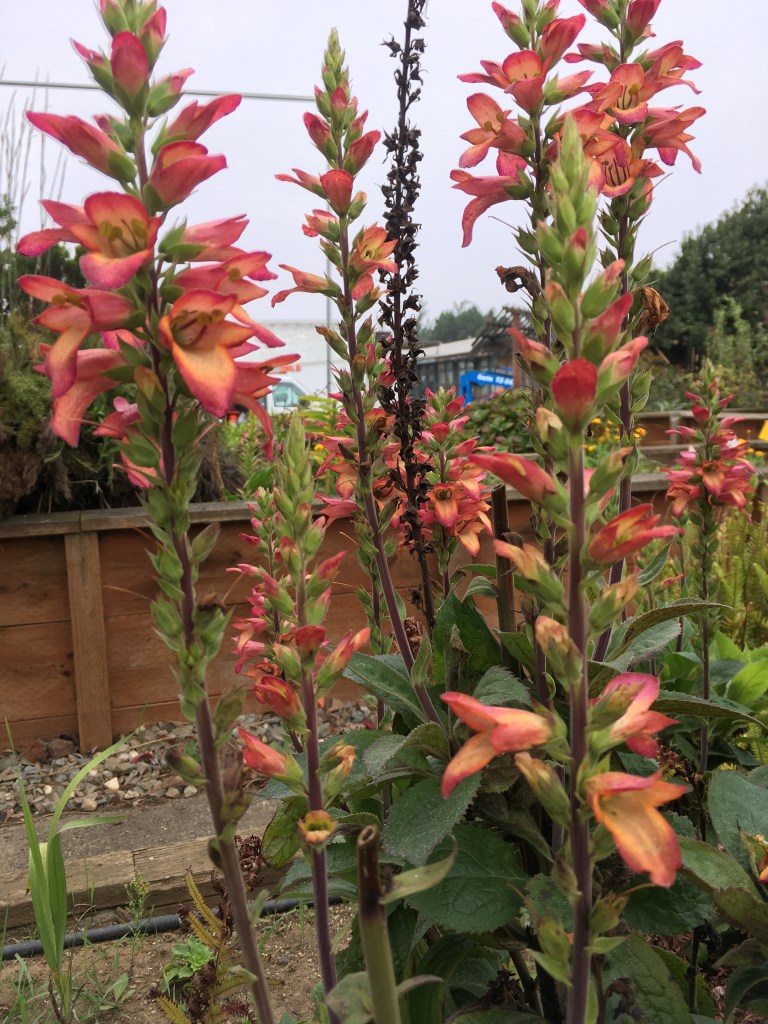
Here is Digiplexis in action
you can see some cut flower stalks of past deadheading
you can also see that the plant sent up more flowers to achieve its end goals

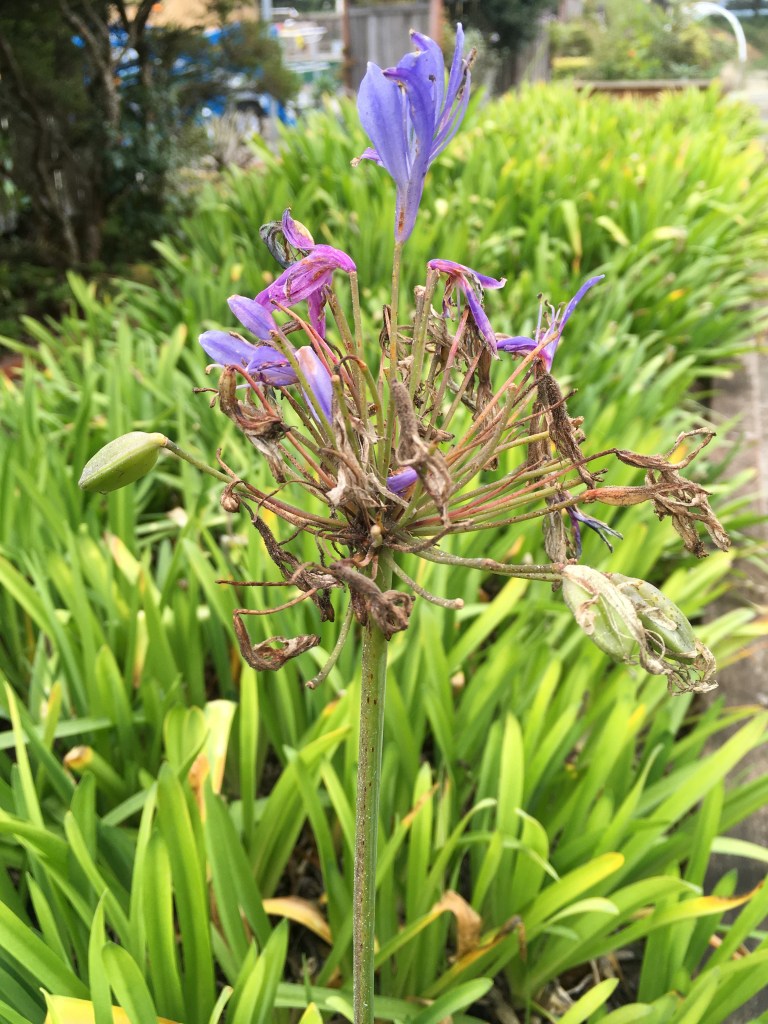
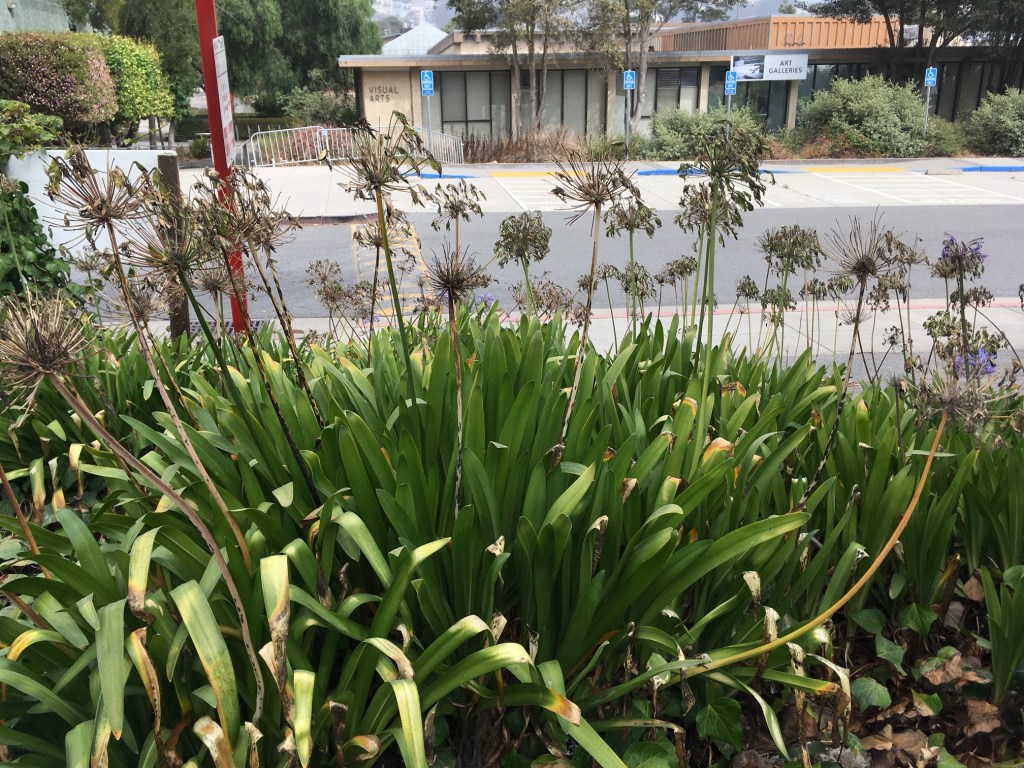
This one is Agapanthus
watch the flowers drop off one by one
observe the fruits start to swell up with seeds
seeds that start off white, then turn black with age
okay here’s plenty of work
deadhead em anytime!

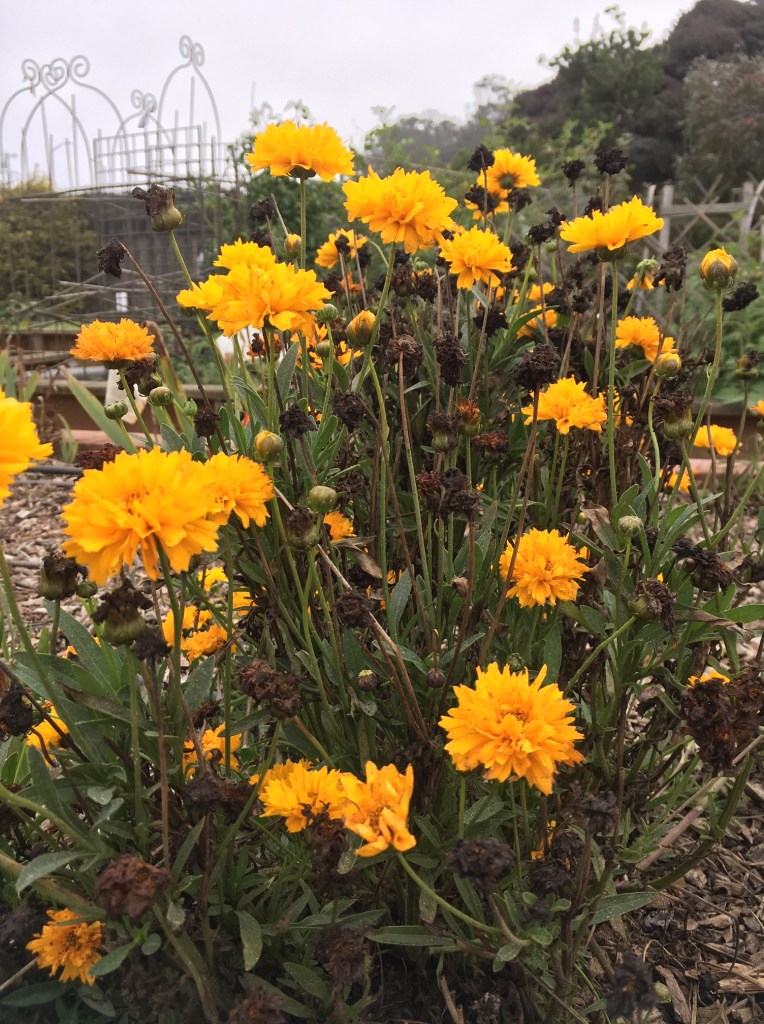
Now when you see a shasta daisy, or a coreopsis
or a california buckwheat, or an osteospermum
you know what to do
to keep the flowers comin’

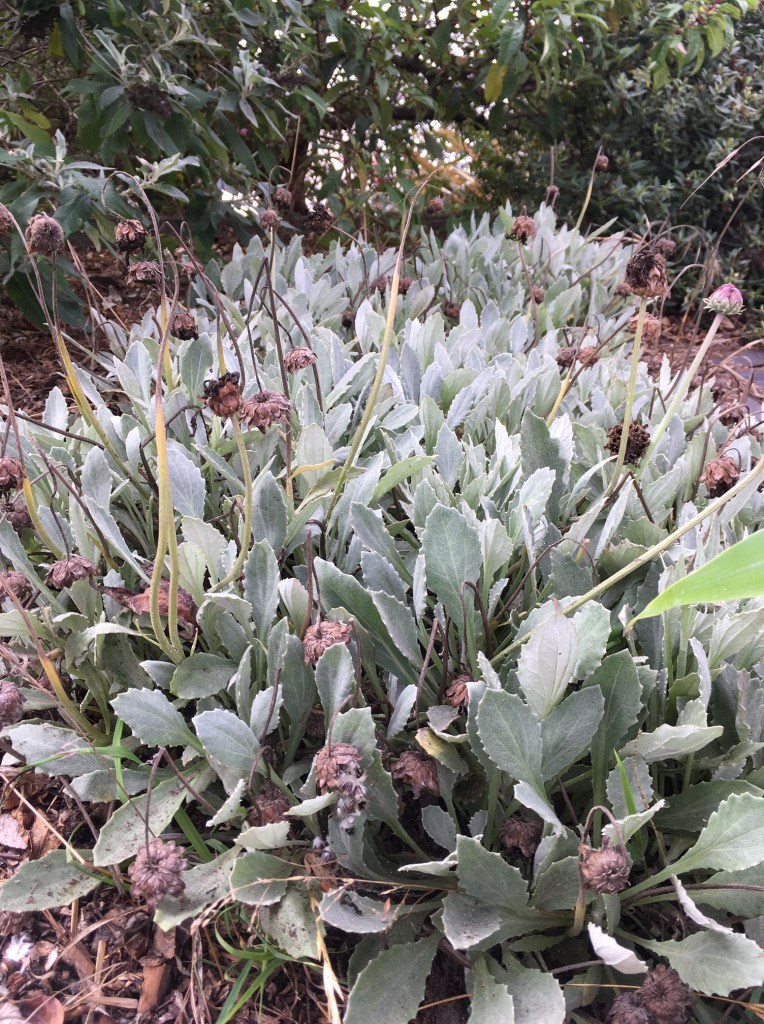
When you remove the brown and spent foliage
it just looks cleaner and taken care of
like a gardener has been through there
this patch of Chasmanthe is all finished for the year, the corms have retired
these little colonies have been shrouded for most of the summer
would be good to take a pair of pruners to em
or snip them with a pair of really sharp shears at the right angle

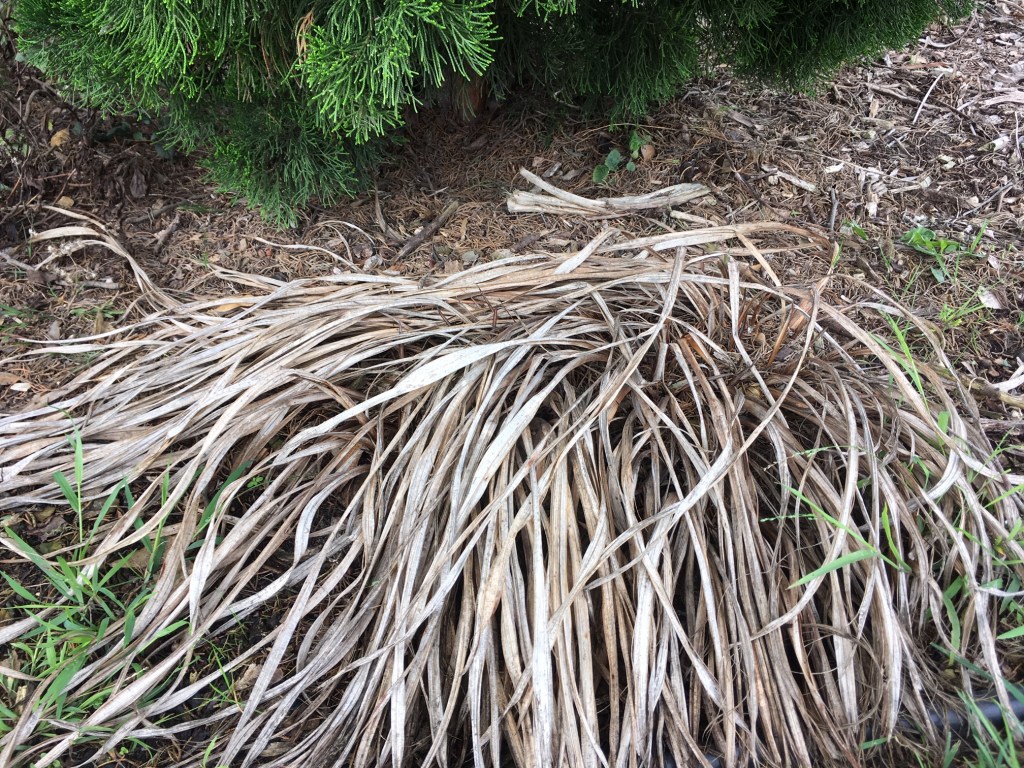
This swathe of grasses is also all done, dropped its seed, just a fiber skeleton left
but these grasses dont actually belong in this lecture
cause they are not perennials, they are annuals – mostly oats Avena

Like with this daylily
you just reach in and pull out all that brown dead stuff
and the plant perks up a bit

Like with this clump of Scilla bulbs
see the gardener’s touch?

Only thing is, sometimes you gotta wait it out
ideally, if nobody is complaining, you wait until the plants’ leaves go all brown by themselves before you dive in with pruners
that way the plant pulls all the green goodness back down into its underground parts
and stores it for next year
if you cut them prematurely, that is – interrupting its natural cycle
it is kinda like dropping a couple of hundred dollar bills on the ground as you walk away from the bank, having just made a withdrawal
if you are able to, follow nature’s rhythm, don’t force it

That said, in nature, even the dead brown leaves serve a purpose

they act like a blanket of insulation

shielding and protecting the parts below

during hard times

As it dries up, down into the ground go the irises:

When the plant is all done
then you go in
for example, this Alstroemeria, see the difference a few minutes of gardening makes?

Sometimes though, you came a little too late, and the plant already started its next growth cycle
like this other patch of Alstroemeria around the corner –

you can still work on it, just try not to yank and cut all the fresh growth

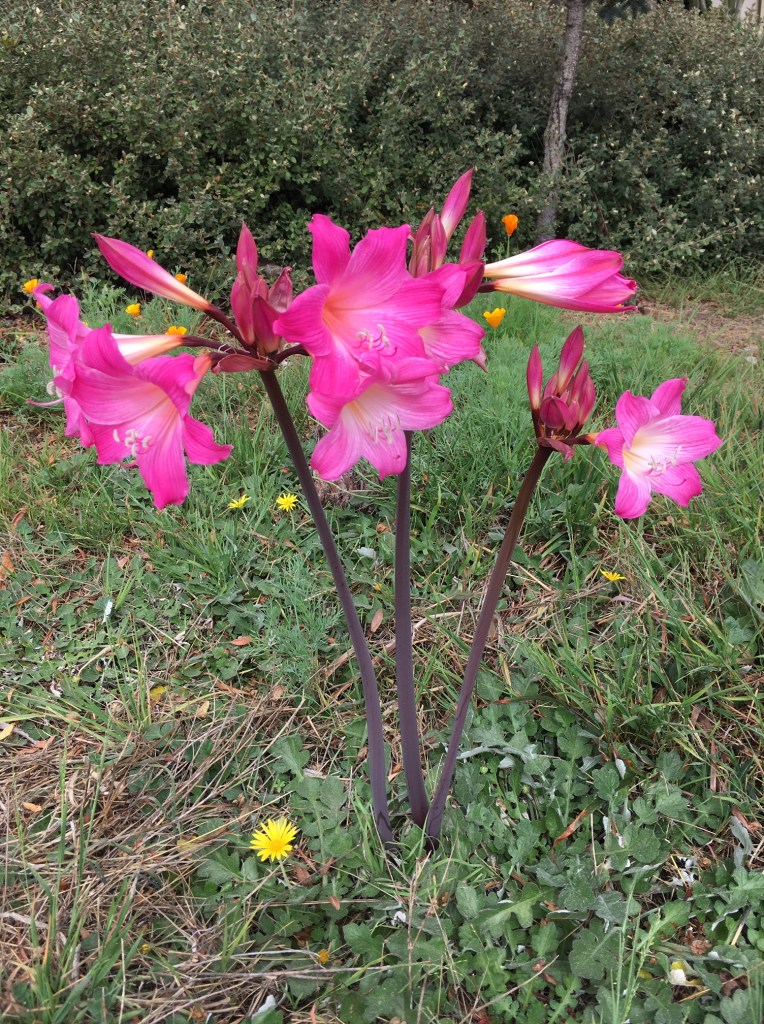
These Amaryllis belladonna are still blooming:

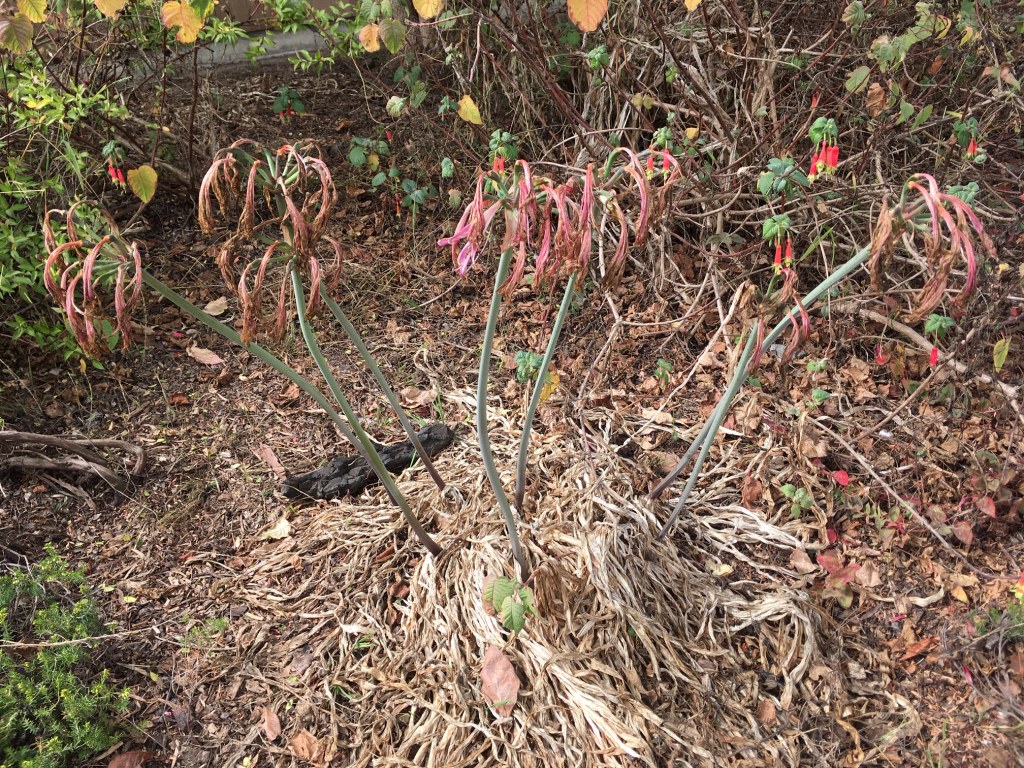
This Amaryllis has that look that says
“That’s it, I’m all done. Lemme rest”
unless you want to save the seed, this is when you can go in and cut it all down


So that next August September it will look like this again

Maybe you are a maintenance gardener
who is secretly harboring wishes
to be a nursery person or a master propagator
well then you want to keep an eye out on the fruits
and start to collect seeds
while you are in the garden

Collecting seeds is almost the total opposite of deadheading
if you want to have germinating plant babies
you have to leave the maturing fruits
the fruits will tell you when they are ready to be harvested
usually when they turn brown
you will have to put up with people saying things like
“Why you leave that? Its so ugly?”
or “Cut it down already, theres no more flowers, are you lazy or what?”
usually, I just shrug, smile, and wait, and wait some more

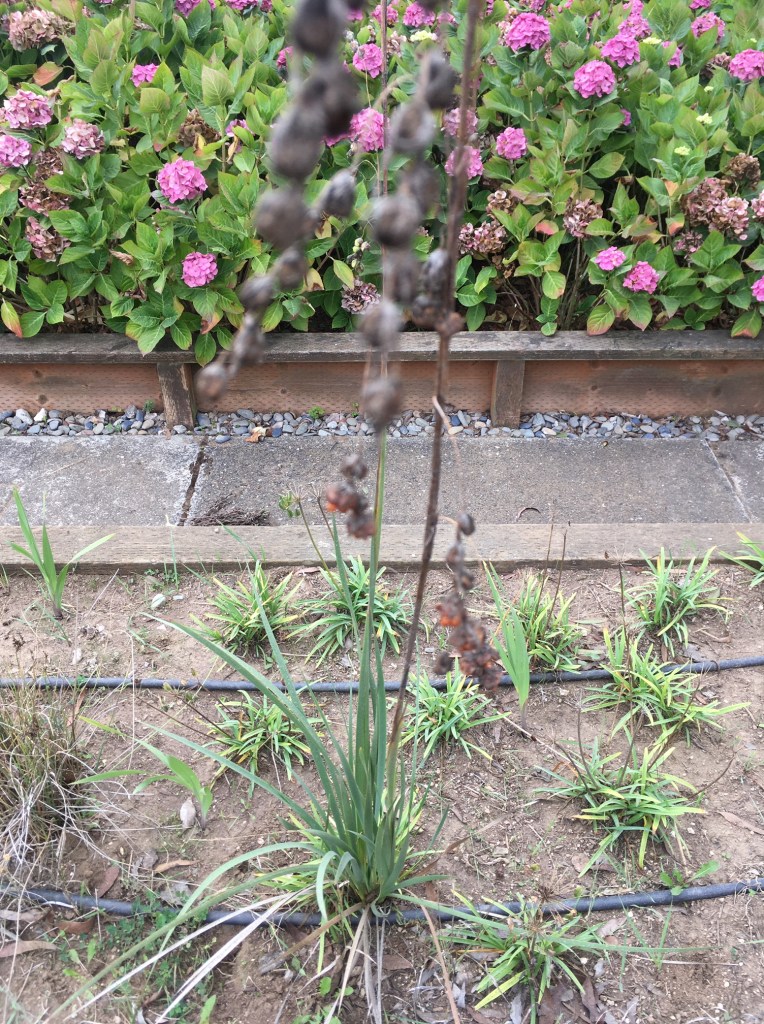
Wait until I can get a handful of the fairy’s fishing wand Dierama seeds:

Until I can fill an envelope with nutka reed grass Calamagrostis seed

Until my pouch is chock full of four o’clocks MIrabilis

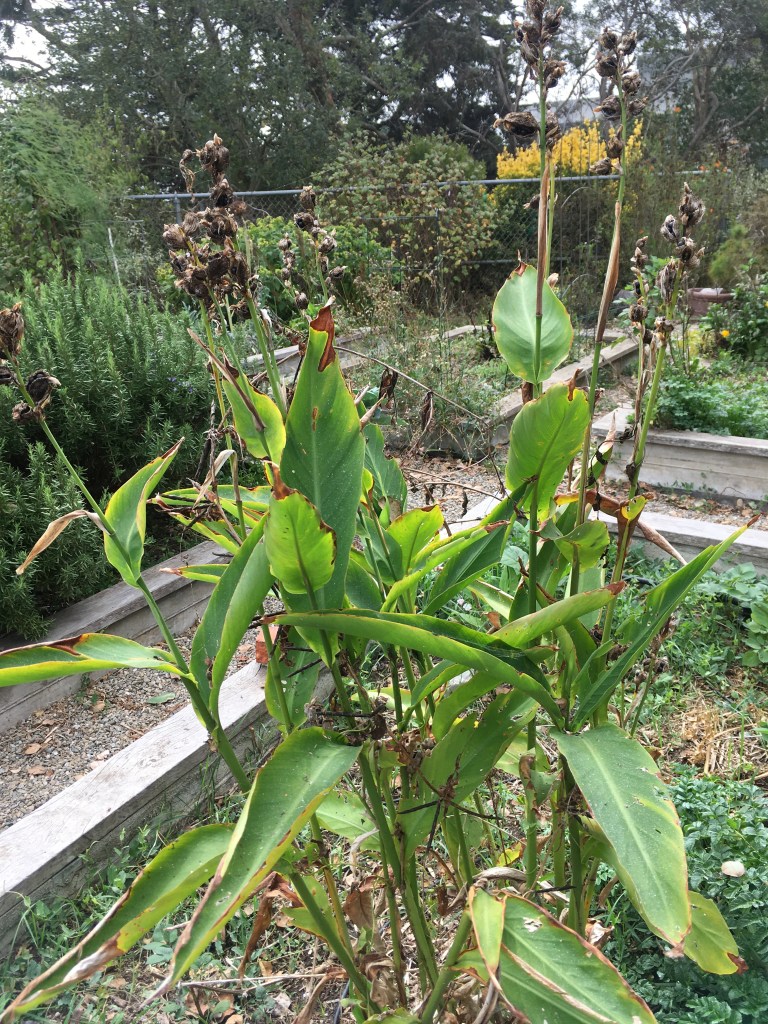
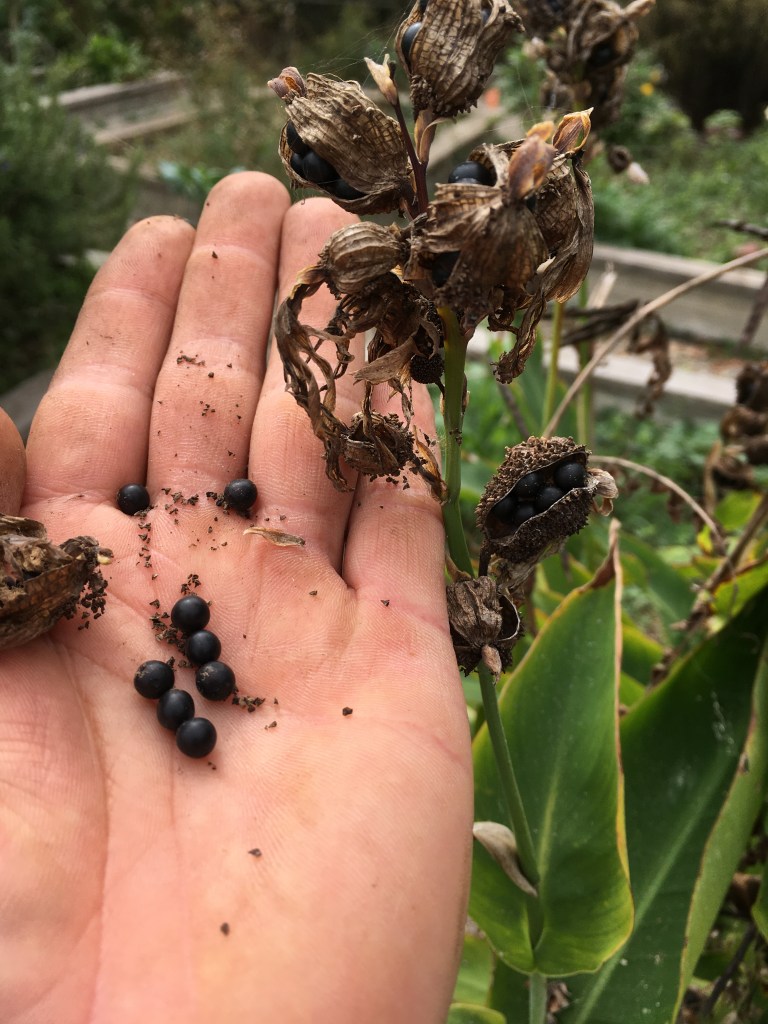
Until Canna edulis’ perfect spherical seeds literally drop from the open capsules

This then completes the life cycle of the plant
and your training as a gardener
if you understand how all this works

Once in a while its challenging to resist
the urge to cut the plant all the way down to the ground
especially when –
the plant’s leaves are full of mildew
its leaves are tattered and bug eaten
rust is pervasive
and frankly, the plant is making you look like a terrible gardener
but then you open a seed pod or two
and discover the reward for all that hard work and patience and tolerance
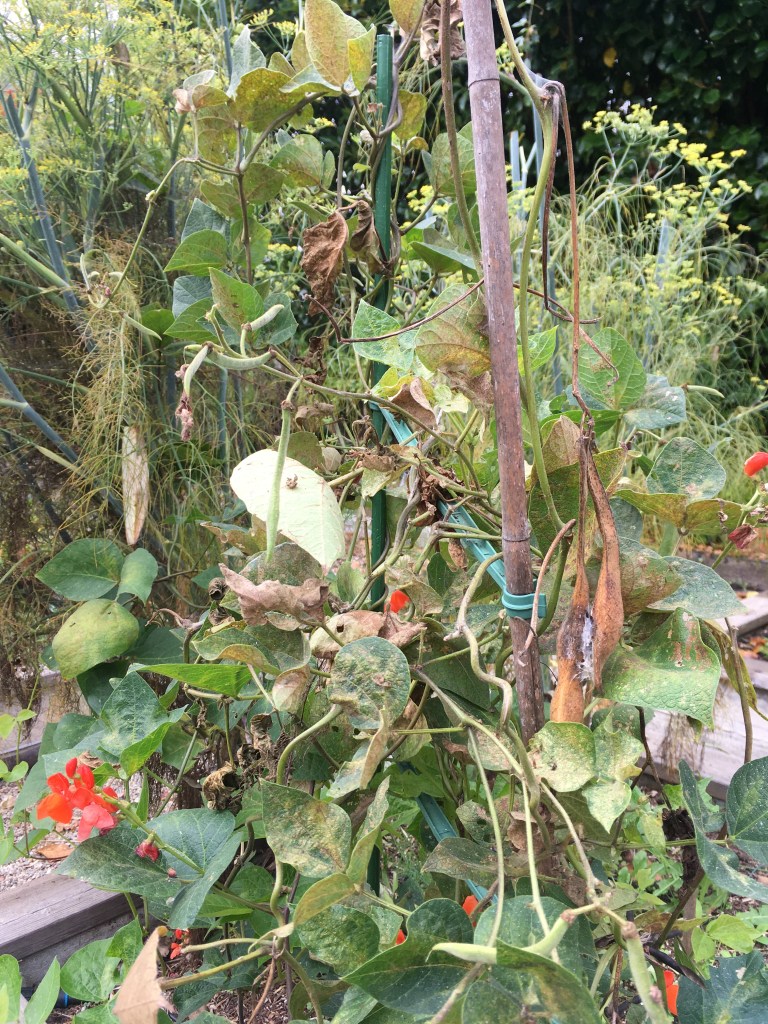
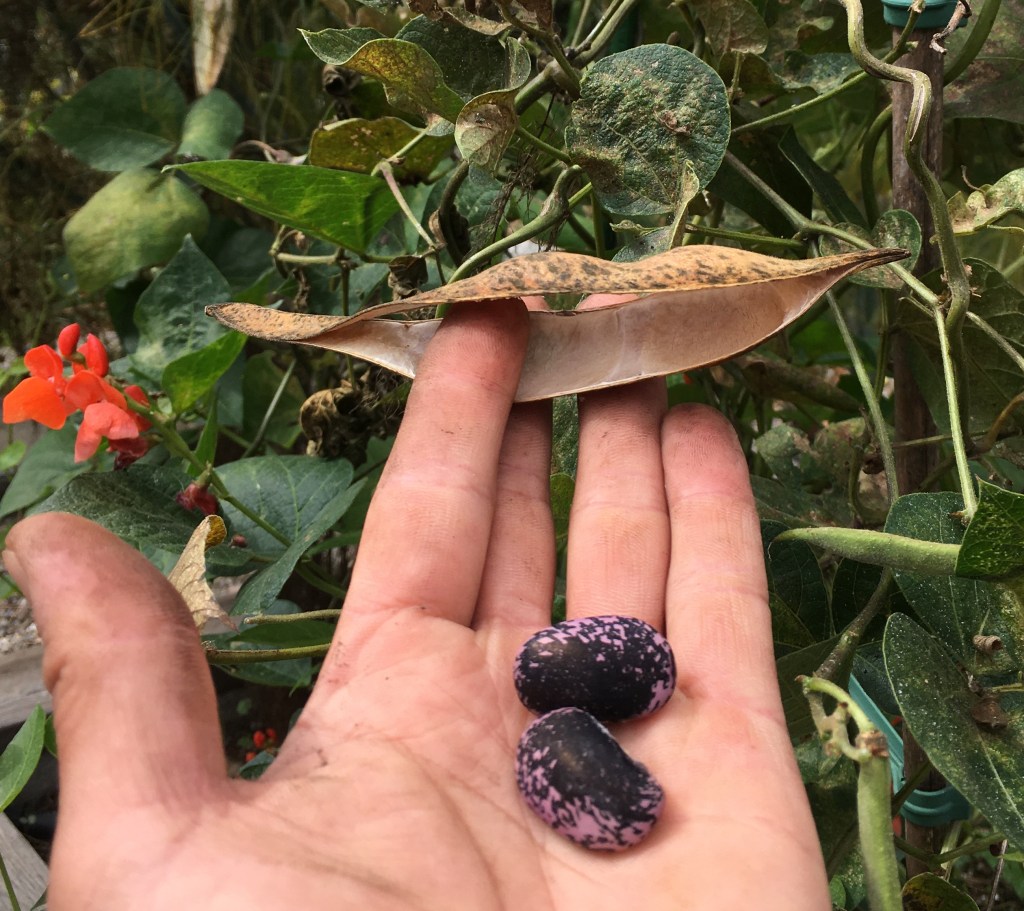
well there it is! Red runner beans in purple and black

Hold up! I know that it’s not looking so good, but please don’t cut it down yet! what are those things at the axils of the leopard lily?! look like teeny baby bulbs with roots?! do you think I might be able to grow them?!!!!?

A tidbit about potting mixes:

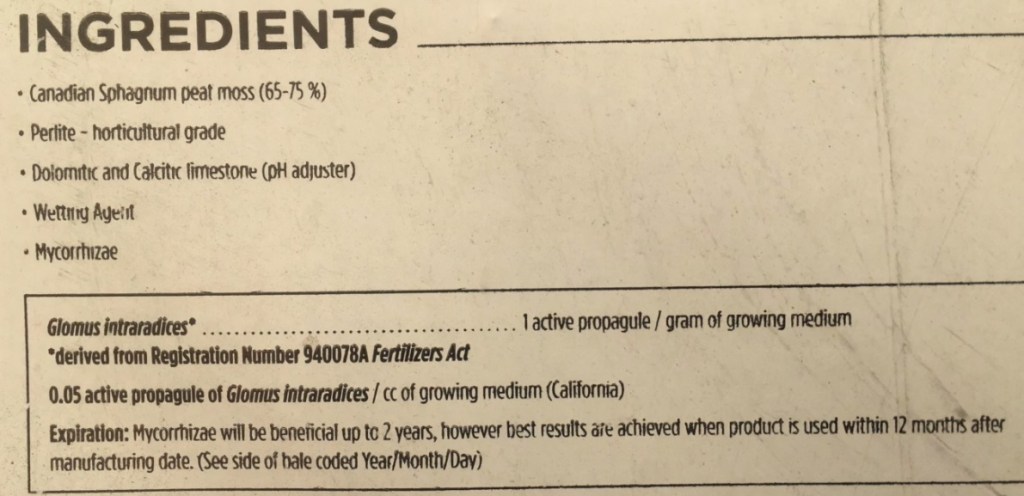
The stuff we are growing the poinsettias in is called Pro Mix. This is from the back of the package. Check out other brands of potting mixes – many have similar ingredients.

Canadian sphagnum peat moss comes to us from bogs, coniferous forests, and wet tundras of the north. Over eons it can build up thick in such places as mosses grow, live, then die. It is able to absorb a lot of water; hence in the olden times it was commonly used for diapers or for wound dressing. It is also useful as tinder, or to burn for fuel. These days it is mined to be used as potting mix. It is acidic in pH, in the 3.0 -4.5 range.

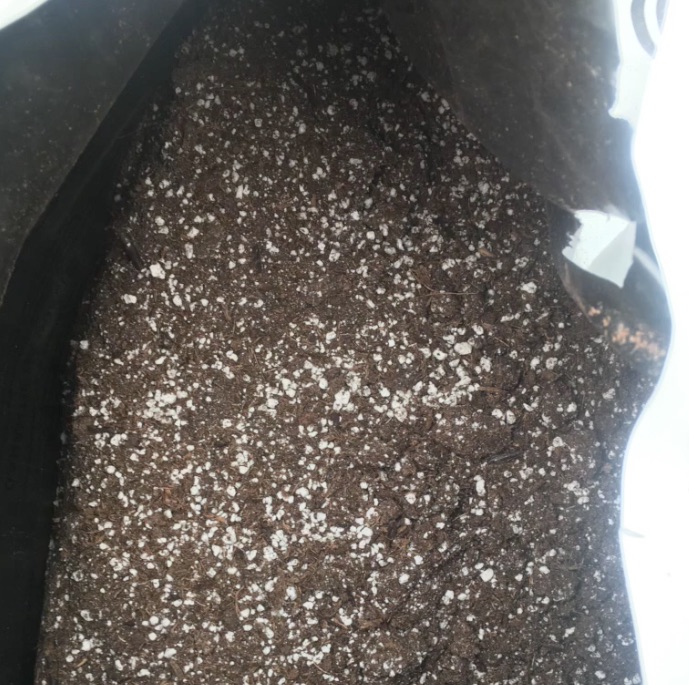
Perlite is the little white exploded expanded volcanic rock used to aid in drainage and aeration and keep the soil mix permeable. This ensures that the plant roots are happy and not sitting in wet goopiness.

Dolomitic and calcitric limestone are added to balance the acidic peat. Limestone is pH 7.5 -8.0 and basic. Most plants like a pH of about 5.5 – 6.0 – 7.0.

Some plants prefer an acidic soil: rhododendrons and ericas (pH 4.5 – 5.5), or the oblong leaf sundews (pH 3.7 – 5.3). There are also other plants that like it more basic and alkaline like the Pinguicula butterworts (pH 7.0-8.0). It is important to keep the pH of your soil within a certain range, otherwise nutrients can become unavailable to plant roots. You can test your soil’s pH with a slurry method, using a pH meter or paper test strips.

Wetting agents are chemicals added to help the water to infiltrate and evenly wet the soil mix. It does this by breaking apart the ‘stickiness’ of water (lowering its surface tension). A common wetting agent when we use when watering street trees is Dawn dish soap. If you do not use a wetting agent, you may see the water just sort of roll off the soil. This is because water is cohesive and prefers being bound to itself rather than breaking apart and going into the pores and cracks of the soil.

Mycorrhizae is fungus root. The species in this package is “Glomus intradices 1 active propagule/gram”, which is about 27,216 spores per 60 pound bag of potting mix. So this is a relatively new additive to potting mixes. What scientists found out is that in nature, plants are working with partners underground – fungi. Plants give the fungi some of the sugars they make from photosynthesis, and in return fungi bring the plants water and nutrients they collect from all around. A mutually beneficial symbiotic relationship. There are fungus that live on and around the plant roots, as well as fungi that live inside the roots. Glomus lives inside and in between the root cells.

The whole idea is that by inoculating the potting soil with these fungus spores, the spores will grow into a network of fungal threads around the roots. it will then help the plant improve its nutrient and water holding ability, and increase the intake of of nutrients like phosphorous. By the way, Glomus intradices was recently renamed to Rhizophagus irregularis. On the package, it says “do not sterilize or pasteurize”, likely because that would probably kill the fungal spores.