Any chance to play with water I am there!  So washing dishes comes easily to me.  Restaurant, home, or camp site – they are all good places to do some chores.  Luckily there is the magical stuff called soap, otherwise the  greasy film on the pots and pans would drive me nuts!  The plastic forks and tupperware containers, boy they really hold on tight to the oils.

The water molecules gather around the tail of the sodium or potassium part of the soap, and keep the soap molecule suspended in the water.  Meanwhile, the other end of the soap molecule grabs onto oils and dirt.  Soap helps make an emulsion – a mix of two liquids that do not usually blend together.  Then it’s off they go to the sewers, treatment plant, bays and oceans.

Image

Another day I was working in the garden, cutting tree branches.  Saw dust was flying in my eyes, the saw teeth were trying to jump on my arms, and the weight of the branch was starting to pinch.  What is this stuff that is so strong?  When I understood, I drew this picture.  It is all in the structure.  Wood shares some similarities with rebar and concrete, bones and muscles, wood frames and drywall.

Image

There are organisms that like to eat wood and break it down into tasty morsels.  Fungi!  Some are picky eaters, and they only relish the brown lignin cores.  They are called white rotters because they leave a bunch of stringy white fibers after their feasting.  Here is one of them:

Image

Fungi comes in many forms and colors, and can be found everywhere.  Fungi loves moisture.  Nature’s house cleaners take care of the dead, and sometimes parasitize the living.  The dry rot that eats my deck is a brown rotter.  It will slowly eat the cellulose (and hemicellulose) until the deck crumbles into little brown cubes.  Arrgggghhh!  Should have used redwood….

Image

Here is a story about parasites in the Mojave desert.  There are beetle larvae that take up residence in bee nests.  It is a little disturbing, but still suitable for younger audiences.

Image

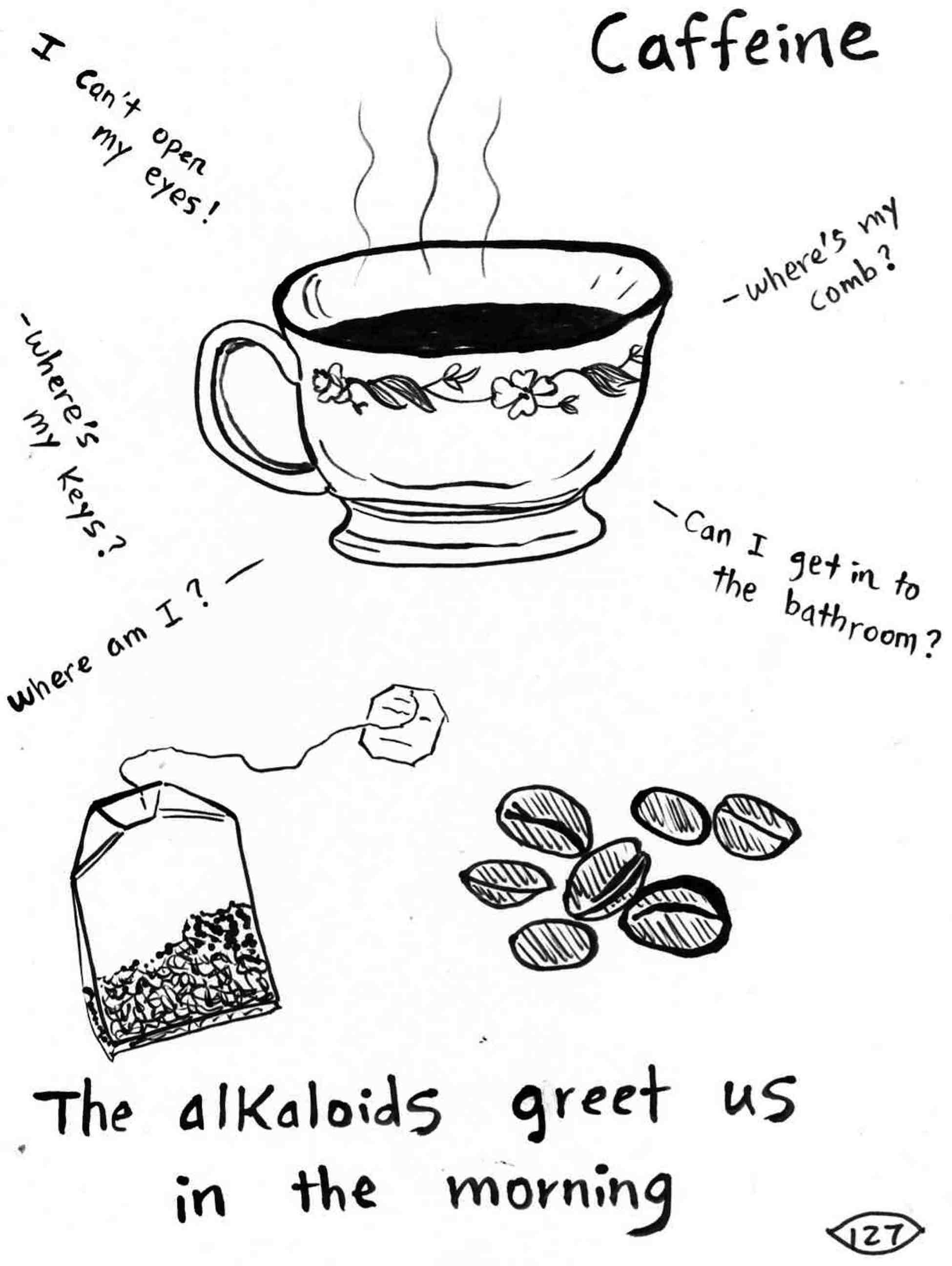
In Taiwan it was common in the old days to chew a palm nut to stay alert and awake.  Coffee was not yet imported and popular, tea was drunk in more relaxed company.  Tobacco, well that is another story.  The Areca palm is one of the cash crops, planted in large plantations or in a vacant lot next to your house along with some bananas.

Image

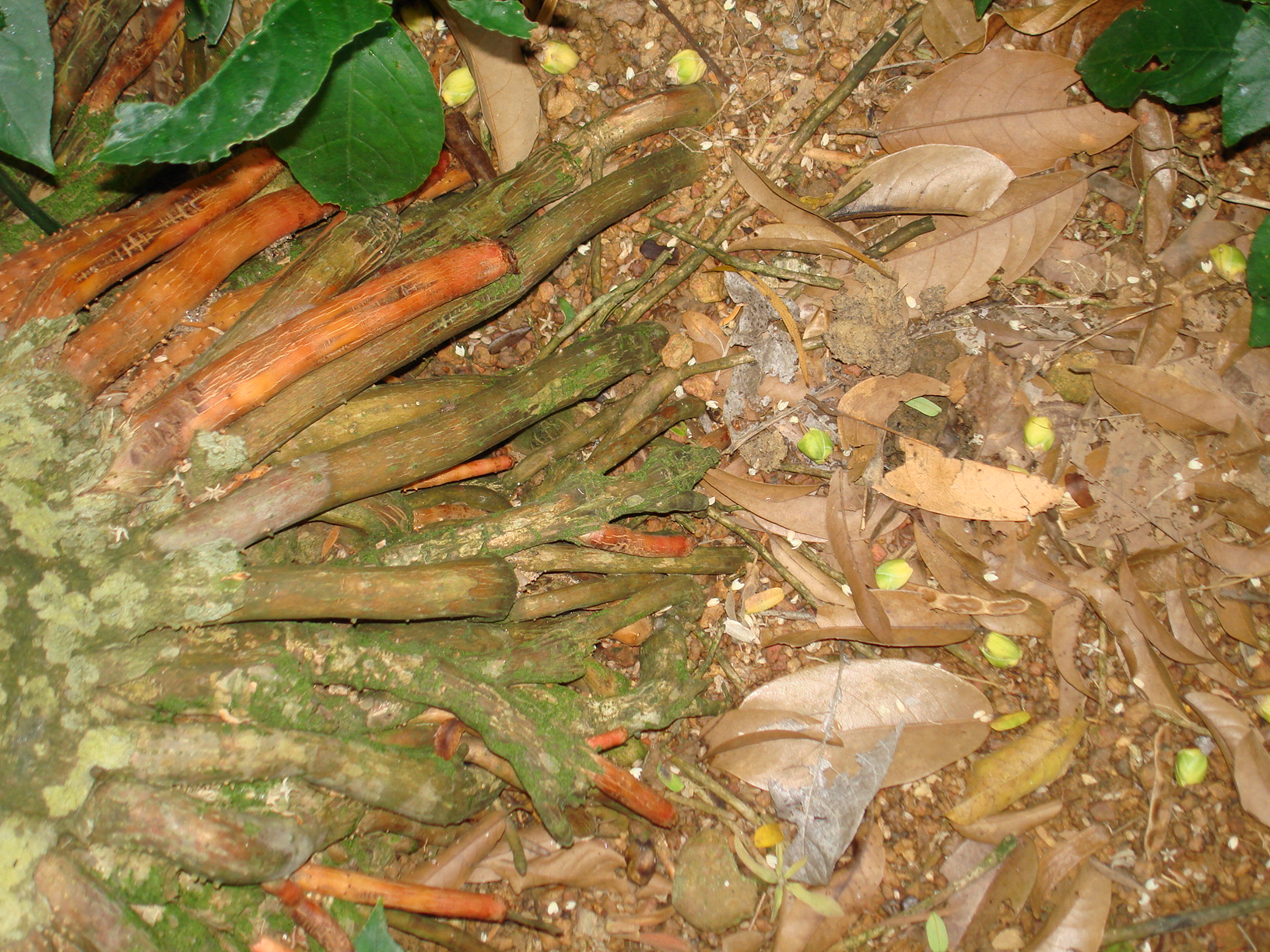
The palm is called bing lang in mandarin Chinese, Areca catechu is its scientific name.  It has nice stilt roots.Image

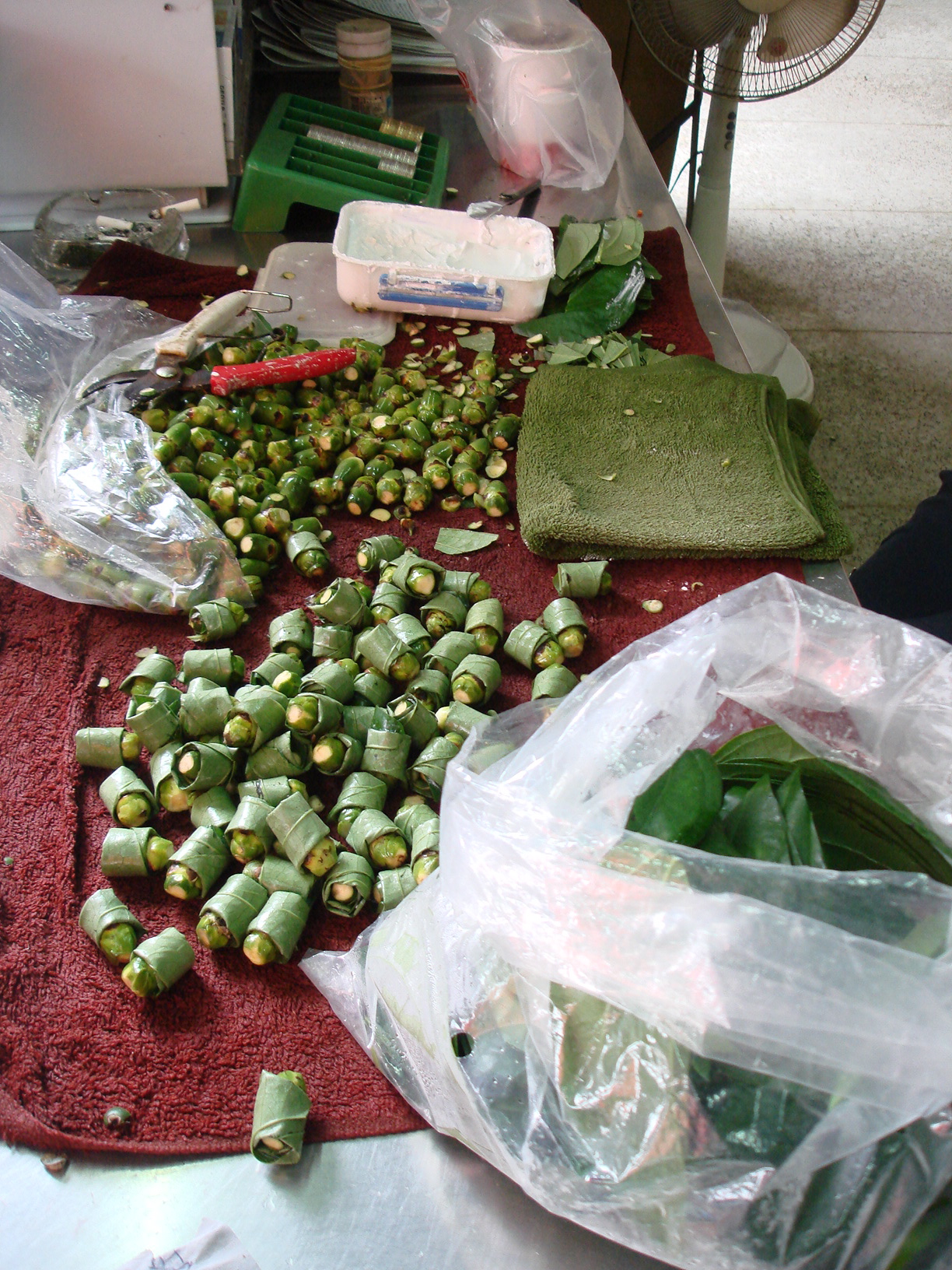
Where you see large neon displays on the street, that is where the bing lang stands are.  There is usually a female store keeper, ‘dressed to impress’, wrapping up the not quite ripe palm nuts in the betel leaf, while dabbing a bit of lime paste in the package.  The betel leaf is heart shaped; its botanical name is Piper betle.  Other species of Piper plants include the pepper (black and white pepper are from the same plant), as well as the Polynesian brew kava kava.

Image

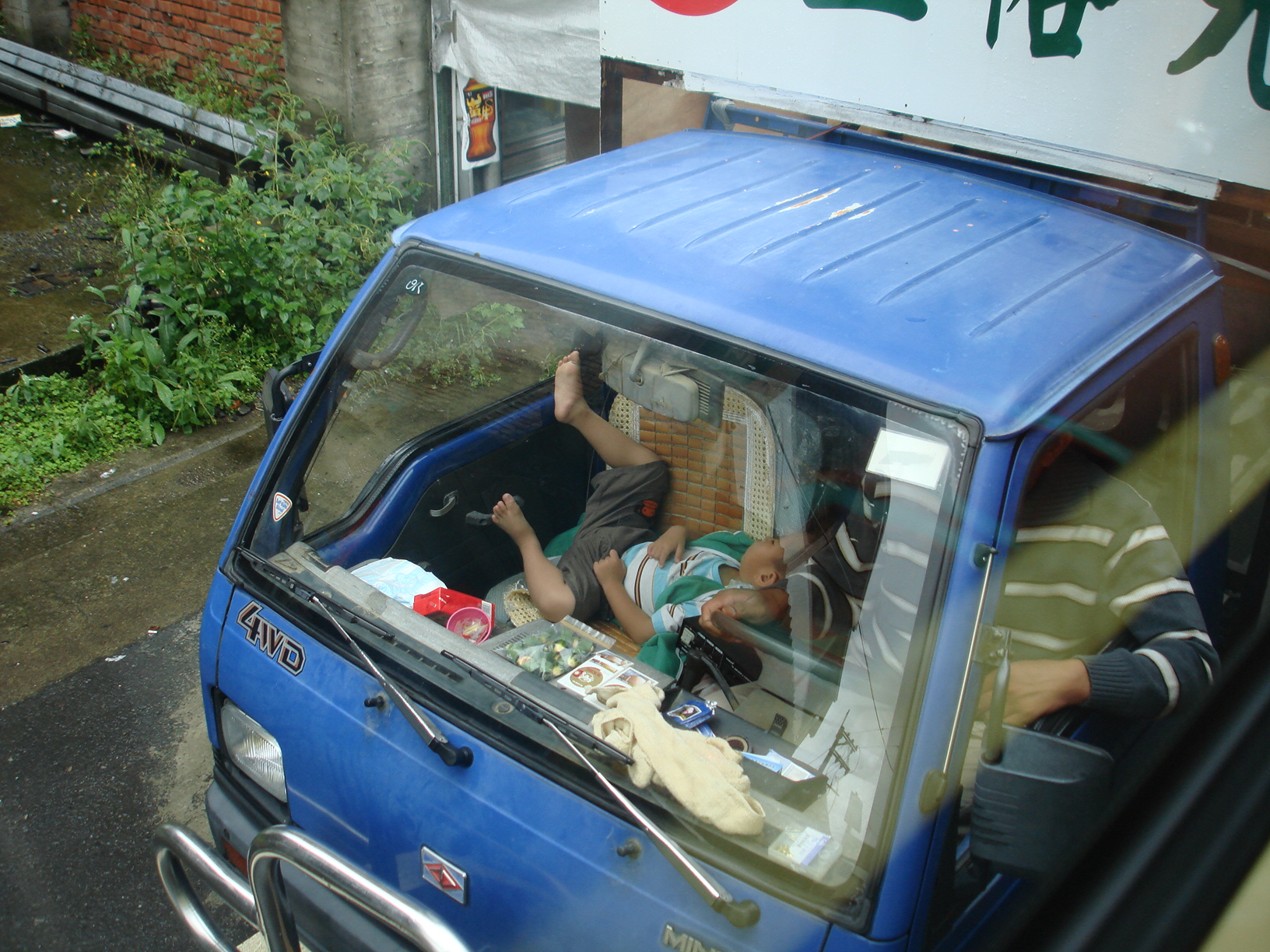
After you take a few chews a great warmth swarms over your body, as does a feeling of vigor and power.  It is as if a small southeast Asian typhoon was inside.  The leaf and nut are not swallowed, but sucked on and passed from cheek to cheek.  Then you gotta spit.  The spit is red.  There is a lot of spitting, out the window or on the sidewalk.  Check out the dashboard – another 200 kilometers to go…

Image

Well, that is part of the reason for the decline of betel nut chewing.  The sidewalks were all stained red.  Besides, spitting is not really an acceptable aspect of civilized modern culture.  Street cameras were installed, fines were levied.  The taxi cab drivers still chew, but ppttuiiii into cups.  Other pills, drinks, and remedies have now over taken this particular plant and human relationship.

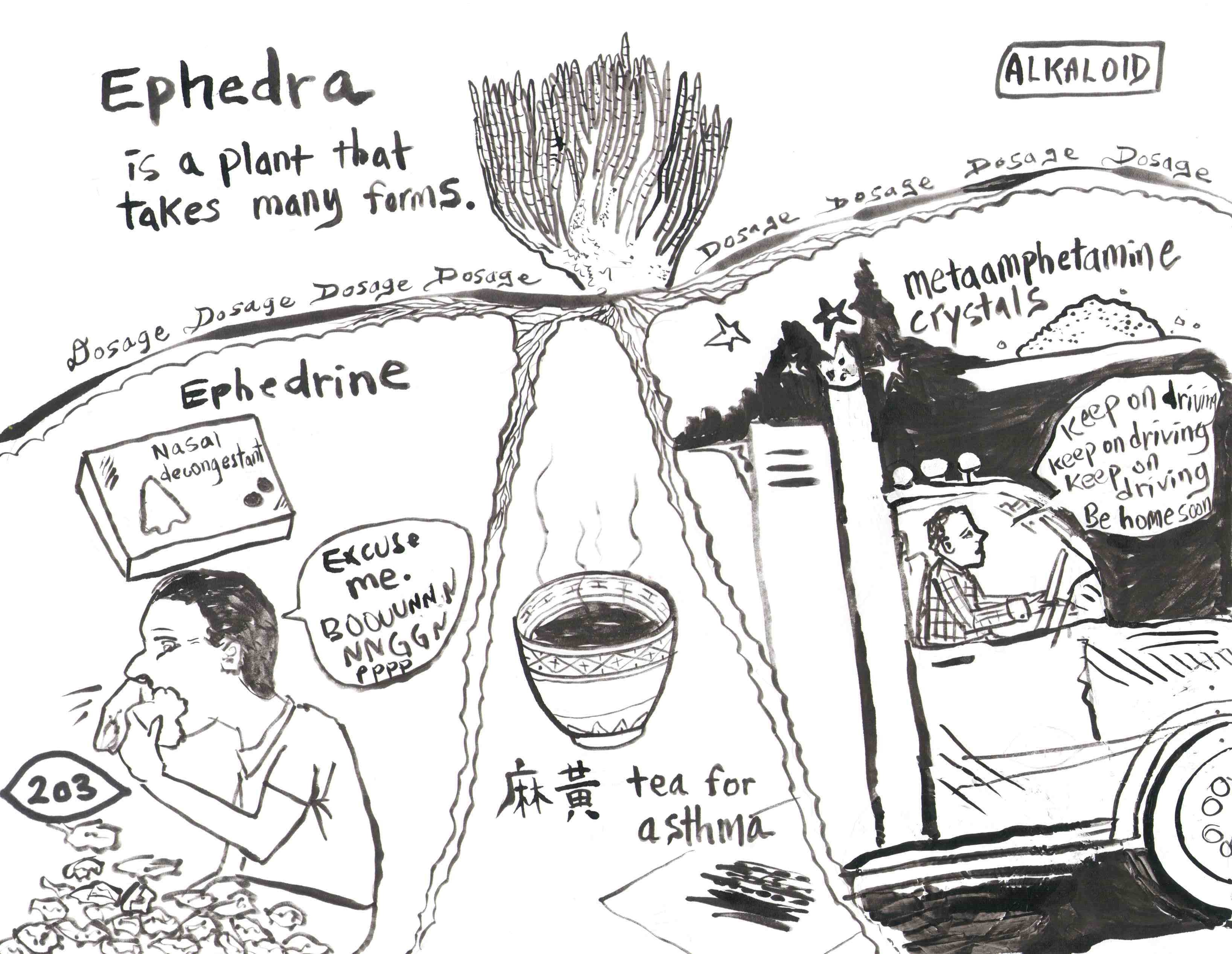
What is consistent through time is the use of plant based chemicals in different forms to stay alert, whether in war time situations or in day to day working life.  With any such substance, there is always the danger of addiction and abuse.  Beware of dosage, reflect on your mind state.  Maintain a healthy balance.

Image

Image

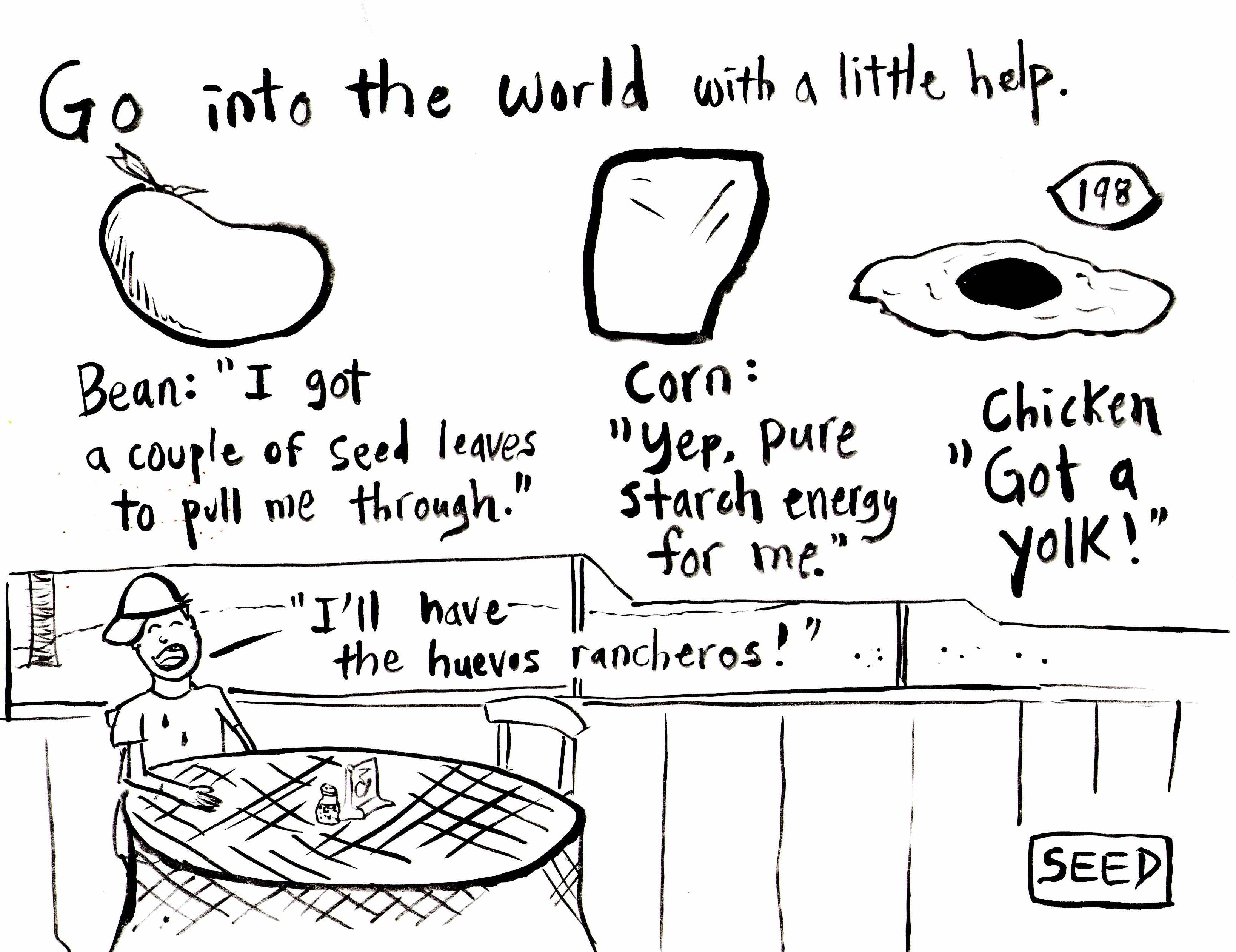
Seeds are fantastic little pods of life.  Aside from the tiny plant embryo which becomes the sprout and roots, most life pods carry a bit of food energy to help them get started.  That way, the plant babies have a jump on things before they get their leaves up into the sun and sky.  The carbohydrates that fuel the little sprouts are also fuel for us.  Noodles and rice, oat cereal and corn bread, yum!  Yolks in eggs do the same for the baby chicks.  And a plate of Mexican food after some watery shacks and nasal drip, the best!

Image

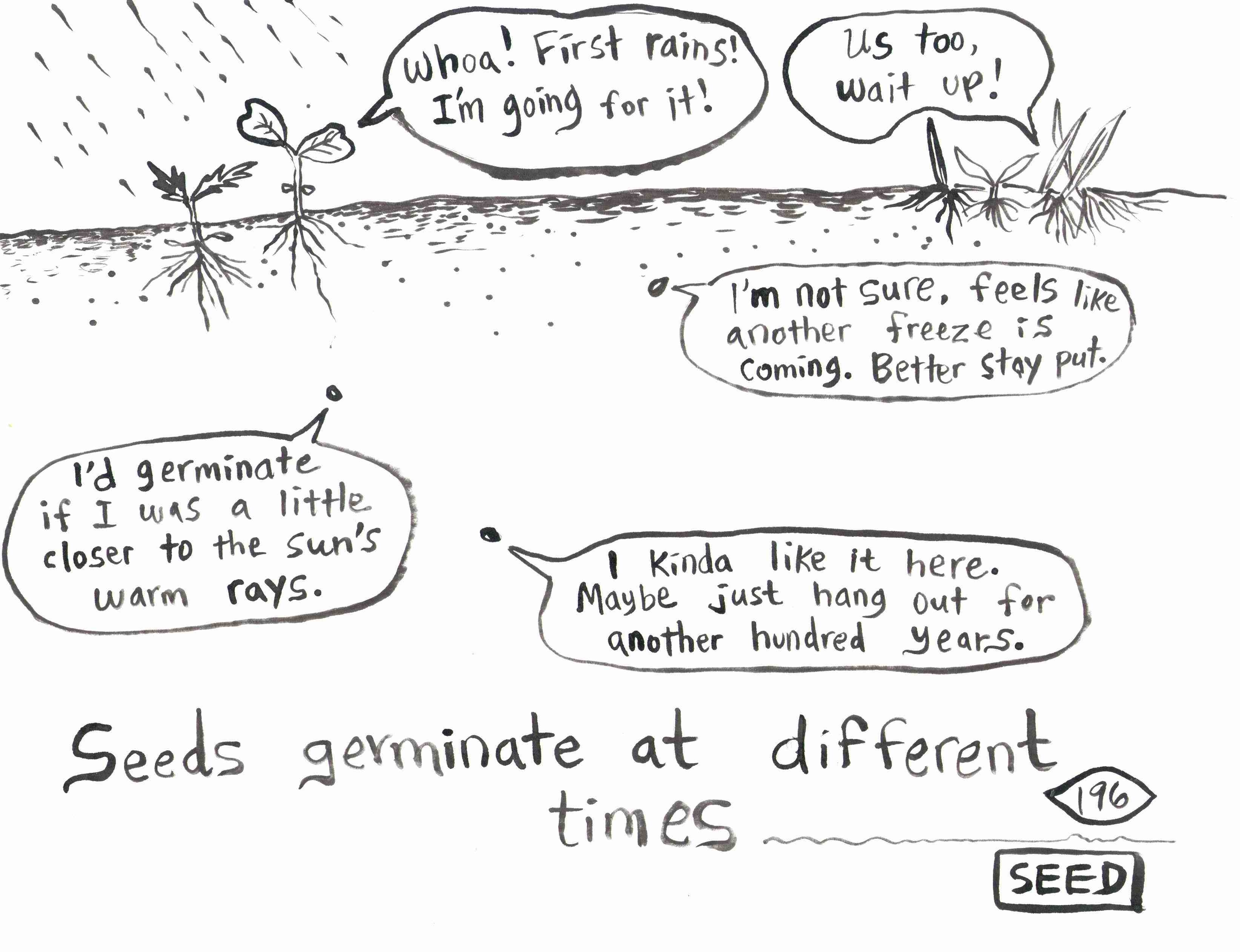
Seeds go into a sort of coma state if it is not too wet, not too warm, or if they are surrounded by some kind of sterile and inert material.  So an icy glacier, a peat bog, or a no oxygen mud hole can be a seed’s home for a long time.  We got some real weedy bean type plant relatives around these parts called Brooms.  Some are French, others are Scottish.  They are said to hang out in the dirt for over eighty years or more, waiting for the right moment to bust open and go for it.  Maybe longer, who knows?  I mean, what’s another year if you’ve been sitting around for fifty already?  Or a hundred?  Oh, one more thing – the brooms have a real hard seed coat which protects their innards.

Image

Roots never cease to amaze me, especially when I am trying to dig up an old and mostly rotten tree and the roots are still holding on tight and strong.  There are many plants in the tropics with roots high above the ground.  The screw pine is one familiar to Hawaiians and fiber weavers in south east Asia also.

Image

Our economies, geographies, and stories are bound up in the layers of bark and tubes of woody shrubs and trees.  The Amazonian rubber trees bridge World War II and the plantations in tropical Asia.  Sugar maples flavor the pancakes and the northern woods.  Chiclet chews and blows, while Myrrh infuses the air with the rituals of birth and resurrection.  Take the time to learn the trees in your neighborhood!

Image

I am teaching a class about basic vegetable and herb gardening in the fall semester.  These are some notes for the students in picture form about insect pests of the garden.

Many insects we call “beneficial” because they prey on pests and keep pest populations under control.  Some “beneficials” lay eggs in the larvae of pestiferous flies and aphids, while others eat them directly with chewing mandibles.

Image

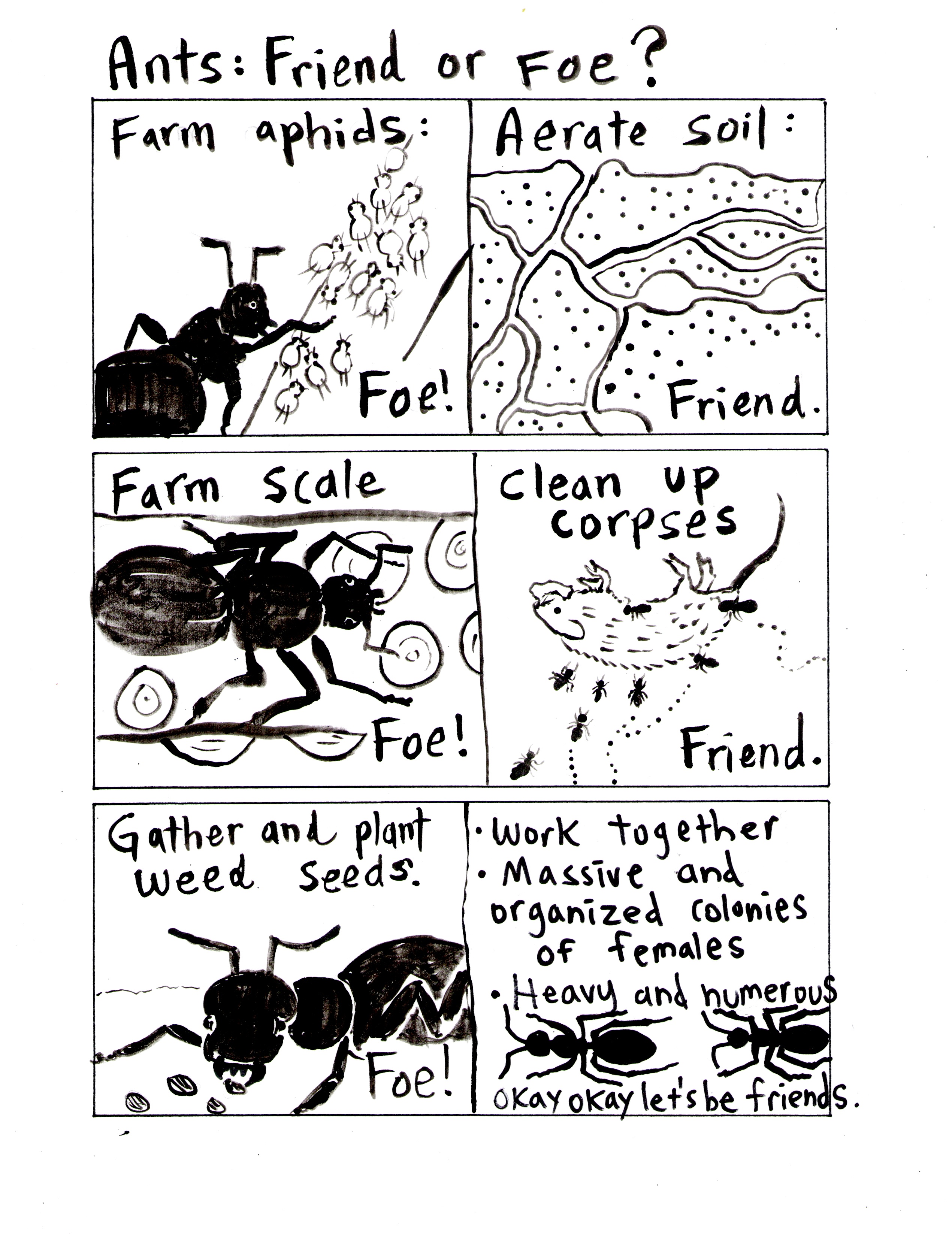
Sometimes, it is hard to say exactly if an insect is a friend to humans or if it is detrimental.  The relationship varies through time and changes depending on the site.  If we were to go to war to try and annihilate an entire group of insects (such as mosquitos for instance) we would likely get pretty sick ourselves and maybe end up losing.  So, we try to live with these small but powerful creatures as best as we can.

Image

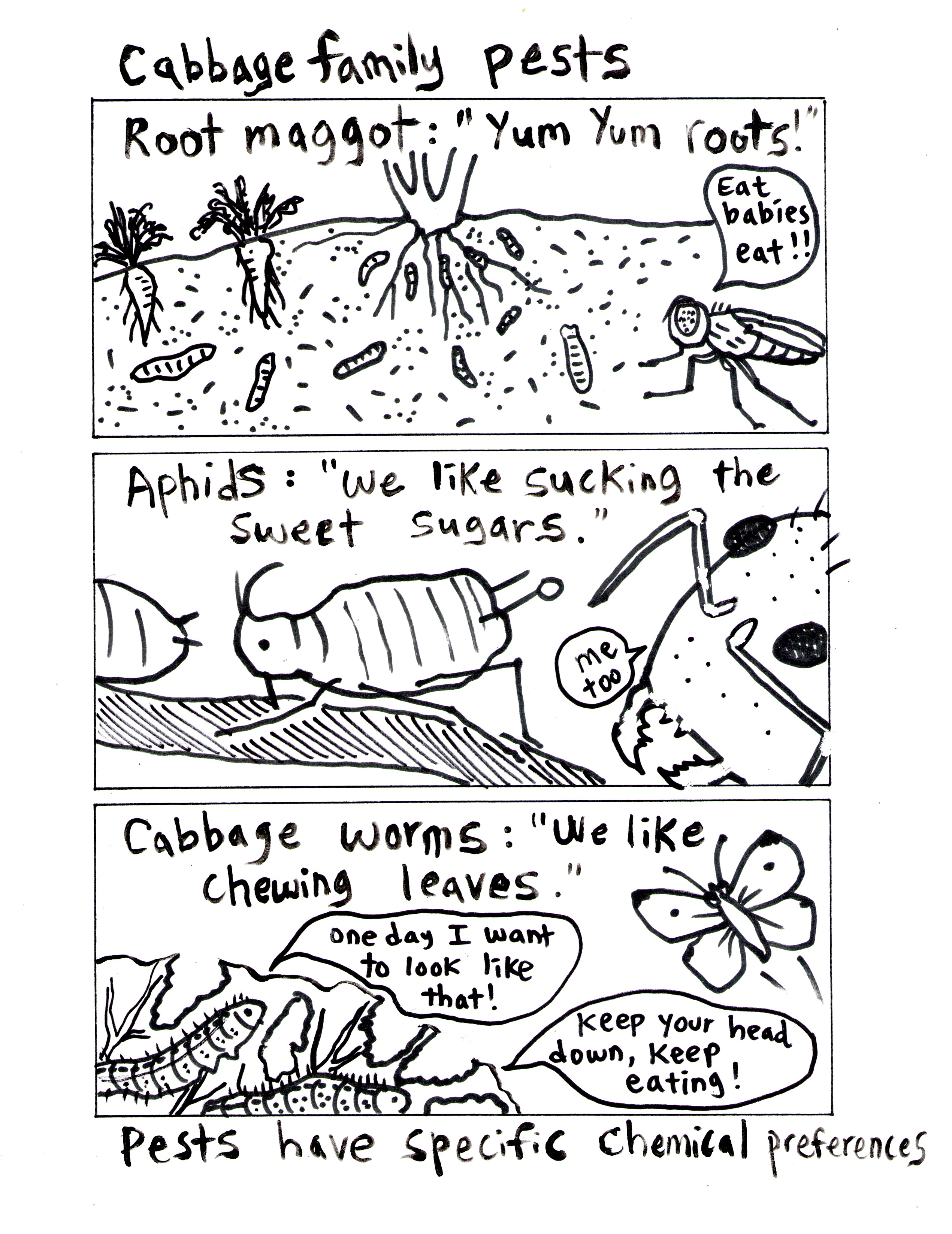
The cabbage family of plants comprise some of our favorite vegetables.  They include the collard greens, broccoli, and kale.  I can smell the chick peas, sweet potatoes, and fried chicken already!  This family is also the “choys” of Chinese stir fry.  The family is distinguished by its four petaled flowers that resemble a cross, hence we also call them the crucifers (from crucifix).  Due to their general tastiness and long history of domestication, they are also loved by garden pests.

Image

While weeds make a place look unsightly and not well kept (where is the gardener around here?!), they are also part of a wild web of life on earth that supports a variety of organisms.  Weeds hover at the margins of human civilization, and are in a state of constant adaptation.  These are three common weeds in  San Francisco:

Image

In general, in the garden, pesticides are used as a last resort.  They are many ways to prevent outbreaks of insect pests from the beginning, or to keep the pests at a level that is tolerable.  Well, what’s a spot or two or a little extra protein?

Image

There are advantages to the use of pesticides too.  Well, that will be for another day…Blackberry and ivy are calling me!

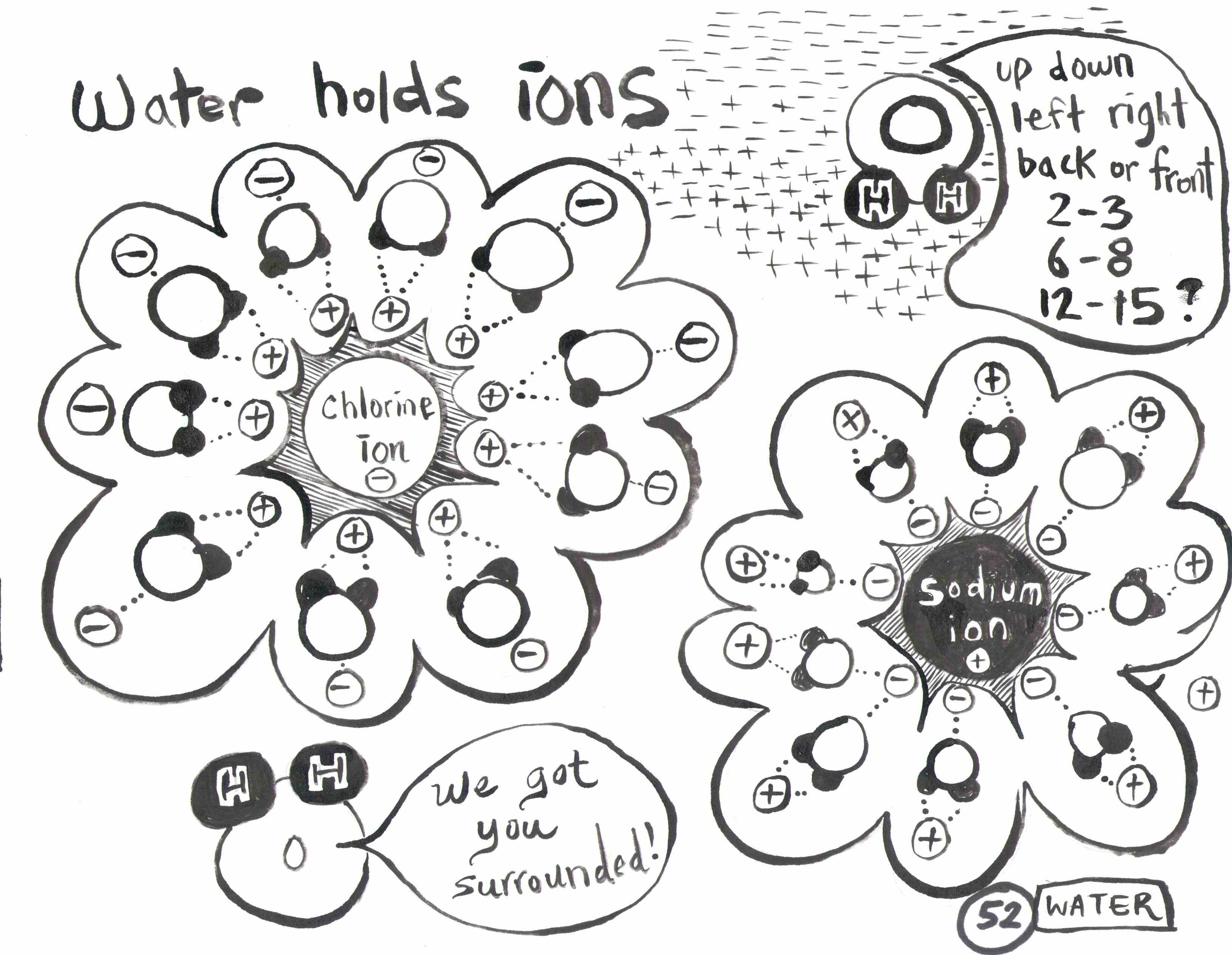
Water is divine stuff.  Tons of cool substances dissolves in water.  Here’s a picture of water holding ions of sodium and chlorine.  So, it doesn’t matter if the ion is charge positive or charge negative.  Water has got both sides, and turns around back and forth to make strong secure bonds.  The water molecule saying Up down left right back or front 2-3 6-8 12-15?  is referring to tides, direction of the wave, front side or backside, and wave heights in feet.

Image

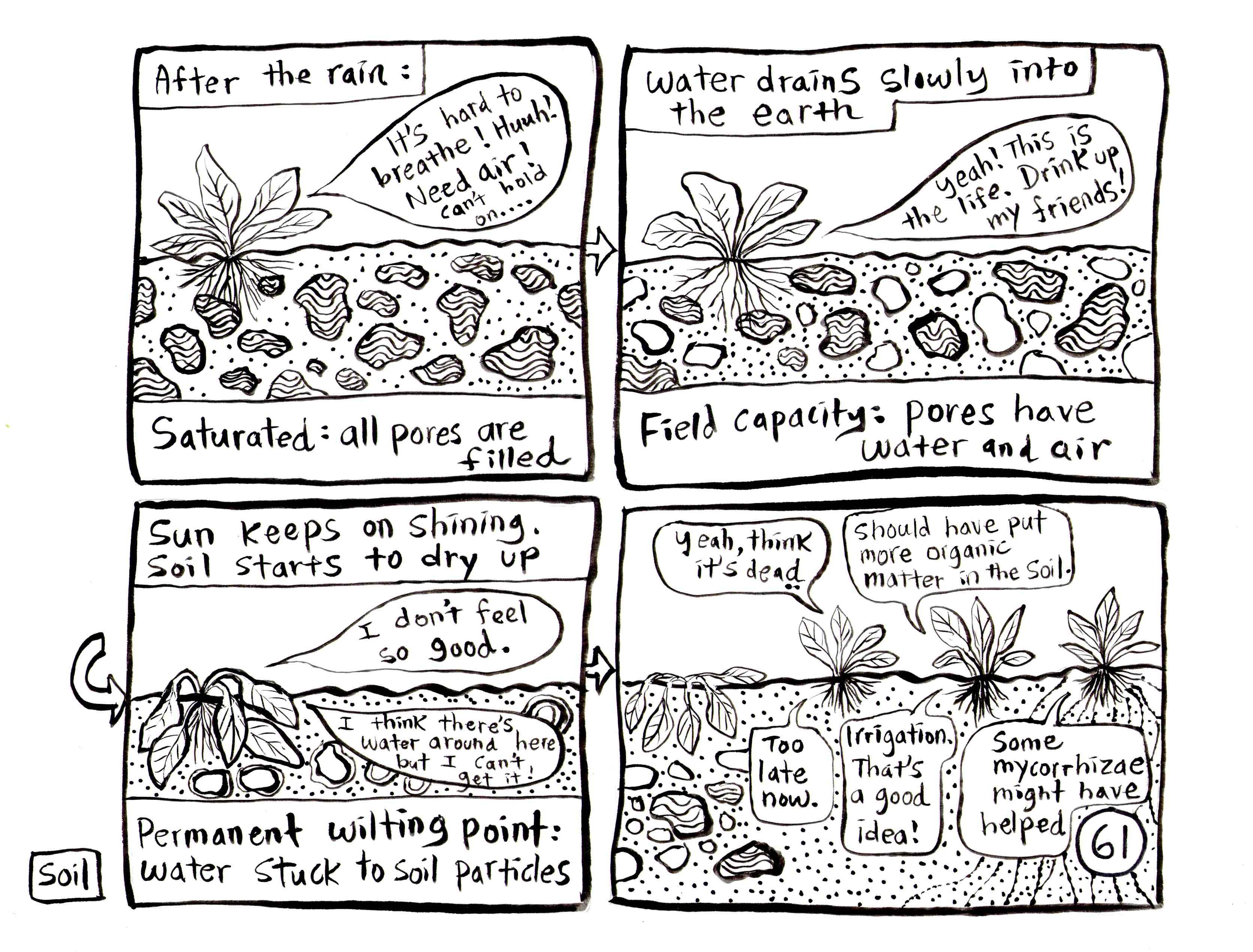
In gardening, we are always concerned with whether or not there is enough water in the soil that plants have access to .  Without water, plants cannot grow.  They suffer and wilt, and succumb to disease and insects. Image

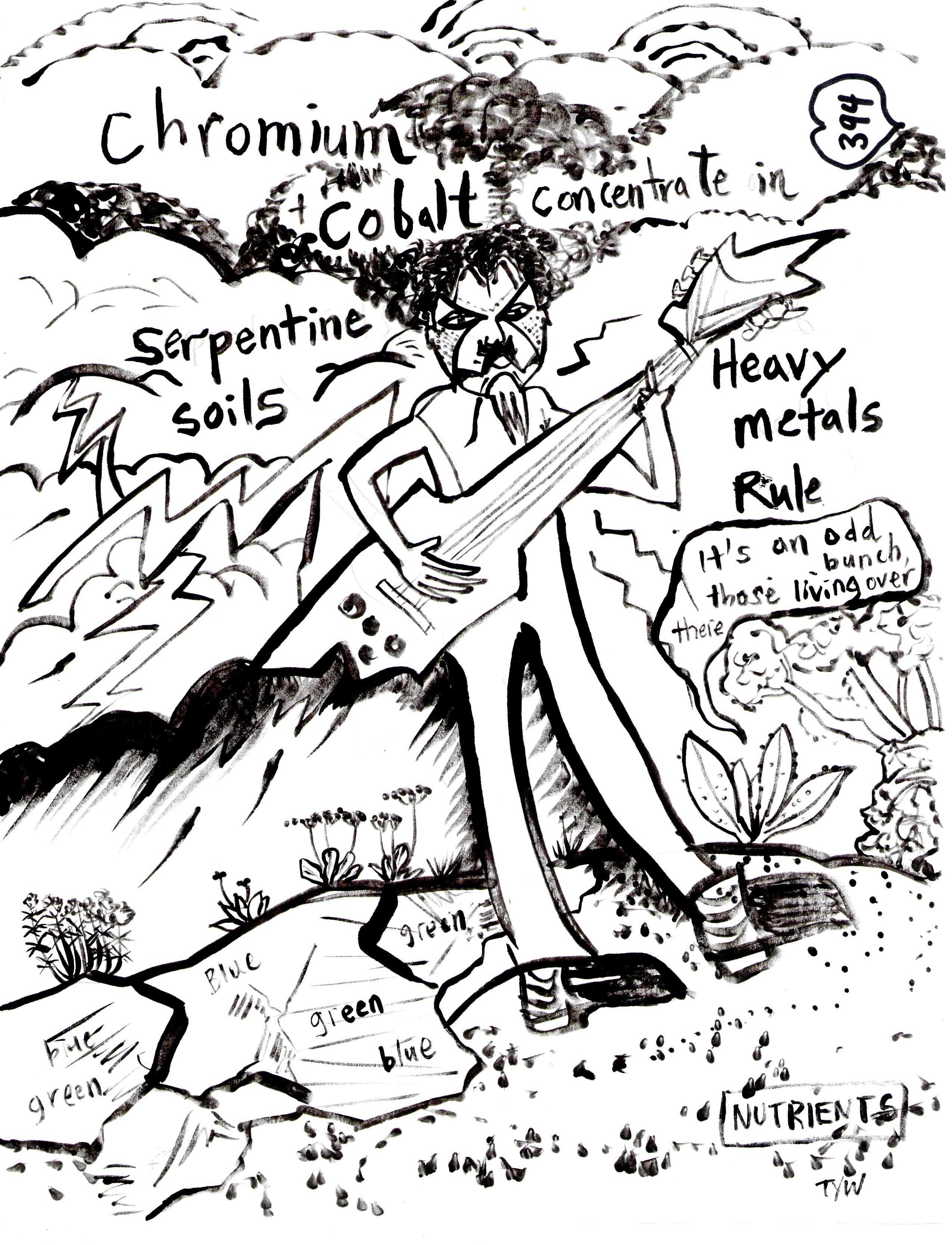
The California state rock is a beautiful blue green rock called Serpentine.  A diagonal belt of it runs across San Francisco from the old military base Presidio to the hills of Potrero near Starr King School and some magnificent Mariposa lilies.  Serpentine has a high concentration of Chromium and Cobalt – heavy metals.  It is also poor in nutrients such as nitrogen, phosphorus, and potassium.  It is a difficult substrate for many plants to live in.  However, some thrive in it. Image