Design principles as applied to landscape and garden design

So first the principle, then some stories…

BALANCE

Garden has a sense of harmony between contrasting forces

there are two kinds of symmetry – bilateral and radial

bilateral is like a person –

if you cut em down the middle top to bottom

fold em,

the right is more or less like the left, more or less

radial symmetry is like an urchin or a sea star

you can cut it down the middle a bunch of ways, this way, that way

and it is symmetrical when you fold it

like a wheel with spokes – radial symmetry

symmetry is present  in the garden, for example –

hedges on the right are same as on the left

stone lion on both sides of the gate or doorway

the geometric star shaped fountain in the middle of the garden

as people, we like this, it makes us smile

it brings a certain sense of order and structure to the landscape

and yet, we also appreciate the slight wibble wobbles of things off kilter

just a little bit

that is the asymmetry in the garden

this can refer to space, to objects, to visual weight

this can be any sort of an imbalance that makes you pay attention and squint a little bit

one side is different from the other side

they say that is how a baby recognizes its parent

this is what distinguishes factory perfect forms from natural and organic forms

in the garden, a large rock balances the flat patio space

there are sun loving plants opposite shade loving plants

wind comes around one way blistering

then mellows out by the sheltered wall

the garden goes high and low in elevation, like hills and valleys

tall narrow trees are grouped with short wide shrubs on the sides

creeping ground cover with roses sticking up behind

this is asymmetry –

it is a way to embrace the tension inherent in,

and flowing through,

dynamic living systems

SCALE AND PROPORTION

Indicates a good fit in the relationship between

people and the garden

for example

the garden gate and paths are right size for the yard

enough for a person or two and a wheelbarrow

the specimen tree is not too big and dominant

and shading out everybody else

the -scape is not too hard, not too soft (not all deck, not all plants)

its not just about flat usable spaces

or being a wanna be jungle

the garden is a magical happy place

for people and nature to hang out

together

a place that is somewhere between

an outdoor room and a nature sanctuary

small herb bed with easy access

(you can only use so many herbs, they are strong scents!)

big vegetable bed further back in the full sun

(give the carrots and swiss chard some room, the artichokes too)

no overgrown vines

make sure maintenance over time is in scale with the growth of plants

and boy do those vines take over if you fall asleep on your watch

necessary tools fit in the shed

with a table for propagation, a spot to store some pots

don’t want to haul dirt mucked shovels into the house

don’t want to be washing clay into the kitchen sink, backin it up

garden fits well in the neighborhood

it takes account of ecological and cultural criteria

scale and proportion

a garden ought to fit like a nice summer shirt or a snug wetsuit

comfy, looking cheerful and relaxed, does the job

good fit

RHYTHM

The garden moves through time and space with a nice flow

there is the regular beat below, steady and syncopated

and the artistic/creative flow on top

you are playing with nature’s song, old man’s weaving, and grandma’s basket

use patterns and repetition

over and over and over again

slightly changed every time you go around again

but tweaked just a little bit to make it hum, make it kzam

brick herringbone, curved paths and beds, diagonals and triangles

more than one of each plant, preferably three or more…

here, then there, then here again

so that when they light up it goes pbam pbing pbong ping pong

theres borders on the hardscape, borders on softscape

the refrain, then back to the story, the refrain again

Sprinkle on variety and diversity

flowers for spring, for summer, for fall, for winter

leaves for year round color and forms

hanging baskets, containers on walls

imagine the garden as a song with an eternal loop and seasonal movements

timing

its all in the timing

UNITY

There are characteristics and ideas and features that link the garden together

so that it appears as one coherent unit

conceptual themes can include:

native plants and their communities

drought tolerant/xeriscape

cactus and succulents

a garden for meditation

a garden to awe visitors and host parties

an eclectic collection, Victorian party

or simply plants with similar ecological needs bunched together

You can also group with

forms and colors:

all shades of green

all white flowers

all red magenta leaves

all plants with that leafy exploding form, from sedges to rushes to grasses and palms and whoever else

gray blue slate from the roof tops to the patio

ceramic mosaics covering the tables and retaining walls

in a garden with unity

everything sticks together

twists and meshes as a whole

folds & tucks one into another, and curls into tight spirals

there are no tangles of inscrutable knots

nor scenes of empty abandoned flower beds

and crumpled plans

a unified garden

is accomplished with good design at the outset

followed by years of of steady sincere garden work

to sew the hems of tree branches

to gather the seeds of fallen nuts

and clean the pathways of rotten fruits and careless garbage

Some philosophies and principles around making of gardens, for further reading and contemplation:

Creating a garden is a spiritual act:

God Almighty first planted a Garden. And indeed it is the purest of human pleasures. It is the greatest refreshment to the spirits of man, without which buildings and palaces are but gross handiworks. And a man shall ever see, that when ages grow to civility and elegancy, men come to build stately sooner than to garden finely, as if gardening were the greater perfection.   – Sir Francis Bacon (followers include Paul Comstock, Bill Evans)

The garden is useful and functional:

Any tendency to design for design’s sake, to create a pattern within which the owner must live according to rules set by the designer, is headed for frustration, if not disaster.  – Thomas Church

As social inequities become more complex, those who have more than the average, and more than they need, tend to express or flaunt such surpluses…. For the common man, dish gardens, patios or suburban backyards may provide symbols of memories of the paradise of the rich. – Garrett Eckbo

Garden is a creative embodiment of the designer.

A garden is a result of an arrangement of natural materials according to aesthetic laws; interwoven throughout are the artist’s outlook on life, his past experiences, his affections, his attempts, his mistakes and his successes.  – Roberto Burle Marx

Structure is the most important component in a successful planting; colour is important too but it is a secondary consideration.  – Piet Oudolf

The garden is  the gateway to  inner designs.

As you work to heal your land, you will find that you will restore yourself.

and

We are drawn to certain locations where the land resonates with us and pulls us towards it.  People can spend their entire lives looking for the places where they belong, places where they feel at home, where they fit and can comfortably set down roots.

– Mary Reynolds

The following are some garden stories from around town and beyond.  They will be used to discuss the principles described.

Balance:

This here is a housing development named Parkmerced by the west side of town near Lake Merced, the Harding Golf Course, the Oceanside water treatment plant, and the Ocean Beach surf break called Sloat.  It was designed by the renowned landscape architect Thomas Church, along with collaborators  Leonard Schultze and aided by Robert Royston.  All the streets radiate out from the circular park in the middle named Juan Bautista Circle.  It is a city within a city.  Radially geometric, so radial symmetry.    Do you like it?  What do you think it would be like to live there?  When I drive into this development it is easy to get lost or go in circles…
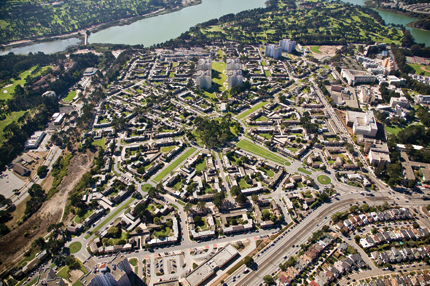
Park_Merced,-San-Francisco,

Along the lines of radial symmetry I carved this gourd for my mushroom teacher named J.R. Blair, who is currently the director of the Sierra Nevada Field campus of San Francisco State University.  Up in the mountains where the snow plants bloom and foxtail pines harken in the snows.  The gourd sits happy in the garden.  Funny thing is, JR says his favorite part is the weird crooked stem that looks like a sea horse or snake at the top.  Not the Mycena or the Conocybe or the Agaricus augustus or the Amanita!
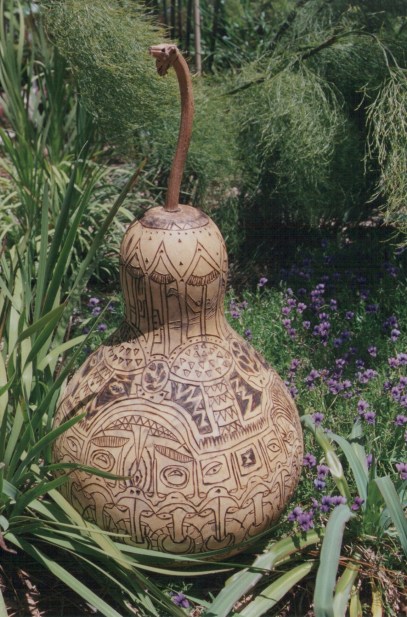
mushroom gourd

In the dwarf conifer garden of the San Francisco Botanical Garden (established way back in the day with a donation from James Noble), there is a pond full of Nymphae water lilies surrounded by irises.  It is a favorite hunting ground of the herons and egrets.  Clear shallow pond full of life.
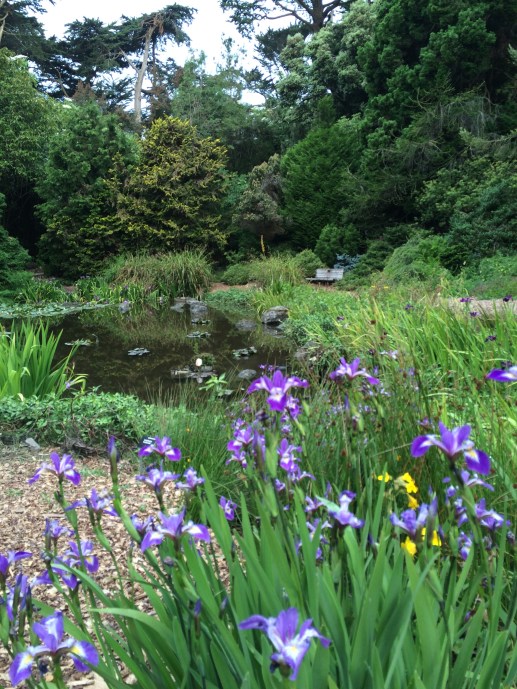
32

Ponds get weedy too.  Aquatic weeds.  So in order to keep the weeds from overtaking everything else and smothering the pond, the gardener has to wade into the pond and pull thousands of pounds of muddy plants out every year to  maintain the garden.  Thats what it takes.  Theres the balance.  Beauty and hard work and achy muscles.
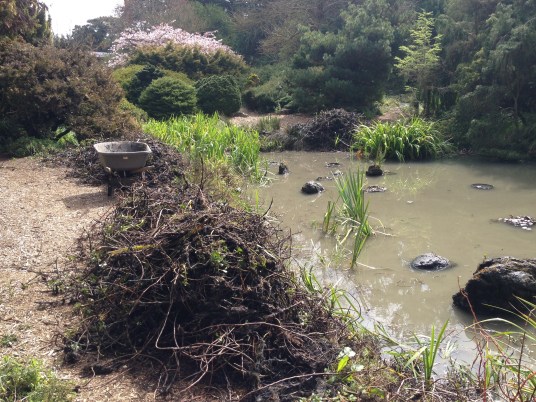
pond weeds

Back in the day when I was a supervisor downtown, Union Square was one of my parks to maintain.  At that time, Justin Lyman was the gardener there and I would help out when needed.  Union Square is at the center of the shopping, theater, and gallery district here in San Francisco.

Okay hold up back up.  The city has various departments – Department of Public Health (General Hospital, neighborhood clinics), Department of Public Works (Streets and islands), Recreation and Parks (Golden Gate Park and all the little parks called Parks and Squares), San Francisco Unified School District (public schools elementary up to high school), Public Utility Commission (water department and also they make electricity with their hydroelectric dam up at Mocassin going towards Yosemite).  All these departments hire gardeners for their landscaped grounds.  So for Recreation and Parks, each distinct area has supervisors and gardeners.  The areas have names like North Beach Complex, Marina Green complex, Richmond complex, Sunset complex, Bayview complex, and so on.  Yes so very complex.  My beat was the Civic Center Complex, which at the time entailed all the parks and recreation centers from Civic Center through the Tenderloin to Union Square, South Park, SOMA, and south into Potrero Hill including Jackson Playground, Potrero Hill Recreation Center, Franklin Square.

As a supervisor, occasionally you make the design decisions.  Sometimes it is a collaborative decision, like a meeting with the Union Square landscape architect Michael Fotheringham and the head of the Union Square merchants association.  Other times, you work with what they give you, what they got at the city’s Park Nursery, what the funds can purchase at Pacific Wholesale Nursery down in Colma.  You try your best to make it look pretty and clean because tourists come from all over the world and they are spending good dollars downtown.  Make it shine!

Anyhow they had just finished the remodel of Union Square when I started working there.  The new design was formal and intensively symmetrical.  Go by there and look at it.
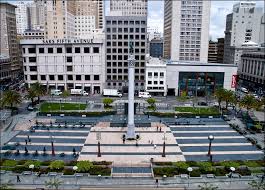
download

Landscape Architecture magazine liked how the Mexican feather grass looked in the corner flower beds as it waved and danced in the wind, and put it on their cover.  The palms are Canary Island date palms and at their bases was New Zealand flax in that yellowy pink hue.

unionsquareplanting

Every Christmas time the kindest and most generous lady named Helen Hilton Riser would donate cyclamens and we would plant them in the four corner granite beds.  In reds and whites.  The gardeners would ask me if she was related to Paris Hilton and I would be like shh I don’t know!  None of your business!  Just plant the cyclamens!  ( This was in early 2000’s).  Then they noticed that the engraving of all the mayors was sideways and hard to read and told me (the supervisor) to get it corrected.  So I asked and called the higher ups, the contractors, the folks in charge.  Nothing.  What is done is done.  Move on!

unionsqcorner

Scale and Proportion:

So sometimes things don’t turn out, don’t fit; not necessarily your fault.  Just cause.  So back in the day at Civic Center, or the Joseph Alioto Performing Arts Piazza, there was a flower plaque across from the Bill Graham Auditorium.  The auditorium is where many high schools host their graduation ceremonies, and also where Golden Gloves, professional wrestling, the Warriors, Jefferson Airplane, Bob Dylan, Rolling Stones all happened.  Anyhow, we would plant the plaque from time to time with displays of flowers.  Sometimes flowers that spelled out words.  At one time in the past they had spelled out PEACE with hens and chicks succulents.  Somebody suggested LOVE, and I said okay, sure.  So we used the California native Armeria maritima, sea thrift, and spelled out love.  We were about to fill in the rest of the space with a contrasting plant with white flowers – sweet alyssum, when we got a call from the higher ups.  “Go out there RIGHT NOW and remove those flowers!”  I was a little bewildered but like, “Yes sir!” and so myself and gardener Neil Neilmeier dug em up and threw em in the compost.  Neil said, “That was the day they took the love out of civic center.”

Later I learned that that same day we took out the plants the state court across the way was deciding on the legality of gay marriage, and that somebody had complained vigorously that the LOVE in the flower plaque was obviously political and they did not like that.  So somebody had us remove it.  I was like????  Love is political?  What?!?!?!?  Maybe somebody did not like the capital letters or the choice of plant material.  But LOVE?!?!!??

love planting

So thanks to Kip Sip the nursery manager at the time we planted it like this.  She was the head of a movement to reduce plant waste and so encouraged the planting of perennials rather than stick em in throw em away annuals, as was the practice.  This was planted in an arc of mostly blues, purples and pinks – Limonium, Rosmarinus, Lavandula, Armeria, Cistus, etc.  Tons of blooms that lasted and lasted and lasted…

civic perennials planting

Rhythm:

Theres a come and go, here and there aspect of the garden.  Among more modern architectural designs these days it is popular to use plants as sculpture. So the more the plant can look the same, look good ALL THE TIME, the more it is utilized.  Agaves and aloes big time, foliage plants like asparagus fern and horsetails.  For us old timers who like the dramatic contrasts and moods that the up and down and summer and winter bring, the highs are worth the lows.  We are at peace with the stark outlines and yet enjoy the billowy abundance.  Here is the California native plant garden in the San Francisco Botanical Garden in the springtime.  It is called the Arthur Menzies Garden.  When I was speaking on behalf of natural areas at City Hall then mayor Gavin Newsom was like Hey that is my grandfather.  I’m like okay cool.  In this scene, the annuals were grown by the extraordinary nursery person Jeanne Rich then planted out by the gardeners, at various times Terry Siefeld and Tyler Taunton.
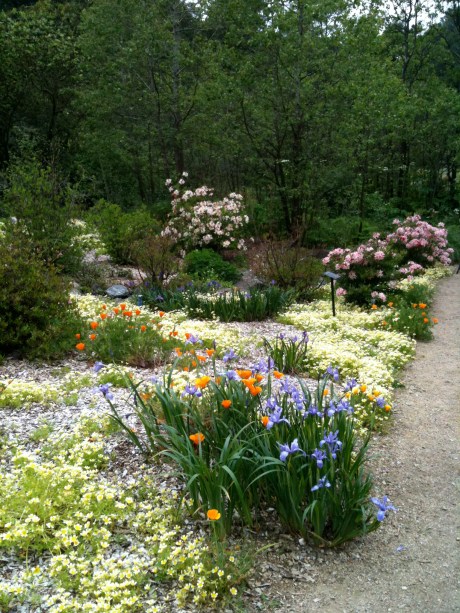
ca nat spring

Now the same spot in the fall winter.  irises going dormant, not all brown yet. Annual meadow foam all faded to mulch. Perennial poppies still holding on. Rhododendrons looking haggard been through the cycle.  Leaves of the quaking aspen all spiraled and fallen.  Just bare trunks now.  What do you think? Does the design work?  Is it worth it?  This is the rhythm.  Theres no correct or incorrect answer.  Just.  Develop.  Your. EYE.
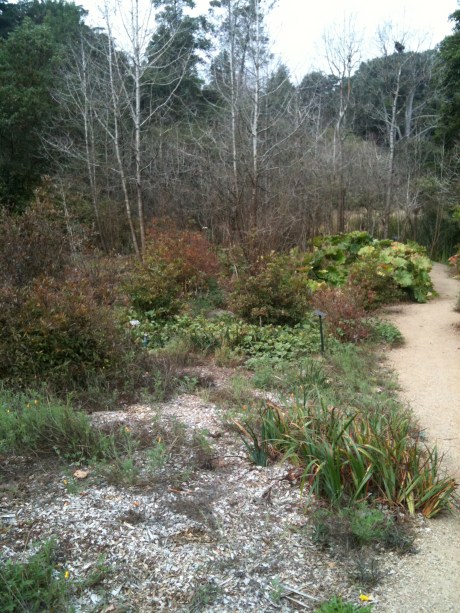
ca nat dry

So in creating the composition that is your garden design, it is helpful to stick to a basic simple palette.  Like sing in one style and gain fluency.  Mix and match and combine in complexity later, when you are thoroughly proficient in the basics.  This was a little table I got from goodwill that kids decorated with ceramic tiles for a school auction.  Its theme was bugs and different life stages during metamorphosis.  Theres inner details but as a whole its just big green circles, little blue circles, and bits of polygon yellows.  So ditto when you are planning plants.  Stick with a handful of herbaceous plants,  a few woody shrubs, and one or at most two kinds of trees.  Keep it simple, then do the variation. A few chords, switch em up.  Not a hundred layers of glazes, just one, or two to three.
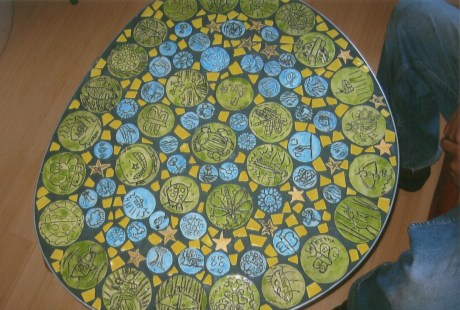
mosaic table

Along the veins of movement and flow of ideas was these buses a gentleman artist named Todd Gilens came up with.  He wanted to decorate our city MUNI (municipal railway) buses with pictures of local endangered species.  That is how I got involved – because of my studies and photographs of butterflies in graduate school, specifically the Mission Blue butterfly.  So if you can, incorporate butterflies into your garden design.  Plant the plants they feed to their young, their larvae.  Also plant the plants they will feed and nectar on.
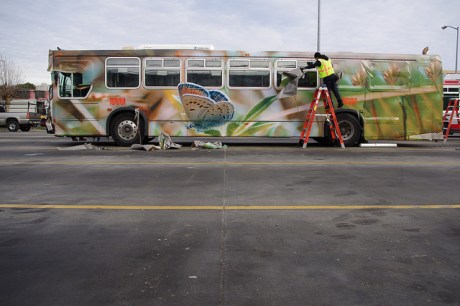
butterfly on bus

Unity:

Underneath the BART (Bay Area Rapid Transit) tracks, at the end of a cul de sac was a park called Cayuga Park.  Like anyplace without a proper caretaker, it gets neglected and abandoned and taken over by somewhat malevolent forces.  In comes Dmitri.   A gardener which in our civil service system is class 3417.  He hedged, pruned, cleaned the paths, picked up the trash.  Had the park looking good.  Still something was missing.  He asked his supervisor if it is okay to do a little bit of wood carving.  At that time, supervisor being a cool dude, not a micromanaging clip board toting unsatisfied manager says  – okay.  Go for it.  Those are the key words.  GO.  FOR.  IT.  So the carvings grew out of stumps and logs and fallen chunks and broken branches.  Hundreds of them carvings depicting folks from the bible, old time indians, african orators, and so on.  Pretty soon the park comes alive, the neighborhood comes around, the community is together not apart.  And he is ‘just a gardener’.  Kinda like in those Steven Seagal movies where he is ‘just a cook’.  Funny.   So unity can come from a person, a little light shining and turning into the sun.
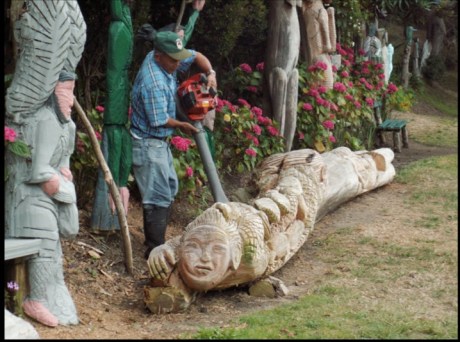
dem cayuga

My old landscape architect buddy John Bela was the designer for this scene.  You may know of his inspired works all over the world but not know his name.  I will say it again.  John Bela.  Remember the first person who stuck some coins in the parking meter, rolled out a strip of turf and plopped down a bench, making the first parklet?  Well that was John Bela.  Now there are parklets and parklet days all over the world.  Who started this? John Bela. And no, there was no copyright.  He made not even one dollar on that one… Still, he persisted and charges on.

Anyhow this was another one of his schemes.  His timing was perfect in that Slow Foods and Alice Waters and Victory Gardens all came together, enabling him to make this permaculture esque food garden in the middle of Civic Center Plaza.  The keyhole beds are edged with the erosion prevention straw rolls and set in place with wooden stakes.  The irrigation is drip.  The pounds and pounds of veggies and fruits went to the soup kitchen at St Anthony’s in the Tenderloin.  Good healthy food is a  design idea that everyone can unite around.
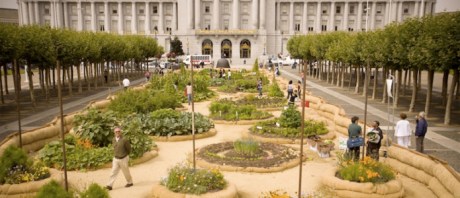
JB victory_garden

Lastly in the realm of unity is this flyer I done for a plot of land I was responsible for long time ago.  A corner lot sand dune at the intersection of Balboa and the Great Highway, across from the beach break known as Kelly’s Cove.  The plants have survived, albeit the look and aesthetic is a bit of the windblown dry and not lush cali native and if you dont know what you are looking at you dont understand it.  But… the metallic green halictid bees are buzzing in and out of the knotweed, the acmon blues and green hairstreak butterflies  are laying eggs on the chamisso’s silver leafed lupine, and its maintenance requirement is LOW.  Its irrigation and water bill is ZERO.  What matters in this garden is COMMUNITY.

parcel4

Greenhouse history

July 27, 2020

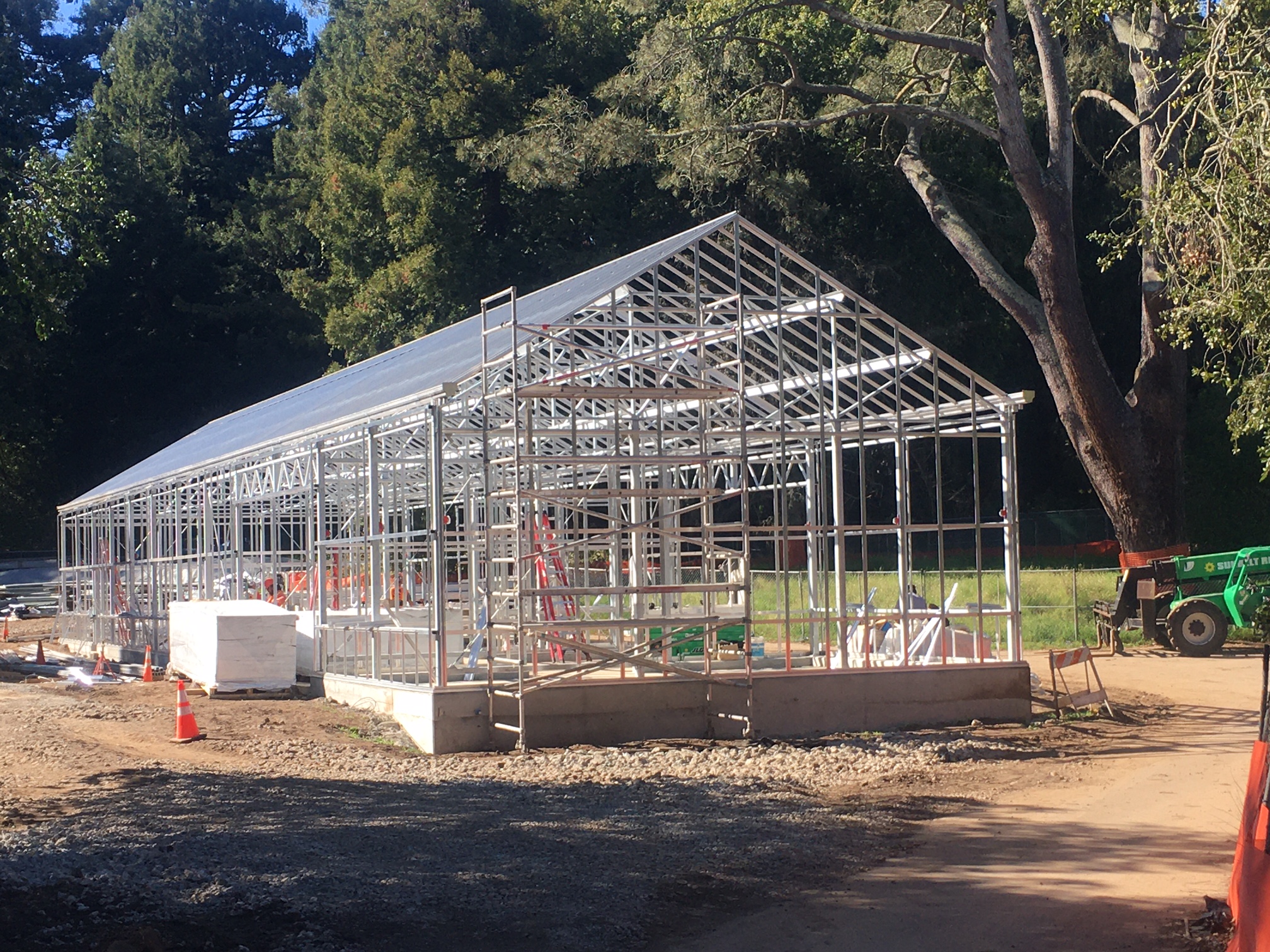
Plants evolved in a variety of climates, latitudes, and geographies throughout the world, over time.  In places close to the poles north and south, hours of daylight would vary over the course of a year.  This would range from 24 hours of darkness in the cold of winter to 24 hours of daylight in the summer.  In areas closer to the mid belt the equator, there would be 12 hours of sun and 12 hours of darkness everyday, in all seasons.  Some places get 300-400” of rainfall a year, other places, less than 1”. 

People and cultures likewise evolved around the plants they could gather and cultivate, and the animals they hunted and domesticated.  Back in the olden times, before widespread world wide travel and commerce, you would eat what was available, when it got ripe or when it matured.  Or you would hunt the animals that migrated through with the rains or that congregated around the falling of jungle fruits.  Nature set the pace, and you the human followed it.  Sometimes the seasonal window for this fruit or vegetable was very small – asparagus and tomatoes in the summer, nuts like walnuts or acorns in the fall, and so on.  So people were always alert and on the move.  Also back in the day, in colder climates, before refrigeration, you had to preserve foods in some way so that you wouldn’t starve to death in the winter while you were holed up in your log cabin or mud dung straw house.  Some vegetables like cabbages you could keep in a root cellar underground or make into kraut.  Other foods you might have to dry, salt, and smoke to preserve them and keep them from becoming food for bacteria, fungus, rodents and insects.

The earliest plants folks figured out that if you took care of plants meticulously, you could sometimes extend their season and even plant them a little bit out of their regular comfort zone.  That is to say, if you blocked the wind, lavished attention on the plant babies, maintained the irrigation, warmed them at night with some thick masonry earth thermal mass, and so on, you might coax a fruit or two or more from a warm subtropical tree planted in a cool temperate place.  Or, you might get another two weeks of red red tomatoes on the vines, more grains and less pests on the rice crop.

During the times of naval superpowers and European conquests, plant worlds collided.  Plants from one area of the world were transplanted to other areas with the suitable climates and soils:  sugar cane from southeast Asia made its way to the Caribbean and Americas; tobacco and rubber trees of the Americas sailed back and rooted in Asia Europe and Africa.  Folks were shocked by the tasty tropical pineapple and mango, bewildered by the stinky durian.  People appreciated the easy and efficient carbohydrate production of the potato and the yam.  There was, and continues to be, a wealth of exchange as cuisines and cultures mixed, fused, adapted, and became something new. 

To meet this demand for fresh foods and foods available year round, the planting and growing of crops intensified and developed alongside horticultural knowledge and technological advances in materials and fuels.  Some plants are still best grown in the ground in a suitable place, in a plantation.  For example, chocolate trees grow best within around twenty degrees latitude north and south of the equator.  The same goes for black pepper.  The products are then shipped around the world for further processing or consumption.  Other plants – mostly annual or perennial herbaceous plants that do not reach a large size, plants with a quick generation time from seed to flower or fruit – became suitable candidates for growing  indoors in commercial greenhouses.  Edible plants, ornamental plants, medicinal plants.

People could now follow nature’s lead, but control aspects of light and air, temperature and humidity, water and irrigation, soil composition and fertility, and so on, in order to maximize the yield of plants, and produce flowers, fruits, seeds and foliage in all seasons.  That is to say, thanks to greenhouses, you could now harvest lettuce and kale in the middle of winter in Wyoming, cut a bundle of flowers in a hothouse in December in Canada, or be harvesting eggplants seven eight nine months out of a year rather than one or two months outdoors. 

When you go to the food market, you see the beautiful tomatoes on a vine, little yellow red orange sweet peppers, and cool perfect cucumbers.  By the checkout stand, amazing blooming orchids growing in bark for only $9.99.  At the florist, there are beautiful roses, a dozen for $15.  In the garden nursery, there are huge fat three four year old tulip bulbs and some fine anemone corms in the cardboard bins.  Or, you go to the cannabis apothecary, and smell that skunky big bud aroma in well packaged jars.  Well this is all a recent development in our relationship with plants.  If you appreciate this abundance and diversity, and understand a little bit of how this came to be, you will be acknowledging the wonder of greenhouses and the folks who work in them.

sec1

sec2

sec3

sec4

7bddf1ec-fe56-4ace-a0ed-e93ac955c8e3

Hardscape in landscaping

is the hard, dead, heavy stuff that you can make a good buck on

during the installation

its the wood deck with a view and a cut out for the oak tree trunk

its the Sonoma field stone retaining wall

20 tons of stone you had to haul through an illegal in law apartment with narrow doors

its the flagstone slabs that came in a crate, but you ordered em too thin

and they kept on snappin one after another during transport, blame the laborers

its the long metal strip of edging border which wiggled and wobbled as you set it in place

its the bags of concrete, poured and screeded, floated and edged

its the yellow grained decomposed granite in the back of your pickup, scratching the paint

hardscape all

Safety is foremost

in selection and in construction

say you design your client a flagstone patio

the red slightly uneven flagstone that reminds you of Arizona and javelinas and road runners

the client lives in the western part of San Francisco, in the Sunset district

all good

the patio gets installed in spring when the weather is nice and the winds are strong

come summer, in rolls the fog, nobody goes to the garden

its just too darn cold

algae spores find the nice gritty crevassed contours of the patio and make their home on it

by fall, the patio is a goopy slimy green mess

winter, more of the same

dad is slipping and falling

grandma is scared to go out there

client not happy, “You didn’t tell me that this would happen!”

you like, “All you gotta do is scrub it hard with a light bleach solution…”

client – “But what will happen to the thyme we planted in between the stones?” , “I thought you said this was going to be low maintenance?”, so on and so forth

so ponder function and use, climate and weather, choice of hardscape

before you make a design decision, before you order the 3 cubic yards of drain rock

Or in another instance, its the safety of the workers

you might consider

its one thing to pick out a nice boulder in the rock yard

the 15 ton granite one in the back that transports you straight to the rainbow falls of the sierras

its quite another to move and place that chunk of rock

into the 40’ x 25’ backyard garden, with no side gate or garage access

somebody is gonna get hurt

unless you budget for a crane…

Permeability and drainage is one more issue

that is a priority

say you visualize an absolutely beautiful stunning outdoor room

shining with blue slate tiles cut sharp and crisp on the ground

underneath the slate, a slab of concrete on which it sits, mortared in place

so when the rains come, this surface does not let any water down into the earth

it is impermeable

so when the water hits it, gathers volume and force, where does it go?

hopefully there is a drain, hopefully it slopes away from the house

if not, uh oh, problems

say bye bye to the elegant Persian hand woven rug soaked to the core

say adios to the bamboo floors warping and jackknifing

these are

problems that could be solved if you understand the forces of mother nature

problems that could be avoided if you sit outside in the winter rains and observed

problems that you create because you design in a vacuum of a screen

not in the ecology of the outdoors and the persistence of time

problems of poor planning and bad design

Rot is a conundrum

because wood is yummy food

not for us, but for a number of other creatures

especially when it gets wet

so if you go cheap and be like – oh just gimme the pine boards or bargain basement doug fir

or if your design is such that mud and soil gather atop your wooden bench day in day out

and the water works its way down the fibers throughout the 2 x 6

how long will the structure last? 

when will the wood become nothing but shredded white fibers and crumblin’ brown blocks?

Along this same line of questioning:

There is a chemical treatment, pressure treatment that renders the wood less amenable to attack by fungi

the orangey green weighted wood with the staple marks called PT

packed with copper compounds, basically fungus poisons

then you are designing a nice vegetable garden with raised beds

a bed that you will fill with organic, compost-fed kale bush beans and cauliflower

do you use PT lumber for the raised bed?  why or why not?

Hardcape

is endless decisions like these

you can ask the folks in the lumber yard, the kind people behind the counter of the stone yard

for advice and assistance

they understand quantities and volumes and weights and coverage

you can talk to the contractors who put stuff like this in all the time

how do you rat proof and skunk proof the low area under the deck?

is clear heart redwood worth the cost?  is it even available? in what sizes?

do you work with ipe ironwood?  why or why not?

I got pesky neighbors and I want privacy.  how tall can I build that fence?

what do you know about bamboo?

Most importantly, it is the field gardeners who have the first hand knowledge

of watching a garden grow and change over time

thats the test and the outcome

remember that this creation this masterpiece this work of art

is not a machine with a one year warranty, tucked indoors away from the elements

nor is it an unbreakable hunk o plastic with a lifetime guarantee

it is a garden you are designing and building

a place with constant weather, insistent pests, and a whole lotta dynamic action all the time

Gardeners can best tell you how water and irrigation and algae interact with the hardscape

they can describe in detail –

how people get tripped up by a slight unintentional grade change

or how people become deterred by the aberrant flow of a pathway

gardeners know what designs don’t work

they know that the designer never shoveled a bucket of sand

they know that the architect never mixed up a batch of mortar

gardens that are the result of careless ignorance or mindful disobedience of nature’s workings

gardens where they cut corners and treat labor poorly

gardens where a skilled craftsperson or a knowledgeable horticulturist is nothing more than a slave or a serf or an indentured servant

“slap it together, get in n get out”

“do what I tell you to do or else…”

gardens where the selection of hardscape, and its placement, are inappropriate

So after a while, you begin to figure out what designs do work

cause the hardscape is strong and firm and holds up fine

cause it does what it is supposed to do

it entertains the family and friends

without causing hurt or harm

it provides a sense of order and structure and direction in the yard

and reminds you of the rocky hills and creek bottom drainages of comforting woods

it takes you to a happy place

year after year after year

This takes a little maintenance, of course

broom the leaves off the deck

clean the paths

weed around the stepping stones

pressure wash the tiles

and so on

Hardscape – lotta work at the outset, but so fulfilling in the long term

if it is done right, it ages gracefully into somewhat permanent magic

Compost and recycling in the garden

Everything goes in a circle

whether you like it or not

whether you acknowledge it or not

whether it is right or wrong or correct or left or front and center


In general

old timers do not like to waste stuff

stuff like food or building materials

because food was precious and scarce and took a lot of work to hunt or grow

because cutting a tree down, hauling it, milling it and drying it into lumber took weeks and months

because every little nail had to be hammered and forged

so then old timers became thrifty, economical, or saving, what have ya wanna call it

if you have tried to grow just one tomato and eat it, you know what I am talking about

its not easy, none of it was easy

everyday survival


These days

thanks to the industrial revolution, global trade, cheap labor, container ships, and so on

there is an abundance of stuff

some good stuff that lasts, lotta stuff so cheap it doesn’t matter if it lasts or not

when it breaks or crumbles or rots

just go buy another one…

so the leftover junk, flotsam and jetsam, day olds and spoiled

all end up in the dump of human civilization

piles dug deep into the earth

mounds of garbage spread far and wide


In nature, everything is used, nothing is wasted


Road kill possum by the guard rail:

turkey vultures are circling

raven is picking at the head

flies are swooshing down laying eggs, ants are carting off pieces of fur and fat


Tree falls down in the forest:

a crack and a thump

fungus is tearing it apart

beetles and termites are having a picnic

bacteria is scrambling for bits


Oil rig scaffold left in the ocean:

becomes a place to live

for creatures like barnacle mussel limpet and algae

drifting migrating spores and larvae find their way onto the steel

settle down, make their homes, and there they dwell

happily ever after


In nature, everything erodes, everything decays

nothing is ever lasting and permanent

she loves to take things apart


Headlands on the northern coast:

arches crags and thirty thousand ton boulders

so rock steady and firm, seemingly immutable

but

let the heat bake em

let the waves batter them incessantly

let the sands scratch and scuff, pepper and graze

and the crust underneath shifts and rolls, twists and subsides

and the formations change

within ten years, within twenty years, within the span of a human life span

you go back for a visit and you are like – what?! 

I don’t remember it like this?! 

this used to be….

well not anymore…


Monuments and buildings:

the pride of Mesopotamia

the glory of Rome

the greatest architecture of all millennium

million dollar mansions

then

revolution or downfall or lack of upkeep and maintenance

war and disease followed by pestilence

then it is abandoned, given up, forgotten

doesn’t take long

for spider, mouse, and cockroach to set up shop

for white rot and brown rot, tropical highs and riverine floods to work together

for screws to come loose, for rebar to rust throughout, for cables to untie, for a leak to spring

for a skeleton of a frame to meld, melt, and congeal back into the earth


Old chevy by the seashore:

salt wind and sand blasting it

iron burning in the air and wetness soaking thru

in a hundred years, what’s left?

maybe some rubber, some plastic, some foam

who remembers what model it was? 

why somebody left it at the beach?

where did the memories go?  all gone


In nature, everything comes around again


Who would have thought

that dead plants submerged

with heat and pressure and time

would end up as oil

and fuel our society and culture

maybe in twenty million years

all that plastic will be deposits

of oil again

until then – there it floats, drifts with the wind, goes up to the sky in low pressures

comes down with the hurricanes and monsoon rains


Who would have imagined

that mercury used to capture gold bits

back in the 1850 gold rush days

would flow downstream from the mountains

and still be in the sediment of the bay today

with the mud and the crabs and the tangled fish nets

how is it possible

that mercury would be filtered, sucked up, and become a part of

shrimp and sea anemone and clam

then taken in by sturgeon shark ray and people too

pooped out, then returned to the earth and sea

going around and around, in and out, in and out


Who can fathom

this endless cycle

of sunrises and sunsets

full moons and new moons

high water marks and low tide pools

going in circles orbits rotations

pretty amazing

all around


Ideally, in the garden, you practice composting, or at least use compost

cause it is great stuff for growing plants!

specifically – for growing domesticated food plants like radishes turnips swiss chard and the like


Compost is the end result of nature breaking down

then mixing with the soil

forming a thick layer of spongy rich growing medium for plants

bits of leaves, peels, seeds, branches, bone, flesh, and so on

in a matrix of fungus bacteria protozoa algae


Compost is the once-alive organic material that has been passed through the bodies and guts of

earthworm millipede pill bug round worm springtail and mite

it is a process that requires the basics of life – water and air, warmth and time

without any of those components, it does not proceed


In the tropical rainforest, matter decomposes quickly

somebody lays a turd, creatures are on it

cause one animal’s turd is another animal’s food

in the cold tundra where it does not rain

it takes a long long time for anything to break down

it just ain’t happening

you can leave a banana peel in the arctic

figure it’ll decompose in no time

but nope, it just sits there, and sits there, and sits there some more…

frozen most of the time

wondering when some bug or mushroom threads are coming to tear it apart

to release the potassium and magnesium and manganese

it had stored in its lifetime


So when we make compost

we are mimicking nature, and speeding up the process by which raw materials

become a useful agricultural or horticultural or natural product

Try to grow a carrot in rocky hard soil

what do the roots do?  do they grow well?

then, grow a carrot in loose cultivated material full of compost

what then, is the shape of the root?

aha!  compost!!!

alright then, let’s get to work

make some piles of fish skins, moldy cheese, rotting limes

add a truck full of brown oak leaves and chipped up elm branches

and a few wheel barrows of lawn clippings

if you’re lucky, bonus for some pond weeds or rinsed off kelp from the seashore

wet it down, turn it time to time to give it some air

give the feeding organisms some good ol’ oxygen to breathe

then like all things, be patient and wait for nature to do her thing

pretty simple, very useful


Like any  fisherman or rancher or farmer or gardener will tell ya

mother nature does not waste

mother nature always wins

mother nature is a loop

old timers be like

what goes around, comes around…

that is how it is

that is how it always will be…

Your instructor Gus Broucaret always gives this funny story out as a handout to the class.  Yes he is a gardener who has mowed and hedged all his life; but this story is reflective of his thoughts about the matter.